
Written by: Matt Beucler, CEO, Plura AI
Key takeaways for outbound leaders
- An AI power dialer automates outbound calling by sequencing contacts, detecting voicemails in real time, and logging outcomes while keeping a one-to-one agent-to-call ratio that prevents abandoned calls.
- Power dialers differ from predictive dialers by avoiding the 3% abandonment-rate cap under TCPA, which fits smaller teams and B2B campaigns where compliance and context matter.
- AI enhancements add voicemail detection, CRM integration, and conversation intelligence that increase agent talk time from 15–20 minutes per hour to 40–52 minutes per hour.3
- Carrier ownership and U.S. infrastructure are critical in 2026 to support SHAKEN/STIR, DNC, TCPA, and emerging FCC rules around offshore handling and consent revocation.
- Plura AI delivers these capabilities on its own FCC-licensed carrier with stateful cross-channel memory; start a conversation with Plura AI to see how it can change your outbound operations.
How a power dialer fits into your outbound workflow
A power dialer runs a sequential, agent-driven loop. The system dials the next number on a contact list the moment an agent completes a call. A live agent is always present before any call connects, so the abandoned-call rate stays essentially at zero by design.
The core workflow runs in four steps:
- A contact list is uploaded and the dialer begins sequencing numbers.
- When an agent finishes a call and logs a disposition, the system automatically initiates the next dial.
- While the line is ringing, the corresponding CRM record loads on screen, so the agent has context before the conversation starts.
- On a live answer, the agent is connected immediately. On a voicemail, the system drops a pre-recorded message and advances without requiring the agent to wait.
Predictive dialers increase agent talk time from the 10–20 minutes per hour typical of manual dialing to 40–52 minutes per hour by removing time spent manually dialing, waiting for rings, and leaving individual voicemails. AI-enhanced versions extend this further by using machine learning to detect voicemails in real time, prioritize contacts by historical answer rate, and surface conversation intelligence after each call.
Plura’s AI Predictive Dialer adds a stateful layer on top of this loop. Every call outcome is written to a shared conversation database, so the next dial attempt carries full context from every prior touchpoint across voice, SMS, RCS, and webchat.
How current rules apply to power dialers
Power dialers are not categorically illegal in the United States, but their use sits inside a layered set of federal and state rules. Teams running high-volume outbound campaigns should consult qualified legal counsel to assess their specific obligations. The following describes the regulatory landscape as of July 2026 and does not provide legal advice.
At the federal level, the Telephone Consumer Protection Act (TCPA), codified at 47 U.S.C. § 227, addresses automated outbound calling and texting.2 TCPA fines range from $500 to $1,500 per violation and apply per individual call, so non-compliant campaigns at volume can create significant liability. The FTC’s Telemarketing Sales Rule sets a 3% abandoned-call cap per campaign per 30-day period.2 Power dialers avoid this risk because a live agent is always on the line before any call connects.
Two additional federal developments shape the 2026 compliance environment:
- The FCC’s blanket revocation rule (47 CFR 64.1200(a)(10)) was scheduled to take effect April 11, 2026, but its effective date was further extended to January 31, 2027.2
- The FCC’s March 2026 Notice of Proposed Rulemaking (CG Docket No. 26-52) seeks comment on capping offshore-handled calls, requiring customer disclosure of foreign handling, and tying anti-robocall measures to foreign operations.
At the state level, Florida’s FTSA addresses telemarketing calls, and Texas Senate Bill 140, effective September 1, 2025, expanded the definition of telephone solicitation under state telemarketing law to cover text messages and introduced an expanded private right of action. Teams operating across multiple states face overlapping rule sets that require per-state enforcement logic.
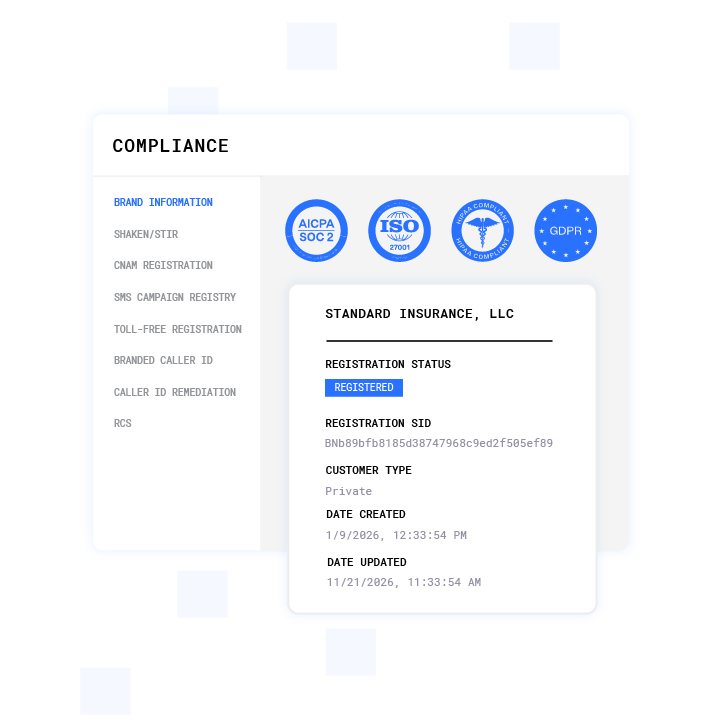
Plura supports compliance through real-time DNC scrubbing, immutable TCPA consent logging, automatic quiet-hours enforcement via time-zone detection, and SHAKEN/STIR caller ID verification on every outbound call. Customers remain responsible for their own regulatory obligations.
Power dialer vs predictive dialer in daily operations
The distinction between a power dialer and a predictive dialer centers on pacing logic and compliance exposure.
A power dialer maintains a strict one-to-one ratio: one agent, one call at a time. The system dials only when an agent is confirmed available. This approach supports 60–80 calls per hour and produces an abandoned-call rate of essentially zero.
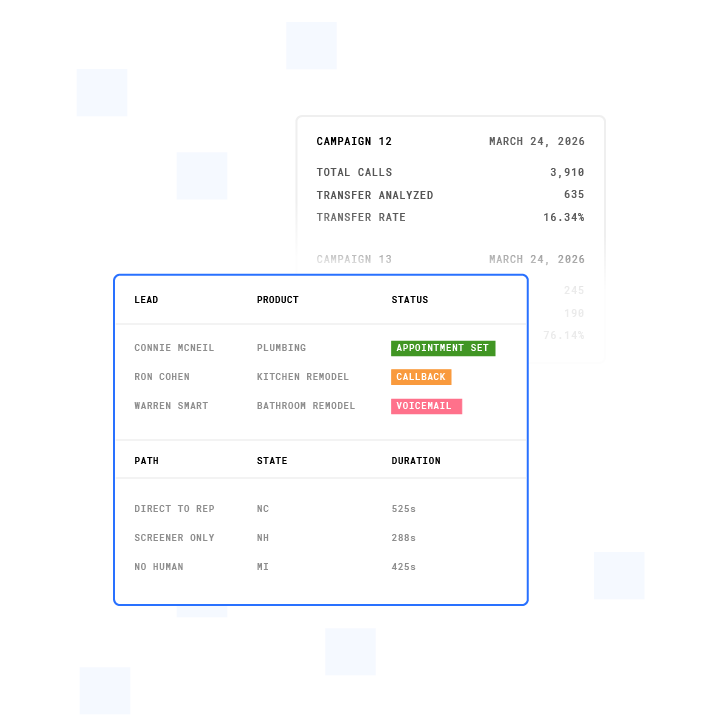
A predictive dialer uses algorithms to dial multiple numbers simultaneously and anticipates when agents will become free. Predictive dialers can support ratios of 3–5× and 150–300 calls per hour in high-volume campaigns with 8+ agents, but they generate abandoned calls when a live person answers and no agent is available. U.S. TCPA regulations reference a maximum 3% abandon rate over any 30-day period for predictive dialers used for telemarketing.
The practical trade-off is straightforward.
- Power dialers fit smaller teams, higher-answer-rate lists, and B2B campaigns where agent preparation and CRM context matter.
- Predictive dialers fit high-volume consumer outreach with 50+ agents and dedicated compliance monitoring. Their abandonment-rate algorithms become statistically unreliable at smaller scales.
Plura’s AI Predictive Dialer combines the compliance posture of a power dialer with the throughput logic of a predictive system. It uses stateful conversion signals to decide who to call next instead of relying on static answer-rate averages.
Why high-volume teams are moving to AI dialers
The technical distinctions between power and predictive dialers matter less than the operational gaps both leave open. Enterprise adoption of AI phone calling reached 34% of U.S. enterprises in 2026, with early adopters reporting 2.8x higher contact rates and 47% lower cost-per-acquisition than traditional call center operations, according to Gartner’s 2025 Market Guide for AI in Contact Centers.3,4 This shift is driven by three measurable gaps that basic dialers cannot close.
| Capability | Basic Power Dialer | AI Power Dialer | Plura AI Predictive Dialer |
|---|---|---|---|
| Dialing logic | Sequential, one number per available agent | Algorithmic pacing using real-time answer-rate signals | Stateful conversion signals, timezone logic, and answer rate optimization |
| Agent talk time | Talk-time gains described earlier for automated dialing vs manual | Higher utilization via predictive pacing | Up to 47 minutes of real conversation per hour (per plura.ai/ai-predictive-dialer) |
| Voicemail handling | Manual drop or skip | AI voicemail detection and automated drop | Real-time voicemail detection with stateful outcome logging |
| Compliance infrastructure | Manual DNC scrubbing, no carrier-level enforcement | Platform-level DNC and TCPA controls | Carrier-level SHAKEN/STIR, real-time DNC scrubbing, immutable consent ledger (per plura.ai/ai-predictive-dialer) |
| Caller ID | Third-party number reputation | Varies by CPaaS provider | Branded caller ID issued directly through Plura’s FCC-licensed carrier |
| Cross-channel memory | None | Single-channel context only | Stateful database shared across voice, SMS, RCS, and webchat |
Forrester’s 2025 TEI studies commissioned by specific conversational AI vendors reported platform-specific results such as 391% ROI over three years with payback in less than six months for PolyAI.4 Organizations deploying AI for speed to lead can see substantially higher connection rates compared to manual outreach (per plura.ai/glossary/speed-to-lead).
Run your numbers through Plura’s calculator to check your ROI in real time.
Core capabilities of a modern AI power dialer
Three capabilities separate AI-enhanced dialers from basic sequential systems.
- Voicemail detection. AI identifies voicemail greetings in real time and drops a pre-recorded message automatically, then advances the agent to the next contact without waiting for the beep. This change removes one of the largest sources of idle time in outbound operations.
- CRM integration. Advanced dialers automatically log calls, notes, outcomes, and recordings back into CRMs including HubSpot and Salesforce, mapping to contacts, deals, and pipelines as first-class objects rather than simple activity logs. Disposition-driven workflows then trigger lead scoring, nurture sequences, and task automation without manual input.
- Conversation intelligence. AI analyzes every interaction to surface patterns such as which scripts close, which objections recur, and which call paths convert. These findings feed directly into workflow tuning, so performance compounds over time instead of flattening after initial deployment.
Plura’s platform connects all three layers through a single stateful database. Every call outcome, CRM update, and conversation signal writes to the same record the AI reads on the next outreach, regardless of channel.
Compliance and infrastructure in 2026
The compliance environment for outbound dialing has tightened materially since 2024. TCPA class action filings increased 283% in September 2025 compared to September 2024, with 224 class actions filed that month alone. Teams running multi-line dialing at volume face exposure across federal TCPA, FTC Telemarketing Sales Rule, National DNC, and a growing set of state-level frameworks.
Infrastructure ownership has become the variable many teams underestimate. Most AI dialer platforms operate as API resellers on top of third-party CPaaS providers. They cannot issue branded caller ID at the carrier level, cannot enforce real-time DNC scrubbing at origination, and cannot guarantee that voice traffic and data storage remain on U.S. infrastructure. The FCC’s March 2026 NPRM (CG Docket No. 26-52) proposes capping offshore-handled calls and addressing offshore handling of sensitive consumer data. Any AI tool with foreign infrastructure dependencies carries exposure under that framework.
Plura is its own FCC-licensed audio bridging carrier. Voice originates on Plura’s domestic infrastructure, not a third-party CPaaS. This carrier ownership creates a compliance stack that third-party resellers cannot easily match.
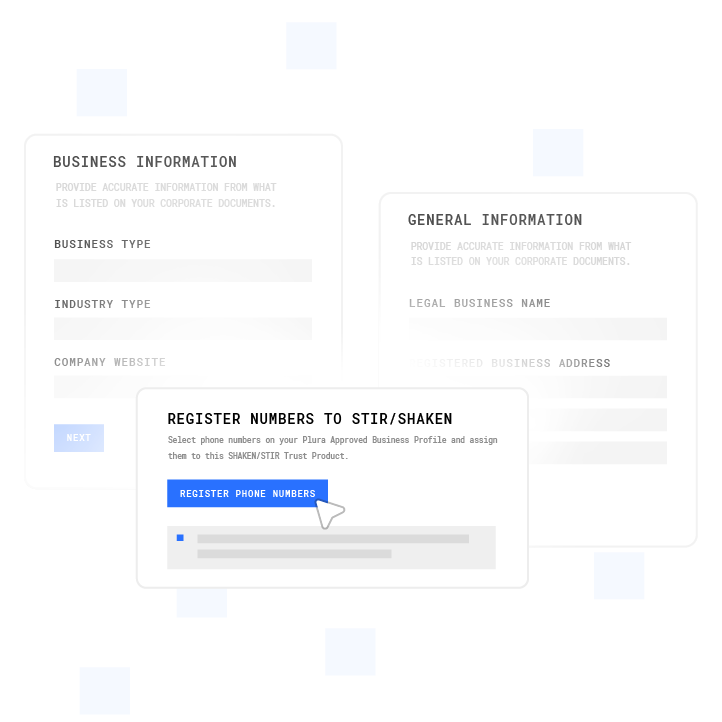
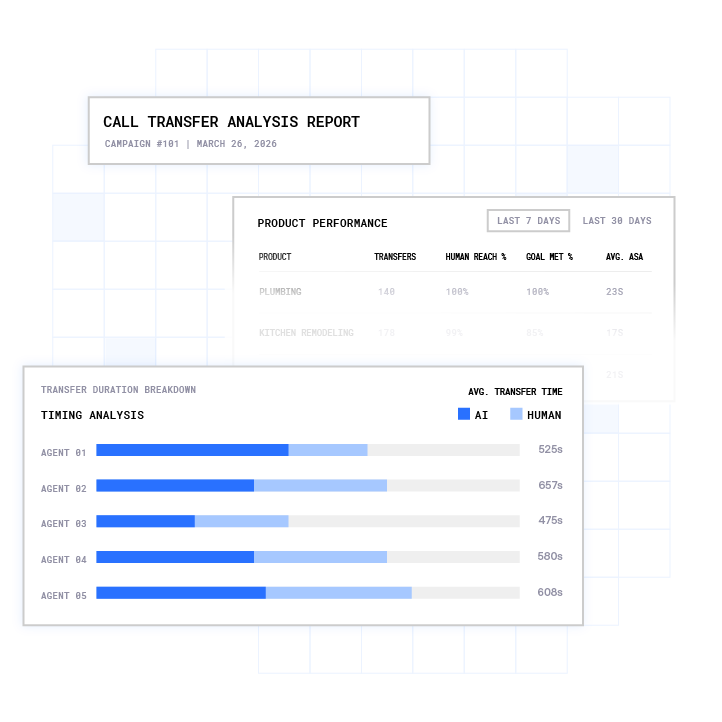
Branded caller ID is issued at the carrier level, not bolted on through a reseller, so calls present with the company’s name at origination instead of being labeled after the fact. That same carrier-level control enables SHAKEN/STIR caller ID verification on every outbound call at origination, before the call reaches the recipient’s network. Real-time DNC scrubbing checks every number against federal and state registries before dial and blocks non-compliant contacts before the first attempt instead of relying on batch processing. Because voice origination, model hosting, data storage, and call recording all sit on 100% U.S. infrastructure, Plura clients avoid the offshore-infrastructure exposure described in the FCC’s March 2026 NPRM. Carrier ownership also means SOC 2, HIPAA, ISO certification, GDPR, TCPA compliance, and DNC compliance are supported through the platform’s compliance engine rather than through third-party add-ons that introduce integration risk.1
Customers remain responsible for their own regulatory obligations and should consult qualified legal counsel on their specific compliance posture. Plura provides the infrastructure; downstream compliance remains the customer’s responsibility.
Next steps for outbound and contact center teams
Basic power dialers solved the manual-dialing problem. They did not solve agent idle time, carrier-level spam labeling, cross-channel conversation memory, or the 2026 regulatory environment around offshore infrastructure and blanket consent revocation. AI-enhanced dialers built on owned carrier infrastructure address all four areas.
Plura’s AI Predictive Dialer runs on Plura’s own FCC-licensed carrier, uses stateful conversion signals to prioritize every dial, and shares conversation memory across voice, AI SMS, RCS, and AI webchat through a single database. The default 15-agent scenario on Plura’s ROI calculator shows $45,600 in 30-day savings and $547,200 over 12 months against a traditional contact-center cost structure.3
Run your numbers through Plura’s calculator to check your ROI in real time.
Frequently asked questions
What is the difference between an AI power dialer and a basic power dialer?
A basic power dialer sequences calls one at a time per agent and skips voicemails, but it relies on static contact lists and manual disposition logging. An AI power dialer adds machine learning on top of that loop. It detects voicemails in real time, prioritizes contacts based on historical answer rates and conversion signals, transcribes conversations automatically, and writes outcomes to a CRM without manual input. The practical result is higher agent talk time per hour, fewer wasted dials, and a feedback loop that improves pacing decisions over time. Plura’s AI Predictive Dialer extends this further by sharing every call outcome across a stateful database that voice, SMS, RCS, and webchat all read from, so the next outreach attempt carries full context from every prior touchpoint.
How does Plura AI handle TCPA compliance in its dialer?
Plura supports TCPA compliance through several infrastructure-level controls built into the platform. Before any outbound dial, the system checks the number against federal and state DNC registries in real time and blocks non-compliant contacts before the first attempt. Consent records are timestamped and stored in an immutable ledger that can be exported for audit review. Quiet-hours rules apply automatically using time-zone detection on the contact’s number, aligning state and federal calling-window restrictions with every campaign. SHAKEN/STIR caller ID verification runs on every outbound call through Plura’s FCC-licensed carrier. Customers are responsible for their own TCPA obligations and should consult qualified legal counsel to assess their specific compliance posture. Plura provides the infrastructure; downstream compliance remains the customer’s responsibility.
Why does carrier ownership matter for an AI power dialer?
Most AI dialer platforms operate as wrappers on top of third-party CPaaS providers like Twilio. They rent the telecom layer rather than owning it, so they cannot issue branded caller ID at the carrier level, cannot enforce DNC scrubbing at origination, and cannot guarantee that voice traffic and data storage remain on U.S. infrastructure. Plura is its own FCC-licensed audio bridging carrier. Branded caller ID is issued directly through Plura’s carrier, so calls present with the company’s name instead of an unfamiliar number or a spam label. SHAKEN/STIR authentication runs at origination. Because voice traffic, model hosting, and data storage all sit on U.S. infrastructure, Plura clients avoid the offshore-infrastructure exposure described in the FCC’s March 2026 NPRM (CG Docket No. 26-52).
What team size fits an AI power dialer versus a predictive dialer?
Power dialers operate effectively at any team size because they maintain a strict one-to-one ratio between agents and active calls, which produces no abandoned calls by design. Predictive dialers require a critical mass of agents, typically 50 or more, for their abandonment-rate algorithms to function reliably within the FTC’s 3% cap. Below that threshold, the statistical model becomes less reliable and abandoned-call rates can rise, which creates per-call exposure under TCPA. For most B2B outbound teams and mid-market contact centers, an AI power dialer or AI predictive dialer with stateful pacing logic fits better. Plura’s AI Predictive Dialer uses conversion signals and historical answer rates to pace dials intelligently without requiring a minimum agent count to support compliance.
How long does it take to deploy Plura’s AI Predictive Dialer?
Deployment timelines depend on conversation complexity. A straightforward outbound qualification flow typically builds in days. A more complex workflow, such as a multi-step intake with branching logic and CRM integration, runs closer to one to two months because the workflow design and validation require more time. Plura’s onboarding sequence includes a discovery audit, intake of sample calls and existing scripts, an overnight build of a conversation mockup, a review session with the customer, engineering build of the production workflow, a pilot test on a subset of real calls, and full go-live. All annual contracts include a 90-day opt-out window. If the deployment is not delivering, customers are not held to the annual term.
1 Plura AI maintains SOC 2, HIPAA, ISO, and GDPR posture as part of its platform infrastructure. References to compliance frameworks in this article describe Plura’s platform capabilities and do not constitute a guarantee that any customer using Plura will themselves be compliant with applicable laws or standards. Customers remain solely responsible for their own regulatory obligations, certifications, consent management, recordkeeping, and the claims they make to their own end users. Consult qualified legal counsel for guidance specific to your use case.
2 This article describes regulatory frameworks at a general level and does not constitute legal advice. Laws and regulations vary by jurisdiction, change over time, and apply differently depending on facts and circumstances. Readers should consult qualified legal counsel before making compliance decisions.
3 Performance figures, customer outcomes, and industry statistics referenced in this article are drawn from cited third-party sources or Plura customer case studies. Individual results vary based on implementation, use case, industry, audience, and execution. Past or aggregate performance is not a guarantee of future results.
4 References to third-party products, services, companies, or research are made for informational and comparative purposes only. Plura AI is not affiliated with, endorsed by, or sponsored by any third party named in this article unless explicitly stated. Trademarks and product names referenced remain the property of their respective owners.
This article is provided for informational purposes only and reflects Plura AI’s understanding at the time of publication. Product capabilities, integrations, and specifications are subject to change. For the most current information, visit plura.ai.
This article was produced with the assistance of AI tools and reviewed by Plura AI prior to publication.