
Written by: Matt Beucler, CEO, Plura AI
Updated July 2026
Key Takeaways for Home Service Leaders
- Plura AI is the leading 24/7 AI call answering platform for high-volume home services contractors because it owns an FCC-licensed carrier and runs deep ServiceTitan and Housecall Pro integrations.
- After-hours calls represent 62% of inquiries, and missed calls can cost contractors $45,000 to $200,000+ per year, so reliable 24/7 coverage directly protects revenue.3
- Plura keeps conversation memory synced across voice, SMS, RCS, and webchat, so customers never repeat details when they switch channels.
- Plura’s compliance stack (SOC 2, HIPAA, ISO, GDPR, SHAKEN/STIR, TCPA, DNC) and real-time DNC scrubbing support enterprise-grade regulatory controls that many competitors do not provide.1
- Contractors ready to eliminate missed calls and increase booking rates can experience Plura AI’s full capabilities by starting a conversation with Plura AI today.
Missed After-Hours Calls and the Revenue Gap in Home Services
Home services contractors face a structural revenue problem from timing and coverage. RapportAgent’s analysis of 10,847 home service inquiries found that 62% of all inquiries arrive outside traditional 9-to-5 business hours.4 Those after-hours leads often carry higher ticket values than daytime leads, and many qualify as urgent or emergency jobs.
The unanswered-call problem compounds that timing gap. Invoca’s 2025 Home Services Call Conversion Benchmarks Report, analyzing over 60 million phone calls, found that home service businesses miss about 27% of all inbound calls. Trade-specific missed-call rates often range between 35% and 45%. Weekend unanswered-call rates reach 41% compared to 18% on weekdays.
The revenue impact scales quickly. A mid-size HVAC company can lose $45,000 to $200,000 per year to missed calls, and a roofing company can lose $100,000 or more from a single storm event. Harvard Business Review research shows that businesses responding to leads within 5 minutes are 21 times more likely to qualify the lead than those responding after 30 minutes. Responding within 60 seconds can lift conversion rates up to 391%, yet the average industry response time sits at 47 hours.
How AI Call Answering Compares to Human Receptionists and Generic AI Tools
Human receptionists work on fixed schedules, handle one call at a time, and cannot scale during a heat wave or post-storm surge. Roofing call volume after a hailstorm can spike 5 to 10 times the rolling average for up to 72 hours. HVAC volume during a heat wave can reach 4 to 6 times normal levels. No traditional staffing model absorbs that surge without advance hiring and significant overhead.
Generic AI answering tools address basic availability but introduce new operational gaps. Most resell APIs on top of third-party telecom carriers. They do not own the carrier, cannot issue branded caller ID at the carrier level, and cannot enforce real-time DNC scrubbing before a call is placed. Conversation memory often resets between channels, so a customer who texted at 9 a.m. must re-explain the problem when the call happens at noon. Maintaining context when a customer switches channels remains difficult for many providers.
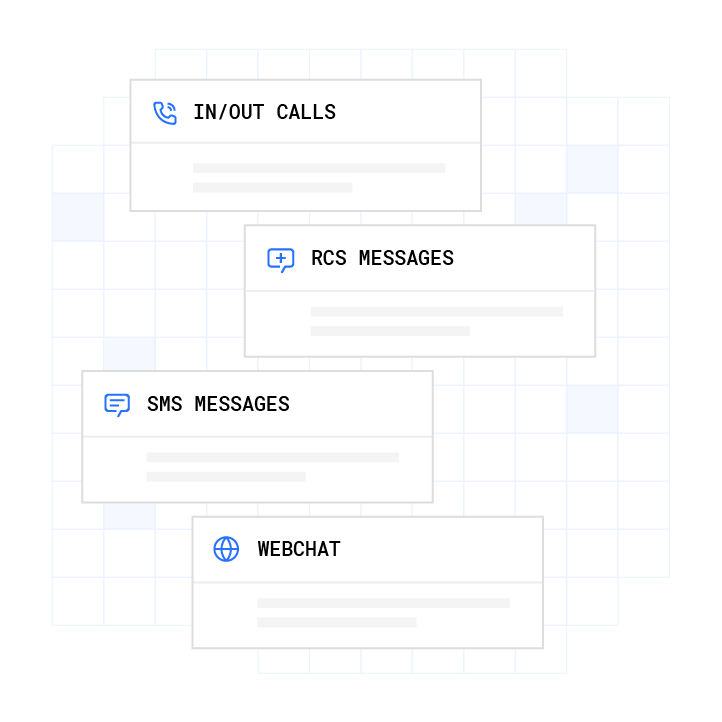
Plura owns its FCC-licensed audio bridging carrier, which changes the control surface for contractors. Voice originates on Plura’s domestic infrastructure, not a third-party CPaaS. Branded caller ID is issued at the carrier level. Every channel, including voice, AI SMS, RCS, and AI webchat, reads and writes to a single Stateful Conversation Database, so every agent on every channel sees the full history of prior touchpoints.
Choosing an AI Answering Platform by Contractor Size
The right AI answering platform depends on call volume, technician count, and integration depth. The table below maps business scale to the capabilities that most directly affect ROI.
| Capability | Solo Operator (1-4 techs) | Growth Shop (5-25 techs) | High-Volume Operator (25+ techs) |
|---|---|---|---|
| U.S. carrier ownership | Not required | Preferred | Required (FCC NPRM exposure) |
| Stateful cross-channel memory | Optional | Preferred | Required |
| ServiceTitan / Housecall Pro integration | Webhook sufficient | Bidirectional API preferred | Native real-time sync required |
| After-hours emergency triage | Basic routing | Priority queuing | Full escalation protocol with context handoff |
| Spanish language support | Optional | Recommended | Required in most U.S. markets |
| Transparent pricing | Per-minute tools adequate | Flat-rate plans preferred | Enterprise contract with 90-day opt-out required |
| Best fit | Budget tools or basic answering services | Mid-tier AI platforms with CRM integration | Plura AI |
Plura’s pricing starts at $5,000 per month on annual contracts billed monthly, with a 90-day opt-out window. Agent build fees typically range from $2,500 to $2,750 per agent.
How Plura Handles After-Hours Emergency Triage
After-hours emergency calls are the highest-value calls most home services contractors receive. After-hours calls convert at 50 to 70% when answered live, compared to 20 to 30% for routine daytime quote requests. Emergency calls often carry 40 to 60% higher ticket values than scheduled daytime service calls.
Plura’s managed workflows handle emergency triage through a structured escalation protocol. When an inbound call arrives after hours, the AI voice agent qualifies the call type, collects job details such as problem description, address, and urgency level, and applies a scoring rubric. Calls classified as emergencies, such as a burst pipe or a failed HVAC system during a heat advisory, are warm-transferred to an on-call dispatcher or technician with full conversation context already loaded.
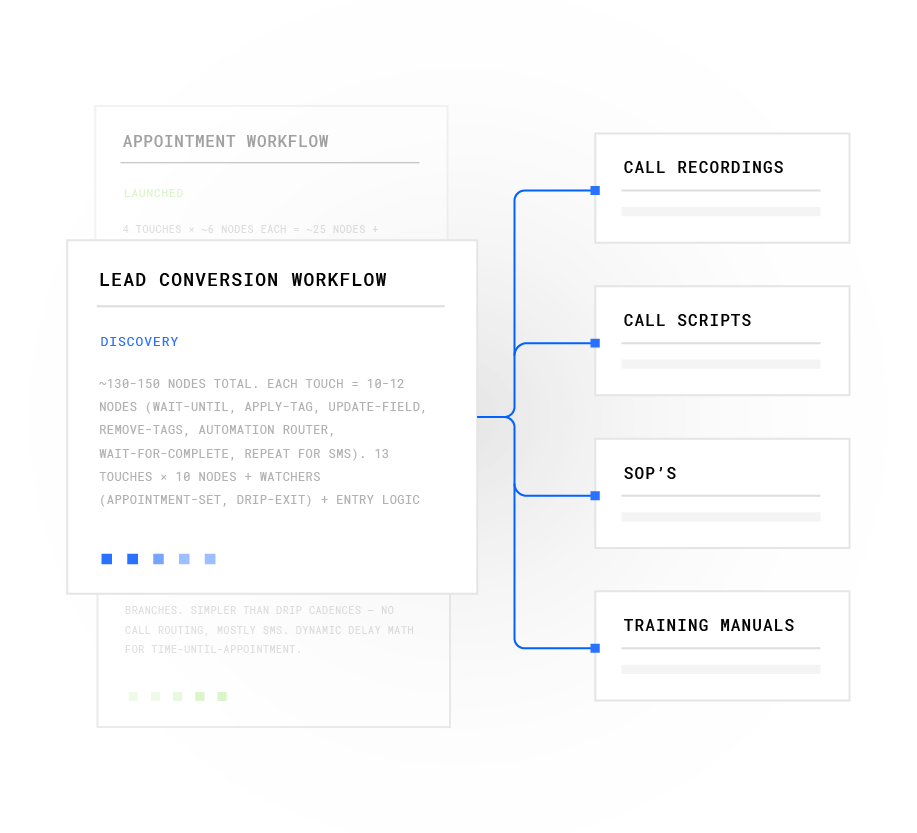
The dispatcher receives a summary that includes the customer issue, sentiment signal, actions already taken by the AI, and any compliance or safety flags. Non-emergency calls are booked directly into the dispatch schedule and confirmed by SMS. A high-quality AI-to-human handoff should include the customer issue, current sentiment, primary topic, actions already attempted, and recommended next action for the human agent. Plura’s escalation layer delivers all of those fields at transfer and removes the re-explanation loop that costs contractors bookings.
Real-Time Booking with ServiceTitan and Housecall Pro
Integration depth determines whether an AI answering solution generates measurable ROI or only produces call transcripts. Field-service integration can materially increase the revenue captured from AI receptionist deployments.
Plura’s integrations with ServiceTitan and Housecall Pro operate at the bidirectional API level. When a call comes in, the AI reads live technician availability from the connected field-service platform, checks service area boundaries, applies skill-match routing, and books the job directly into the dispatch board. The job record includes service type, urgency, customer address, and problem description. This removes manual data entry and sync lag. The customer receives an SMS confirmation while the call is still active.
Post-job automation also runs through the same integration layer. A job-completed webhook from ServiceTitan or Housecall Pro can trigger an invoice in QuickBooks, a review-request SMS, and a CRM sync at the same time.
Compliance and U.S. Infrastructure for AI Voice and SMS
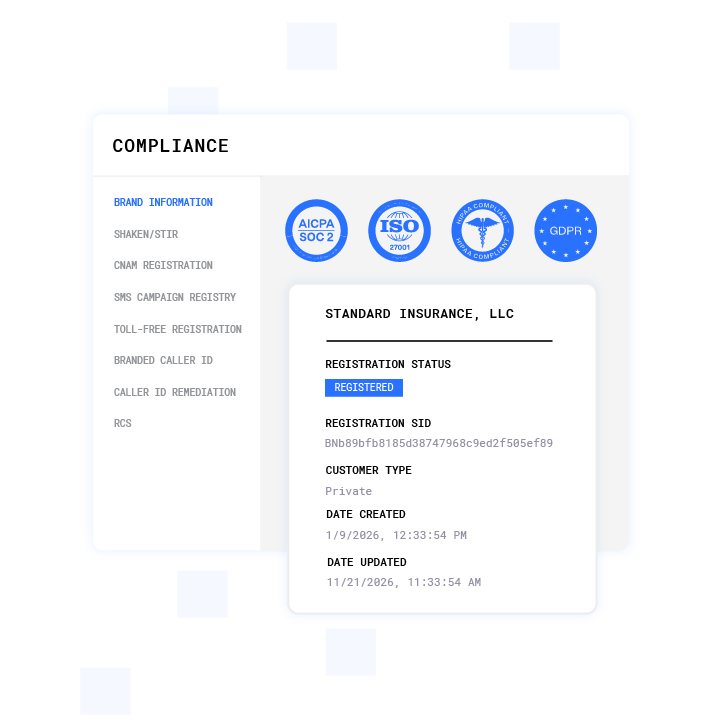
AI voice and SMS systems in home services operate within a layered regulatory environment. Plura supports compliance with SOC 2, HIPAA, ISO certification, GDPR, SHAKEN/STIR caller ID verification, TCPA-related controls, and DNC-related controls. Customers remain responsible for their own regulatory obligations and should consult qualified counsel on how these frameworks apply to their specific operations.
At the infrastructure level, Plura runs on 100% U.S. infrastructure by architecture, so voice origination, model hosting, data storage, and call recording all sit on domestic systems subject to U.S. oversight. This domestic foundation enables carrier-level controls. SHAKEN/STIR authentication runs on every outbound call to help verify caller ID legitimacy, and real-time DNC scrubbing checks every number against federal and state registries before dial. Each customer interaction generates timestamped, immutable consent records that flow into the compliance dashboard, which exports audit-ready reports in one click when regulators or counsel request documentation.
The FCC’s February 2024 Declaratory Ruling (FCC 24-17) stated that AI-generated voices qualify as “artificial or prerecorded voice” under the TCPA (47 U.S.C. § 227(b)).2 The ruling describes statutory damages that can range from $500 to $1,500 per call. Contractors deploying any AI voice system should review that ruling and applicable state disclosure laws with counsel before go-live.
After-Hours Booking ROI for a 10-Truck HVAC Shop
A 10-truck HVAC operation receiving 200 inbound calls per month, with 40% arriving after hours and a 60% unanswered rate on those after-hours calls, misses about 48 calls per month. At a $1,200 average ticket and a 38% close rate, those missed calls represent roughly $21,888 in lost monthly revenue, or $262,656 annually, before lifetime value or referral effects.
Deploying Plura’s after-hours call answering captures those 48 calls. At the same close rate, that equals approximately $21,888 recovered per month. Against a platform cost starting at $5,000 per month, the net monthly gain is about $16,888. Plura AI voice agents answer 100% of inbound calls within two rings, and a multi-unit home services franchise owner reported that booking rate doubled after moving from 40% missed calls to 100% answered calls without adding a receptionist.
Run your numbers through Plura’s calculator to check your ROI in real time.
Frequently Asked Questions
How does AI call answering handle after-hours emergency triaging for home services contractors?
AI call answering systems for home services use a triage protocol that classifies each inbound call by urgency during the conversation. The AI collects the problem description, property address, and urgency indicators, then routes the call based on pre-configured escalation rules. True emergencies, such as a gas leak, flooding, or HVAC failure during extreme weather, are warm-transferred to an on-call technician or dispatcher with full conversation context.
Non-emergency after-hours calls are booked directly into the dispatch schedule and confirmed by SMS. Plura’s managed workflows support this full escalation protocol, including context handoff at transfer, so the technician receives a complete summary without requiring the customer to repeat information.
What is the cost difference between AI call answering and a human receptionist for a home services business?
A human receptionist covering standard business hours often costs $35,000 to $55,000 annually in salary, taxes, and benefits and still provides no after-hours coverage. Adding after-hours human answering through a third-party service typically costs $1,000 to $3,000 per month depending on call volume. A 24/7 AI call answering platform like Plura starts at $5,000 per month and covers all hours, all channels, and unlimited concurrent calls.
The economic case strengthens when missed-call revenue enters the model. A mid-size HVAC company losing $45,000 to $200,000 annually to missed calls can often recover a multiple of the platform cost in captured bookings alone. Plura’s ROI calculator at plura.ai/calculator lets contractors model their specific call volume, average ticket, and close rate against platform cost.
Does AI call answering integrate directly with ServiceTitan and Housecall Pro for real-time booking?
Yes, Plura integrates at the bidirectional API level. Plura’s integrations with ServiceTitan and Housecall Pro allow the AI to read live technician availability, check service area boundaries, apply skill-match routing, and write the booked job directly to the dispatch board during the call. The job record includes service type, urgency, customer address, and problem description.
This approach removes manual data entry and the sync lag that creates double-booking risk in webhook-only integrations. The full integration directory is available at plura.ai/integrations.
What compliance frameworks does Plura support for AI voice and SMS in home services?
Plura supports compliance with SOC 2, HIPAA, ISO certification, GDPR, SHAKEN/STIR caller ID verification, TCPA-related controls, and DNC-related controls. Real-time DNC scrubbing runs before every outbound contact. Consent records are timestamped and immutable. SHAKEN/STIR authentication runs on every outbound voice call. The compliance dashboard exports audit-ready reports on demand.
Customers are responsible for their own regulatory obligations, and Plura provides the infrastructure layer. Contractors should consult qualified counsel on how TCPA, state AI disclosure laws, and other applicable frameworks apply to their specific operations.
How does stateful conversation memory improve booking rates for home services contractors?
Stateful memory means the AI carries the full history of every prior interaction with a customer across every channel. A homeowner who texted about a leaking water heater at 9 a.m. and then calls at 11 a.m. does not need to re-explain the problem. The AI voice agent already has the service address, the problem description, and any scheduling preferences from the earlier SMS thread.
This reduction in friction keeps callers engaged and reduces hang-ups that send revenue to competitors. Plura’s Stateful Conversation Database keys every interaction to the customer’s phone number, email, or ID, and every channel, including voice, SMS, RCS, and webchat, reads from and writes to the same database in real time.
What happens when the AI cannot resolve a call and needs to escalate to a human?
Plura’s escalation protocol transfers the call to a U.S. agent or on-call technician with a structured handoff summary. That summary includes the customer issue in one sentence, current sentiment, the service type and urgency level, actions already taken by the AI, and any compliance or safety flags. The human agent does not start from zero.
For after-hours escalations, the protocol includes explicit SLA communication to the customer, such as an estimated callback window, so the caller knows what to expect. Escalation thresholds are configurable by call type, urgency score, and customer history, which allows contractors to set tighter escalation rules for emergency trades like plumbing and HVAC.
Conclusion: Turning Missed Calls into Booked Jobs
The six-figure annual revenue loss documented earlier comes from structural causes such as after-hours inquiry volume, unanswered-call rates, and slow response times that human staffing alone rarely fixes. The most effective 24/7 AI call answering for home services combines carrier-grade infrastructure, stateful cross-channel memory, real-time ServiceTitan and Housecall Pro integration, and a compliance layer that supports SOC 2, HIPAA, ISO certification, GDPR, SHAKEN/STIR caller ID verification, TCPA-related controls, and DNC-related controls. Plura AI delivers those capabilities on a single platform built on its own FCC-licensed carrier, with a 90-day opt-out window on every annual contract.
Contractors running 5 to 50 or more techs and handling 50 or more calls per day stand to gain the most from a platform at this depth. The size-tiered matrix above shows where generic tools and budget answering services stop delivering and where Plura’s infrastructure becomes the deciding factor.
Run your numbers through Plura’s calculator to check your ROI in real time.
Book a live demo with Plura to see the full platform in action for your trade and call volume.
1 Plura AI maintains SOC 2, HIPAA, ISO, and GDPR posture as part of its platform infrastructure. References to compliance frameworks in this article describe Plura’s platform capabilities and do not constitute a guarantee that any customer using Plura will themselves be compliant with applicable laws or standards. Customers remain solely responsible for their own regulatory obligations, certifications, consent management, recordkeeping, and the claims they make to their own end users. Consult qualified legal counsel for guidance specific to your use case.
2 This article describes regulatory frameworks at a general level and does not constitute legal advice. Laws and regulations vary by jurisdiction, change over time, and apply differently depending on facts and circumstances. Readers should consult qualified legal counsel before making compliance decisions.
3 Performance figures, customer outcomes, and industry statistics referenced in this article are drawn from cited third-party sources or Plura customer case studies. Individual results vary based on implementation, use case, industry, audience, and execution. Past or aggregate performance is not a guarantee of future results.
4 References to third-party products, services, companies, or research are made for informational and comparative purposes only. Plura AI is not affiliated with, endorsed by, or sponsored by any third party named in this article unless explicitly stated. Trademarks and product names referenced remain the property of their respective owners.
This article is provided for informational purposes only and reflects Plura AI’s understanding at the time of publication. Product capabilities, integrations, and specifications are subject to change. For the most current information, visit plura.ai.
This article was produced with the assistance of AI tools and reviewed by Plura AI prior to publication.