

Written by: Matt Beucler, CEO, Plura AI
What 24/7 AI Phone Answering Really Costs
- 24/7 AI phone answering services range from $25–$300 per month for basic SMB use to $1,000–$3,000 per month at the enterprise tier, with high-volume operators seeing major TCO reductions versus traditional models.
- Regulatory pressure on offshore BPOs and rising compliance costs push regulated industries toward U.S.-based, carrier-grade AI platforms for sensitive customer conversations.
- Hidden costs such as overages, compliance surcharges, and custom integrations can double or triple advertised per-minute rates, so all-in managed platforms often provide more predictable cost at scale.
- High-volume operators often reach 90-day ROI by replacing 15 human agents with 6 AI agents at 100% utilization, cutting monthly costs from $60,000 to $14,400 while maintaining conversation quality and compliance support.3
- Plura AI delivers enterprise-grade AI answering with compliance support, multi-channel memory, and a free webchat trial so operators can validate performance before committing.
How AI Answering Fits Into Today’s Contact Center Landscape
The market for 24/7 call answering has moved through three phases: onshore human agents, offshore business process outsourcing (BPO), and AI-assisted platforms. Each phase solved a cost problem and introduced a new one.
Onshore human contact centers remain reliable but expensive. Domestic contact center agents cost $15 to $25 per hour before benefits and overhead, with 35 to 45 percent annual agent turnover that forces constant rehiring and retraining. U.S. contact center spend remains substantial, and agent labor still accounts for most operating costs.
Offshore BPOs solved the wage problem for two decades, but that model now faces growing regulatory pressure. The Federal Communications Commission (FCC) Notice of Proposed Rulemaking (NPRM), CG Docket No. 26-52, proposes capping offshore customer-service call volume at 30 percent and limiting offshore handling of sensitive consumer data such as passwords, multi-factor authentication codes, Social Security numbers, and banking data. The Keep Call Centers in America Act (S.2495) and the Foreign Robocall Elimination Act (S.2666) extend the federal regulatory perimeter. State laws in New York, New Jersey, Connecticut, Missouri, and Florida already restrict offshore handling of medical, financial, and consumer data. The offshore BPO industry carries an estimated $400 billion in exposure under these converging rules. This regulatory pressure has accelerated the shift to AI-assisted platforms.
The third category, AI-assisted platforms, appears to be the escape hatch from both wage pressure and compliance risk. Most platforms do not fully deliver on that promise. Many are application programming interface (API) resellers built on top of third-party Communications Platform as a Service (CPaaS) providers like Twilio.4 They do not own the carrier, cannot issue branded caller ID at the carrier level, and cannot enforce real-time Do Not Call (DNC) scrubbing. Plura operates differently. It is its own FCC-licensed audio bridging carrier and runs on 100 percent U.S. infrastructure by architecture.
Book a live demo with Plura to see carrier-grade AI answering in action.
Four Cost Levers That Drive AI Answering ROI
Choosing a 24/7 AI phone answering service requires more than comparing headline per-minute rates. Four cost dimensions determine actual total cost of ownership.
Billing model risk. Per-minute pricing at $0.07 to $0.15 per minute for infrastructure-layer providers looks attractive, but total costs should include all components. Overage charges can reach two to three times the bundled effective rate, and seasonal volume spikes can double a monthly bill. Managed all-in-one platforms charge $0.25 to $0.50 per minute and bundle telephony, large language model (LLM) processing, speech-to-text (STT), and text-to-speech (TTS) into a single invoice.
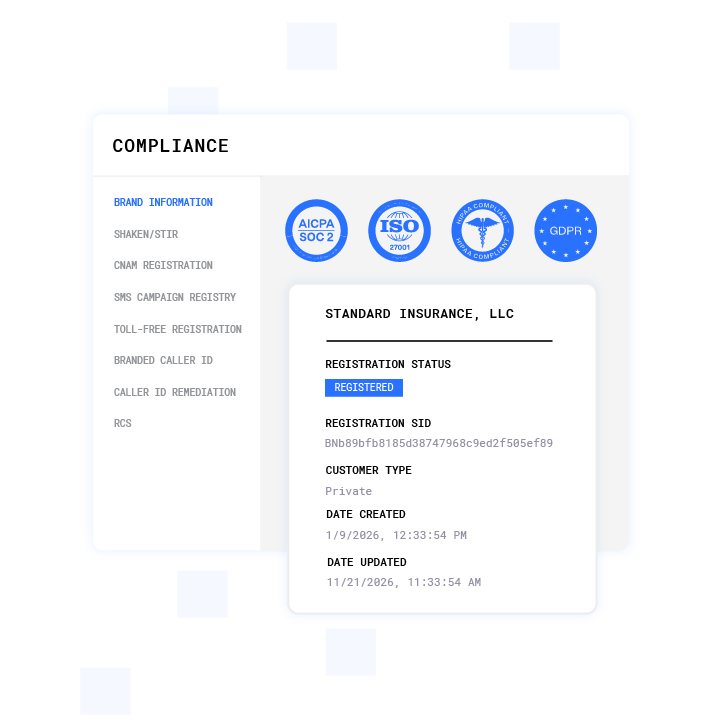
Hidden compliance costs. Regulated environments add material cost. HIPAA compliance surcharges can reach $1,000 per month on some platforms. Medical regulatory compliance can add a premium to answering service pricing on general platforms. Plura supports compliance with HIPAA, SOC 2, SHAKEN/STIR caller ID verification, TCPA compliance, and DNC compliance as first-class platform layers, not add-ons.1 Customers remain responsible for their own regulatory obligations.
Automation versus human oversight. Leading AI voice agents in 2026 achieve up to about 88% task completion or containment rates on contact-center calls.5 Most operators adopt an AI-first model with human escalation for 15-35% of calls requiring judgment. Pure human services remain the exception for very low-volume or premium-brand use cases.
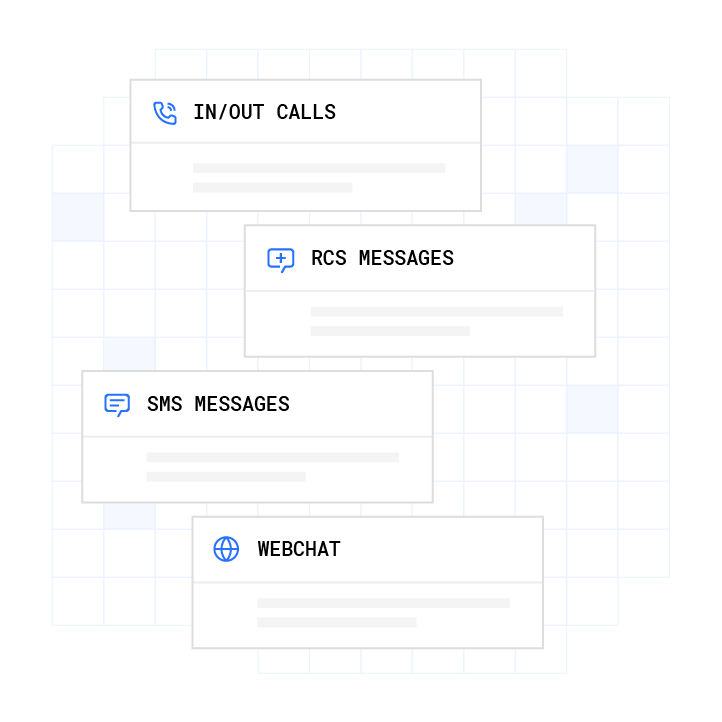
Channel mix impact. Single-channel voice-only platforms miss the compounding value of cross-channel context. Plura’s Stateful Conversation Database holds memory across voice, AI SMS, RCS, and AI webchat, so a customer who texted at 9 a.m. is recognized when the call comes at noon. That context reduces handle time and improves conversion while keeping headcount flat.
Operational Best Practices for 24/7 AI Answering
High-volume operators running 24/7 AI phone answering at scale follow a consistent set of operational practices.
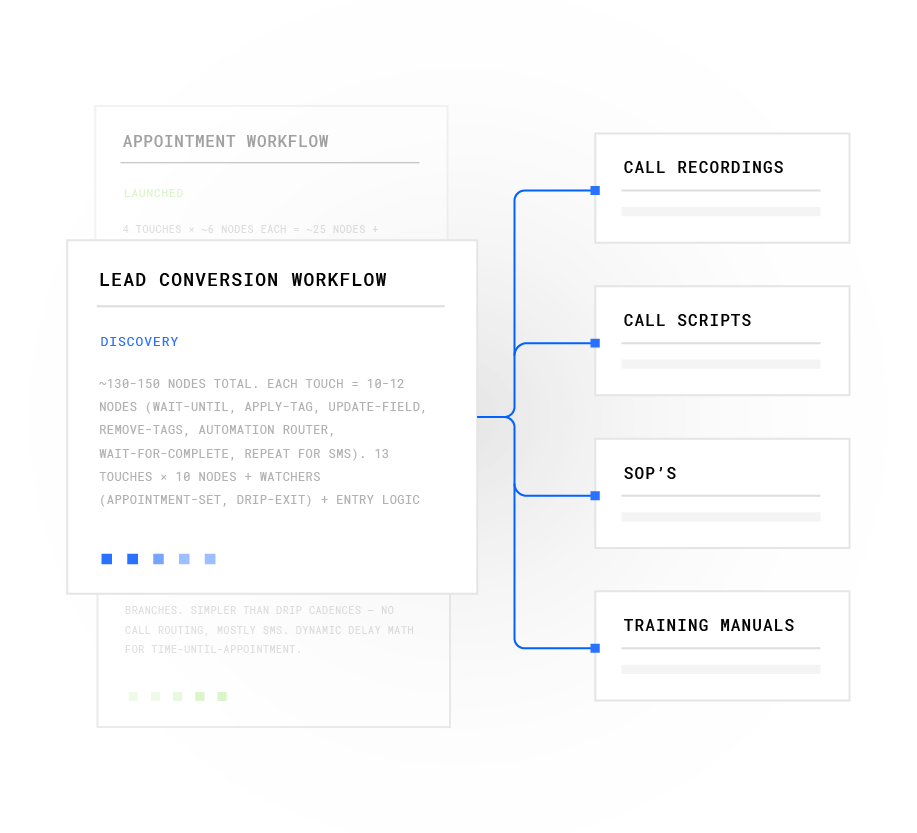
Workflow design. Effective deployments use a no-code workflow builder to define conversation logic. Typical flows include a greeting node, qualification gate, sensitive-data redaction, negotiation guardrails, transfer rules, and post-call actions. Each node references stateful conversation history so the AI does not ask a caller to repeat information already captured on a prior touchpoint.
Consent management. The Telephone Consumer Protection Act (TCPA) and state-level mini-TCPA laws describe how outbound AI voice calls can be handled.2 Effective April 11, 2025, TCPA amendments allow consumers to revoke consent using any reasonable method.2 Plura’s compliance engine timestamps consent records, makes them immutable, and exports audit-ready reports on demand. Operators should consult qualified counsel on their specific consent obligations.
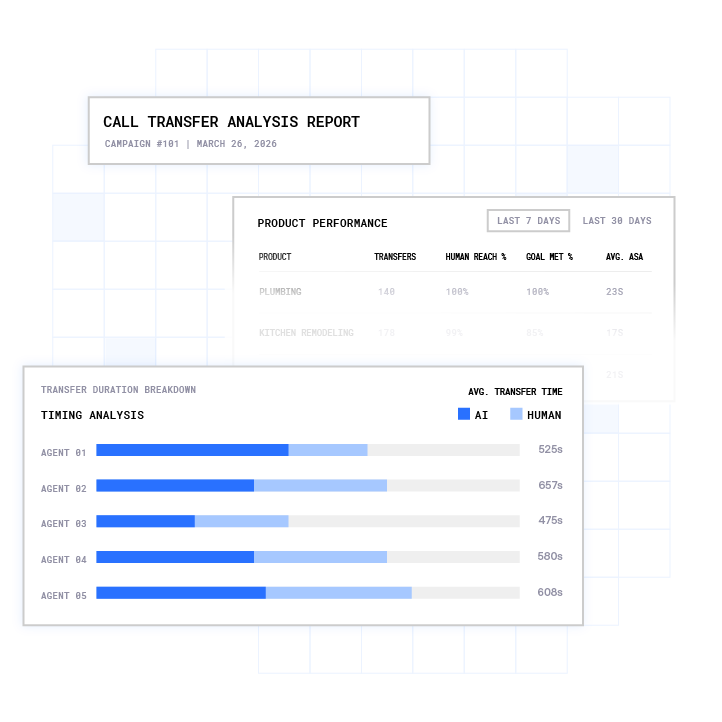
Performance monitoring. Outcome metrics drive better decisions than activity metrics. Measuring only calls handled and minutes billed hides revenue leakage. Plura’s conversation intelligence layer surfaces outcome-based metrics such as conversion lift, contact rates, and cost per completed action, not just dashboard summaries with limited operational signal.
Readiness Checklist Before You Deploy AI Answering
Before selecting a tier or platform, operators should evaluate three dimensions.
Interaction volume. The practical floor for an AI agent platform of this depth is 500 daily interactions or $5,000 per month in paid-media spend. Below that threshold, the ROI math rarely justifies the build. Above it, the economics shift decisively in favor of AI.
Compliance requirements. Healthcare, insurance, financial services, and legal operators carry HIPAA, TCPA, and state-specific obligations that must be mapped to platform capabilities before deployment. When platforms bolt compliance on after the fact, they create audit exposure that operators inherit. Plura’s compliance engine enforces DNC compliance and TCPA compliance on every outbound contact before dial, with real-time registry scrubbing and quiet-hours enforcement through time-zone detection.
Integration needs. Plura connects to 50-plus tools across CRM, calendar, payment, and data enrichment categories. The full integration directory is at plura.ai/integrations. Custom CRM integration development on other platforms typically adds $1,000 to $5,000 to total cost, per Aircall’s May 2026 analysis.
Compare plans and rates side by side at plura.ai/pricing.
Costly Mistakes to Avoid With AI Answering
Underestimating compliance complexity. The U.S. regulatory landscape for voice AI has shifted from a federal floor to a state-heavy mosaic, with Texas TRAIGA (effective January 1, 2026), Colorado AI Act (effective June 30, 2026), Utah UAIPA (amended 2025), and California CPPA ADMT regulations (compliance starting January 1, 2027).5 FCC penalties for VoIP non-compliance can reach $251,322 per violation per day. Operators selecting platforms without carrier-level compliance infrastructure absorb that exposure directly.
Measuring activity instead of outcomes. Studies show that small businesses often miss a significant percentage of incoming calls, which creates substantial lost revenue. Operators who track only minutes billed and calls handled miss the revenue-leak signal entirely. The critical metrics are cost per qualified lead and revenue captured per dollar of platform spend.
Cost Breakdown by Tiers and Enterprise TCO
The table below maps published 2026 market pricing to operator scale. All figures are drawn from cited sources.
| Tier | Monthly Cost Range | Typical Use Case |
|---|---|---|
| Basic | $25 to $65/month | Solo operators, light call volume, simple message taking |
| Mid | $65 to $300/month | SMBs, moderate call volume, call transfers, basic CRM sync |
| Premium | $300 to $1,000/month | Growing teams, higher call volume, 24/7 coverage, compliance features |
| Hybrid (AI + human) | $250 to $1,000/month | Operators requiring human escalation on a portion of calls |
| Enterprise | $5,000+/month | High-volume contact centers, 500+ daily interactions, regulated environments |
Enterprise and high-volume TCO. For operators running 100-seat equivalent contact centers, the cost comparison focuses on annual TCO, not just monthly subscription pricing. Traditional operations cost $4 million to $7 million annually, while Plura delivers equivalent volume at $300,000 to $700,000 TCO. At the per-conversation level, Plura AI voice agents cost $0.35 to $0.85 per completed conversation including intelligence, versus $5 to $15 fully loaded for offshore call centers. For a 50-seat offshore team in insurance, the fully loaded annual cost runs approximately $1.2 million, while Plura handling equivalent volume costs $180,000 to $300,000 annually.
The default scenario on Plura’s ROI calculator illustrates this shift. A 15-agent operation at $20 per hour with standard taxes, benefits, and commissions at 40 percent talk utilization costs $60,000 per month. Replacing that team with Plura at $15 per hour, 100 percent talk utilization, and 6 Plura agents doing the work of 15 humans drops the monthly cost to $14,400. That change produces $45,600 in savings in the first 30 days.
Plura’s plans are structured as Multi ($5,000/month), Agency ($7,500/month), and Enterprise (custom), all on annual contracts billed monthly with a 90-day opt-out window.
Run your numbers through Plura’s calculator to check your ROI in real time.
Free and Low-Cost AI Answering Options
Some platforms offer free trials or limited freemium tiers for testing. Free tiers rarely support production deployments at meaningful call volume. Most providers do not offer a free tier at all due to API and infrastructure costs, per Allo’s 2026 guide. For operators handling 500 or more daily interactions, a free tier provides little useful signal on production performance, compliance posture, or integration depth.
Plura offers a live AI voice agent demo so operators can evaluate conversation quality, latency, and escalation handling before committing to a plan.
How “Cheap” AI Answering Pricing Really Works
At the SMB tier, plans start at about $25 per month for low-volume use. Infrastructure-layer providers like Retell AI publish rates as low as $0.07 per minute, but the all-in cost including LLM processing, telephony, and compliance components reaches $0.13 to $0.31 per minute in production.
Headline price rarely reflects total cost. Hidden costs on AI voice agents add 18–35% to advertised monthly pricing. For high-volume operators, the lowest per-minute rate on a platform that lacks real-time DNC scrubbing, SHAKEN/STIR caller ID verification, or stateful conversation memory often becomes a compliance liability and a conversion gap, not a true discount.
Is an AI Receptionist Worth the Investment?
At SMB scale, the math is straightforward. A fully loaded in-house receptionist costs $53,700 per year covering 40 hours per week. An AI receptionist at $600 to $3,600 per year covers 8,760 hours. Human call handling costs $2.70 to $5.60 per call, while AI voice handling costs $0.12 to $0.50 per call.3
At enterprise scale, the core question shifts to platform architecture. The critical factors include whether the platform owns the carrier stack, holds conversation memory across channels, and supports compliance at the infrastructure level. Platforms that do not own the carrier pass a CPaaS markup to the customer, cannot issue branded caller ID, and cannot enforce real-time DNC compliance before dial. The median cost per contact on assisted channels is $13.50, per Gartner’s customer service benchmarks (February 2024).4 Plura’s per-conversation cost of $0.35 to $0.85 represents a 94 to 97 percent reduction against that benchmark.
For operators at the 500-plus daily interaction threshold, the 90-day ROI window Plura delivers reflects a specific cost model. Six AI agents replace 15 human agents at 100 percent talk utilization versus 40 percent, with no taxes, benefits, commissions, or rehiring cycle.
Frequently Asked Questions
What billing models do AI phone answering services use?
Three primary models exist in 2026. Per-minute billing charges for each minute of call time and favors short, high-frequency calls but carries overage risk on longer conversations. Per-call billing charges a flat rate per call regardless of duration, which provides predictability on high-volume days. Monthly subscription plans bundle a set number of calls or minutes into a fixed fee, with overages applied beyond the included volume. Hybrid models combine a base subscription fee with per-minute or per-call overages. For high-volume operators, subscription or enterprise contract pricing with committed volume discounts typically delivers the lowest effective per-conversation cost.
What hidden costs should operators watch for?
Setup and onboarding fees range from $500 to $2,000 for professionally assisted deployments and $10,000 or more for custom enterprise implementations. CRM integration development adds $1,000 to $5,000 on platforms without native connectors. HIPAA compliance surcharges reach $1,000 per month on some platforms. Overage penalties can reach two to three times the bundled per-minute rate. Concurrency overages, failed-call minimum charges, and double-dip transfer surcharges where billing continues during live-agent handoffs are additional cost vectors that do not appear in advertised pricing.
How does Plura price its enterprise AI answering service?
Plura’s published plans are Multi at $5,000 per month, Agency at $7,500 per month, and Enterprise at custom pricing, all on annual contracts billed monthly. Agent build fees are $2,500 to $2,750 per agent. Every annual contract includes a 90-day opt-out window. The AI agent pricing starts at $15 per hour for the Agency Plan. For a 100-seat equivalent operation, Plura’s TCO of $300,000 to $700,000 annually replaces traditional contact-center economics of $4 million to $7 million. Full plan details are at plura.ai/pricing.
What compliance features matter most for high-volume AI phone answering?
For operators handling regulated industries or high outbound volume, the critical compliance infrastructure includes real-time DNC registry scrubbing before each dial, TCPA consent records that are timestamped and immutable, SHAKEN/STIR caller ID verification on every outbound call, quiet-hours enforcement through time-zone detection, and HIPAA-aligned encryption and audit logging for healthcare data. Platforms that bolt these on as add-ons after the fact create audit exposure. Plura’s compliance engine enforces these as first-class platform layers. Operators remain responsible for their own regulatory obligations and should consult qualified counsel on their specific requirements.
Should high-volume operators use a pure AI model or a hybrid AI-plus-human model?
Most high-volume operators in 2026 run an AI-first model with human escalation for the 15-35% of calls mentioned earlier. This approach lets pure AI handle routine qualification, intake, scheduling, and FAQ resolution at scale. Human agents then focus on escalations that fall outside defined workflow paths, such as complex negotiation or sensitive disclosures. Plura’s platform supports this model natively. The no-code workflow builder defines escalation gates, and the Unified Inbox gives human agents full conversation context from every prior touchpoint across voice, SMS, RCS, and webchat before they pick up the transfer.
Conclusion and Next Steps
The cost of a 24/7 AI phone answering service in 2026 ranges from $25 to $300 per month at the Basic SMB tier to $1,000–$3,000 per month at the Enterprise tier. For 100-seat operations, AI platforms typically land in the $300,000 to $700,000 annual TCO range, while traditional human and offshore models often sit between $4 million and $7 million. The evaluation framework for high-volume operators has three components: interaction volume at or above 500 daily interactions, compliance requirements such as HIPAA, TCPA compliance, DNC compliance, SHAKEN/STIR, SOC 2, and state-level rules mapped to platform capabilities, and integration depth across native CRM connectors versus custom development cost.
Platforms that do not own the carrier stack pass a CPaaS markup to the customer, cannot issue branded caller ID, and cannot enforce compliance at the infrastructure level. Plura is its own FCC-licensed audio bridging carrier, runs on 100 percent U.S. infrastructure by architecture, and holds stateful conversation memory across voice, SMS, RCS, and webchat on a single platform. The 90-day opt-out window in every annual contract puts the ROI commitment on the line.
Two practical next steps:
- Run your numbers through Plura’s calculator to check your ROI in real time.
- Compare plans and rates side by side at plura.ai/pricing.
Updated July 2026.
1 Plura AI maintains SOC 2, HIPAA, ISO, and GDPR posture as part of its platform infrastructure. References to compliance frameworks in this article describe Plura’s platform capabilities and do not constitute a guarantee that any customer using Plura will themselves be compliant with applicable laws or standards. Customers remain solely responsible for their own regulatory obligations, certifications, consent management, recordkeeping, and the claims they make to their own end users. Consult qualified legal counsel for guidance specific to your use case.
2 This article describes regulatory frameworks at a general level and does not constitute legal advice. Laws and regulations vary by jurisdiction, change over time, and apply differently depending on facts and circumstances. Readers should consult qualified legal counsel before making compliance decisions.
3 Performance figures, customer outcomes, and industry statistics referenced in this article are drawn from cited third-party sources or Plura customer case studies. Individual results vary based on implementation, use case, industry, audience, and execution. Past or aggregate performance is not a guarantee of future results.
4 References to third-party products, services, companies, or research are made for informational and comparative purposes only. Plura AI is not affiliated with, endorsed by, or sponsored by any third party named in this article unless explicitly stated. Trademarks and product names referenced remain the property of their respective owners.
5 This article contains forward-looking statements regarding industry trends, technology adoption, and future capabilities. These statements reflect current expectations and are subject to change. Plura AI undertakes no obligation to update forward-looking statements except as required.
This article is provided for informational purposes only and reflects Plura AI’s understanding at the time of publication. Product capabilities, integrations, and specifications are subject to change. For the most current information, visit plura.ai.
This article was produced with the assistance of AI tools and reviewed by Plura AI prior to publication.