

Written by: Matt Beucler, CEO, Plura AI
Key Takeaways for High-Volume Lead Teams
- Lead qualification software automates scoring, filtering, and routing so sales teams focus on high-fit prospects. This matters for U.S. operators handling thousands of contacts each month.
- Real-time AI enrichment outperforms traditional rules-based scoring by pulling data from 30-plus sources during live conversations across voice, SMS, and RCS.
- High-volume operators need platforms that deliver sub-five-second qualification while supporting TCPA, DNC, HIPAA, SOC 2, and state-level compliance on 100% U.S. infrastructure.1,2
- Most lead qualification tools cover only one or two key criteria. Plura AI combines speed, multi-channel coverage, stateful conversation memory, and compliance support in one platform.
- High-volume operators can cut monthly costs from $60,000 to $14,400 while improving conversion rates.3 See a live Plura AI walkthrough of real-time multi-channel qualification.
Lead Qualification for Speed-to-Lead Performance
Speed to lead is the interval between a prospect expressing interest and the first meaningful contact from sales. Lead qualification is the process that determines whether that prospect is worth pursuing at all. A qualified lead meets defined criteria around budget, authority, need, and timeline. An unqualified lead consumes rep time without producing revenue.
The gap between interest and contact is where most revenue leaks. Harvard Business Review research found that companies responding within five minutes are 100 times more likely to connect with a prospect than those waiting 30 minutes.3 Leads contacted within one minute are 391% more likely to convert than those contacted after 24 hours.3 Yet the average B2B lead response time is 42–47 hours, with roughly 23% of companies responding within 5 minutes.
Manual qualification cannot close that gap for operators running thousands of contacts per month. High-volume teams need software architectures that qualify and route leads in real time.
Rules-Based Scoring and Real-Time AI Enrichment
Rules-based lead scoring assigns point values to demographic attributes and behavioral events, then triggers a handoff to sales when the cumulative score crosses a predefined threshold. This approach is fully interpretable and auditable, and it performs well when a pipeline has fewer than 500 closed-won data points or when data quality is inconsistent. Rules degrade quietly when buyer behavior drifts from the assumptions written into the model years earlier.
Predictive AI scoring trains a machine learning model on historical conversion data to rank new leads by similarity to past closed-won deals. Organizations using predictive lead scoring often see higher conversion rates and shorter sales cycles compared to traditional scoring methods. The trade-off is data dependency. Effective predictive ML lead scoring typically requires at least 200–500 closed-won examples over 6–12 months of clean CRM data.
Real-time AI enrichment extends beyond both approaches. Instead of scoring a lead after the fact, it enriches the lead profile during the conversation, pulling from 30-plus data sources while the AI agent is still on the call or in the SMS thread. Solar and home services companies using AI agents with property data, energy usage estimates, and home valuations achieved two to three times improvements in appointment set rates. Enrichment happens before the human rep picks up the phone, not after.
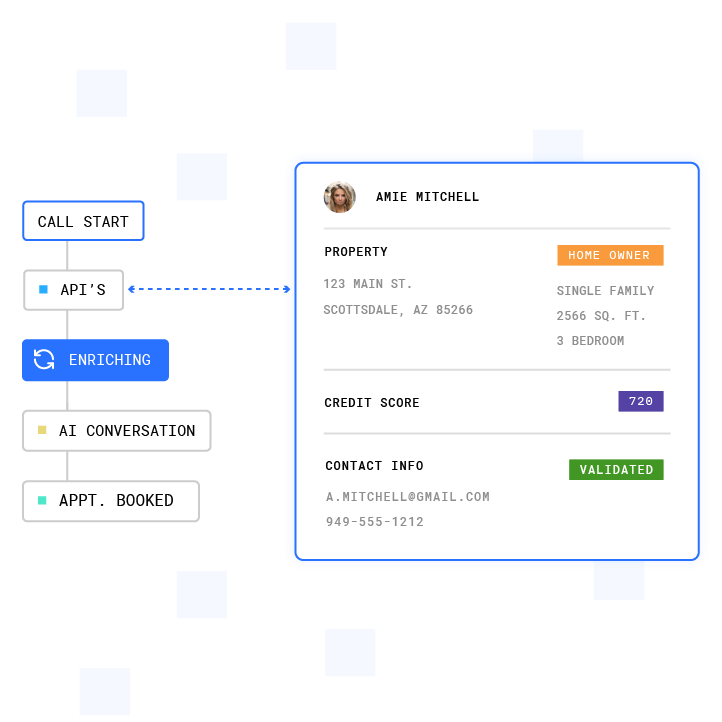
By 2026, mature B2B teams run a hybrid architecture: a transparent rule-based base layer handles disqualification filters, while a predictive ML re-ranker prioritizes the remaining leads by conversion likelihood.5 High-volume operators add a third layer. A real-time conversational AI qualifies the lead in the channel where the prospect already is, such as voice, SMS, or RCS, before any human involvement.
HubSpot Lead Scoring for CRM-Centric Teams
HubSpot’s lead scoring is available on its Starter tier for manual scoring and requires the Professional plan at $890 per month for predictive AI scoring.4 It suits teams of 5 to 500 already operating on HubSpot’s CRM. Scoring is based on contact properties and behavioral events logged inside HubSpot. Native CRM integration is a deciding factor for lead qualification tools, and HubSpot users should prioritize solutions that sync bidirectionally with their existing stack. HubSpot does not natively handle voice or SMS qualification at the carrier level.
Salesforce Einstein Lead Scoring for Enterprise Pipelines
Salesforce Einstein Lead Scoring is included in Sales Cloud Enterprise and above.4 It uses machine learning trained on historical CRM data to rank leads by conversion likelihood. It is best suited for enterprise teams of 100 to 5,000 with rich historical CRM data. Einstein does not include built-in TCPA or DNC enforcement at the carrier level.
6sense for Account-Level Intent Data
6sense is a predictive account intelligence platform that uses AI to identify in-market accounts based on intent signals from across the web. 6sense reported that opportunities on accounts prioritized through its AI qualification system generated 29% higher opportunity values and 33% larger deal sizes than non-prioritized accounts.4 6sense operates at the account level and does not handle real-time voice, SMS, or RCS conversations.
Apollo.io for Outbound Prospecting Lists
Apollo.io starts at $49 per user per month and provides a database of over 230 million verified B2B contacts.4 positioning it for B2B sales teams building prospect lists at scale. It includes a native dialer and BANT (Budget, Authority, Need, Timeline) framework support. Apollo functions primarily as an outbound prospecting and sequencing tool rather than a real-time inbound qualification platform.
Chili Piper for Inbound Form Routing
Chili Piper targets B2B teams of 15 or more users on Salesforce or HubSpot, with pricing beginning at $1,250 per month for automatic qualification and routing of high-volume inbound web form leads.4 Its primary function is speed-to-lead routing, qualifying inbound form submissions and booking meetings in real time. It does not include AI voice agents, SMS qualification, or built-in TCPA and DNC enforcement.
Clay for Data Enrichment Workflows
Clay starts at $185 per month ($167 on annual billing) for the Launch plan and targets GTM teams with custom workflows and data enrichment via multiple providers.4 Teams typically need at least a week of setup, and Clay integrates voice via third-party tools. Clay is a data enrichment and workflow orchestration tool. It does not natively handle conversational qualification across voice, SMS, or RCS.
Outreach AI for Rep-Driven Sequences
Outreach AI uses quote-based pricing that starts at approximately $100–$120 per user per month ($1,200–$1,440 per year) for the entry-level Amplify Core plan.4 Outreach is a sales execution platform built around rep-driven sequences. It does not include carrier-level compliance enforcement or stateful cross-channel conversation memory.
Plura AI for Real-Time Multi-Channel Qualification
Plura AI is an FCC-licensed platform of AI agents that handles voice, SMS, RCS, and webchat conversations on 100% U.S. infrastructure. Unlike the tools above, Plura owns its carrier stack, which means branded caller ID is issued at the carrier level, real-time DNC scrubbing runs before every outbound contact, and TCPA compliance support sits as a core layer of the platform rather than a bolt-on. Every channel shares a Stateful Conversation Database, so a lead that texted at 9 a.m. is the same lead when the call comes at noon. A solar company using Plura’s AI Lead Intelligence increased conversion rates from 6% to 18% with the same leads and offer.3
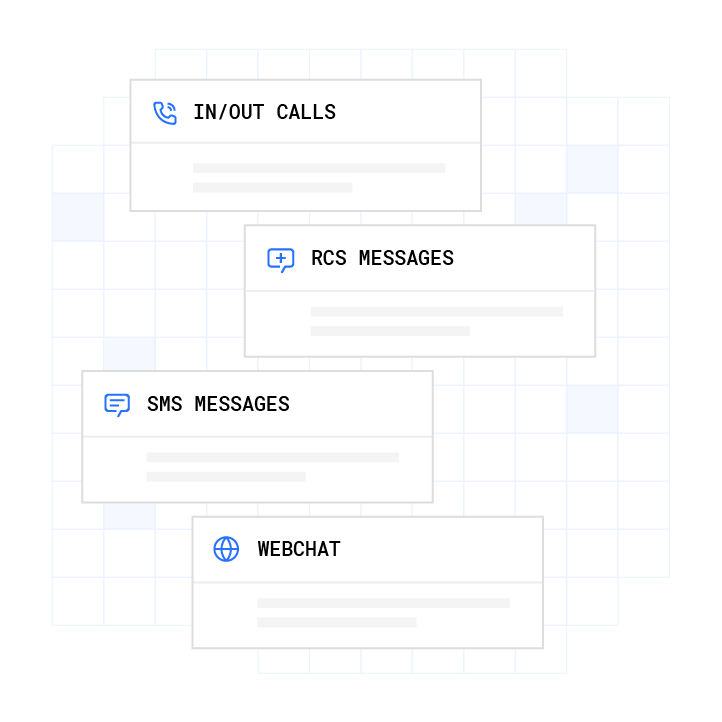
See Plura in action with a live multi-channel qualification demo.
Tool Comparison Across Eight Lead Platforms
The table below shows how each platform performs across five decision criteria that matter for high-volume operators. These criteria are real-time multi-channel qualification, built-in TCPA and DNC enforcement, stateful conversation memory, CRM integrations, and total cost of ownership for a 15-rep team.
| Platform | Real-Time Multi-Channel Qualification | Built-In TCPA/DNC Enforcement | Stateful Conversation Memory | CRM Integrations | Starting TCO for 15-Rep Team |
|---|---|---|---|---|---|
| HubSpot | No (form and email only) | No | No | Native HubSpot CRM | $890/mo (Professional) |
| Salesforce Einstein | No (CRM scoring only) | No | No | Native Salesforce | Enterprise plan required |
| 6sense | No (account intent only) | No | No | Salesforce, HubSpot | Custom pricing |
| Apollo.io | Partial (dialer, no SMS/RCS) | No | No | Salesforce, HubSpot | $49/user/mo |
| Chili Piper | No (form routing only) | No | No | Salesforce, HubSpot | $1,250/mo base |
| Clay | No (enrichment only) | No | No | HubSpot, Salesforce via webhook | $349/mo base |
| Outreach AI | Partial (voice sequences, no RCS) | No | No | Salesforce, HubSpot | $1,800/seat/yr |
| Plura AI | Yes (voice, SMS, RCS, webchat) | Yes (carrier-level) | Yes (cross-channel) | HubSpot, Salesforce, Zoho, 50+ more | From $5,000/mo (Multi plan) |
TCO figures drawn from published pricing pages cited throughout this article. Plura TCO reflects the Multi plan per Plura’s pricing page. All figures current as of July 28, 2026.
The table above shows that most platforms address one or two decision criteria. Plura is the only platform that addresses all five simultaneously, which changes economics and risk for high-volume and compliance-sensitive operations.
Best Lead Qualification Software for High-Volume Teams
Plura is the purpose-built option for operators running thousands of contacts per month. The platform’s AI SMS agents reply to every new lead in seconds, validate and qualify buyers from 30-plus data sources, and hand off warm transfers to reps. The speed-to-lead advantage is structural. Plura contacts leads in seconds, versus the 42-hour industry median mentioned earlier. Plura enables lead response times under 60 seconds, multichannel engagement via voice, SMS, RCS, and webchat, real-time AI lead scoring, and cost per qualified lead of $25 to $60,3 compared to a traditional range of $85 to $200.
For franchise networks and agency owners managing multiple client accounts, the Stateful Conversation Database means every channel inherits the full memory of every prior touchpoint. This eliminates the friction of leads re-explaining themselves. A lead that received an SMS offer at 9 a.m. does not start from scratch when the AI voice agent calls at noon. That continuity preserves conversion momentum, and it is only practical at scale when qualification data flows directly into the CRM systems operators already run. Plura’s integrations with HubSpot, Salesforce, Zoho, and 50-plus additional tools ensure that handoff happens automatically.
The economics at scale are documented on Plura’s ROI calculator. A 15-agent operation paying $20 per hour with standard taxes, benefits, and commissions at 40% talk utilization costs $60,000 per month. Six Plura agents running at 100% talk utilization replace that team at $14,400 per month, producing $45,600 in 30-day savings and $547,200 over 12 months.3 Run your own headcount and volume through Plura’s calculator to see projected ROI.
Best Lead Qualification Software for Compliance-Sensitive Teams
Plura is built for operators who cannot accept TCPA or DNC exposure as a routine risk. TCPA violations can cost $500 to $1,500 per text or call,2 with treble damages available for willful violations. Many lead qualification platforms treat compliance as a configuration layer the customer manages. Plura treats it as a primary platform layer and supports customer compliance programs with carrier-level controls.
Every outbound contact is checked against federal and state DNC registries in real time before dial. Plura provides HIPAA and SOC 2 compliance support, and integration with The Blacklist Alliance’s TCPA Litigation Firewall for real-time Do Not Call scrubbing and litigation protection.1 Quiet-hours rules enforce automatically through time-zone detection. Consent records are timestamped, immutable, and exportable for audits. Plura’s compliance framework includes SOC 2 aligned infrastructure, TCPA and STIR/SHAKEN enforcement, integration with Blacklist Alliance for DNC screening, and Number Verifier for caller ID reputation.1
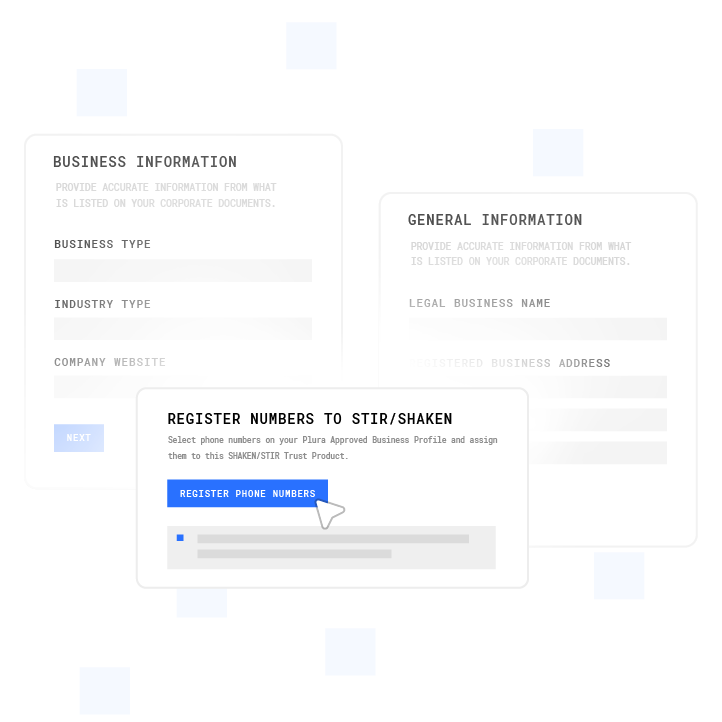
The platform runs on 100% U.S. infrastructure by architecture, which matters under the FCC’s Notice of Proposed Rulemaking (NPRM, CG Docket No. 26-52) and the growing set of state onshoring laws in New York, New Jersey, Connecticut, Missouri, and Florida.2 Voice origination, model hosting, data storage, and call recording all sit on domestic infrastructure. Operators in regulated verticals including healthcare, insurance, financial services, and legal use Plura’s AI voice agent for intake and qualification flows that require HIPAA-aligned encryption and field-level sensitive-data redaction.
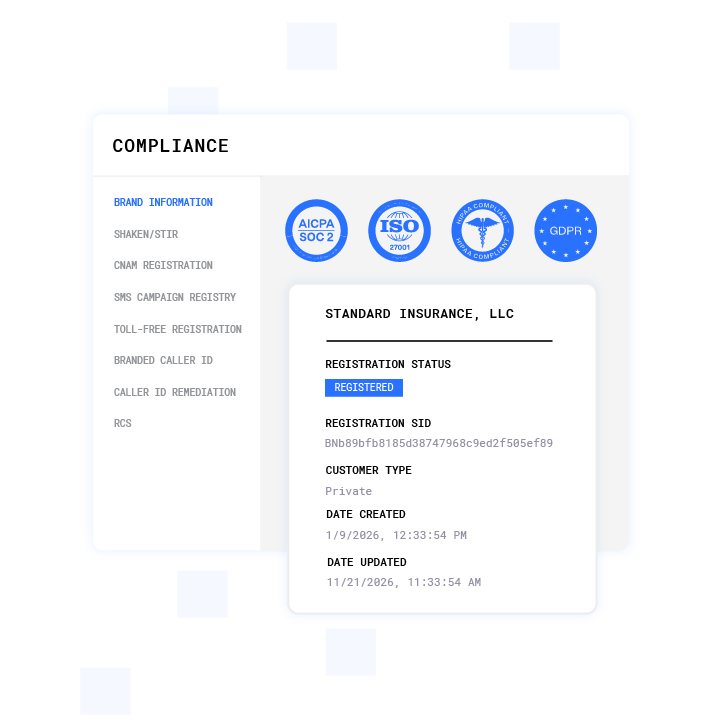
Customers are responsible for their own regulatory obligations and certifications. Plura provides the infrastructure and enforcement tooling, and customers determine how those capabilities support their compliance posture. Teams should consult qualified counsel on their specific obligations under TCPA, HIPAA, and applicable state rules.
Schedule a compliance review session to see how Plura’s infrastructure maps to your campaigns.
Compare plans and rates side by side on Plura’s pricing page.
Frequently Asked Questions
What is lead qualification software and why does it matter for high-volume operators?
Lead qualification software automates the process of evaluating inbound inquiries against defined criteria, scoring them, and routing only high-fit prospects to sales. For high-volume operators handling thousands of contacts per month, manual qualification creates a bottleneck that causes leads to go cold before a rep reaches them. The industry median first-response time is 42 hours. Contacting a lead within five minutes makes them up to 100 times more likely to connect. Software that closes that gap at scale, across voice, SMS, and RCS, often determines whether a pipeline converts or leaks revenue.
How does real-time AI enrichment differ from traditional rules-based lead scoring?
Rules-based scoring assigns fixed point values to attributes like job title or page visits, then triggers a handoff when a threshold is crossed. The model remains static until someone manually updates the rules. Real-time AI enrichment pulls from 30-plus external data sources during the live conversation, before any human rep is involved. The AI agent qualifies the lead on the first touch using property data, firmographics, intent signals, and contact validation, then routes only verified buyers to the sales team. Enrichment happens in the conversation, not in a batch job after the fact.
What compliance frameworks should high-volume U.S. operators look for in lead qualification software?
High-volume operators running voice, SMS, and RCS campaigns should look for platforms that support TCPA compliance, DNC compliance, HIPAA, SOC 2, and applicable state-level rule sets. The platform should check every outbound contact against federal and state DNC registries in real time before dial, maintain timestamped and immutable consent records, enforce quiet-hours rules automatically through time-zone detection, and provide audit-ready exports on demand. Operators in regulated verticals should also look for HIPAA-aligned encryption and field-level sensitive-data redaction. Customers remain responsible for their own regulatory obligations, and the platform provides enforcement infrastructure that supports those programs. Teams should consult qualified counsel on their specific compliance posture.
What is the total cost of ownership difference between a 15-rep human team and an AI lead qualification platform?
The economics documented earlier show that a 15-agent human team costs approximately $60,000 per month, while six Plura agents deliver equivalent coverage at $14,400 per month, a 76% reduction in labor cost with higher utilization. For larger operations, Plura’s total cost of ownership of $300,000 to $700,000 per year replaces traditional contact-center economics of $4 million to $7 million on equivalent volume. The calculator at Plura’s ROI calculator lets operators input headcount, hourly rate, and utilization figures to produce a scenario-specific projection.
Why does owning the carrier stack matter for lead qualification at scale?
Most AI voice and SMS platforms are API resellers built on top of third-party communications platforms like Twilio. They cannot issue branded caller ID at the carrier level, cannot enforce real-time DNC scrubbing at origination, and inherit the caller ID reputation of the underlying carrier rather than their own. Plura is its own FCC-licensed audio bridging carrier. Branded caller ID is issued directly, STIR/SHAKEN authentication runs on every outbound call, and compliance enforcement happens at the carrier level before the call or text reaches the prospect. For high-volume operators, this distinction affects pickup rates, compliance posture, and per-minute economics at the same time.
Conclusion: Choosing Lead Qualification Software in 2026
The lead qualification software category in 2026 spans rules-based CRM scoring tools, predictive ML platforms, and real-time multi-channel AI agents. For high-volume U.S. operators, the decision criteria that matter most are response speed, channel coverage, stateful conversation memory, TCPA and DNC compliance support, and total cost of ownership at scale. Most tools in this category address one or two of those criteria. Plura addresses all five on a single platform running on 100% U.S. infrastructure.
Run your numbers through Plura’s ROI calculator to see the 30-day, 12-month, and 60-month savings for your team size and volume. Compare plans and rates side by side on Plura’s pricing page.
1 Plura AI maintains SOC 2, HIPAA, ISO, and GDPR posture as part of its platform infrastructure. References to compliance frameworks in this article describe Plura’s platform capabilities and do not constitute a guarantee that any customer using Plura will themselves be compliant with applicable laws or standards. Customers remain solely responsible for their own regulatory obligations, certifications, consent management, recordkeeping, and the claims they make to their own end users. Consult qualified legal counsel for guidance specific to your use case.
2 This article describes regulatory frameworks at a general level and does not constitute legal advice. Laws and regulations vary by jurisdiction, change over time, and apply differently depending on facts and circumstances. Readers should consult qualified legal counsel before making compliance decisions.
3 Performance figures, customer outcomes, and industry statistics referenced in this article are drawn from cited third-party sources or Plura customer case studies. Individual results vary based on implementation, use case, industry, audience, and execution. Past or aggregate performance is not a guarantee of future results.
4 References to third-party products, services, companies, or research are made for informational and comparative purposes only. Plura AI is not affiliated with, endorsed by, or sponsored by any third party named in this article unless explicitly stated. Trademarks and product names referenced remain the property of their respective owners.
5 This article contains forward-looking statements regarding industry trends, technology adoption, and future capabilities. These statements reflect current expectations and are subject to change. Plura AI undertakes no obligation to update forward-looking statements except as required.
This article is provided for informational purposes only and reflects Plura AI’s understanding at the time of publication. Product capabilities, integrations, and specifications are subject to change. For the most current information, visit plura.ai.
This article was produced with the assistance of AI tools and reviewed by Plura AI prior to publication.