
Written by: Matt Beucler, CEO, Plura AI
Enterprise Missed-Call Recovery: Key Takeaways
- Generic text-back tools fail at scale because they lack carrier ownership, cross-channel stateful memory, and infrastructure-level compliance controls.
- Plura AI recovers missed calls in under five seconds using a hybrid approach across voice, SMS, and RCS on a single stateful platform.
- Speed-to-lead benchmarks show that responding within five minutes can make leads up to 100 times more likely to connect, while 85% of unanswered callers never call back.3
- Plura’s FCC-licensed carrier infrastructure enables branded caller ID, real-time DNC scrubbing, and compliance enforcement at the infrastructure layer instead of as add-ons.
- Plura’s stateful conversation memory and no-code workflows deliver enterprise-grade missed-call recovery; book a live demo with Plura AI to see the impact in your environment.
How Missed-Call Recovery Models Compare in the Real World
Three distinct approaches exist for recovering a missed call, and each behaves very differently once volume increases.
Text-back only sends an automated SMS the moment a call goes unanswered. The workflow is simple: detect a missed call, fire a templated message, then wait for a reply. For single-location SMBs with low call volume, this often covers the gap. At scale, the model breaks down. There is no voice follow-up, no qualification, no memory of what the caller said on a prior contact, and no mechanism for handling complex inquiries inside the thread.
AI voice callback goes further. An AI voice agent calls the missed number within seconds, conducts a natural conversation, qualifies the lead, and routes warm transfers to a human rep. AI voice callback improves recovery rates on missed calls that do not respond to an initial SMS.
Hybrid recovery sequences both channels in a structured way. A three-layer approach outperforms either channel alone. An SMS within 90 seconds acknowledges the missed call. An AI voice callback fires at three to five minutes if no SMS response occurs. A backup message follows at 30 to 60 minutes if prior layers yield no conversion, and the entire sequence cancels upon any response. Promptly sent SMS after a missed call can achieve higher response rates than those sent after a longer delay.
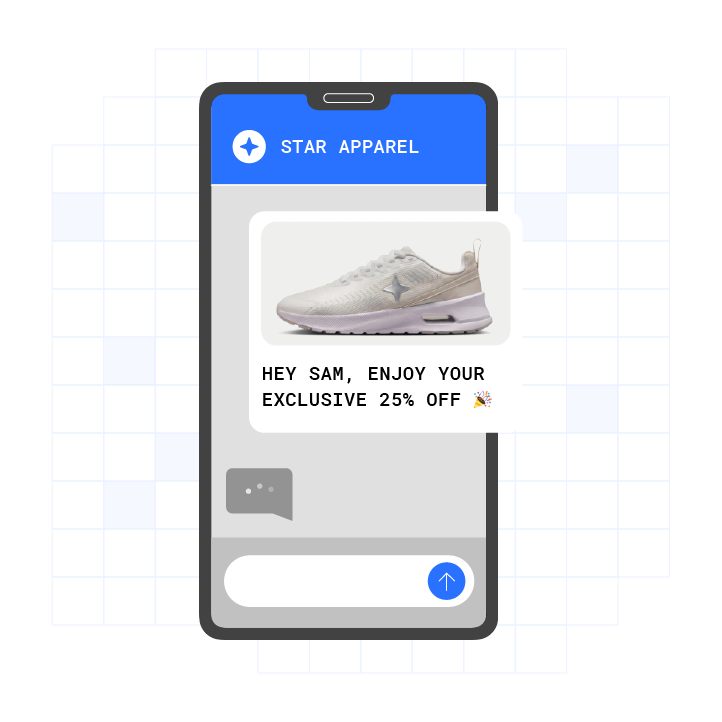
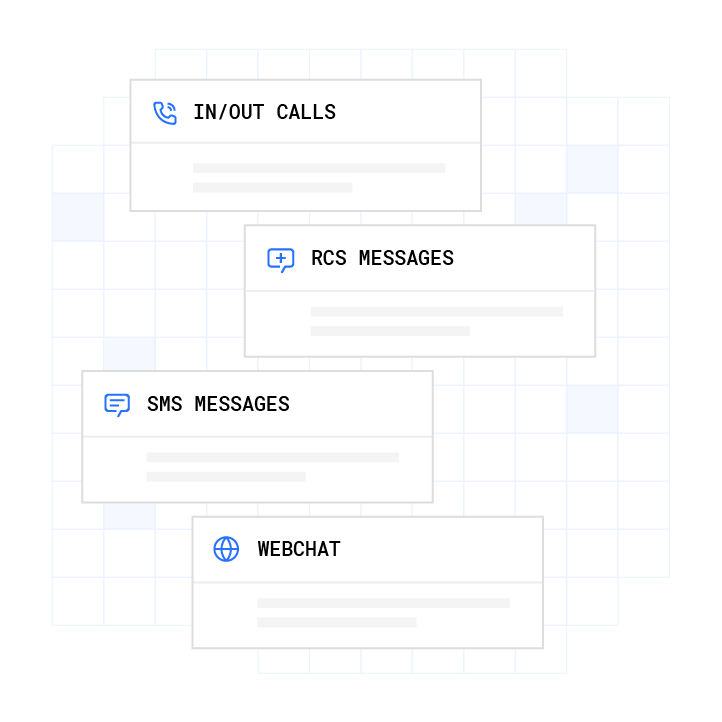
Plura’s missed-call recovery operates as a hybrid system on a single stateful platform. Voice, AI SMS, and RCS share one conversation database instead of operating as disconnected point tools.
Why Speed-to-Lead Benchmarks Matter at Scale
The average business takes 47 hours to reply to leads, by which point most prospects have already moved on. That delay has a measurable cost. Businesses responding within five minutes are up to 100 times more likely to connect with a lead.3 Automated replies sent within 60 seconds achieve 391% higher response rates than those delayed by an hour or more.3
Research shows that a large share of incoming calls never reach a live person. Eighty-five percent of callers whose calls go unanswered will not call back.
For high-volume operators running thousands of inbound calls monthly, those percentages translate directly into revenue. The average small business loses approximately $126,000 per year in revenue from missed calls.3 At franchise-network or contact-center scale, that figure multiplies across every location.
Plura contacts leads in under five seconds across voice, SMS, and RCS, 24/7. Organizations deploying AI for speed to lead see response times drop from hours to seconds and connection rates increase by three to five times.
See how faster response times translate to revenue in your operation by running the numbers through Plura’s ROI calculator.
Regulatory Considerations for Missed-Call Text Back
Automated text responses to missed calls operate under the Telephone Consumer Protection Act (TCPA, 47 U.S.C. § 227), which governs automated calling and texting.2 The TCPA and its FCC implementing regulations form the primary federal framework.2 Operators should consult qualified counsel to understand how these rules apply to their specific programs.
Several compliance considerations are relevant to any missed-call text-back deployment. Automated replies triggered by a missed call may qualify as a text message sent using an automatic telephone dialing system under TCPA rules, and the fact that the message is a reply rather than an outbound campaign does not necessarily remove it from TCPA coverage. The FCC has confirmed that AI-generated voices are treated as artificial or prerecorded voices under the TCPA, which means prior express consent is a central consideration before any AI voice callback.
Key compliance elements for missed-call recovery programs include consent documentation, Do Not Call (DNC) list scrubbing, quiet-hours enforcement, and opt-out handling. Consumers can revoke consent at any time and in any reasonable manner, and businesses must honor do-not-call and revocation requests no later than 10 business days after receipt. Organizations scrub calling lists against the National Do Not Call Registry at least every 31 days, with DNC violations that can result in fines of up to $43,792 per call under the federal TSR or over $53,000 per call in government enforcement actions.
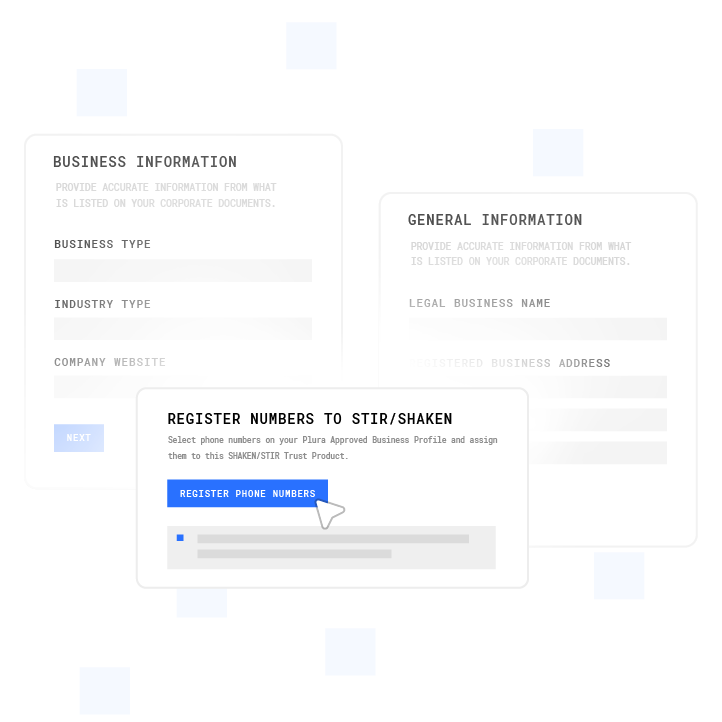
Plura supports compliance with TCPA, DNC, HIPAA, SOC 2, ISO certification, GDPR, SHAKEN/STIR caller ID verification, and 10DLC.1 These controls operate at the infrastructure layer instead of as bolt-on tools. Customers remain responsible for their own compliance obligations and regulatory posture.
Operational Difference: Text-Back vs. AI Voice Recovery
Text-back tools send a single automated SMS when a call is missed. They are fast to deploy and low-cost per message, but they remain passive. The system fires a message and waits. If the lead does not reply, the recovery attempt ends. A 2025 CallRail survey of 1,000 U.S. consumers found that 58% of unanswered callers leave no voicemail at all4, and a significant share will not reply to a text either.
An AI voice agent takes an active position. It calls the missed number, conducts a real conversation, handles objections, qualifies the lead against defined criteria, and routes a warm transfer to a human rep when the workflow calls for it. The AI does not wait for the lead to re-engage. It re-engages the lead directly.
The operational difference at scale is significant. A text-back tool handles one channel. Plura’s AI voice agent platform handles voice, SMS, RCS, and AI webchat from a single stateful database, so every channel inherits the full context of every prior touchpoint. A lead who texted at 9 a.m. is recognized when the AI voice call arrives at noon, without requiring the caller to repeat themselves.
Stateful Conversation Memory Across Channels
Most missed-call recovery tools treat each channel as a separate session. A text-back platform has no memory of a prior voice call. An AI voice tool from a different vendor has no memory of the SMS thread. The customer re-explains their situation on every contact.
Plura’s Stateful Conversation Database keys every interaction to a customer token (phone number, email, or ID) and persists it across voice, SMS, RCS, and webchat. When the AI picks up a missed-call recovery sequence, it already knows what was offered, what was accepted, what was declined, and what qualification status the lead holds. Plura uses stateful AI architecture that remembers previous interactions, preferences, and outcomes across channels for better personalization and follow-ups.
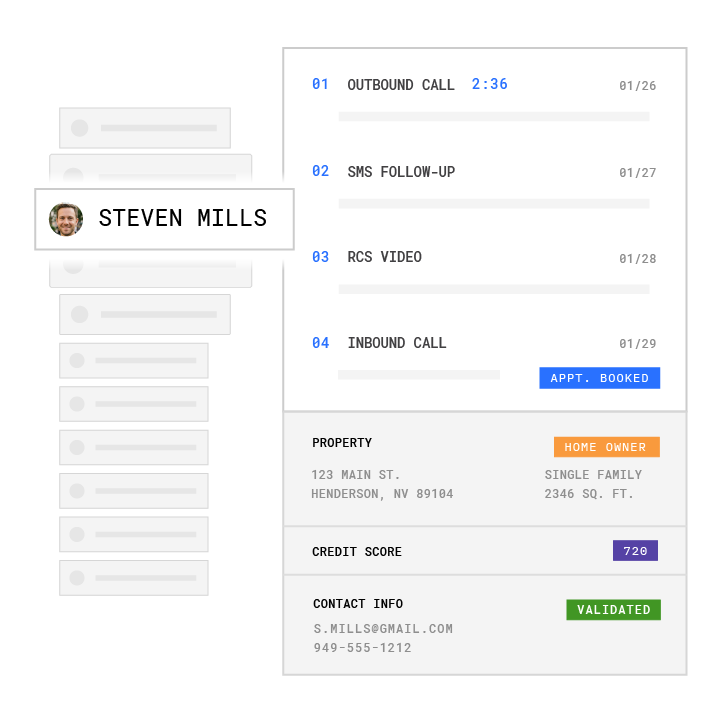
This architecture matters operationally. Franchise networks running hundreds of locations cannot accept a customer experience where the AI at location A has no memory of the conversation at location B. Contact centers running thousands of daily interactions cannot afford re-qualification on every channel switch. Stateful memory is not a feature. It is the infrastructure requirement that separates enterprise-grade recovery from SMB text-back tools.
See Plura’s AI voice agent in action. Schedule a demo to see how stateful memory works across voice, SMS, and RCS in a live environment.
Carrier Ownership and Twilio-Wrapper Limitations
Stateful, enterprise-grade recovery also depends on carrier-level control. The majority of AI voice and SMS platforms on the market are API resellers. They wrap Twilio or another CPaaS (Communications Platform as a Service: the API-only telecom layer that providers like Twilio sell to AI vendors who do not own their own carrier) and pass the cost and limitations of that dependency to the customer.
The practical consequences for missed-call recovery at scale are significant. A Twilio-wrapper platform cannot issue branded caller ID at the carrier level, cannot enforce real-time DNC scrubbing at origination, and cannot authenticate calls through SHAKEN/STIR from its own carrier identity. Compliance sits on top of the stack instead of at the infrastructure layer.
| Capability | Carrier-Owned Platform (Plura) | Twilio-Based API Wrapper |
|---|---|---|
| FCC carrier license | Plura owns its telecom infrastructure and holds an FCC carrier license | No carrier license, routes through third-party CPaaS |
| Branded caller ID | Issued directly at the carrier level | Dependent on third-party reseller, inherits CPaaS reputation |
| Cross-channel stateful memory | Unified stateful inbox maintaining full conversation history across voice, SMS, webchat, and RCS | Typically channel-isolated, no shared memory by default |
| Compliance enforcement | HIPAA, SOC 2, TCPA Litigation Firewall integration, real-time DNC scrubbing at infrastructure layer1 | Compliance is customer-managed, not enforced at origination |
Plura is its own FCC-licensed audio bridging carrier. Voice originates on Plura’s domestic infrastructure. Branded caller ID is issued at the carrier level. Real-time DNC scrubbing, immutable consent logging, and TCPA-litigator filtering operate as first-class layers of the platform instead of third-party add-ons.
Integration and CRM Connectivity
Missed-call recovery software that does not write back to the CRM creates a data gap. The recovery event happens, but the CRM does not know. Reps follow up blind or do not follow up at all.
Plura’s integrations cover 50+ tools across CRM, calendar, attribution, document signing, payment processing, and data enrichment categories. Native CRM integration with HubSpot, Salesforce, and Zoho means every missed-call recovery event, conversation transcript, qualification outcome, and transfer record writes directly to the customer record.4 Automation connectors for Go High Level, Make, and Zapier extend that reach to custom workflow stacks.4
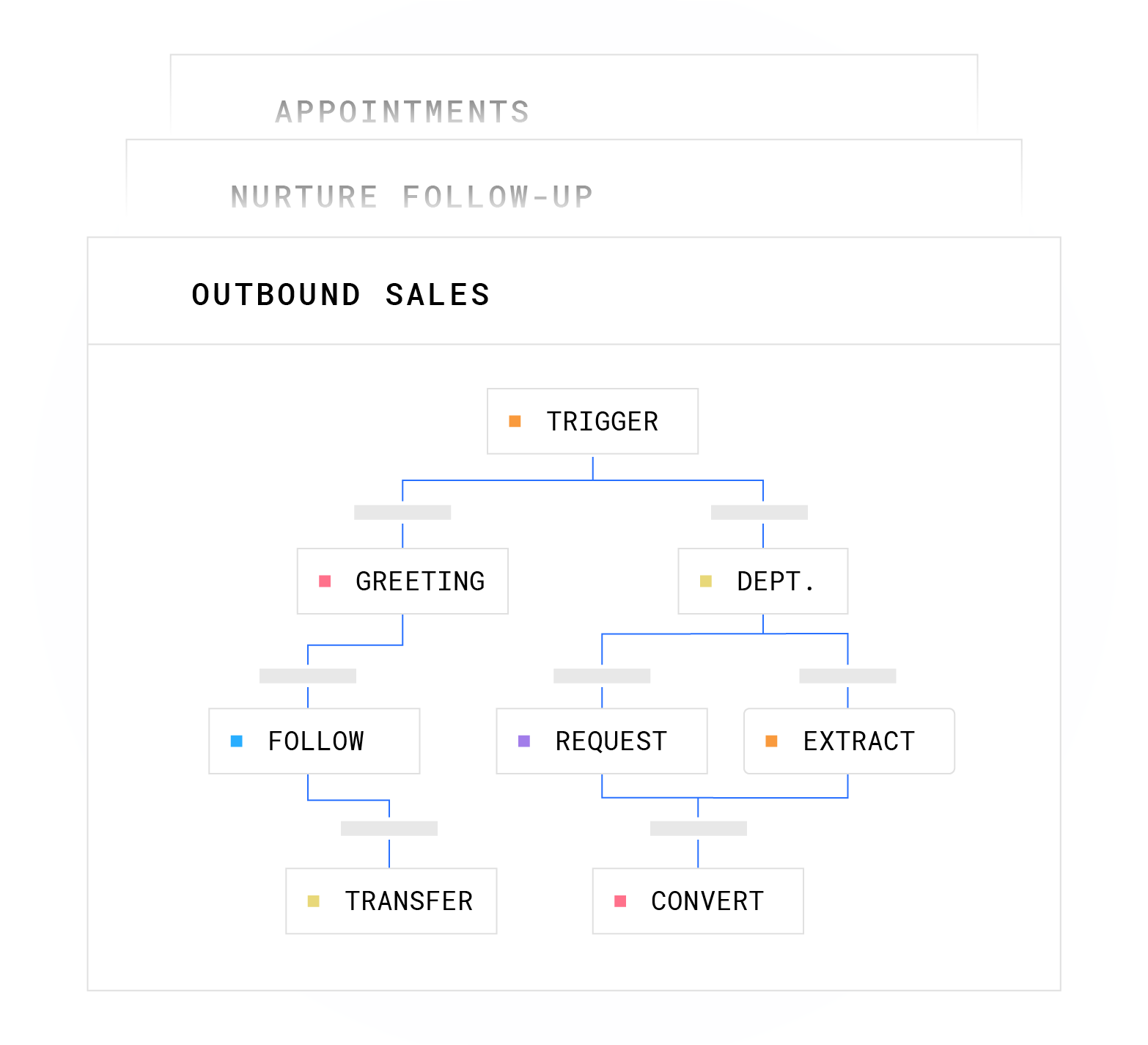
The no-code workflow builder allows operators to configure missed-call recovery sequences, qualification gates, transfer rules, and post-call actions without engineering resources. Iterations deploy without redeploying the underlying AI.
Cost at Scale and ROI Considerations
Generic text-back tools price at the SMS level, often a few cents per message. That model looks inexpensive until the volume, compliance overhead, and revenue leakage from incomplete recovery are factored in.
At contact-center scale, the relevant comparison is total cost of ownership. A 15-agent operation paying $20 per hour with standard taxes, benefits, and commissions at 40% talk utilization costs $60,000 per month to operate. Replacing that team with Plura at $15 per hour, 100% talk utilization, and six Plura agents doing the work of 15 humans drops the monthly cost to $14,400. That is $45,600 in savings in the first 30 days, $547,200 over 12 months, and $2,736,000 over 60 months (per plura.ai/calculator).3
For higher-volume operations, Plura’s total cost of ownership of $300,000 to $700,000 per year replaces traditional contact-center economics of $4 million to $7 million on equivalent volume (per plura.ai/guides/ai-communications-strategy).
Calculate your total cost of ownership versus traditional contact center economics using Plura’s ROI calculator.
Frequently Asked Questions
How fast should missed-call recovery respond?
The research consensus is clear: the faster the response, the higher the recovery rate. The five-minute benchmark is not arbitrary. It represents the point where connection probability drops sharply, with conversion rates 21 times higher at five minutes versus 30 minutes. The 391% lift in response rates cited in speed-to-lead research applies to automated replies sent within 60 seconds versus those delayed by an hour or more.
For high-volume operators, the benchmark is not just raw speed but consistency at scale. A manual process that responds in five minutes during business hours but takes four hours on weekends does not function as a recovery system. It functions as partial coverage. Plura contacts leads in under five seconds across voice, SMS, and RCS, 24 hours a day, seven days a week, including after hours, weekends, and peak-volume periods when human teams are most likely to miss calls.
What compliance requirements apply to high-volume outbound missed-call recovery?
High-volume missed-call recovery programs touch several federal and state regulatory frameworks.2 The TCPA governs automated calling and texting and focuses heavily on prior express consent before most automated outreach. The FCC has confirmed that AI-generated voices are treated as artificial or prerecorded voices under the TCPA. The National DNC Registry and state DNC lists restrict outbound contact to numbers that have opted out. 10DLC registration governs A2P SMS traffic on 10-digit long-code numbers. SHAKEN/STIR authentication applies to outbound voice calls. HIPAA applies to any program handling protected health information. State laws add further requirements, including stricter calling-hour windows and higher per-violation penalties in states such as Florida and Connecticut.
Operators should consult qualified legal counsel to assess how these frameworks apply to their specific programs. Plura supports compliance with TCPA, DNC, HIPAA, SOC 2, ISO certification, GDPR, SHAKEN/STIR caller ID verification, and 10DLC at the infrastructure layer.1 Real-time DNC scrubbing runs before every outbound contact. Consent records are timestamped, immutable, and audit-ready. Quiet-hours enforcement applies automatically through time-zone detection. Customers remain responsible for their own compliance obligations.
Can AI voice agents preserve context across SMS and RCS?
Most AI voice platforms cannot preserve context across channels because they are built as separate products from separate vendors with separate data stores. A voice agent from one vendor and an SMS tool from another have no shared memory. The customer who texted at 9 a.m. has to re-explain their situation when the AI voice call arrives at noon.
Plura’s architecture solves this at the data layer with a unified database that tracks every touchpoint, including voice, SMS, RCS, and webchat, under a single customer identifier. Every channel reads from and writes to the same system of record. The AI voice agent that handles a missed-call recovery call already knows the full SMS thread, the qualification status from a prior webchat session, and any offers or objections from previous contacts. That context does not require manual CRM lookup or human handoff notes. It is available to the AI in real time on every contact.
Conclusion
Missed calls are not a minor operational inconvenience. At high volume, they are a measurable revenue leak: 62% of callers who do not reach a business contact a competitor immediately, and 85% never call back. Generic text-back tools address the symptom at the SMS layer but leave the underlying problem intact: no carrier ownership, no cross-channel stateful memory, and no infrastructure-level compliance enforcement.
Plura AI is built for operators where volume is the qualifier. An FCC-licensed carrier stack, stateful memory across voice, SMS, and RCS, real-time DNC scrubbing, TCPA compliance support, and a no-code workflow builder that deploys in days rather than months work together as one platform. Every missed call is recovered in under five seconds. Every conversation is remembered across every channel. Every outbound contact is checked against compliance rules before it fires.
The math is on the table. Run your numbers through Plura’s ROI calculator to quantify the impact.
1 Plura AI maintains SOC 2, HIPAA, ISO, and GDPR posture as part of its platform infrastructure. References to compliance frameworks in this article describe Plura’s platform capabilities and do not constitute a guarantee that any customer using Plura will themselves be compliant with applicable laws or standards. Customers remain solely responsible for their own regulatory obligations, certifications, consent management, recordkeeping, and the claims they make to their own end users. Consult qualified legal counsel for guidance specific to your use case.
2 This article describes regulatory frameworks at a general level and does not constitute legal advice. Laws and regulations vary by jurisdiction, change over time, and apply differently depending on facts and circumstances. Readers should consult qualified legal counsel before making compliance decisions.
3 Performance figures, customer outcomes, and industry statistics referenced in this article are drawn from cited third-party sources or Plura customer case studies. Individual results vary based on implementation, use case, industry, audience, and execution. Past or aggregate performance is not a guarantee of future results.
4 References to third-party products, services, companies, or research are made for informational and comparative purposes only. Plura AI is not affiliated with, endorsed by, or sponsored by any third party named in this article unless explicitly stated. Trademarks and product names referenced remain the property of their respective owners.
This article is provided for informational purposes only and reflects Plura AI’s understanding at the time of publication. Product capabilities, integrations, and specifications are subject to change. For the most current information, visit plura.ai.
This article was produced with the assistance of AI tools and reviewed by Plura AI prior to publication.