
Written by: Matt Beucler, CEO, Plura AI
Updated August 2026
Answer Card: Plura AI at a Glance
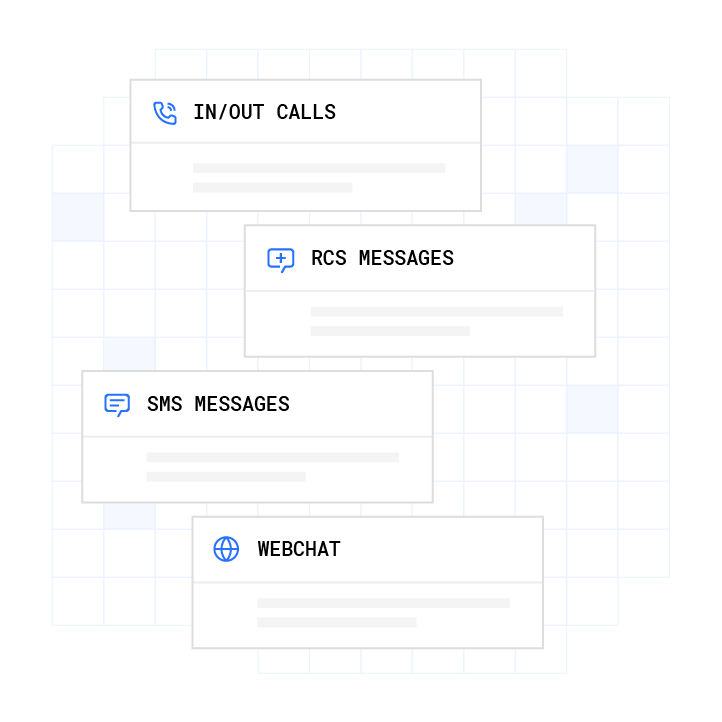
Plura AI is the only carrier-owned platform with a 90-day opt-out window on every missed call recovery software free trial–style annual contract. Its 24/7 AI voice agents recover leads across voice, SMS, RCS, and webchat on 100% U.S. infrastructure with SOC 2, HIPAA, ISO certification, SHAKEN/STIR caller ID verification, TCPA compliance support, and real-time DNC compliance enforcement, which are features most SMB tools do not provide.1
See how Plura recovers missed calls in a live demo.
Key Takeaways for Enterprise Operators
- Over 62% of business calls go unanswered, costing the average small business about $126,000 per year in lost revenue.3
- The 90-day opt-out window described above is the industry’s longest published commitment period for this category.
- Enterprise operators need carrier-grade controls such as SOC 2, HIPAA, SHAKEN/STIR, and real-time DNC enforcement that most SMB tools lack.
- Plura’s AI agents deliver a 6× TCO reduction, cutting a $60,000 per month contact center bill to $14,400 at equivalent volume.
- Watch Plura’s 24/7 AI voice agents recover missed calls across voice, SMS, RCS, and webchat in a guided session.
Missed Calls as a Revenue Leak at Scale
A 2024 study by 411 Locals tracking 85 businesses across 58 industries found that only 37.8% of incoming calls were answered by a live person, so the average business misses more than 62% of inbound calls. For home services, legal, and healthcare operators, the miss rate climbs even higher. The average small business loses approximately $126,000 per year in revenue from missed calls, driven by the fact that 85% of callers who reach voicemail never call back and 62% immediately contact a competitor.
At high-volume operations running 500 or more daily interactions, those losses compound quickly. A franchise network missing calls across 20 locations does not lose $126,000 annually. It loses multiples of that figure, often without centralized visibility into where the leak occurs.
Speed amplifies the impact. Harvard Business Review research found that companies responding within five minutes are 100 times more likely to connect with a prospect than those waiting 30 minutes, and leads contacted within one minute are 391% more likely to convert than those contacted after 24 hours. Given these stakes, operators need enough trial time to validate whether a missed call recovery platform can consistently hit those response targets.
Trial-Length Comparison Across AI Voice Platforms
Trial structures across missed-call recovery and AI voice platforms vary significantly in length, opt-out terms, and what operators can actually test before committing.4 The table below reflects published information as of August 2026.
| Platform | Trial / Entry Offer | Opt-Out Window | Key Limitations |
|---|---|---|---|
| Plura AI | Annual contract, billed monthly | 90-day opt-out on every annual contract | Minimum volume threshold applies, not designed for sub-500 daily interactions |
| Retell AI | $10 free credits | Standard SaaS terms, no published opt-out window | Developer-oriented, limited managed onboarding |
| Synthflow | Free build mode for prototyping | Standard SaaS terms, no published opt-out window | Real per-minute costs reach $0.13-$0.37 after adding BYOK LLM, TTS, and telephony, Twilio-dependent infrastructure |
| Bland AI | Free tier available; enterprise starts at $299/month plus per-minute fees | Standard SaaS terms, no published opt-out window | Requires engineering resources; API-first platform |
| Vapi | Usage-based; no formal trial published | Standard SaaS terms, no published opt-out window | Developer-first; customer responsible for conversation design and telecom integration |
The 90-day opt-out window Plura offers on every annual contract is the longest published commitment window in this category. If the deployment does not deliver, operators are not held to the full annual term.
Compliance and Infrastructure Requirements for High Volume
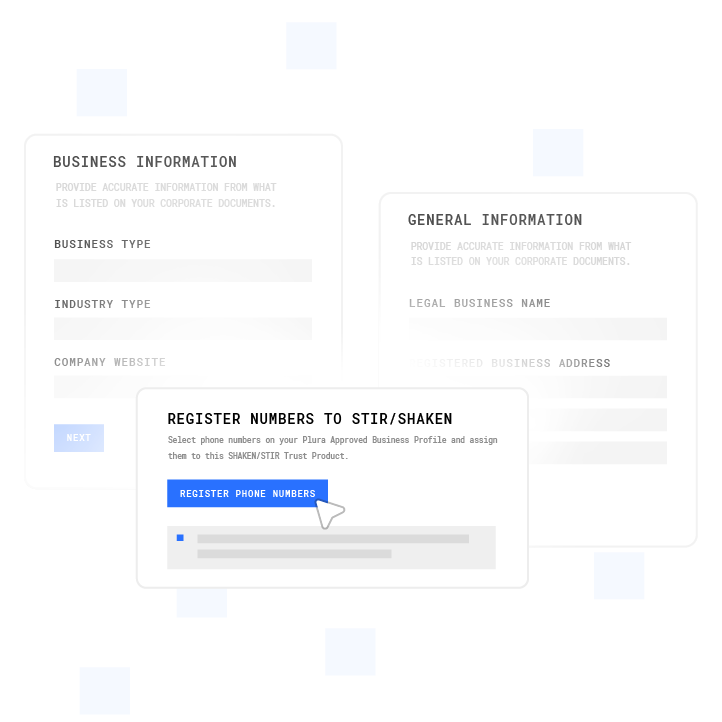
The compliance landscape for AI voice and SMS tools tightened materially in 2024 and 2025. In February 2024, the FCC issued a declaratory ruling that AI-generated voices count as “artificial or prerecorded voice” under the TCPA (Telephone Consumer Protection Act), which brings prior express consent and prior express written consent rules into scope for outbound AI-voice and telemarketing calls.2 STIR/SHAKEN caller ID authentication applies to voice service providers on IP networks, and large U.S. Tier-1 carriers reached 85% signed call traffic using STIR/SHAKEN in 2025.
State-level requirements now layer on top of federal frameworks. California’s AB 2905, effective January 1, 2025, requires robocalls using an AI-generated or significantly AI-altered voice to disclose that fact at the start of the call. TCPA statutory damages can reach $500 per message, with potential trebling to $1,500 per message for willful violations, which creates six-figure exposure for non-compliant automated systems. Operators in regulated verticals should consult qualified counsel on their specific obligations.
The compliance infrastructure matrix below reflects published platform capabilities as of August 2026.
| Compliance Feature | Plura AI | Synthflow | Bland AI / Vapi |
|---|---|---|---|
| SOC 2 | SOC 2 (published) | Not published | Varies by platform |
| HIPAA | HIPAA (published) | Not published | Varies by platform |
| SHAKEN/STIR Caller ID Verification | Carrier-provisioned; FCC-licensed carrier | Twilio-dependent; no carrier license | Third-party CPaaS dependent |
| Real-Time DNC Compliance | Enforced before every outbound contact | Not published at carrier level | Customer responsibility |
| 100% U.S. Infrastructure | Yes, by architecture | Not published | Not published |
| ISO Certification | ISO certified (published) | Not published | Not published |
Plura supports compliance across SOC 2, HIPAA, ISO certification, GDPR, SHAKEN/STIR caller ID verification, TCPA compliance, and DNC compliance. Customers remain responsible for their own regulatory obligations and certifications.
TCO Math: 700K vs. 7M in Contact Center Spend
The economics of missed-call recovery at enterprise scale center on cost structure, not feature lists. Labor accounts for 60 to 70 percent of total contact center operating costs, so agent efficiency becomes the decisive factor in any TCO comparison.
Using the default inputs from Plura’s ROI calculator:
- 15 human agents at $20/hour with 25% taxes, benefits, and commissions at 40% talk utilization: $60,000/month
- Equivalent Plura AI coverage using 6 agents at 100% talk utilization: $14,400/month
- 30-day savings: $45,600
- 12-month savings: $547,200
- 60-month savings: $2,736,000
At higher volume, the model produces a total cost of ownership of $700,000 per year against a traditional contact-center benchmark of $7M. That gap reflects the difference between a cost structure that scales linearly with headcount and one that scales logarithmically with conversation volume.
Plura’s AI voice agents cost $0.35 to $0.85 per completed conversation including intelligence, versus $5 to $15 fully loaded for offshore call centers. For a 50-seat equivalent contact center, traditional offshore operations cost $35,000-$50,000 monthly, while AI contact centers cost $8,000-$15,000 monthly.
Run your own volumes through Plura’s ROI calculator to see projected savings.
Contractor and Home-Services Use Case
Franchises average a 67% missed-call rate during peak hours. For contractors and home-services operators, the math is direct. A non-ACHR News industry study tracked over 130,000 contractor calls with a 74% unanswered rate, and separate home-services data referenced 42 missed calls per month equating to roughly $113,000 in monthly lost pipeline at typical HVAC job values.
Plura’s AI answering service for home services answers 100% of inbound calls within two rings and contacts leads from websites, Google Business Profiles, or ad campaigns within 60 seconds via SMS or voice call. This immediate response reduces the wait time that sends prospects to competitors, while the 24/7 AI voice agent handles booking, confirmation, and CRM logging so technicians stay on the job instead of fielding calls.
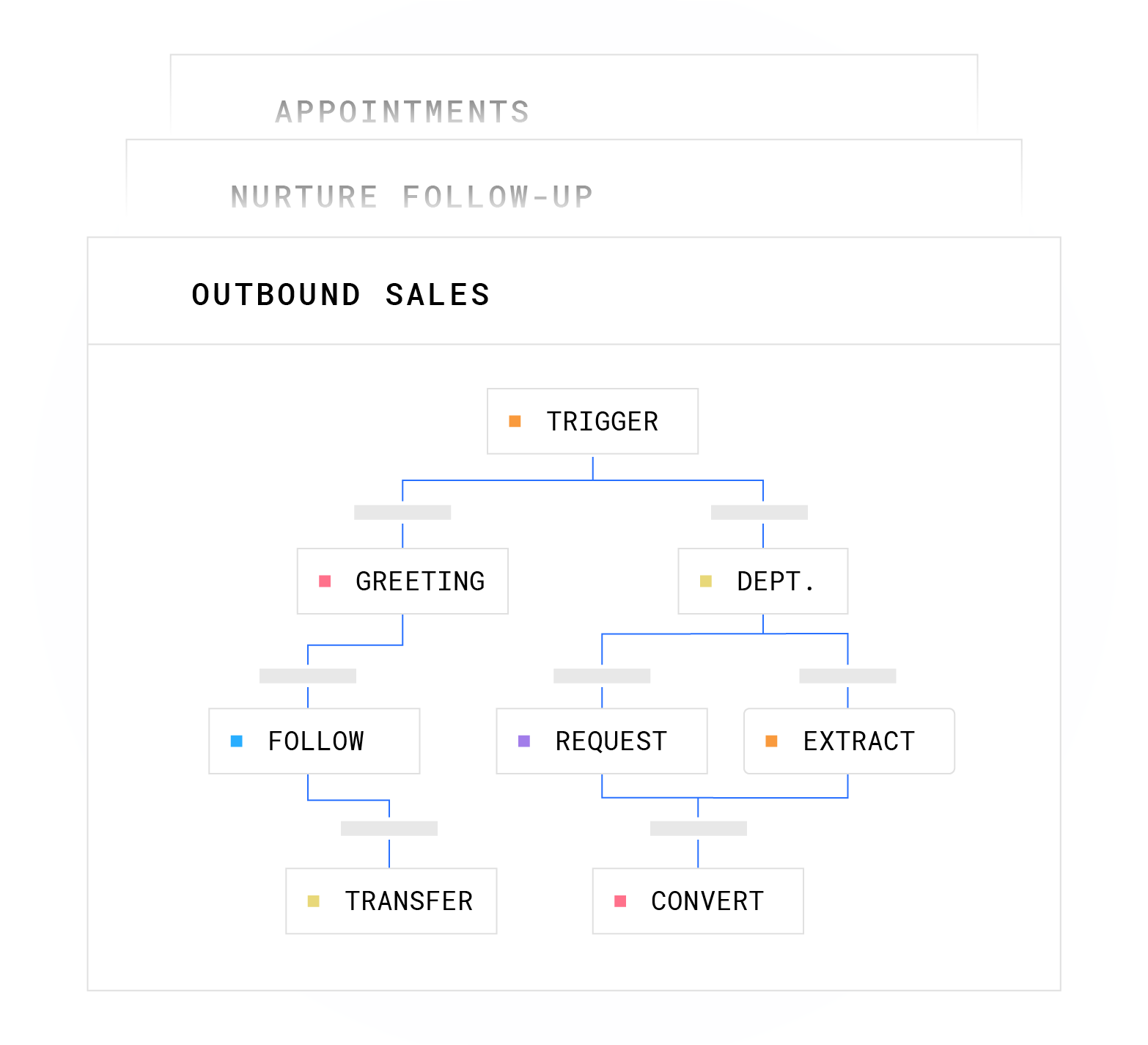
The stateful conversation database keeps every touchpoint connected. A lead who texted at 9 a.m. is recognized when the AI voice agent calls at noon, with no re-introduction and no repeated qualification. The agent continues the conversation with full context from prior interactions across voice, SMS, RCS, and AI webchat.
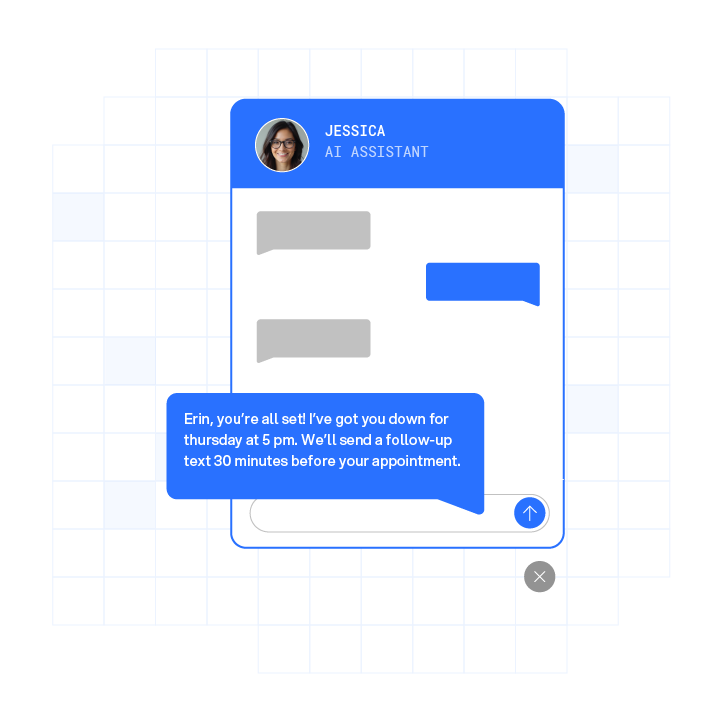
Watch the home-services workflow handle a live booking from first ring to CRM sync.
People Also Ask
Which missed call recovery software is best and free?
No enterprise-grade missed call recovery platform is fully free at production volume. SMB tools offer free tiers or short trials, but they carry material limitations such as lack of carrier-owned infrastructure, no real-time DNC enforcement at the carrier level, no stateful cross-channel memory, and no published opt-out windows on annual contracts. For operators running fewer than 500 daily interactions, SMB tools may be sufficient. For high-volume operators in regulated verticals, the compliance and scalability gaps in free-tier tools can create exposure that outweighs the cost savings. Plura’s 90-day opt-out window on every annual contract functions as a near risk-free trial in the enterprise segment because operators are not locked in if the deployment does not perform.
How long are the trials for missed call recovery software?
Trial lengths in this category range from $10 in free credits (Retell AI) to 14-day trials on multiple SMB tools to free build modes for prototyping (Synthflow). None of the SMB-oriented platforms publish a 90-day opt-out window on annual contracts. Plura’s 90-day opt-out is the longest published commitment window in the enterprise segment. That distinction matters because a 14-day trial does not give a high-volume operator enough time to measure lead recovery rates, compliance posture, or stateful memory performance across channels at production volume.
What compliance features should enterprise operators require from missed call recovery software?
Enterprise operators in regulated verticals should evaluate platforms against a specific compliance checklist before committing. The framework described in CRS Report R48941 (May 2026) covers TCPA consent requirements, National Do Not Call Registry obligations, time-of-day calling limits, and STIR/SHAKEN authentication mandates for voice service providers. Operators should consult qualified counsel on their specific obligations. From a platform capability standpoint, the features to verify include real-time DNC scrubbing enforced before every outbound contact, immutable timestamped consent records, SHAKEN/STIR caller ID verification at the carrier level, SOC 2 and HIPAA support for regulated data, and 100% U.S. infrastructure for operators subject to FCC NPRM or state onshoring requirements. Plura supports compliance across these areas, and customers remain responsible for their own regulatory posture.
How does stateful cross-channel memory affect missed call recovery performance?
Most AI voice and SMS tools treat each channel as a separate system, so a lead who texted on Monday and called on Wednesday must re-identify and re-explain their situation. That friction reduces conversion and increases handle time. A stateful conversation database keys every interaction to the same customer token across voice, SMS, RCS, and webchat, so the agent on the Wednesday call already knows what was said on Monday. Customers expect consistent interactions across departments. Plura’s stateful architecture delivers that continuity by default rather than as a custom configuration.
Conclusion and Next Steps
Most missed call recovery software free trials are short, shallow, and tuned for SMB volume. They rarely address the compliance depth, scalability, or stateful cross-channel memory that high-volume operators in regulated verticals require. The 90-day opt-out window Plura offers on every annual contract is the only published commitment window of its length in the enterprise segment. The carrier-owned infrastructure and compliance framework described earlier are not bolt-on features. They form the foundation of the platform.
For operators running 500 or more daily interactions, TCO math becomes the starting point. A $60,000 per month human contact center operation becomes $14,400 per month with Plura at equivalent volume, which compounds to $2,736,000 over 60 months.
Compare plans and rates side by side on Plura’s pricing page.
Use Plura’s ROI calculator to model savings against your current contact center costs.
Frequently Asked Questions
What makes Plura AI different from other AI voice agent platforms for missed call recovery?
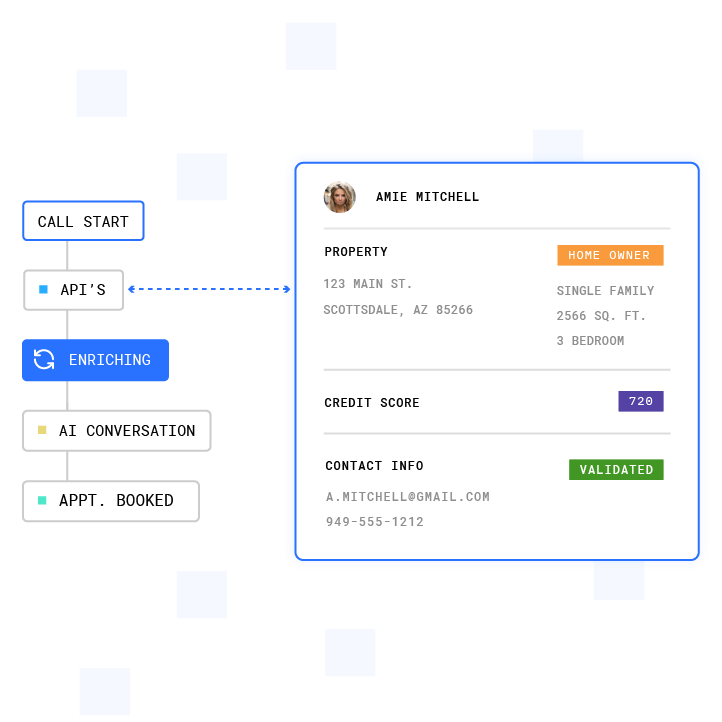
Plura AI owns its carrier stack, so voice originates on Plura’s FCC-licensed audio bridging carrier rather than a third-party CPaaS like Twilio. That structure matters for three reasons. First, branded caller ID is issued at the carrier level, so calls present with the company’s name instead of “Spam Likely.” Second, real-time DNC enforcement and TCPA compliance support occur inside the platform before every outbound contact instead of as a bolt-on. Third, SHAKEN/STIR caller ID verification runs on every outbound call through Plura’s own carrier identity. Most AI voice platforms in this category act as API resellers that rent the carrier layer from a third party and inherit that party’s caller ID reputation and compliance posture. Plura also maintains a stateful conversation database across voice, SMS, RCS, and AI webchat, so a lead who texted at 9 a.m. is recognized when the AI voice agent calls at noon. The 90-day opt-out window on every annual contract means operators are not locked in if the deployment does not deliver.
What volume of calls does Plura AI support, and is it suitable for franchise networks?
Plura is built for high-volume operators running at least 500 daily customer interactions or at least $5,000 per month in paid-media spend. Below that threshold, the platform’s depth often does not generate enough ROI to justify the build. For franchise networks, Plura answers 100% of inbound calls within two rings across every location, with identical greeting and qualification scripts enforced system-wide. A centralized dashboard tracks per-location metrics including lead response times and conversion rates. AI deployment compresses from the 2 to 4 weeks of front-desk training per new hire to days of AI deployment per location. The stateful conversation database and no-code workflow builder allow franchise operators to enforce scripts, disclosures, DNC lists, and state-specific rules at the system level rather than location by location.
How does Plura AI handle TCPA compliance and DNC enforcement for missed call recovery?
Plura supports compliance with TCPA and DNC requirements through platform-level enforcement on every outbound contact. Every number is checked against federal and state DNC registries in real time before dial. Consent records are timestamped and immutable. Quiet-hours rules enforce automatically through time-zone detection, applying state and federal calling-window restrictions to every campaign. The compliance dashboard exports audit-ready reports in one click. Plura also supports HIPAA for protected health information across voice, SMS, RCS, and webchat, and holds SOC 2 and ISO certification. Customers are responsible for their own regulatory obligations and certifications, and operators in regulated verticals should consult qualified counsel on their specific compliance requirements under TCPA, HIPAA, and applicable state laws.
What does the onboarding process look like, and how quickly can Plura AI go live?
Plura’s onboarding sequence starts with a discovery audit of the operator’s business and call economics, followed by intake of sample calls, SOPs, and existing scripts. Plura then builds a dynamic conversation mockup using internal tooling, reviews it with the customer, and moves to engineering build of the production workflow, a pilot test on a subset of real calls, and full go-live. A simple inbound qualification flow typically goes live in days. A complex multi-step intake, such as a 25-question health-history survey, usually runs closer to one to two months because the workflow logic takes time to design and validate. Every annual contract includes a 90-day opt-out window, so if the deployment does not deliver, the customer is not held to the annual term.
How does Plura AI’s pricing compare to running a traditional contact center?
The TCO comparison detailed earlier shows a 6× cost reduction at equivalent volume. Plura offers three pricing tiers, including Multi at $7,500 per month and Enterprise at custom pricing, all on annual contracts billed monthly with a 90-day opt-out window. Full plan details are available on Plura’s pricing page.
1 Plura AI maintains SOC 2, HIPAA, ISO, and GDPR posture as part of its platform infrastructure. References to compliance frameworks in this article describe Plura’s platform capabilities and do not constitute a guarantee that any customer using Plura will themselves be compliant with applicable laws or standards. Customers remain solely responsible for their own regulatory obligations, certifications, consent management, recordkeeping, and the claims they make to their own end users. Consult qualified legal counsel for guidance specific to your use case.
2 This article describes regulatory frameworks at a general level and does not constitute legal advice. Laws and regulations vary by jurisdiction, change over time, and apply differently depending on facts and circumstances. Readers should consult qualified legal counsel before making compliance decisions.
3 Performance figures, customer outcomes, and industry statistics referenced in this article are drawn from cited third-party sources or Plura customer case studies. Individual results vary based on implementation, use case, industry, audience, and execution. Past or aggregate performance is not a guarantee of future results.
4 References to third-party products, services, companies, or research are made for informational and comparative purposes only. Plura AI is not affiliated with, endorsed by, or sponsored by any third party named in this article unless explicitly stated. Trademarks and product names referenced remain the property of their respective owners.
This article is provided for informational purposes only and reflects Plura AI’s understanding at the time of publication. Product capabilities, integrations, and specifications are subject to change. For the most current information, visit plura.ai.
This article was produced with the assistance of AI tools and reviewed by Plura AI prior to publication.