

Written by: Matt Beucler, CEO, Plura AI
Key Takeaways on Voicemail Detection Costs
- Voicemail detection pricing varies widely across CPaaS providers. Twilio charges $0.0075 per completed call, while Telnyx publishes lower per-invocation rates.4
- Per-invocation AMD models create accuracy trade-offs. Cheaper acoustic systems often generate higher false positive rates that burn live connects at scale.
- Bundled detection platforms remove separate AMD fees. That structure produces lower total cost of ownership for high-volume contact center operations.
- AI-based detection systems typically deliver higher accuracy and lower latency than traditional rule-based approaches, while reducing the dead air that can trigger carrier spam mitigation.
- Plura AI’s AI Predictive Dialer bundles voicemail detection into the platform with no per-invocation charges, which gives high-volume operators a lower effective TCO. Request a cost comparison against your current setup.
How Voicemail Detection Works in Outbound Calling
Voicemail detection, also called AMD or Answering Machine Detection, is the process an outbound calling system uses to decide whether a dialed call reached a live human or an automated voicemail greeting. The system analyzes the audio at the moment of answer and then routes the call. A live human connects to a live agent or AI voice agent. A detected machine triggers a separate voicemail workflow.
The post-detection action is where regulatory exposure concentrates. Under the Telephone Consumer Protection Act (TCPA; 47 U.S.C. § 227), delivering a prerecorded or artificial-voice message after machine detection to a wireless number without prior express written consent carries statutory damages of $500 per message, trebled to $1,500 for willful violations, with no aggregate cap.2 The FCC’s 2022 Declaratory Ruling FCC 22-85 describes ringless voicemail to wireless numbers as a “call” under the TCPA and applies the same consent framework as other prerecorded robocalls.2 Operators should consult qualified counsel on their specific consent and disclosure obligations before deploying any voicemail drop workflow.
AMD in Calling: Detection Architectures and Compliance Impact
AMD in calling refers to the automated classification layer that runs when a dialed call is answered. The system listens to the first one to three seconds of audio and classifies the answer as either a live human or an answering machine, using acoustic or transcription-based signals.
Two detection architectures are in production use in 2026. The first is acoustic heuristics, which analyzes initial silence length, greeting duration, word count, and audio energy envelope. Amdify’s analysis places traditional rule-based AMD false positive rates at 15 to 25 percent.4 The second is AI or transcription-based detection, which reads the greeting text or applies a neural network trained on millions of labeled recordings. Transcription-based AMD can reach high accuracy on test sets when combined with silence detection.
Detection architecture shapes compliance risk and customer experience. A synchronous AMD system that waits for a verdict before connecting often introduces several seconds of dead air, which can degrade the live-connect experience and trigger carrier pattern-based spam mitigation. An asynchronous system connects the call immediately and runs the classifier in parallel, which avoids dead air but requires the AI voice agent to handle the first moments of the call before the verdict arrives.
2026 Voicemail Detection Pricing Comparison Across Providers
The table below reflects published pricing as of July 2026. All figures are per-call or per-invocation unless noted. Operators running 100,000 or more calls per month should model total monthly cost, not just unit rate, because the per-invocation structure compounds at scale.
| Provider | AMD Model | Per-Call / Invocation Cost | Detection Approach |
|---|---|---|---|
| Twilio | Answering Machine Detection (AMD) | $0.0075 per completed call | Activated via machineDetection: 'Enable' in Call API |
| Telnyx Standard AMD | Standard AMD | $0.0020 per call | Standard detection |
| Telnyx Premium AMD | Premium AMD | $0.0065 per call | AI-enhanced detection |
| Vapi | Voicemail detection (bundled in voice usage) | Included in per-minute voice rate | AI/transcription-based, developer-configured |
| Plura AI Predictive Dialer | Bundled AI detection | Bundled into platform | AI-based |
According to Twilio’s documentation, Twilio AMD costs $0.0075 per completed call. Telnyx Standard and Premium AMD rates are drawn from Telnyx’s published pricing page. Vapi folds detection into per-minute voice usage per its pricing documentation.4 Plura’s bundled model is described at plura.ai/pricing.
See how these rates translate to your monthly volume at plura.ai/pricing.
Per-Call Voicemail Detection Costs and Billing Models
Voicemail detection costs per call vary by provider and tier. The range looks narrow at the unit level, yet at high monthly call volumes it can create a significant AMD line item before voice termination, platform licensing, or agent labor.
Two billing models are in use. The per-invocation model charges every time AMD is activated, regardless of whether the call was answered by a human or a machine. The per-completed-call model, used by Twilio, charges only when the call reaches an answered state. Neither model accounts for the cost of false positives. A live human misclassified as a machine becomes a burned lead, not a refunded invocation.
Bundled models, like the one inside Plura’s AI Predictive Dialer, remove the per-invocation line entirely. The detection cost is absorbed into the platform fee. That structure can produce a lower effective per-call AMD cost across a wide range of volumes. For operators running high monthly call counts, the bundled model often delivers a structurally lower TCO than any per-invocation alternative.
Balancing Accuracy, Latency, and AMD Cost
Detection accuracy determines how much of the per-invocation spend actually produces value. A system that misclassifies 20 percent of live humans as machines does not save agent time. It burns live connects at the rate of the false positive.
Legacy acoustic AMD can have higher false positive rates. The 15 to 25 percent false positive range noted earlier compounds at scale, burning live connects at the same rate as the misclassification. AI-based and transcription-based AMD systems can reach higher accuracy with lower false positive rates.
Latency also affects performance. Amdify reports that traditional rule-based AMD classification latency can be higher, while AI-powered AMD operates with lower latency. A synchronous AMD system that inserts several seconds of silence before connecting degrades the live-connect experience and can trigger carrier-level spam pattern detection.
Cheaper Alternatives to Twilio AMD
Telnyx Standard AMD can provide a lower per-invocation rate among major CPaaS providers compared to Twilio. The structurally cheaper option is a bundled platform that removes the per-invocation charge entirely. Plura’s AI Predictive Dialer bundles voicemail detection into the platform fee with no separate AMD line item. For operators at high monthly call volumes, that structure can eliminate AMD fees as a distinct budget category. The bundled model also removes the incentive to skip AMD on borderline calls to save money, which is a common workaround that increases false negatives.
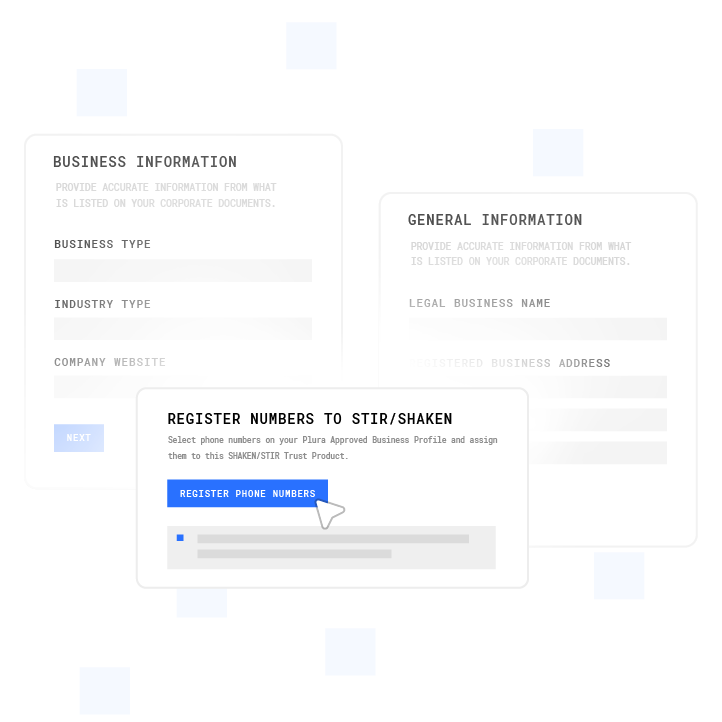
Plura operates as an FCC-licensed audio bridging carrier rather than a CPaaS reseller. Branded caller ID is issued at the carrier level. STIR/SHAKEN (Secure Telephone Identity Revisited / Signature-based Handling of Asserted information using toKENs) authentication runs on every outbound call. Real-time DNC (Do Not Call) scrubbing is enforced before each dial. Operators using Twilio-based tools inherit Twilio’s caller ID reputation and often bolt compliance layers on separately.
Run a side-by-side cost comparison for your current setup at plura.ai/pricing.
Monthly AMD Cost Modeling at 100,000 Calls
The following model uses 100,000 outbound calls per month as the baseline. AMD is invoked on every call. Voice termination costs are excluded to isolate the AMD variable. All per-invocation figures are drawn from published pricing cited above.
- Twilio AMD: significant monthly AMD fees alone
- Telnyx Premium AMD: significant monthly cost
- Telnyx Standard AMD: lower monthly cost
- Plura AI Predictive Dialer (bundled): no per-invocation AMD fees
Add voice termination at a typical $0.0085 per minute, using Twilio’s published U.S. outbound rate, on a 45-second average call duration. At 100,000 calls, termination alone generates approximately $6,375 in cost regardless of provider.3 AMD fees stack on top of that termination baseline, so the total monthly cost depends on whether you pay per invocation or use a bundled model. On Twilio, the combined AMD plus termination cost at 100,000 calls reaches a higher monthly total because you pay both the termination fee and the per-call AMD charge. Plura’s bundled model removes the separate AMD line, so your monthly cost consists of the platform fee and termination.
At higher monthly call volumes, the Twilio AMD line alone grows quickly. The Telnyx Standard line grows more slowly. Plura’s bundled AMD line remains at $0. The gap between per-invocation and bundled economics widens linearly with volume, which is why the bundled model often produces a lower TCO for the high monthly call ranges that define large contact center operations.
For a full TCO model that includes platform fees, agent labor, and voice termination for your specific call volume, run your numbers through Plura’s ROI calculator.
Choosing Between Premium AMD and Bundled Detection
The decision between premium per-invocation AMD and a bundled platform model depends on three operational variables: monthly call volume, accuracy requirements, and compliance posture.
Per-invocation premium AMD, such as Telnyx Premium at $0.0065, can fit operators running fewer than 20,000 calls per month who need AI-enhanced accuracy without committing to a full platform migration. At that volume, the monthly AMD cost stays below $130. The per-invocation model also provides flexibility to test detection quality before scaling.
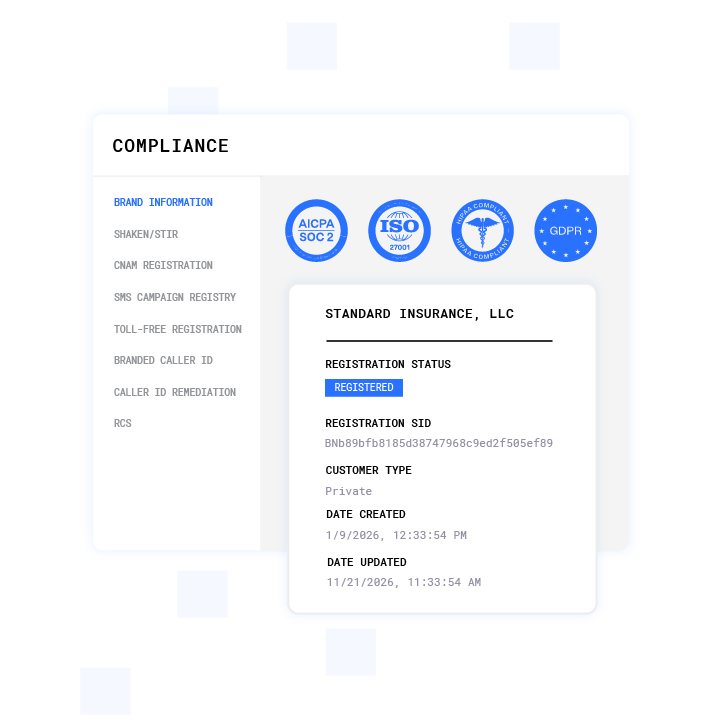
Bundled detection inside a platform like Plura’s AI Predictive Dialer is usually the lower-TCO choice for operators above 50,000 monthly calls. The per-invocation savings compound with volume. Detection accuracy is AI-based with no acoustic heuristic fallback. The compliance infrastructure described earlier, including TCPA, DNC, STIR/SHAKEN, HIPAA, and SOC 2, runs on the same platform instead of being assembled from separate vendors.1
Operators in regulated verticals, including healthcare, insurance, and financial services, face an additional consideration: the post-detection action. Under the TCPA framework described by Jeeva AI’s 2026 TCPA guide, AI-generated voicemail messages are treated as artificial voices under the statute, and the TCPA damages structure described earlier applies to the delivery of that message regardless of how the voice was created.2 Operators should consult qualified counsel on their specific consent documentation and state-level disclosure obligations before deploying voicemail drop workflows. Plura supports TCPA and DNC compliance at the platform level. Downstream obligations remain the operator’s responsibility.
FAQ
What is the difference between standard and premium AMD?
Standard AMD uses acoustic heuristics to classify a call as human or machine. It analyzes initial silence length, greeting duration, word count, and audio energy patterns. It is faster to deploy and cheaper per invocation, but it often produces higher false positive rates under default parameters.
Premium AMD uses AI or transcription-based classification, reading the greeting text or applying a neural network trained on labeled call recordings. It typically achieves lower false positive rates and operates with lower latency. The cost difference between standard and premium options reflects that accuracy gap. For high-volume operations where each false positive is a burned live connect, the accuracy improvement from premium AMD often justifies the higher per-invocation rate, unless a bundled platform removes the per-invocation charge entirely.
Does voicemail detection create TCPA compliance exposure?
AMD itself functions as a detection technology and does not independently create TCPA exposure. The compliance risk concentrates in the post-detection action. If the system delivers a prerecorded or AI-generated message to a wireless number after detecting a machine, that delivery falls within the TCPA consent framework described in FCC Declaratory Ruling FCC 22-85 (2022) and the February 2024 FCC ruling on AI-generated voices. The TCPA damages structure described earlier, including $500 per message and trebled damages for willful violations, applies at the message level. Operators should consult qualified counsel on their specific consent documentation, state-level mini-TCPA obligations, and disclosure requirements before deploying any voicemail drop workflow. Plura supports TCPA and DNC compliance at the infrastructure level. Operators remain responsible for their own consent records and regulatory posture.
How does Plura AI’s bundled voicemail detection work?
Plura’s AI Predictive Dialer includes voicemail detection as a built-in component of the platform. Detection runs on AI-based classification rather than acoustic heuristics, which supports higher accuracy and lower latency than many legacy rule-based systems.
Because Plura operates as an FCC-licensed audio bridging carrier rather than a CPaaS reseller, the detection layer sits on Plura’s own infrastructure alongside branded caller ID issuance, STIR/SHAKEN authentication, and real-time DNC scrubbing. Operators do not need to configure a separate AMD API call, manage a separate billing line, or reconcile detection accuracy against a per-invocation cost. The detection cost is absorbed into the platform fee.
What happens to connect rates when AMD accuracy is low?
A false positive in AMD means a live human is classified as a machine. The call is either disconnected or routed to a voicemail drop workflow instead of a live agent or AI voice agent. That live connect is lost.
At a 50-agent contact center running 200 dials per hour, the difference between an 8 percent false positive rate, which reflects tuned traditional AMD, and a 3 percent false positive rate, which reflects AI-based AMD, produces approximately 200 additional recovered live connections per day.3 At scale, that gap compounds into measurable pipeline impact. Operators modeling AMD costs should include the revenue value of recovered live connects in the TCO calculation, not just the per-invocation fee. A cheaper per-invocation rate that produces more false positives can carry a higher effective cost than a bundled system with higher accuracy.
Can Plura replace an existing dialer setup that uses Twilio AMD?
Plura’s AI Predictive Dialer is designed as a full replacement for legacy dialer infrastructure, including setups built on Twilio-based CPaaS with separate AMD configuration. The migration path replaces the Twilio voice layer, the AMD API call, and any separate compliance bolt-ons with a single platform that runs on Plura’s own FCC-licensed carrier.
Branded caller ID, STIR/SHAKEN authentication, real-time DNC scrubbing, TCPA compliance support, and AI-based voicemail detection are all included. Plura’s onboarding sequence includes a discovery audit, workflow build, and pilot test on a subset of real calls before full go-live. Annual contracts include a 90-day opt-out window. For a side-by-side cost comparison against your current Twilio AMD setup, see plura.ai/pricing.
Conclusion: Lowering AMD Cost While Protecting Live Connects
Voicemail detection pricing varies across major CPaaS providers. At high monthly call volumes, that variation can create significant AMD fees before voice termination or platform costs. Per-invocation pricing also creates an accuracy trade-off, because cheaper acoustic AMD can produce higher false positive rates that burn live connects at scale.
Plura AI’s AI Predictive Dialer removes the per-invocation AMD line by bundling AI-based detection into the platform. For contact center leaders and agency owners running high volumes of monthly calls, the bundled model often delivers a lower TCO than per-invocation alternatives, while providing higher detection accuracy, lower latency, and the compliance infrastructure described earlier on the same platform.
Compare bundled vs. per-invocation economics for your call volume at plura.ai/pricing.
1 Plura AI maintains SOC 2, HIPAA, ISO, and GDPR posture as part of its platform infrastructure. References to compliance frameworks in this article describe Plura’s platform capabilities and do not constitute a guarantee that any customer using Plura will themselves be compliant with applicable laws or standards. Customers remain solely responsible for their own regulatory obligations, certifications, consent management, recordkeeping, and the claims they make to their own end users. Consult qualified legal counsel for guidance specific to your use case.
2 This article describes regulatory frameworks at a general level and does not constitute legal advice. Laws and regulations vary by jurisdiction, change over time, and apply differently depending on facts and circumstances. Readers should consult qualified legal counsel before making compliance decisions.
3 Performance figures, customer outcomes, and industry statistics referenced in this article are drawn from cited third-party sources or Plura customer case studies. Individual results vary based on implementation, use case, industry, audience, and execution. Past or aggregate performance is not a guarantee of future results.
4 References to third-party products, services, companies, or research are made for informational and comparative purposes only. Plura AI is not affiliated with, endorsed by, or sponsored by any third party named in this article unless explicitly stated. Trademarks and product names referenced remain the property of their respective owners.
This article is provided for informational purposes only and reflects Plura AI’s understanding at the time of publication. Product capabilities, integrations, and specifications are subject to change. For the most current information, visit plura.ai.
This article was produced with the assistance of AI tools and reviewed by Plura AI prior to publication.