
Written by: Matt Beucler, CEO, Plura AI
Key Takeaways for Contact Center and Revenue Leaders
- An AI SDR runs proactive, multi-channel outreach to qualify leads and book meetings. A chatbot only reacts to inbound website questions.
- Plura AI owns its FCC-licensed carrier, which enables branded caller ID, real-time DNC scrubbing, and SHAKEN/STIR authentication across voice, SMS, RCS, and webchat.1
- Stateful conversation memory persists across every channel and session. Leads never repeat themselves, and qualification accuracy improves.
- Organizations using AI SDRs report 3x–5x faster response times, 77% more revenue per rep, and cost-per-qualified-lead reductions from $85–$200 down to $25–$60.3
- See how a proactive AI SDR performs in your environment by joining a live Plura AI demo.
AI SDR vs Chatbot: Operational Comparison
| Capability | Reactive Chatbot | Proactive AI SDR (Plura) |
|---|---|---|
| Engagement model | Waits for a website visitor to initiate | Initiates outreach across voice, SMS, RCS, and webchat without inbound trigger |
| Channel support | Primarily website widget or single messaging app | Voice, SMS, RCS, and AI webchat on one platform |
| Conversation memory | Session-based, resets between visits | Stateful Conversation Database persists context across every channel and session |
| CRM integration depth | Limited or one-way activity logging | Bidirectional sync with HubSpot, Salesforce, Zoho, and 50+ integrations4 |
| Carrier-level compliance | No carrier ownership, compliance bolted on or absent | FCC-licensed carrier; TCPA compliance, DNC compliance, SHAKEN/STIR caller ID verification, SOC 2, HIPAA, ISO certification, GDPR support |
| Lead qualification | Real-time enrichment from 30+ data sources, qualification during the live conversation | Real-time enrichment from 30+ data sources, qualification during the live conversation |
| Speed to first contact | Dependent on inbound visit, no outbound capability | Under 5 seconds to first AI-powered contact |
Why Reactive Chatbots Cannot Build Outbound Pipeline
Chatbots handle inbound support, not outbound pipeline. They sit on a webpage, wait for a visitor, and respond when someone types a question. That model covers a narrow set of jobs: deflecting support tickets, answering FAQs, and capturing contact details from visitors who already chose to engage.
Chatbots do not generate pipeline from cold prospects and cannot reach a lead who never visited your site. The speed-to-lead gap makes this limitation expensive. Harvard Business Review research found that companies responding within five minutes are 100 times more likely to connect with a prospect than those waiting 30 minutes. Leads contacted within one minute are 391% more likely to convert than those contacted after 24 hours. A chatbot that waits for inbound traffic cannot close that gap on outbound leads.
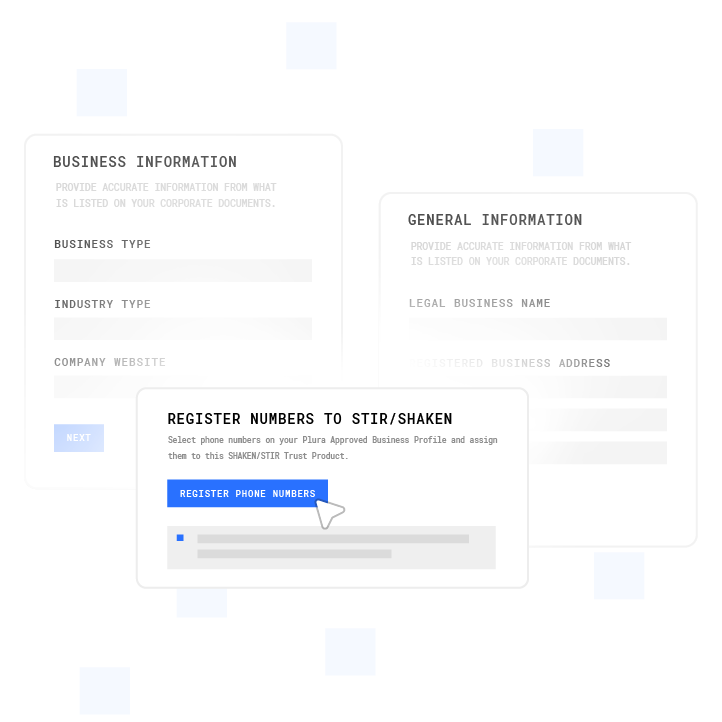
Single-channel limits compound the problem. Most chatbot platforms lack the carrier infrastructure to operate voice or SMS at scale. They cannot issue branded caller ID, scrub numbers against DNC registries in real time, or authenticate outbound calls through STIR/SHAKEN (Secure Telephone Identity Revisited/Signature-based Handling of Asserted information using toKENs). Without those layers, outbound voice campaigns face “Spam Likely” flags and carrier blocks before a conversation starts.
The result is a tool category that handles inbound questions but leaves outbound pipeline entirely unaddressed. That gap is exactly what proactive AI SDR platforms are designed to close.
Proactive AI SDRs on Owned Carrier Infrastructure
Plura AI operates differently from the ground up. Rather than wrapping a third-party CPaaS (Communications Platform as a Service) like Twilio, Plura owns its FCC-licensed audio bridging carrier. That structure matters because branded caller ID is issued at the carrier level, SHAKEN/STIR authentication runs on every outbound call at origination, and DNC scrubbing happens before the dial.
The platform’s AI voice agent handles inbound and outbound calls in English or Spanish, 24/7, with no human ramp time. The AI SMS layer contacts leads in under five seconds and qualifies buyers using real-time enrichment from 30+ data sources before a human rep picks up the phone. Both channels share a Stateful Conversation Database, so an agent that texted a lead at 9 a.m. picks up the voice call at noon already knowing what was discussed, which objections surfaced, and what offers were made.
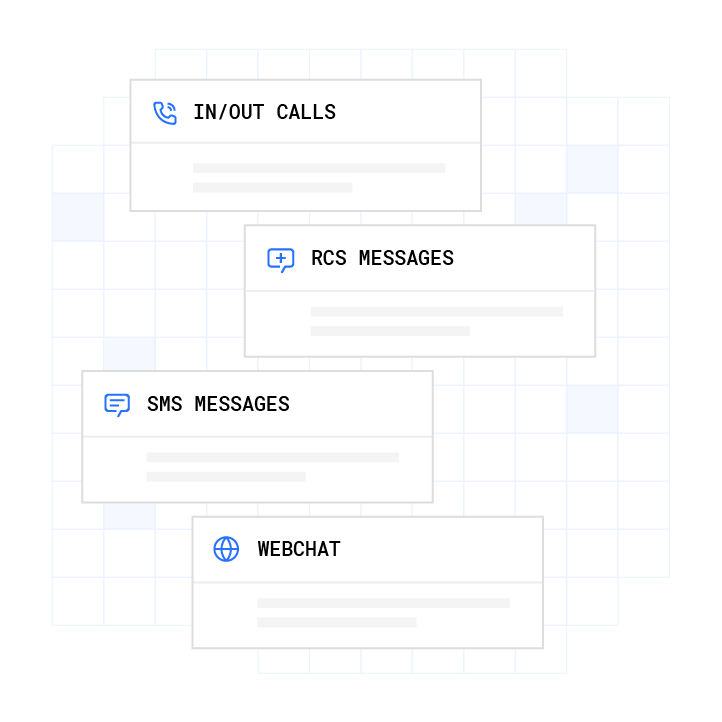
Plura enables lead response times under 60 seconds, multichannel engagement via voice, SMS, RCS, and webchat, and real-time AI lead scoring, with a cost per qualified lead of $25 to $60. That compares to a traditional cost per qualified lead of $85 to $200 for manual outreach models.
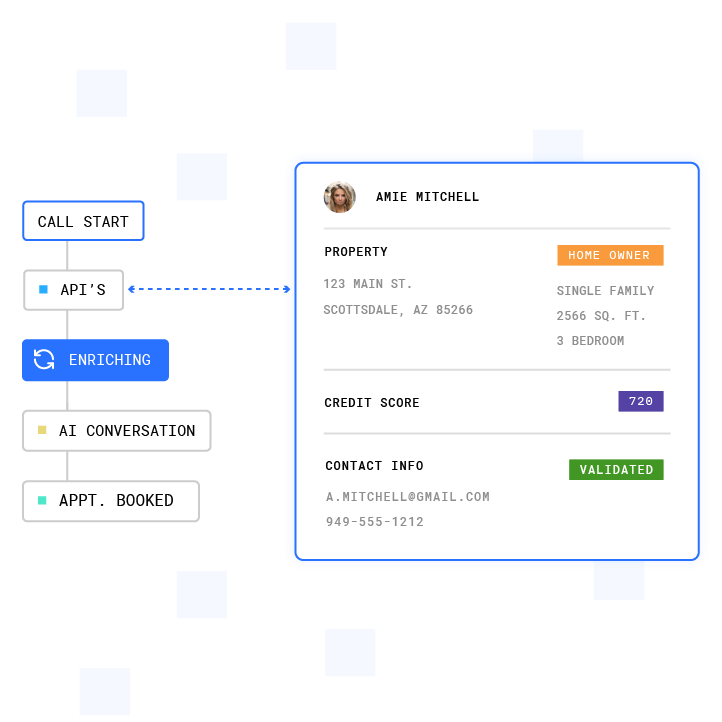
For operators running high-volume outbound, the AI Predictive Dialer prioritizes contacts using stateful conversion signals. It maximizes talk time per dial and routes only live, qualified buyers to human reps.
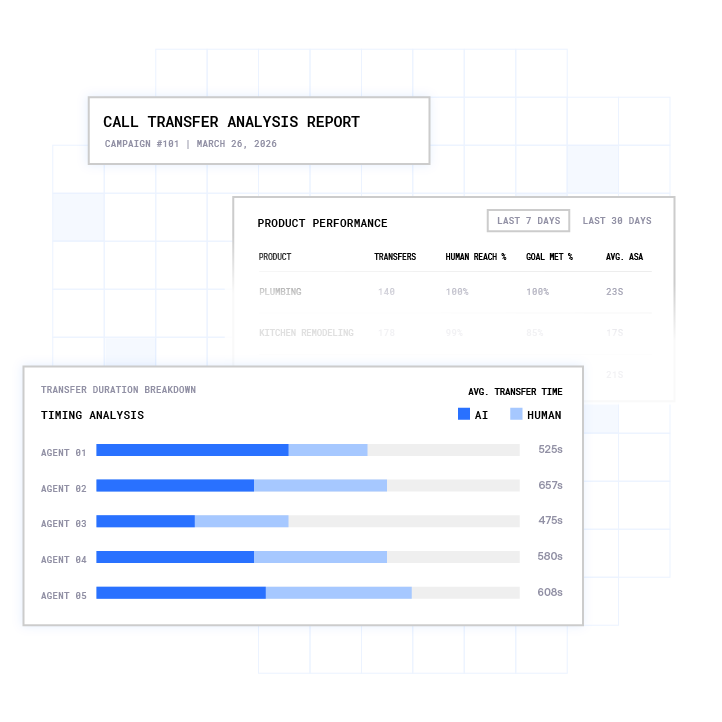
Watch Plura’s carrier-level outreach and routing in a personalized live walkthrough: plura.ai/plura-webchat.
Where AI SDRs Replace SDR Tasks vs Human Judgment
AI now handles the volume work, while humans focus on judgment work. That boundary is clear in 2026.5
A single-channel chatbot cannot replace an SDR because it does not perform SDR tasks. It answers questions but does not prospect, qualify, or book. A multi-channel AI SDR platform like Plura operates across voice, SMS, RCS, and webchat at the same time, contacts leads in seconds, enriches them from 30+ data sources during the live conversation, and routes only qualified buyers to human reps.
AI does not yet match human SDRs in complex, multi-stakeholder enterprise qualification. Discovery and qualification calls in complex deals still benefit from human ownership because AI SDRs are not yet reliable in live multi-stakeholder conversations.
The practical model for most B2B operators in 2026 is a hybrid.
Performance Evidence: Do AI SDRs Work at Scale?
Adoption data and unit economics both support AI SDR performance. Salesforce’s 2024 State of Sales Report found that sales teams using AI are 1.3x more likely to see revenue growth (83% vs. 66% without AI). Gong’s 2025 State of Revenue AI report found that AI-driven teams generate 77% more revenue per representative.
The economics of AI SDR deployment at scale are straightforward. Plura’s illustrative 15-agent scenario shows the infrastructure advantage: a human contact center at $20 per hour with standard overhead and 40% talk utilization costs $60,000 per month. Six Plura agents running at 100% talk utilization replace that team at $14,400 per month, a 30-day saving of $45,600 and a 12-month saving of $547,200. Total cost of ownership runs $300,000 to $700,000 per year against a traditional contact-center benchmark of $4 million to $7 million.
AI SDR tools tend to underperform in fully autonomous, unreviewed outbound email sequences. That pattern reflects channel fit, not a failure of AI SDRs. Voice and SMS, supported by real-time enrichment and stateful memory, consistently outperform cold email sequences that run without human oversight.
Use Plura’s ROI calculator to model savings for your specific contact volumes.
Defining an AI SDR in Today’s Regulatory Environment
An AI SDR is an autonomous software agent that performs prospecting, outreach, qualification, and meeting-booking functions traditionally handled by a human sales development representative. It operates without waiting for inbound triggers, contacts leads across multiple channels, and maintains context across every interaction.
In 2026, the regulatory environment shapes what “AI SDR” infrastructure must include. The FCC’s February 2024 declaratory ruling described AI-generated voice calls under the TCPA’s (Telephone Consumer Protection Act, 47 U.S.C. § 227) “artificial or prerecorded voice” framework, subjecting them to the same consent and DNC controls as traditional robocalls.2 Since February 2025, U.S. carriers block all unregistered A2P 10DLC (Application-to-Person 10-Digit Long Code) SMS traffic at the network level.
The FCC’s Notice of Proposed Rulemaking (NPRM, CG Docket No. 26-52) proposes capping offshore customer-service calls at 30% and limiting offshore handling of sensitive consumer data. Companion legislation including the Keep Call Centers in America Act (S.2495) and state laws in New York, New Jersey, Connecticut, Missouri, and Florida already restrict offshore handling of medical, financial, and consumer data. AI SDR platforms with foreign infrastructure dependencies carry exposure under this regulatory trajectory.
Plura runs on 100% U.S. infrastructure by architecture. Voice origination, model hosting, data storage, and call recording all sit on domestic infrastructure. The platform supports compliance with TCPA, DNC, HIPAA, SOC 2, ISO certification, GDPR, and SHAKEN/STIR caller ID verification. Customers remain responsible for their own regulatory obligations; Plura provides the infrastructure layer.
Carrier ownership is the structural differentiator. Most AI voice platforms are API resellers built on top of Twilio or another CPaaS. They cannot issue branded caller ID at the carrier level, enforce real-time DNC scrubbing at origination, or control exposure under the FCC’s proposed foreign-infrastructure limits. Plura owns the full stack.
How to Evaluate AI SDR Platforms
Contact center and revenue leaders should compare AI SDR platforms against chatbot tools or Twilio-based API resellers on a few specific dimensions.
- Carrier ownership: Determine whether the vendor owns an FCC-licensed carrier or rents from a third-party CPaaS. Carrier ownership affects branded caller ID, SHAKEN/STIR authentication, and real-time DNC scrubbing.
- Stateful cross-channel memory: Confirm whether conversation context persists across voice, SMS, RCS, and webchat, or whether each channel operates in isolation. Persistent memory now drives a large share of AI sales performance.
- Compliance infrastructure: Review how TCPA compliance, DNC compliance, HIPAA, SOC 2, ISO certification, GDPR, and SHAKEN/STIR caller ID verification are supported at the platform level, and where your team retains responsibility.
- U.S. infrastructure posture: Under the FCC NPRM and state onshoring laws, identify where voice origination, data storage, and call recording sit.
- Channel breadth: Check whether the platform runs voice, SMS, RCS, and webchat from a single workflow and a single conversation database, or whether it requires separate vendors for each channel.
Plura’s pricing runs across three tiers: Multi ($5,000/month), Agency ($7,500/month), and Enterprise (custom), all on annual contracts billed monthly with a 90-day opt-out window. Agent build fees are $2,500 to $2,750 per agent.
Review plans at plura.ai/pricing, then schedule a platform demo tailored to your contact volumes at plura.ai/plura-webchat.
Frequently Asked Questions
What is the core difference between an AI SDR and a chatbot?
A chatbot is a reactive tool that responds to questions initiated by a website visitor. It operates on a single channel, typically a website widget, and has no outbound capability. An AI SDR is a proactive agent that initiates outreach across multiple channels, qualifies leads using real-time data enrichment, and books meetings without waiting for inbound traffic. The functional gap is the difference between answering questions and generating pipeline. Plura’s AI SDR platform contacts leads in under five seconds across voice, SMS, RCS, and webchat, with stateful memory that persists across every channel and session.
Can AI SDRs replace human SDRs entirely?
AI SDRs do not replace human SDRs entirely, and the boundary is well-documented. AI SDRs handle high-volume structured tasks effectively: prospecting, enrichment, first contact, initial qualification, and meeting booking for straightforward opportunities. Human SDRs retain a meaningful advantage in complex, multi-stakeholder enterprise deals where nuanced qualification, tone interpretation, and stakeholder navigation matter. The most cost-effective model in 2026 is a hybrid. AI handles everything up to the live discovery conversation, and humans handle everything in it. Plura’s platform is built for that handoff, routing only qualified, enriched buyers to human reps via live transfer.
What compliance infrastructure does Plura provide for voice and SMS outreach?
Plura supports compliance with TCPA, DNC, HIPAA, SOC 2, ISO certification, GDPR, and SHAKEN/STIR caller ID verification. Every outbound contact is checked against federal and state DNC registries in real time before dial. Consent records are timestamped and immutable. Quiet-hours rules enforce automatically through time-zone detection. SHAKEN/STIR authentication runs on every outbound voice call at the carrier level. All SMS traffic runs on 10DLC-registered numbers. Customers are responsible for their own regulatory obligations and should consult qualified counsel regarding their specific compliance requirements. Plura provides the infrastructure; compliance posture downstream remains the customer’s responsibility.
Why does carrier ownership matter for an AI SDR platform?
Most AI voice platforms are API resellers that route calls through a third-party CPaaS like Twilio. That structure means branded caller ID cannot be issued at the carrier level, DNC scrubbing becomes a bolt-on rather than a platform-native layer, and SHAKEN/STIR authentication depends on a third party’s infrastructure. Carrier ownership also shapes exposure under the FCC NPRM (CG Docket No. 26-52) and state onshoring laws, which restrict offshore handling of sensitive consumer data. Plura owns its FCC-licensed audio bridging carrier. Voice originates on Plura’s domestic infrastructure, so branded caller ID, real-time DNC scrubbing, and SHAKEN/STIR authentication are all enforced at origination.
What is stateful conversation memory and why does it matter for B2B sales?
Stateful conversation memory means that every interaction a lead has with your AI agent, whether by voice, SMS, RCS, or webchat, is stored in a single database keyed to that contact. When the AI reaches out again on a different channel, it already knows what was discussed, which objections were raised, what offers were made, and where the qualification stands. Without stateful memory, each channel resets the conversation and the buyer has to repeat themselves. Plura’s Stateful Conversation Database is the shared data layer underneath every channel on the platform. A lead texted at 9 a.m. is the same lead when the voice call comes at noon, with full context carried forward automatically.
Conclusion: Moving From Reactive Chatbots to Proactive AI SDRs
The distinction between an AI SDR and a chatbot is categorical, not incremental. Chatbots are reactive tools built for inbound support. AI SDRs are proactive pipeline engines built for outbound qualification and booking. In 2026, the regulatory environment, carrier requirements, and speed-to-lead economics all favor operators who have moved to proactive, multi-channel AI SDR infrastructure.
Plura AI is the only platform that owns its FCC-licensed carrier, maintains a Stateful Conversation Database across voice, SMS, RCS, and webchat, and supports compliance with TCPA, DNC, HIPAA, SOC 2, ISO certification, GDPR, and SHAKEN/STIR caller ID verification on 100% U.S. infrastructure. The platform contacts leads in under five seconds, qualifies them with real-time enrichment from 30+ data sources, and routes only verified buyers to human reps.
Contact centers that still rely on a reactive chatbot for pipeline generation see a measurable gap compared with proactive AI SDR infrastructure. The difference shows up in response time, conversion rate, and cost per qualified opportunity.
Schedule a live Plura demo at plura.ai/plura-webchat, or use the ROI calculator to quantify the cost impact for your team.
1 Plura AI maintains SOC 2, HIPAA, ISO, and GDPR posture as part of its platform infrastructure. References to compliance frameworks in this article describe Plura’s platform capabilities and do not constitute a guarantee that any customer using Plura will themselves be compliant with applicable laws or standards. Customers remain solely responsible for their own regulatory obligations, certifications, consent management, recordkeeping, and the claims they make to their own end users. Consult qualified legal counsel for guidance specific to your use case.
2 This article describes regulatory frameworks at a general level and does not constitute legal advice. Laws and regulations vary by jurisdiction, change over time, and apply differently depending on facts and circumstances. Readers should consult qualified legal counsel before making compliance decisions.
3 Performance figures, customer outcomes, and industry statistics referenced in this article are drawn from cited third-party sources or Plura customer case studies. Individual results vary based on implementation, use case, industry, audience, and execution. Past or aggregate performance is not a guarantee of future results.
4 References to third-party products, services, companies, or research are made for informational and comparative purposes only. Plura AI is not affiliated with, endorsed by, or sponsored by any third party named in this article unless explicitly stated. Trademarks and product names referenced remain the property of their respective owners.
5 This article contains forward-looking statements regarding industry trends, technology adoption, and future capabilities. These statements reflect current expectations and are subject to change. Plura AI undertakes no obligation to update forward-looking statements except as required.
This article is provided for informational purposes only and reflects Plura AI’s understanding at the time of publication. Product capabilities, integrations, and specifications are subject to change. For the most current information, visit plura.ai.
This article was produced with the assistance of AI tools and reviewed by Plura AI prior to publication.