
Written by: Matt Beucler, CEO, Plura AI
Key Takeaways for Outbound Leaders
- Human-only outbound dialing drives high labor costs, constant hiring churn, and TCPA exposure that grows with every call.
- AI predictive dialers increase volume and speed-to-lead while lowering cost per contact, but they do not match humans on complex negotiations or regulated advice.
- Hybrid AI-human workflows outperform both pure models, producing stronger pipeline ROI and lower cost per qualified opportunity.
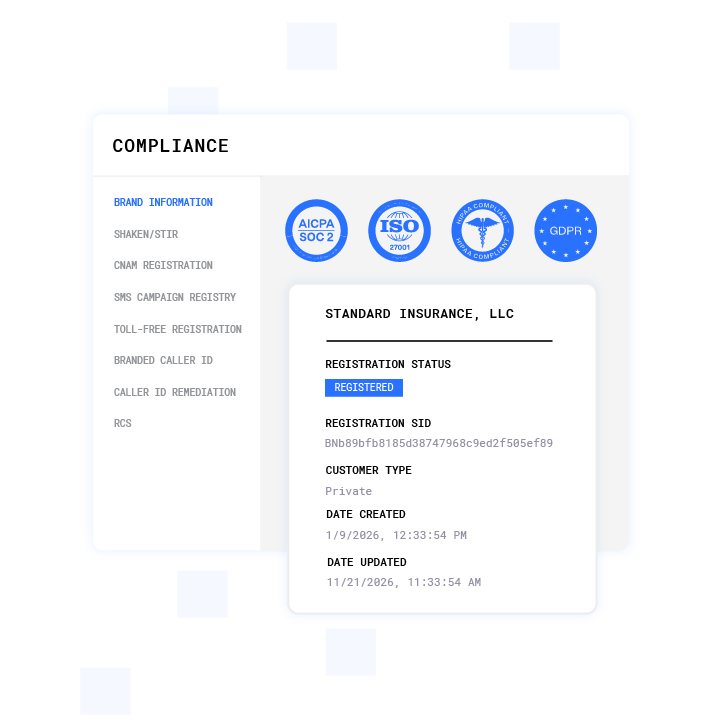
- Plura AI is the only platform that owns its FCC-licensed carrier and applies SOC 2, HIPAA, ISO, GDPR, SHAKEN/STIR, TCPA, and DNC controls at the infrastructure layer.1
- Plura AI hands off qualified calls to humans with shared stateful memory across every channel; talk to Plura AI to see the hybrid handoff in action.
Core Differences in Volume, Cost, and Empathy
Human-only outbound economics are difficult to defend at scale. Contact centers allocate 60-70% of operating costs to agent labor, with annual agent turnover running 35-45% across the industry.3 Each replacement hire for a contact center agent carries $10,000 to $20,000 in costs according to McKinsey research.3 For a 100-seat operation, traditional contact center costs run $4 million to $7 million annually.3
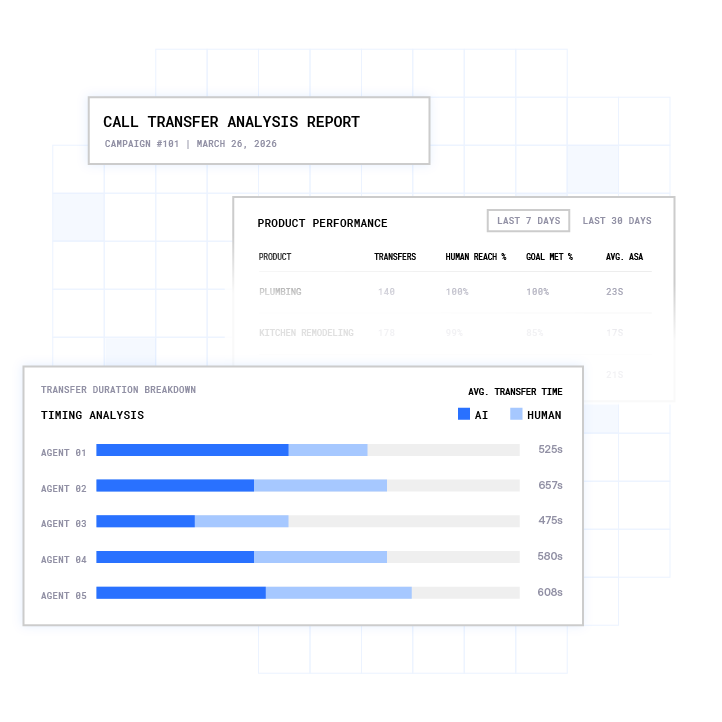
On the volume side, human agents in a typical contact center spent only about 15 minutes per hour actually talking to prospects before predictive dialing. An AI predictive dialer connects agents only to live conversations, which pushes talk time toward 45 to 50 minutes per hour on the same headcount.
Human agents retain a clear advantage in complex, high-stakes interactions.3 For enterprise deals with multiple stakeholders, regulated advice, or sensitive negotiations, human judgment produces better downstream outcomes.
The compliance dimension compounds the cost problem. TCPA violations can cost $500 per violation, rising to $1,500 if the violation is willful or knowing per text or call, and 2,628 TCPA lawsuits were filed in 2025, a 60% year-over-year increase. Human-operated outbound teams that rely on manual compliance processes carry structural exposure that scales with call volume.
Where AI Predictive Dialers Outperform Human-Only Teams
An AI predictive dialer outperforms human-only operations in four specific scenarios.
High-volume, low-complexity qualification. AI voice agents can place significantly more dials per day compared to 50-100 touches for a human SDR. AI agents also follow up on leads consistently when the workflow is configured correctly, while human SDRs often fall behind on follow-up. For appointment reminders, initial qualification, and lead reactivation, AI handles the volume without the overhead.
Speed-to-lead requirements. Companies responding within five minutes are 100 times more likely to connect with a prospect than those waiting 30 minutes, and leads contacted within one minute are 391% more likely to convert. Human SDR queues cannot match sub-5-second response at scale.
Cost per contact at volume. Plura AI voice agents cost $0.35 to $0.85 per completed conversation including intelligence, compared to $6 to $18 per call for fully loaded US human agents.
24/7 coverage without shift premiums. AI contact centers provide 24/7/365 availability compared to business hours plus shifts for traditional operations. That continuous coverage comes without the turnover risk that plagues shift-based human teams, and AI contact centers have 0 violations on compliance track record compared to 30-50% annual turnover for traditional operations, which creates coverage gaps and additional exposure as new hires ramp.
Where Human Agents Still Outperform AI
Three categories of interaction consistently produce better outcomes with human agents.
Complex negotiations and enterprise sales. For enterprise motions with $50K+ ACV deals and five or more stakeholder buying committees, human SDRs with AI augmentation produce better pipeline quality and higher conversion rates than pure AI SDRs. Nuanced objection handling, relationship-building, and multi-stakeholder alignment require human judgment.
Regulated advice and sensitive disclosures. Financial advice, legal counsel, and medical guidance involve regulatory frameworks that often require licensed human professionals. AI can handle intake and qualification, while humans handle the regulated conversation.
High-stakes empathy cases. Retention calls for at-risk customers, complaint resolution, and crisis situations benefit from human tone and adaptive empathy that current AI voice technology does not match at the same fidelity. Human SDRs generated 2.6x more revenue than AI SDRs in head-to-head tests when the interaction required relationship depth.
How Plura’s Hybrid Workflow Operates in Practice
Hybrid models consistently beat either pure configuration. Hybrid pods generate around $278,000 in pipeline per seat per month, against $187,000 for human-only teams and $94,000 for pure AI.3
Plura’s hybrid handoff operates across five clear steps.
- AI initiates contact. The AI predictive dialer dials from a prioritized list using stateful conversion signals, including historical answer rates and prior negotiation outcomes. Calls originate over Plura’s FCC-licensed carrier with SHAKEN/STIR caller ID verification.
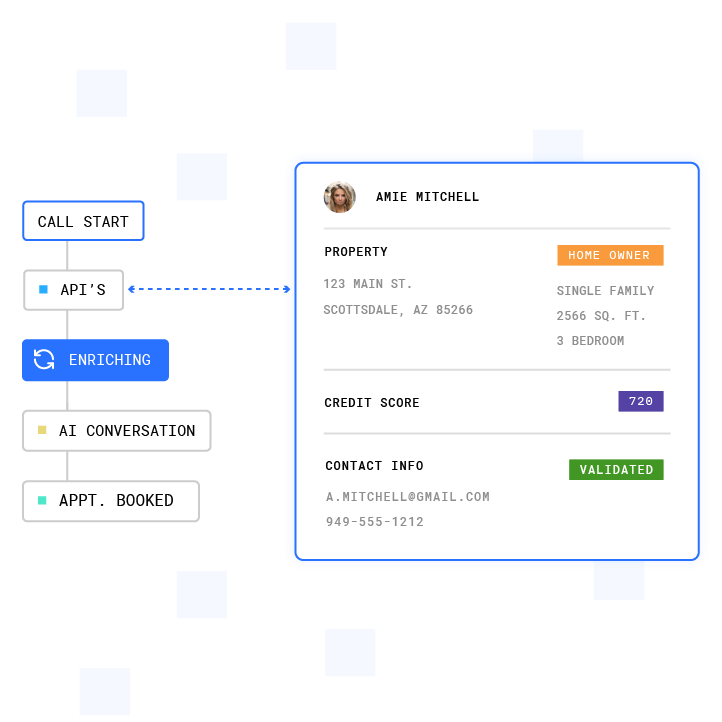
- AI qualifies the lead. The AI voice agent conducts the opening conversation, enriches the lead in real time from 30+ data sources, and applies the qualification criteria defined in the no-code workflow builder.
- Workflow gate triggers handoff. When a qualification threshold is met, or when the conversation requires human judgment, the AI warm-transfers the call to a U.S. agent with full context already loaded.
- Human receives stateful context. The receiving agent sees the complete conversation history across every prior channel touchpoint in the Unified Inbox. The customer does not repeat themselves.
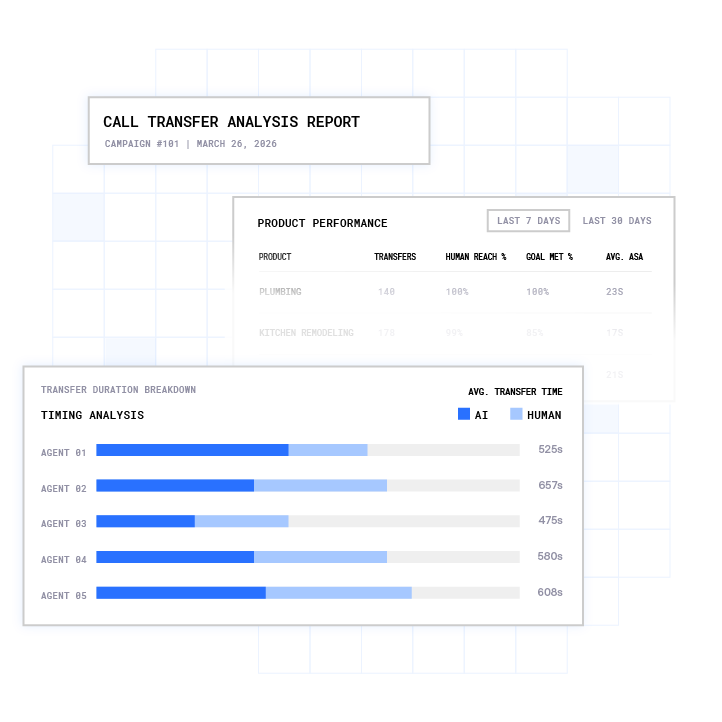
- Post-call intelligence feeds the loop. Conversation intelligence analyzes every interaction to surface objection patterns, script performance, and conversion gaps. Those insights feed continuous workflow improvement.
A COO at a regional financial services firm described the model directly: “We kept 8 human agents for complex cases and deployed Plura for everything else.”
That hybrid workflow only delivers ROI when the infrastructure underneath it maintains deliverability and supports compliance at scale. Two infrastructure-layer problems, spam labeling and TCPA exposure, determine whether an outbound operation can operate effectively in the current regulatory environment.
Compliance and Spam-Label Realities for Outbound Teams
Spam labeling has materially degraded outbound economics. Mobile answer rates for unknown numbers in the US have dropped significantly due to carrier-level spam scoring, STIR/SHAKEN enforcement, and consumer behavior shifts. When a business number gets spam-labeled, answer rates can drop by 40 to 60 percent, and when a call displays “Spam Likely,” 95% of recipients ignore it entirely.
Spam labeling operates at the carrier level. Most AI voice platforms cannot address it because they rent carrier infrastructure from third-party CPaaS providers and inherit that provider’s caller ID reputation. Plura issues branded caller ID directly through its FCC-licensed carrier, applies SHAKEN/STIR caller ID verification on every outbound call, and remediates spam labels at the carrier layer rather than bolting on a third-party fix.
On the TCPA side, the compliance landscape has tightened. The TCPA regulates calls made with artificial or pre-recorded voices (including AI) separately from those made using an autodialer.2 TCPA statutory damages under 47 U.S.C. § 227(b)(3) are $500 per violation, rising to $1,500 if the violation is willful or knowing, with each call or text counting as a separate violation and no statutory cap on total liability.
Plura supports compliance through infrastructure-layer controls. These include real-time DNC scrubbing against federal and state registries before every dial, immutable TCPA consent records, automatic quiet-hours enforcement via time-zone detection, and one-click audit-ready exports. Customers remain responsible for their own compliance obligations and regulatory posture, while Plura provides the infrastructure layer that supports those obligations.
Book a live demo with Plura to see how the compliance infrastructure operates on a live call. Schedule your demo here.
Real ROI Numbers for AI, Human, and Hybrid Models
The following table compares AI-only, human-only, and hybrid models on the dimensions that most directly affect cost, capacity, and risk.
Model Volume Capacity Cost per Contact Compliance Ownership Spam-Label Handling AI-Only (Plura) High volume of dials per day per agent seat $0.35-$0.85 per completed conversation (as noted earlier) Carrier-level: SHAKEN/STIR, real-time DNC, TCPA consent logging at infrastructure layer Branded caller ID issued at FCC-licensed carrier level; spam remediation at origination Human-Only 50-100 touches/day per rep $6-$18 per call (fully loaded US, as noted earlier) Manual processes; compliance bolted on; exposure scales with volume No carrier-level remediation; significantly reduced answer rates on unknown numbers Hybrid (Plura + Human) 18.3 meetings set per seat monthly vs. 9.4 human-only $224 cost per qualified opportunity vs. $487 human-only Carrier-level controls on AI leg; human agents receive pre-qualified, compliant handoffs AI leg uses branded caller ID; human leg inherits clean number reputation At the TCO level, Plura’s total cost of ownership runs $300,000-$700,000 annually for a 100-seat equivalent operation, replacing the $4 million to $7 million traditional contact center cost structure. Using the default scenario in Plura’s ROI calculator: 15 human agents at $20/hour with 40% talk utilization cost $60,000 per month; 6 Plura agents handling equivalent volume at 100% talk utilization cost $14,400 per month. That gap compounds to $547,200 in 12-month savings and $2,736,000 over 60 months.
Run your numbers through Plura’s calculator to check your ROI in real time. Open the ROI calculator.
After leaders see the ROI math, the same operational questions surface repeatedly. The following FAQs address the most common ones.
Frequently Asked Questions
Are predictive dialers illegal?
Predictive dialers are not illegal in the United States.2 They operate under the Telephone Consumer Protection Act (47 U.S.C. § 227) and FCC implementing regulations, which set specific requirements for their use. Key requirements include obtaining prior express written consent before contacting cell phones for telemarketing, scrubbing contact lists against the National Do Not Call Registry within 31 days before any campaign, keeping abandoned-call rates at or below 3% of answered calls per campaign over any 30-day period, and restricting calls to 8:00 a.m. to 9:00 p.m. in the recipient’s local time zone. The TCPA regulates calls made with artificial or pre-recorded voices (including AI) separately from those made using an autodialer. Operators should consult qualified legal counsel regarding their specific compliance obligations.
What is the difference between a power dialer and a predictive dialer?
A power dialer dials one number per available agent, which means a live agent is always ready before any call is placed. This eliminates abandoned-call risk entirely because no call goes out without an agent prepared to handle it. A predictive dialer calls multiple numbers simultaneously per agent using an algorithm to predict when agents will become available, which maximizes talk time but creates a window where answered calls may not connect to an agent immediately. Power dialers carry lower regulatory exposure from abandoned calls and often fit smaller teams or regulated industries where the 3% abandonment cap is difficult to manage. Predictive dialers deliver higher talk-time utilization at scale but require tighter compliance controls. Plura’s AI predictive dialer uses stateful conversion signals to prioritize which contacts to dial next, combining the volume efficiency of predictive dialing with carrier-level compliance enforcement.
How does Plura AI support TCPA compliance automatically?
Plura supports TCPA compliance through infrastructure-layer controls built into the platform rather than bolted on after the fact. Every outbound contact is checked against federal and state DNC registries in real time before a dial is placed. Consent records are timestamped, immutable, and stored in an audit-ready format. Quiet-hours rules apply automatically through time-zone detection on the contact, using state and federal calling-window restrictions for every campaign. The compliance dashboard exports audit-ready reports in one click. Plura also integrates with Blacklist Alliance for real-time TCPA litigator and DNC screening on outbound contacts. Customers remain responsible for their own compliance obligations, while Plura provides the infrastructure layer that supports those obligations.
What makes Plura AI different from other AI predictive dialer platforms?
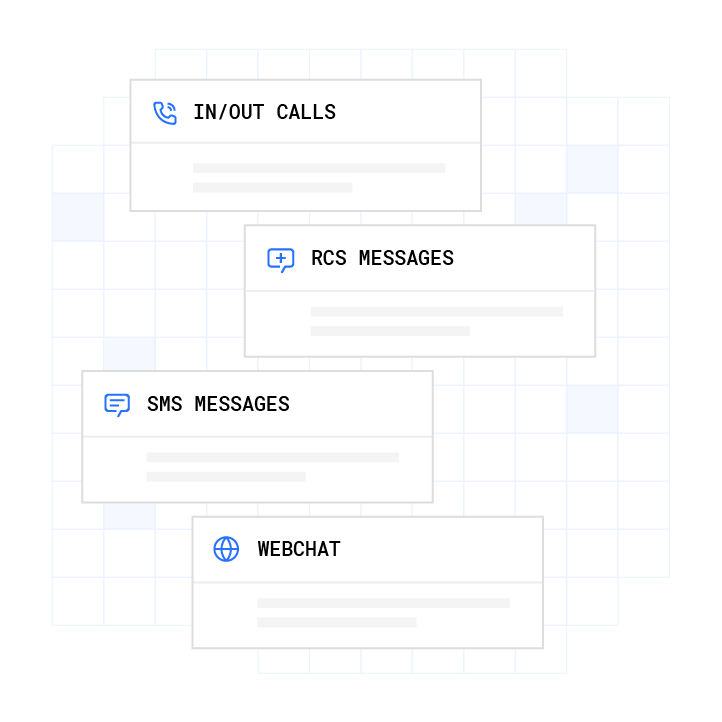
Most AI voice platforms are API resellers built on top of third-party CPaaS providers like Twilio. They do not own the carrier, cannot issue branded caller ID at the carrier level, and cannot apply compliance controls at origination. Plura is its own FCC-licensed audio bridging carrier. Voice originates on Plura’s domestic infrastructure, which means branded caller ID is issued directly, SHAKEN/STIR caller ID verification runs at the carrier layer, and spam-label remediation happens at origination rather than through a third-party add-on. In addition, Plura’s AI voice, AI SMS, AI RCS, and AI webchat all share a Stateful Conversation Database, so a lead who texted at 9 a.m. is recognized when the call comes at noon, with full prior context available to both the AI and any human agent who receives the handoff.
When should a contact center use a hybrid AI-human model instead of replacing agents entirely?
Most operations see the strongest performance with a hybrid configuration. Pure AI underperforms humans on closed-won conversion by roughly 10 percentage points, while pure human teams cannot match AI on volume, speed-to-lead, or cost per contact. The hybrid model assigns AI to high-volume, low-complexity work such as initial qualification, appointment setting, lead reactivation, and outbound reminders. Human agents handle complex negotiations, regulated advice, high-stakes empathy cases, and enterprise deals with multiple stakeholders. The handoff works because Plura’s Stateful Conversation Database carries full context from the AI leg into the human leg, so agents receive pre-qualified prospects with complete conversation history rather than cold transfers. Operators running this model have reported shifting from spending 60% of time trying to contact leads to spending 90% of time closing them.
Conclusion: Choosing the Right Outbound Model
The decision framework is direct. Pure human outbound carries high labor costs, 35-45% annual turnover, spam-label exposure that drops answer rates significantly, and TCPA liability that scales with every dial. Pure AI outperforms on volume, speed, and cost per contact but underperforms on complex negotiations, regulated advice, and high-stakes relationship work. The hybrid model, with AI handling qualification and humans handling complexity, consistently outperforms both pure configurations on pipeline ROI, cost per qualified opportunity, and total volume.
The infrastructure layer turns that strategy into an executable plan. Platforms that rent carrier access from third-party CPaaS providers cannot issue branded caller ID at the carrier level, cannot apply compliance controls at origination, and struggle in the regulatory environment that 2026 has produced. Plura AI owns its FCC-licensed carrier, applies SOC 2, HIPAA, ISO certification, GDPR, SHAKEN/STIR caller ID verification, TCPA, and DNC controls at the infrastructure layer, and hands off qualified calls to humans with shared stateful memory across every channel.1
The math is clear. Run your numbers through Plura’s calculator to check your ROI in real time.
For a detailed look at plans and rates, compare pricing options.
Book a live demo with Plura to see the hybrid handoff, stateful memory, and carrier-level compliance controls in a live environment. Schedule your demo here.
1 Plura AI maintains SOC 2, HIPAA, ISO, and GDPR posture as part of its platform infrastructure. References to compliance frameworks in this article describe Plura’s platform capabilities and do not constitute a guarantee that any customer using Plura will themselves be compliant with applicable laws or standards. Customers remain solely responsible for their own regulatory obligations, certifications, consent management, recordkeeping, and the claims they make to their own end users. Consult qualified legal counsel for guidance specific to your use case.
2 This article describes regulatory frameworks at a general level and does not constitute legal advice. Laws and regulations vary by jurisdiction, change over time, and apply differently depending on facts and circumstances. Readers should consult qualified legal counsel before making compliance decisions.
3 Performance figures, customer outcomes, and industry statistics referenced in this article are drawn from cited third-party sources or Plura customer case studies. Individual results vary based on implementation, use case, industry, audience, and execution. Past or aggregate performance is not a guarantee of future results.
4 References to third-party products, services, companies, or research are made for informational and comparative purposes only. Plura AI is not affiliated with, endorsed by, or sponsored by any third party named in this article unless explicitly stated. Trademarks and product names referenced remain the property of their respective owners.
This article is provided for informational purposes only and reflects Plura AI’s understanding at the time of publication. Product capabilities, integrations, and specifications are subject to change. For the most current information, visit plura.ai.
This article was produced with the assistance of AI tools and reviewed by Plura AI prior to publication.