

Written by: Matt Beucler, CEO, Plura AI | Last updated: August 25, 2026
Key Takeaways
- The most effective speed-to-lead setup uses AI SMS or voice to contact every inbound lead within seconds, qualifies the prospect from 50+ data sources, and delivers a warm live transfer to a human agent inside 5 minutes.
- Leads contacted within five minutes close at roughly 32%, versus 12% after 24 hours, creating a 2.6x conversion gap driven by response timing.3
- Plura AI uses a hybrid model that sequences AI SMS first contact, real-time enrichment, and a structured handoff that passes full context so agents never start from a blank slate.
- Carrier-level TCPA and DNC compliance, SHAKEN/STIR verification, and quiet-hours enforcement run automatically before every outbound contact, which removes the need for separate tools and reduces audit gaps.2
- Operators can see the full sub-5-second workflow in action by booking a live demo with Plura AI.
Why Five Minutes Is Already the Edge of the Window
Leads go cold in minutes. Aggregated 2026 benchmark data across 939 companies found that leads contacted inside five minutes close at roughly 32%, versus 12% when contact occurs after 24 hours.4 That gap is a 2.6x close-rate difference on the same leads, driven by response timing alone.
The 2007 MIT/InsideSales.com Lead Response Management study found that leads contacted within 5 minutes of a form submission are 100 times more likely to be reached by phone than leads contacted after 30 minutes.3 Lead conversion rates drop 10x after the first 5 minutes.
A 2007 study of 1,000 B2B demo requests found that 63.5% of firms never replied. 2026 benchmarks show that most companies still miss the five-minute response window. The median first response time for B2B inbound leads in 2026 sits at approximately 42 hours, long after the average buyer has mentally moved on.
Five minutes is not a comfortable buffer. It is the outer edge of the window where contact is still worth attempting at full conversion potential. Operators that want to hit this window consistently at scale remove humans from the first touch and let AI handle the opening seconds.
Book a live demo with Plura to see the sub-5-second first-contact workflow in action.
The Hybrid AI SMS + Live Transfer Model for Sub-5-Second Contact
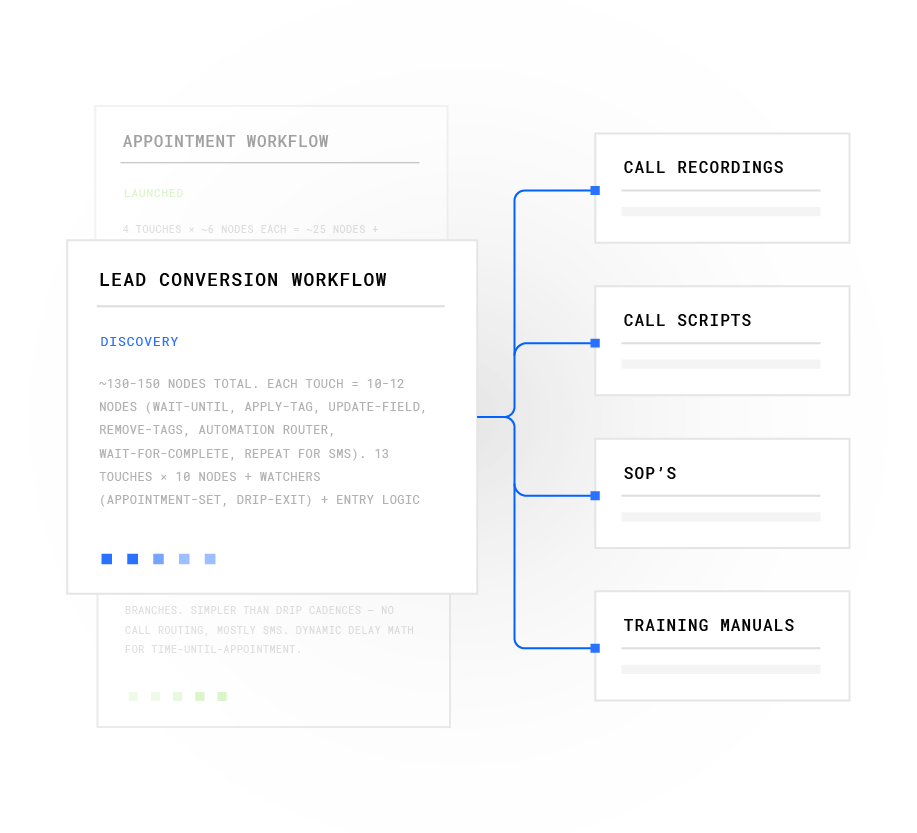
To achieve sub-5-second response times at scale, operators need a system that automates first contact while preserving the human judgment required to close deals. The hybrid model has two phases: AI-first contact and human close. Each phase depends on the other.
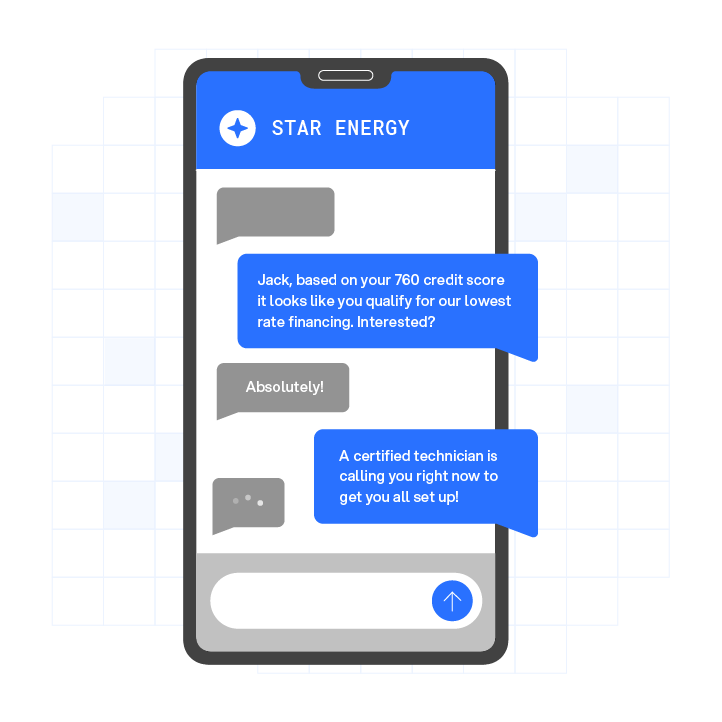
In phase one, the moment a lead submits a form, Plura’s AI SMS agent sends a branded, personalized message within seconds. If the lead does not reply within a defined window, the AI voice agent places an outbound call. Pew Research found that only 19% of Americans answer calls from unknown numbers, which makes SMS the preferred first channel for initiating contact before escalating to voice.4 Plura sequences both channels from the same stateful conversation database, so the voice call already knows what was said in the SMS thread.
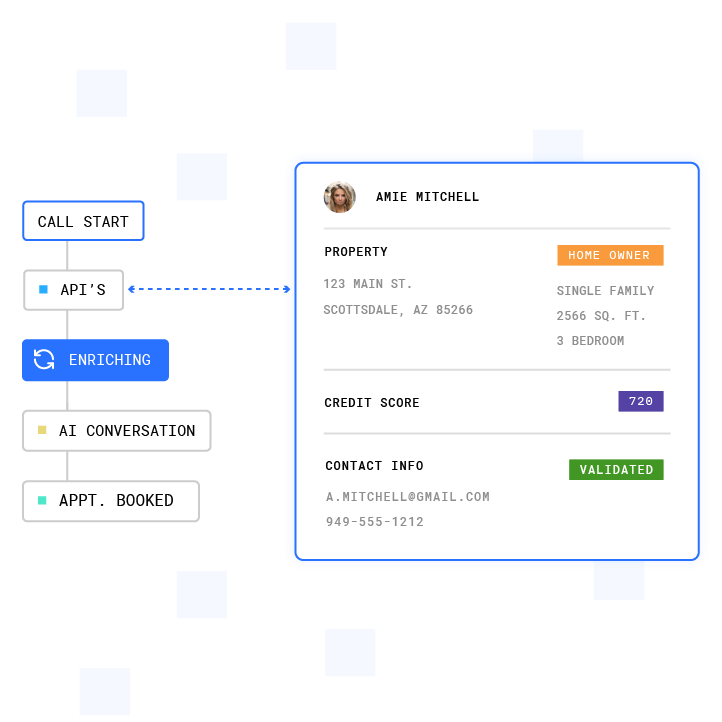
In phase two, once the AI has confirmed intent and collected qualification data from 50+ enrichment sources, it executes a warm live transfer. The receiving agent sees the full transcript, enrichment flags, and a plain-language summary before the first word is spoken. Forrester has not identified incomplete context transfer (or any handoff-related factor) as a leading cause of post-handoff customer dissatisfaction4. Its CX analyses instead cite chatbot failures, missteps on customer obsession, and employee-experience priorities as key drivers of declining scores. Plura’s handoff object addresses the context gap by passing structured memory instead of a raw transcript dump.
The text-to-call escalation path sits in the same workflow. A lead that replies to SMS gets qualified in-thread. A lead that does not reply gets called. A lead that answers the call and qualifies gets transferred. Every path ends at a live agent with context intact, inside 5 minutes.
Routing Rules Tuned by Lead Score and Territory
Routing logic determines whether a qualified buyer reaches the right agent or waits in a generic queue. Plura’s workflow engine applies routing rules at the moment of qualification, not at the moment of transfer.
The routing decision tree operates on three inputs:
- Lead score: Enrichment data from 50+ sources produces a real-time score. Leads above the threshold route directly to a senior closer. Leads below the threshold enter a nurture sequence managed by the AI SMS agent until the score improves or the lead opts out.
- Territory: Geographic routing rules assign leads to the agent or team covering the lead’s market. State-level quiet-hours rules from Plura’s compliance engine apply automatically based on the lead’s local time zone, so no agent receives a transfer that would fall outside configured calling windows.
- Availability: AI routing systems evaluate agent skills, current workload, performance metrics, and real-time availability to prevent agent overload while maintaining coverage. Plura applies this logic in a priority cascade. It routes to the best available agent first to create an immediate connection when possible. When no agent is immediately available, the system selects the best-fit agent based on skills and performance, then surfaces queue position and estimated wait time during the hold.
Escalation triggers fire automatically when the AI detects signals outside its configured scope. These include repeated questions, negative sentiment, high-risk keywords, or a qualification score that requires human judgment. Effective hybrid SMS handoffs use warm transfers in which the AI first briefs the agent via an internal note before the customer is connected, allowing the agent to join with full context. Plura executes this briefing automatically on every transfer.
Compliance Controls Embedded in the Contact Flow
TCPA compliance and DNC compliance sit inside Plura’s stack rather than as bolt-on features. Controls apply at the carrier level before every outbound contact on every channel.
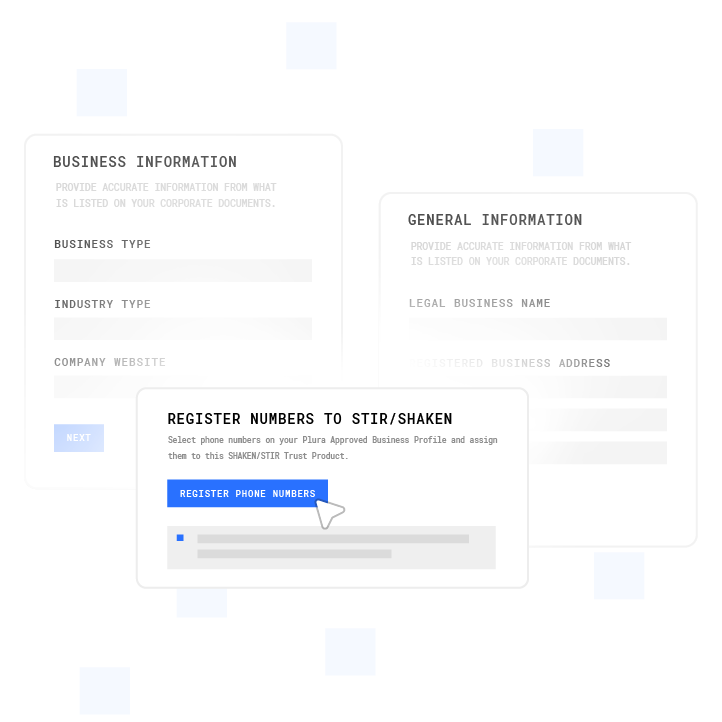
Every number is checked against federal and state DNC registries in real time before dial, so no contact proceeds without that screening step.2 Once cleared, the system verifies that consent records exist and are current. These records are timestamped, immutable, and audit-ready. Quiet-hours rules then apply automatically through time-zone detection on the contact’s location, which prevents calls outside configured windows even when DNC and consent checks pass. SHAKEN/STIR caller ID verification runs on every outbound voice call and authenticates origination at the carrier level instead of relying on a third-party reseller’s reputation.
TCPA statutory damages for AI voice violations run $500 per call for unintentional violations and $1,500 per call for knowing or willful violations, with no aggregate cap.2 The 2026 TCPA settlements include Hy Cite at $4.75M and Albertsons at $5.95M, while QuoteWizard reached a $19M settlement with court approvals in 2025. TCPA lawsuits rose 60% in 2025 compared to the prior year, with the majority filed as class actions. Operators should consult qualified counsel on their specific obligations under TCPA, DNC, and applicable state rules.
Plura supports compliance with SOC 2, HIPAA, ISO certification, and GDPR across all four channels.1 The compliance dashboard exports audit-ready reports in one click. Every outbound contact on the platform runs through the same enforcement layer, with zero exceptions.
Measurement Dashboard for Speed-to-Lead Performance
The measurement layer tracks the metrics that show whether the speed-to-lead setup is working. Plura’s business intelligence dashboard surfaces the following in real time:
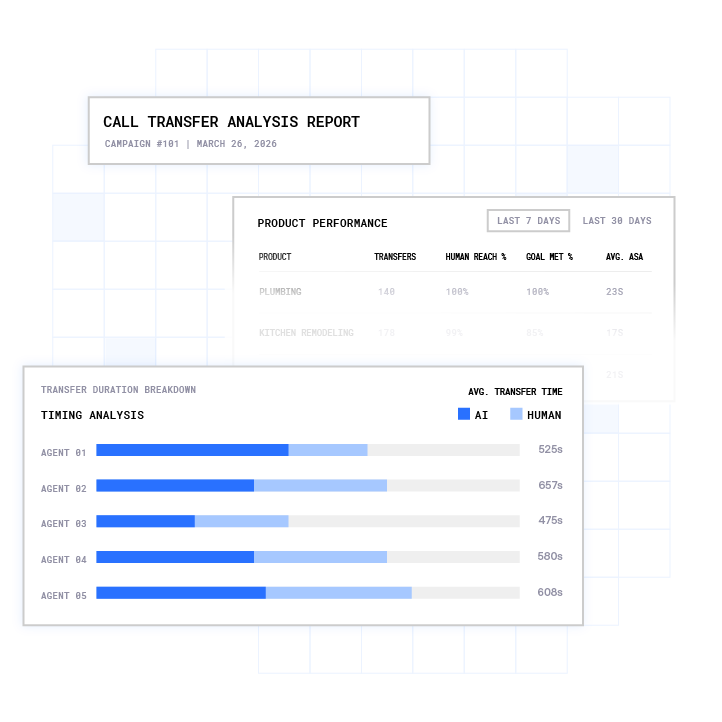
- First-contact latency: Time from lead submission to first AI touch, measured in seconds per lead.
- Qualification rate: Percentage of contacts that meet the lead score threshold and advance to live transfer.
- Transfer success rate: Percentage of warm transfers that connect to a live agent within the 5-minute SLA window.
- Post-handoff resolution time: Time from agent pickup to conversation close, tracked separately from AI handling time.
- Compliance audit log: Every DNC check, consent record, and quiet-hours enforcement event, exportable on demand.
- Pipeline contribution: Qualified leads transferred to agents as a percentage of total inbound volume, mapped to revenue outcomes via CRM integrations.
Operators can track handoff-specific metrics separately from general support metrics. These include handoff CSAT, time to first agent response, repeat information rate, and handoff abandonment rate. Plura’s dashboard segments these metrics by channel, territory, and lead score band, so operators can see exactly where the workflow is losing time or volume.
Plura Compared to a Generic CRM Queue
Generic CRM setups route leads to a human queue. The human checks the queue when available. By the time the first call goes out, the lead has often been waiting for hours. The table below shows what the response-time gap costs in conversion terms.
| Response Window | Conversion Rate | Close Rate | Source |
|---|---|---|---|
| Under 5 minutes | ~21% | ~32% | Aloware / Optifai 2026 Benchmark; InsideSales / Harvard / Optifai 2026 |
| Within 1 hour | Declining | 24% | Optifai Lead Response Benchmark |
| 1-24 hours | Declining | ~15% | Optifai B2B Benchmark Study, Q2 2025-Q1 2026 |
| Over 24 hours (industry avg.) | ~2.3% | ~12% | 2026 Speed-to-Lead Benchmark; InsideSales / Harvard / Optifai 2026 |
Generic CRM setups also lack carrier-level compliance enforcement. DNC scrubbing, TCPA consent logging, and SHAKEN/STIR caller ID verification are typically handled by third-party add-ons with separate audit trails and no real-time enforcement at the moment of dial. Plura runs that system on its own FCC-licensed carrier, with SOC 2, HIPAA, ISO certification, GDPR, SHAKEN/STIR caller ID verification, TCPA compliance, and DNC compliance supported inside the same stack that originates the call.1 There is no third-party CPaaS in the path, no wrapper tax, and no compliance gap between the platform and the carrier.
Q&A: Speed-to-Lead Setup in Practice
How quickly should you respond to leads?
Leads contacted within 1 minute are 391% more likely to convert than those contacted after 24 hours. Responding to a lead within one hour makes qualification roughly 7 times more likely than responding an hour later. The practical target for high-volume operations is first AI contact in under 5 seconds, with a live agent on the line inside 5 minutes for qualified buyers.
Why is speed to lead so important?
A Lead Connect study found that 78% of customers buy from the first company to respond to their inquiry. InsideSales.com research found that 35-50% of all sales are won by the vendor that responds first. Speed to lead functions as a structural advantage for any operator running inbound lead volume, not just as a sales tactic.
What is the difference between AI SMS first contact and a live agent call?
AI SMS responds within seconds and qualifies the lead through a real conversation before any human is involved. The AI voice agent escalates when the lead does not reply to SMS or when the qualification workflow calls for a voice touch. The live agent then receives a warm transfer with full context and focuses on the close. AI handles speed and scale. Humans handle judgment and closing.
How does Plura enforce TCPA compliance and DNC compliance in real time?
Every outbound contact on Plura’s platform is checked against federal and state DNC registries before dial. Consent records are timestamped and immutable. Quiet-hours rules apply automatically based on the lead’s local time zone. SHAKEN/STIR caller ID verification authenticates every outbound voice call at the carrier level. The compliance dashboard exports audit-ready logs on demand. Operators should consult qualified counsel on their specific obligations under applicable law.
What happens when the AI cannot qualify a lead?
Plura’s workflow engine includes explicit escalation triggers. These include repeated questions, low-confidence intent below defined thresholds, negative sentiment signals, or high-risk keywords. When any trigger fires, the AI executes a warm transfer to a U.S. agent with a structured handoff object that contains the conversation summary, intent flags, enrichment data, and escalation reason. The agent never starts from a blank slate.
How does Plura handle leads that come in outside business hours?
Plura’s 24/7 call answering and AI SMS operate continuously. Drift research on over 30 million conversations indicates that 39%+ of B2B website conversations happen outside normal (9-5) working hours. Leads submitted at 11 p.m. on a Saturday receive the same near-instant first contact as leads submitted at 9 a.m. on a Tuesday. Qualified leads are either transferred to an on-call agent or held in a warm queue for the next available agent at open of business, with the full conversation context preserved.
What does the ROI look like for a 15-agent operation?
At default inputs on Plura’s ROI calculator, a 15-agent operation paying $20 per hour with standard taxes, benefits, and commissions at 40% talk utilization costs $60,000 per month. Replacing that team with Plura at $15 per hour, 100% talk utilization, and 6 Plura agents doing the work of 15 humans drops the monthly cost to $14,400. That shift produces $45,600 in savings in the first 30 days and $547,200 over 12 months.3
Conclusion: A System Built for Speed, Context, and Control
The most effective speed-to-lead setup is not a faster CRM notification or a better email template. It is a system that removes humans from the first touch, qualifies the lead in real time, and delivers a warm buyer to a live agent inside 5 minutes at any volume, with compliance controls applied before every contact.
Plura runs that system on its own FCC-licensed carrier, with SOC 2, HIPAA, ISO certification, GDPR, SHAKEN/STIR caller ID verification, TCPA compliance, and DNC compliance supported inside the same stack that originates the call.1 No third-party CPaaS. No compliance bolt-on. No context lost at handoff.
Run your numbers through Plura’s calculator to check your ROI in real time.
Frequently Asked Questions
What is the best speed to lead setup for high-volume inbound lead operations?
The most effective setup combines an AI SMS agent that responds within seconds on every lead submission, a real-time lead qualification layer that enriches the contact from 50+ data sources during the conversation, and a warm live transfer to a human agent inside 5 minutes for qualified buyers. The entire workflow runs on a single platform with compliance enforcement at the carrier level, so DNC compliance and TCPA compliance checks occur before every contact without a separate tool or manual review step. Plura executes this workflow on its own FCC-licensed carrier, which means branded caller ID, SHAKEN/STIR caller ID verification, and real-time DNC scrubbing are all enforced inside the same stack.
How does AI SMS lead qualification work before a live transfer?
When a lead submits a form, Plura’s AI SMS agent sends a branded, personalized message within seconds and opens a two-way conversation. During that conversation, the platform pings 50+ enrichment sources in real time, including IP data, contact data, intent signals, and business firmographics, to build a qualification profile. The AI scores the lead against the operator’s defined criteria. Leads that meet the threshold trigger a warm live transfer to the assigned agent, who receives the full transcript, enrichment data, and a plain-language summary before the first word is spoken. Leads that do not meet the threshold enter a nurture sequence managed by the AI SMS agent until their score improves or they opt out.
What compliance infrastructure does Plura provide for automated SMS and voice outreach?
Plura supports compliance with TCPA compliance, DNC compliance, SHAKEN/STIR caller ID verification, SOC 2, HIPAA, ISO certification, and GDPR across voice, SMS, RCS, and webchat. Every outbound contact is checked against federal and state DNC registries before dial. Consent records are timestamped, immutable, and audit-ready. Quiet-hours rules apply automatically based on the lead’s local time zone. The compliance dashboard exports audit-ready reports in one click. Operators are responsible for their own regulatory obligations and should consult qualified counsel on their specific compliance posture under applicable law.
How does Plura maintain conversation context across SMS and voice channels during a handoff?
Plura’s Stateful Conversation Database keys every interaction to a customer token, whether that is a phone number, email address, or contact ID, and persists the full conversation history across all channels in one place. When the AI SMS agent escalates to a voice call or a live transfer, the receiving channel reads from the same database. The agent workspace surfaces the conversation summary, intent flags, enrichment data, sentiment, and escalation reason as the first-visible fields. The customer does not repeat information. The agent does not start from a blank slate. This cross-channel memory is built into the platform architecture, not assembled through transcript stitching between separate tools.
What metrics should operators track to measure speed to lead performance?
The core metrics for a hybrid AI SMS and live transfer setup are first-contact latency in seconds from lead submission to first AI touch, qualification rate as a percentage of contacts that advance to live transfer, transfer success rate targeting a high percentage of warm transfers connecting within the 5-minute SLA window, post-handoff resolution time tracked separately from AI handling time, and pipeline contribution mapping qualified transfers to revenue outcomes via CRM integrations. Plura’s business intelligence dashboard segments all of these metrics by channel, territory, and lead score band in real time, with compliance audit logs exportable on demand for legal review or carrier requirements.
1 Plura AI maintains SOC 2, HIPAA, ISO, and GDPR posture as part of its platform infrastructure. References to compliance frameworks in this article describe Plura’s platform capabilities and do not constitute a guarantee that any customer using Plura will themselves be compliant with applicable laws or standards. Customers remain solely responsible for their own regulatory obligations, certifications, consent management, recordkeeping, and the claims they make to their own end users. Consult qualified legal counsel for guidance specific to your use case.
2 This article describes regulatory frameworks at a general level and does not constitute legal advice. Laws and regulations vary by jurisdiction, change over time, and apply differently depending on facts and circumstances. Readers should consult qualified legal counsel before making compliance decisions.
3 Performance figures, customer outcomes, and industry statistics referenced in this article are drawn from cited third-party sources or Plura customer case studies. Individual results vary based on implementation, use case, industry, audience, and execution. Past or aggregate performance is not a guarantee of future results.
4 References to third-party products, services, companies, or research are made for informational and comparative purposes only. Plura AI is not affiliated with, endorsed by, or sponsored by any third party named in this article unless explicitly stated. Trademarks and product names referenced remain the property of their respective owners.
This article is provided for informational purposes only and reflects Plura AI’s understanding at the time of publication. Product capabilities, integrations, and specifications are subject to change. For the most current information, visit plura.ai.
This article was produced with the assistance of AI tools and reviewed by Plura AI prior to publication.