

Written by: Matt Beucler, CEO, Plura AI | Last updated: August 25, 2026
Key Takeaways
- Automated lead scoring uses demographic, firmographic, behavioral, intent, negative, and engagement signals to rank inbound contacts and trigger AI Voice or AI SMS handoffs in real time.
- Plura AI continuously enriches every lead with 30+ data sources during live conversations, updates scores instantly, and writes them to its Stateful Conversation Database for immediate routing decisions.
- Vertical-specific playbooks for SaaS, real estate, and home services adjust base scoring tables with targeted signals such as urgency, financing readiness, or emergency keywords to improve conversion speed.
- Negative signals like competitor domains, unsupported geographies, or disengagement automatically block or deprioritize outreach, which protects sales resources and supports compliance.
- See how Plura turns these scoring models into instant AI Voice or AI SMS outreach by booking a live demo today.
Table 1: Demographic Scoring Signals That Prove Buyer Authority
Demographic scoring confirms whether a contact has decision power and a reliable way to reach them. Focus on titles and verified work emails, because they carry the highest point values and signal real buying authority.
| Signal | Points | Data Source | Handoff Threshold |
|---|---|---|---|
| Decision-maker title (VP, Director, Owner) | +20 | LinkedIn, form field, enrichment API | High total score can route directly to an AI Voice call in real time |
| Manager-level title | +10 | LinkedIn, enrichment API | |
| Individual contributor or unknown title | +2 | Form field | |
| Work email domain confirmed | +10 | Email validation API | |
| Personal email (Gmail, Hotmail) | -15 | Email validation API |
Automation rule: When demographic contribution plus all other dimensions reaches a high threshold, Plura routes the lead to an AI voice agent rapidly. If the lead is unreachable by voice after one attempt, AI SMS follows automatically.
Table 2: Firmographic Scoring For Account Fit
Firmographic scoring measures whether the account matches your target profile by size, industry, and geography. These signals filter out low-value accounts early and concentrate live conversations on companies that can buy at your price point.
| Signal | Points | Data Source | Handoff Threshold |
|---|---|---|---|
| Company size 50-500 employees | +15 | Firmographic enrichment, People Data Labs | Firmographic subtotal above a minimum level advances to behavioral scoring, and a high combined total can trigger AI Voice handoff |
| Company size 500+ employees | +20 | Firmographic enrichment | |
| Company size under 10 employees | -10 | Firmographic enrichment | |
| Target industry match (insurance, legal, real estate, home services) | +15 | SIC/NAICS code, enrichment API | |
| Geography: served market | +10 | IP data, form field |
Automation rule: When the firmographic subtotal falls below a minimum level, Plura suppresses immediate AI Voice routing and assigns the lead to a nurture sequence via AI SMS until the record is re-scored.
Table 3: Behavioral Scoring For Buying Signals On Your Site
Behavioral scoring tracks what prospects do on your properties, such as pricing visits and demo requests. These actions reveal where they sit in the buying journey and when they are ready for a live conversation.
| Signal | Points | Data Source | Handoff Threshold |
|---|---|---|---|
| Pricing page visit | +20 | Website analytics, CRM event | Behavioral subtotal above a minimum level, combined with fit score, can trigger AI Voice in real time |
| Demo or quote request form submitted | +25 | Form capture, CRM | |
| Case study or ROI calculator engagement | +15 | Website analytics | |
| Webinar or event attendance | +10 | Event platform integration | |
| Single blog visit, no return | +3 | Website analytics |
Automation rule: A pricing page visit plus a demo form submission in the same session often pushes leads past a high threshold. At that point, Plura places an AI voice agent call in real time after form submission.
Table 4: Negative Signals That Block Low-Value Leads
Negative scoring removes poor-fit or risky contacts from your sales queues. These penalties prevent wasted dials and protect your brand from unwanted outreach.
| Signal | Points | Data Source | Action |
|---|---|---|---|
| Competitor domain email | -50 (disqualify) | Email domain lookup | Block AI Voice routing, archive in CRM |
| Student or job-seeker role indicator | -40 | Form field, LinkedIn enrichment | Route to self-serve resources, suppress sales queue |
| Unsupported geography | -30 | IP data, form field | Block AI Voice, assign low-frequency nurture |
| Email unsubscribe or repeated bounce | -20 | Email platform event | Suppress all outreach, flag for review |
| No activity for 90+ days after initial engagement | -15 (score decay) | CRM timestamp | Re-route to re-engagement AI SMS sequence |
Automation rule: Any lead that hits a disqualify-level negative signal is blocked from AI Voice and AI SMS sales routing. Plura tags the record in the CRM and holds it for re-evaluation if the contact’s role or company changes.
Table 5: Intent Scoring For In-Market Buyers
Intent scoring captures signals that show a prospect is actively researching your category. These signals can outweigh weaker demographic or firmographic data and justify fast outreach.
| Signal | Points | Data Source | Handoff Threshold |
|---|---|---|---|
| Third-party intent: actively researching category | +25 | Intent data provider, enrichment API | Intent subtotal above a minimum level can escalate to AI Voice in real time, even with limited behavioral history |
| Repeated visits to product or pricing pages within 7 days | +20 | Website analytics | |
| Direct search for brand or product name | +15 | UTM parameters, attribution platform | |
| Content download on high-intent topic (compliance guide, ROI calculator) | +15 | CRM event, form capture |
Automation rule: A confirmed third-party intent signal can be sufficient to trigger an AI voice agent call in real time, even when firmographic or demographic scores are still incomplete.
Table 6: Engagement Scoring After First Contact
Engagement scoring tracks how quickly and consistently a lead responds once outreach starts. These signals guide when to escalate from AI SMS or email into a live AI Voice conversation.
| Signal | Points | Data Source | Handoff Threshold |
|---|---|---|---|
| Reply to AI SMS within 5 minutes | +20 | SMS platform event | Engagement subtotal above a minimum level after first AI SMS touch can escalate to AI Voice live transfer |
| Email click-through on outbound sequence | +10 | Email platform event | |
| Webchat session lasting 2+ minutes | +15 | AI webchat event log | |
| No response to 3 sequential touches | -10 | CRM cadence log |
Automation rule: A reply to the first AI SMS touch adds 20 engagement points. If the combined score then crosses a high threshold, Plura escalates to a live AI voice agent call in real time after the reply.
Real-Time Enrichment Layer: How Plura Scores Leads Mid-Conversation
Static scoring models assign points at form submission and then stop. Plura’s business intelligence layer works differently, because it pings 30+ data sources, including IP and property data, email validation, contact data, intent signals, and business firmographics, during the live conversation across every channel. The score updates in real time and writes immediately to the Stateful Conversation Database.
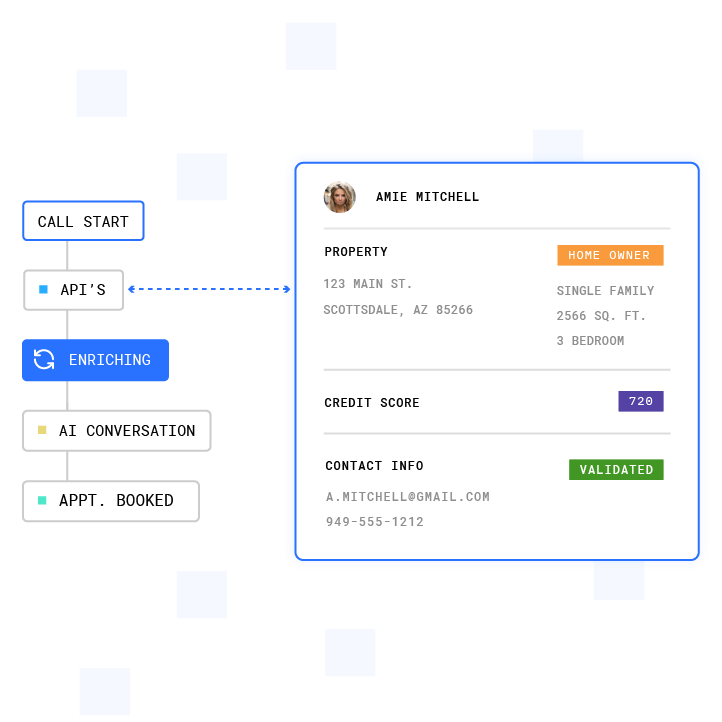
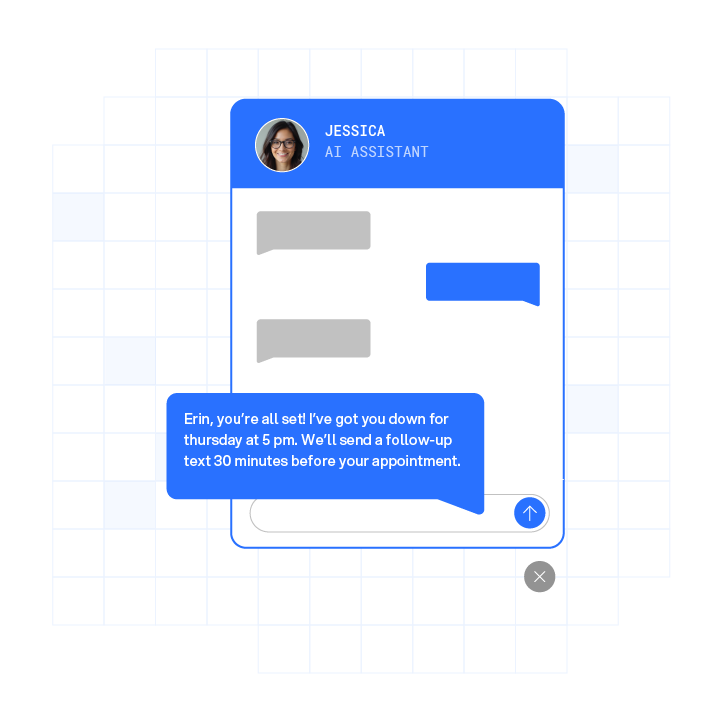
The practical sequence is simple. Lead captured, enrichment APIs called within seconds, score calculated, threshold evaluated, and handoff rule fired. If the score crosses a high threshold during an AI SMS conversation, Plura escalates to an AI voice agent call mid-thread without the lead re-entering a queue. The Stateful Conversation Database carries full context across the channel switch, so the voice agent already knows what was said in the text exchange.
Modern enrichment APIs add minimal latency, typically under a few seconds. The scoring accuracy gains from complete data outweigh the minor processing delay. To maintain that accuracy, Plura follows a strict sequence: ingestion, validate, standardize, enrich, score, deliver. This order ensures enrichment completes before any routing decision fires.
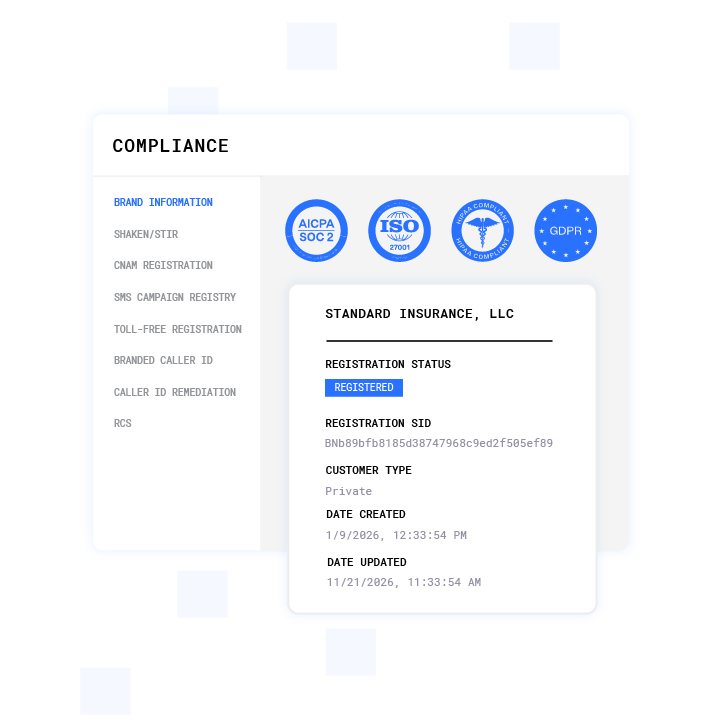
While enrichment runs, Plura’s compliance engine operates in parallel. Every outbound contact is checked against federal and state DNC registries before dial, TCPA consent records are timestamped and immutable, and SHAKEN/STIR caller ID verification authenticates every outbound voice call.1,2 HIPAA, SOC 2, ISO certification, GDPR, and DNC compliance infrastructure sit in the platform layer, not as afterthoughts.1,2
See real-time lead scoring trigger an AI Voice handoff on a live call
Run your numbers through Plura’s ROI calculator to check your cost savings in real time.
The base scoring tables above apply across industries, and each vertical needs targeted adjustments to capture the signals that predict conversion in that market. The following playbooks show how to adapt the scoring model for SaaS, real estate, and home services.
SaaS Vertical Playbook For Mid-Market Sales
SaaS teams selling to mid-market buyers, typically 50 to 500 employees, can adjust the base model with a few focused changes. These tweaks reward high-intent product research and accounts that match your contract size.
- Add +15 points for a confirmed SaaS or technology industry match via firmographic enrichment.
- Add +20 points for a pricing page visit combined with a free-trial or demo request in the same session.
- Add +10 points for a compliance guide or ROI calculator download, which reflects high commercial intent in regulated SaaS sales.
- Subtract -20 points for company size under 10 employees, which typically falls below minimum contract value.
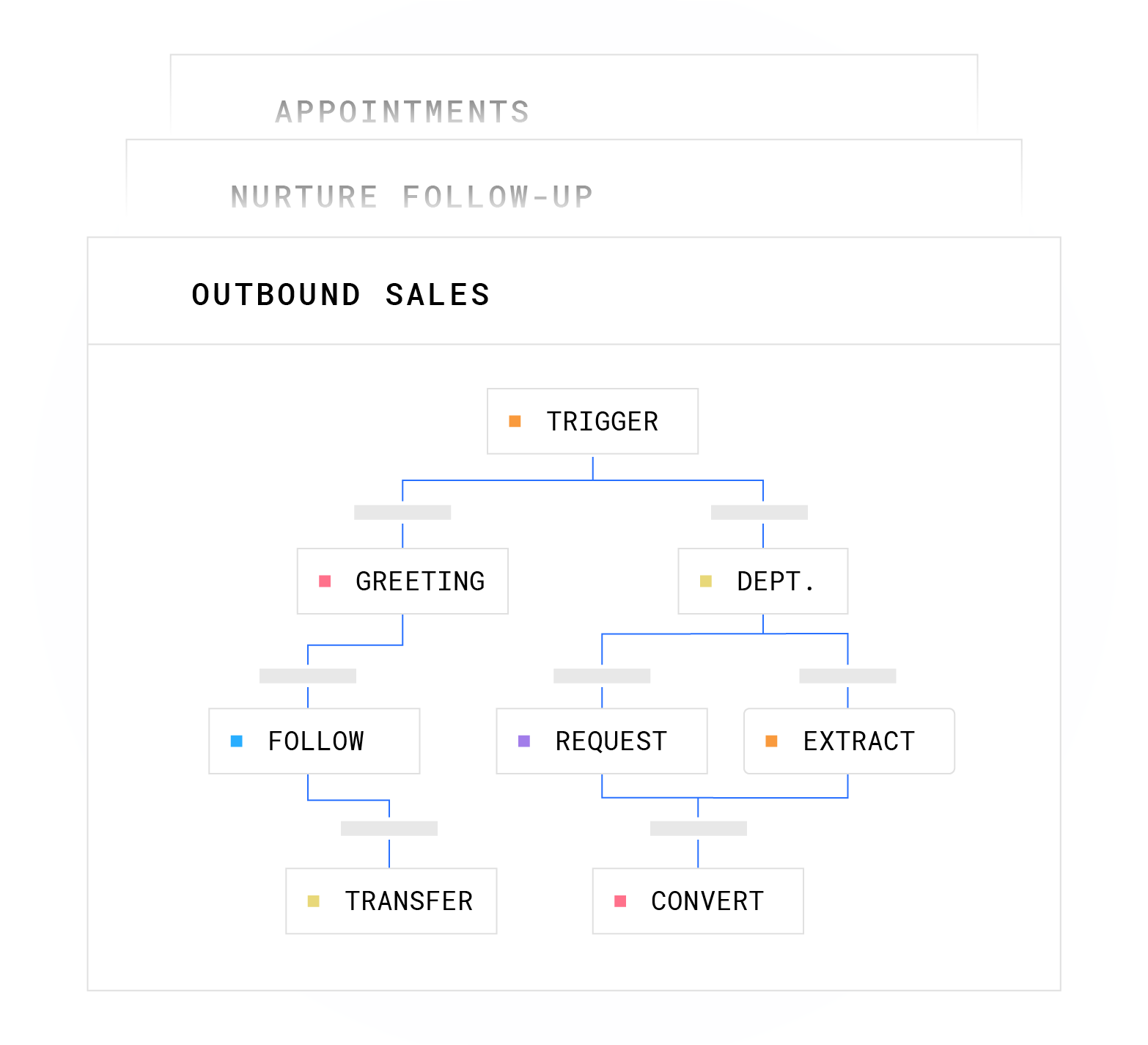
Real-time handoff rule: When the combined score reaches a high band, the system routes to an AI voice agent rapidly at the qualifying event. If there is no answer, an AI SMS follow-up keeps the conversation moving.
Real Estate Vertical Playbook For Urgent Buyers
Real estate lead scoring prioritizes urgency, financing readiness, and geography over generic firmographic fit. The adjustments below reflect those priorities and help teams focus on near-term transactions.
- Add +25 points for a stated purchase or sale timeline under 90 days.
- Add +25 points for confirmed pre-approval or financing readiness.
- Add +20 points for a specific property inquiry, with an address or MLS number provided.
- Add +10 points for a reply to the first AI SMS touch within 10 minutes.
- Subtract -20 points for geography outside served markets.
Real-time handoff rule: High scoring leads in the Hot band move to an AI voice agent call rapidly. Moderate scoring leads in the Warm band receive an AI SMS nurture sequence with a scheduled follow-up. Plura supports automated routing so agents reach serious buyers quickly.
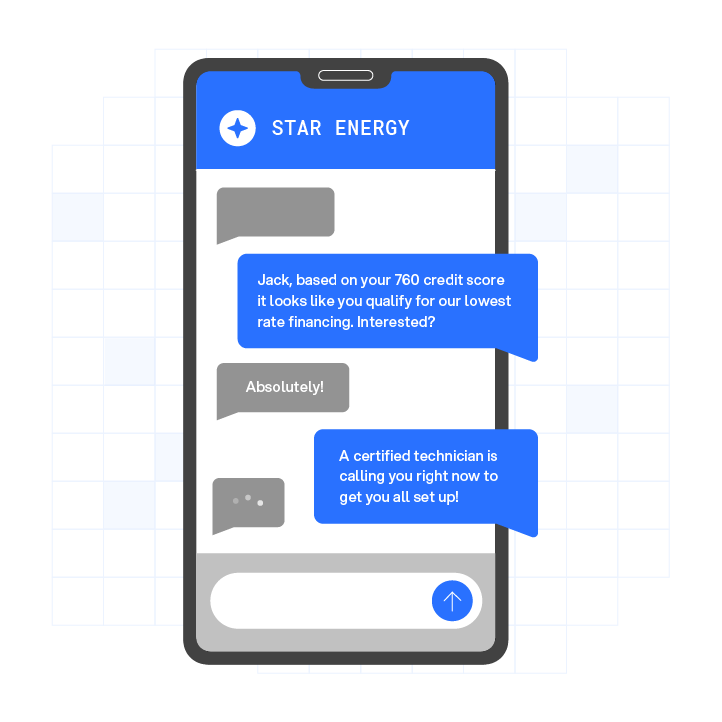
Home Services Vertical Playbook For Emergency Calls
Home services scoring weights urgency and call behavior above other signals. Emergency service requests often close the same day at near-full price and should reach a live resource immediately.
- Add +30 points for an emergency or urgent service request, using keyword detection in form or SMS.
- Add +20 points for a referral source confirmed via attribution data.
- Add +15 points for an inbound call lasting over 2 minutes.
- Add +25 points for the same lead calling 3 or more times within 24 hours.
- Subtract -10 points for explicit price-shopping language such as “what is the minimum cost”.
Real-time handoff rule: Any lead with an emergency signal and a high combined score moves to an AI voice agent call or live transfer rapidly. Leads with moderate-to-high scores receive an automated AI SMS confirmation promptly. Plura’s AI answering service for home services applies these rules 24/7 without staffing gaps.
Watch the home services playbook route an emergency call in under 60 seconds
Frequently Asked Questions
How is lead score calculated?
Lead score is calculated by assigning point values to attributes and actions that correlate with closed-won outcomes, then summing those values into a total score per contact. A complete model combines at least six signal categories: demographic fit (title, contact quality), firmographic fit (company size, industry, geography), behavioral signals (page visits, form submissions, content downloads), intent signals (third-party research data, repeat pricing page visits), negative signals (competitor domains, unsupported geographies, disengagement), and engagement signals (reply speed, session length, channel responsiveness). Each category contributes a subtotal, and the combined score is evaluated against a handoff threshold. When the threshold is crossed, an automation rule fires and routes the lead to a sales channel, an AI voice agent call, an AI SMS sequence, or a nurture path, depending on the score band.
Can you give me an example of lead scoring?
A home services company receives a form submission at 9:47 p.m. on a Saturday. The lead selects “emergency plumbing” as the service type (+30 points), provides a work phone number (+10 points), is located within the company’s service area (+10 points), and submits via a paid search ad tied to a high-intent keyword (+15 points). Total score reaches 65 points. Plura promptly fires an AI SMS to the lead confirming receipt and asking for the address. The lead replies within 3 minutes (+20 engagement points), which pushes the total to 85. Plura then escalates to an AI voice agent call that qualifies the job and books the technician, all before a human dispatcher sees the notification.
What is the difference between rule-based and AI-driven lead scoring?
Rule-based scoring assigns fixed point values to predefined attributes and does not update those rules based on outcome data. It is fast to implement but static, because a rule written in January does not account for the behavioral patterns that emerge in March. AI-driven scoring trains a model on historical closed-won and closed-lost records, identifies which signals actually predicted conversion, and weights them accordingly. In practice, most high-volume operators start with a rule-based model using the tables in this guide, then layer predictive scoring as their CRM accumulates sufficient conversion history.
What score threshold should trigger an immediate AI Voice or AI SMS handoff?
The scoring tables in this guide use a threshold that reflects when a lead has demonstrated sufficient fit and intent to justify immediate outreach. High scoring leads receive an AI voice agent call rapidly. Leads with moderate scores receive an AI SMS nurture sequence. Lower scoring leads may be assigned to low-frequency nurture or filtered out entirely. The threshold serves as a starting point, not a fixed rule. Operators should calibrate it against their own closed-won data and adjust it to avoid missing qualified leads.
How does Plura handle lead scoring across multiple channels without losing context?
Plura’s Stateful Conversation Database keys every interaction to a single customer token, whether that is a phone number, email address, or CRM ID. When a lead replies to an AI SMS thread, that reply updates the engagement score and writes the new total to the database. If the updated score crosses the AI Voice threshold, the voice agent that picks up the call already knows the lead’s name, the service they requested, the SMS exchange that just occurred, and any enrichment data pulled during the text conversation. The lead does not re-explain themselves. The same context is available in the Unified Inbox for any human agent who takes a warm transfer. This cross-channel memory makes rapid handoffs operationally viable at scale, because the AI does not need to re-qualify a lead it already knows.
What compliance considerations apply to automated lead scoring and AI outreach?
Automated lead scoring itself does not create outreach obligations, but the handoff rules that scoring triggers do. Every AI Voice call and AI SMS message fired by a scoring threshold must operate within the applicable regulatory framework. Plura’s compliance infrastructure, detailed earlier in the enrichment layer section, handles DNC scrubbing, TCPA consent record handling, SHAKEN/STIR verification, and quiet-hours enforcement automatically. HIPAA and SOC 2 infrastructure covers protected health information across supported channels.1,2 Operators remain responsible for their own consent records, campaign configurations, and compliance obligations under applicable law. Plura supports compliance, and downstream compliance posture stays with the operator. Consult qualified legal counsel for guidance specific to your industry and jurisdiction.
Walk through a scoring model built for your vertical with a Plura specialist
Compare plans and rates side by side at plura.ai/pricing.
1 Plura AI maintains SOC 2, HIPAA, ISO, and GDPR posture as part of its platform infrastructure. References to compliance frameworks in this article describe Plura’s platform capabilities and do not constitute a guarantee that any customer using Plura will themselves be compliant with applicable laws or standards. Customers remain solely responsible for their own regulatory obligations, certifications, consent management, recordkeeping, and the claims they make to their own end users. Consult qualified legal counsel for guidance specific to your use case.
2 This article describes regulatory frameworks at a general level and does not constitute legal advice. Laws and regulations vary by jurisdiction, change over time, and apply differently depending on facts and circumstances. Readers should consult qualified legal counsel before making compliance decisions.
This article is provided for informational purposes only and reflects Plura AI’s understanding at the time of publication. Product capabilities, integrations, and specifications are subject to change. For the most current information, visit plura.ai.
This article was produced with the assistance of AI tools and reviewed by Plura AI prior to publication.