

Written by: Matt Beucler, CEO, Plura AI
Key takeaways for AI missed-call booking in healthcare
- AI missed-call booking for healthcare uses AI voice agents to capture, qualify, and schedule unanswered patient calls, which recovers revenue that would otherwise be lost.
- The seven-step workflow spans real-time call detection, intent qualification, EHR-integrated booking, confirmations, and structured follow-up reminders that reduce no-shows.
- Key outcomes include up to 40% improvement in no-show rates, response times under 5 seconds, after-hours coverage, and reduced staff workload through full bidirectional EHR integration.3
- Compliance support is critical. Platforms need BAA coverage, encryption, audit logging, consent management, and contractual limits on PHI use in model training, aligned with HIPAA and TCPA frameworks.1
- Plura AI delivers this complete missed-call recovery solution with carrier-grade infrastructure; see how Plura’s webchat can transform your practice’s scheduling efficiency.
Step 1: Capture the missed call in real time
Objective: Detect every unanswered, abandoned, or voicemail-routed call the moment it occurs and pass a structured event to the recovery workflow.
Inputs: A webhook from the practice phone system fires when a call goes unanswered, drops from the hold queue, or rolls to voicemail. The event payload includes the caller’s number, timestamp, queue name, and call duration.
Decision points:
- Business hours vs. after-hours: the workflow branches to different recovery scripts and urgency thresholds based on when the call occurred.
- Known vs. unknown number: caller ID is cross-referenced against the patient record so the next step can use the right level of context.
These two decisions work together to determine tone, urgency, and scripting before the AI reaches out.
Step 2: Qualify caller intent with an AI voice agent
Objective: Identify why the patient called before attempting to book, so the recovery outreach routes into the correct workflow branch.
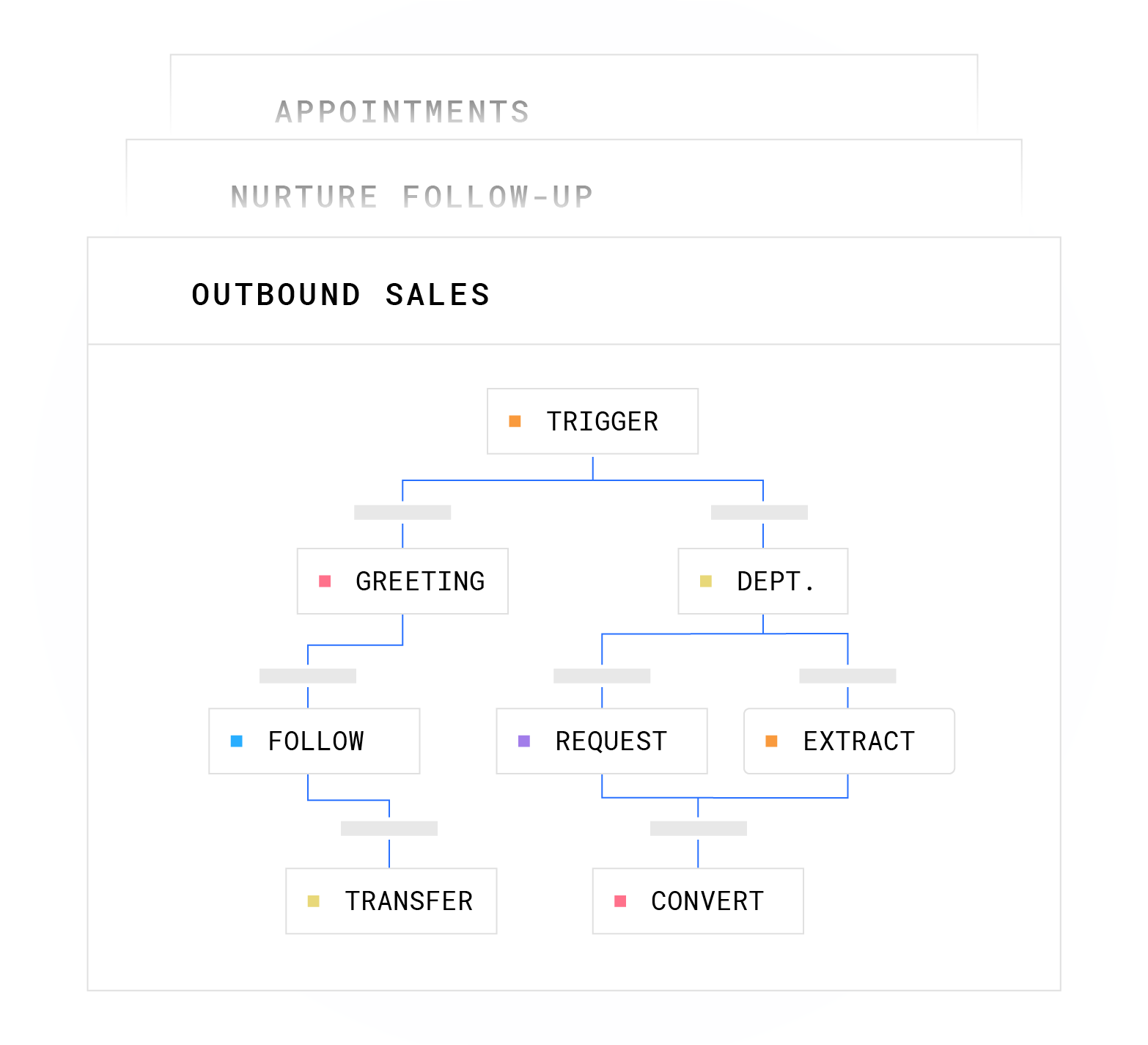
Inputs: Caller ID plus any available patient context from the EHR or practice management system. Plura’s AI voice agent initiates outbound contact within seconds of the missed-call event. Leads contacted within one minute are 391% more likely to convert than those contacted after 24 hours.3
Decision points:
- New vs. returning patient: new patients require full demographic collection. Returning patients move through an abbreviated update flow.
- Scheduling vs. clinical inquiry: scheduling intent routes to Step 3. Clinical questions escalate to a human staff member with full call context attached.
- Urgent vs. routine: red-flag symptom language triggers immediate clinical escalation instead of self-service booking.
Step 3: Check real-time provider availability
Objective: Query the live provider calendar and present accurate slot options to the patient during the same interaction.
Inputs: A bidirectional EHR calendar sync via FHIR R4 (Fast Healthcare Interoperability Resources, the current federal interoperability standard) or HL7 v2 messaging for legacy systems. Many modern EHRs expose scheduling functions through FHIR R4 Appointment resources, including Epic, Oracle Health, and athenahealth.4
Decision points:
- Slot match: if an available slot matches the patient’s stated preference, the workflow proceeds to Step 4.
- No immediate match: the patient is offered the next available slot or enrolled in a waitlist with automated notification when a cancellation opens.
- Provider-specific rules: appointment type, insurance panel, and visit duration rules from the EHR configuration are applied before any slot is offered.
Step 4: Book or reschedule directly in the EHR
Objective: Confirm the appointment and write it directly to the EHR calendar before the interaction ends.
Inputs: Patient preferences captured during the qualification conversation. The AI applies the practice’s scheduling logic, confirms the slot verbally or via text, and executes a write-back to the EHR so the appointment appears in the clinician’s calendar with no manual re-entry.
Decision points:
- Confirm: the patient accepts the offered slot. The booking is written to the EHR and the workflow advances to Step 5.
- Offer alternatives: the patient declines. The AI presents the next two available options before escalating to a staff callback queue if no match is found.
- Reschedule: the patient already has an existing appointment. The AI modifies the existing record rather than creating a duplicate.
Step 5: Send confirmation via SMS or RCS
Objective: Deliver an immediate booking confirmation to the patient on their preferred channel.
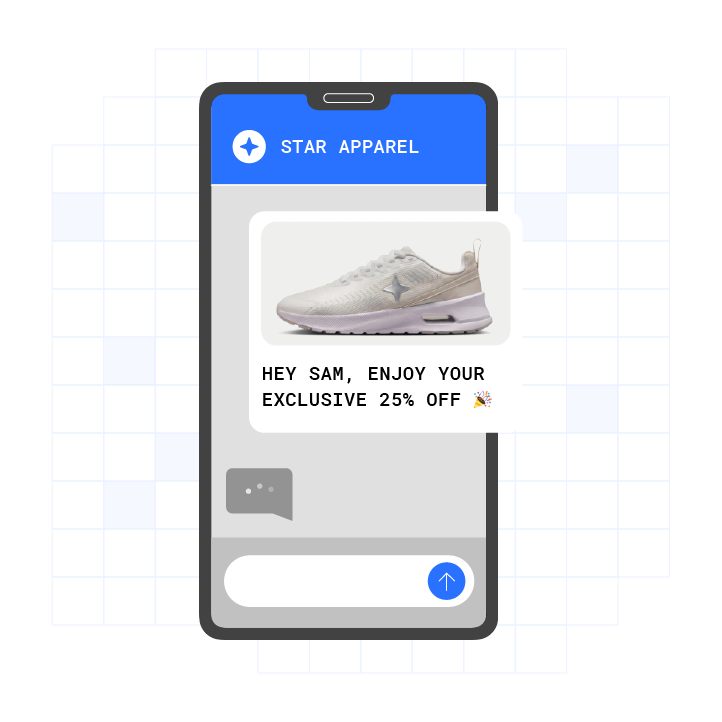
Inputs: The patient’s documented channel preference and consent record. Plura’s platform supports both SMS (Short Message Service) and RCS (Rich Communication Services, the next-generation messaging standard supported across modern Apple and Android devices). RCS delivers branded, interactive confirmation messages with rescheduling links inside the message thread.
Decision points:
- Channel preference: RCS is used where the patient’s device supports it. SMS is the fallback for all other devices.
- Consent verification: outbound text is sent only when a documented opt-in record exists. Practices should consult qualified counsel regarding TCPA consent frameworks and A2P 10DLC registration obligations before deploying outbound SMS campaigns.2
- Opt-out handling: any STOP reply is honored automatically and logged to the consent record.
Step 6: Log the interaction back to the EHR
Objective: Write a structured interaction record back to the system of record so clinical and front-office teams have full context.
Inputs: Structured data from the completed interaction, including caller identity, call timestamp, intent classification, appointment details, and channel used. A properly integrated AI voice agent reads real-time data from the EHR and writes confirmed appointments directly back into the system of record with no manual re-entry required.
Decision points:
- Write-back success: the appointment and interaction note appear in the EHR. The workflow advances to Step 7.
- Write-back failure: the system flags the record for manual staff review and creates a task in the practice management system instead of silently dropping the data.
- PHI handling: only the minimum necessary data fields are written to the EHR. Practices should consult qualified counsel and review 45 CFR Part 164 regarding PHI minimization concepts under the HIPAA Security and Privacy Rules.2
Step 7: Trigger a structured follow-up cadence
Objective: Reduce no-shows by delivering a structured reminder sequence between booking and the appointment date.
Inputs: The confirmed appointment record and the practice’s no-show rules. A University of Texas at Arlington study found that making reminder calls three or more days before appointments can reduce no-show rates, with three days identified as an effective timing window for preparatory tasks.3
Decision points:
- Reminder timing: the sequence typically includes an immediate booking confirmation, a preparation reminder 3 days prior, a 24-hour confirmation request, and a same-day check-in 2 hours before the appointment.
- Confirmation response: if the patient confirms, the sequence closes. If the patient requests a reschedule, the workflow loops back to Step 3.
- No response: the system escalates to a staff callback task instead of allowing the slot to age without action.
Practices deploying Plura report the no-show improvement cited earlier, driven by the structured reminder cadence and the speed of initial recovery contact.
Run your numbers to check your ROI in real time
HIPAA and compliance considerations for AI booking
Any AI system that processes, stores, or transmits protected health information in a healthcare setting operates within a regulatory framework that includes the HIPAA Privacy Rule (45 CFR Part 164, Subpart E), the HIPAA Security Rule (45 CFR Part 164, Subpart C), and the Breach Notification Rule (45 CFR Part 164, Subpart D).2 Practices should consult qualified counsel to determine their specific obligations under each rule before deploying any AI communication platform.

Key infrastructure considerations for evaluating any AI missed-call booking platform include components that work together to support a defensible compliance posture:
- Business Associate Agreement (BAA): Any voice AI vendor handling PHI on behalf of a healthcare practice must sign a BAA, which is a federal HIPAA requirement defining data use, protection, breach reporting, and data handling upon contract termination. The BAA should cover the full subcontractor chain so every party handling PHI is addressed.
- Encryption: HIPAA-aligned AI platforms typically use TLS 1.3 encryption for data in transit and AES-256 encryption for data at rest. These controls protect PHI as it moves through the workflow.
- Audit logging: Audit trails should be tamper-resistant and retained for at least six years from their creation date. This history supports investigations and internal reviews.
- Data minimization: Only the minimum necessary PHI should be collected for automated scheduling tasks, such as name, date of birth, and appointment type, which limits exposure if data is accessed improperly.
- No PHI in model training: Contracts with AI vendors should explicitly address whether customer PHI is excluded from AI model training or fine-tuning so practices can manage data-use risk.
Plura supports compliance efforts through SOC 2 certification, HIPAA-aligned infrastructure, ISO certification, SHAKEN/STIR caller ID verification, TCPA compliance support, and DNC compliance support.1 Plura’s platform runs on 100% U.S. infrastructure by architecture, which is relevant to practices evaluating exposure under state-level medical information offshoring restrictions. Customers are responsible for their own compliance obligations, certifications, and the claims they make to their end users. Practices should consult qualified counsel before deploying any AI system that handles patient data.
For outbound SMS and voice, practices should also review TCPA consent frameworks, A2P 10DLC registration obligations, and applicable state calling-window restrictions.2 Plura’s platform includes real-time DNC scrubbing, immutable consent logging, and automated quiet-hours enforcement by time-zone detection to support these workflows.1
EHR integration requirements for real-time booking
Bidirectional EHR integration is the technical prerequisite that separates genuine real-time booking from a message-taking service. A read-only integration allows the AI to check availability but requires staff to manually enter confirmed appointments. A read-write integration allows the AI to write the confirmed appointment directly to the EHR calendar before the call or text interaction ends.
Common integration methods include:
- FHIR R4 APIs: The current federal interoperability standard, supported by Epic, Oracle Health (Cerner), athenahealth, and eClinicalWorks. Epic provides FHIR R4 endpoints, including the Appointment resource for scheduling.
- HL7 v2 messaging: The legacy standard still present in many live EHR environments, used for admissions, lab results, and order communications.
- Middleware bridges: Platforms such as Redox or Health Gorilla provide a unified API layer when direct EHR APIs are unavailable or require custom mapping.4
Before selecting a platform, practices should verify that the vendor can demonstrate a live call in which the appointment appears in the target EHR before the call ends, and that all PHI transmitted through the integration is covered by a signed BAA. View Plura’s complete integration directory for technical details on each supported EHR system.
AI missed-call booking compared to traditional answering services
AI missed-call booking platforms like Plura deliver response speeds under 5 seconds to first contact, always-on coverage across voice, SMS, and RCS, and bidirectional real-time EHR sync with appointments written before the interaction ends. They also provide compliance support through SOC 2, HIPAA-aligned infrastructure, SHAKEN/STIR, TCPA compliance support, and DNC compliance support. Traditional answering services typically provide message-taking only, with staff manually entering bookings from call logs, variable compliance infrastructure, and slower average response times.
See how Plura’s pricing compares to traditional answering services
Benefits of AI missed-call booking for healthcare practices
The measurable outcomes of a fully deployed AI missed-call booking workflow include several operational and financial gains.
- No-show reduction: The structured reminder cadence in Step 7 and sub-5-second recovery contact deliver the no-show reduction documented earlier, with measurable improvement often appearing within the first 30 to 90 days.
- Revenue recovery: A substantial number of inbound calls to healthcare providers go unanswered, which creates significant lost revenue for health systems. Recovering even a fraction of that volume produces measurable monthly revenue within the first 30 to 90 days.
- After-hours capture: 16.5% of patient calls occur outside standard business hours, based on analysis of 27 million calls.3 An always-on AI voice agent captures this volume without additional staffing.
- Staff capacity reallocation: Automating the missed-call recovery queue reduces the manual follow-up burden on front-desk staff. Teams can then focus on higher-complexity patient interactions.
- Patient retention: 41% of patients would switch doctors if they couldn’t reach their office by text message.3 Consistent, fast recovery outreach directly addresses this attrition driver.
Plura’s stateful conversation database means that a patient who texted at 9 AM is recognized when the AI voice agent calls at noon, with full context from the prior interaction already loaded. There is no channel-switching penalty and no need for the patient to re-introduce themselves. The same memory-driven AI conversation continues across every touchpoint.
See healthcare-specific deployment patterns and case examples.
Frequently asked questions about AI missed-call booking
Common questions about deploying AI missed-call booking for healthcare practices are answered below.
How long does it take to deploy AI missed-call booking for a medical practice?
Most small-to-mid practices complete deployment in two to four weeks. Week one covers workflow mapping and EHR integration scoping. Weeks one and two cover the technical EHR connection and HIPAA-aligned configuration. Weeks two and three cover reminder sequence setup and after-hours rules. Weeks three and four cover staff training and a soft launch on a single appointment type before full rollout. Complex multi-step intake workflows, such as a 25-question health-history survey, run closer to one to two months because the workflow logic requires additional design and validation. Plura’s annual contracts include a 90-day opt-out window, so practices are not locked in if the deployment is not delivering.
What EHR systems does Plura integrate with for real-time appointment booking?
Plura connects to EHR and practice management systems through FHIR R4 APIs, HL7 v2 messaging, and middleware bridges where direct APIs are unavailable. Supported systems include Epic, Oracle Health (Cerner), athenahealth, eClinicalWorks, NextGen, and any platform exposing a FHIR R4 Appointment resource or proprietary scheduling API. The integration supports bidirectional sync, meaning the AI reads real-time availability and writes confirmed appointments back to the EHR calendar before the patient interaction ends. The full integration directory is available in Plura’s integration documentation. Before go-live, every EHR integration is tested in a sandbox environment to confirm write-back works in the clinician calendar view.
What compliance infrastructure should practices look for in an AI missed-call booking platform?
Practices should evaluate vendors against several infrastructure requirements before deploying any AI system that handles patient data. The vendor should be willing to sign a Business Associate Agreement covering the full subcontractor chain. The platform should encrypt data in transit and at rest, implement role-based access controls, and maintain tamper-resistant audit logs retained for at least six years. Outbound SMS and voice workflows should include documented consent management, real-time DNC scrubbing, and automated opt-out handling. Practices should also verify how the vendor treats customer PHI in relation to AI model training. Plura’s compliance infrastructure is detailed in the HIPAA and compliance considerations section above. The platform supports compliance efforts through SOC 2, HIPAA-aligned infrastructure, ISO certification, and telecommunications compliance support for SHAKEN/STIR, TCPA, and DNC. Customers remain responsible for their own compliance obligations. Consult qualified counsel before deploying any AI system that handles protected health information.
How does the AI handle calls that require clinical judgment or urgent triage?
The workflow includes explicit escalation guardrails at Step 2. When a patient’s language matches red-flag symptom patterns, such as chest pain, difficulty breathing, or stroke signs, the AI does not attempt to book an appointment. It routes the call immediately to clinical staff with full call context attached. For orange-level acute symptoms or post-procedure concerns, the call escalates to a nurse or medical assistant queue. The AI handles only green-level routine scheduling, insurance questions, and general inquiries autonomously. Every escalation is logged to the unified inbox so staff have the full interaction history before they pick up. The AI does not improvise on outcomes that carry clinical risk.
How do practices measure the ROI of AI missed-call booking?
The primary metrics are recovery contact rate, recovered bookings, time-to-first-response, recovered revenue, and staff handling time. Recovery contact rate measures the percentage of missed callers reached within the target window. Recovered bookings track appointments confirmed through the AI recovery workflow. Time-to-first-response measures seconds from missed-call detection to outbound contact. Recovered revenue multiplies recovered bookings by average appointment value. Staff handling time compares hours per week spent on manual missed-call follow-up before and after deployment. These metrics should be compared weekly against pre-deployment baselines. Model your specific ROI using your practice’s call volume and appointment value.
1 Plura AI maintains SOC 2, HIPAA, ISO, and GDPR posture as part of its platform infrastructure. References to compliance frameworks in this article describe Plura’s platform capabilities and do not constitute a guarantee that any customer using Plura will themselves be compliant with applicable laws or standards. Customers remain solely responsible for their own regulatory obligations, certifications, consent management, recordkeeping, and the claims they make to their own end users. Consult qualified legal counsel for guidance specific to your use case.
2 This article describes regulatory frameworks at a general level and does not constitute legal advice. Laws and regulations vary by jurisdiction, change over time, and apply differently depending on facts and circumstances. Readers should consult qualified legal counsel before making compliance decisions.
3 Performance figures, customer outcomes, and industry statistics referenced in this article are drawn from cited third-party sources or Plura customer case studies. Individual results vary based on implementation, use case, industry, audience, and execution. Past or aggregate performance is not a guarantee of future results.
4 References to third-party products, services, companies, or research are made for informational and comparative purposes only. Plura AI is not affiliated with, endorsed by, or sponsored by any third party named in this article unless explicitly stated. Trademarks and product names referenced remain the property of their respective owners.
This article is provided for informational purposes only and reflects Plura AI’s understanding at the time of publication. Product capabilities, integrations, and specifications are subject to change. For the most current information, visit plura.ai.
This article was produced with the assistance of AI tools and reviewed by Plura AI prior to publication.