

Written by: Matt Beucler, CEO, Plura AI | Last updated: August 25, 2026
Updated August 2026
Key Takeaways
- AI appointment booking tools vary widely. Most handle only web or chat, while voice-first platforms like Plura AI book live on inbound and outbound calls with real-time calendar sync.
- Plura AI operates its own FCC-licensed carrier, which enables branded caller ID, STIR/SHAKEN verification, and supports TCPA, DNC, HIPAA, and SOC 2 compliance on 100% U.S. infrastructure.1
- Voice-first AI agents can reduce no-shows by up to 40% through immediate confirmations, multi-channel reminders, and automated waitlist management across voice, SMS, RCS, and webchat.3
- Stateful cross-channel memory keeps every interaction tied to a single customer record, which removes repeat explanations and improves conversion rates in high-volume operations.
- High-volume operators can book a live demo with Plura AI to see how its voice-first booking platform connects with existing calendars and CRMs.
AI Voice Booking Over the Phone
AI voice agents can now handle the full scheduling lifecycle on a live call. They confirm availability, capture caller details, write the appointment to a connected calendar, and send a confirmation by SMS or RCS. They do this without a human receptionist in the loop. The capability gap between platforms is not whether they can book. It is how they book and what happens after the call.
Most AI booking tools on the market today are built as software layers on top of third-party CPaaS (Communications Platform as a Service) providers such as Twilio.4 Because they do not own the carrier stack, these platforms face three critical limitations. First, they cannot issue branded caller ID at the carrier level, which affects answer rates and trust. Second, they cannot enforce real-time DNC scrubbing before the call leaves the network, which creates compliance exposure. Third, they may not align with the FCC’s (Federal Communications Commission) proposed foreign-infrastructure prohibitions under CG Docket No. 26-52, which focus on domestic carrier ownership.
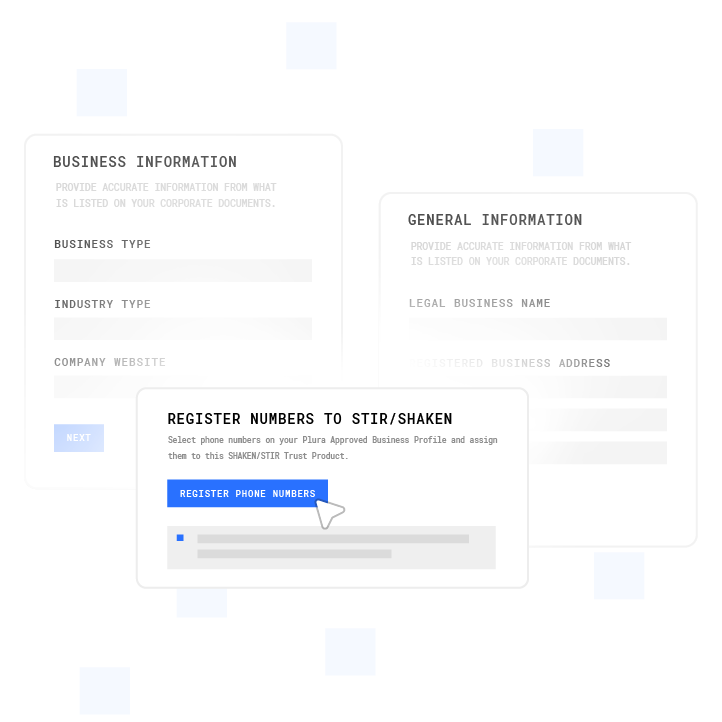
Plura AI operates its own FCC-licensed audio bridging carrier. Voice originates on Plura’s domestic infrastructure. Branded caller ID is issued at the carrier level, not bolted on through a reseller. STIR/SHAKEN (Secure Telephone Identity Revisited / Signature-based Handling of Asserted information using toKENs) caller ID verification runs on every outbound call. That architectural difference separates a voice-first booking platform from a chat tool with a phone number attached.
Book a live demo with Plura to see the voice-first booking flow in action.
Best AI Appointment Tool for Home Services Operators
Home services operators face a specific version of the booking problem. Calls arrive after hours, during jobs, and across multiple locations at the same time. After-hours call answering functions as the core value proposition in this vertical, not a side feature. The tools below are ranked by their suitability for high-volume, voice-first, compliance-supported booking in home services and adjacent industries.
- Plura AI – FCC-licensed AI voice agent platform with stateful cross-channel memory, real-time DNC scrubbing, TCPA and HIPAA compliance support, SOC 2 certification, ISO certification, GDPR coverage, SHAKEN/STIR caller ID verification, and 100% U.S. infrastructure. It books live on calls, syncs to Google Calendar, Cal.com, and Calendly, and maintains conversation context across voice, AI SMS, RCS, and webchat. Plans and rates start at the Multi tier.
- Calendly – Web-based scheduling tool designed for self-service booking via a link.4 It has no inbound voice capability. It fits low-complexity, web-driven scheduling where the customer starts in a browser.
- Zoho Bookings – Calendar and appointment module within the Zoho CRM (Customer Relationship Management) ecosystem. It supports web and chat-based flows. It has no native AI voice agent or outbound call capability.
- Motion – AI-powered calendar tool focused on task and meeting scheduling for individuals and small teams. It has no voice channel, no outbound dialing, and no carrier-level compliance infrastructure for regulated industries.
- Vapi – Developer-first AI voice API (Application Programming Interface).4 It requires engineering resources to configure and maintain. It does not own carrier infrastructure and routes through third-party CPaaS. HIPAA support is available as a paid add-on.
- Synthflow – AI voice platform built on third-party telecom infrastructure. It is voice-capable but relies on a CPaaS layer for carrier functions. It does not hold an FCC carrier license.
- Bland AI – AI voice platform with strong voice quality. It is voice-only, API-based, requires developer involvement, and does not hold an FCC carrier license.
The table below compares these platforms across four capabilities that matter most for high-volume voice-first booking.
| Tool | Voice AI Booking | Stateful Cross-Channel Memory | TCPA / DNC / HIPAA / SOC 2 Support | FCC-Licensed Carrier |
|---|---|---|---|---|
| Plura AI | Yes, live on calls, inbound and outbound (per Plura vs. Bland AI comparison) | Yes, voice, AI SMS, RCS, and webchat share one stateful database (per Plura vs. Vapi comparison) | TCPA compliance support, DNC compliance support, HIPAA, SOC 2, ISO certification, GDPR, SHAKEN/STIR (per Plura vs. Vapi comparison)1 | Yes (per Plura vs. Synthflow comparison) |
| Calendly | No, web or link only | No | Limited, no carrier-level enforcement | No |
| Zoho Bookings | No, web or chat only | No | Limited, no carrier-level enforcement | No |
| Motion | No | No | Not applicable at carrier level | No |
| Vapi | Yes, via API, developer-configured | No, stateless by default | HIPAA available as paid add-on | No, routes through third-party CPaaS |
| Synthflow | Yes, voice only | No | Relies on Twilio BAA for HIPAA (per Plura vs. Synthflow comparison) | No, depends on Twilio infrastructure |
| Bland AI | Yes, voice only, API-based | No | No native carrier-level compliance support | No |
How AI Booking Tools Cut No-Shows
No-shows cost the U.S. healthcare industry an estimated $150 billion annually in lost revenue and wasted provider time.3 Across appointment-based businesses, the average no-show rate sits around 23% before any automated reminders, based on a review of 105 studies. One study in a gastroenterology outpatient clinic found that 30% of patients who missed appointments forgot to attend or cancel (per PubMed study).
AI booking tools address no-shows through three main mechanisms. They send immediate confirmation at the point of booking. They run multi-touch reminder sequences at 48 hours, 24 hours, and 2 hours before the appointment. They manage automated waitlists that fill cancelled slots in real time. Automated SMS and email reminders reduce no-shows by 30% to 60% according to a Cochrane Systematic Review. Interactive reminders in AI scheduling tools can raise confirmation rates further.
Voice-first platforms add a layer that web-only tools cannot match. An outbound AI voice agent calls the patient or customer directly, confirms attendance, and handles rescheduling in the same conversation. A peer-reviewed study analyzing 135,393 appointments found that AI-driven reminder calls achieved a 50.7% relative reduction in the no-show rate.
Plura’s healthcare deployments support up to 40% improvement in no-show rates through its AI voice agent reminder and outbound follow-up workflows. Because Plura’s voice, AI SMS, and RCS channels share a single stateful conversation database, a patient who rescheduled by text is already known to the voice agent on the next outbound call. That continuity removes the repeat-yourself problem that erodes patient trust in multi-channel reminder systems.
2026 Regulatory Context for AI Voice Booking
The FCC’s Notice of Proposed Rulemaking (NPRM, CG Docket No. 26-52) proposes capping offshore customer-service calls at 30% and limiting offshore handling of sensitive consumer data such as passwords, multi-factor authentication credentials, Social Security numbers, and banking and card data.2 Companion federal legislation includes the Keep Call Centers in America Act (S.2495) and the Foreign Robocall Elimination Act (S.2666).
At the state level, New York’s Call Center Jobs Act carries penalties up to $10,000 per day. New Jersey, Connecticut, Missouri, and Florida have enacted or proposed companion restrictions on offshore handling of medical, financial, and consumer data. Operators with existing offshore vendor contracts should consult qualified legal counsel to assess exposure under these frameworks before any proposed rules take effect.
Plura runs on 100% U.S. infrastructure by architecture. Voice origination, model hosting, data storage, and call recording all sit on domestic infrastructure. This structure does not rely on a contractual promise layered on top of a foreign-hosted stack. It reflects the underlying design. Some operators using Plura report “100% U.S.-handled” in their broadband consumer label disclosures without carve-outs.
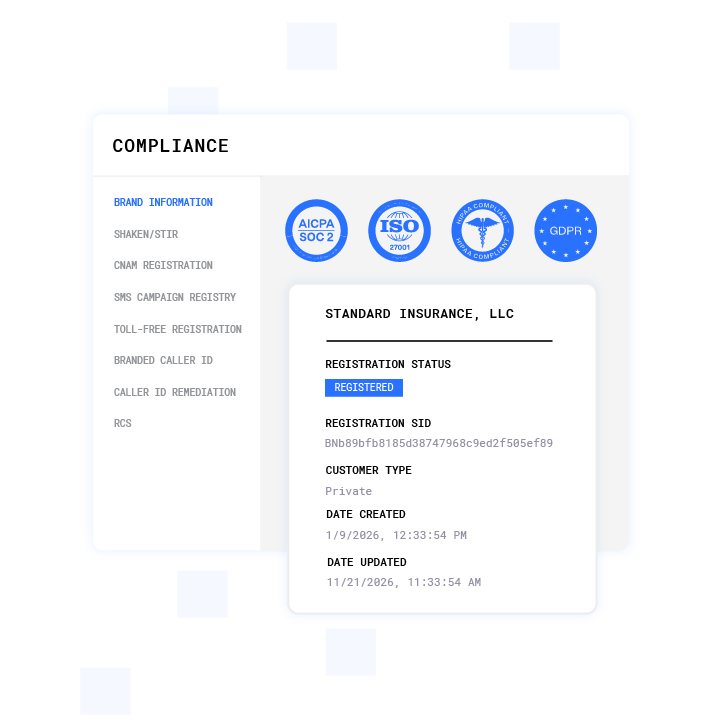
On the TCPA side, the FCC’s February 2024 Declaratory Ruling (FCC-24-17) stated that AI-generated voices qualify as “artificial or prerecorded voice” under the TCPA.2 That interpretation makes outbound AI voice agents subject to the same consent rules as traditional robocalls. Operators should consult qualified counsel regarding their specific consent architecture, calling windows, and DNC scrubbing cadence. Plura’s compliance engine supports TCPA compliance and DNC compliance posture through real-time registry scrubbing, immutable consent logging, and automated quiet-hours enforcement by time zone. Compliance obligations downstream of the platform remain the operator’s responsibility.
Frequently Asked Questions
Voice-First AI Booking vs Web-Based Schedulers
Web-based schedulers handle bookings that a customer initiates through a browser or chat interface. They work well for low-complexity, self-service flows where the customer is already on a website and motivated to book. Voice-first AI booking tools handle the phone channel, which carries the highest-friction, highest-value bookings such as after-hours calls, complex multi-provider scheduling, multilingual callers, and inbound leads who called from an ad instead of visiting a website.
A front-desk employee handling 40 booking calls per day at three to four minutes each spends two to two and a half hours daily on scheduling alone. A voice-first AI booking agent handles equivalent volume 24 hours a day, seven days a week, with no incremental per-call cost. The two tool categories do not substitute for each other. They address different portions of the booking funnel. High-volume operators typically need both, unified on a single platform with shared conversation memory so a customer who started on web chat is already known when they call.
Impact of Stateful Memory on Booking Outcomes
Most AI booking platforms are stateless, so each call or message starts from zero. A customer who texted to reschedule at 9 a.m. has to re-explain the situation when the AI calls at noon. That friction increases abandonment, reduces trust, and forces human agents to re-qualify contacts that the AI already handled.
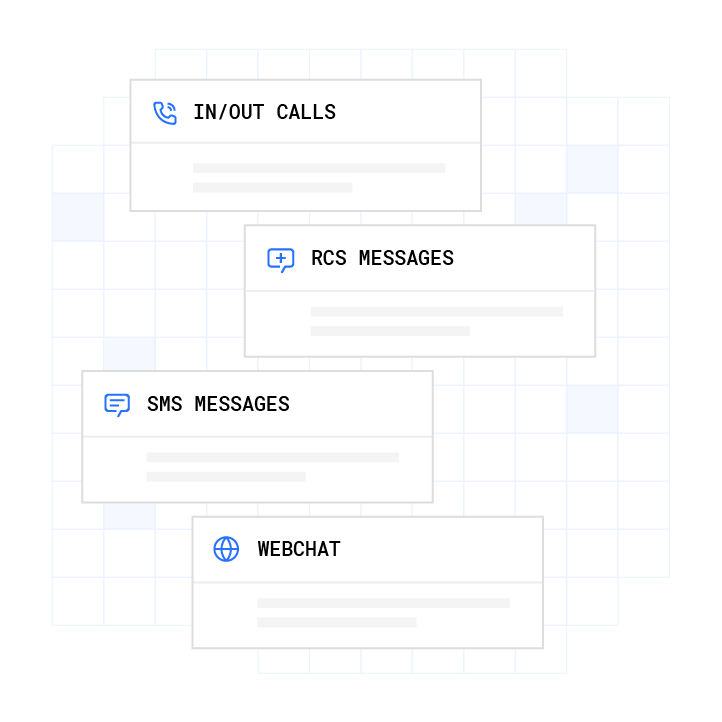
Stateful memory keeps every interaction across voice, SMS, RCS, and webchat tied to the same customer record. The AI agent on the noon call already knows the reschedule request, the original appointment details, and any prior objections. In appointment-heavy verticals like healthcare, legal, and home services, this continuity directly affects show rates and rebooking conversion. Platforms that maintain stateful cross-channel memory consistently outperform stateless alternatives on multi-touch booking workflows because the customer never has to repeat themselves.
Compliance Factors for AI Voice Booking Agents
Several regulatory frameworks intersect when an AI voice agent books appointments over the phone. The TCPA addresses outbound AI voice calls to cell phones and distinguishes between informational calls such as appointment reminders and telemarketing calls, with different consent standards. The FCC’s February 2024 ruling confirmed that AI-generated voices fall under the TCPA’s “artificial or prerecorded voice” definition.
HIPAA applies when the booking call involves protected health information, which can require business associate agreements with vendors that process that data. Twelve U.S. states require all-party consent for call recording, so an AI voice agent may need to disclose recording at the start of the call in those jurisdictions. DNC compliance involves scrubbing outbound lists against federal and state registries on a defined cadence. Operators should consult qualified legal counsel to assess their specific obligations under each framework. Plura’s platform supports TCPA compliance, DNC compliance, and HIPAA posture through built-in enforcement mechanisms, but operators retain responsibility for their own regulatory obligations.
Integrating AI Booking With Calendars and CRMs
Integration depth often determines whether an AI booking tool succeeds in production. A platform that can read calendar availability but cannot write a confirmed booking back to the system of record in real time creates a manual reconciliation step that undercuts automation.
Enterprise-grade AI booking platforms connect bidirectionally to calendar systems such as Google Calendar, Cal.com, and Calendly, and to CRMs such as HubSpot, Salesforce, and Zoho. Live availability queries and confirmed booking write-backs happen inside the same call. Integration failures at the CRM write or calendar booking layer account for more enterprise AI voice deployment failures than issues with model quality. Operators evaluating platforms should require a live write-path test against their actual system of record, not just a logo on an integrations page. Plura’s integrations directory covers more than 50 tools across calendars, CRMs, data enrichment providers, payment processors, and document signers.
Conclusion: Economics of AI Appointment Booking
The economics of AI appointment booking are measurable. Contacting a lead within five minutes makes them 100 times more likely to connect than waiting 30 minutes. A 60-second response lifts conversions by 391%.3 Plura’s AI voice agents answer 100% of inbound calls within two rings across every location and contact leads within 60 seconds via SMS or voice. These capabilities deliver the no-show reduction documented in healthcare deployments through Plura’s appointment-based workflows.
Run your numbers through Plura’s calculator to check your ROI in real time.
Compare plans and rates side by side at plura.ai/pricing.
1 Plura AI maintains SOC 2, HIPAA, ISO, and GDPR posture as part of its platform infrastructure. References to compliance frameworks in this article describe Plura’s platform capabilities and do not constitute a guarantee that any customer using Plura will themselves be compliant with applicable laws or standards. Customers remain solely responsible for their own regulatory obligations, certifications, consent management, recordkeeping, and the claims they make to their own end users. Consult qualified legal counsel for guidance specific to your use case.
2 This article describes regulatory frameworks at a general level and does not constitute legal advice. Laws and regulations vary by jurisdiction, change over time, and apply differently depending on facts and circumstances. Readers should consult qualified legal counsel before making compliance decisions.
3 Performance figures, customer outcomes, and industry statistics referenced in this article are drawn from cited third-party sources or Plura customer case studies. Individual results vary based on implementation, use case, industry, audience, and execution. Past or aggregate performance is not a guarantee of future results.
4 References to third-party products, services, companies, or research are made for informational and comparative purposes only. Plura AI is not affiliated with, endorsed by, or sponsored by any third party named in this article unless explicitly stated. Trademarks and product names referenced remain the property of their respective owners.
This article is provided for informational purposes only and reflects Plura AI’s understanding at the time of publication. Product capabilities, integrations, and specifications are subject to change. For the most current information, visit plura.ai.
This article was produced with the assistance of AI tools and reviewed by Plura AI prior to publication.