
Written by: Matt Beucler, CEO, Plura AI
Key Takeaways
- An AI SDR is an AI-powered system that automates prospecting, outreach, qualification, and meeting booking for B2B sales teams. It handles top-of-funnel work that human SDRs previously owned.
- Autonomous AI SDR agents operate independently without human review, while AI-assisted platforms keep humans in the approval loop. Plura AI uses a hybrid model that combines both approaches.
- Hybrid AI-plus-human configurations consistently outperform pure-AI or human-only setups. They generate higher pipeline per seat and stronger reply rates when teams apply clear guardrails.
- Key risks include domain-reputation collapse, shallow personalization, and low-quality meetings. Teams reduce these risks with compliant infrastructure, clean data, and human review layers.
How AI SDRs Work Across the Funnel
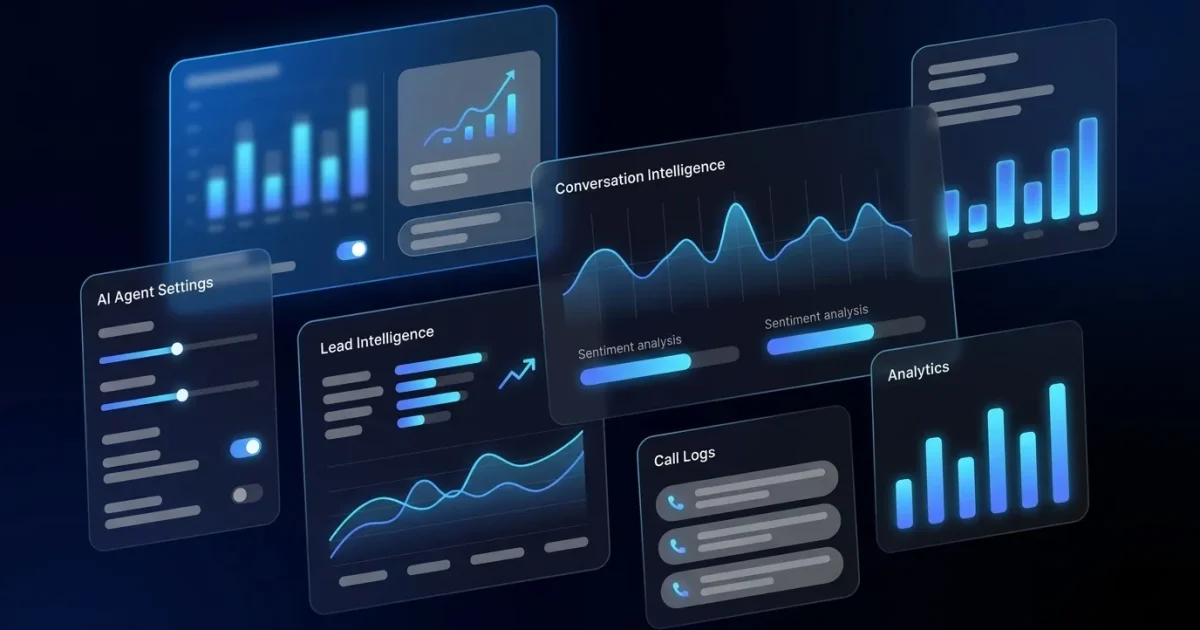
AI SDRs now handle the top-of-funnel tasks that human SDRs traditionally performed, across a connected set of functions that run from first touch to booked meeting.
- Prospecting and lead research: AI scans databases and live web data to match ideal customer profiles (ICPs) and gather firmographic and intent signals.
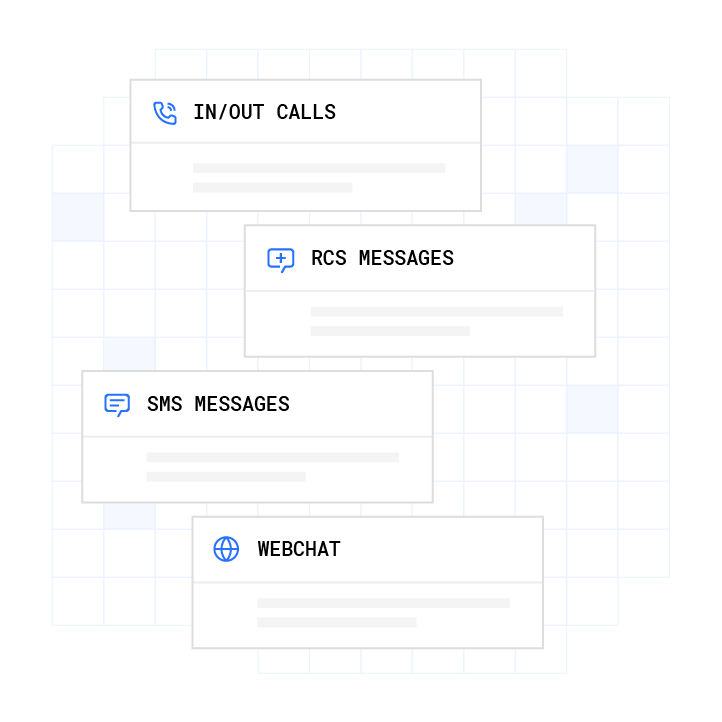
- Personalized outreach across channels: AI writes and sends tailored messages via email, voice, SMS, and RCS using large language models (LLMs).
- Lead qualification and scoring: AI reads replies, answers questions, handles objections, and scores lead fit against defined criteria.
- Follow-up sequences: AI runs multi-touch cadences automatically and adjusts based on engagement signals.
- Meeting booking: AI drops calendar links or books directly into human rep schedules.
- CRM integration: AI logs every interaction and updates records in real time.
AI SDRs use LLMs and conversation intelligence to hold natural conversations and improve with each interaction. Plura’s AI SDR agents use a stateful conversation database that remembers context across voice, SMS, and RCS channels. A lead who texts at 9 a.m. is treated as the same person when the call happens at noon. That cross-channel memory separates a full platform from a point tool.
Not all AI SDRs operate the same way, though. The market splits into deployment models that carry very different risk profiles.
Autonomous vs. AI-Assisted AI SDR Platforms
Two main categories define the market:
Autonomous AI SDR agents operate independently, prospecting, writing, sending, and booking without human review. Tools in this category include 11x, AiSDR, and Artisan.4
AI-assisted platforms augment human SDRs with research, enrichment, and drafting, while a human reviews and sends. Apollo and Clay fall into this category.4
The distinction matters for deployment risk. Fully autonomous agents operating without human oversight can damage domain reputation through uncapped send volume, misclassify replies, and generate off-brand messages at scale. Domain-reputation collapse caps 47% of attempted AI SDR deployments within the first 90 days, according to Laxis Research’s State of the AI SDR 2026 report.3
Plura is an AI-assisted platform that also runs autonomous AI voice and SMS agents, which supports both outbound and inbound motions. Its AI predictive dialer and AI SMS lead qualification tools operate on Plura’s own FCC-licensed carrier infrastructure, avoiding the limitations of third-party CPaaS (Communications Platform as a Service) wrappers.
See the hybrid model in a live demo.
Align AI SDR Selection With Your Sales Motion
Most AI SDR failures start before the tool is chosen. Teams buy technology before they define their sales motion. A more reliable approach starts with the motion, then matches the tool to that motion.
Outbound-heavy teams need autonomous prospecting and outreach to generate pipeline from scratch. An AI SDR can manage 500+ accounts per day versus 50 for a human SDR, according to Fin.ai’s inbound vs. outbound AI SDR analysis.3
Inbound-heavy teams need fast response and qualification. A Harvard Business Review study found that companies responding within five minutes are 100x more likely to connect with a prospect than those waiting 30 minutes.3 The industry standard for first contact on an inbound lead is 47+ hours. Speed-to-lead is where most inbound revenue leaks.
Before selecting any tool, evaluate these criteria, because each one determines whether the platform can actually execute your motion:
- ICP fit and targeting criteria
- Buying signals and intent data sources
- Enrichment depth and data quality
- Outreach channels: email, voice, SMS, RCS
- Follow-up cadence and sequence logic
- Qualification criteria and scoring model
- Booking process and calendar integration
- CRM integration and data hygiene
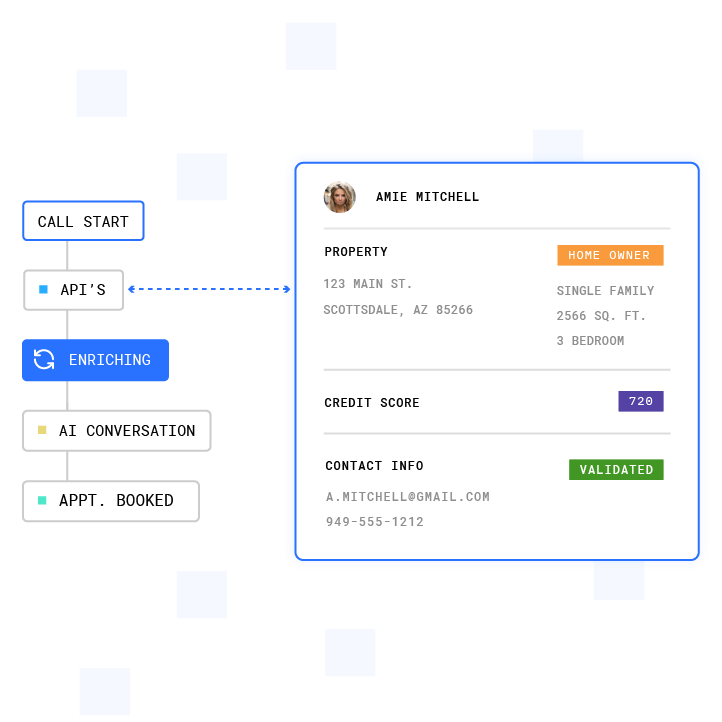
Plura is built for high-volume communicators who need to contact leads in under 5 seconds across voice, SMS, and RCS, with real-time lead enrichment from 30+ data sources. Its no-code workflow builder lets operators design memory-driven conversation pathways without engineering resources.
How Much an AI SDR Costs in Practice
Pricing varies significantly by platform type and deployment model:
- AiSDR: $900-$2,500/month billed quarterly, credit-based
- 11x: From $3,750/month billed annually on the Growth plan
- Apollo: $49-$119/seat/month billed annually
- Human SDR: $98,000-$173,000 fully loaded annually, including benefits, tools, management overhead, and ramp time
Plura’s pricing is structured transparently. The model includes an agent build fee of $2,750 per agent, with plans starting at $7,500/month for the Multi tier on an annual contract billed monthly, with a 90-day opt-out window. Plura’s ROI calculator estimates monthly human agent costs at $60,000 for 15 agents at $20/hour with 25% taxes, benefits, and commissions at 40% talk utilization. The same output uses 6 Plura AI agents at 100% talk utilization for $14,400, projecting a 30-day ROI of $45,600.
Compare plans and rates side by side.
Does AI SDR Actually Work?
Results depend heavily on deployment model and sales motion fit. Laxis Research’s 2026 report shows the gap clearly. Fully autonomous AI SDR agents land at 1-3% reply rates and $250-$400 per qualified meeting, while signal-driven, human-supervised outreach hits 15-25% reply rates at $80-$180 per qualified meeting.3 The difference shows up in both engagement and cost per qualified meeting.
The hybrid model consistently outperforms both pure-AI and human-only configurations. Hybrid pods with one human SDR per two AI SDR seats generate $278,000 in pipeline per seat per month versus $187,000 for human-only configurations, per RevOps Co-op benchmarks compiled by Digital Applied.3
Teams need to mitigate several recurring risks:
- Domain-reputation collapse: 47% of AI SDR deployments hit a domain-reputation wall in the first 90 days, per Smartlead and Instantly aggregate sender data.
- Shallow personalization: Generic openers perform worse than no personalization at all, because experienced buyers recognize the template immediately.
- Low-quality meetings: AI-booked meetings show at 60-70%, while human-booked meetings show at 75-85%, per Laxis Research’s 2026 report.
Plura’s proven outcomes across its customer base include 3x average ROI in 90 days, 47% pipeline growth, and 90% faster lead-response time.3 These metrics reflect the impact of combining AI agents with human oversight.
Run your numbers through Plura’s ROI calculator to check your ROI in real time.
How AI Is Changing the SDR Role
The question of replacement is really a question of how the SDR role evolves. Current data points to a hybrid model rather than a full handoff to AI.
36% of B2B companies reduced SDR headcount, while 44% kept it unchanged, per Emergence Capital and Benchmarkit’s Beyond Benchmarks 2025 report. AI-native companies are increasing SDR hiring. Cursor, OpenAI, and Fireworks AI all list active SDR roles, per Refonte Learning’s H1 2026 GTM hiring analysis. Hybrid pods (1 human plus 2 AI) outperform both pure-AI and human-only configurations on pipeline per dollar, per RevOps Co-op’s 2026 pod composition benchmark.
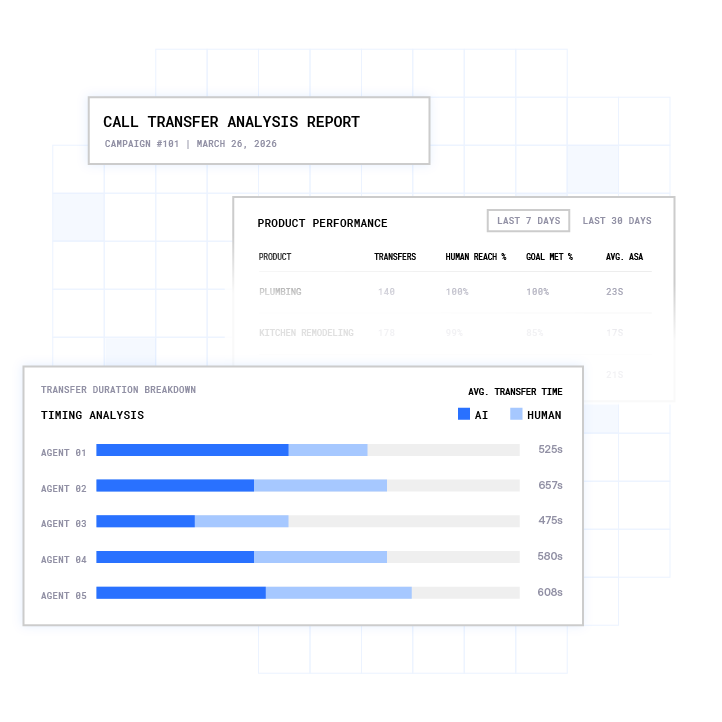
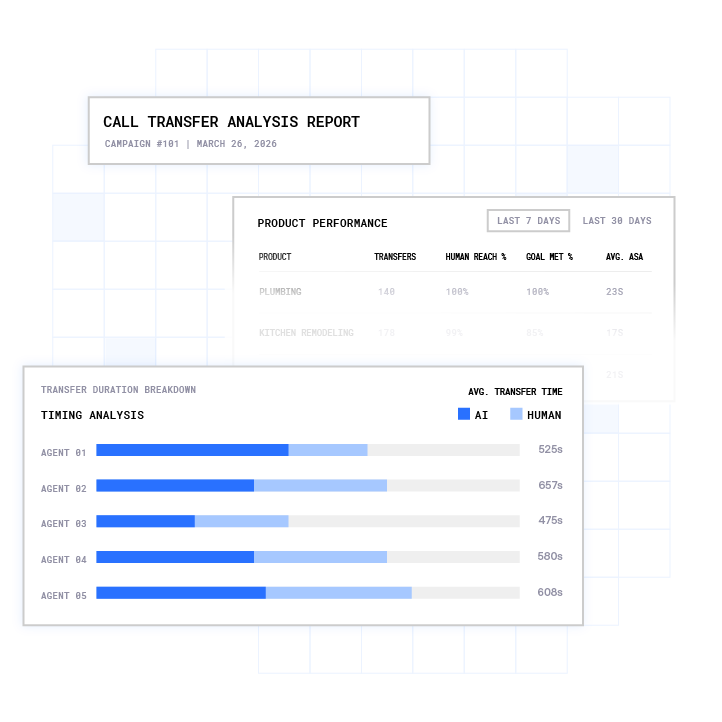
The SDR role is shifting toward AI orchestration. Plura augments human SDRs by handling initial outreach and qualification across voice, SMS, and RCS, then live-transferring warm leads to human reps for closing conversations. The conversation intelligence layer surfaces which scripts close, which objections recur, and which conversion paths win, then feeds that signal back into the workflow.
Compliance and Deliverability as Core Selection Criteria
Most AI SDR vendor comparisons focus on features and price. They often skip the criteria that determine whether a deployment survives past 90 days: compliance infrastructure and deliverability architecture.
Platforms built on third-party CPaaS wrappers lack the ability to issue branded caller ID at the carrier level, enforce real-time DNC (Do Not Call) scrubbing before dial, or remediate spam labels without going through a reseller. That structure creates risk for any team running outbound at volume.
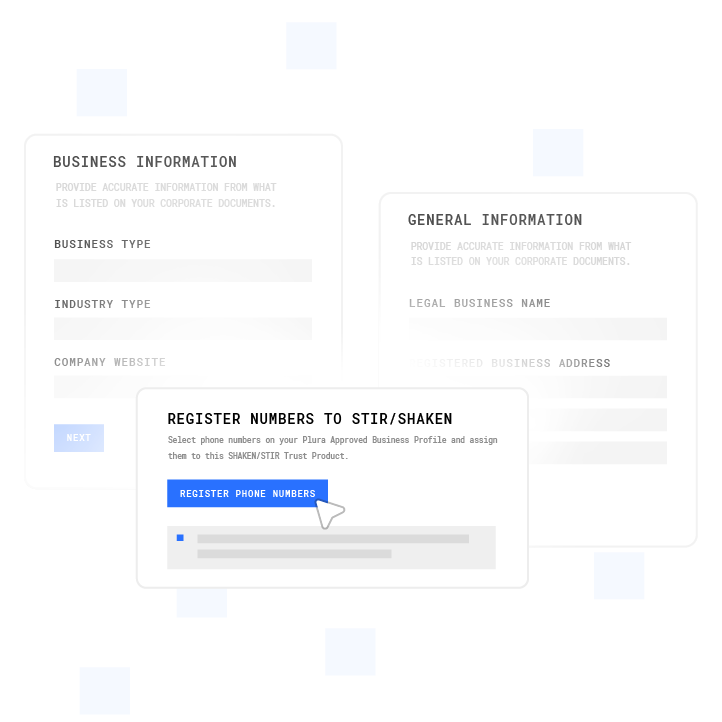
Plura is its own FCC-licensed audio bridging carrier. Voice originates on Plura’s domestic infrastructure. Branded caller ID is issued at the carrier level. Every outbound contact is checked against federal and state DNC registries in real time before dial. The platform supports compliance with SOC 2, HIPAA, ISO certification, GDPR, SHAKEN/STIR caller ID verification, TCPA compliance, and DNC compliance, with immutable consent records and one-click audit-ready exports.1,2 Customers remain responsible for their own regulatory obligations. Plura provides infrastructure that supports those obligations.
For teams evaluating AI SDR tools, the compliance and deliverability checklist should include:
- Whether the vendor owns its carrier stack or wraps a third-party CPaaS
- Whether branded caller ID is issued at the carrier level
- Whether DNC scrubbing is enforced before dial
- Whether consent records are timestamped and audit-ready
- Whether the platform runs on 100% U.S. infrastructure
Review Plura’s compliance infrastructure in a live walkthrough.
Conclusion and Next Steps for Evaluating AI SDRs
The decision framework for AI SDR selection in 2026 has three steps. Define your sales motion first. Evaluate costs transparently against fully loaded human SDR economics. Mitigate deployment risk with human oversight and compliant infrastructure.
The market data is clear. 41% of enterprise B2B teams had an AI SDR in production as of Q1 2026, up from 12% a year earlier, per Laxis Research. The teams generating the most pipeline per dollar are running hybrid models rather than pure-AI configurations. The tools that survive past 90 days pair clean data and throttled sending with human oversight and carrier-grade compliance infrastructure.
Practical next steps include an internal workflow audit to map where top-of-funnel time is spent. Teams can then align stakeholders on ICP and qualification criteria before any tool is selected, gather requirements across outreach channels, and run a comparative evaluation that includes compliance posture alongside features and price.
For high-volume B2B sales teams that need a carrier-grade AI SDR platform with voice, SMS, and RCS capabilities, explore Plura in a live demo or compare Plura against alternatives.
FAQ
What is an AI SDR?
An AI SDR is an AI-powered system that automates prospecting, outreach, qualification, and meeting booking for B2B sales teams. It handles top-of-funnel tasks that human SDRs traditionally performed. AI SDRs use large language models to write personalized messages, manage follow-up sequences, score leads against defined criteria, and book meetings directly into rep calendars. They operate across email, voice, SMS, and RCS channels, and range from fully autonomous agents that send without human review to AI-assisted platforms that keep a human in the approval loop before any message is sent.
How much does an AI SDR cost?
AI SDR tools range from $900/month for autonomous agents like AiSDR on the entry-level Explore plan, billed quarterly, to $3,750+/month for 11x on an annual contract. AI-assisted platforms like Apollo start at $49/seat/month billed annually. A fully loaded human SDR costs $98,000-$173,000 per year when factoring in benefits, tools, management overhead, and ramp time. Plura starts at $7,500/month for the Multi tier on an annual contract billed monthly, with a $2,750 per-agent build fee and a 90-day opt-out window. The more useful comparison is cost per qualified opportunity. Hybrid AI-plus-human pods reduce that figure from $487 to $224, a 54% reduction, per Bridge Group SDR Metrics 2026 data compiled by Digital Applied.
Does AI SDR work?
AI SDR deployments work when teams apply a clear sales motion, clean data, and human oversight. Fully autonomous AI SDR agents operating without oversight consistently underperform hybrid configurations on conversion quality, show rate, and deliverability durability. Signal-driven, human-supervised outreach achieves 15-25% reply rates versus 1-3% for fully autonomous agents, per Laxis Research’s 2026 report. The hybrid pod pipeline advantage detailed earlier shows how one human SDR paired with two AI seats can materially increase pipeline per seat. Teams that get consistent pipeline from AI-driven outreach treat it as a governed system with defined inputs, clear handoff points, and a human review layer for anything that carries reputational or deal risk.
Is AI replacing SDRs?
AI is multiplying human SDR capacity rather than removing the role. AI handles repetitive tasks like list building, enrichment, initial outreach, and follow-up sequencing. Humans retain ownership of qualification calls, objection handling, complex negotiation, and enterprise account strategy. 44% of B2B SaaS companies kept SDR headcount unchanged in 2025, per Emergence Capital and Benchmarkit’s Beyond Benchmarks 2025 report. AI-native companies like Cursor, OpenAI, and Fireworks AI are actively hiring SDRs, per Refonte Learning’s H1 2026 GTM hiring analysis. The SDR role is evolving toward AI orchestration, where reps manage and refine AI agent workflows rather than executing manual outreach themselves.
What is the difference between autonomous and AI-assisted AI SDRs?
Autonomous AI SDR agents operate without human review at any stage. They prospect, write, send, handle replies, and book meetings independently. Tools in this category include 11x, AiSDR, and Artisan. Without human oversight, autonomous agents can damage domain reputation through uncapped send volume, generate off-brand or hallucinated messages, and misclassify replies at scale. AI-assisted platforms keep a human in the approval loop before any message is sent. Tools like Apollo and Clay fall into this category. They augment human SDRs with research, enrichment, and drafting, while the human reviews and sends. Plura supports both modes, with autonomous AI voice and SMS agents for high-volume outreach and human-in-the-loop handoffs for qualification and closing conversations.
How do I choose an AI SDR for outbound vs. inbound?
Teams should begin with their sales motion. Outbound-heavy teams need autonomous prospecting and outreach to generate pipeline from scratch, with tools that can manage 500+ accounts per week and run multi-touch cadences without human input at each step. Inbound-heavy teams need sub-5-minute response and qualification, because companies that respond within five minutes are 100x more likely to connect with a prospect than those waiting 30 minutes, per Harvard Business Review research cited by Plura. For inbound, the critical capability is speed-to-lead across every channel simultaneously. For outbound, the critical capabilities are data quality, enrichment depth, and deliverability infrastructure. Most B2B teams running both motions benefit from a platform that handles both, with shared conversation memory across channels so context stays intact between touchpoints.
What are the risks of using an AI SDR?
The three most common failure modes are domain-reputation collapse, shallow personalization, and low-quality meetings. Domain-reputation collapse from over-sending caps a large share of attempted AI SDR deployments within the first 90 days, as noted earlier. Shallow personalization, where messages insert a company name or funding event but lack genuine relevance, performs worse than no personalization at all because experienced buyers recognize the template. Low-quality meetings inflate pipeline numbers without producing closed revenue, which creates downstream friction for account executives. Mitigation requires clean and verified contact data, throttled sending with proper domain warmup, sourced facts for personalization rather than AI inference, explicit qualification gates before booking, and a human review layer for low-confidence replies and high-value accounts.
How does Plura AI compare to other AI SDR tools?
Plura differs from many AI SDR tools by owning its carrier infrastructure, which enables carrier-level branded caller ID, real-time DNC scrubbing before dial, and direct spam-label remediation. The platform supports compliance with SOC 2, HIPAA, ISO, GDPR, SHAKEN/STIR, TCPA, and DNC standards. For a detailed comparison, see plura.ai/compare.
1 Plura AI maintains SOC 2, HIPAA, ISO, and GDPR posture as part of its platform infrastructure. References to compliance frameworks in this article describe Plura’s platform capabilities and do not constitute a guarantee that any customer using Plura will themselves be compliant with applicable laws or standards. Customers remain solely responsible for their own regulatory obligations, certifications, consent management, recordkeeping, and the claims they make to their own end users. Consult qualified legal counsel for guidance specific to your use case.
2 This article describes regulatory frameworks at a general level and does not constitute legal advice. Laws and regulations vary by jurisdiction, change over time, and apply differently depending on facts and circumstances. Readers should consult qualified legal counsel before making compliance decisions.
3 Performance figures, customer outcomes, and industry statistics referenced in this article are drawn from cited third-party sources or Plura customer case studies. Individual results vary based on implementation, use case, industry, audience, and execution. Past or aggregate performance is not a guarantee of future results.
4 References to third-party products, services, companies, or research are made for informational and comparative purposes only. Plura AI is not affiliated with, endorsed by, or sponsored by any third party named in this article unless explicitly stated. Trademarks and product names referenced remain the property of their respective owners.
This article is provided for informational purposes only and reflects Plura AI’s understanding at the time of publication. Product capabilities, integrations, and specifications are subject to change. For the most current information, visit plura.ai.
This article was produced with the assistance of AI tools and reviewed by Plura AI prior to publication.