
Written by: Matt Beucler, CEO, Plura AI
Key Takeaways
- TCPA liability insurance is a specialty coverage that pays defense costs and settlements when businesses face Telephone Consumer Protection Act lawsuits, because standard CGL and cyber policies routinely exclude these claims.2
- Coverage requires an express grant in Media Liability, Technology E&O with a TCPA endorsement, or standalone TCPA policies, and is expensive, limited, and increasingly difficult to obtain.
- Typical policies cover defense costs, settlements, and judgments up to policy limits, but exclude intentional violations, punitive damages, regulatory fines, and pre-existing claims.
- Pricing depends on call volume, consent documentation, prior claims, and use of autodialers, with higher-risk programs paying more for the same limits.
- Plura AI’s compliant AI-powered communication infrastructure helps reduce TCPA exposure and strengthen your underwriting profile. See how Plura improves your TCPA risk posture.
What Is TCPA Liability Insurance?
TCPA liability insurance is a specialized insurance product that covers legal defense costs, settlements, and judgments when a business faces a Telephone Consumer Protection Act claim. The TCPA allows private plaintiffs to seek $500 per negligent violation and $1,500 per willful violation, with no cap on class size.2 Because exposure scales per call or text, a single campaign error can create millions in potential liability. Standard business policies generally exclude this risk, so coverage comes from specialty markets.
Why Standard Policies Exclude TCPA
Most business owners assume their CGL or cyber liability policy will protect them from a TCPA lawsuit. That assumption usually fails. Here is how each policy type falls short:
- CGL policies exclude TCPA claims through “personal and advertising injury” limitations. Courts have consistently held that robocalls and unwanted texts are neither bodily injury nor property damage, so carriers have no duty to defend.
- Cyber liability policies almost universally exclude TCPA statutory penalties. Even though they address data privacy breaches, cyber carriers treat TCPA as a separate regulatory and marketing exposure.
- E&O and D&O policies may offer defense-only coverage, which pays legal fees but not settlements or judgments. Some exclude TCPA outright.
The root cause is the TCPA’s damages structure. A class action covering 10,000 contacts can threaten $5 million to $15 million in exposure before defense costs.3 Insurers exclude this risk because the math is unpredictable and the exposure is enormous. Industry analysts at CRC Group and law firms including Kelley Drye and Jones Day have documented this coverage gap extensively.4 Their consensus is clear: if your policy does not contain an express grant of TCPA coverage, you have no TCPA coverage.
What TCPA Liability Insurance Covers
Policies with an express TCPA grant usually include four core protections:
- Defense costs: Legal fees to defend against TCPA claims, including class actions. Look for “defense costs in addition to limits” rather than defense-inside-limits, which erodes your coverage amount. A complex TCPA case can burn $200,000 to $400,000 in defense alone.
- Settlements: Payments to resolve TCPA claims before trial. Many small-team cases settle for $2,000 to $10,000 with clean documentation and insurance in place.
- Judgments: Court-ordered damages after trial, up to your policy limits.
- Statutory damages: The $500 to $1,500 per-violation damages when the policy language expressly covers them.
Most specialty TCPA policies are claims-made, which means they cover claims filed during the policy period as long as the underlying act occurred after the retroactive date. Many operators try to push the retroactive date back to their founding date and consider tail coverage if they cancel.
What TCPA Insurance Does Not Cover
TCPA liability insurance has significant gaps. Common exclusions include:
- Intentional or knowing violations: If a court finds your calling practice was willful, coverage may be denied. Some policies exclude intentional violations of law entirely.
- Pre-existing claims: Acts that occurred before your retroactive date fall outside coverage.
- Punitive damages: Most policies exclude punitive or exemplary damages.
- Regulatory fines and penalties: FCC or FTC enforcement actions are typically excluded.
- State law claims: Florida’s Telephone Solicitation Act (FTSA), California’s rules, and Washington’s electronic communication law have their own damages structures. Many buyers confirm whether their policy addresses these state statutory claims.
- Third-party lead liability: Some policies exclude claims from purchased lead lists entirely. Buyers that rely on leads often need vendor consent documentation that aligns with the FCC’s one-to-one consent standard.
Specialty Policy Types That Can Include TCPA Coverage
Given these exclusions in standard policies, TCPA coverage sits in specialty markets rather than typical commercial lines. Here is how the main policy types compare:
| Policy Type | How TCPA Coverage Works | Typical Limits |
|---|---|---|
| Media Liability | Most common home for TCPA coverage, although some forms exclude statutory violations | $1M to $5M |
| Technology E&O with TCPA Endorsement | Explicit TCPA language added by endorsement, such as offerings from Tokio Marine HCC | $500K to $2M |
| Standalone TCPA Endorsement | Clear structure that avoids ambiguity over advertising-injury wording | $500K to $2M |
| Cyber Liability with Express TCPA Endorsement | Less common and requires an express grant, rather than relying on the absence of an exclusion | Varies |
The critical requirement is an express grant of TCPA coverage. An absence of exclusion provides no TCPA protection. The policy must affirmatively state that TCPA claims fall within coverage.
How Much Does TCPA Liability Insurance Cost?
TCPA liability insurance is expensive compared with many other coverages, and pricing varies widely based on your risk profile. Broker quotes and industry surveys show that small teams under 20 reps often pay in the low thousands per year for $1 million in coverage, with higher limits scaling accordingly.3
Underwriters focus on several pricing drivers:
- Call volume: More outbound contacts create more exposure.
- Consent documentation quality: Weak records increase pricing and worsen claim outcomes.
- Prior claims or FCC complaints: Even one FCC complaint can significantly increase premiums or trigger a declination.
- Use of autodialers or predictive dialers: Higher risk than CRM-based click-to-dial.
- Industry vertical: Financial services, insurance, and debt collection often pay more.
- SMS volume: Text messaging at scale usually pushes buyers toward higher limits.
For broader market context, general liability premiums rose 2.6% and umbrella premiums rose 4.8% in Q1 2026, according to the Council of Insurance Agents and Brokers Q1 2026 P&C Market Survey. TCPA coverage sits in the excess and surplus lines market, where capacity comes from a small set of specialty carriers, including certain Lloyd’s of London syndicates, Markel, and Tokio Marine HCC.
Learn how Plura supports a stronger underwriting narrative by documenting consent, scrubbing, and quiet-hours controls.
How to Buy TCPA Liability Insurance: A Step-by-Step Guide
Once you understand the cost drivers, the next move is finding the right policy and carrier. Use this step-by-step process with your team and broker.
- Work with a specialty broker. Your retail broker who writes commercial auto and BOP policies probably does not know these markets exist, so you need to work with a specialist. Contact two or three specialty brokers, such as tech and media specialists like Embroker, Founder Shield, or Coalition, and ask whether they access Lloyd’s of London syndicates or other E&S carriers that write TCPA and telemarketing liability.4
- Ask for express TCPA coverage. Request a TCPA or communications liability quote specifically. Require policy language that affirmatively grants TCPA coverage instead of waiting to “see what the policy says.”
- Review policy language for four critical terms.
- Does the coverage grant expressly name TCPA claims?
- How far back does the retroactive date reach?
- Do class actions share the same limit or have a separate sublimit?
- Are defense costs inside or outside the policy limits?
- Does this policy address SMS and text message claims, or only voice calls?
- Does it address state laws such as Florida’s FTSA?
- What is the class action sublimit?
- What documentation should you maintain so claims can be evaluated?
Recent Legal Developments and Market Trends
The TCPA insurance market is tightening, and 2026 brings new challenges operators should understand before approaching a broker.5
The Seventh Circuit’s Hossfeld v. Allstate decision (June 2026) clarified two important points. First, TCPA vicarious liability requires authority at each delegation level. This means a brand cannot be held liable for a subcontractor’s actions if that subcontractor entered the picture without the brand’s knowledge or approval. Second, the court clarified that treble damages under the TCPA require knowing or reckless conduct, rather than merely volitional acts. This development matters for insurance because it narrows the “intentional acts” exclusion trigger in some scenarios, although operators should consult qualified counsel on how this applies to their specific situation.
Carriers are increasingly scrutinizing AI-driven communications.5 The FCC’s February 2024 Declaratory Ruling confirmed that AI-generated voices trigger the same prior express written consent obligations as prerecorded messages. Insurers are responding by adding exclusions or applying additional underwriting scrutiny to AI-generated outreach.
Compliance technology is becoming a prerequisite for coverage. Underwriters now ask about DNC scrubbing practices, consent mechanisms, and written TCPA compliance policies. A documented compliance program can improve insurability and support stronger pricing.
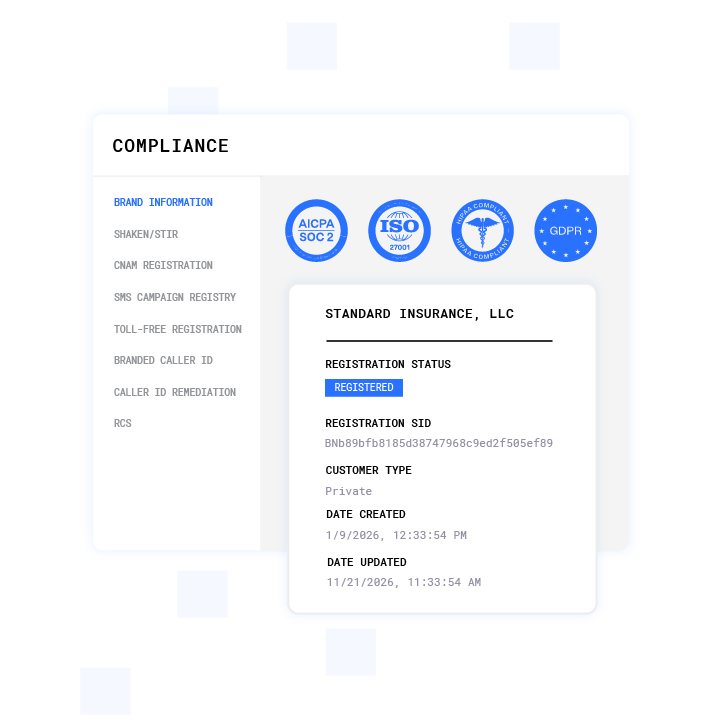
Plura Security & Compliance supports SOC 2, ISO, and GDPR standards with trust registration, verification management, and secure AI communications.1 The broader casualty market remains disciplined. In mid-2026, many buyers with favorable loss experience saw low- to mid-single-digit increases on primary general liability renewals and single-digit to low-double-digit increases on umbrella and excess liability programs, according to Business Insurance reporting. TCPA coverage remains in the specialty market, where capacity is limited but competition among MGAs is increasing.
These developments reinforce a clear message: TCPA coverage is narrowing, and prevention and documentation matter more than ever.
Prevention as the First Layer of TCPA Risk Management
TCPA liability insurance exists, but it is expensive, limited, and increasingly hard to obtain. Operators with the strongest risk posture treat insurance as one layer of a broader risk strategy.
Plura AI’s FCC-licensed platform supports compliance on every outbound call and text through real-time DNC scrubbing, TCPA consent management, and automated quiet-hours enforcement. This documented posture, backed by a zero-violation track record, SOC 2 certification, and 50+ state rule sets enforced on every outbound contact, gives underwriters exactly what they expect to see during the application process.1 Operators running Plura’s AI Predictive Dialer and AI SMS can demonstrate a strong compliance program to insurers, which directly affects pricing and insurability.
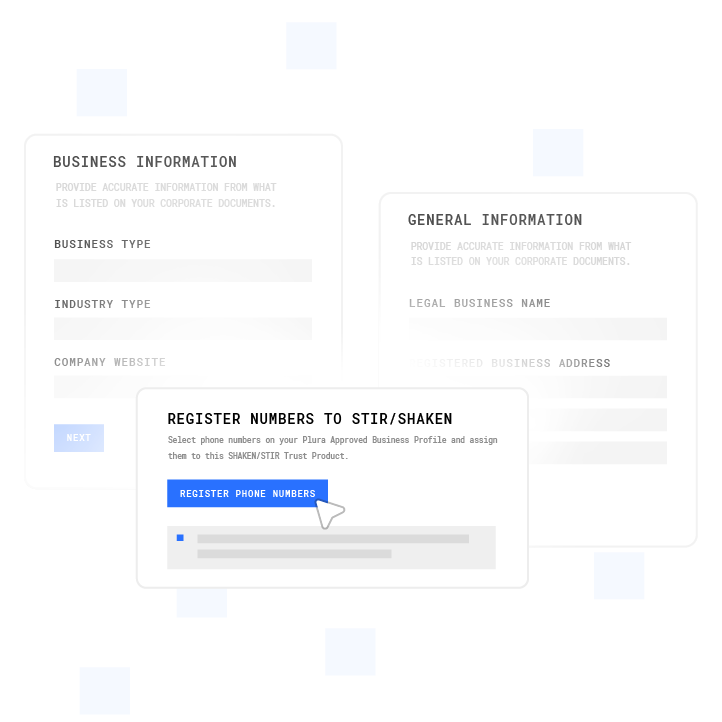
Plura’s FCC-licensed AI communications platform simplifies compliant business registration and phone number provisioning for AI Voice, SMS, RCS, and Webchat workflows. Insurance pays for the lawsuit. Plura helps teams reduce the chance of facing that lawsuit in the first place.
Get a live demo of Plura’s TCPA-focused compliance controls to see how compliant AI-powered communication infrastructure can reduce your TCPA risk and support better insurance terms.
Frequently Asked Questions
What is TCPA coverage insurance?
TCPA coverage insurance is a specialty liability policy that pays defense costs and settlements when a business faces a claim under the Telephone Consumer Protection Act (47 U.S.C. § 227). It addresses claims for unsolicited calls, texts, and faxes, with potential statutory damages of $500 to $1,500 per violation. Standard CGL and cyber policies typically exclude TCPA claims, so coverage often comes from specialty markets such as Media Liability or Technology E&O with an express TCPA endorsement. Most policies are claims-made, which means the claim must be filed during the policy period and the underlying act must have occurred after the retroactive date. Operators should consult a specialty broker and qualified counsel to evaluate their specific coverage needs.
Does general liability cover TCPA?
Commercial general liability policies routinely exclude TCPA claims through “personal and advertising injury” limitations. Courts have consistently held that robocalls and unwanted texts are neither bodily injury nor property damage, so carriers have no duty to defend. Coverage typically requires a specialty policy with an express grant of TCPA coverage. Simply having a CGL policy in place does not provide protection against TCPA lawsuits, demand letters, or class action filings. Operators who have not confirmed TCPA coverage in writing with their broker often treat themselves as uninsured for this exposure.
What does TCPA liability insurance typically exclude?
TCPA liability insurance typically excludes intentional or knowing violations, pre-existing claims before the retroactive date, punitive damages, regulatory fines and penalties from the FCC or FTC, and some state law claims. Some policies exclude claims from purchased lead lists entirely. Policies also commonly exclude contractually assumed liability, which means that if you agreed in a vendor contract to indemnify a third party for TCPA violations, that obligation may fall outside coverage. Buyers often review the exclusions carefully and confirm how the policy addresses state statutes such as Florida’s FTSA if they operate in high-litigation states. Qualified counsel can help interpret these provisions before binding any policy.
How much does TCPA insurance cost for call centers?
TCPA insurance for call centers varies widely based on call volume, consent documentation quality, prior claims history, use of autodialers, and industry vertical. Small teams under 20 reps often fall within the cost ranges described in the pricing section above. Larger operations with higher volume, SMS campaigns, or prior FCC complaints can face significantly higher premiums or difficulty finding coverage at all. Financial services, insurance, and debt collection verticals usually pay toward the higher end of the range. These figures come from broker quotes and industry surveys rather than published aggregate rates, so actual pricing depends on each operator’s specific risk profile.
Can compliance technology improve my TCPA insurance terms?
Underwriters increasingly evaluate documented compliance programs as part of the TCPA insurance application process. Factors that can support better pricing and insurability include real-time DNC scrubbing with documented scrub dates, timestamped and immutable consent records, a written TCPA compliance policy, automated quiet-hours enforcement, and a clean claims and FCC complaint history. Operators who can demonstrate these controls through audit-ready exports and compliance dashboards present a lower-risk profile to specialty underwriters. Compliance technology does not guarantee coverage or specific pricing, but it directly affects how underwriters evaluate applications. Many teams work with their broker to understand what documentation to prepare before submitting an application.
1 Plura AI maintains SOC 2, HIPAA, ISO, and GDPR posture as part of its platform infrastructure. References to compliance frameworks in this article describe Plura’s platform capabilities and do not constitute a guarantee that any customer using Plura will themselves be compliant with applicable laws or standards. Customers remain solely responsible for their own regulatory obligations, certifications, consent management, recordkeeping, and the claims they make to their own end users. Consult qualified legal counsel for guidance specific to your use case.
2 This article describes regulatory frameworks at a general level and does not constitute legal advice. Laws and regulations vary by jurisdiction, change over time, and apply differently depending on facts and circumstances. Readers should consult qualified legal counsel before making compliance decisions.
3 Performance figures, customer outcomes, and industry statistics referenced in this article are drawn from cited third-party sources or Plura customer case studies. Individual results vary based on implementation, use case, industry, audience, and execution. Past or aggregate performance is not a guarantee of future results.
4 References to third-party products, services, companies, or research are made for informational and comparative purposes only. Plura AI is not affiliated with, endorsed by, or sponsored by any third party named in this article unless explicitly stated. Trademarks and product names referenced remain the property of their respective owners.
5 This article contains forward-looking statements regarding industry trends, technology adoption, and future capabilities. These statements reflect current expectations and are subject to change. Plura AI undertakes no obligation to update forward-looking statements except as required.
This article is provided for informational purposes only and reflects Plura AI’s understanding at the time of publication. Product capabilities, integrations, and specifications are subject to change. For the most current information, visit plura.ai.
This article was produced with the assistance of AI tools and reviewed by Plura AI prior to publication.