

Written by: Matt Beucler, CEO, Plura AI
Key Takeaways
- TCPA-compliant 2026 call center costs range from $22,900–$30,000 monthly for a 5-agent U.S. in-house team and $12,500–$19,200 for equivalent Caribbean BPO operations.
- AI infrastructure delivers the same volume at $8,000–$15,000 monthly, with compliance enforcement built into the carrier layer instead of separate tools.
- Each TCPA violation carries $500–$1,500 in statutory damages per call, with no aggregate cap, so non-compliance risk can exceed annual tooling budgets.
- Offshore BPO contracts now face new regulatory exposure under the FCC NPRM and five active state onshoring laws, which increases audit and compliance overhead.
- Plura AI offers a live cost modeling session to map these figures against your specific seat count and compliance requirements.
Call Center Cost Per Call by Operating Model
Operating model drives cost per call more than any other factor. Gartner’s customer service benchmarks put the median cost per assisted contact at $13.50, versus $1.84 for self-service channels.3 AI infrastructure sits closer to the self-service floor, while in-house human teams sit well above the assisted median once compliance overhead is included.
The table below breaks down monthly costs across three operating models at 5, 25, and 50 agents, so you can see how AI infrastructure stays flat while human models scale linearly with headcount.
| Model | 5-Agent Monthly Range | 25-Agent Monthly Range | 50-Agent Monthly Range |
|---|---|---|---|
| In-house (fully loaded) | $22,900–$30,000 | $114,500–$150,000 | $229,000–$300,000 |
| BPO outsourced (dedicated agents) | $12,500–$19,200 | $62,500–$96,000 | $125,000–$192,000 |
| AI infrastructure (equivalent volume) | $8,000–$15,000 | $8,000–$15,000 | $8,000–$15,000 |
Domestic contact center agents cost $15–$25 per hour before benefits and overhead. A 25–35% benefits load, management, facilities, and technology push the fully burdened U.S. in-house rate to roughly $25–$45 per hour. BPO providers bundle many of these line items into a per-agent rate, but often add management overhead for QA, supervisors, and account management on top of base hourly rates.
CCaaS (Contact Center as a Service) platform software adds another cost layer. Enterprise-tier platforms such as NICE CXone run $100–$240+ per agent per month, Five9 runs $149–$229+ per agent per month, and Genesys Cloud CX runs $75–$155+ per agent per month, but those rates cover only the base platform.4 Separate compliance monitoring tools for generic CCaaS platforms can add more cost per seat per month on top of base platform and CRM fees, because most CCaaS platforms do not enforce TCPA or DNC rules natively.
Plura AI’s ROI calculator estimates monthly AI agent costs at $14,400 for equivalent volume to 15 human agents, at $15 per hour with 100% talk utilization using 6 agents.3 The same volume costs $60,000 per month with 15 human agents at $20 per hour including taxes, benefits, and commissions at 40% talk utilization.
See how these cost models apply to your specific seat count in a live demo.
TCPA Violation Cost Benchmarks
The Telephone Consumer Protection Act (47 U.S.C. § 227) sets statutory damages at $500 per violation, tripling to $1,500 per call or text for willful or knowing violations.2 There is no aggregate cap on class-action exposure.
| Violation Type | Statutory Range | Recent Settlement Examples |
|---|---|---|
| Autodialed/prerecorded call to cell without consent | $500–$1,500 per call | QuoteWizard: $19M; Gen Digital: $9.95M |
| Call to number on National DNC Registry | $500 per call (beyond first) | Debt collector: $11M for DNC registry calls |
| Prerecorded/artificial voice without consent | $500–$1,500 per call | Comodo Group: $1.625M (Feb 2026) |
| Violation of internal DNC list after opt-out request | $500–$1,500 per call | Major retailer: $32M for texts without consent |
Businesses have paid significant amounts in TCPA-related settlements and judgments in recent years. TCPA class-action filings rose 95% year over year. The FCC’s February 2024 Declaratory Ruling confirmed that AI-generated voices qualify as “artificial or prerecorded voice” under TCPA.2 Operators should consult qualified counsel on their specific obligations under 47 U.S.C. § 227 and FCC implementing regulations.
Understanding TCPA penalty exposure is only half the equation. The other half is knowing what compliance actually costs when it is built into your cost-per-call calculation, because most operators exclude compliance infrastructure from that figure and understate their true operating cost.
Call Center Cost Per Call With Compliance Included
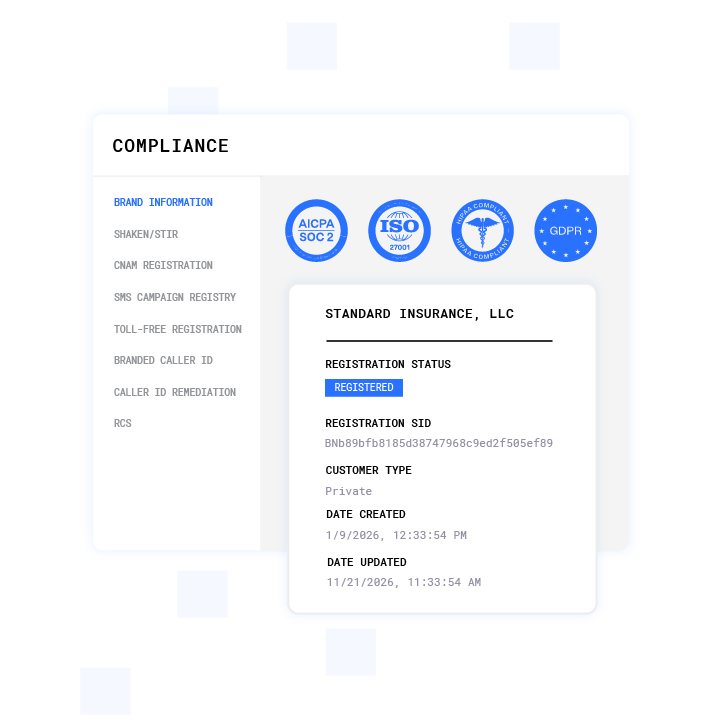
Cost per call is total monthly operating cost divided by total calls handled. The figure most operators cite understates true cost because it excludes compliance infrastructure. The table below itemizes the specific compliance line items that sit on top of base labor and platform costs, including DNC registry access, CCaaS platform fees, monitoring tools, and authentication layers that can add significant monthly spend to a 25-agent operation.
| Compliance Line Item | Monthly Cost Range | Source |
|---|---|---|
| $75–$240+ per seat | Balto/Genesys/Five9 published rates | |
| Separate compliance monitoring add-on | Additional per seat monthly (varies) | Industry benchmarks |
| $82 per area code (first 5 free); max $22,626/year | CompliancePoint / FTC fee schedule | |
| $500–$2,000/month (5-agent team) | Telemarketing.com 2026 benchmarks | |
| STIR/SHAKEN authentication and branded caller ID | Bundled in carrier or add-on fee | FCC TRACED Act implementing orders |
| Quiet-hours enforcement (50+ state rules) | Platform-dependent; often manual without automation | State-level rule sets |
Total cost of ownership for enterprise CCaaS platforms including CRM, compliance tools, and integrations can reach high per-seat monthly figures when all elements are included. For a 25-agent team, that compliance overhead alone can add substantial monthly costs before a single call is made.
Cost of Non-Compliance vs. Cost of Compliance
The table below compares annual fine exposure against the cost of compliance tooling at three team sizes. Fine exposure figures use the $500 statutory floor and assume 100 non-compliant calls per day for 30 days, a volume well within reach of any active outbound team.
| Scenario | Annual Fine Exposure | Annual Compliance Tooling Cost | Net Risk Delta |
|---|---|---|---|
| 100 non-compliant calls/day x 30 days | $1.5M (at $500/call) | $6,000–$24,000/year (5-agent team) | $1.476M–$1.494M exposure avoided |
| 50,000-record campaign without consent | $25M–$75M theoretical | $36,000–$120,000/year (25-agent team) | Existential exposure vs. manageable tooling spend |
| DNC registry violation (FTC) | Up to $50,120 per call | $22,626 max/year for full DNC access | Registry access cost is a fraction of one violation |
Operators should consult qualified legal counsel to assess their specific exposure under 47 U.S.C. § 227 and FTC Telemarketing Sales Rule provisions.
The risk analysis above establishes the cost of non-compliance. The section below translates that into actionable budgets, breaking down the specific line items that make up the in-house, BPO, and AI cost stacks so operators can see exactly where compliance overhead sits in the total monthly spend.
2026 Monthly Budget Examples by Team Size
The tables below show fully loaded monthly budgets across three operating models at 5, 25, and 50 agents. All figures draw from 2026 industry benchmarks cited inline.
| Line Item | 5-Agent In-House | 5-Agent BPO | AI Equivalent |
|---|---|---|---|
| Labor / agent fees | $20,000–$36,000 | $12,500–$19,200 (all-in) | $8,000–$15,000 |
| Benefits / payroll taxes | $4,167–$7,500 | Bundled | $0 |
| Technology / CCaaS platform | $2,500–$7,500 | Bundled | Included in platform |
| Compliance infrastructure | $500–$2,000 | Partial (varies by vendor) | Included in platform |
| Turnover / recruiting reserve | $1,800–$3,200 | Bundled | $0 |
| Facilities / remote stipends | $833–$2,083 | Bundled | $0 |
| Monthly Total | $22,900–$30,000 | $12,500–$19,200 | $8,000–$15,000 |
| Team Size | In-House Monthly | BPO Monthly | AI Monthly |
|---|---|---|---|
| 5 agents | $22,900–$30,000 | $12,500–$19,200 | $8,000–$15,000 |
| 25 agents | $114,500–$150,000 | $62,500–$96,000 | $8,000–$15,000 |
| 50 agents | $229,000–$300,000 | $125,000–$192,000 | $8,000–$15,000 |
The AI cost range does not scale linearly with headcount because AI infrastructure handles volume increases without proportional seat additions. AI contact centers have a 0% turnover rate compared to 30–45% annually for traditional operations, which removes the $10,000–$20,000 per-agent replacement cost that compounds annually in human-staffed models.
Run your numbers through Plura’s calculator to check your ROI in real time.
The budget tables above show BPO costs 35–45% lower than in-house operations at small scale, which explains why many operators have moved volume offshore. Those cost comparisons were built on a regulatory environment that no longer exists. The section below explains how 2026 federal and state onshoring rules add compliance overhead to every offshore BPO contract, overhead that was not priced into the $12,500–$19,200 monthly BPO figures above.
Why 100% U.S. Infrastructure Matters Under 2026 Rules
The regulatory environment for offshore call center operations has shifted materially. The FCC’s Notice of Proposed Rulemaking (NPRM, CG Docket No. 26-52) proposes capping offshore customer-service calls at 30% and prohibiting offshore handling of sensitive consumer data including passwords, multi-factor authentication codes, Social Security numbers, and banking and card data. Companion federal legislation includes the Keep Call Centers in America Act (S.2495) and the Foreign Robocall Elimination Act (S.2666).
While those federal measures are still proposed, five states have already enacted or advanced restrictions that directly penalize or limit offshore call center operations, creating compliance exposure for any operator with BPO contracts in those jurisdictions:
- New York’s Call Center Jobs Act with penalties up to $10,000 per day
- New Jersey’s mirror statute
- Connecticut’s state-contract bans
- Missouri’s offshore-disclosure executive order
- Florida’s medical-information offshoring ban
Every offshore BPO contract a covered entity holds is now a potential compliance consideration under this framework. Operators should consult qualified counsel to assess exposure under applicable federal and state provisions.
Plura AI is built on 100% U.S. infrastructure by architecture, not by policy statement, which removes the offshore data-handling exposure described in the FCC NPRM. Because voice origination, model hosting, data storage, and call recording all run on domestic infrastructure, customer data does not cross international boundaries during call processing. Plura operates as its own FCC-licensed audio bridging carrier, which means STIR/SHAKEN (Secure Telephone Identity Revisited / Signature-based Handling of Asserted information using toKENs) caller ID verification runs at the carrier level on every outbound call, not as a third-party add-on that can be misconfigured or skipped.
That carrier-level enforcement extends to the platform’s compliance engine. The engine includes real-time DNC (Do Not Call) scrubbing against federal and state registries before each dial, an immutable TCPA consent ledger with timestamped records, and automated quiet-hours enforcement through time-zone detection across 50+ state rule sets. Plura’s compliance framework includes SOC 2 compliant infrastructure, TCPA and STIR/SHAKEN enforcement, integration with Blacklist Alliance for DNC screening, and Number Verifier for caller ID reputation.1
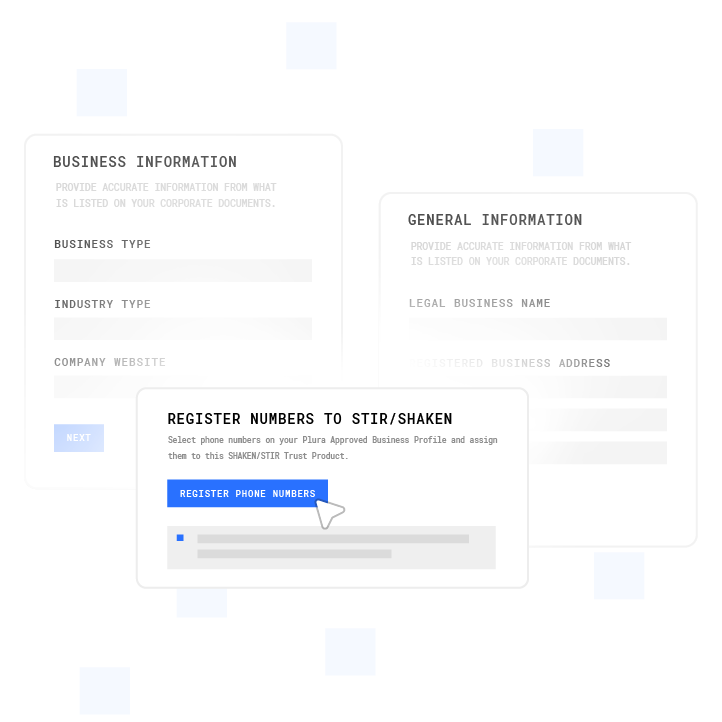
Plura supports customer compliance with TCPA, DNC, HIPAA, SOC 2, and ISO certification standards.1 Customers remain responsible for their own regulatory obligations and the claims they make to their end users. Operators should consult qualified legal counsel on their specific compliance posture.
Review Plura’s infrastructure architecture and compliance engine in a live walkthrough.
Frequently Asked Questions
What is included in the fully loaded cost of a TCPA-compliant in-house call center agent in 2026?
A fully loaded in-house agent cost in 2026 includes base salary, payroll taxes and benefits (typically 25–35% of base), management and supervision overhead, technology (CCaaS platform, CRM, dialer, call recording), compliance infrastructure (DNC registry access, TCPA consent logging, STIR/SHAKEN authentication), facilities or remote work stipends, and a turnover reserve. For regulated verticals such as insurance and healthcare, licensing and compliance training add another layer. The combined figure for a single agent in a compliance-heavy environment runs $55,000–$72,000 annually before any fine exposure is factored in. A 5-agent team in this model costs approximately $22,900–$30,000 per month fully loaded.
Does the FCC’s 2024 ruling on AI voice apply to outbound call center operations?
The FCC’s February 2024 Declaratory Ruling confirmed that AI-generated voices qualify as “artificial or prerecorded voice” under the TCPA. Outbound AI voice campaigns therefore fall under the same consent, DNC scrubbing, and quiet-hours frameworks that apply to traditional robocall operations. The statutory damages described earlier ($500–$1,500 per call) apply to AI voice campaigns under this ruling. Operators should consult qualified counsel to assess how this ruling applies to their specific outbound programs under 47 U.S.C. § 227 and FCC implementing regulations.
How does AI infrastructure reduce TCPA compliance cost compared to in-house or BPO models?
In-house and BPO models require compliance infrastructure to be purchased, configured, and maintained separately from the core CCaaS platform, which typically adds costs for compliance monitoring tools on top of base platform fees. Human agents also introduce script-drift risk, where agents deviate from approved language over time and create consent and disclosure exposure that technology alone cannot prevent. AI infrastructure built on a compliant carrier stack enforces DNC scrubbing, consent logging, quiet-hours rules, and STIR/SHAKEN authentication on every contact by default, without a separate compliance add-on layer.
Plura’s compliance engine functions as a first-class layer of the platform, not a bolt-on. The result is a lower per-seat compliance overhead and a consistent enforcement posture across every outbound contact.
What are the hidden costs in BPO outsourcing that operators typically underestimate?
BPO contracts bundle labor, technology, and management into a per-agent rate, but several cost categories remain outside that rate. Setup and onboarding fees run $1,000–$5,000 plus $50–$200 per agent per month in technology and licensing. Management overhead for QA, supervisors, and account management can increase the effective rate. Offshore BPO programs now carry regulatory exposure under the FCC NPRM (CG Docket No. 26-52) and state onshoring laws, which creates audit and compliance overhead that was not priced into contracts signed before 2025. Compliance posture for TCPA and DNC varies by vendor and is not always enforced at the carrier level, leaving the contracting operator exposed to statutory liability for violations made on their behalf.
What does Plura AI cost compared to a traditional 15-agent call center?
As shown in the cost comparison earlier, a 15-agent human operation at $60,000 per month can be replaced with 6 AI agents at $14,400 per month, a $45,600 monthly difference that stacks to $547,200 annually. For larger operations, Plura’s total cost of ownership of $300,000–$700,000 annually replaces the $4M–$7M traditional contact center cost structure at equivalent volume. Plura offers three pricing tiers: Multi at $5,000 per month, Agency at $7,500 per month, and Enterprise at custom pricing, all on annual contracts billed monthly with a 90-day opt-out window.
Conclusion
TCPA-compliant call center costs in 2026 form a stack that includes labor, platform, compliance tooling, DNC registry access, turnover reserves, and fine exposure that compounds with every non-compliant contact. In-house teams at 50 agents cost $229,000–$300,000 monthly fully loaded. BPO at equivalent volume runs $125,000–$192,000 monthly, with offshore contracts now carrying regulatory exposure under the FCC NPRM and five active state onshoring laws. AI infrastructure at equivalent volume runs $8,000–$15,000 monthly with compliance enforcement built into the carrier layer, not bolted on afterward.
The TCO gap between models is material. Gartner projects conversational AI will reduce global contact center labor costs by $80 billion in 2026.5 Operators who have not modeled the full compliance cost stack, including fine exposure, are making infrastructure decisions on incomplete numbers.
Model your specific cost stack and ROI using Plura’s calculator.
1 Plura AI maintains SOC 2, HIPAA, ISO, and GDPR posture as part of its platform infrastructure. References to compliance frameworks in this article describe Plura’s platform capabilities and do not constitute a guarantee that any customer using Plura will themselves be compliant with applicable laws or standards. Customers remain solely responsible for their own regulatory obligations, certifications, consent management, recordkeeping, and the claims they make to their own end users. Consult qualified legal counsel for guidance specific to your use case.
2 This article describes regulatory frameworks at a general level and does not constitute legal advice. Laws and regulations vary by jurisdiction, change over time, and apply differently depending on facts and circumstances. Readers should consult qualified legal counsel before making compliance decisions.
3 Performance figures, customer outcomes, and industry statistics referenced in this article are drawn from cited third-party sources or Plura customer case studies. Individual results vary based on implementation, use case, industry, audience, and execution. Past or aggregate performance is not a guarantee of future results.
4 References to third-party products, services, companies, or research are made for informational and comparative purposes only. Plura AI is not affiliated with, endorsed by, or sponsored by any third party named in this article unless explicitly stated. Trademarks and product names referenced remain the property of their respective owners.
5 This article contains forward-looking statements regarding industry trends, technology adoption, and future capabilities. These statements reflect current expectations and are subject to change. Plura AI undertakes no obligation to update forward-looking statements except as required.
This article is provided for informational purposes only and reflects Plura AI’s understanding at the time of publication. Product capabilities, integrations, and specifications are subject to change. For the most current information, visit plura.ai.
This article was produced with the assistance of AI tools and reviewed by Plura AI prior to publication.