
Written by: Matt Beucler, CEO, Plura AI
Updated September 2026
Key Takeaways
- Cloud-based AI predictive dialers use machine learning to dial multiple numbers, predict agent availability, and connect only live answers, which cuts time wasted on voicemails and busy signals.
- Modern AI platforms add AI voice agents that run full conversations, qualify leads, and book meetings, so every answered call receives an immediate response.
- Key compliance focus areas in 2026 include abandonment management, real-time DNC scrubbing, and consent tracking, with fines assessed on a per-call basis.
- Most operations see payback within the first quarter when AI agents replace a meaningful share of human talk time.
- Plura AI’s AI Predictive Dialer combines carrier-grade controls, multi-channel memory, and native CRM integrations, so leaders can see how Plura can transform outbound operations.
How Cloud-Based AI Predictive Dialers Differ from Traditional Systems
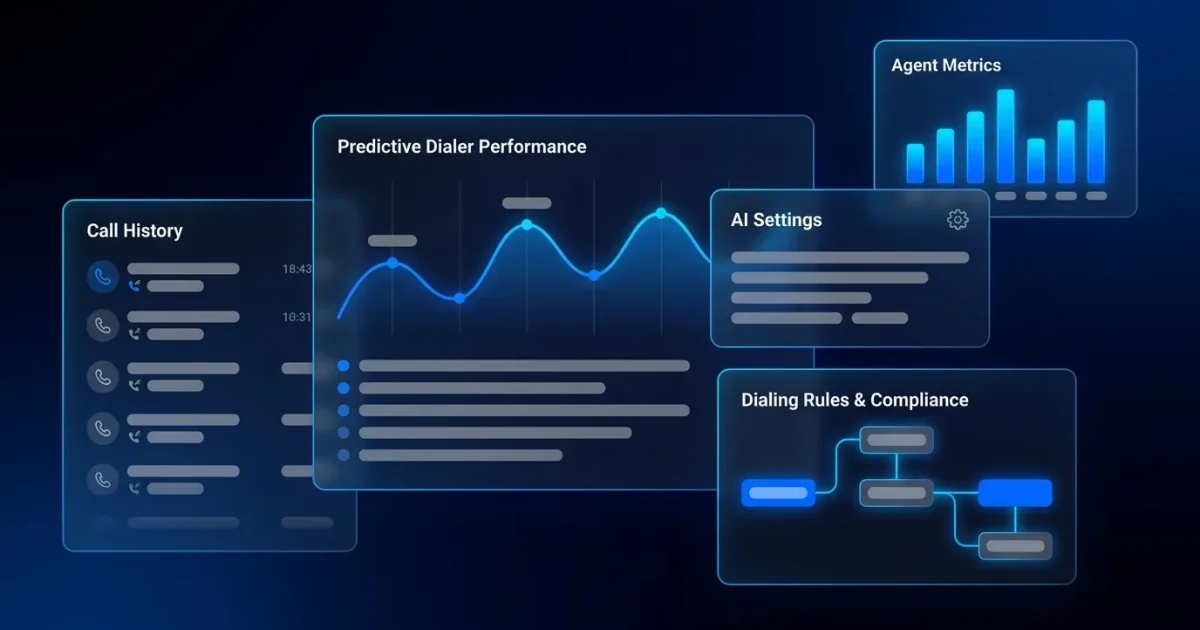
Modern cloud-based AI predictive dialers differ from legacy systems in deployment model, dialing intelligence, and conversation handling.
Cloud-based vs. on-premise. On-premise predictive dialer systems typically require $15,000 to $40,000 in hardware before software licensing, plus 6 to 12 weeks of deployment time. Cloud-based platforms remove that capital expense. They scale with headcount and support remote agents without VPNs or hardware configuration.
AI predictive dialer vs. basic auto dialer. “Auto dialer” covers predictive, progressive, power, and preview dialers. A predictive dialer uses statistical pacing models to dial multiple numbers ahead of agent availability. An AI predictive dialer adds machine learning that prioritizes which contacts to call based on answer rates, prior outcomes, and enrichment data. It then adjusts pacing dynamically instead of relying on static dial ratios.
The AI conversation layer. The most significant shift in 2026 is the rise of AI voice agents that conduct the entire conversation, qualify leads, handle objections, and book meetings, escalating to humans only when needed. This creates a fundamentally different product architecture that eliminates the abandoned-call problem by design. Each AI agent is instantiated per call, so every answered call is greeted immediately.
How Predictive Dialing Works: Mechanics and AI Enhancement
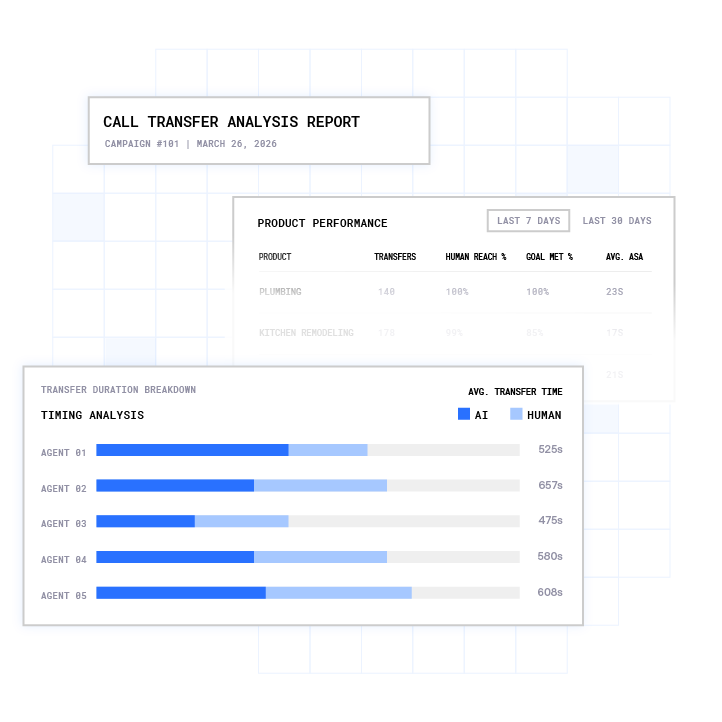
Predictive dialing algorithms dial more numbers than available agents using models of answer rates, average handle time, and agent availability. Dial ratios typically run 1.2 to 2.0 calls per agent, with the real-world ceiling set by the abandonment cap.
Answering Machine Detection (AMD) distinguishes live humans from voicemail. Leading platforms reach 95%+ AMD accuracy with under 2% false positives. A 5% AMD gain yields roughly 5% more live conversations per hour. For a 100-agent operation making 30,000 calls per day, the difference between 70% and 96% AMD accuracy can mirror adding 24 full-time agents without hiring.
AI-enhanced pacing adjusts dial rates in real time based on answer rates, abandonment thresholds, and agent status. This replaces static configurations that cannot react to intraday swings in list performance.
AI voice agents represent the structural change. Instead of connecting a human agent to every answered call, AI voice agents handle the conversation from greeting through qualification and booking. Plura AI’s AI Predictive Dialer deploys AI voice agents that conduct complete sales conversations, with stateful memory shared across voice, SMS, RCS, and webchat.
Key AI Features to Look For in a Dialer Platform
Feature evaluation for a cloud-based AI predictive dialer should extend beyond basic AMD. The capabilities below separate platforms that improve revenue outcomes from those that only increase dial volume.
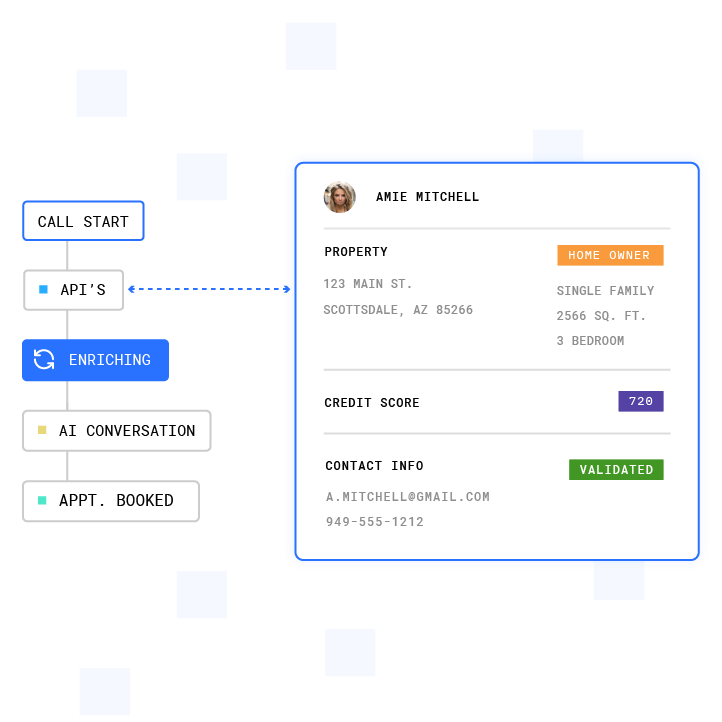
- AI voice agents that handle initial conversations, qualify leads, and book meetings, not just dial. Plura provides full lead enrichment before every interaction. This enables autonomous AI voice agents to run complete sales conversations, qualify leads, and book appointments.
- Real-time lead scoring using 30+ enrichment data sources during the conversation, so qualification happens at the moment of contact instead of in a later batch.
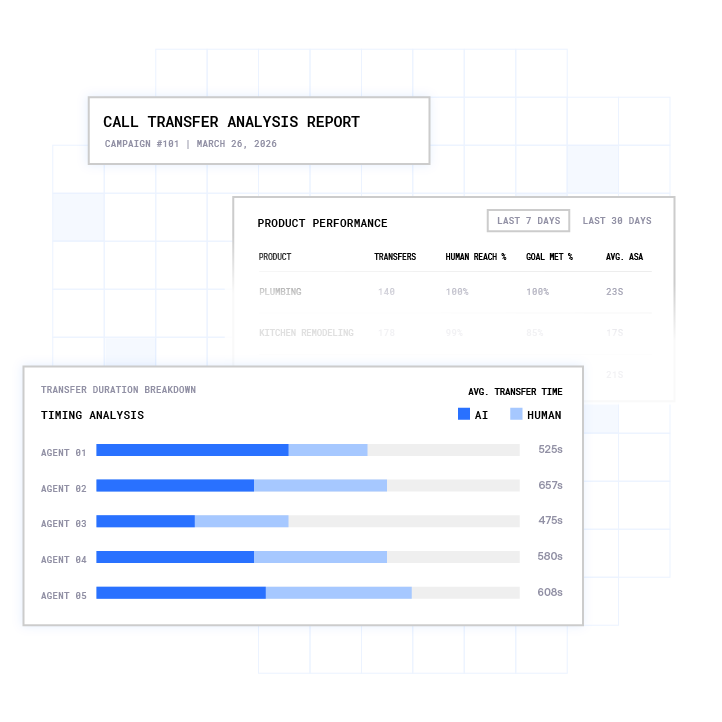
- Sentiment analysis and conversation intelligence that surfaces objections and coaching opportunities across every call. Plura’s conversation intelligence generates client-ready reports automatically and feeds findings back into workflow tuning.
- Stateful conversation memory across voice, SMS, RCS, and webchat, so a lead who texted at 9 a.m. appears as the same contact when the call connects at noon, with full prior context available.
- CRM integration depth. Native two-way sync that reads lead data to personalize conversations and writes structured qualification results back is materially different from a Zapier connection. Plura’s integrations include native two-way sync with HubSpot, Salesforce, and Zoho, among 50+ tools.
Compliance and Legal Considerations for 2026
This section describes platform features and regulatory frameworks. Consult qualified counsel for legal advice specific to your operation.
Compliance now drives as many buying decisions as productivity. The 2026 regulatory environment has tightened across federal rules, state laws, and carrier policies.
TCPA and the 3% abandonment cap. FCC rules under 47 C.F.R. § 64.1200(a)(6) limit abandoned calls to 3% of calls answered by live persons over a 30-day rolling window per campaign.2 An abandoned call is one not connected to an agent within 2 seconds of the recipient’s completed greeting. Violations carry fines of $500 for inadvertent violations and $1,500 for knowing or willful violations per call. A non-compliant campaign of 5,000 contacts can generate significant federal exposure, plus state-level liability.
State mini-TCPAs. Florida’s FTSA and Oklahoma’s OTSA restrict predictive dialing on cell phones without prior express written consent. B2B contact lists now skew 60 to 80 percent mobile, so the safe-harbor zone for predictive dialing has narrowed in 2026.
One-to-one consent. The FCC’s one-to-one consent rule describes consent to receive autodialed or prerecorded calls as specific to a single seller. This affects comparison-shopping forms that previously authorized multiple sellers from one checkbox.
Blanket revocation. Effective April 11, 2026, if a consumer revokes consent for one type of communication from a company, that revocation applies to all communications from that company. Outbound dialing systems therefore need to track opt-outs at the customer level instead of by campaign or channel.
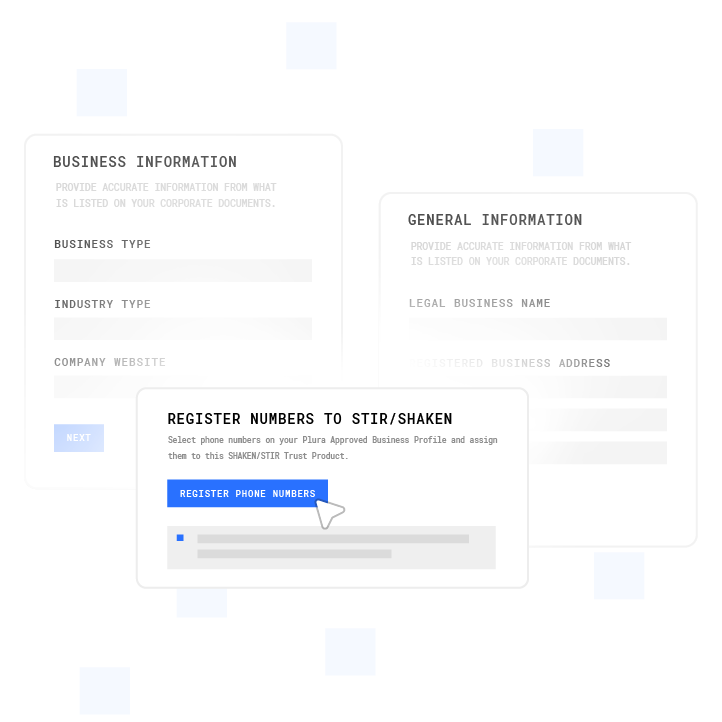
STIR/SHAKEN and spam labeling. Calls without A-level STIR/SHAKEN attestation see answer rates 30 to 50% below signed numbers. “Spam Likely” labels drop answer rates 60 to 80%. Carriers control these signals, so solving the problem requires carrier-level controls.
FCC Know Your Customer proposal. In April 2026, the FCC proposed tougher Know Your Customer rules that would require originating voice providers to verify the identity and intended use of businesses behind outbound calling campaigns, with penalties starting at $2,500 per illegal call.2
What compliant platforms do. Compliant architectures support real-time DNC scrubbing against federal and state registries before every dial, maintain immutable consent records, enforce quiet hours by time zone, cap abandonment below 3%, and provide audit-ready exports. Plura’s compliance engine is built to enforce these controls at the platform level on every outbound contact, with SOC 2, HIPAA, and ISO certification covering the underlying infrastructure.1 Plura also integrates with The Blacklist Alliance’s TCPA Litigation Firewall for real-time Do Not Call scrubbing and litigation protection.
Are predictive dialers illegal? Predictive dialing remains in use with appropriate consent, pacing, and DNC handling. The per-call fine structure means volume amplifies risk, so governance and reporting matter as much as dialing speed.
See compliance enforcement in action with a live demo.
Cost and ROI: What You’ll Actually Pay
Pricing models. Cloud-based predictive dialers typically use three structures. Per-seat pricing runs $50 to $200 per user per month. Per-minute pricing runs $0.01 to $0.04 for telephony plus AI usage. Usage-based per-conversation pricing aligns cost with AI volume. Enterprise platforms like Five9 run $159 to $229 per seat with 50-seat minimums and 12 to 36-month contracts.4
Hidden costs. Hidden costs often push deployments over budget. According to Forrester, 58% of AI sales tool buyers exceed their initial budget estimate by more than 30%, largely from underestimating implementation and data infrastructure.4 Implementation for enterprise platforms typically runs $5,000 to $20,000 or more. Carrier rates can vary 2 to 8x depending on whether the vendor owns its infrastructure or resells a third-party CPaaS.
Plura’s illustrative ROI. For a 15-agent operation at $20 per hour with 40% talk utilization, human costs run about $60,000 per month. Plura agents replace 15 humans with 6 AI agents at $14,400 per month. This yields a 30-day ROI of $45,600, a 12-month ROI of $547,200, and a 60-month ROI of $2,736,000.3 Plura reports 3x average ROI in 90 days, 47% pipeline growth, and 90% faster lead response.3
Speed-to-lead benchmarks. A Harvard Business Review study found that companies responding within five minutes are 100x more likely to connect with a prospect than those waiting 30 minutes. Leads contacted within 1 minute are 391% more likely to convert than those contacted after 24 hours. Gartner’s median cost per contact is $1.84 for self-service channels and $13.50 for assisted channels.
Representative pricing comparison.
| Platform | Pricing Model | Published Starting Price | Deployment Timeline |
|---|---|---|---|
| Plura AI | Usage-based per conversation | Custom (see pricing page) | 2 to 4 weeks |
| Five9 | Per-seat, 50-seat minimum | $159 to $229/seat/month | 3 to 6 months |
| Convoso | Quote-only | ~$90 to $165/seat/month (third-party estimate) | 1 to 3 weeks |
| CloudTalk | Per-seat + add-ons | $25/user/month | Self-serve |
Predictive Dialer vs. Progressive Dialer: Matching Mode to Team Size
The choice between predictive and progressive dialing affects both compliance exposure and productivity, and the impact varies by team size and campaign type.
Predictive dialing can push agent talk time to 45 to 50 minutes per hour, while progressive dialers often reach 35 to 40 minutes. Predictive dialers dial multiple numbers per agent ahead of availability, which creates the over-dialing that generates abandoned calls. Progressive dialers place one call only when an agent becomes available. This produces zero abandoned calls but lower throughput.
Predictive dialing is often used by teams of 25 or more agents handling high-volume campaigns, while progressive dialing suits 10 to 25 agents with mixed volume. For teams under 10 agents, the pacing algorithm lacks statistical stability, so a power or preview dialer usually fits better.
AI voice agents change this tradeoff. Each AI agent is instantiated per call, so every answered call is greeted immediately. This removes the abandoned-call problem that makes predictive dialing a compliance concern at scale.
How to Choose the Right Solution: A Practical Checklist
Leaders should evaluate any cloud-based AI predictive dialer against the following criteria before signing a contract.
- Compliance architecture. Confirm that the platform enforces real-time DNC scrubbing, maintains immutable consent records, enforces quiet hours by time zone, and supports abandon-rate caps below 3%. Compliance should operate at the platform level rather than as an add-on.
- AI conversation capability. Confirm that the AI handles conversations, including qualification, objection handling, and booking. Check whether it maintains context across channels.
- Carrier infrastructure. Determine whether the vendor owns its carrier or resells a third-party CPaaS such as Twilio. Ask if it can issue branded caller ID at the carrier level and what STIR/SHAKEN attestation level it signs. Vendors that own their carrier can enforce compliance before the call leaves the network and can issue branded caller ID under their own identity.
- U.S. infrastructure. Confirm whether voice origination, model hosting, and data storage run on domestic infrastructure. This affects exposure under FCC NPRMs and HIPAA-adjacent state rules.
- Integration depth. Look for native CRM two-way sync instead of only Zapier. The platform should read lead data to personalize outreach and write structured results back.
- Total cost of ownership. Model Year 1 TCO including implementation, compliance add-ons, and per-minute costs, not just license fees. For a 100-seat contact center, traditional operations can cost $4 million to $7 million annually, while AI-powered communications using platforms like Plura can range from $300,000 to $700,000.
- Deployment timeline. Target days and weeks instead of months. Enterprise CCaaS platforms often take 3 to 6 months, while Plura typically deploys in 2 to 4 weeks from contract to live AI conversations across all channels.
Vendor capabilities in practice. When comparing vendors, prioritize those that own their carrier infrastructure, since this enables carrier-level compliance enforcement and branded caller ID. For example, Plura is an FCC-licensed carrier that owns its stack and issues branded caller ID at the carrier level. Plura’s AI Predictive Dialer includes list management, dynamic pacing, time zone logic, answer rate tuning, and compliance controls, with stateful conversation memory shared across voice, SMS, RCS, and webchat. All infrastructure runs on U.S. servers, which supports alignment with FCC NPRM (CG Docket No. 26-52).
Run the numbers for your operation with a personalized demo.
Frequently Asked Questions
Are predictive dialers illegal?
Predictive dialers operate within U.S. markets when used in line with TCPA and FCC frameworks. As detailed in the compliance section, the FCC caps abandonment and assesses fines on a per-call basis. Operations also need to manage DNC registries, calling hours, and consent requirements, with some states adding rules beyond the federal baseline. The per-call fine structure means a single non-compliant campaign at volume can create significant liability. Consult qualified counsel for guidance specific to your jurisdiction.
What is the difference between a predictive dialer and an auto dialer?
“Auto dialer” is the umbrella term covering predictive, progressive, power, and preview dialers. A predictive dialer dials multiple numbers simultaneously ahead of agent availability using pacing models, which increases talk time but introduces abandonment risk. Power dialers place one call per available agent, which removes abandonment but reduces volume. Progressive dialers dial one call as soon as an agent becomes free, with a short preview window. Preview dialers show the contact record and require the agent to initiate the call, providing the most agent control and the lowest throughput.
What is the difference between a predictive dialer and a progressive dialer?
Predictive dialers dial multiple numbers per agent ahead of availability, which maximizes talk time but raises abandoned-call risk under FCC limits. Progressive dialers place one call only when an agent becomes available, which produces zero abandoned calls but lower talk time. Predictive dialing often fits larger teams on high-volume campaigns, while progressive dialing fits mid-sized teams or compliance-sensitive outreach. As discussed earlier, AI voice agents handle conversations directly and remove the structural over-dialing that creates abandonment.
How much does a cloud-based AI predictive dialer cost?
Cloud-based predictive dialers typically range from $50 to $200 per seat per month for software, plus $0.01 to $0.04 per minute for telephony and $20 to $50 per seat for compliance add-ons. Enterprise platforms such as Five9 often run $159 to $229 per seat with 50-seat minimums. AI-native platforms such as Plura price per conversation, so cost scales with AI volume rather than headcount. Year 1 total cost of ownership should include implementation, compliance infrastructure, and carrier rates, not just license fees. According to Forrester, 58% of AI tool buyers exceed their initial budget by 30% or more due to underestimated implementation costs.
How does a cloud-based AI predictive dialer improve connect rates?
Connect rates improve through several compounding mechanisms. Branded caller ID can reduce the likelihood of “Spam Likely” labels and improve answer rates, but it does not guarantee prevention or removal of such labels, which depend on separate reputation signals and calling behavior. STIR/SHAKEN A-level attestation signals legitimate origination to destination carriers, and unsigned calls often see answer rates 30 to 50% below signed numbers. Local presence dialing rotates numbers local to the recipient’s area code to increase pickup likelihood. Intelligent retry logic based on optimal calling times reduces wasted dials. Real-time number reputation monitoring identifies and rotates flagged numbers before they drag down performance. Platforms that own their carrier infrastructure can enforce these controls at the origination level instead of relying on third-party add-ons. Plura also communicates with iOS 26 call screening so calls present with company name and reason for the call, which helps convert screened calls into live conversations instead of voicemails.
1 Plura AI maintains SOC 2, HIPAA, ISO, and GDPR posture as part of its platform infrastructure. References to compliance frameworks in this article describe Plura’s platform capabilities and do not constitute a guarantee that any customer using Plura will themselves be compliant with applicable laws or standards. Customers remain solely responsible for their own regulatory obligations, certifications, consent management, recordkeeping, and the claims they make to their own end users. Consult qualified legal counsel for guidance specific to your use case.
2 This article describes regulatory frameworks at a general level and does not constitute legal advice. Laws and regulations vary by jurisdiction, change over time, and apply differently depending on facts and circumstances. Readers should consult qualified legal counsel before making compliance decisions.
3 Performance figures, customer outcomes, and industry statistics referenced in this article are drawn from cited third-party sources or Plura customer case studies. Individual results vary based on implementation, use case, industry, audience, and execution. Past or aggregate performance is not a guarantee of future results.
4 References to third-party products, services, companies, or research are made for informational and comparative purposes only. Plura AI is not affiliated with, endorsed by, or sponsored by any third party named in this article unless explicitly stated. Trademarks and product names referenced remain the property of their respective owners.
This article is provided for informational purposes only and reflects Plura AI’s understanding at the time of publication. Product capabilities, integrations, and specifications are subject to change. For the most current information, visit plura.ai.
This article was produced with the assistance of AI tools and reviewed by Plura AI prior to publication.