

Written by: Matt Beucler, CEO, Plura AI
Updated September 5, 2026
Key Takeaways
- An SMS CRM support platform connects text messaging with CRM data to manage support conversations, automate workflows, and keep a complete interaction history.
- Text has overtaken phone as the preferred business contact method, with 89% of consumers signed up for business texts and 57% expecting a reply within 15 minutes.
- Core evaluation criteria include real-time CRM integration, automation depth, compliance tooling (10DLC, TCPA, consent), scalability, and AI capabilities such as stateful cross-channel memory.
- Service-focused platforms deliver the deepest automation and cost savings for high-volume operators, outperforming native CRM features and basic add-ons.
- Plura AI combines AI-powered SMS agents, real-time CRM integration, and compliance-support tooling to handle high-volume support at scale. Book a live demo to see it in action.
The Text Channel Is Now a Support Essential
EZ Texting’s 2026 Consumer Texting Behavior Report found that 89% of consumers have signed up to receive texts from a business, up from 66% five years earlier.3 Text (46%) has now surpassed phone (43%) as the preferred method for consumers to contact a business. And 57% of consumers expect a response within 15 minutes when texting a business.
The operational takeaway is clear. Support teams that respond quickly on text retain more customers and convert more leads than teams that stay phone-first. This guide gives a vendor-neutral overview of the SMS CRM support platform landscape and a practical buying framework you can apply to your own operation.
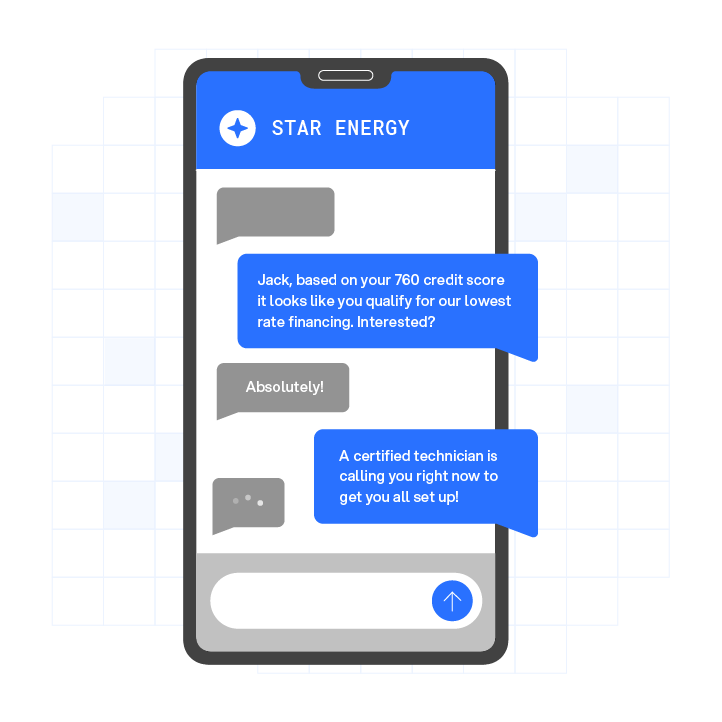
Book a live demo with Plura to see AI customer service texting in action.
Core Capabilities of an SMS CRM Support Platform
A mature SMS CRM support platform combines CRM data with SMS capabilities to handle inbound and outbound support texts and create a unified record of every customer interaction. The five core capabilities to evaluate are:
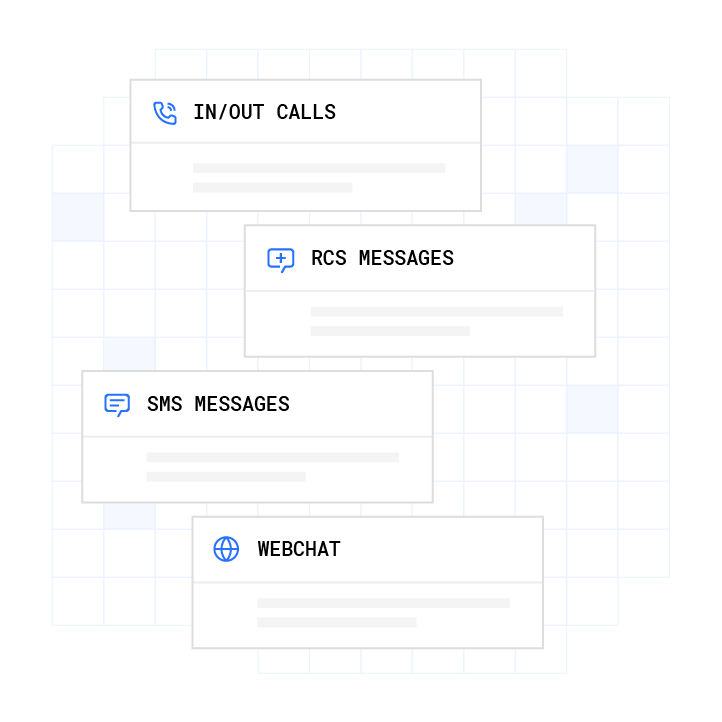
- Unified Communication: Send and receive SMS, MMS, and increasingly RCS (Rich Communication Services) alongside voice and webchat within a single interface.
- Automation: Use triggers and workflows for auto-replies, ticket creation, appointment reminders, and follow-up sequences based on CRM events.
- Shared Inbox: Enable team collaboration with conversation assignments, internal notes, and full history on each contact.
- Compliance Management: Handle opt-in and opt-out tracking, consent logging, and 10DLC (10-Digit Long Code) registration for A2P (application-to-person) messaging.
- Analytics: Track response times, resolution rates, and customer satisfaction scores.
AI-powered platforms like Plura add intelligent conversation handling, stateful memory across channels, and automated resolution for common support issues. To understand how these capabilities show up in daily operations, it helps to look at how SMS CRM integration works at a technical level.
How SMS CRM Integration Works
SMS CRM integration connects your messaging layer to your customer records so that every inbound reply updates the contact timeline, triggers the appropriate workflow, and routes the conversation to the right agent or AI. Four common integration methods exist, each with different tradeoffs in setup speed, flexibility, and engineering effort:
- Native CRM features: SMS built directly into the CRM. Fastest to deploy, limited control.
- iPaaS connectors: No-code tools like Zapier or Make that bridge CRM and SMS platforms. Balanced simplicity and cost, but polling-based and not real time.
- Direct webhook-to-API integrations: Full control over two-way data flows and low latency, but requires engineering resources.
- Messaging-first CRMs: Platforms built with SMS as a core channel, which removes the integration layer entirely.
Plura integrates with 50+ tools including HubSpot, Salesforce, and Zoho. Every conversation logs to the contact timeline and every workflow trigger fires in real time. Plura’s AI contact center guide details how stateful memory across channels eliminates the re-explanation problem. A customer who texts at 9 a.m. is recognized when the call comes at noon, with full context already available.
Platform Categories for SMS CRM Support
The SMS CRM market splits into three distinct categories. Knowing where a vendor sits helps you predict automation depth, compliance tooling, and scalability.
Native SMS CRMs
CRMs with SMS built directly into the interface, such as Close, allow sales teams to text prospects without leaving the CRM.4 Close includes built-in SMS with all conversations automatically logged alongside other communication history. Setup is fast. Native SMS features often have limits in throughput, AI capability, and compliance tooling.
Integrated Add-Ons
Specialized SMS tools plug into major CRMs like HubSpot or Salesforce.4 These tools offer deeper functionality than native features, including shared inboxes, workflow triggers, and two-way conversation threading. They depend on the CRM’s API limits and often do not include advanced AI or stateful cross-channel memory. Platforms in this category install directly into CRM workflows and automatically sync replies to the contact timeline.
Service-Focused Platforms
Service-focused platforms are built specifically for high-volume customer service and sales conversations. These platforms deliver the deepest automation, AI capabilities, and compliance-support features. Plura sits in this category as an AI-powered, FCC-licensed platform with stateful conversation memory across voice, SMS, RCS, and webchat.
Typical Support Workflow: From Text to Resolution
A well-integrated SMS CRM support platform follows a consistent text-to-resolution workflow:
- Customer texts your support number.
- An AI or auto-responder acknowledges the message instantly.
- The conversation is logged to the CRM and a support ticket is created.
- An agent or AI resolves the issue, pulling context from the CRM contact record.
- A follow-up and feedback request is sent.
Harvard Business Review research found that companies responding within five minutes are 100 times more likely to connect with a prospect than those waiting 30 minutes.3 Leads contacted within one minute are 391% more likely to convert3 than those contacted after 24 hours. These response-time advantages explain why Plura’s AI customer service texting agents reply in seconds and handle common issues automatically, 24/7, without agent involvement.
Selection Criteria for SMS CRM Support Platforms
Use this checklist when evaluating SMS CRM support platforms:
- Integration depth: Confirm that the platform syncs two-way with your CRM in real time, instead of relying only on polling-based middleware. No-code middleware like Zapier can support simple one-directional sends, but inbound replies rarely make it back to the CRM without additional configuration and delays.
- Automation capabilities: Check whether the platform can trigger messages from CRM events, handle branching conversation logic, and escalate to a human agent when needed.
- Compliance features: Review how the platform supports 10DLC registration, opt-in and opt-out tracking, consent logging, and quiet-hours enforcement. Consult qualified counsel on your specific obligations.
- Scalability: Industry average annual agent turnover in contact centers is 30-45%. A platform that scales without proportional headcount creates a structural advantage.
- AI capability: Confirm whether the platform offers stateful memory across channels or treats each conversation as a new interaction.
- Cost structure: Gartner’s customer service benchmarks (February 2024) put the median cost per contact at $1.84 for self-service channels and $13.50 for assisted channels.3 AI-powered self-service at scale changes this math significantly.
High-volume operators gain the most from service-focused platforms with AI-powered conversation handling and compliance-support tooling. These platforms deliver an automation depth and cost structure that native tools and basic add-ons rarely reach. Run your numbers at Plura’s ROI calculator to see the cost difference for your operation.
Book a live demo with Plura to evaluate the platform against your specific workflow.
Compliance Essentials for SMS CRM Support
Business SMS in the United States operates inside a layered compliance framework. Operators should consult qualified counsel on their specific obligations. The key frameworks to understand are:
10DLC Registration
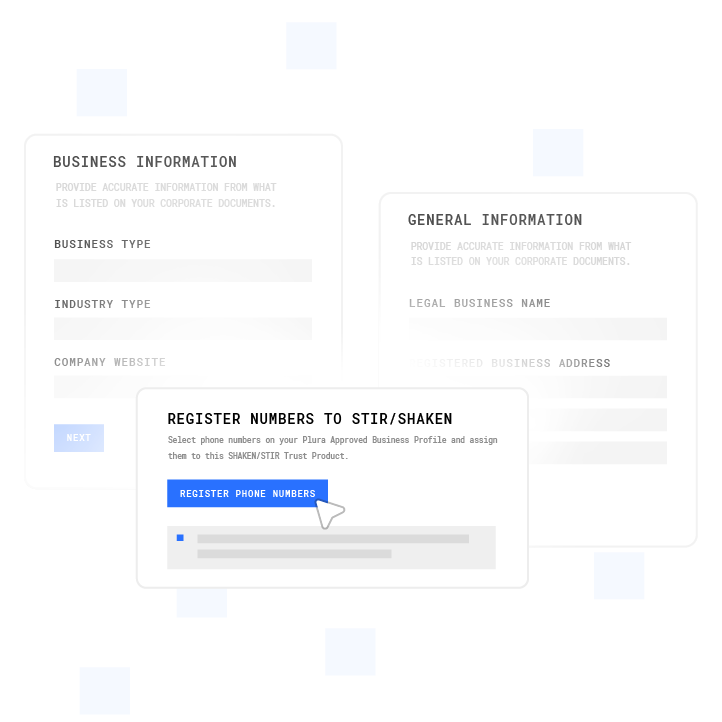
A2P 10DLC is the carrier-mandated framework for sending business SMS from local 10-digit numbers.2 T-Mobile, AT&T, and Verizon operate this framework through The Campaign Registry (TCR). Since February 1, 2025, U.S. wireless carriers block 100% of unregistered A2P traffic sent over 10-digit long codes. Businesses register their brand and each campaign with TCR. Registration addresses carrier deliverability, while consent, opt-out handling, and calling-hour rules sit in a separate legal layer.
TCPA Consent
The Telephone Consumer Protection Act (TCPA), codified at 47 U.S.C. § 227, describes rules for automated text messaging.2 TCPA violations can cost $500 to $1,500 per text or call. A compliant opt-in flow typically includes an unchecked checkbox, clear disclosure language, and a timestamped consent record. Operators should consult qualified counsel on their specific consent requirements.
Opt-In and Opt-Out Mechanics
When a consumer texts any STOP variant, businesses stop sending marketing messages to that number and suppress that number across every campaign for that brand. State laws in Florida, Texas, Oklahoma, and Washington impose additional requirements beyond federal minimums.
DNC Scrubbing
Do Not Call (DNC) list scrubbing operates as a separate layer from 10DLC registration.2 Plura enforces real-time DNC scrubbing and consent logging on every outbound contact. Review Plura’s SMS guidelines for details on how the platform supports compliance operations. Customers remain responsible for their own regulatory obligations.
Why Plura AI Fits High-Volume SMS Support Teams
That compliance foundation is one reason high-volume communicators in healthcare, insurance, financial services, e-commerce, and franchise networks choose Plura. The platform category decision shapes operational outcomes, and Plura is built for large-scale, multi-channel support.
Plura is its own FCC-licensed audio bridging carrier and runs on 100% U.S. infrastructure. Voice, SMS, RCS, and AI webchat all share a Stateful Conversation Database, so every channel inherits the full memory of every prior touchpoint. The AI customer service texting agents reply in seconds, handle common issues automatically, and warm-transfer complex cases to U.S. agents with full context already loaded.
Plura’s compliance engine supports real-time DNC scrubbing, TCPA consent logging, and quiet-hours rules on every outbound contact. SOC 2, HIPAA, and ISO certification cover the underlying infrastructure.1 Domestic contact center agents cost $15-25 per hour before benefits and overhead. Plura’s AI agents run at 100% talk utilization without overhead, ramp time, or turnover. The illustrative 15-agent scenario at Plura’s ROI calculator shows $547,200 in savings over 12 months.3
Leaders can compare plans and rates or run their own numbers at Plura’s ROI calculator to see the projected impact.
Book a live demo with Plura and see how AI customer service texting performs at your volume.
Frequently Asked Questions
What is the best SMS CRM for customer service?
The best SMS CRM for customer service depends on your volume and automation requirements. Small teams with low message volume often work well with a native SMS CRM or a basic add-on integrated with HubSpot or Salesforce. High-volume operators handling thousands of support texts per month usually benefit from a service-focused platform with AI conversation handling, stateful memory, and compliance-support tooling. Plura is purpose-built for this use case, with AI SMS agents that reply in seconds, resolve common issues automatically, and escalate complex cases to human agents with full context.
How does SMS CRM integration work?
SMS CRM integration connects your messaging layer to your customer records so that every inbound reply updates the contact timeline, triggers the appropriate workflow, and routes the conversation correctly. The four common methods are native CRM features, iPaaS connectors like Zapier or Make, direct webhook-to-API integrations, and messaging-first platforms that remove the integration layer. The key data synchronization concerns are mapping contact fields correctly, preserving opt-in status, and ensuring opt-out requests update the CRM record in real time across all channels.
What are the compliance considerations for SMS support?
Business SMS in the United States operates inside a layered compliance framework. At the carrier level, A2P 10DLC registration through The Campaign Registry applies to business traffic sent over local 10-digit numbers. At the legal level, the Telephone Consumer Protection Act (TCPA) describes consent rules for marketing and promotional messages. State laws in Florida, Texas, Oklahoma, Washington, and Maryland add further requirements. Operators should consult qualified counsel on their specific obligations. Platforms like Plura support compliance operations by enforcing real-time DNC scrubbing, consent logging, and quiet-hours rules, while customers remain responsible for their own regulatory posture.
Can I use an SMS CRM with HubSpot or Salesforce?
Yes. Both HubSpot and Salesforce support SMS integration through native features, marketplace add-ons, and direct API connections. HubSpot handles SMS natively with SMS living inside the contact timeline and replies returning as activities. Salesforce requires add-ons for SMS but can handle complex workflows once configured. Plura integrates with both platforms, logging every conversation to the contact record and firing workflow triggers in real time. The integration directory covers the full list of supported tools across CRMs, calendars, data enrichment providers, and more.
What is the difference between an SMS CRM and an SMS marketing platform?
An SMS marketing platform focuses on bulk promotional campaigns such as broadcast messages, segmentation, drip sequences, and campaign analytics. An SMS CRM support platform focuses on two-way conversations, including shared inboxes, ticket creation, agent assignment, and resolution tracking tied to individual customer records. The distinction matters operationally. Marketing platforms focus on reach and open rates. Support platforms focus on response time, resolution rate, and customer satisfaction. Many high-volume operators need both capabilities, which is why service-focused platforms like Plura combine AI-powered conversation handling with CRM-connected workflows across both use cases.
1 Plura AI maintains SOC 2, HIPAA, ISO, and GDPR posture as part of its platform infrastructure. References to compliance frameworks in this article describe Plura’s platform capabilities and do not constitute a guarantee that any customer using Plura will themselves be compliant with applicable laws or standards. Customers remain solely responsible for their own regulatory obligations, certifications, consent management, recordkeeping, and the claims they make to their own end users. Consult qualified legal counsel for guidance specific to your use case.
2 This article describes regulatory frameworks at a general level and does not constitute legal advice. Laws and regulations vary by jurisdiction, change over time, and apply differently depending on facts and circumstances. Readers should consult qualified legal counsel before making compliance decisions.
3 Performance figures, customer outcomes, and industry statistics referenced in this article are drawn from cited third-party sources or Plura customer case studies. Individual results vary based on implementation, use case, industry, audience, and execution. Past or aggregate performance is not a guarantee of future results.
4 References to third-party products, services, companies, or research are made for informational and comparative purposes only. Plura AI is not affiliated with, endorsed by, or sponsored by any third party named in this article unless explicitly stated. Trademarks and product names referenced remain the property of their respective owners.
This article is provided for informational purposes only and reflects Plura AI’s understanding at the time of publication. Product capabilities, integrations, and specifications are subject to change. For the most current information, visit plura.ai.
This article was produced with the assistance of AI tools and reviewed by Plura AI prior to publication.