
Written by: Matt Beucler, CEO, Plura AI
Key Takeaways
- Contact center AI security relies on layered controls beyond basic checklists, including TLS 1.3 encryption, AES-256 at rest, zero-trust access, and PII redaction.
- AI-specific threats such as prompt injection, data poisoning, model inversion, and conversational inference leakage require architectural mitigations like tool permission gating and runtime monitoring.
- Compliance frameworks including SOC 2 Type II, HIPAA, GDPR, and the EU AI Act (effective August 2026) should be verified with actual reports and contractual terms instead of marketing badges.1
- Operational guardrails such as transparency disclosures, human oversight, immutable audit trails, and real-time anomaly detection help prove AI agents stay within authorized scope during live interactions.
- Plura AI delivers enterprise-grade security with 100% U.S. infrastructure, SOC 2 Type II, HIPAA, and GDPR coverage plus real-time guardrails.1 Book a live demo to see how these controls work in practice.
Baseline Security Controls for Contact Center AI
Every contact center AI vendor evaluation starts with baseline infrastructure controls. These are table-stakes requirements. A vendor that cannot confirm them in writing during procurement is not ready for enterprise deployment.
| Control Area | Requirement | Implementation Guidance |
|---|---|---|
| Encryption in transit | TLS 1.3 on all connections | Verify the vendor disables TLS 1.0 and 1.1. Confirm SRTP for media streams. PCI DSS v4.0 explicitly prohibits TLS 1.0 and 1.1. |
| Encryption at rest | AES-256 | Ask about key management. Customer-managed keys (CMK) are preferred. Confirm encryption applies to call recordings, transcripts, and logs. |
| PII redaction | Automatic detection and masking | Require field-level redaction in transcripts and DTMF masking for payment data. Card digits should not appear in recordings or logs. |
| Access control | Zero-trust with MFA and SSO | Require SAML 2.0 or OIDC. NCSC guidance recommends phishing-resistant MFA over SMS or email codes. |
| Tenant isolation | Logical and physical separation | Confirm no cross-customer data access. Ask explicitly whether your data is used to train shared models. |
| Audit logging | Immutable, tamper-evident | Request sample audit records. Verify retention meets regulatory minimums. NIST SP 800-53 Rev 5 control AU-9 addresses protection and retention of audit information. |
Compare plans and rates side by side at plura.ai/pricing.
AI-Specific Security Threats in Contact Centers
Most vendor security documentation stops at infrastructure controls. AI-specific threats require additional architectural decisions before deployment.
Prompt Injection in Live Conversations
OWASP ranks prompt injection as LLM01, the top vulnerability for LLM applications. Direct injection manipulates the model through the conversation interface. Indirect injection embeds malicious instructions in content the AI retrieves during a call, such as a document, knowledge base article, or CRM note.
Assaf Keren, CSO of Qualtrics, describes prompt injection as especially risky in contact centers because these systems connect to customer records.4 A successful injection can expose personal data, trigger incorrect actions on accounts, or mislead customers.
A 2026 Towson University study in IEEE/ACIS SERA proceedings tested 2,100 trials across three system architectures and three LLM families. Memory poisoning reached 94 percent success in autonomous configurations without architectural controls.3 Architectural mitigations, specifically tool permission gating, memory write filtering, and provenance tracking, reduced that figure to 11 percent.
Data Poisoning of Training and RAG Pipelines
NIST AI 100-2e2025 defines data poisoning as a primary attack category, covering availability attacks, targeted attacks, backdoor or trojan attacks, and clean-label attacks. Poisoning targets the training or RAG pipeline by introducing crafted examples that create backdoors.
Research by Anthropic with the UK AI Security Institute and the Alan Turing Institute found that roughly 250 poisoned documents were sufficient to install a backdoor across a wide range of model and dataset sizes.3 Poisoning persists in model weights and survives restarts.
Model Inversion and Model Extraction
Model inversion attacks use model outputs to reconstruct sensitive training data, such as confidential documents or patient records. Model extraction attacks allow adversaries to approximate a proprietary model by systematically querying it.
Research from Cornell University and Google demonstrated that LLMs can be induced to reproduce verbatim training data, including personal information and API keys, through carefully crafted queries.4
Conversational Inference Leakage
PromptHalo’s 2026 analysis identifies conversational inference leakage as a distinct threat. AI voice agents can disclose data they were legitimately allowed to access through carefully constructed question sequences. Data leaves through natural language output instead of file transfer, so traditional data loss prevention tools may not detect it.
Shadow AI Inside the Enterprise
Assaf Keren of Qualtrics reports that around half of employees use AI tools regularly at work, but only about 20 percent use company-approved ones. Sensitive data moves through workflows security teams do not see.
Recommended mitigations across these AI-specific threats include:
- Input validation and output filtering at every layer
- Architectural isolation of instruction channels from data channels
- Tool permission gating and least-privilege connectors
- Continuous adversarial red teaming instead of point-in-time assessments
- Runtime monitoring for anomalous behavior, including repeated sensitive-field requests, tool call deviations, and authorization denial patterns
- Provenance tracking for all data entering training or retrieval pipelines
Compliance Frameworks to Validate with Vendors
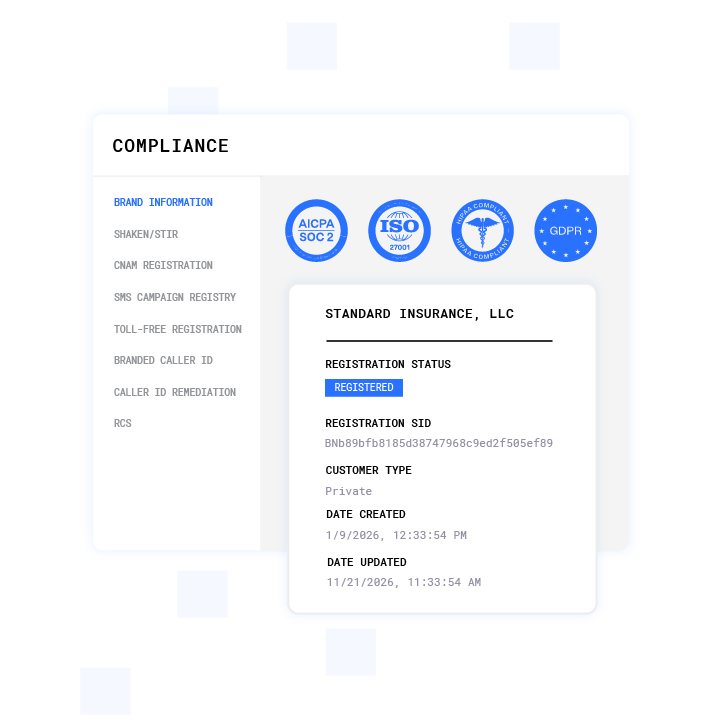
The compliance landscape for contact center AI spans general security frameworks, sector-specific regulations, and emerging AI-specific standards.2 The EU AI Act became fully applicable August 2, 2026, and introduces transparency (Article 50), human oversight (Article 14), and automatic logging (Article 12) requirements for certain high-risk AI voice systems. Consult qualified counsel for interpretation of any specific regulatory obligation.
| Framework | Key Requirements | Vendor Evidence to Request |
|---|---|---|
| SOC 2 Type II | Controls operating 6 to 12 months | Request the actual report under NDA instead of a badge. Type I is a point-in-time snapshot. Type II covers operating effectiveness over time for vendors processing customer data continuously. |
| ISO 27001 | Information security management system | Request the Statement of Applicability, not just the certificate. |
| HIPAA | BAA, PHI encryption, audit logs (45 CFR § 164.316(b)(2)(i) specifies six years) | Confirm BAA availability in your plan. Verify that the breach-notification window appears in the contract. |
| GDPR | Lawful basis, DPIA for high-risk processing, data subject rights | Verify EU data residency options. Confirm that the sub-processor list includes LLM providers. |
| PCI DSS | DTMF masking, pause-and-resume recording, TLS 1.2 or higher on SIP trunks | Confirm that card data never reaches AI inputs, logs, or training pipelines. |
| ISO 42001 | AI management system standard (published December 2023) | Treat as an emerging requirement. Ask about the vendor roadmap and current alignment.5 |
| NIST AI RMF | Voluntary framework with Govern, Map, Measure, and Manage functions | Ask how the vendor maps its controls to AI RMF functions. Request documentation of AI risk decisions. |
Operational Guardrails for Live AI Calls
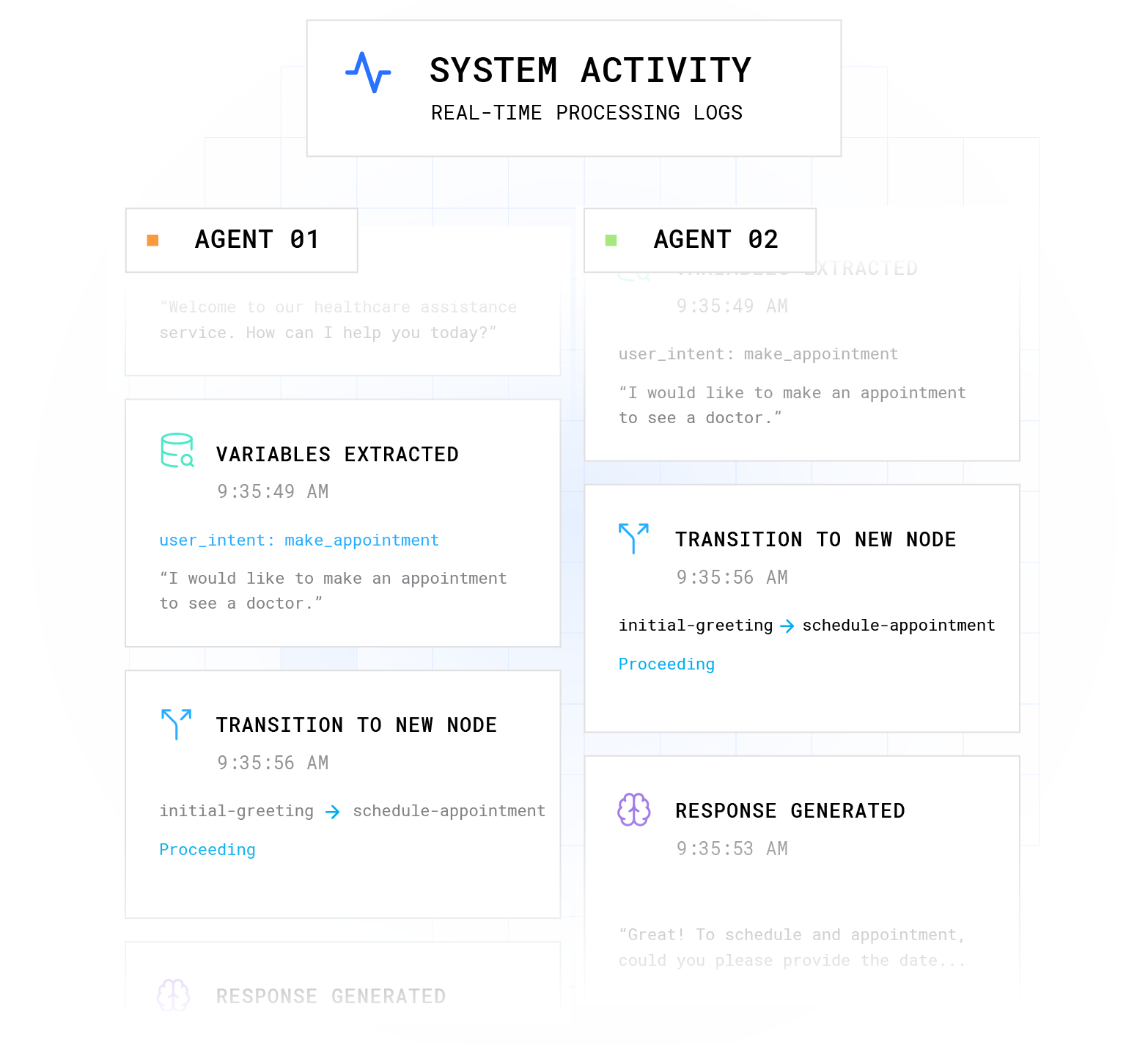
Certifications confirm that controls existed during an audit period. They do not confirm that an AI agent stayed within authorized scope during a live call. Runtime evidence helps demonstrate that behavior, and regulators increasingly request it explicitly.
Operational guardrails to verify include:
- Transparency disclosures: AI disclosure at first interaction appears in EU AI Act Article 50 and in a growing set of state-level AI disclosure laws, including California SB 942 (operative August 2, 2026) and Texas TRAIGA (in force since January 1, 2026). Consult counsel for obligations specific to your jurisdiction.
- Human oversight: Escalation paths for high-risk actions and human-in-the-loop review for account changes, refunds, and PHI disclosure. The AI should follow defined outcomes for material decisions.
- Immutable audit trails: Decision-level logging with tamper evidence. For agentic systems, logging should capture action lineage, including which model produced the output, which tool was invoked, and whether the action was authorized.
- Data retention policies: Configurable retention schedules and verified deletion propagation to subprocessors. Ask for a timeline and written confirmation of deletion.
- Real-time monitoring: Detection rules for anomalous behavior, including repeated sensitive-field requests, tool call patterns that deviate from expected workflows, repeated authorization denials, and sudden shifts in language or sentiment.
Book a live demo with Plura to see how these guardrails work inside the platform: plura.ai/plura-webchat.
Vendor Evaluation Criteria and Red Flags
Use the questions below as your RFP template and score vendors on a 1 to 5 scale across categories. A weighted scoring approach helps compare vendors objectively and creates a defensible procurement record.
Questions to ask every vendor include:
- Where does call data live across storage, processing, and transit residency layers, including the LLM layer?
- Who within your organization can access call records?
- What is the default retention period, and can it be configured by business unit?
- Which subprocessors, including LLM providers, participate, and what data can each access?
- Do model providers train on customer data, and is a no-train term documented in the contract and flowed down to the LLM layer?
- What is the breach-notification window, and is it defined contractually instead of as “as soon as practicable”?
- Can you provide a sample audit record for a single AI decision?
- What is your incident response plan, and when was it last tested?
- Do you have independent penetration testing results from the last 12 months?
Red flags in vendor responses include:
- “We can customize that later”
- “We are secure because we use AWS or Azure”
- “Most customers do not ask for that level of logging”
- “Our AI provider handles that”
- Claims of “SOC 2 certified” or “HIPAA certified” (SOC 2 is an attestation, and HIPAA does not have an official certification)
- Verbal no-train assurances without contract terms
- BAA availability only on top-tier plans as an upsell
Industry-Specific Considerations for AI Voice
Healthcare Contact Centers
Under HIPAA (45 CFR Parts 160, 162, 164), vendors that create, receive, maintain, or transmit protected health information (PHI) on behalf of a covered entity typically sign a Business Associate Agreement (BAA).2 The BAA reflects federal requirements rather than an optional best practice. Additional controls for healthcare AI voice deployments include caller identity verification before PHI disclosure, audit logs for every PHI access event retained for the period specified under 45 CFR § 164.316(b)(2)(i), and clinical safety guardrails such as explicit scope enforcement, symptom-based escalation, and human handoff for clinical decisions. Consult qualified counsel for your specific HIPAA obligations.
Financial Services Contact Centers
AI agents that perform credit decisions, fraud detection, or AML monitoring may meet the SR 11-7 definition of a “model” under Federal Reserve and OCC guidance, which involves independent validation and ongoing performance monitoring. PCI DSS applies to systems that store, process, or transmit cardholder data. SEC Rule 204-2 addresses recordkeeping for advisory outputs. Regulation S-P addresses safeguarding of client records. The GLBA Safeguards Rule addresses ongoing vendor oversight. The EU AI Act’s Annex III classifies certain AI used for creditworthiness assessment as high-risk. Consult qualified counsel for obligations under each framework.
State AI Disclosure Laws for Voice and Chat
California SB 942 (as amended by AB 853) introduces covered-provider obligations operative August 2, 2026. Colorado SB 189, signed May 14, 2026, becomes effective January 1, 2027. Texas TRAIGA has been in force since January 1, 2026.2 Requirements vary by jurisdiction. Consult qualified counsel for applicability to your deployment.
Implementation Roadmap for This Security Checklist
- Conduct a vendor security review. Use the checklist above as your RFP template. Score vendors on a 1 to 5 scale across control areas, compliance certifications, AI-specific threat mitigations, and operational guardrails.
- Map requirements to internal policies. Align vendor capabilities with your existing security framework, such as NIST CSF, ISO 27001, or another standard your organization already uses.
- Establish ongoing monitoring. Schedule annual vendor reassessment at minimum. Trigger a re-review on material changes such as a new model provider, a new processing region, or post-incident remediation.
- Document everything. Maintain evidence of due diligence for auditors and regulators. Preserve a completed vendor questionnaire, risk tier assignment, and gap remediation record as core artifacts.
Plura AI Alignment with This Checklist
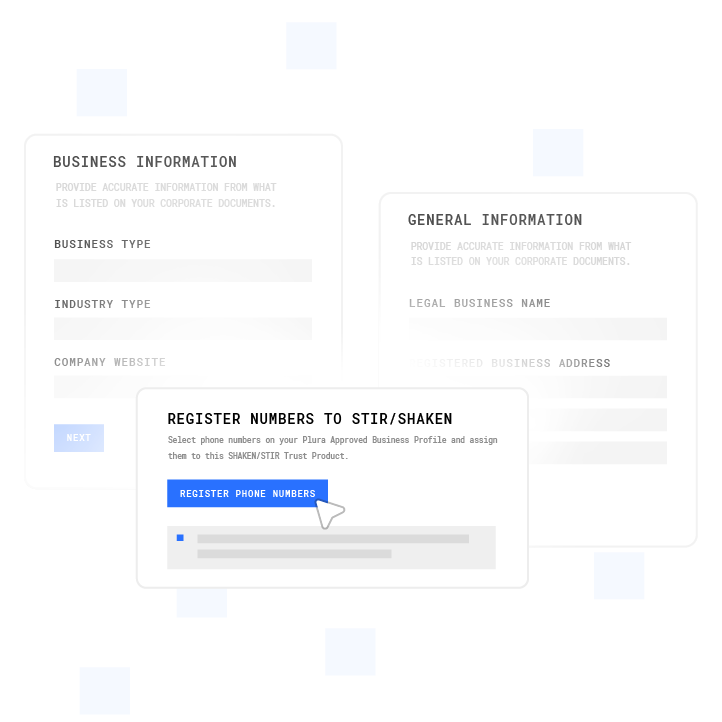
Plura AI is an FCC-licensed carrier running 100 percent U.S. infrastructure by architecture rather than by promise. Voice origination, model hosting, data storage, and call recording all sit on domestic infrastructure, which supports data residency expectations under the FCC NPRM (CG Docket No. 26-52) and state onshoring laws. Plura’s compliance engine enforces real-time DNC scrubbing, TCPA-litigator screening, automated quiet hours, and immutable consent logging inside the platform on every outbound contact. STIR/SHAKEN authentication runs on every outbound call. Plura supports compliance with SOC 2 Type II, HIPAA, ISO certification, and GDPR coverage.1 Customer data is not used to train models, and data isolation is enforced by architecture.
Plura’s AI voice agent handles inbound and outbound calls with field-level PII redaction, escalation paths for high-risk actions, and decision-level audit trails. The no-code workflow builder enforces BATNA-style negotiation guardrails so the AI operates within defined boundaries on every call. The conversation intelligence layer surfaces anomalous behavior patterns for continuous monitoring.
Compare plans and rates side by side at plura.ai/pricing.
Frequently Asked Questions
What are the major security threats associated with AI in contact centers?
The primary AI-specific threats are prompt injection, data poisoning, model inversion, conversational inference leakage, and shadow AI. Prompt injection is ranked the top LLM vulnerability by OWASP. A 2026 Towson University study found memory poisoning reached 94 percent success in autonomous configurations without architectural controls. Data poisoning targets training and retrieval pipelines and persists in model weights. Model inversion allows attackers to reconstruct sensitive training data from model outputs. Conversational inference leakage allows AI agents to disclose data through carefully constructed question sequences. Shadow AI refers to employees using unapproved AI tools, which moves sensitive data through workflows security teams cannot monitor. Traditional perimeter security does not address these threats.
How do you secure AI in a contact center?
Security for AI in a contact center layers traditional controls with AI-specific controls. Traditional controls include TLS 1.3 in transit, AES-256 at rest, zero-trust access with MFA and SSO, and immutable audit logging. AI-specific controls include input validation and output filtering, architectural separation of instruction channels from data channels, tool permission gating with least-privilege connectors, continuous adversarial red teaming, runtime monitoring for anomalous behavior, and provenance tracking for all data entering training or retrieval pipelines. Architectural controls, not just prompt-level defenses, materially reduce attack success rates.
What are the compliance requirements for AI use in contact centers?
Applicable frameworks depend on your industry, geography, and the data your AI system processes. General security frameworks include SOC 2 Type II and ISO 27001. Sector-specific regulations include HIPAA for healthcare, PCI DSS for payment card data, and GDPR for EU personal data. Emerging AI-specific standards include ISO 42001 and the NIST AI Risk Management Framework. The EU AI Act, fully applicable as of August 2, 2026, introduces transparency, human oversight, and automatic logging requirements for certain high-risk AI voice systems. State-level AI disclosure laws in California, Colorado, and Texas add further obligations. Consult qualified counsel for the specific requirements applicable to your deployment.
What is prompt injection in contact center AI?
Prompt injection is an attack where malicious instructions are embedded in content the AI processes, which can cause the model to leak data, bypass guardrails, or take unauthorized actions. Direct injection manipulates the model through the conversation interface. Indirect injection embeds malicious instructions in content the AI retrieves during a call, such as a document, knowledge base entry, or CRM note. Indirect injection often carries higher risk in integrated applications because the attacker plants instructions in content the model later reads, and the victim and attacker are different people. The risk multiplies in RAG systems and agentic deployments where the AI can call tools, access databases, and take actions with limited human oversight.
Does SOC 2 Type II cover AI-specific risks?
SOC 2 Type II verifies that general security controls operated effectively over a 6 to 12 month period. It does not verify that an AI agent behaved within authorized scope during live calls, that prompt injection defenses worked, or that model outputs were monitored for anomalous behavior. Runtime evidence and AI-specific testing help demonstrate those controls. When evaluating vendors, request the actual SOC 2 Type II report under NDA instead of a badge, and ask separately about AI-layer controls, including adversarial testing, output monitoring, and decision-level audit trails.
1 Plura AI maintains SOC 2, HIPAA, ISO, and GDPR posture as part of its platform infrastructure. References to compliance frameworks in this article describe Plura’s platform capabilities and do not constitute a guarantee that any customer using Plura will themselves be compliant with applicable laws or standards. Customers remain solely responsible for their own regulatory obligations, certifications, consent management, recordkeeping, and the claims they make to their own end users. Consult qualified legal counsel for guidance specific to your use case.
2 This article describes regulatory frameworks at a general level and does not constitute legal advice. Laws and regulations vary by jurisdiction, change over time, and apply differently depending on facts and circumstances. Readers should consult qualified legal counsel before making compliance decisions.
3 Performance figures, customer outcomes, and industry statistics referenced in this article are drawn from cited third-party sources or Plura customer case studies. Individual results vary based on implementation, use case, industry, audience, and execution. Past or aggregate performance is not a guarantee of future results.
4 References to third-party products, services, companies, or research are made for informational and comparative purposes only. Plura AI is not affiliated with, endorsed by, or sponsored by any third party named in this article unless explicitly stated. Trademarks and product names referenced remain the property of their respective owners.
5 This article contains forward-looking statements regarding industry trends, technology adoption, and future capabilities. These statements reflect current expectations and are subject to change. Plura AI undertakes no obligation to update forward-looking statements except as required.
This article is provided for informational purposes only and reflects Plura AI’s understanding at the time of publication. Product capabilities, integrations, and specifications are subject to change. For the most current information, visit plura.ai.
This article was produced with the assistance of AI tools and reviewed by Plura AI prior to publication.