

Written by: Matt Beucler, CEO, Plura AI
Key Takeaways for 2026 Contact Center AI Compliance
- Contact center AI compliance in 2026 spans TCPA, DNC, HIPAA, GDPR/CCPA, the EU AI Act, FCC NPRM CG Docket No. 26-52, and state onshoring laws across voice, SMS, RCS, and webchat.2
- Operators need eight core controls: mapped data flows, no-train clauses, field-level PII redaction, real-time DNC scrubbing, human-in-the-loop escalation, immutable consent ledgers, continuous monitoring, and documented model governance.
- Carrier-owned infrastructure strengthens compliance by enforcing real-time DNC scrubbing, STIR/SHAKEN A-level attestation, and consent logging at origination.
- Frequent failures include weak spam-label remediation, consent records stored only at campaign level, and offshore infrastructure that conflicts with pending FCC rules on sensitive data.
- Plura AI’s FCC-licensed carrier stack delivers these controls at the platform level by default, and you can book a live demo to see how the eight-step checklist maps to the architecture.
2026 Regulation Matrix for Contact Center AI
The following table summarizes the major 2026 frameworks that affect AI-powered contact centers, along with their enforcement triggers and primary sources.
| Regulation | 2026 Status | Enforcement Trigger | Primary Source |
|---|---|---|---|
| TCPA (Telephone Consumer Protection Act) | Active. FCC’s February 2024 declaratory ruling classifies AI-generated voice as “artificial or prerecorded voice.” Statutory damages of $500 to $1,500 per call or text.2 | Outbound AI voice or SMS without prior express written consent, and failure to honor opt-outs within 10 business days. | 47 U.S.C. § 227 |
| National DNC Registry | Active. Over 258 million active registrations in FY2025. FTC civil penalties reached $53,088 per violation as of January 2025.3 | Dialing registered numbers without exemption, or relying on nightly-only batch scrubs that miss same-day additions. | FTC DNC Registry |
| HIPAA | Active. HHS published a Security Rule NPRM on January 6, 2025. Business associate agreements for AI vendors now address PHI use for model training. | AI vendor processing PHI without a signed BAA, or offshore storage of protected health information. | 45 CFR Parts 160, 162, 164 |
| GDPR / CCPA | Active. GDPR fines reach €20 million or 4% of global turnover.3 CCPA/CPRA penalties are $2,500 per violation or $7,500 for intentional violations, subject to inflation adjustments. AI-generated outputs, including sentiment scores, qualify as personal information under CCPA. | Processing EU or California resident data without lawful basis, DPA, or fulfillment of data-subject rights. | Regulation (EU) 2016/679; California Civil Code § 1798.100 |
| EU AI Act | Article 50 transparency obligations effective August 2, 2026. Fines for transparency violations reach €15 million or 3% of global turnover. Under the Digital Omnibus agreement, high-risk obligations for standalone Annex III systems were deferred to 2 December 2027, and for Annex I embedded systems to 2 August 2028.2 | Failure to disclose AI identity at interaction start for EU customers, or absence of a human-oversight pathway. | EU AI Act (Regulation (EU) 2024/1689) |
| FCC NPRM CG Docket No. 26-52 | Proposed rulemaking. Proposes a 30% cap on offshore customer-service calls and a prohibition on offshore handling of sensitive consumer data such as passwords, SSNs, and card data. | Offshore handling of sensitive consumer data and foreign-infrastructure dependencies in AI voice deployments. | FCC.gov, CG Docket No. 26-52 |
| State Onshoring Laws | Active in five states. New York penalties reach $10,000 per day. New Jersey, Connecticut, Missouri, and Florida impose additional restrictions on offshore handling of medical, financial, and consumer data. | Offshore handling of covered data categories in regulated verticals, or failure to disclose offshore operations. | NY Call Center Jobs Act; NJ.gov; Connecticut General Assembly; Missouri Executive Order; Florida Statutes |
The regulations above define the compliance perimeter. The next section turns those requirements into concrete operational controls for AI contact centers.
Eight-Step Implementation Checklist for AI Contact Centers
Step 1: Map Data Flows Across Every Channel
Teams need a clear map of where customer data originates, where it travels, and where it rests. This map should cover voice recordings, SMS threads, RCS exchanges, webchat transcripts, enrichment API calls, and analytics outputs. For each data type, document the storage region, subprocessors, and any cross-border transfers. GDPR Chapter V and the FCC NPRM both treat data residency as an architectural concern rather than a purely contractual one. Operators should maintain an updated Article 30 Records of Processing Activities entry for each AI channel and consult qualified counsel on specific mapping obligations.
Step 2: Embed No-Train Clauses in Every Vendor Agreement
Contracts now routinely include no-train terms that prevent customer interaction data from training vendor AI models. A Data Processing Agreement under GDPR Article 28 should state whether customer data may be used for model training, and HHS’s January 2025 HIPAA Security Rule NPRM extends similar expectations to business associate agreements involving PHI. Every AI vendor agreement should include explicit no-train language, sub-processor disclosure, and model deletion obligations at termination. Operators should work with qualified counsel before finalizing vendor terms.
Step 3: Enforce Field-Level PII Redaction
PII redaction works best at the gateway layer on tool outputs before sensitive data reaches AI model context, logs, or analytics. Card numbers, account identifiers, health details, government IDs, and authentication credentials should be masked in recordings, transcripts, and AI inference inputs. For healthcare deployments, PHI redaction forms part of HIPAA-aligned architecture under 45 CFR Part 164. Plura AI’s compliance engine applies field-level redaction across voice, SMS, RCS, and webchat by default, with sensitive data routed through HIPAA-aligned channels. Readers should consult qualified counsel on redaction obligations.
Step 4: Activate Real-Time DNC and TCPA-Litigator Scrubbing
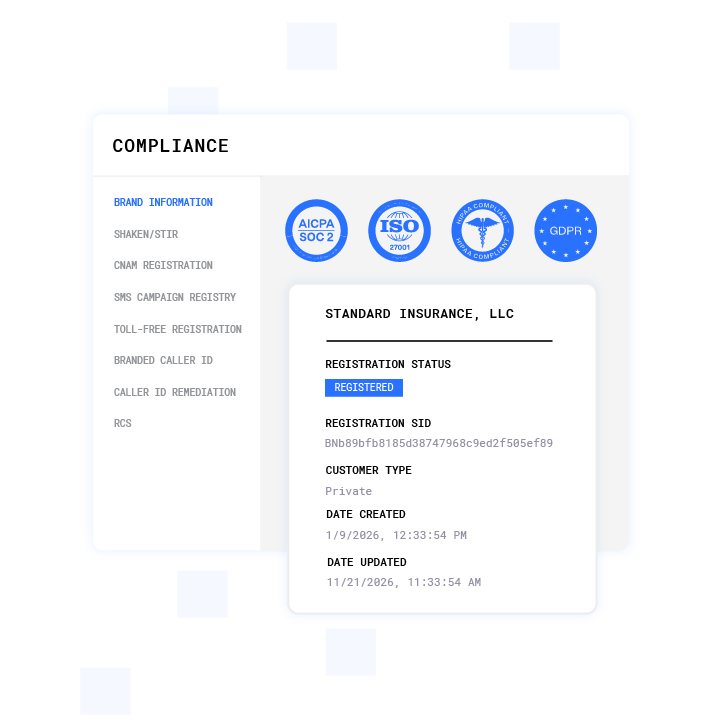
Real-time DNC enforcement against the National DNC Registry and internal opt-out lists before every dial is now a baseline control for AI voice systems. Nightly batch scrubs miss numbers added during the day. With civil penalties exceeding $53,000 per violation, real-time enforcement against the registry’s 258 million active numbers has become a standard operational safeguard. Plura integrates with The Blacklist Alliance’s TCPA Litigation Firewall for real-time DNC scrubbing and litigation protection.4 Every outbound contact on Plura is checked before dial, and non-compliant numbers are blocked before the first attempt. Readers should consult qualified counsel on DNC obligations.
Step 5: Configure Human-in-the-Loop Escalation
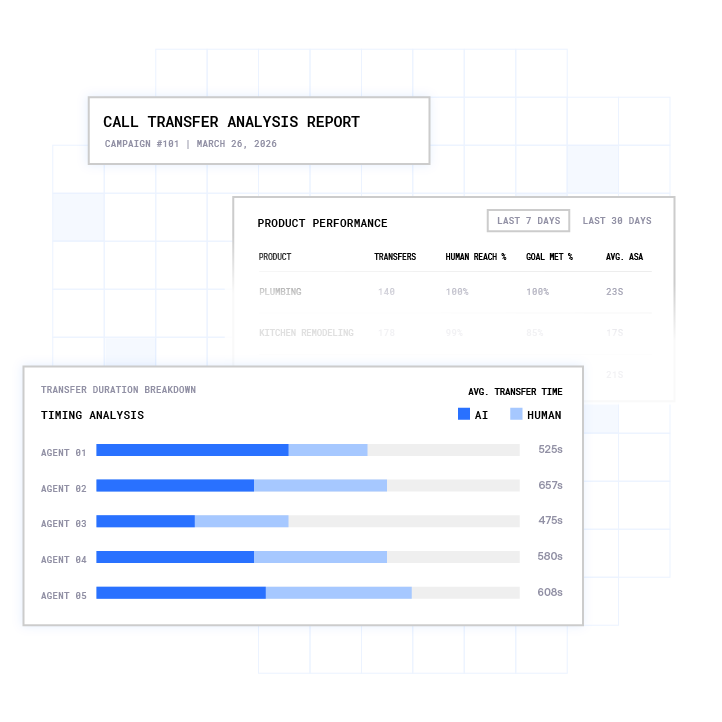
EU AI Act Article 14 describes that high-risk AI systems require human oversight tools that allow teams to monitor, interpret, and override AI outputs in real time. Even when a system is not classified as high-risk, meaningful human oversight appears across GDPR Article 22, the EU AI Act, and FedRAMP 20x benchmarks. Escalation paths should cover unfamiliar customer requests, sensitive disclosures, high-stakes objections, and any interaction where the AI reaches its workflow limits. Plura’s AI voice agent warm-transfers calls to U.S. agents when workflow gates trigger and passes full conversation context so customers avoid repeating themselves. Readers should consult qualified counsel on human-oversight expectations.
Step 6: Generate Immutable Consent Ledgers
A court-admissible TCPA audit record for each AI call must capture the consumer phone number and state of residence, which establish jurisdiction and applicable state-law considerations. The record should also include the consent record reference and exact disclosure language shown, which demonstrate the notice provided. The consumer’s affirmative response, along with IP and device data, helps show that consent was actively given. Consent and call timestamps, seller identity, and call purpose tie the record to a specific interaction. Federal and state DNC scrubbing results at dial-time, calling-window compliance, and cease-communication flag status document that the call met policy at the moment of dialing. The call recording and full transcript provide complete interaction context for potential litigation defense. Immutable storage via WORM or cryptographic hash chains supports SOC 2 control CC7.2, which describes audit logs as protected from unauthorized modification.1 Plura’s compliance engine generates timestamped, immutable consent records with one-click audit exports. Readers should consult qualified counsel on consent recordkeeping.
Step 7: Run Continuous Conversation-Intelligence Monitoring
Manual QA sampling of 1–5% of conversations leaves most policy violations hidden in the remaining 95%. This gap creates regulatory exposure in high-volume environments. A monitoring program for AI voice should include automated consent verification at every call trigger, a human-review queue for high-impact interactions, quarterly audits of workflows and scripts, and alerts for score drops or policy miss rates. Plura’s conversation intelligence layer analyzes every interaction across voice, SMS, RCS, and webchat and feeds findings back into workflow tuning. Readers should consult qualified counsel on monitoring program design.
Step 8: Document Model Governance and AI Disclosure
EU AI Act Article 50, effective August 2, 2026, describes that individuals interacting with an AI system in customer service must be informed they are speaking with AI at the start of the interaction. California AB 2905 and Utah S.B. 226 introduce similar state-level disclosure expectations in the United States. Model governance documentation should include an AI system register, version control for prompts and workflows, escalation policy, and evidence of AI literacy training for agents and supervisors. Operators should also document the intended use of each AI feature and conduct a GDPR Data Protection Impact Assessment where large-scale personal data processing occurs. Readers should consult qualified counsel on disclosure and governance.
Step 3 above, field-level PII redaction, is often the most technically complex control to implement correctly. The next section breaks down the three-layer redaction architecture in more detail.
How to Redact PII in AI Transcripts
Field-level redaction in AI transcripts operates at three layers: the recording, the transcript, and the AI model input. Each layer requires its own control. Recording-level redaction pauses or mutes audio capture during sensitive data entry such as card numbers or SSNs. Transcript-level redaction replaces identified PII tokens with masked placeholders before the transcript is stored or exported. Model-input redaction prevents sensitive fields from entering the LLM reasoning step, which aligns with GDPR data minimization and HIPAA minimum-necessary concepts under 45 CFR § 164.502(b).
Contact centers handling PHI should review the HHS January 2025 HIPAA Security Rule NPRM, which addresses cybersecurity for electronic protected health information and expects business associate agreements to cover sub-processor disclosure and model deletion at termination. The future-dated requirements within PCI DSS v4.0 became mandatory on March 31, 2025, while the standard itself became mandatory on March 31, 2024.
Plura applies field-level redaction across all four channels by default. Sensitive data routes through HIPAA-aligned channels, and the compliance engine exports redacted transcripts with audit-ready logs that show what was redacted, when, and by which workflow node. Readers should consult qualified counsel on redaction architecture.
The next section focuses on how the EU AI Act affects customer-facing AI in contact centers and how these obligations connect to the disclosure and oversight controls described above.
EU AI Act Requirements for Contact Centers
Article 50’s transparency obligations, described in Step 8 above, take effect in August 2026.5 The disclosure must be available in the customer’s own language and include a non-audio alternative for accessibility. Fines for Article 50 violations reach €15 million or 3% of annual worldwide turnover, whichever is higher.
Standard customer support chatbots and voice bots typically fall into the limited transparency risk category, which involves AI interaction notices and synthetic content labeling. High-risk classification applies to uses involving credit scoring, essential services, biometrics, or emotion recognition as described in Annex III. Under the Digital Omnibus agreement, high-risk obligations for standalone Annex III systems were deferred to 2 December 2027, and for Annex I embedded systems to 2 August 2028, while chatbot transparency and emotion recognition disclosure obligations were not delayed.
Article 14 of the EU AI Act describes that for high-risk AI systems, humans must be able to monitor, interpret, and override AI outputs in real time and remain aware of automation bias. Even for non-high-risk systems, organizations are expected to provide transparency when AI is involved, maintain meaningful human oversight, and document governance. EU AI Act expectations for customer support also include role-based AI literacy training for agents, QA staff, and admins, with this obligation in force since February 2, 2025.
Operators serving EU customers should audit and classify every AI system in use, including chatbots, voice bots, routing algorithms, sentiment analysis tools, and agent-assist tools, and then build disclosure into the interaction itself before August 2, 2026. Readers should consult qualified counsel on EU AI Act classification.
Vendor-Evaluation Scorecard for AI Contact Center Infrastructure
This scorecard helps leaders compare carrier-owned infrastructure with third-party CPaaS wrappers across four attributes that affect compliance and operational control.
| Attribute | Carrier-Owned Infrastructure | Third-Party CPaaS Wrapper | 90-Day Opt-Out Terms |
|---|---|---|---|
| Infrastructure ownership | Vendor owns an FCC-licensed carrier, and voice originates on domestic infrastructure. | Voice routes through a third-party CPaaS such as Twilio, and the vendor does not own the carrier layer.4 | Not applicable to infrastructure ownership |
| Carrier-grade compliance controls | Real-time DNC scrubbing, STIR/SHAKEN A-level attestation, and TCPA-litigator filtering enforced at origination. | Compliance controls added at the application layer, with STIR/SHAKEN attestation often B-level from shared number pools, per Telnyx SIP provider analysis.4 | Not applicable to compliance controls |
| Consent-ledger immutability | Timestamped, immutable consent records with one-click audit exports that support SOC 2 CC7.2 expectations. | Consent logging depends on third-party integrations, and immutability is not consistently enforced at the platform layer. | Not applicable to consent ledger |
| Real-time scrubbing location | Scrubbing executes at the carrier layer before dial, and non-compliant numbers are blocked before the first attempt. | Scrubbing executes at the application layer after call initiation, and nightly batch scrubs are common. | Plura includes a 90-day opt-out window in every annual contract; see plans and rates |
Common Compliance Failures in AI Contact Centers
Three failure patterns account for most TCPA and DNC exposure in AI-enabled contact centers.
Spam-label remediation gaps. Platforms that rent carrier capacity from a third-party CPaaS inherit that provider’s caller ID reputation. STIR/SHAKEN attestation from shared number pools is typically B-level instead of A-level, which destination carriers often flag as “Scam Likely.” Plura eliminates this problem by issuing branded caller ID directly through its FCC-licensed carrier and remediating spam labels at the carrier level so calls present with the company’s name.
Consent-record gaps. A court-admissible TCPA audit record requires the exact disclosure language shown, the consumer’s affirmative response, IP and device data, and dial-time DNC scrubbing results, all linked to a specific call record. Many platforms store consent at the campaign level instead of the interaction level, which creates gaps that appear during discovery. The 2024 TSR amendments extended record retention requirements from two years to five years and added mandatory call-detail records plus audio recordings of verbally obtained consent.
Offshore-infrastructure exposure. The FCC NPRM CG Docket No. 26-52 proposes a flat prohibition on offshore handling of sensitive consumer data. Companion legislation, including the Keep Call Centers in America Act (S.2495) and the Foreign Robocall Elimination Act (S.2666), extends the federal regulatory perimeter. Plura eliminates offshore-infrastructure exposure by running on 100% U.S. infrastructure by architecture. Voice origination, model hosting, data storage, and call recording all sit on domestic infrastructure, so sensitive consumer data does not cross international borders during call handling.
Run your numbers through Plura’s calculator to check your ROI in real time.
People Also Ask
How do I redact PII in AI contact center transcripts?
PII redaction in AI transcripts requires controls at three layers: the recording, the transcript, and the AI model input. Recording-level controls pause or mute audio during sensitive data entry. Transcript-level controls mask tokens such as SSNs, card numbers, and medical identifiers before storage. Model-input controls prevent those fields from entering LLM context, which creates an auditable control point. Platforms that enforce redaction at the carrier and workflow layer, instead of relying only on post-processing, provide stronger audit evidence. Readers should consult qualified counsel on redaction architecture.
What consent records are needed for TCPA-compliant AI voice calls?
A defensible TCPA audit record requires the fields listed in Step 6 above, along with adherence to the 2024 TSR amendments’ five-year retention expectation. Immutable storage via WORM or cryptographic methods supports SOC 2 CC7.2 and strengthens evidence that records are tamper-resistant. Readers should consult qualified counsel on consent recordkeeping for their programs.
When does an AI contact center need human-in-the-loop escalation?
Human-in-the-loop escalation appears as a governance expectation across GDPR Article 22, EU AI Act Article 14, and FedRAMP 20x benchmarks. Escalation paths should cover interactions where the AI reaches workflow limits, where customers make unfamiliar or sensitive requests, where high-stakes objections arise, and where the AI would otherwise make decisions with legal or similarly significant effects without human review. For EU customers, EU AI Act Article 14 describes that high-risk AI systems require humans to monitor, interpret, and override AI outputs in real time. Readers should consult qualified counsel on human-oversight design.
Conclusion: Turning Compliance Controls into Daily Operations
Contact center AI compliance in 2026 spans seven regulatory frameworks, five active state onshoring laws, and a pending FCC rulemaking that will reshape offshore dependencies across the $400 billion BPO industry. The eight-step checklist above outlines the operational sequence: map data flows, embed no-train clauses, enforce field-level redaction, activate real-time DNC and TCPA-litigator scrubbing at the carrier layer, configure human-in-the-loop escalation, generate immutable consent ledgers, run continuous conversation intelligence monitoring, and document model governance.
Plura AI’s FCC-licensed carrier stack delivers these controls at the platform level by default rather than as bolt-on integrations. Voice originates on Plura’s domestic infrastructure with STIR/SHAKEN A-level attestation, branded caller ID, and real-time DNC scrubbing before every dial. Consent records are timestamped and immutable. Field-level redaction operates across AI voice, AI SMS, and AI webchat channels. Every annual contract includes a 90-day opt-out window. Readers should consult qualified counsel on their specific compliance obligations.
Run your numbers through Plura’s calculator to check your ROI in real time.
Compare plans and rates side by side at plura.ai/pricing.
Frequently Asked Questions
What is the difference between carrier-owned AI infrastructure and a third-party CPaaS wrapper for compliance purposes?
A carrier-owned platform originates voice traffic on its own FCC-licensed network, so controls such as real-time DNC scrubbing, STIR/SHAKEN A-level attestation, and branded caller ID operate at the point of origination. A third-party CPaaS wrapper routes calls through an upstream provider’s network and inherits that provider’s caller ID reputation and attestation level. For TCPA and DNC compliance, carrier-layer scrubbing blocks non-compliant numbers before the first attempt, while application-layer scrubbing executes after call initiation. For FCC NPRM CG Docket No. 26-52, 100% U.S. infrastructure by architecture removes offshore-infrastructure exposure. Plura is its own FCC-licensed audio bridging carrier. Readers should consult qualified counsel on infrastructure choices.
Does the EU AI Act apply to U.S.-based contact centers serving EU customers?
The EU AI Act applies to organizations that place AI systems on the EU market or serve EU customers, regardless of where the business is based.5 Article 50 transparency obligations take effect August 2, 2026, and require AI voice agents and chatbots handling EU customer interactions to disclose their AI identity at the start of the interaction. Standard customer support chatbots typically fall into the limited transparency risk category and require AI interaction notices. Under the Digital Omnibus agreement, high-risk obligations for standalone Annex III systems were deferred to 2 December 2027 and for Annex I embedded systems to 2 August 2028, while chatbot transparency obligations were not delayed. Fines for Article 50 violations reach €15 million or 3% of annual worldwide turnover. Readers should consult qualified counsel on EU AI Act applicability.
What does immutable consent logging mean in practice for a high-volume AI dialer?
Immutable consent logging means that once a consent record is written, neither the platform, the operator, nor the AI agent can alter or delete it. In practice, teams implement this through WORM storage such as S3 Object Lock, append-only databases, or cryptographic hash chains. For a high-volume AI predictive dialer running tens of thousands of calls per day, immutability ensures that the audit trail for each call, including the exact disclosure language, the consumer’s affirmative response, and the dial-time DNC scrubbing result, is tamper-evident and retrievable on demand. SOC 2 control CC7.2 describes audit logs as protected from unauthorized modification, and GDPR Article 17(3)(e) permits retention of logs necessary for legal claims even when a data-subject deletion request is received. Plura’s compliance engine generates immutable consent records with one-click audit exports. Readers should consult qualified counsel on consent logging for their call volumes and geographies.
How does real-time DNC scrubbing differ from nightly batch scrubbing for TCPA compliance?
The National DNC Registry receives new registrations daily, so nightly batch scrubbing checks numbers against the registry as of the previous evening. A number registered after the last batch run can still be dialed before the next update. Real-time scrubbing executes the registry check at dial initiation and blocks non-compliant numbers before the first attempt, regardless of when they were registered. The FTC received more than 2.6 million DNC complaints in FY2025, and civil penalties reached $53,088 per violation as of January 2025. For AI dialers capable of 50,000 or more daily calls, the difference between real-time and batch scrubbing is material to litigation exposure. Plura checks every outbound contact against federal and state DNC registries in real time before dial. Readers should consult qualified counsel on DNC scrubbing.
What state-level AI disclosure laws apply to outbound contact center calls in 2026?
Several U.S. states have enacted AI disclosure requirements that affect outbound contact center calls. California AB 2905, effective January 1, 2025, describes a live human voice disclosing AI use before any automated outbound message plays. Utah S.B. 226, effective May 7, 2025, describes verbal disclosure at the start of any interaction where generative AI is used in regulated occupations, with penalties up to $5,000 per violation. Texas SB 140, effective September 2024, describes AI voice disclosure within the first 30 seconds of a call. California’s chatbot disclosure law took effect in January 2026. Texas TRAIGA, effective January 1, 2026, imposes disclosure expectations primarily on governmental agencies. Florida’s mini-TCPA tightens the evening calling cutoff to 8 PM for certain categories. The FCC’s pending NPRM on AI-generated calls proposes mandatory in-call AI disclosure at the federal level, with a final rule expected by Q4 2026 or Q1 2027.5 Readers should consult qualified counsel on the disclosure rules that apply to their operations.
1 Plura AI maintains SOC 2, HIPAA, ISO, and GDPR posture as part of its platform infrastructure. References to compliance frameworks in this article describe Plura’s platform capabilities and do not constitute a guarantee that any customer using Plura will themselves be compliant with applicable laws or standards. Customers remain solely responsible for their own regulatory obligations, certifications, consent management, recordkeeping, and the claims they make to their own end users. Consult qualified legal counsel for guidance specific to your use case.
2 This article describes regulatory frameworks at a general level and does not constitute legal advice. Laws and regulations vary by jurisdiction, change over time, and apply differently depending on facts and circumstances. Readers should consult qualified legal counsel before making compliance decisions.
3 Performance figures, customer outcomes, and industry statistics referenced in this article are drawn from cited third-party sources or Plura customer case studies. Individual results vary based on implementation, use case, industry, audience, and execution. Past or aggregate performance is not a guarantee of future results.
4 References to third-party products, services, companies, or research are made for informational and comparative purposes only. Plura AI is not affiliated with, endorsed by, or sponsored by any third party named in this article unless explicitly stated. Trademarks and product names referenced remain the property of their respective owners.
5 This article contains forward-looking statements regarding industry trends, technology adoption, and future capabilities. These statements reflect current expectations and are subject to change. Plura AI undertakes no obligation to update forward-looking statements except as required.
This article is provided for informational purposes only and reflects Plura AI’s understanding at the time of publication. Product capabilities, integrations, and specifications are subject to change. For the most current information, visit plura.ai.
This article was produced with the assistance of AI tools and reviewed by Plura AI prior to publication.