
Written by: Matt Beucler, CEO, Plura AI
Updated August 2026
Key Compliance Gates Contact Centers Need in 2026
- Four non-negotiable compliance gates, real-time DNC scrubbing, TCPA litigator filtering, consent-ledger immutability, and state quiet-hour enforcement, must run at call origination for AI power dialers in 2026.
- The FCC’s February 2024 Declaratory Ruling 24-17 classifies AI-generated voices as “artificial,” which triggers prior express written consent requirements and exposes violators to $500–$1,500 TCPA damages per call.
- Real-time DNC scrubbing at dial time, not queue time, against the National Registry, internal lists, and the Reassigned Numbers Database helps reduce stale-DNC and reassigned-number exposure.
- State calling-hour rules can be stricter than the federal 8 a.m.–9 p.m. window, so real-time carrier lookup is needed to apply the correct state-specific quiet hours and avoid penalties that can reach $10,000 per violation.
- Plura AI’s FCC-licensed carrier stack enforces all compliance gates at the infrastructure layer, and you can book a live demo to see how carrier-level enforcement works in practice.
AI Voice Classification Under Robocall Rules
On February 2, 2024, the FCC (Federal Communications Commission) adopted Declaratory Ruling 24-17 (released February 8, 2024), classifying AI-generated voices as “artificial” under 47 U.S.C. § 227(b)(1)(B) of the TCPA.2 The ruling applies to real-time LLM-driven voice synthesis, voice cloning, and any call where AI generates or substantially modifies the spoken audio.
The practical consequence is straightforward. An AI predictive dialer that places outbound calls to mobile phones with an AI voice agent generally requires prior express written consent under the same standard that applies to prerecorded robocalls. AI-voiced robocalls are generally prohibited without that consent, and every such call must clearly identify the caller at the outset and provide an opt-out mechanism.
TCPA statutory damages are $500 to $1,500 per call or text, with no cap on aggregate class-action exposure. TCPA class-action filings through mid-2025 increased nearly 95% year-over-year.3 Contact-center leaders and compliance officers should consult qualified counsel regarding their specific consent and disclosure obligations under the ruling.
Book a live demo with Plura to see how carrier-enforced compliance gates work in practice.
Real-Time DNC Scrubbing Standards for Power Dialers
Under the FTC’s (Federal Trade Commission) Telemarketing Sales Rule (TSR) at 16 CFR § 310.4(b)(3)(iv), telemarketers must access the National Do Not Call Registry no more than 31 days before placing any call.2 Because consumers register daily, scrubbing at queue time rather than dial time creates stale-DNC exposure. 47 CFR § 64.1200(d) requires entities making artificial or prerecorded-voice or telemarketing calls to residential subscribers to maintain company-specific do-not-call lists and honor opt-out requests within 30 days.
Plura integrates with The Blacklist Alliance’s TCPA Litigation Firewall® for real-time DNC scrubbing and litigator filtering on every outbound contact. The platform also checks the Reassigned Numbers Database (RND) before dialing to address liability on ported numbers where prior consent may no longer apply to the current subscriber.
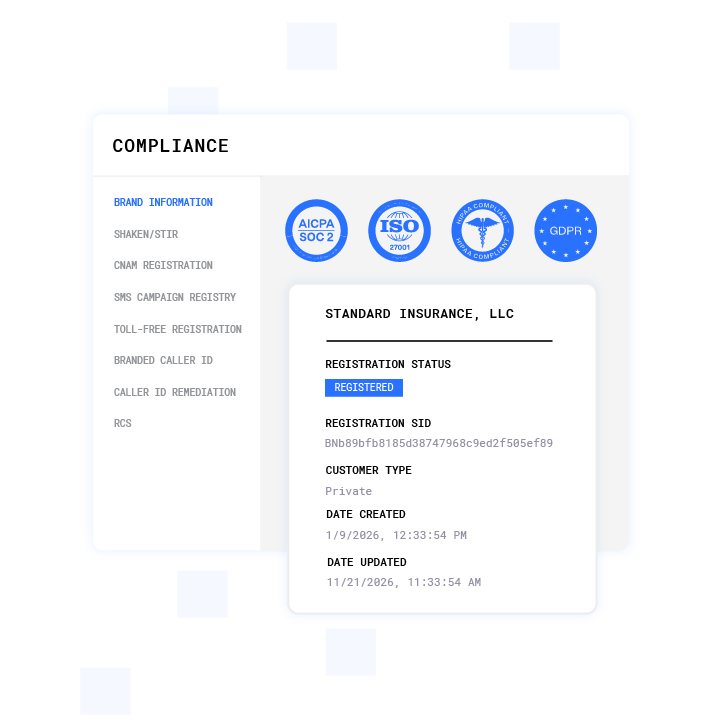
Pre-call DNC gate checklist:
- Scrub against the National DNC Registry at dial time, using data no older than 31 days.
- Scrub against the company-specific internal DNC list at dial time.
- Check the Reassigned Numbers Database to confirm the consenting party still holds the number.
- Verify that no cease-communication flag exists on the record.
- Confirm that the TCPA litigator screening list has been checked.
- Log the scrub timestamp and data source for each number in a tamper-evident audit record.
State Calling-Hour Rules and Time-Zone Logic in 2026
The federal floor under 47 CFR § 64.1200(c)(1) and 16 CFR § 310.4(c) prohibits outbound telemarketing calls before 8:00 a.m. or after 9:00 p.m. in the called party’s local time zone. The caller’s time zone does not affect this standard. When a state imposes a stricter window, the state rule controls for calls into that state.
Because of number portability, area codes do not reliably indicate a recipient’s current state or time zone. Outbound dialers use real-time carrier lookup or phone-validation APIs to determine the recipient’s current location and apply the correct window per record. When a number’s time zone cannot be resolved, many operations treat the most restrictive plausible window as the safe posture and hold the call.
2026 state quiet-hour reference table (stricter than federal floor):
| State | Permitted Calling Window | Key Restriction vs. Federal Floor | Statutory Reference |
|---|---|---|---|
| Florida | 8:00 a.m. – 8:00 p.m. | Ends at 8:00 p.m.; 3 attempts per 24 hrs per subject | Fla. Stat. § 501.059 |
| Oklahoma | 8:00 a.m. – 8:00 p.m. | End time 1 hour earlier; 3 attempts per 24 hrs per subject | Okla. Stat. tit. 15 §§ 775C.1-775C.6 |
| Oregon | 8:00 a.m. – 8:00 p.m. | End time 1 hour earlier; 3 attempts per 24 hrs per subject (eff. Jan 1, 2026) | HB 3865 |
| Connecticut | 9:00 a.m. – 8:00 p.m. | Start time 1 hour later; end time 1 hour earlier | Conn. Gen. Stat. § 42-288a |
| Texas | 9:00 a.m. – 9:00 p.m. Mon-Sat; Noon – 9:00 p.m. Sun | Start time 1 hour later; restricted Sunday window | Tex. Bus. & Com. Code ch. 301 |
| Massachusetts | 8:00 a.m. – 8:00 p.m. | Strictest end time among all states | M.G.L. c. 159C § 3 |
| Rhode Island | 8:00 a.m. to 9:00 p.m. local time | Same as federal TCPA rules | R.I. Gen. Laws § 5-61-3.6 |
| All other states | 8:00 a.m. – 9:00 p.m. | Federal floor applies | 47 CFR § 64.1200(c)(1) |
A conservative 9:00 a.m. to 8:00 p.m. window in the recipient’s local time zone satisfies all 50 states and D.C. for weekday calls. Express written consent does not override calling-hour restrictions under federal TCPA or state law.
Plura’s compliance engine enforces quiet-hour rules automatically through time-zone detection on the contact record, applying state-specific windows at the carrier level before each dial.
Consent-Management Architecture for AI Dialers
Prior express written consent (PEWC) for autodialed or AI-voiced telemarketing calls to mobile phones must include a signed agreement identifying the specific seller, disclosing that an autodialer or AI-generated voice may be used, and stating that consent is not a condition of purchase. The consent record must capture the exact disclosure language shown, a timestamp, the URL or platform where consent was obtained, and evidence of human interaction.
The FCC’s one-to-one consent rule, which would have required consent authorizing calls from only a single identified seller, was scheduled to take effect January 27, 2025, but was vacated by the Eleventh Circuit on January 24, 2025. Consent revocation can occur through any reasonable method and must be honored promptly, and FCC guidance indicates no more than 24 hours for processing revocation.
Plura’s consent ledger timestamps every consent record, stores it in an immutable format, and makes it available for one-click audit export. The platform’s pre-call validation chain checks consent purpose against call purpose and flags records older than 18 months for review before dial.
Human Oversight and Pacing With AI Voice Agents
Human oversight in AI-powered outbound calling rests on two operational decisions. Leaders must decide how many human agents to staff relative to AI predictive dialer call volume, and they must decide how to manage the abandoned-call rate that results from predictive pacing.
Human-to-call ratio decision matrix:
| Scenario | AI Pacing Model | Human Agent Role | Abandoned-Call Risk |
|---|---|---|---|
| AI qualifies, human closes | AI handles full conversation; transfers qualified leads | Receives warm transfers only | Low: AI connects before transfer |
| AI screens, human engages all live answers | AI dials; human takes every live answer | Handles all live-answer calls | Medium: depends on agent availability at answer |
| Predictive dialer with human agents | Dialer paces ahead of agent availability | Handles live answers as they arrive | High if pacing exceeds 3% abandoned-call cap |
The 3% abandoned-call cap under 47 C.F.R. § 64.1200(a)(7) limits the percentage of abandoned calls a campaign may generate. Operations using a power dialer with human agents must monitor pacing in real time to stay within this threshold. Contact qualified counsel regarding specific staffing and pacing obligations.
Abandoned-Call Rules for Power Dialers
The pacing decisions described above directly affect whether an operation stays within federal abandoned-call limits. Under 47 C.F.R. § 64.1200(a)(7), an abandoned call is defined as a call answered by a live person that is not connected to a live agent within two seconds of the called party’s completed greeting. Voicemails, busy signals, and answering-machine detections are excluded from the denominator, so only live-answered calls count.
The FCC safe-harbor provision allows a prerecorded disclosure message played within two seconds of answer that identifies the caller, provides a callback number, and states the call is for telemarketing purposes. When this message plays, the call does not count toward the 3% abandoned-call limit. To qualify for the TSR safe harbor under 16 CFR § 310.4(b)(1)(ii), the telemarketer must also allow the phone to ring for at least 15 seconds or four rings before disconnecting an unanswered call, and retain records demonstrating compliance for 24 months.
Each abandoned call exceeding the 3% cap carries the TCPA statutory damages described earlier.
API-Wrapper vs FCC-Carrier Compliance Architecture
Most AI voice platforms are built as API wrappers on top of third-party CPaaS (Communications Platform as a Service) providers such as Twilio.4 Compliance features in these architectures sit in software layers after the call originates on infrastructure the platform does not own. Plura operates as its own FCC-licensed audio bridging carrier, so compliance gates execute at the carrier layer before a call is ever placed.
| Compliance Capability | API-Wrapper Architecture | Plura FCC-Carrier Architecture |
|---|---|---|
| DNC scrubbing | Software layer added post-origination, and scrub timing depends on API call sequence | Real-time scrub at origination via Blacklist Alliance integration before dial |
| TCPA litigator filtering | Requires separate third-party subscription and is not enforced at carrier level | TCPA Litigation Firewall® integrated at the platform layer |
| Consent ledger | Stored in external CRM or database, and audit trail depends on customer configuration | Immutable, timestamped consent records with one-click audit export |
| State quiet-hour enforcement | Configured per campaign by operator and not enforced at carrier level | Automatic time-zone detection enforces state-specific windows at origination |
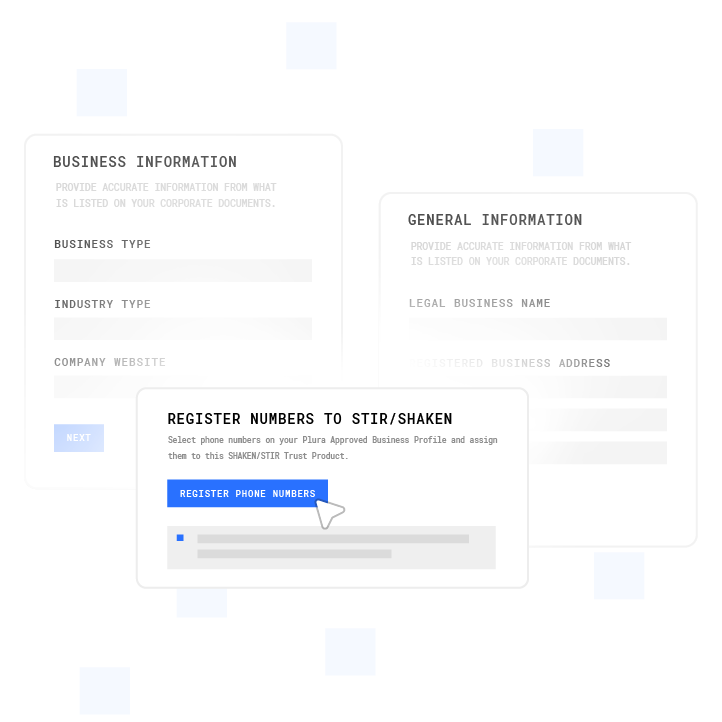
| SHAKEN/STIR authentication | Inherited from CPaaS provider’s attestation and not issued by the platform | Issued at Plura’s own FCC-licensed carrier level on every outbound call |
| Branded caller ID | Requires third-party reseller, with reputation tied to CPaaS number pool | Issued directly through Plura’s FCC-licensed carrier |
The FCC’s enforcement posture reinforces why carrier-level compliance matters. The FCC Enforcement Bureau issued an order on August 25, 2025, removing 1,203 non-compliant providers from the Robocall Mitigation Database, and required other providers to cease accepting their traffic by August 27, 2025 for failing to certify SHAKEN/STIR caller ID authentication or submit required robocall mitigation plans. Platforms that rent carrier access rather than owning it inherit the compliance posture of their upstream provider.
Book a live demo with Plura to walk through the carrier-enforced compliance architecture.
Pre-Call Gate Checklist for AI Power Dialers
The following gates describe the sequence Plura’s compliance engine executes before every outbound dial. Contact-center leaders and compliance officers should verify that their dialer architecture enforces each gate at origination, not as a post-dial audit.
- National DNC Registry scrub: Check at dial time against data meeting the 31-day freshness requirement described earlier.
- Internal DNC list scrub: Check company-specific opt-out list at dial time per 47 CFR § 64.1200(d).
- TCPA litigator filter: Screen against known TCPA litigant lists via Blacklist Alliance TCPA Litigation Firewall® before dial.
- Reassigned Numbers Database check: Confirm the consenting party still holds the number to reduce exposure on reassigned lines.
- Consent record validation: Confirm PEWC exists, purpose matches call purpose, and revocation flag is clear.
- State quiet-hour enforcement: Resolve recipient’s current state and time zone via real-time carrier lookup, apply the most restrictive applicable window, and hold the call if the window is closed.
- Abandoned-call rate check: Confirm the campaign is below the 3% abandoned-call cap before adding the call to the predictive pacing queue.
- SHAKEN/STIR attestation: Confirm outbound call originates with full attestation on Plura’s FCC-licensed carrier.
- Audit log entry: Record UTC timestamp, calculated local time, time-zone data source, DNC scrub result, consent record ID, and dialer configuration version.
Frequently Asked Questions
Scope of the FCC’s February 2024 AI Voice Ruling
FCC Declaratory Ruling 24-17 classified AI-generated voices as “artificial” under 47 U.S.C. § 227(b)(1)(B), which applies to any call using an artificial or prerecorded voice to a wireless number or residential landline. The ruling is not limited to telemarketing. However, the prior express written consent requirement is most stringent for telemarketing and advertising calls to mobile phones. Narrow exemptions exist for non-commercial informational messages, emergency alerts, and certain healthcare communications, but these exemptions do not permit marketing content. Contact qualified counsel to determine which consent standard applies to a specific call type and recipient category.
Interaction Between State and Federal Calling Windows
State telemarketing laws can impose stricter quiet-hour limits than the federal TSR and TCPA floor. When a state rule is more restrictive, the state rule controls for calls into that state. A call placed during the federal-permitted window but outside a state’s narrower window may expose the caller to state-level penalties, which can layer on top of federal TCPA damages. For example, Texas penalties can reach $10,000 per violation under state law.
Because number portability means area codes do not reliably indicate a recipient’s current state, dialers must use real-time carrier lookup to resolve the recipient’s actual location before each call. When the time zone cannot be resolved, many operations hold the call rather than dial. Consult qualified counsel regarding state-specific obligations.
One-to-One Consent and Purchased Lead Lists
The FCC’s one-to-one consent rule, which would have required that prior express written consent authorize calls from only a single identified seller, was scheduled to take effect January 27, 2025, but was vacated by the Eleventh Circuit on January 24, 2025. Organizations using purchased lead lists must obtain and verify independent proof of consent for their specific brand before placing any AI-voiced or autodialed call to those numbers. The consent record must identify the specific seller, include the disclosure language shown at the time of consent, and carry a timestamp and evidence of human interaction. Consult qualified counsel regarding consent verification obligations for third-party lead lists.
Differences Between FTC TSR and FCC TCPA Abandoned-Call Rules
The FTC’s Telemarketing Sales Rule at 16 CFR § 310.4(b)(1)(ii) measures the 3% abandoned-call cap per campaign per day, while the FCC’s standard under 47 C.F.R. § 64.1200(a)(7) also limits abandoned calls to 3%. Both define an abandoned call as a live-answered call not connected to a live agent within two seconds of the called party’s completed greeting. Both agencies enforce independently, and both can apply to the same outbound campaign.
The FTC can seek civil penalties up to $51,744 per TSR violation, and TCPA private actions allow $500 to $1,500 per call. Operations running predictive dialers should monitor abandonment rates against both standards and retain records demonstrating compliance for at least 24 months under 16 CFR § 310.5.
Recent FCC Carrier-Level Enforcement Actions
The FCC has escalated carrier-level enforcement significantly. The August 2025 enforcement action mentioned earlier removed 1,203 providers from the Robocall Mitigation Database and required other providers to stop accepting their traffic. This followed an earlier August 2025 action removing 185 providers, which prompted 51 state attorneys general to launch Operation Robocall Roundup. In December 2024, the FCC had ordered 2,411 providers to correct deficient filings or face removal.
The FCC has also revoked certifications, issued forfeitures, and referred cases to the Department of Justice. A $6 million forfeiture was ordered in September 2024 for AI-cloned voice robocalls. These actions show that compliance failures at the carrier layer can result in network disconnection, not just fines.
Conclusion: Pre-Call Architecture as the Compliance Lever
AI power dialer compliance in 2026 functions as a pre-call architecture problem, not a post-dial reporting problem. The four non-negotiable gates, real-time DNC scrubbing, TCPA litigator filtering, consent-ledger immutability, and state quiet-hour enforcement, must execute at call origination. Platforms that bolt these controls on after the fact through software layers on top of third-party CPaaS infrastructure cannot enforce them at the carrier level, and the FCC’s August 2025 removal of 1,203 non-compliant providers from the Robocall Mitigation Database illustrates the operational consequence of that gap.
Plura’s FCC-licensed carrier stack enforces all four gates at origination, with SHAKEN/STIR authentication, branded caller ID, and SOC 2, HIPAA, and DNC compliance infrastructure built into the platform.1 The AI predictive dialer includes dynamic pacing, time-zone logic, and abandoned-call rate controls. Every outbound contact runs through the pre-call gate sequence before the AI voice agent speaks.
Customers are responsible for their own regulatory obligations and compliance posture. Plura provides the infrastructure layer that supports those obligations.
Run your numbers through Plura’s calculator to check your ROI in real time.3
1 Plura AI maintains SOC 2, HIPAA, ISO, and GDPR posture as part of its platform infrastructure. References to compliance frameworks in this article describe Plura’s platform capabilities and do not constitute a guarantee that any customer using Plura will themselves be compliant with applicable laws or standards. Customers remain solely responsible for their own regulatory obligations, certifications, consent management, recordkeeping, and the claims they make to their own end users. Consult qualified legal counsel for guidance specific to your use case.
2 This article describes regulatory frameworks at a general level and does not constitute legal advice. Laws and regulations vary by jurisdiction, change over time, and apply differently depending on facts and circumstances. Readers should consult qualified legal counsel before making compliance decisions.
3 Performance figures, customer outcomes, and industry statistics referenced in this article are drawn from cited third-party sources or Plura customer case studies. Individual results vary based on implementation, use case, industry, audience, and execution. Past or aggregate performance is not a guarantee of future results.
4 References to third-party products, services, companies, or research are made for informational and comparative purposes only. Plura AI is not affiliated with, endorsed by, or sponsored by any third party named in this article unless explicitly stated. Trademarks and product names referenced remain the property of their respective owners.
This article is provided for informational purposes only and reflects Plura AI’s understanding at the time of publication. Product capabilities, integrations, and specifications are subject to change. For the most current information, visit plura.ai.
This article was produced with the assistance of AI tools and reviewed by Plura AI prior to publication.