
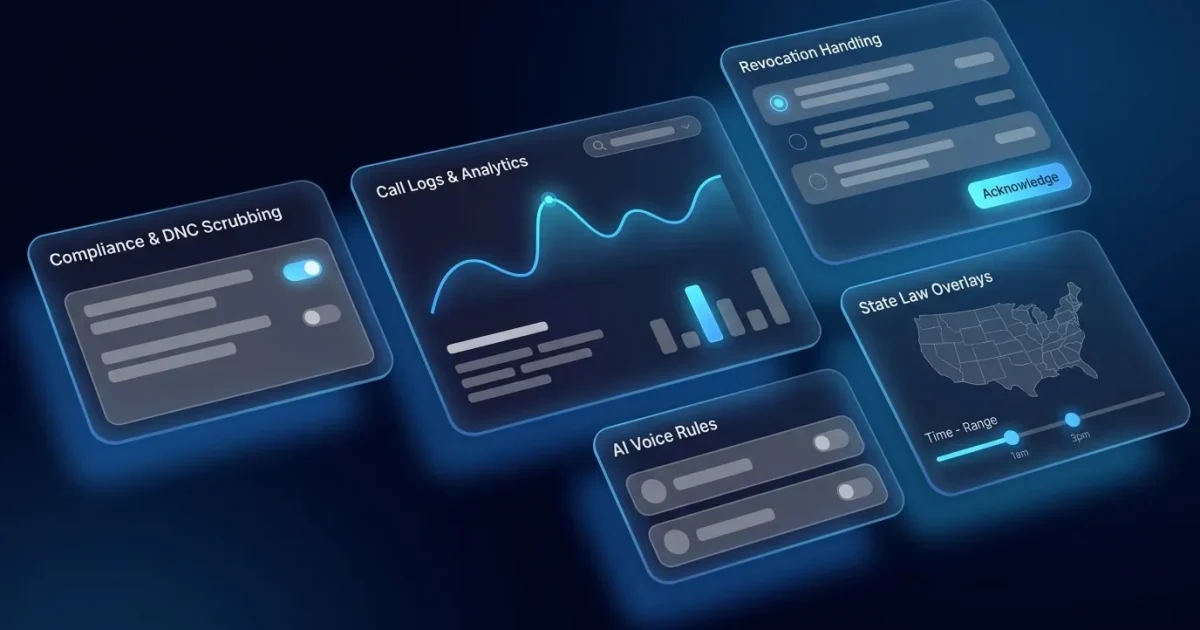
Written by: Matt Beucler, CEO, Plura AI
Key Takeaways
- An AI predictive dialer is TCPA compliant in 2026 only when it enforces prior express written consent, real-time DNC scrubbing, and strict AI-voice classification rules on every outbound contact.2
- Defensible consent records require timestamp, IP address, capture URL, exact consent language, and seller identification, stored in immutable systems for at least four years.
- Real-time DNC scrubbing must check every number immediately before dialing and re-scrub numbers idle more than 14 days, covering both federal and applicable state registries.
- AI-generated voices are classified as artificial or prerecorded under TCPA, requiring prior express written consent for telemarketing calls to mobile numbers.
- Plura AI delivers carrier-owned infrastructure with real-time DNC scrubbing, stateful consent logging, and 100% U.S. infrastructure, and you can book a live demo to see how these controls fit into your compliance workflow.
Prior Express Written Consent Standards for 2026 Campaigns
Prior express written consent (PEWC) is the baseline for autodialed or prerecorded telemarketing calls and texts to mobile numbers. Under 47 C.F.R. § 64.1200(f)(9), a valid PEWC agreement includes a written signature, which can be electronic under the E-SIGN Act.2 It also includes a clear and conspicuous disclosure authorizing the named seller to deliver calls or texts, plus a statement that consent is not a condition of purchase.
The FCC’s one-to-one consent rule, scheduled to take effect January 27, 2025, was vacated by the Eleventh Circuit before that date. It never required that each consent authorize contact from only one specific seller. Multi-seller consent forms used by lead generators no longer satisfy this standard, and consent must be logically and topically related to the interaction that generated it.
A defensible 2026 consent record contains more than a signed form. Courts and regulators look at the technical context to decide whether consent was knowing and voluntary. The practical proof standard therefore includes the timestamp of consent in ISO-8601 format with timezone, which shows exactly when consent was given. It includes the IP address of the device, which helps confirm location and device, and the exact URL of the capture page, which proves what form appeared. It also includes the exact consent language shown, the named seller, the user-agent string and session data, which help detect fraud or bots, and any later opt-out record, which shows the full consent lifecycle. The practical proof standard reflects these expectations.
Consent storage architecture works best on write-once or append-only systems that sit outside operational lead-routing platforms. Many operators keep records at least four years for federal exposure and extend retention to five to seven years for state mini-TCPA jurisdictions.
Plura’s compliance engine timestamps and stores consent records in an immutable ledger, making those records available for litigation discovery and regulatory audit on demand. Operators remain responsible for the consent language, capture mechanism, and seller identification on their own forms.
Real-Time DNC Scrubbing for Predictive Dialers
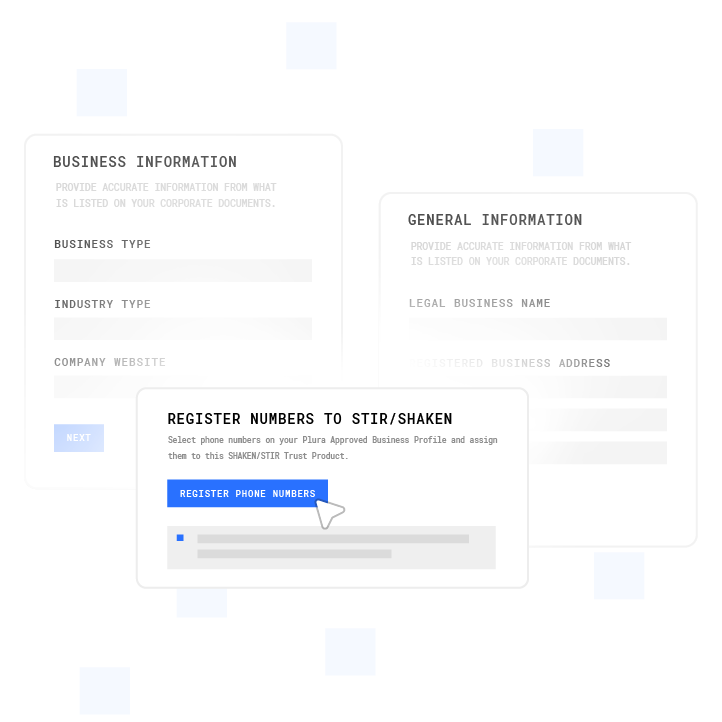
Once you establish valid consent, the next compliance layer is avoiding numbers on Do Not Call registries. The National DNC Registry, managed by the FTC, requires telemarketers to scrub calling lists at least every 31 days. Real-time scrubbing goes further. It checks each number immediately before the call is sent through a pre-dial hook in the dialer, which closely aligns with predictive dialer risk reduction under TCPA.
A compliant DNC scrubbing workflow re-scrubs any number that has not been dialed in 14 days before the next attempt. It also prevents any number from sitting in an active queue more than 30 days without a fresh check. If a number is flagged, the system removes it from the dial queue automatically and tags it in the CRM with the suppression reason and scrub timestamp.
State DNC registries in Colorado, Florida, Indiana, Louisiana, Missouri, Pennsylvania, Texas, and Wyoming require scrubbing in addition to the national registry. Federal compliance alone does not address these state-level obligations.
Plura integrates with The Blacklist Alliance for DNC screening and the TCPA Litigation Firewall® for real-time litigation protection, checking every outbound contact before dial.4 Scrub logs capture the number checked, timestamp, lists queried, result, and campaign record ID.
AI-Generated Voice Rules for Outbound Campaigns
In February 2024, the FCC ruled that AI-generated voices in robocalls fall under TCPA’s “artificial or prerecorded” voice category. Robocalls using AI-generated voices are generally treated as artificial voice calls under TCPA and require explicit, documented consent before such calls are placed. Prerecorded or artificial voice messages must identify the caller at the beginning of the message and provide a contact number.
The FCC’s consumer guidance states that AI-generated voice calls are illegal unless the consumer has agreed to receive them or the caller qualifies for an exemption. Pending legislation, including H.R. 1027 (the QUIET Act, introduced in the 119th Congress), would add disclosure requirements for robocalls that use AI to emulate a human being and would increase forfeiture amounts for certain TCPA violations.
For operators running an AI predictive dialer with AI-generated voice, this classification means prior express written consent is the operative standard for telemarketing calls to mobile numbers. Operators should consult qualified counsel on how the AI-voice classification applies to their specific campaign types and call flows.
Revocation Handling and Audit-Ready Reporting
The FCC’s April 2025 Consent Revocation Rule requires businesses to honor opt-outs within 10 business days, regardless of the method used to revoke, including reply text, voicemail, email, or a verbal request to a live agent. Virginia’s amended Telephone Privacy Protection Act, effective January 1, 2026, requires honoring texted STOP or UNSUBSCRIBE requests for at least 10 years.
When a contact opts out during a call, many operators write the opt-out to the suppression store before the call ends and propagate it to every dialer node within seconds. Cross-channel suppression is often configurable so a voice opt-out also stops SMS. Internal DNC requests have no expiration and apply across all active campaigns, not just the campaign that received the request.
Plura’s compliance dashboard exports audit-ready reports in one click, covering consent records, opt-out records with channel and timestamp, scrub logs, and campaign records. TCPA claims carry a four-year statute of limitations, and records should be retained for at least five years to cover that window plus margin.
State Law Overlays and Quiet-Hours Controls
Federal TCPA sets a calling window of 8:00 a.m. to 9:00 p.m. in the called party’s local time zone. State laws frequently narrow that window or add independent consent requirements. As of 2026, more than 15 states enforce their own mini-TCPA laws with broader autodialer definitions, stricter consent rules, and steeper penalties than the federal statute.
Notable state overlays include:
- Florida (FTSA): Caps commercial calls at three per 24 hours on the same subject matter, restricts calling to 8 a.m. to 8 p.m. local time, and exposes violators to $500 per call, trebled to $1,500 for willful violations. Consent expires after 18 months.
- Connecticut: Requires prior express written consent for nearly any telephonic sales call and imposes fines of up to $20,000 per violation under SB 1058.
- Texas (SB 140, effective September 1, 2025): Expanded the definition of telephone solicitation to include text, graphic, or image messages and enhanced private rights of action for violations of the state’s telemarketing laws.
- Washington: Created a private right of action with statutory damages of $500 per violation under its commercial solicitation laws.
- New York: Addresses regulatory measures during declared states of emergency with Executive Orders extending such declarations.
Plura’s compliance engine enforces quiet-hours rules automatically through time-zone detection on the contact record, applying state and federal calling-window restrictions to every campaign. Operators configure state-specific overrides at the campaign level.
7-Step Compliance Checklist for AI Predictive Dialers in 2026
| Step | Requirement | Key Standard | Plura Control |
|---|---|---|---|
| 1 | Capture prior express written consent with named seller, phone number, contact type, and no-purchase-required disclosure | See consent requirements above | Immutable consent ledger with timestamp, IP, URL, and seller field |
| 2 | Classify AI-generated voice as artificial or prerecorded and obtain PEWC before any AI-voice telemarketing call | FCC February 2024 ruling on AI-generated voices | AI-voice campaign consent flag enforced at dial time |
| 3 | Scrub all numbers against federal and applicable state DNC registries within 31 days before each campaign and re-scrub numbers idle more than 14 days | 47 C.F.R. § 64.1200(d); FTC DNC rules | Real-time pre-dial DNC scrubbing via Blacklist Alliance integration |
| 4 | Screen for TCPA serial litigators before dialing | Screening for serial TCPA litigators | TCPA Litigation Firewall® integration blocks known litigator numbers |
| 5 | Enforce calling-window restrictions using the contact’s local time zone, not the campaign server clock | Federal: 8 a.m. to 9 p.m. local; state overlays vary | Automatic time-zone detection with state-specific quiet-hours rules |
| 6 | Honor revocation requests within 10 business days across all channels and campaigns and propagate opt-outs to every dialer node | FCC April 2025 Consent Revocation Rule | Cross-channel suppression store with sub-second propagation |
| 7 | Retain consent records, opt-out records, scrub logs, and campaign records for at least five years and export audit-ready reports on demand | 28 U.S.C. § 1658 (four-year TCPA statute of limitations) | One-click audit export from compliance dashboard |
Walk through how each checklist step maps to a Plura control in a live demo.
Frequently Asked Questions
What documentation proves prior express written consent for high-volume campaigns?
A defensible consent record in 2026 goes beyond the signed form itself. The surrounding technical metadata is what determines whether consent holds up in litigation. A complete record includes the timestamp of consent in ISO-8601 format with timezone, the IP address of the device used to consent, the exact URL of the capture page, the exact consent language rendered to the consumer at the moment of opt-in, the named seller as a structured field, the user-agent string, session data, and any subsequent opt-out record. Consent storage often uses write-once or append-only systems separate from operational lead-routing platforms. Retention of at least four years is the federal floor, with five to seven years common for state mini-TCPA jurisdictions. Operators should consult qualified legal counsel to confirm their specific documentation architecture meets current FCC and state requirements.
How does real-time DNC scrubbing work inside an AI predictive dialer?
Real-time DNC scrubbing inserts a pre-dial hook into the dialer’s call-placement logic. Before any number is sent to the carrier for dialing, the system queries federal and state DNC registries and the operator’s internal suppression list simultaneously. If the number appears on any list, the dial is blocked automatically, the suppression reason is logged with a timestamp, and the record is tagged in the CRM. The scrub log captures the number checked, the lists queried, the result, and the campaign record ID. A compliant workflow also re-scrubs numbers that have been idle for more than 14 days before the next attempt, since numbers can be added to registries between the original upload and the scheduled call. Plura’s compliance engine performs this check at the carrier level before origination, not as a post-dial filter.
Are AI-generated voices treated as artificial or prerecorded under TCPA?
The FCC ruled in February 2024 that AI-generated voices fall under TCPA’s “artificial or prerecorded” voice category. This classification remains operative. The practical effect is that any outbound call using an AI-generated voice for telemarketing purposes to a mobile number requires prior express written consent under the same standard as a prerecorded message. The call must also identify the caller at the beginning of the message and provide a contact number. Pending legislation, including H.R. 1027 (the QUIET Act), would add disclosure requirements specifically for AI-emulated human voices and increase forfeiture amounts. Operators should consult qualified legal counsel on how this classification applies to their specific call types, including informational calls, appointment reminders, and debt-collection calls, which carry different consent standards.
How quickly must revocation requests be honored in 2026?
The FCC’s April 2025 Consent Revocation Rule sets a maximum of 10 business days to honor a revocation request, regardless of the channel through which it was received. Revocation methods include reply text, voicemail, email, or a verbal request to a live agent. The opt-out must propagate across all active campaigns, not just the campaign that received the request, and the internal suppression list must be maintained indefinitely. Virginia’s amended Telephone Privacy Protection Act, effective January 1, 2026, requires honoring texted STOP or UNSUBSCRIBE requests for at least 10 years. The key operational challenge is ensuring that opt-outs sync across every dialer node and channel, including voice and SMS, within that window. Operators should confirm their specific revocation obligations with qualified legal counsel, particularly for multi-state campaigns where state law may impose shorter windows than the federal standard.
Conclusion
TCPA class-action filings reached 1,807 in 2025, a 97% increase over 915 in 2024, with statutory damages running $500 to $1,500 per call or text.3 For high-volume operators running an AI predictive dialer, a single campaign touching 100,000 numbers without proper consent can create eight-figure class-action exposure.
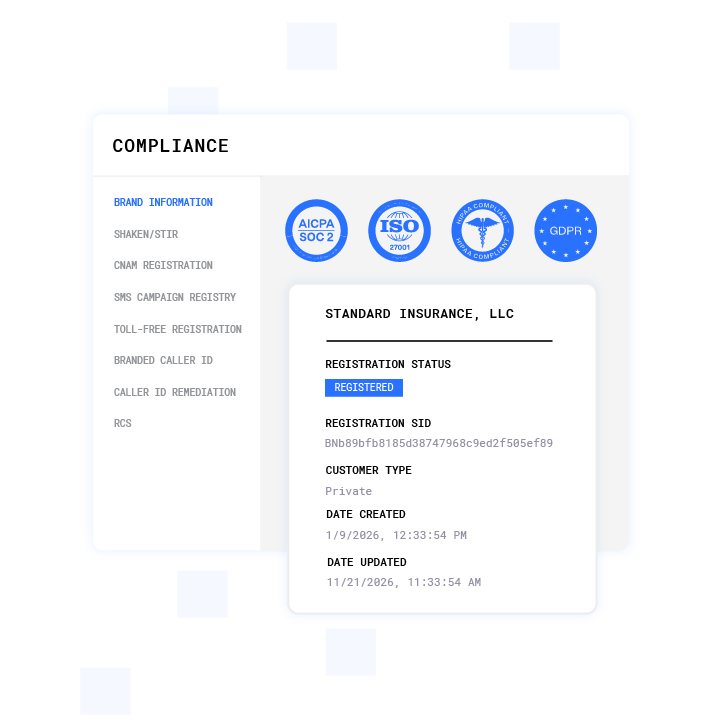
The controls that reduce that exposure are technical controls, not just paperwork. Real-time DNC scrubbing at the carrier level, immutable consent logging with full metadata, automatic quiet-hours enforcement by the contact’s local time zone, sub-second revocation propagation across all channels, and TCPA litigator screening before every dial all work together to manage risk. Plura AI’s carrier-owned stack delivers these controls on 100% U.S. infrastructure, with SOC 2, HIPAA, and SHAKEN/STIR caller ID verification built into the platform.1 Plura supports compliance infrastructure; operators remain responsible for their own legal obligations and should work with qualified counsel on their specific programs.
Run your numbers through Plura’s ROI calculator to check your cost per connected call against your current dialer spend.
Review plans and rates to see which tier fits your call volume and compliance requirements.
Updated August 2026.
1 Plura AI maintains SOC 2, HIPAA, ISO, and GDPR posture as part of its platform infrastructure. References to compliance frameworks in this article describe Plura’s platform capabilities and do not constitute a guarantee that any customer using Plura will themselves be compliant with applicable laws or standards. Customers remain solely responsible for their own regulatory obligations, certifications, consent management, recordkeeping, and the claims they make to their own end users. Consult qualified legal counsel for guidance specific to your use case.
2 This article describes regulatory frameworks at a general level and does not constitute legal advice. Laws and regulations vary by jurisdiction, change over time, and apply differently depending on facts and circumstances. Readers should consult qualified legal counsel before making compliance decisions.
3 Performance figures, customer outcomes, and industry statistics referenced in this article are drawn from cited third-party sources or Plura customer case studies. Individual results vary based on implementation, use case, industry, audience, and execution. Past or aggregate performance is not a guarantee of future results.
4 References to third-party products, services, companies, or research are made for informational and comparative purposes only. Plura AI is not affiliated with, endorsed by, or sponsored by any third party named in this article unless explicitly stated. Trademarks and product names referenced remain the property of their respective owners.
This article is provided for informational purposes only and reflects Plura AI’s understanding at the time of publication. Product capabilities, integrations, and specifications are subject to change. For the most current information, visit plura.ai.
This article was produced with the assistance of AI tools and reviewed by Plura AI prior to publication.