
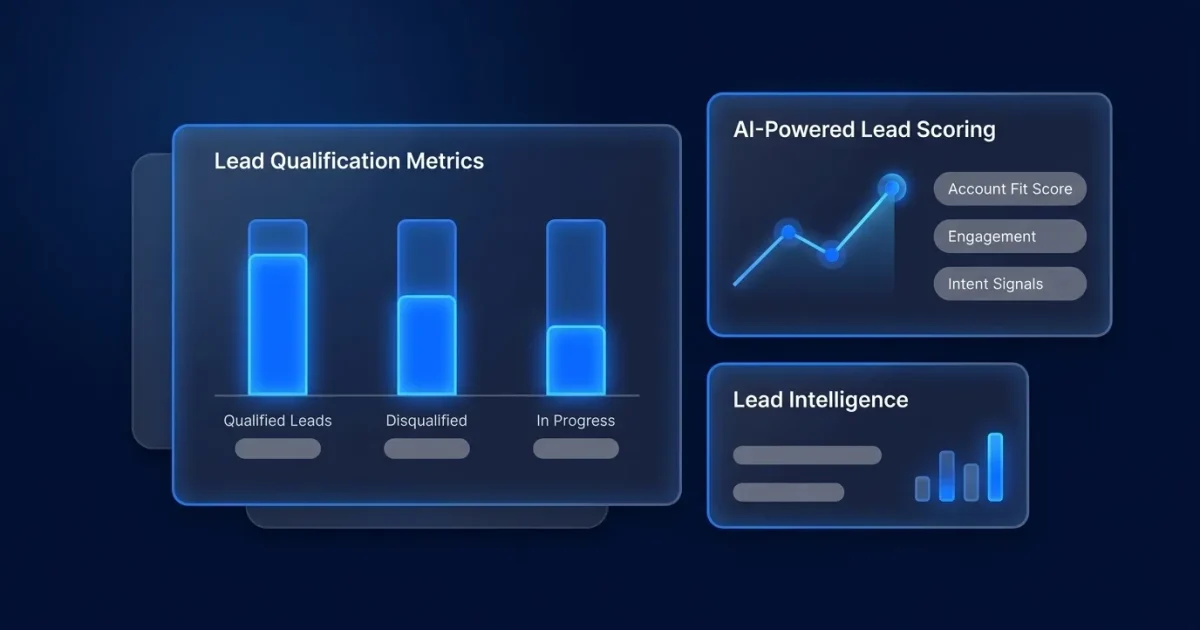
Written by: Matt Beucler, CEO, Plura AI
Key Takeaways
- An ideal customer profile (ICP) for lead qualification is a data-backed description of the companies most likely to become your highest-value customers, using firmographic, technographic, and behavioral criteria.
- Companies with a documented ICP achieve a 68% higher win rate, and ICP-matched accounts close at 2.8x the rate of non-ICP accounts.1
- ICP operates at the account level while buyer personas operate at the individual level. ICP comes first so teams avoid investing persona work into unfit accounts.
- Building an effective ICP requires analyzing top customers, identifying firmographic and technographic attributes, defining pain points, and validating with sales and win/loss data.
- Plura AI automates ICP-driven lead qualification in real time across every channel. See Plura’s AI apply your ICP criteria in a live demo.
Why ICP-Driven Lead Qualification Matters
The cost of poor qualification is measurable. Only 13% of marketing-qualified leads (MQLs) convert to sales-qualified leads (SQLs) across B2B technology sellers, according to Salesforce’s State of Sales, 6th edition.1,2 That means 87 out of every 100 leads your SDRs (sales development representatives) touch never become opportunities.
The gap between ICP-matched and non-ICP accounts is significant across every conversion metric:
- As noted above, ICP-matched accounts close at 2.8x the rate of non-ICP accounts, according to Adobe’s B2B Marketing Benchmark 2024.1,2
- B2B teams with documented ICP-based segmentation report 1.7x higher marketing-sourced pipeline conversion than teams without, according to Adobe’s 2023 B2B Marketing and Sales Trends Report.1,2
- Accounts matching both ICP criteria and active intent signals convert at 4.1x the rate of accounts matching only one criterion, according to Bombora’s Company Surge Benchmark Report, Q1 2024.1,2
A vague ICP causes SDRs to waste the majority of their calls. A data-backed ICP, applied through a scoring model and automated with AI, turns a pipeline full of interest into a pipeline full of revenue.
ICP vs. Buyer Persona: Account Fit vs. Stakeholder Fit
These two tools operate at different levels. An ICP is account-level and answers “should we pursue this company?” A buyer persona is person-level and answers “how do we engage the right stakeholder inside that company?” ICP comes first in the sequence so persona research focuses on accounts that can actually buy and grow.
| Attribute | ICP | Buyer Persona |
|---|---|---|
| Focus | Company (firmographics, technographics) | Individual (role, goals, objections) |
| Purpose | Lead qualification and prioritization | Messaging and personalization |
| Built from | CRM data, retention rates, win/loss analysis | Customer interviews, call recordings |
| Example | B2B SaaS, 50-500 employees, uses Salesforce | VP of Sales at a mid-market SaaS company |
Most outbound teams underuse ICP and over-rely on persona, which produces volume without pipeline quality. A single ICP-fit account may have three or four relevant personas inside it, each requiring a different message and a different conversation.
How to Create an Ideal Customer Profile for Lead Qualification
- Analyze your best customers. Pull your top 20% by revenue, retention, and expansion. Look for shared patterns, not anecdotes. A single large deal does not create a repeatable pattern, while recurring evidence across multiple accounts does.
- Identify firmographic attributes. Capture industry, company size by headcount and revenue, geography, and growth stage. These filters make your ICP queryable in a CRM or data provider.
- Add technographic data. Document which CRM, marketing automation platform, and other tools your best customers run. Tech stack fit often predicts a smoother implementation and faster time-to-value.
- Define pain points and goals. Clarify the problem customers hire you to solve and the outcome they use to measure success. ICP captures the company-level pain, and persona work identifies who feels that pain most acutely.
- Validate with sales and win/loss data. Review closed-won and closed-lost deals. Interview account executives on what differentiated the wins. Analyze churned accounts for anti-patterns, because your worst customers are as instructive as your best.
Fill-in-the-blank ICP template (copy-paste ready):
- Industry: [e.g., SaaS, healthcare, financial services]
- Company size (employees): [e.g., 50-500]
- Annual revenue: [e.g., $10M-$50M]
- Tech stack: [e.g., Salesforce, HubSpot]
- Pain points: [e.g., slow lead response, low conversion]
- Goals: [e.g., increase sales efficiency]
- Disqualifiers: [e.g., agencies, fewer than 25 employees, no CRM]
Watch ICP-driven qualification in a live Plura demo to see how AI-powered lead qualification applies your ICP criteria across every inbound channel.
How to Use ICP for Lead Scoring (with Example)
A scoring model converts your ICP from a document into an operational filter. The standard approach uses a 0-100 point scale, with points allocated to each ICP criterion based on its correlation with closed-won deals. Thresholds then determine routing so sales and marketing handle leads consistently.
| Criterion | Points |
|---|---|
| Industry: SaaS | 30 |
| Company size: 120 employees | 20 |
| Tech stack: Salesforce + HubSpot | 20 |
| Pain point: “Leads go cold in hours” | 30 |
| Total | 100 – Sales-ready |
A lead scoring 80 or above routes to an SDR immediately. A score of 50-79 enters a nurture sequence. Scores below 50 fall outside your active focus. Behavioral signals, such as pricing page visits or demo requests, add intent points on top of fit. Fit defines who to target, and behavior shows when to act, so teams score fit first and then layer intent.
When building the model, keep it to 8-12 criteria, because too many signals create noise and obscure the factors that actually predict conversion. Set thresholds by running the model against historical closed-won data and finding the score above which conversion rates jump materially, rather than copying an industry average.
Common ICP Mistakes and How to Fix Them
Even a well-scored model fails when the underlying ICP is flawed. These are the patterns that most often undermine qualification and routing.
- Confusing ICP with buyer persona. Fix: ICP describes the company, and persona describes the person inside it. A “VP of Sales at a SaaS company” belongs in a persona, not in the ICP.
- Making the ICP too broad. Fix: Design the ICP so it excludes a meaningful portion of your current customers. “B2B SaaS companies” covers tens of thousands of organizations and provides no useful filter.
- Building from aspiration instead of data. Fix: Mine your best customers rather than a list of dream logos. An aspiration-heavy ICP often produces accounts that are hard to close, slow to onboard, and quick to churn.
- Ignoring disqualifiers. Fix: Write explicit “do not sell to” rules. Clear disqualifiers protect rep time and keep the funnel focused on accounts that can succeed.
- Never updating the ICP. Fix: Review the ICP quarterly against win/loss and churn data. Trigger an off-cycle review when win rate inside the stated ICP diverges from your overall win rate.
Using ICPs in AI-Powered Lead Qualification
A scoring model sitting in a spreadsheet only helps when teams apply it quickly. The operational gap most B2B teams face comes from the delay between a lead arriving and the ICP being applied to it. The industry standard for first contact on an inbound lead is 47 or more hours. Contacting a lead within 5 minutes makes them up to 100x more likely to connect, and a 60-second response lifts conversions by 391% (industry research published on plura.ai/calculator).1
AI closes that gap. Plura AI’s AI SMS agents and AI voice agents engage leads in under 5 seconds. They ask qualifying questions mapped to your ICP criteria and use enrichment from 30-plus data sources to qualify leads in real time. The same ICP logic that lives in your scoring model runs inside every conversation, on every channel, 24 hours a day.
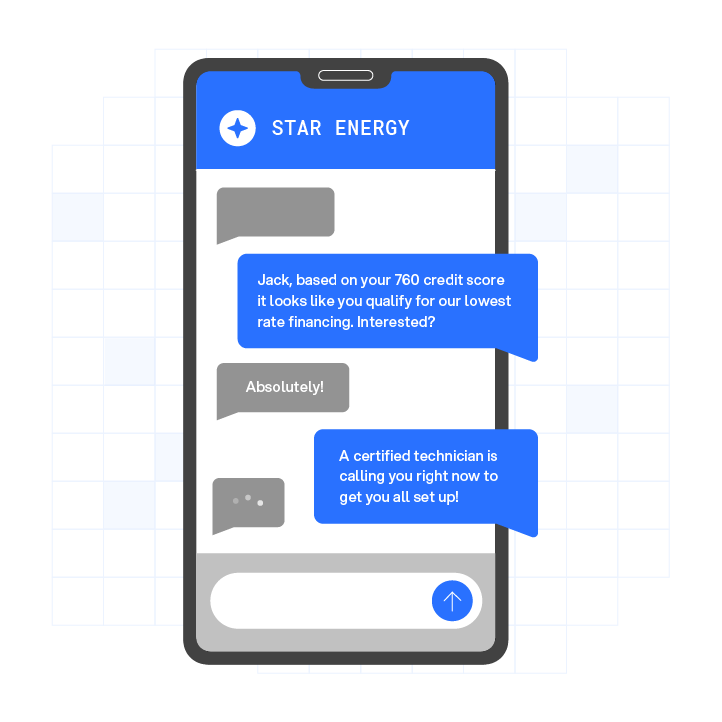
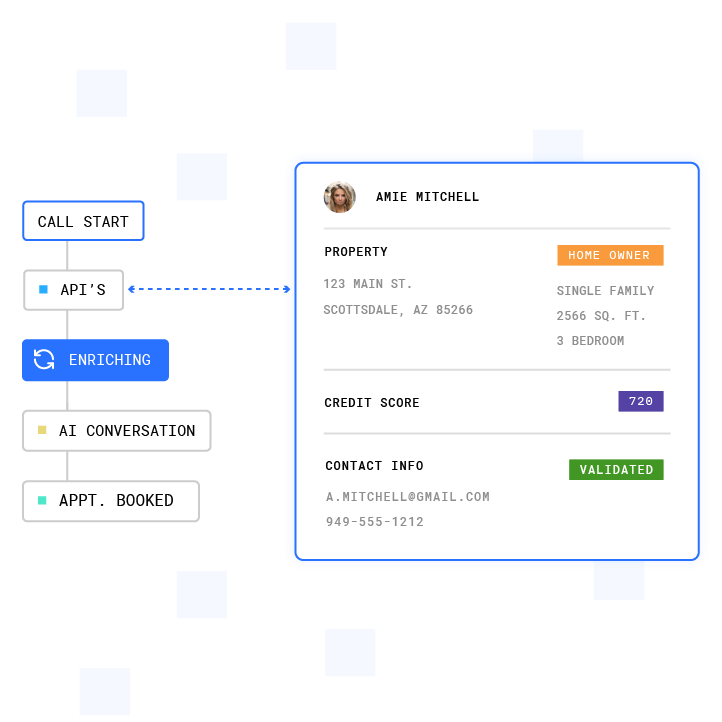
Plura’s AI Lead Intelligence layer enriches every lead with firmographic, technographic, and intent data during the conversation itself, not in a downstream batch job. That means the score reflects the company as it is now, not as it was when a list was last imported. High-fit leads route to an SDR immediately. Mid-fit leads enter a nurture sequence automatically. Low-fit leads exit cleanly and do not consume rep time.
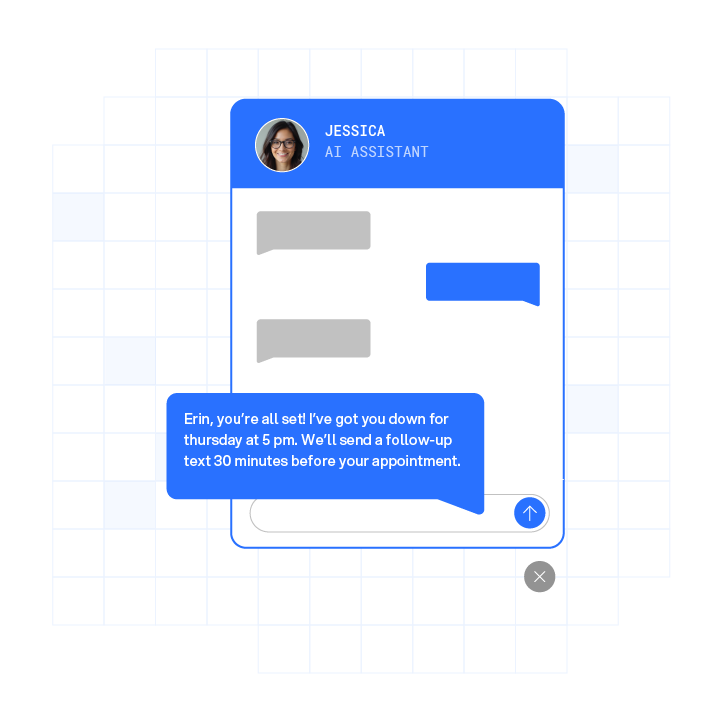
SDRs then spend less time chasing leads that will never convert and more time closing the ones that will. One Marketing Director operating on this model described the shift: “We went from spending 60% of our time trying to contact leads to spending 90% of our time closing them.”
Watch ICP-driven qualification run live across voice and SMS in a demo with Plura.
Frequently Asked Questions
What is an ideal customer profile example?
A concrete ICP example for a B2B SaaS company might read: companies with 50-500 employees, $10M-$50M in annual revenue, operating in North America, using Salesforce or HubSpot as their CRM, with an active outbound sales motion, and a documented pain point around slow lead response or low MQL-to-SQL conversion. Disqualifiers would include agencies, companies with fewer than 25 employees, and organizations with no CRM in place. Every clause in that definition is queryable in a data provider or CRM, which makes it operational rather than aspirational.
What should be included in a customer profile?
A complete ICP for lead qualification covers four layers. Firmographics include industry, company size by headcount and revenue, geography, and growth stage. Technographics cover the tools the company runs, particularly CRM, marketing automation, and any platforms your product integrates with. Pain points and goals describe the specific problem the company needs to solve and the outcome they measure success by. Disqualifiers are the explicit “do not sell to” rules that protect rep time from accounts that will never close. Each layer should be expressed as a measurable, queryable criterion rather than a prose description.
How do you use ICP for lead scoring?
Convert each ICP criterion into a point value on a 0-100 scale, weighted by its correlation with closed-won deals. A typical allocation might give 30 points to industry fit, 20 to company size, 20 to tech stack, and 30 to pain point match. Set routing thresholds using the approach described earlier, then layer behavioral intent signals, such as pricing page visits or demo requests, on top of fit points to capture timing. Validate the model quarterly by retroactively scoring recent closed-won and closed-lost deals and checking whether the thresholds predicted the outcomes correctly.
What is the difference between ICP and buyer persona?
An ICP describes the ideal company to pursue, defined by firmographic and technographic attributes at the account level. A buyer persona describes the individual stakeholder inside that company you need to engage, defined by role, goals, objections, and decision-making authority. ICP comes first in the qualification sequence so persona research focuses on accounts that fit. Once an account passes the ICP filter, personas determine which contacts to reach, what message to send, and how to navigate the buying committee. Most B2B companies use one to three ICPs and three to five personas per ICP to cover the relevant stakeholder types without overcomplicating the go-to-market motion.
Conclusion: Turn Your ICP into Revenue
A documented ICP, translated into a scoring model with explicit thresholds and disqualifiers, forms the operational foundation of a predictable pipeline. A documented ICP turns qualification from an opinion into a repeatable process that protects rep time, improves MQL-to-SQL conversion, and gives sales and marketing a shared definition of what a good lead looks like.
The next step is automation. Applying ICP criteria manually at scale becomes unmanageable when inbound volume spikes or when leads arrive outside business hours. Plura’s lead qualification infrastructure applies your ICP scoring model in real time, across voice and SMS, in under 5 seconds on every lead, around the clock. The CRM integrations push scored leads and full conversation transcripts directly into your existing workflow, so your team shows up to every conversation already knowing who they are talking to and why.
Ready to automate your ICP qualification? Compare plans and rates at Plura’s pricing page, or request a live demo to see the qualification engine on real traffic.
1 Performance figures, customer outcomes, and industry statistics referenced in this article are drawn from cited third-party sources or Plura customer case studies. Individual results vary based on implementation, use case, industry, audience, and execution. Past or aggregate performance is not a guarantee of future results.
2 References to third-party products, services, companies, or research are made for informational and comparative purposes only. Plura AI is not affiliated with, endorsed by, or sponsored by any third party named in this article unless explicitly stated. Trademarks and product names referenced remain the property of their respective owners.
This article is provided for informational purposes only and reflects Plura AI’s understanding at the time of publication. Product capabilities, integrations, and specifications are subject to change. For the most current information, visit plura.ai.
This article was produced with the assistance of AI tools and reviewed by Plura AI prior to publication.