

Written by: Matt Beucler, CEO, Plura AI | Last updated: August 26, 2026
Key Takeaways for 2026 Call Center Automation
- Call center automation in 2026 splits into two models: AI agents that replace repetitive conversations and suites that assist human agents. AI agents deliver larger cost savings and clearer compliance controls at scale.
- Plura AI is an FCC-licensed carrier platform that owns its infrastructure, enforces controls at the carrier level, and provides quantified TCO math (about $700K vs. $7M annually) that supports replacing 15 agents with 6 AI agents.3
- Market demand is surging. Voice AI is handling a rapidly growing share of inbound contact-center volume, and the generative AI customer-support segment is projected to reach $34 billion by 2031.3
- Regulatory pressure from the FCC and state laws is accelerating adoption of U.S.-based AI infrastructure and increasing risk for offshore BPO contracts and foreign-hosted AI tools.
- Operators can validate savings and compliance support by booking a live demo with Plura and reviewing how a carrier-owned AI agent platform moves from pilot to production in days, not months.
Where Call Center Automation Demand Is Growing Fastest in 2026
Demand for call center AI is accelerating faster than many planning cycles assume. The Business Research Company’s Call Center AI Global Market Report projects the market will grow substantially, reaching over $11 billion by 2030, with North America as the largest regional market.
The generative AI segment within customer support is expanding even faster.5 Mordor Intelligence’s July 2026 report projects the generative AI in customer support market at $9.86 billion in 2026 and $34.12 billion by 2031 at a 28.18% CAGR.5 Voice AI is a leading growth area within this broader customer support automation trend.
The channel shift behind these numbers is significant. Aggregated data from Zendesk, Gartner, and Salesforce shows voice AI handling 19% of inbound contact-center volume in 2026, up from 6% in 2024, with banking and telecom leading adoption.4 That same data shows 64% of enterprise customer experience teams ran an agentic AI pilot in 2026, but only 27% had at least one channel in full production.3 The gap between pilot and production is where most operators are stuck today.
Plura’s carrier-owned infrastructure and AI-agent model are designed to close that gap by removing third-party carrier dependencies and long integration cycles. See how Plura’s carrier infrastructure closes the pilot-to-production gap in your first 90 days.
AI-Agent Call Centers vs. AI-Enhanced Call Centers
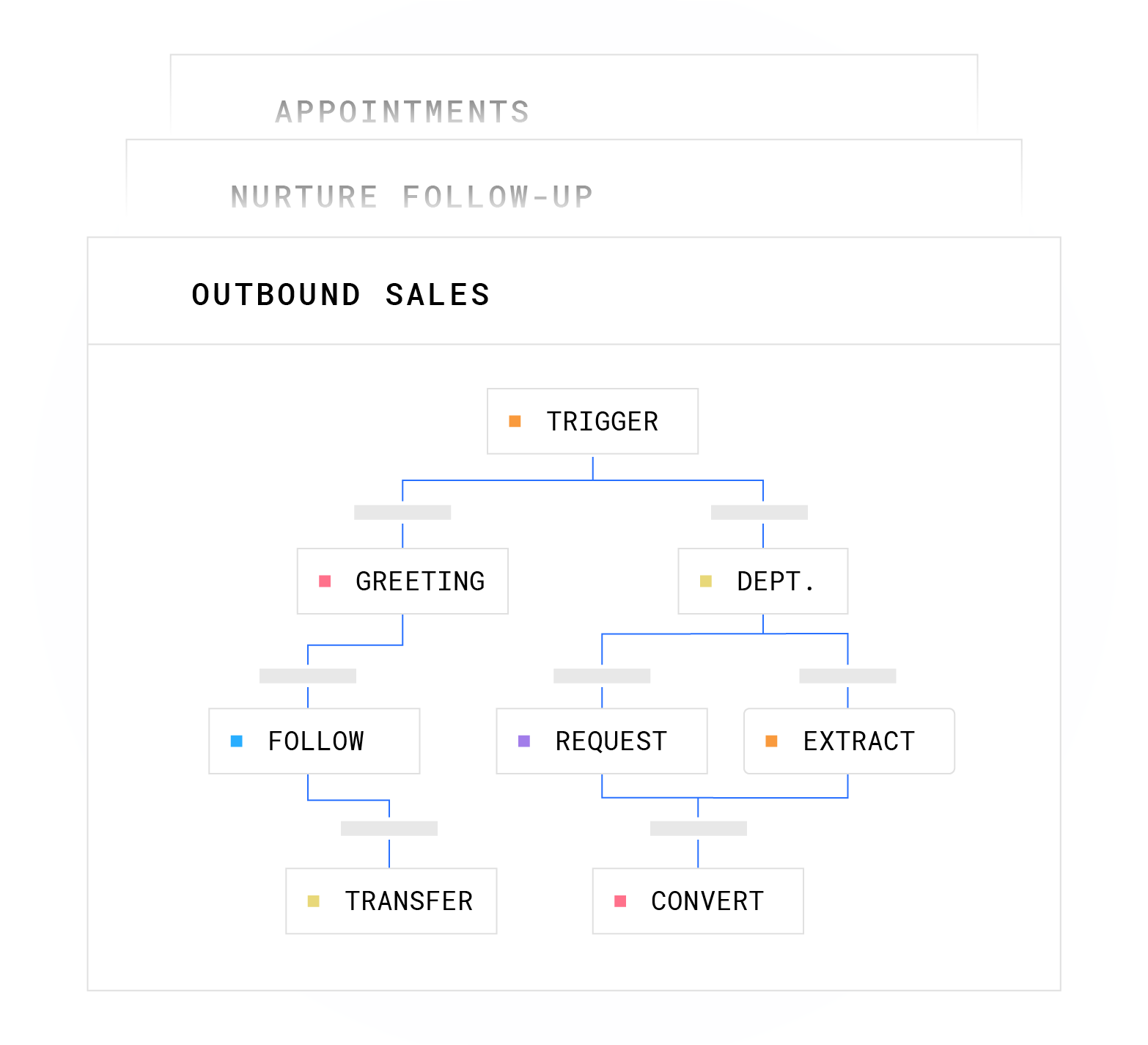
Buyers in 2026 face two fundamentally different purchase types. Most vendors sell AI-enhanced call centers, which add AI features on top of a human-agent infrastructure. The AI summarizes calls, suggests responses, routes tickets, and scores leads, while humans still handle the conversation.
The second category, AI-agent call centers, replaces the repetitive conversation itself. No human agent sits in the loop for tier-one volume. The economics, infrastructure requirements, and compliance posture of these two models differ in ways that materially affect budget and risk.
| Dimension | Plura AI (AI-Agent) | AI-Enhanced Suites (e.g., Five9, Genesys, NICE)4 | Twilio-Based API Resellers (e.g., Synthflow, Vapi)4 |
|---|---|---|---|
| Primary model | AI agents replace repetitive conversations | AI assists human agents | AI voice layer on third-party CPaaS |
| Carrier ownership | FCC-licensed audio bridging carrier, owned infrastructure | Third-party carrier dependency | Depends on Twilio, no carrier license |
| Branded caller ID | Issued at carrier level | Reseller-dependent | Not issued at carrier level |
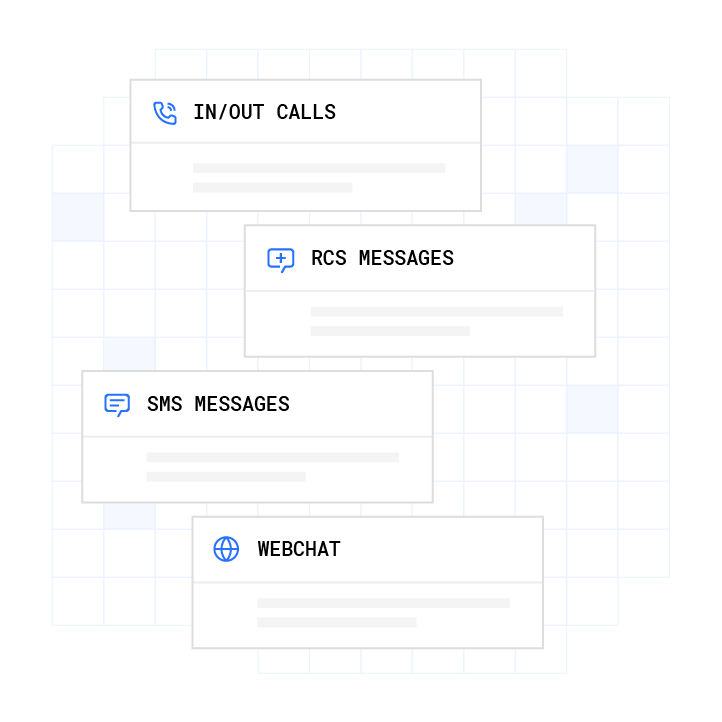
| Cross-channel memory | Stateful Conversation Database across voice, AI SMS, RCS, AI webchat | CRM-based lookup, session-scoped | Single-channel, no persistent memory |
| U.S. infrastructure | 100% U.S. by architecture | Varies, often multi-region | Inherits Twilio’s infrastructure posture |
| Deployment timeline | Days to weeks | 3 to 6 months including agent training | Developer-managed, timeline varies |
The table above reflects published positioning from each vendor category. Plura’s comparison with Five9 documents the difference between an AI-native platform built for autonomous agents and a legacy CCaaS platform with AI features layered on top.
Cost Structure of True Call-Center Automation
The cost difference between AI-agent and AI-enhanced models is structural, not incremental. Plura’s executive guide on AI communications strategy puts the annual TCO for a 100-seat traditional contact center at $4 million to $7 million. The equivalent AI-powered operation using Plura runs $300,000 to $700,000 annually.
The Plura ROI calculator makes the unit economics concrete. The default scenario models 15 human agents at $20 per hour, with 25% for taxes, benefits, and commissions, operating at 40% talk utilization. Monthly cost in that scenario is $60,000. Replacing that team with 6 Plura AI agents running at 100% talk utilization drops the monthly cost to $14,400.
That shift produces a 30-day saving of $45,600, a 12-month saving of $547,200, and a 60-month saving of $2,736,000. These numbers assume current wage levels and do not require aggressive utilization assumptions.
The 40% talk utilization figure for human agents reflects typical operations. Industry analysis shows that labor comprises 60% to 75% of cost-to-serve in North American customer support, and a large share of inbound volume consists of tier-one inquiries. AI voice agents handle tier-one inbound calls at containment rates between 45% and 60%, with customer satisfaction scores within 3 points of human-handled calls for the same intents.
For operators comparing AI-agent platforms against AI-enhanced suites on a per-conversation basis, Gartner and IBM benchmarks put the average cost of an agent-assisted contact at $13.50, versus $0.50 to $2.00 for an AI-resolved interaction.4 The cost gap compounds quickly at high volume, especially in industries with long handle times.
Use Plura’s ROI calculator to plug in your own headcount, wages, and volume and see the savings profile for your operation.
Regulatory and Infrastructure Requirements for 2026
Two regulatory forces are reshaping the call center vendor landscape in 2026 and favor operators that already use U.S.-based AI infrastructure.
The first is the FCC’s Notice of Proposed Rulemaking (NPRM), CG Docket No. 26-52.2 The Congressional Research Service’s May 2026 report on robocall and AI voice regulation describes the FCC’s active rulemaking posture, including its February 2024 declaratory ruling that AI-generated voices are classified as “artificial voices” under the Telephone Consumer Protection Act (TCPA; 47 U.S.C. § 227).2 The NPRM discusses a potential cap on offshore customer-service calls and potential restrictions on offshore handling of sensitive consumer data. Operators with offshore BPO contracts or AI tools running on foreign infrastructure should consult qualified counsel on their exposure under this rulemaking.
The second force is state-level legislation. New York’s Call Center Jobs Act includes penalties up to $10,000 per day. New Jersey, Connecticut, Missouri, and Florida have enacted or proposed parallel restrictions on offshore handling of medical, financial, and consumer data. These statutes already apply and sit alongside federal activity.
On the federal compliance side, the TCPA addresses prior express written consent for telemarketing calls using automated or artificial voice systems, with statutory damages of $500 to $1,500 per violation and no cap on class-action exposure.2 Proper caller ID authentication, lawful routing, and carrier compliance are central to avoiding blocking and enforcement actions at scale. These requirements are enforced through mechanisms such as the FCC’s Robocall Mitigation Database, which tracks mitigation practices at the carrier level.
Operators should review the Robocall Mitigation Database requirements and consult counsel on their specific consent and disclosure obligations to confirm how their current infrastructure aligns with these expectations.
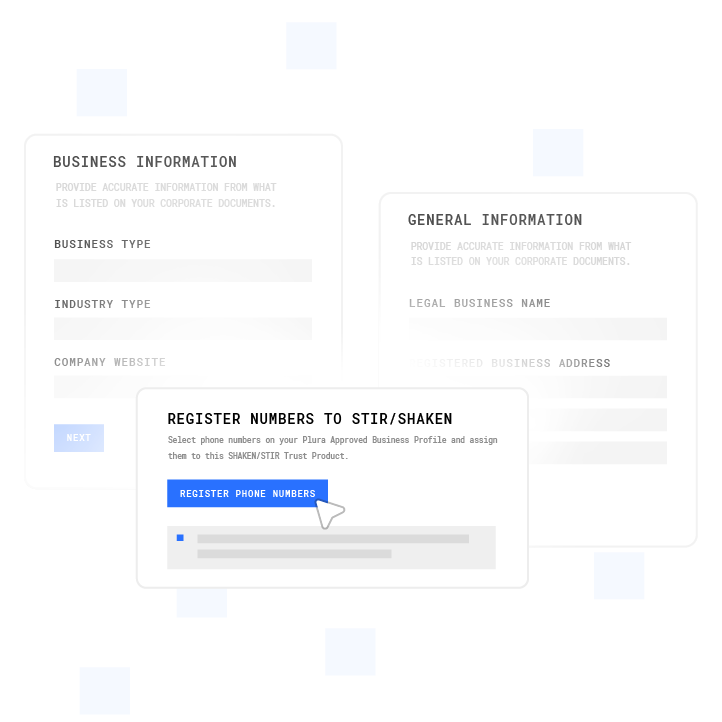
Plura runs on 100% U.S. infrastructure by architecture. Voice origination, model hosting, data storage, and call recording all sit on domestic infrastructure. Plura supports compliance with TCPA, DNC, HIPAA, SOC 2, STIR/SHAKEN caller ID verification, and 50+ state rule sets, with real-time DNC scrubbing, immutable consent logging, and automated quiet-hours enforcement on every outbound contact.1 Customers remain responsible for their own regulatory obligations and the claims they make to their end users.
Proving ROI Within 90 Days
Plura’s deployment model centers on a 90-day opt-out window in every annual contract. If the deployment does not deliver, operators are not held to the full year. The platform’s published performance benchmarks across customers are 3x average ROI in 90 days, 47% average pipeline growth, and 90% faster lead-response time than baseline.3
The speed-to-lead component drives a large share of that ROI. Contacting a lead within 5 minutes makes that lead up to 100x more likely to connect. A 60-second response lifts conversions by 391%. Plura’s AI voice agent responds in under 5 seconds across voice, AI SMS, RCS, and AI webchat, 24/7, on every channel in parallel.
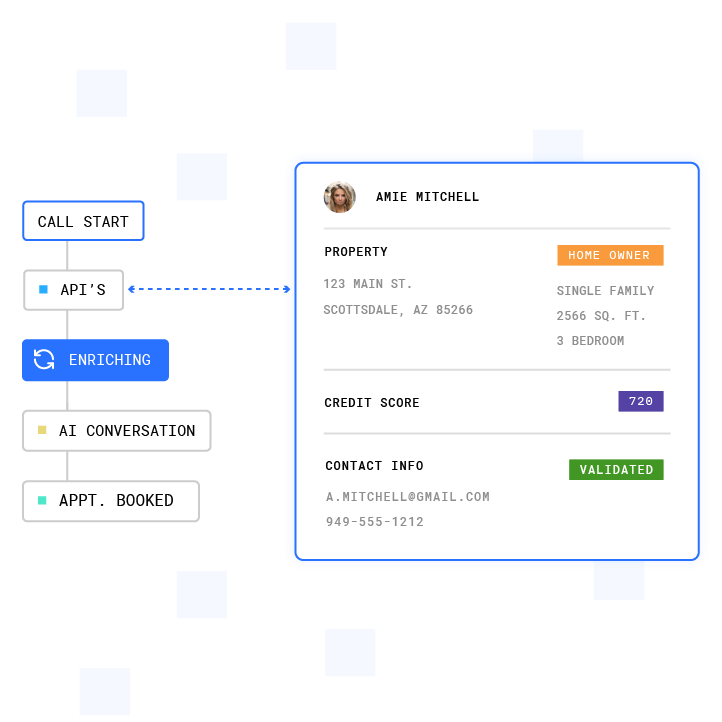
The industry standard for first contact on an inbound lead is over 47 hours, which leaves significant revenue on the table for high-intent leads.
Plura’s comparison of AI voice agents versus offshore call centers documents a representative insurance scenario. A 50-seat offshore team at approximately $1.2 million annually fully loaded is compared with Plura handling equivalent volume at $180,000 to $300,000 annually, with higher quality scores and zero turnover.
Review Plura’s plans and rates side by side to align a pricing tier with your current and projected volume.
Frequently Asked Questions
Which call center automation tools are most in demand in 2026?
Voice AI agents are the fastest-growing category in 2026, with adoption rates roughly tripling since 2024, as detailed in the market data above. Demand concentrates in two purchase types: AI-agent platforms that replace repetitive conversations entirely and AI-enhanced suites that assist human agents with summaries, routing, and scoring. High-volume operators in healthcare, insurance, financial services, and legal are driving the largest deployments because those verticals carry high per-conversation labor costs and heightened sensitivity to offshore restrictions.
What is the real cost difference between AI agents and human agents at scale?
At the unit level, Gartner and IBM benchmarks put the average cost of a human-assisted contact at $13.50, versus $0.50 to $2.00 for an AI-resolved interaction.4 At the TCO level, the cost gap is structural. Traditional 100-seat centers run in the $4 million to $7 million annual range, while equivalent AI-powered volume on Plura’s platform runs in the $300,000 to $700,000 range, as detailed in the cost analysis above.
The default 15-agent scenario in Plura’s ROI calculator, described earlier, illustrates this difference at the monthly level, with human costs running roughly four times higher than AI-agent costs for equivalent volume. The gap widens at higher volumes because AI scales without proportional headcount increases.
How does Plura AI differ from Twilio-based AI voice tools?
Most AI voice platforms are software layers built on top of Twilio or another CPaaS, which means they rent the carrier infrastructure rather than own it. Plura is its own FCC-licensed audio bridging carrier. That distinction affects three concrete areas.
First, Plura issues branded caller ID at the carrier level rather than through a reseller. Second, Plura enforces real-time DNC scrubbing and TCPA-litigator screening before each outbound contact rather than as a bolt-on. Third, Plura’s compliance posture is enforced at origination rather than downstream. Synthflow and similar platforms operate as software layers without a carrier license and inherit Twilio’s infrastructure posture.
What does the FCC NPRM mean for operators using offshore call centers or AI tools with foreign infrastructure?
The FCC’s NPRM, CG Docket No. 26-52, discusses a potential cap on offshore customer-service calls and potential restrictions on offshore handling of sensitive consumer data, including passwords, multi-factor authentication codes, Social Security numbers, and banking and card data. Companion federal legislation includes the Keep Call Centers in America Act (S.2495) and the Foreign Robocall Elimination Act (S.2666).
State laws in New York, New Jersey, Connecticut, Missouri, and Florida already address offshore handling of medical, financial, and consumer data. Operators with offshore BPO contracts or AI tools running on foreign infrastructure should consult qualified legal counsel to assess their exposure. Plura runs on 100% U.S. infrastructure by architecture, with no offshore dependencies in voice origination, model hosting, data storage, or call recording.
When does a human handoff make sense in an AI-agent deployment?
AI agents handle tier-one volume most effectively, including intake, qualification, appointment confirmation, FAQ resolution, lead follow-up, and status updates. Human handoff makes sense when a conversation reaches a defined escalation trigger, such as a high-stakes negotiation outcome, a sensitive disclosure outside the workflow’s defined paths, a complex complaint requiring judgment, or a regulatory interaction that involves a licensed professional.
Plura’s no-code workflow builder includes explicit guardrails at each node, with warm-transfer routing to a U.S. agent when a trigger fires. The AI does not improvise on outcomes that carry material risk. Sensitive data, including protected health information and payment data, is redacted at the field level and routed through HIPAA-aligned channels before any handoff occurs.
1 Plura AI maintains SOC 2, HIPAA, ISO, and GDPR posture as part of its platform infrastructure. References to compliance frameworks in this article describe Plura’s platform capabilities and do not constitute a guarantee that any customer using Plura will themselves be compliant with applicable laws or standards. Customers remain solely responsible for their own regulatory obligations, certifications, consent management, recordkeeping, and the claims they make to their own end users. Consult qualified legal counsel for guidance specific to your use case.
2 This article describes regulatory frameworks at a general level and does not constitute legal advice. Laws and regulations vary by jurisdiction, change over time, and apply differently depending on facts and circumstances. Readers should consult qualified legal counsel before making compliance decisions.
3 Performance figures, customer outcomes, and industry statistics referenced in this article are drawn from cited third-party sources or Plura customer case studies. Individual results vary based on implementation, use case, industry, audience, and execution. Past or aggregate performance is not a guarantee of future results.
4 References to third-party products, services, companies, or research are made for informational and comparative purposes only. Plura AI is not affiliated with, endorsed by, or sponsored by any third party named in this article unless explicitly stated. Trademarks and product names referenced remain the property of their respective owners.
5 This article contains forward-looking statements regarding industry trends, technology adoption, and future capabilities. These statements reflect current expectations and are subject to change. Plura AI undertakes no obligation to update forward-looking statements except as required.
This article is provided for informational purposes only and reflects Plura AI’s understanding at the time of publication. Product capabilities, integrations, and specifications are subject to change. For the most current information, visit plura.ai.
This article was produced with the assistance of AI tools and reviewed by Plura AI prior to publication.