

Written by: Matt Beucler, CEO, Plura AI | Last updated: August 27, 2026
Key Takeaways for RCS Bulk Messaging in Regulated Industries
- RCS bulk messaging at enterprise scale relies on a sequenced compliance process that covers brand verification, TCPA consent mapping, real-time DNC scrubbing, and immutable consent logging before any message is sent.
- Carrier-owned infrastructure with direct FCC licensing and branded sender identity reduces compliance gaps compared to API-reseller platforms that depend on third-party routing.
- State-level rules such as quiet-hour restrictions and consent requirements must be mapped to every campaign use case, with a California-aligned consent architecture serving as a conservative nationwide baseline.
- Integrating RCS into a stateful conversation database shared across voice, SMS, and webchat keeps opt-out suppression consistent and reduces redundant contacts across channels.
- Plura AI owns its FCC-licensed carrier stack and enforces all compliance controls before every send; book a live demo with Plura to evaluate carrier-owned RCS for your campaigns.
RCS Bulk Messaging Workflow for Regulated Operators
RCS bulk messaging in a regulated industry operates as a sequenced decision process, not a single technical step. Each stage gates the next and defines what can be sent, to whom, and when. Skipping any step can expose the operator to TCPA statutory damages of $500 to $1,500 per unsolicited message, with class action settlements that can reach millions of dollars. The seven steps below connect each operational decision to its compliance dependency.
Step 1: Complete Brand Verification and Secure a Carrier-Approved RCS Agent Profile
Before any RCS message reaches a recipient, the brand completes a multi-layered verification process. Obtaining a verified RCS sender profile for Google-managed launches typically takes 1-3 business days if brand approval and all required assets are provided promptly. The process requires business documentation, consistent branding assets such as logo, display name, and colors, clear use-case descriptions with message samples, and proof of explicit consent collection methods.
Approval occurs at the agent, brand, and campaign levels from Google and from individual carriers including AT&T, Verizon, T-Mobile, and US Cellular before any production traffic can be sent. Operators also need an approved SMS sender (10DLC, short code, or toll-free) configured as a fallback, because messages automatically revert to SMS when the recipient device does not support RCS. Once this identity and routing foundation is in place, the next gate is determining which recipients can receive each message type.
Step 2: Align Campaign Use Cases With TCPA Consent Tiers and State Quiet-Hour Rules
TCPA (47 U.S.C. § 227) treats RCS messages as calls to wireless numbers.2 Marketing messages sent via automated systems require prior express written consent as defined at 47 CFR 64.1200(f)(9), while informational messages require prior express consent. Consent captured in one channel does not automatically extend to RCS unless the consent language explicitly covers it and is properly documented.
State-level rules add additional layers that affect timing and content. Florida’s Telephone Solicitation Act restricts outreach after 8 PM. California’s Consumer Privacy Act introduces opt-in consent and data-handling requirements. The FCC’s one-to-one consent rule under the TCPA, which would have required separate prior express written consent for each seller, was vacated by the Eleventh Circuit in January 2025 and is not effective. Many operators treat a California-aligned consent architecture as a conservative baseline for nationwide programs. Consult qualified counsel to determine which requirements apply to your specific campaigns.
Step 3: Enable Real-Time DNC Scrubbing Before Every Send
Under 47 U.S.C. § 227(c) and 47 C.F.R. § 64.1200(c), National DNC Registry restrictions apply to automated text messages to wireless numbers.2 Liability is calculated per message, not per campaign. A batch of 50,000 messages sent without scrubbing against current federal and state DNC registries creates per-message exposure across the entire send.
Plura’s compliance engine runs real-time DNC scrubbing before every outbound contact. The platform blocks non-compliant numbers before the first send attempt. This enforcement occurs inside the platform at the carrier level, which keeps scrubbing as a pre-send control instead of a post-send audit.
Step 4: Use Immutable Consent Logging With Audit-Ready Exports
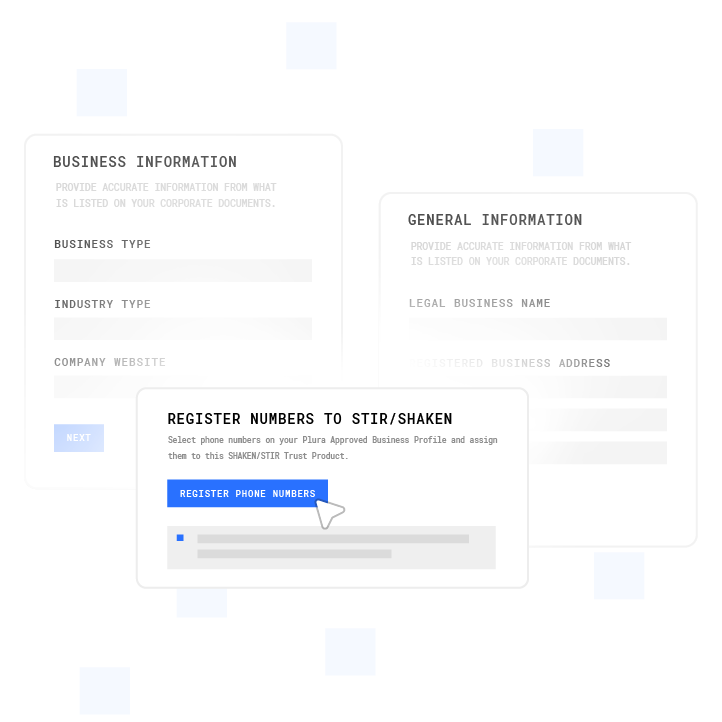
Each consent record needs six data points at minimum: timestamp, source channel, telephone number, disclosure version, data access scope, and current opt-out status. Each outbound message should query that record in real time and block the send if any field is missing, expired, or flagged as opted out.
Plura stores consent records as timestamped, immutable entries with one-click audit export for legal review, carrier requirements, or regulatory inquiries. Because these records are shared across all channels in real time, opt-out requests are honored everywhere immediately, not just in the channel where the request was received.
Step 5: Send Through a Carrier-Owned Stack With Branded Identity and Automatic SMS Fallback
Most RCS platforms act as API resellers that route traffic through third-party CPaaS providers. These platforms cannot issue branded caller ID at the carrier level, and their compliance enforcement often sits outside the core send path. A platform with direct carrier interconnects holds its own contracted connections to AT&T, Verizon, T-Mobile, and US Cellular, which reduces latency, removes intermediary handoffs, and shortens the SLA chain.4
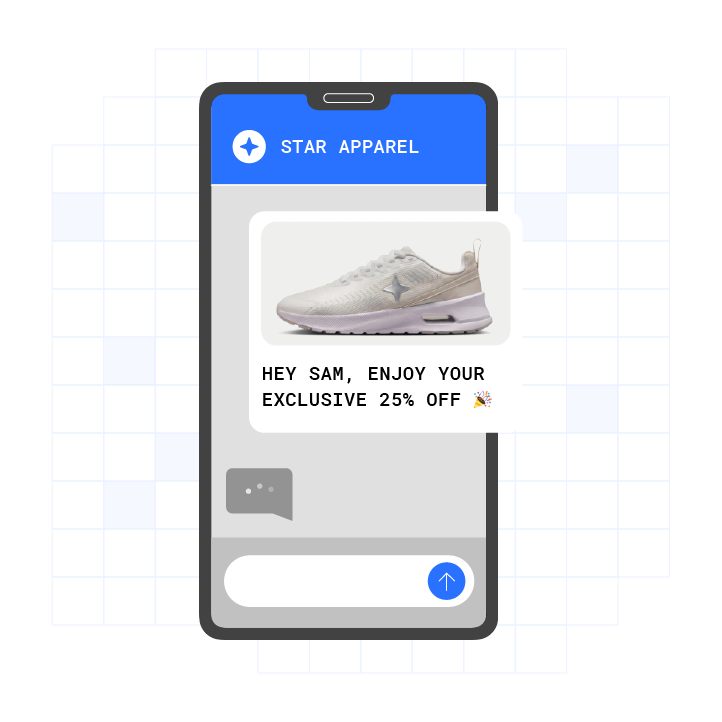
Plura is its own FCC-licensed carrier. Plura AI’s AI RCS messaging delivers branded, interactive messages with rich media, in-message documents, in-message payments, and personalized video, all inside the message thread. Automatic SMS fallback activates when the recipient device does not support RCS, which preserves reach without fragmenting the campaign.
See how Plura’s branded RCS messaging works in a live environment.
Step 6: Connect RCS to a Shared Stateful Conversation Database
Customers expect every channel to recognize their history and current status. Every channel should read from and write to the same conversation object in real time, with consent status stored in the shared record so that opt-outs suppress contacts across all channels.
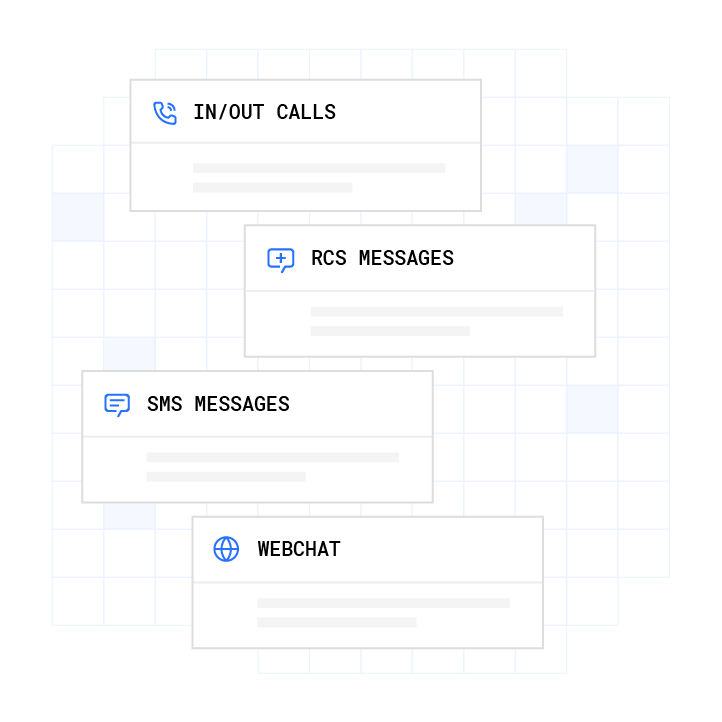
Plura’s Stateful Conversation Database keys every interaction to a customer token such as phone number, email, or ID across voice, AI SMS, RCS, and AI webchat. The AI reads and writes to this database on every conversation. Context, offers made, objections raised, and opt-out status carry across every channel by default, which sets up effective monitoring in the next step.
Step 7: Track Delivery, Engagement, and Compliance Metrics in One Dashboard
RCS can achieve strong engagement with open and read rates, click-through rates, and conversion rates that vary by vertical and use case. Monitoring these metrics alongside compliance indicators such as opt-out rates, DNC block counts, and consent record completeness in a single dashboard has become the operational standard for high-volume regulated campaigns.
Plura’s conversation intelligence layer surfaces delivery, read rates, and compliance metrics in one view, with audit-ready exports available on demand. This shared view connects the stateful database to day-to-day campaign management.
RCS vs. SMS for High-Volume Regulated Campaigns
RCS and SMS support different operational goals, and engagement benchmarks often favor RCS at scale. Rich-media RCS messages can achieve high open rates, with click-through rates 3 to 7 times higher than rich SMS.3
Industry benchmarks suggest that RCS can deliver higher link click-through rates and lower unsubscribe and block rates compared to SMS. Plura’s AI RCS messaging achieves an 80% read rate and a 35% click-through rate, with 3x higher engagement compared to SMS3, across more than 2 billion supported devices.

RCS adds interactive features that SMS cannot deliver, including rich media carousels, in-message document signing, in-message payments, and personalized video. RCS interactions increased by 349% during Cyber Week 2024 compared to 2023.3
The critical operational point is that RCS does not replace the compliance obligations that govern SMS. TCPA consent requirements, CTIA guidelines, DNC scrubbing, quiet-hour enforcement, and carrier registration all apply to RCS business messaging. RCS adds a carrier-ecosystem verification layer that raises the compliance bar compared to SMS, which creates higher barriers for non-compliant senders. Operators in healthcare, insurance, and financial services face the same TCPA, DNC, and HIPAA considerations on RCS that they manage on SMS. Consult qualified counsel regarding your specific obligations under these frameworks.
SMS still holds a reach advantage. SMS delivery rates average 97-98%, with cited open rates of 98% that measure device-level visibility rather than active reading, with near-universal device reach. RCS has substantial reach, particularly on Android devices. Automatic SMS fallback on a carrier-owned platform narrows that gap for high-volume campaigns.
Carrier-Owned Stack vs. API-Reseller Platforms for Compliance
The table below compares the two infrastructure models on the dimensions that matter most for regulated, high-volume RCS bulk messages. Every data point reflects published platform capabilities.
| Platform Type | Carrier Ownership | Real-Time DNC Before Send | Stateful Cross-Channel Memory |
|---|---|---|---|
| Carrier-owned (e.g., Plura AI RCS) | FCC-licensed, owns carrier stack, with branded sender identity issued at carrier level | Enforced inside the platform before every send, with non-compliant numbers blocked before first attempt | Single Stateful Conversation Database shared across voice, SMS, RCS, and webchat by default |
| API-reseller / CPaaS-based | Routes through intermediaries including Google’s Jibe infrastructure and carrier networks, with no direct carrier ownership | Typically a third-party add-on or customer-managed integration, not enforced at origination | Requires customer application to stitch identity across separate channel silos |
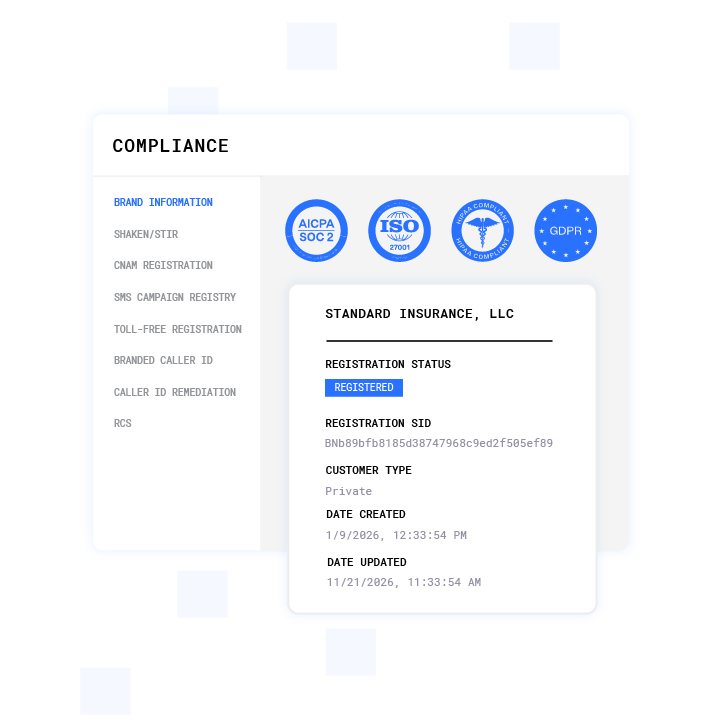
For regulated operators, the compliance gap between these two models functions as an audit exposure question rather than a simple feature comparison. Plura’s compliance framework includes SOC 2 infrastructure, TCPA and STIR/SHAKEN enforcement, and real-time DNC screening1, enforced before every send at the carrier level.
1
Compare carrier-owned vs. API-reseller platforms in a working demo.
90-Day Implementation Checklist for Compliant RCS Bulk Messages
Weeks 1 to 4: Brand Verification and Consent Architecture Audit
- Submit brand verification documentation to Google and initiate carrier review with AT&T, Verizon, T-Mobile, and US Cellular.
- Audit existing consent records and confirm that each record captures timestamp, source channel, telephone number, disclosure version, data access scope, and opt-out status.
- Map every planned campaign use case to the applicable TCPA consent tier, including prior express written consent for marketing and prior express consent for informational messaging.
- Confirm that 10DLC registration is current and that an approved SMS sender is configured for automatic fallback.
- Document state-specific quiet-hour rules for every state in the campaign footprint and configure time-zone detection accordingly.
- Engage qualified counsel to review consent language and campaign use-case classifications.
Weeks 5 to 8: Workflow Build, Real-Time Scrubbing Configuration, and Pilot
- Build campaign workflows on a no-code workflow builder with DNC scrubbing gates, opt-out suppression logic, and quiet-hour enforcement nodes.
- Configure real-time DNC scrubbing against federal and state registries and verify that non-compliant numbers are blocked before send, not flagged after.
- Integrate the RCS send layer with the stateful conversation database so opt-out status and prior interaction history are readable across voice and SMS channels.
- Run a pilot on 10,000 messages and monitor delivery rates, read rates, opt-out rates, and DNC block counts in the compliance dashboard.
- Test automatic SMS fallback for recipients without RCS-capable devices.
- Export a sample audit report and validate completeness against your legal team’s requirements.
Weeks 9 to 12: Full Rollout, Audit Export Testing, and Performance Review
- Scale to full campaign volume with real-time monitoring active across delivery, engagement, and compliance metrics.
- Run a full audit export and review the output with compliance and legal teams before the first major send.
- Review conversation intelligence data and identify which message types, send times, and interactive elements drive the highest read and click-through rates.
- Confirm that cross-channel suppression operates as a shared budget across RCS, SMS, and voice, not as independent per-channel limits.
- Schedule a 90-day performance review against baseline KPIs established during the pilot.
Run your numbers through Plura’s ROI calculator to model the cost impact of a compliant RCS rollout against your current SMS spend.
Frequently Asked Questions
How long does it take to get approved for RCS business messaging in the US?
As noted in Step 1 above, the approval process typically takes 1-3 business days when all required assets are ready. The timeline covers Google brand verification, carrier-level review at AT&T, Verizon, T-Mobile, and US Cellular, and use-case approval for each campaign type. During this period, the brand profile and intended use cases are locked and cannot be edited. Operators should initiate verification before building campaign workflows, not after. A carrier-owned platform with established carrier relationships can reduce friction in the submission and approval process compared to platforms using indirect routing.
What compliance controls are relevant before sending RCS bulk messages in healthcare or insurance?
Regulated verticals rely on the same TCPA, DNC, and HIPAA-adjacent controls on RCS that apply to SMS and voice. Every send should pass real-time DNC scrubbing against federal and state registries. Consent records need to be timestamped, immutable, and audit-ready, with opt-out status queryable in real time before each message. Quiet-hour rules apply by recipient local time, with state-specific variations in Florida, California, and other jurisdictions.
For healthcare use cases, Google’s RCS Business Messaging platform states that messages containing Protected Health Information are prohibited under its Acceptable Use Policy.2 Operators should evaluate whether their use cases require a messaging channel with default end-to-end encryption. Consult qualified counsel and your compliance team to determine which frameworks apply to your specific campaigns and data types.
How does Plura’s stateful conversation database affect RCS bulk messaging?
Plura’s Stateful Conversation Database keys every interaction to a customer token across voice, AI SMS, AI RCS, and AI webchat. When a customer receives an RCS message and later calls in, the voice agent reads the same conversation record, including what was offered, what was accepted, and current opt-out status. This cross-channel memory prevents redundant contacts, supports consistent opt-out suppression across all channels, and provides a unified audit trail for compliance review. The database functions as the shared foundation underneath every Plura channel by default, not as a separate integration layer.
What is the difference between a carrier-owned RCS platform and an API-reseller platform for compliance purposes?
A carrier-owned platform holds its own FCC license and direct contracted connections to US carriers. Compliance enforcement, including DNC scrubbing and branded sender identity, happens inside the platform at the carrier level before any message leaves the network. An API-reseller platform routes traffic through a third-party CPaaS provider. Compliance controls on reseller platforms are typically third-party add-ons or customer-managed integrations, not enforced at origination.
For regulated operators subject to TCPA, DNC, and HIPAA-adjacent requirements, this distinction affects where compliance enforcement sits in the send path and who is accountable when a scrubbing failure occurs. Plura is its own FCC-licensed carrier, and enforcement happens before every send, not as a post-send audit.
How does Plura handle HIPAA considerations for RCS messaging in healthcare?
Plura’s platform runs on 100% US infrastructure by architecture, with HIPAA-aligned encryption, access controls, and audit logging across voice, SMS, RCS, and webchat.1 Sensitive data fields, including Protected Health Information, are handled with field-level redaction and routed through HIPAA-aligned channels. Plura supports customer compliance, and customers remain responsible for their own HIPAA obligations, including determining which message content is appropriate for RCS delivery versus more restrictive channels.
Healthcare operators using Plura for appointment confirmations, patient intake, and reminder workflows can reference the platform’s HIPAA-aligned infrastructure in their compliance documentation. See Plura’s healthcare deployment patterns at plura.ai/industries/healthcare.
What engagement benchmarks should regulated operators use to evaluate RCS bulk message performance?
Industry benchmarks for RCS show strong engagement performance with open and read rates, click-through rates, and conversion rates that vary by vertical and use case. Sinch campaign data shows click-through rates 3 to 7 times higher than rich SMS.4 Plura’s AI RCS messaging reports an 80% read rate and a 35% click-through rate across its platform.
For comparison against the SMS baseline discussed earlier (97-98% delivery, 98% device-level open rates), RCS shows stronger active engagement metrics. Operators should establish baseline metrics during the pilot phase, described in weeks 5 to 8 of the implementation checklist above, before scaling to full volume. They should also monitor opt-out and DNC block rates alongside engagement metrics as leading compliance indicators.
Conclusion: Sequenced Controls for Compliant RCS at Scale
RCS bulk messaging at enterprise scale in a regulated vertical follows a seven-step compliance decision sequence, not a single technical integration. Brand verification and carrier approval gate the entire program, because without them no messages can be sent at all. Once the brand is approved, TCPA consent mapping and state quiet-hour configuration determine which numbers can be reached and when. Even with proper consent, real-time DNC scrubbing before every send separates a defensible audit posture from per-message statutory exposure.
Immutable consent logging and audit-ready exports provide the documentation layer that compliance and legal teams expect. Carrier-owned infrastructure with branded sender identity closes gaps that API-reseller platforms leave open. A stateful conversation database shared with voice and SMS prevents cross-channel context failures that generate redundant contacts and missed opt-outs. Unified compliance monitoring then ties the operational and regulatory picture together in one dashboard.
Plura owns the carrier stack, enforces these controls before each send, and stores the full conversation record across every channel. Compare plans and rates to see which tier fits your send volume and compliance requirements.
Schedule a compliance walkthrough with Plura’s team to map your specific requirements.
1 Plura AI maintains SOC 2, HIPAA, ISO, and GDPR posture as part of its platform infrastructure. References to compliance frameworks in this article describe Plura’s platform capabilities and do not constitute a guarantee that any customer using Plura will themselves be compliant with applicable laws or standards. Customers remain solely responsible for their own regulatory obligations, certifications, consent management, recordkeeping, and the claims they make to their own end users. Consult qualified legal counsel for guidance specific to your use case.
2 This article describes regulatory frameworks at a general level and does not constitute legal advice. Laws and regulations vary by jurisdiction, change over time, and apply differently depending on facts and circumstances. Readers should consult qualified legal counsel before making compliance decisions.
3 Performance figures, customer outcomes, and industry statistics referenced in this article are drawn from cited third-party sources or Plura customer case studies. Individual results vary based on implementation, use case, industry, audience, and execution. Past or aggregate performance is not a guarantee of future results.
4 References to third-party products, services, companies, or research are made for informational and comparative purposes only. Plura AI is not affiliated with, endorsed by, or sponsored by any third party named in this article unless explicitly stated. Trademarks and product names referenced remain the property of their respective owners.
This article is provided for informational purposes only and reflects Plura AI’s understanding at the time of publication. Product capabilities, integrations, and specifications are subject to change. For the most current information, visit plura.ai.
This article was produced with the assistance of AI tools and reviewed by Plura AI prior to publication.