

Written by: Matt Beucler, CEO, Plura AI | Last updated: August 27, 2026
Key Takeaways for Gateway and Voice Providers
- U.S. gateway providers must keep RMD registration active, complete annual recertification by March 1, and answer Industry Traceback Group requests within 24 hours under current FCC rules.2
- SHAKEN/STIR C-level attestation, four-year KYUP record-keeping, and 10-business-day CORES/RMD updates remain standing obligations for all voice service providers handling NANP traffic.
- Providers may not accept traffic from foreign upstream providers that are not listed in the RMD when calls use U.S. NANP caller ID, and enforcement is active.
- The Foreign Robocall Elimination Act (S.2666) has not passed the Senate as of August 2026, so proposed additions such as the $100,000 bond requirement and enhanced traceback immunity are not yet law.4
- Plura AI delivers carrier-grade voice infrastructure on 100% U.S. soil with built-in SHAKEN/STIR, DNC scrubbing, and TCPA logging, and you can talk with our team to strengthen your compliance posture.1
Current FCC Gateway Provider Obligations in Effect Today
The following ten items reflect enacted rules under the TRACED Act and subsequent FCC orders.2 Each item is in force as of August 27, 2026, and together they form the baseline compliance framework that every U.S. gateway provider must maintain to reduce enforcement risk.
- RMD Registration. All voice service providers (VSPs) interconnected with the public switched telephone network (PSTN) and furnishing voice communications using North American Numbering Plan (NANP) resources must register in the FCC Robocall Mitigation Database (RMD). The RMD is the public registry where providers certify their SHAKEN/STIR implementation status or upload a written mitigation program. Gateway providers handling foreign-originated traffic had a compliance deadline of January 11, 2023 for RMD registration.
- Annual RMD Recertification by March 1. The FCC requires all providers with current RMD filings to complete mandatory annual recertification by March 1 each year, or the next business day if March 1 falls on a weekend. Recertification verifies the accuracy of company information, mitigation programs, SHAKEN/STIR certifications, and contact details. The recertification window opens February 1.
- SHAKEN/STIR Gateway (C-Level) Attestation. SHAKEN/STIR (Secure Telephone Identity Revisited / Signature-based Handling of Asserted information using toKENs) is the caller ID authentication framework mandated under the TRACED Act. Gateway providers handling foreign-originated traffic that cannot verify the call’s origin assign a C-level (Gateway) attestation, which indicates the call entered the network at a known point. The FCC has also proposed requiring terminating providers to transmit verified caller identity information whenever an A-level attestation is indicated. That rulemaking remains pending.
- 24-Hour Industry Traceback Group Response. Providers must respond to traceback requests from the Industry Traceback Group (ITG) within 24 hours. The ITG is the FCC-designated consortium that investigates illegal robocall traffic. Timely action can influence enforcement outcomes, as shown when the FCC applied a downward adjustment to the proposed forfeiture against Voxbeam Telecommunications because the provider blocked traffic within 24 hours of the first ITG traceback request.
- KYUP Record-Keeping for Four Years. The Know-Your-Upstream-Provider (KYUP) rule requires voice service providers to take reasonable and effective steps to ensure upstream providers are not using the provider to carry a high volume of illegal traffic. Providers must retain records that support KYUP compliance for four years. The FCC’s May 2026 Further Notice of Proposed Rulemaking (FNPRM) in WC Docket No. 17-97 proposes expanding these obligations further, but those proposals are not yet final rules.
- 10-Business-Day CORES/RMD Update Requirement. All FCC Registration Number (FRN) holders must update their CORES (Commission Registration System) and RMD information within 10 business days of any change to company details, contact information, or mitigation program status.
- $10,000 Base Forfeiture for False RMD Information. The FCC has set a $10,000 base forfeiture for each submission of false or inaccurate information to the RMD. Providers that certify an incorrect operational role, as Voxbeam did by certifying it was not a gateway provider, face compounded enforcement exposure.
- $1,000 Per-Day Forfeiture for Late Updates. Under FCC 24-135 (effective February 5, 2026), failure to update RMD or CORES information within 10 business days triggers a $1,000 forfeiture per violation. Non-compliance can also result in removal from the RMD and mandatory traffic blocking by downstream carriers.
- Downstream Blocking of Unregistered Foreign Traffic. Intermediate and terminating providers must block all voice traffic from any originating or gateway provider not listed in the RMD within 30 days of the provider appearing on the FCC’s non-compliant list. Enforcement of the prohibition on accepting traffic from foreign providers not in the RMD when calls use U.S. NANP resources is in effect.
- Verification of Upstream Foreign Providers in RMD Before Accepting NANP Calls. Under 47 C.F.R. § 64.6305(g)(2), U.S. providers are barred from accepting traffic directly from a foreign provider not listed in the RMD when the calls use U.S. NANP resources in the caller ID field. Gateway providers must implement systems that automatically require RMD verification of any foreign upstream provider before traffic is accepted. The mitigation plan filed in the RMD must also describe customer vetting practices, traffic monitoring for suspicious patterns, and the provider’s traceback response process.
Compare plans operating on 100% U.S. infrastructure at Plura AI’s pricing page.
Proposed FREA Additions and Readiness Planning
Bill status as of August 2026: The Foreign Robocall Elimination Act (S.2666) has not passed the Senate. No House action has occurred, and the bill has not been enacted into law. The items below describe proposed requirements only. Readers should consult qualified legal counsel regarding their organization’s obligations under current law.
The following proposed additions are drawn from S.2666 and incorporate four amendments secured during committee consideration.
- $100,000 Bond Requirement (Proposed). S.2666 would direct the FCC to require certain voice service providers to post a bond of up to $100,000 before certifying to the RMD that they are implementing robocall mitigation measures. Any increase in revenues from forfeited bonds is projected to be insignificant. This requirement is not current law. Readiness action: review bonding capacity and surety relationships in anticipation of a potential FCC rulemaking if the bill is enacted.
- FCC-DOJ-FTC Robocall Task Force (Proposed). The bill would direct the FCC, in coordination with the FTC and DOJ, to establish a task force on unlawful robocalls that reports to Congress within 360 days of establishment on the most effective ways to combat them. Readiness action: monitor task force establishment and any resulting recommendations that may inform future rulemaking.
- Traceback Consortium Immunity (Proposed). A Thune-Markey amendment incorporated into S.2666 would grant the registered industry traceback consortium immunity from prosecution for publishing information on suspected fraudulent, abusive, or unlawful robocalls. The CBO notes this limits private entities’ rights of action for damages related to such sharing. Readiness action: no direct operational change is required, but traceback investigations may become more active if immunity is enacted.
- Enhanced Transparency Reporting on Traceback Results (Proposed). Two Markey-Lujan amendments in S.2666 would direct the robocall task force to evaluate the benefits and risks of periodically releasing traceback results to improve transparency and deterrence. Readiness action: assess internal documentation practices for traceback response records, because periodic public disclosure of traceback results could affect provider reputation.
Separately, the FCC’s May 2026 FNPRM in WC Docket No. 17-97 proposes expanded KYUP information-collection requirements, including verification of whether an upstream provider is owned by or subject to the jurisdiction of a foreign adversary. That rulemaking is also pending and not yet final.
Infrastructure Strategy for Gateway Providers
Plura AI is an FCC-licensed audio bridging carrier. Voice originates on Plura’s own domestic infrastructure, not through a third-party Communications Platform as a Service (CPaaS). That distinction has direct operational relevance for gateway providers that are evaluating their infrastructure posture under current FCC rules and proposed additions.
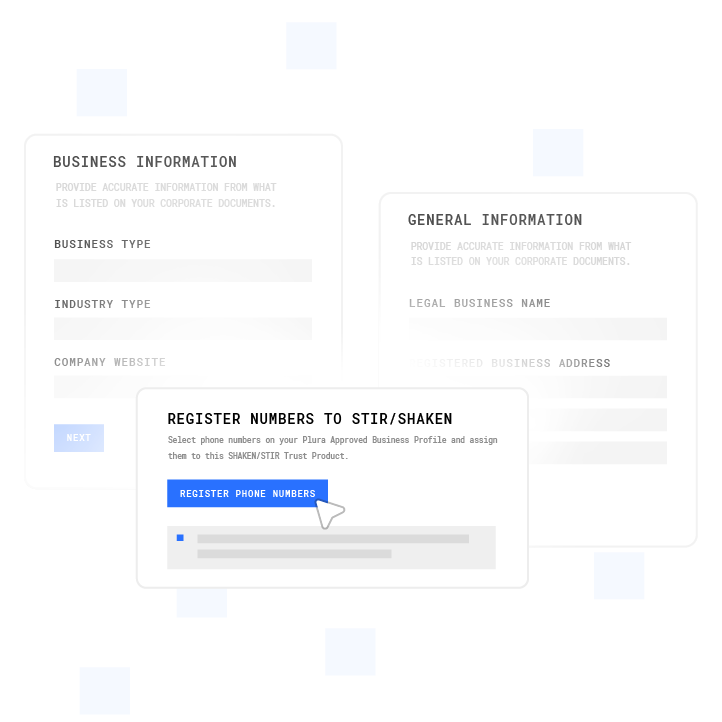
Plura’s platform runs on 100% U.S. infrastructure by architecture, which means voice origination, model hosting, data storage, and call recording all sit on domestic infrastructure without foreign routing points. This domestic-only architecture enables SHAKEN/STIR authentication to run at the carrier level on every outbound call, with branded caller ID issued directly through Plura’s FCC-licensed carrier identity rather than through a reseller. Because compliance features are built into the carrier layer rather than bolted on afterward, real-time DNC (Do Not Call) scrubbing, TCPA (Telephone Consumer Protection Act, 47 U.S.C. § 227) consent logging, and automated quiet-hours enforcement operate as first-class platform capabilities, not third-party add-ons.
For operators evaluating the FCC’s proposed foreign adversary provisions in the KYUP FNPRM, Plura’s domestic infrastructure architecture means voice traffic does not route through foreign-controlled infrastructure. Plura supports customer compliance efforts, and customers remain responsible for their own regulatory obligations and certifications.
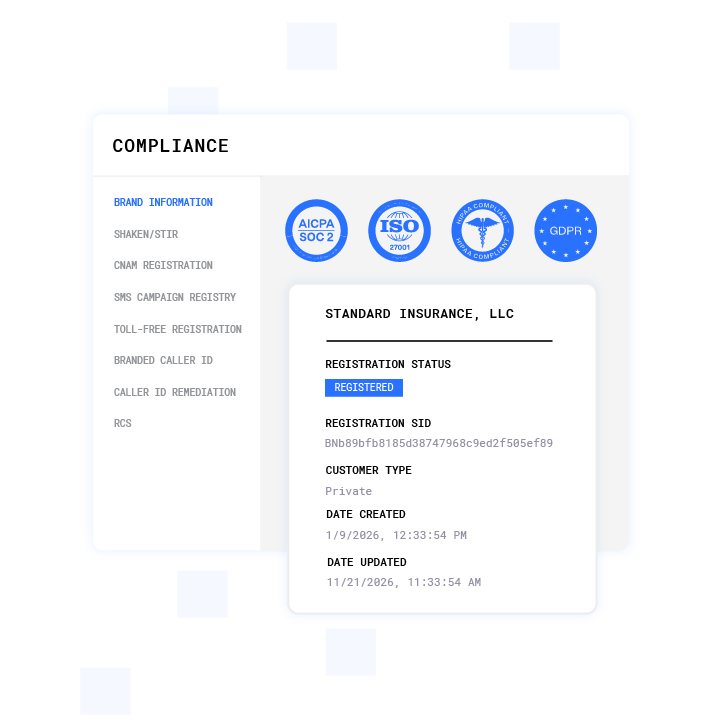
Plura’s AI Predictive Dialer and AI voice agent capabilities operate on this same carrier-grade foundation, with SOC 2, HIPAA, and ISO certification covering the underlying infrastructure.1
Review Plura’s carrier-grade pricing and compliance features.
Frequently Asked Questions
Foreign Robocall Elimination Act Legislative Status
No. As of August 27, 2026, S.2666 has not been enacted. S.2666 has not passed the Senate and awaits further consideration by the House of Representatives. No House vote has occurred, and the bill has not been presented to the President for signature. Gateway providers should continue operating under current FCC rules and consult qualified legal counsel regarding any compliance planning tied to the bill’s proposed provisions.
Consequences of Accepting Traffic from Unregistered Foreign Providers
Under 47 C.F.R. § 64.6305(g)(2), U.S. providers are prohibited from accepting traffic directly from a foreign provider not listed in the RMD when the calls use U.S. NANP resources in the caller ID field. Enforcement of this rule is in effect. In April 2026, the FCC proposed a $4.5 million forfeiture against Voxbeam Telecommunications for transmitting tens of thousands of calls from Axfone, a foreign provider never listed in the RMD.3 The FCC proposed the forfeiture amount based on calls that used U.S. NANP caller ID and reached U.S. subscribers. Providers that block traffic promptly after a traceback request may receive downward adjustments, as Voxbeam did for blocking within 24 hours. Organizations should consult qualified legal counsel regarding their specific obligations.
Impact of the Proposed $100,000 Bond Requirement
If enacted, S.2666 would direct the FCC to require certain voice service providers to post a bond of up to $100,000 before certifying to the RMD that they are implementing robocall mitigation measures. The FCC would determine the specific bond amount. The Congressional Budget Office cost estimate projects that revenues from forfeited bonds would be insignificant, and that implementation costs for the FCC, FTC, and DOJ would be negligible. Because S.2666 has not been enacted, this requirement is not in effect. If the bill becomes law, the FCC would need to issue implementing rules before the bond requirement would apply. Providers should monitor House action and any subsequent FCC rulemaking and consult qualified legal counsel for guidance on their specific situation.
Current KYUP Rule Compared with Proposed FNPRM Expansion
The current KYUP rule requires voice service providers to take reasonable and effective steps to ensure upstream originating or intermediate providers are not using the provider to carry a high volume of illegal traffic. The FCC’s May 2026 FNPRM in WC Docket No. 17-97 proposes to establish baseline KYUP information-collection, compliance review, verification, monitoring, and responsive-action requirements. The proposed rules would require providers to collect general business information, financial information, ownership and affiliate details including ultimate beneficial owners with 10 percent or more stake, operational records, and service information from upstream providers before entering new agreements, renewing existing agreements, or upon receiving adverse information.
The FNPRM also proposes that providers determine whether an upstream provider is owned by, controlled by, or subject to the jurisdiction of a foreign adversary. These proposed requirements are not yet final rules. The FCC proposes that new KYUP rules take effect the later of 12 months after Federal Register publication of a Report and Order or 30 days after OMB approval of any new information collections. Organizations should consult qualified legal counsel regarding current obligations and readiness planning for proposed additions.
Conclusion: Acting on Current Rules While Tracking What Comes Next
The distinction between current FCC obligations and proposed legislation is operationally significant for U.S. voice and gateway providers. The ten-item checklist above reflects enacted rules under the TRACED Act and subsequent FCC orders, including RMD registration and annual recertification, SHAKEN/STIR C-level attestation, 24-hour ITG traceback response, KYUP record-keeping, 10-business-day CORES/RMD update requirements, and the prohibition on accepting traffic from foreign providers not listed in the RMD. These obligations are in force now.
The proposed FREA additions described earlier remain pending legislation. The $100,000 bond concept, the FCC-DOJ-FTC robocall task force, traceback consortium immunity, and enhanced transparency reporting are not current law. Providers should monitor House action and any subsequent FCC rulemaking if the bill is enacted.
The FCC’s regulatory activity in 2026 also includes the May 2026 KYUP FNPRM, the July 2026 RMD FNPRM proposing expanded filing obligations and a one-step removal process, and the March 2026 Call Center Onshoring NPRM. Each of these rulemakings is pending and not yet final. The FCC has also proposed, in a separate rulemaking, that voice service providers implement measures so that consumers know which calls originate from outside the United States and that providers avoid spoofing of U.S. telephone numbers for calls that originate from outside the United States.
Plura operates on 100% U.S. infrastructure by architecture, with SHAKEN/STIR authentication, branded caller ID issuance, real-time DNC scrubbing, and TCPA consent logging built into the platform at the carrier level. As noted in the infrastructure discussion, customers retain responsibility for their own compliance posture.
Explore Plura’s domestic infrastructure plans and pricing.
1 Plura AI maintains SOC 2, HIPAA, ISO, and GDPR posture as part of its platform infrastructure. References to compliance frameworks in this article describe Plura’s platform capabilities and do not constitute a guarantee that any customer using Plura will themselves be compliant with applicable laws or standards. Customers remain solely responsible for their own regulatory obligations, certifications, consent management, recordkeeping, and the claims they make to their own end users. Consult qualified legal counsel for guidance specific to your use case.
2 This article describes regulatory frameworks at a general level and does not constitute legal advice. Laws and regulations vary by jurisdiction, change over time, and apply differently depending on facts and circumstances. Readers should consult qualified legal counsel before making compliance decisions.
3 References to third-party products, services, companies, or research are made for informational and comparative purposes only. Plura AI is not affiliated with, endorsed by, or sponsored by any third party named in this article unless explicitly stated. Trademarks and product names referenced remain the property of their respective owners.
4 This article contains forward-looking statements regarding industry trends, technology adoption, and future capabilities. These statements reflect current expectations and are subject to change. Plura AI undertakes no obligation to update forward-looking statements except as required.
This article is provided for informational purposes only and reflects Plura AI’s understanding at the time of publication. Product capabilities, integrations, and specifications are subject to change. For the most current information, visit plura.ai.
This article was produced with the assistance of AI tools and reviewed by Plura AI prior to publication.