
Written by: Matt Beucler, CEO, Plura AI | Last updated: August 27, 2026
Key Takeaways
- Conversational AI voice agents now handle 19% of inbound contact-center volume, making them the fastest-growing channel in 2026.3
- Production-scale deployments need sub-800 ms latency, real-time DNC/TCPA enforcement, and carrier-level STIR/SHAKEN attestation to reduce spam labeling and compliance risk.1
- Plura AI is the only FCC-licensed carrier platform in this comparison that checks compliance before the call originates and issues A-level STIR/SHAKEN caller ID under its own carrier identity.1
- Stateful cross-channel memory across voice, SMS, RCS, and webchat removes repetitive customer questions and enables seamless context handoff.
- Plura AI delivers up to $2.7 million in five-year savings versus human agents;3 start a free trial today to model your own ROI.
Executive Summary
Voice AI handled 19% of inbound contact-center volume in 2026, up from 6% in 2024, making it the fastest-growing channel in the industry. That growth has produced a crowded vendor landscape where the differences between platforms are not obvious from a demo. The criteria that matter at production scale, including latency under load, interrupt handling, real-time compliance enforcement, carrier ownership, stateful memory, CRM handoff, and total cost of ownership (TCO), rarely appear in a sales conversation.
This guide presents a seven-criteria evaluation framework for contact center leaders running 500 or more daily interactions. It includes a direct comparison of platform architectures and a 15-agent TCO scenario drawn from Plura’s ROI calculator.
High-Volume Outbound Voice: Latency, Spam Labeling, and Compliance Risk
The first criterion in evaluating AI voice platforms is performance under production load. High-volume outbound calling surfaces three failure modes that low-volume deployments rarely expose: latency degradation under concurrent load, spam labeling from carrier analytics engines, and compliance gaps when call velocity exceeds manual review capacity.
Hamming AI’s analysis of over 4 million production voice AI calls found that production deployments have a median (P50) end-to-end response latency of 1.4 to 1.7 seconds, while human conversation operates on a 200 to 400 ms turn-taking window.3 Higher latency can increase call abandonments. Every 100 ms above 800 ms can reduce call completions by 4 to 6%.3
On the compliance side, TCPA statutory damages are $500 per violation, up to $1,500 for willful or knowing conduct, with no aggregate cap.2 That structure creates per-call exposure that scales rapidly in high-volume AI dialing without documented compliance records. Real-time DNC scrubbing at call initiation is the operational standard because numbers are added to registries daily, which makes nightly batch jobs insufficient.
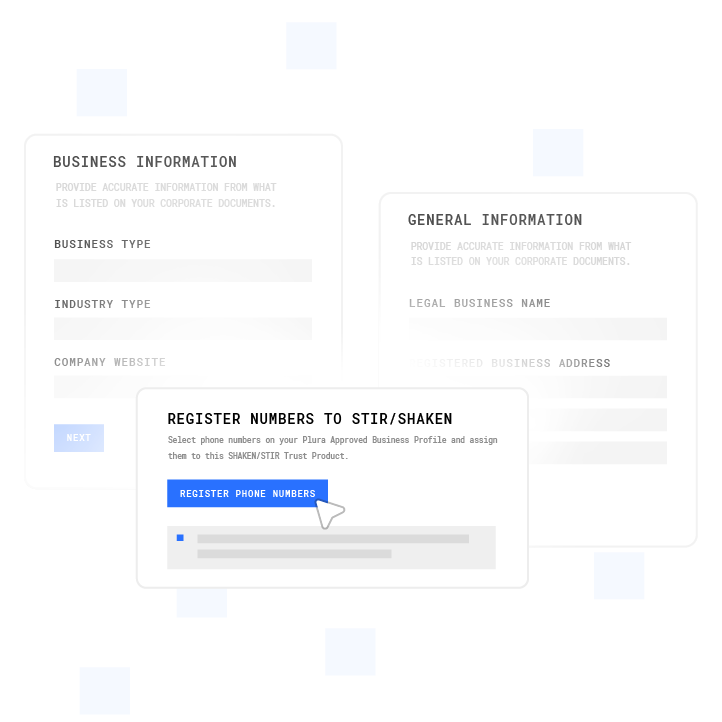
Plura AI’s AI voice agent runs on Plura’s own FCC-licensed audio bridging carrier, not a third-party CPaaS (Communications Platform as a Service). That carrier ownership enables A-level STIR/SHAKEN caller ID verification on every outbound call, branded caller ID issued at the carrier level, and real-time DNC compliance checks before dial, not as a post-processing step.
Real-Time DNC and TCPA Controls for AI Voice Agents
The FCC’s February 2024 Declaratory Ruling (FCC 24-17) confirmed that AI-generated voice calls are classified as artificial or prerecorded voice under the TCPA.2 That classification subjects them to the same consent, DNC, and calling-window rules as traditional robocalls. State-level requirements add additional layers. California requires bots to disclose their nature in certain contexts (for example, purchasing or voting decisions) as of 2026; Texas and Colorado have enacted related AI accountability laws,2 and at least 12 states have enacted mini-TCPA laws with requirements that are stricter than federal rules. Readers should review the underlying regulations or consult qualified counsel for specific guidance.
Most AI voice platforms enforce compliance as a software layer bolted onto a third-party carrier. That architecture creates a gap. The platform can check a DNC list, but it cannot enforce that check at the point of call origination. Plura’s compliance engine functions as a first-class layer of the platform. Every outbound contact is checked against federal and state DNC registries in real time before dial. Consent records are timestamped and immutable. Quiet-hours rules apply automatically through time-zone detection. The compliance dashboard exports audit-ready reports in one click.
Real-time DNC scrubbing of the National Registry and state lists at call initiation is the operational standard because numbers are added daily, which makes nightly batch jobs insufficient to avoid dialing newly registered numbers. Plura supports this check at the carrier level, before the call leaves the network.
PolyAI, Retell, and Plura: Architectural Differences That Matter
PolyAI, Retell, and Plura represent distinct architectural categories, and those differences matter at production scale.4
PolyAI is purpose-built for enterprise inbound contact center replacement, with domain-specific pre-training on large datasets of real contact center conversations. It targets high containment rates on structured inbound flows and integrates with CCaaS systems like Avaya and Genesys. PolyAI does not operate as an FCC-licensed carrier and does not own the carrier stack.
Retell AI is a developer-focused platform that offers a no-code visual builder alongside full API access, with support for HIPAA, SOC 2, and PCI compliance, but no native QA, analytics, workforce management, or agent coaching tools.1 Retell does not own carrier infrastructure and does not issue branded caller ID at the carrier level.
Plura operates as its own FCC-licensed audio bridging carrier, so voice originates on Plura’s domestic infrastructure, not a third-party CPaaS. This architectural difference produces three operational advantages that neither PolyAI nor Retell can replicate: branded caller ID issued under Plura’s own carrier identity, A-level STIR/SHAKEN caller ID verification on every outbound call, and compliance enforcement at the point of origination. Together, these capabilities address the spam labeling and compliance gaps that affect high-volume outbound operations. Plura also supports outbound at scale through its AI Predictive Dialer, which neither PolyAI nor Retell offers natively. All four channels (voice, AI SMS, RCS, and AI webchat) share a single Stateful Conversation Database, so context from a morning SMS thread carries into an afternoon voice call without the customer repeating themselves.
Seven-Criteria Framework for Evaluating AI Voice Platforms
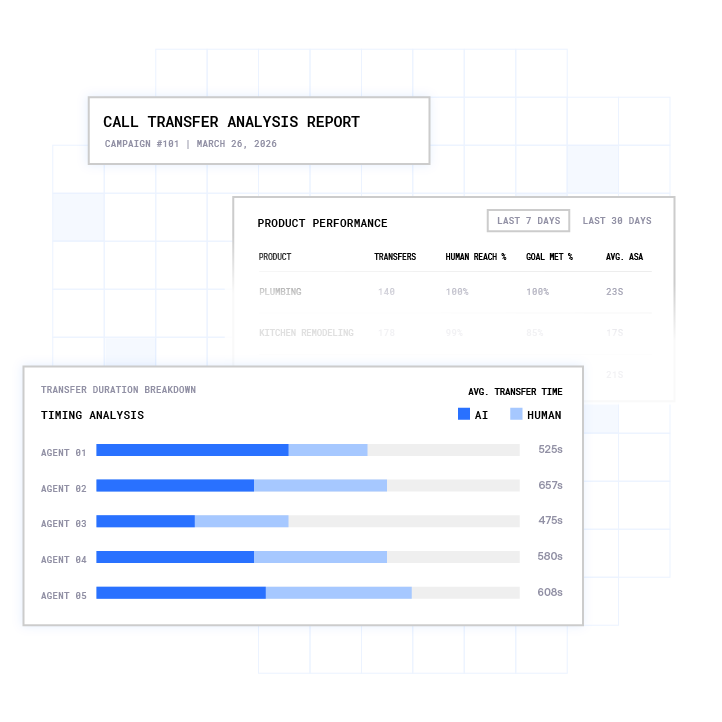
- Latency Under Load. End-to-end response latency is the single most important technical variable for voice AI at scale. As noted earlier, latency above 800 ms causes callers to speak over the agent or hang up. Evaluate vendors on p95 and p99 latency under 2x expected peak concurrency, not median latency in a demo environment. Plura targets sub-800 ms end-to-end on its own carrier infrastructure, which removes intermediary carrier hops that add 400 to 600 ms of latency before audio reaches the AI stack in reseller architectures.
- Interrupt Handling. Barge-in correctness determines whether a voice agent sounds like a conversation or a phone tree. Production-grade voice agents handle barge-ins by streaming speech while simultaneously listening, stopping playback within a fraction of a second when the caller interrupts, and processing the interruption as input while preserving dialogue state. Evaluate vendors on false positive rate, which reflects stopping on background noise, and false negative rate, which reflects missing genuine interruptions. Rising interruption and repair rates per intent in production monitoring signal degrading prompt or recognition performance.
- CRM Handoff. A voice agent that cannot write to a CRM during the call creates a data gap that human agents later need to fill. Plura supports real-time data writes to HubSpot, Salesforce, Zoho, and more than 50 additional tools through its integrations directory. Evaluate vendors on whether CRM writes happen during the call or in a post-call batch job, and whether warm transfers carry full conversation context to the receiving agent.
- Compliance Engine. Compliance enforcement must happen before the call originates, not as a software check after the carrier has already dialed. TCPA compliance infrastructure should provide call logging of every attempt with timestamp, number, duration, disposition, and campaign, retained for the four-year federal statute of limitations. Plura’s compliance engine supports DNC and TCPA controls at the carrier level, with immutable consent records and automated quiet-hours enforcement by time-zone detection. As discussed earlier, nightly batch jobs cannot keep pace with daily DNC registry updates. Operators should consult qualified counsel regarding their specific regulatory obligations.
- Carrier Control. Carrier control separates Plura from every other platform in this comparison. Carrier ownership and attestation quality directly influence downstream termination and pickup performance for outbound AI voice calls in U.S. call centers, independent of AI model quality. Platforms that provision numbers through bundled PSTN layers such as Twilio Programmable Voice frequently receive only B-level attestation even when the organization legitimately owns the numbers. Calls without A-level STIR/SHAKEN attestation are more likely to be flagged, labeled as spam, or blocked, which reduces answer rates and campaign performance. Plura issues branded caller ID directly through its FCC-licensed carrier and runs STIR/SHAKEN caller ID verification on every outbound call.
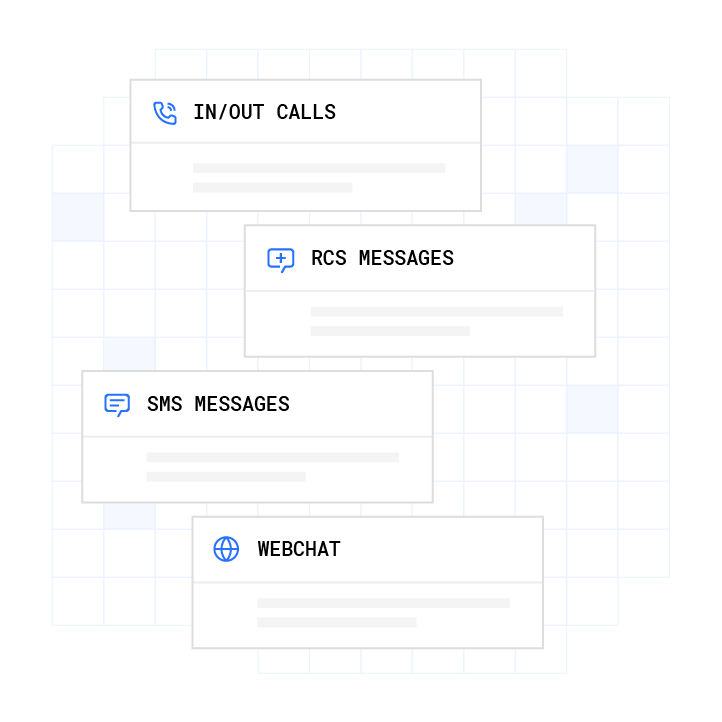
- Stateful Cross-Channel Memory. Most AI voice platforms are stateless within a single call and have no memory of prior SMS, webchat, or RCS interactions. Plura uses stateful AI architecture that remembers previous interactions, preferences, and outcomes across channels for better personalization and follow-ups. Every interaction across voice, SMS, RCS, and webchat is keyed to a customer token and persisted in one Stateful Conversation Database. A customer who texted at 9 a.m. is the same customer when the call comes at noon. Evaluate vendors on whether cross-channel memory is native or requires custom integration.
- Total Cost of Ownership. Per-minute pricing comparisons hide the real TCO difference between platforms. The relevant comparison includes agent build fees, ongoing iteration costs, compliance infrastructure, carrier fees, and the cost of human agents displaced. For a 100-seat contact center, traditional operations cost $4 million to $7 million annually, while AI-powered communications using platforms like Plura cost $300,000 to $700,000. Run your specific numbers through Plura’s ROI calculator to model the 30-day, 12-month, and 60-month savings for your operation.
Platform Comparison Snapshot
The table below compares four platforms across four criteria relevant to high-volume regulated outbound call centers. Every data point is cited inline. Values that cannot be compared on a shared unit are described in prose above.
| Platform | Carrier-Owned? | Real-Time DNC Enforcement | Cross-Channel Stateful Memory |
|---|---|---|---|
| Plura AI | Yes – FCC-licensed audio bridging carrier | Yes – enforced at carrier level before dial | Yes – voice, SMS, RCS, webchat share one Stateful Conversation Database |
| PolyAI | No – does not operate as an FCC-licensed carrier | Not documented as a carrier-level enforcement layer | Inbound-focused; cross-channel stateful memory not documented as a native capability |
| Retell AI | No – developer-focused API platform without owned carrier infrastructure | Not documented as a carrier-level enforcement layer | Not documented as a native cross-channel capability |
| Vapi | No – lacks owned telephony; priced with a $0.05/min platform fee plus higher realistic all-in costs4 | Not documented as a carrier-level enforcement layer; HIPAA available only as a $1,000/month add-on | Not documented as a native cross-channel capability |
Total Cost of Ownership for a 15-Agent Operation
The default scenario on Plura’s ROI calculator uses a 15-agent operation paying $20 per hour with standard taxes, benefits, and commissions, and a 40% talk-utilization rate typical of human contact-center work.
- Human agent cost: $60,000 per month (15 agents x $20/hour x 25% taxes/benefits/commission x 40% talk utilization)3
- Plura agent cost: $14,400 per month at $15/hour, 100% talk utilization, 6 Plura agents replacing 15 humans
- 30-day savings: $45,600
- 12-month savings: $547,200
- 60-month savings: $2,736,0003
The gap widens at higher volumes. For a 100-seat equivalent operation, Plura’s TCO of $300,000 to $700,000 annually replaces the $4 million to $7 million traditional contact-center cost structure. That difference reflects 100% talk utilization versus the 40% industry average for human agents, zero taxes and benefits overhead, no rehiring cycle, and no 2 to 4-week training ramp on each new hire.
For context, Gartner’s customer service benchmarks published February 2024 put the median cost per contact at $13.50 for assisted channels.4 Plura’s AI voice agents cost $0.35 to $0.85 per completed conversation including intelligence, a reduction that compounds across millions of annual contacts.
Frequently Asked Questions
How Plura Differs from Other AI Voice Agent Platforms
Plura operates as its own FCC-licensed audio bridging carrier. Most AI voice platforms are API resellers that route calls through a third-party CPaaS like Twilio. That architecture means they cannot issue branded caller ID under their own carrier identity, cannot achieve A-level STIR/SHAKEN caller ID verification without inheriting a shared number pool’s reputation, and cannot enforce DNC or TCPA controls before the call leaves the network. Plura supports compliance at the point of origination. Additionally, all four of Plura’s channels (voice, SMS, RCS, and webchat) share a single Stateful Conversation Database, so conversation context carries across channels without custom integration. No other platform in this comparison combines FCC carrier ownership with native cross-channel stateful memory and a built-in AI Predictive Dialer for outbound operations.
Real-Time DNC and TCPA Controls in High-Volume Outbound
In a high-volume outbound environment, compliance enforcement must happen before the call originates, not as a software check after the carrier has already dialed. Plura’s compliance engine checks every outbound contact against federal and state DNC registries in real time before dial. Non-compliant numbers are blocked before the first attempt. Consent records are timestamped and immutable. Quiet-hours rules apply automatically through time-zone detection on the contact, using state and federal calling-window restrictions for every campaign. The compliance dashboard exports audit-ready reports in one click. Operators are responsible for their own regulatory obligations and should consult qualified counsel regarding their specific compliance posture.
Why Carrier Ownership Influences Pickup Rates
Carrier analytics engines operated by major wireless networks score every outbound number in real time before the first ring. A call labeled as spam causes answer rates to drop significantly. The signals these systems evaluate include outbound volume spikes, low answer rates, absence of inbound call history, short call durations, and repeated synthetic audio fingerprints. STIR/SHAKEN attestation level is also weighted. A-level attestation requires the originating carrier to verify caller identity and confirm ownership of the displayed number. Platforms that provision numbers through bundled PSTN layers frequently receive only B-level attestation, which increases spam labeling risk. Plura issues branded caller ID directly through its FCC-licensed carrier and runs STIR/SHAKEN caller ID verification on every outbound call, which supports stronger attestation than reseller architectures can typically achieve.
Stateful Cross-Channel Memory in Daily Operations
Stateful cross-channel memory means that every interaction a customer has with your operation, whether by voice, SMS, RCS, or webchat, is stored in a single database keyed to that customer’s identity. When a customer texts at 9 a.m. and calls at noon, the AI voice agent already knows what was discussed, what was offered, and what remains unresolved. Most AI voice platforms are stateless within a single call and have no awareness of prior interactions on other channels. That gap forces customers to repeat themselves and prevents the AI from using prior context to personalize the conversation or anchor a negotiation. Plura’s Stateful Conversation Database functions as the data layer underneath every channel, so context is native, not a custom integration project.
Deployment Timelines for High-Volume Call Centers
Deployment timelines depend on conversation complexity. A straightforward inbound qualification flow typically goes live in days. A complex multi-step intake, such as a 25-question health-history survey with branching logic, runs closer to one to two months because the workflow logic requires design and validation. Plura’s onboarding sequence includes a discovery audit, intake of sample calls and existing scripts, an overnight build of a conversation mockup, a review session, engineering build of the production workflow, a pilot test on a subset of real calls, and full go-live. All annual contracts include a 90-day opt-out window. Compare plans and deployment timelines at plura.ai/pricing.
Conclusion: Carrier Control and Stateful Memory as Differentiators
The seven criteria in this framework, latency under load, interrupt handling, CRM handoff, compliance engine, carrier control, stateful memory, and TCO, separate production-grade conversational AI voice agents from demo-ready tools that degrade at scale. Carrier ownership is the criterion that most vendors cannot meet. It requires an FCC license, direct number provisioning, and compliance enforcement at the point of origination. Plura is the only platform in this comparison that combines FCC carrier ownership with real-time DNC and TCPA controls, native cross-channel stateful memory, and a 15-agent TCO that delivers immediate six-figure annual savings against a traditional human agent model.
Cost-focused operators can run their specific headcount and hourly rate through Plura’s ROI calculator to model 12-month and 60-month savings.
Capability-focused operators can compare platform tiers, channel support, and compliance features at plura.ai/pricing.
Book a live demo with Plura and see the carrier-owned compliance stack running on a live call.
1 Plura AI maintains SOC 2, HIPAA, ISO, and GDPR posture as part of its platform infrastructure. References to compliance frameworks in this article describe Plura’s platform capabilities and do not constitute a guarantee that any customer using Plura will themselves be compliant with applicable laws or standards. Customers remain solely responsible for their own regulatory obligations, certifications, consent management, recordkeeping, and the claims they make to their own end users. Consult qualified legal counsel for guidance specific to your use case.
2 This article describes regulatory frameworks at a general level and does not constitute legal advice. Laws and regulations vary by jurisdiction, change over time, and apply differently depending on facts and circumstances. Readers should consult qualified legal counsel before making compliance decisions.
3 Performance figures, customer outcomes, and industry statistics referenced in this article are drawn from cited third-party sources or Plura customer case studies. Individual results vary based on implementation, use case, industry, audience, and execution. Past or aggregate performance is not a guarantee of future results.
4 References to third-party products, services, companies, or research are made for informational and comparative purposes only. Plura AI is not affiliated with, endorsed by, or sponsored by any third party named in this article unless explicitly stated. Trademarks and product names referenced remain the property of their respective owners.
This article is provided for informational purposes only and reflects Plura AI’s understanding at the time of publication. Product capabilities, integrations, and specifications are subject to change. For the most current information, visit plura.ai.
This article was produced with the assistance of AI tools and reviewed by Plura AI prior to publication.