

Written by: Matt Beucler, CEO, Plura AI
Updated May 2026
Key Takeaways for CX and Revenue Leaders
-
Conversational AI for websites replaces static forms by qualifying leads, answering questions, and booking meetings in real time using natural language understanding.
-
Most tools fall short for regulated industries because they rely on third-party CPaaS providers and cannot enforce carrier-level compliance or maintain cross-channel memory.
-
Enterprise-grade platforms need real-time DNC scrubbing, TCPA controls, stateful memory across voice, SMS, and webchat, and 100% U.S. infrastructure to support 2026 regulatory expectations.
-
Plura AI stands out by owning its FCC-licensed carrier, providing HIPAA-aligned and SOC 2 controls, and preserving conversation context across all channels without resets.1
-
Leaders ready to replace manual SDR queues and offshore BPO contracts can get started with Plura Webchat today and see measurable ROI within 30 days.
How Website Conversational AI Works in Practice
Conversational AI for website is software that runs structured, goal-directed dialogue with site visitors in real time. It uses natural language understanding to qualify leads, answer product questions, collect intake data, and route contacts to the right next step. A modern conversational AI agent reads the page context the visitor arrived from, enriches the lead with live data, and adapts the conversation based on what the visitor says.
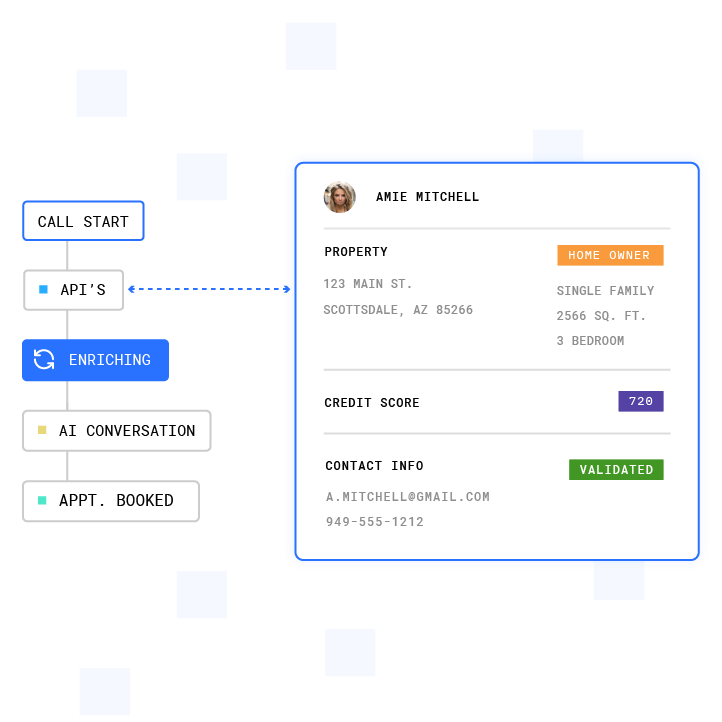
The output is a qualified contact record, a booked meeting, or a warm transfer to a human agent. This happens in the time it takes a visitor to read a short paragraph, not over hours of back-and-forth email.
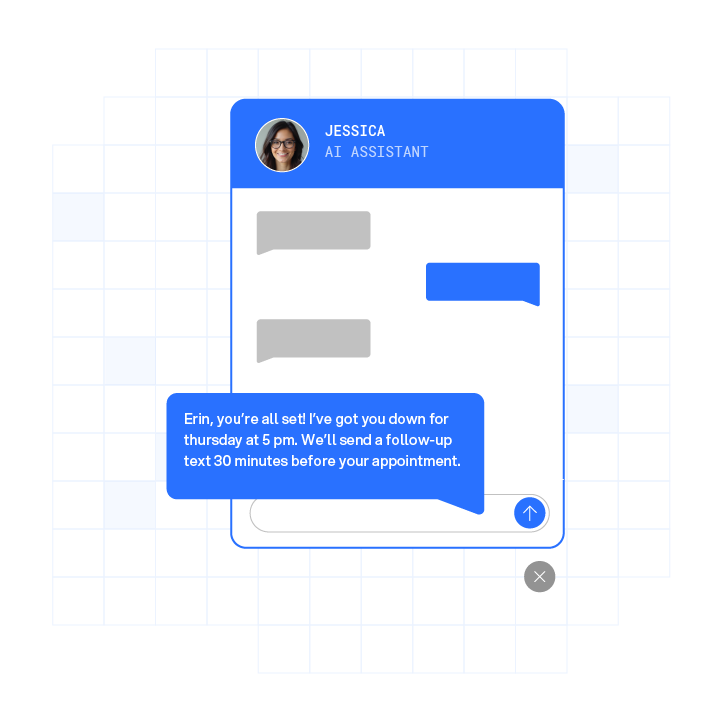
Deployment in a regulated, high-volume environment follows a clear sequence.
-
Define scope and success metrics. Identify the single highest-volume use case, such as inbound lead qualification or appointment booking. Set measurable targets for containment rate, cost per qualified lead, and response time before configuration starts.
-
Audit and prepare data. Clean the product catalog, knowledge base, or intake scripts the AI will reference. Remove duplicate entries, fix outdated pricing, and fill missing fields, because bad source data degrades accuracy from day one.
-
Select a platform with carrier-grade compliance infrastructure. Evaluate whether the vendor owns its telecom carrier, enforces real-time DNC scrubbing, and maintains SOC 2 and HIPAA-aligned controls natively, not through a third-party bolt-on.1
-
Map conversation flows and guardrails. Design the dialogue logic, escalation triggers, sensitive-data redaction rules, and human handoff paths before building. Guardrails define what the AI can and cannot do and are mandatory in regulated verticals. These guardrails also clarify which backend integrations you need next.
-
Integrate with backend systems. Connect the AI to your CRM, calendar, and compliance registries via API so it can read verified customer records, book appointments, and check DNC status in real time during the conversation. With flows and integrations in place, you can test the system in a controlled environment.
-
Pilot on webchat before expanding channels. Launch on the website first and monitor resolution rate, CSAT, and escalation patterns for two to four weeks. Use those results to extend to voice, SMS, and RCS using the same stateful memory layer.
-
Iterate continuously. Treat every human escalation as a training signal. Review conversation transcripts weekly, close capability gaps, and retune prompts against actual outcomes rather than demo scenarios.
See your projected savings and revenue lift in Plura’s ROI calculator.
Why Most Tools Fall Short for Regulated High-Volume Operators
Many CX leaders plan to increase AI investments in the next year, yet most enterprises have piloted chatbots but fewer report measurable improvements in support operations. The gap between pilot and production performance traces back to a structural problem. Most conversational AI tools are API resellers built on top of third-party CPaaS providers like Twilio.4
These vendors do not own the carrier, cannot issue branded caller ID at the carrier level, and cannot enforce real-time DNC scrubbing before a call originates. Compliance sits as a bolt-on after the fact, which means the operator absorbs the liability.
For high-volume operators in healthcare, insurance, financial services, and legal, that liability is material. TCPA violations can cost $500 to $1,500 per text or call.2 A platform that cannot enforce quiet-hours rules automatically, cannot produce an immutable consent ledger on demand, and cannot block TCPA-litigator numbers in real time does not function as a compliance tool. It functions as a liability generator with a chat interface.
Memory creates the second failure mode. NICE identifies fragmented data across CRMs, ticketing tools, and billing systems as a primary blocker to scaling agentic AI. Most platforms compound this by running voice and SMS as separate products with separate memories. A customer who texted at 9 a.m. has to re-explain themselves when the call comes at noon. That reset hurts experience and conversion and drains pipeline.
Compliance Expectations for Website Conversational AI in 2026
The compliance landscape for conversational AI on websites has expanded materially in 2026. Operators evaluating platforms should consult qualified counsel on their specific obligations. The regulatory surface now includes several areas that directly affect platform selection.
State chatbot disclosure laws now cover multiple jurisdictions.2 California SB 243, effective January 1, 2026, describes disclosure of non-human status, mental health crisis protocols, and special protections for minors for companion chatbots. New York S-3008C addresses disclosure of AI interaction for companion chatbots. More than 35 states had active AI legislation as of March 2026, covering topics such as training-data transparency, chatbot safety, and AI in healthcare decisions. Operators often adopt the most stringent applicable state requirements as a practical floor and then consult counsel on jurisdiction-specific obligations.
For outbound contact, TCPA and DNC enforcement remain primary exposure vectors. Platforms that enforce real-time DNC scrubbing before each dial, maintain timestamped and immutable consent records, and apply quiet-hours rules automatically through time-zone detection can reduce operational exposure. Plura’s compliance engine applies these controls as a first-class layer of the platform, not a third-party add-on. Customers are responsible for their own regulatory obligations; Plura provides infrastructure that supports compliance operations.
The FCC NPRM (CG Docket No. 26-52) proposes capping offshore customer-service calls and describing limits on offshore handling of sensitive consumer data. Every operator with offshore vendor contracts or AI tools running on foreign infrastructure should review that exposure with counsel. Plura runs on 100% U.S. infrastructure by architecture. Voice origination, model hosting, data storage, and call recording all sit on domestic infrastructure.
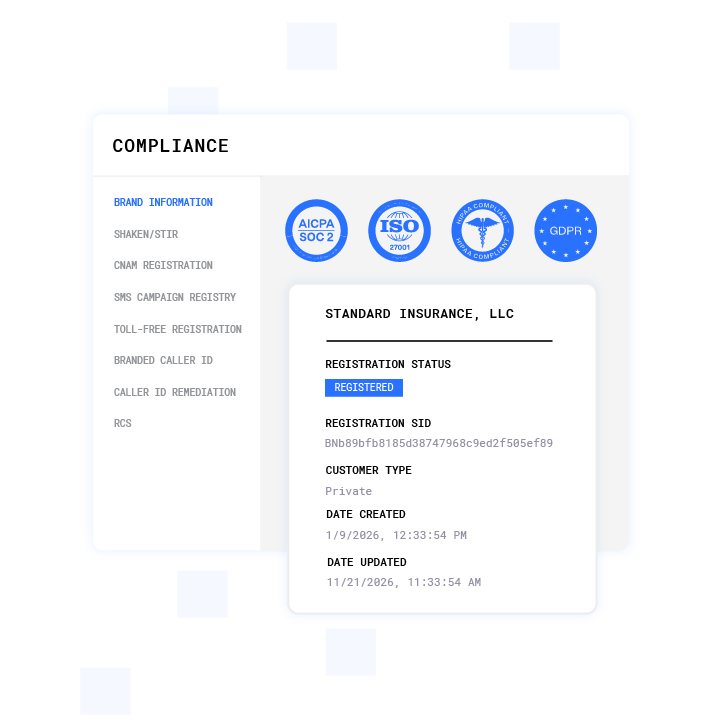
Evaluation criteria for platform selection in regulated environments include carrier ownership, real-time DNC scrubbing at the carrier level, stateful memory across voice, SMS, RCS, and webchat, and 100% U.S. infrastructure. They also include SOC 2 Type II certification, HIPAA-aligned controls, ISO certification, GDPR coverage, SHAKEN/STIR caller-ID authentication, and TCPA and DNC compliance infrastructure. Plura supports customer compliance across these dimensions, while customers remain responsible for their own certifications and downstream obligations.
Review Plura pricing and plan options side by side.
Best Conversational AI for Website 2026: Platform Tiers
Evaluated against the enterprise criteria above, platforms in this category fall into three tiers.
General-purpose chatbot tools such as those from ChatBot.com and Tidio are built for consumer-grade FAQ deflection.4 They do not own telecom infrastructure, do not enforce real-time DNC scrubbing, and do not maintain stateful memory across voice and SMS.
Developer-first API platforms such as Vapi route voice through third-party CPaaS providers.4 They offer usage-based pricing and strong developer documentation. The operator, however, must build compliance infrastructure, conversation memory, and carrier-level controls from scratch. Plura’s stateful AI architecture remembers previous interactions, preferences, and outcomes across channels. Vapi’s stateless, API-led approach does not provide this by default.
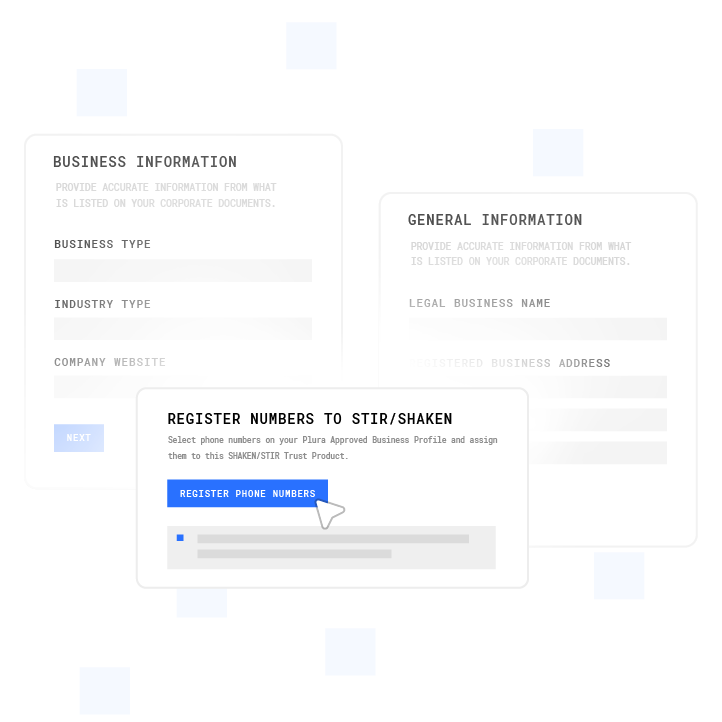
Plura AI is built on its own FCC-licensed audio bridging carrier. Voice does not route through Twilio or another CPaaS. Branded caller ID is issued at the carrier level. Real-time DNC scrubbing, TCPA-litigator list filtering, and SHAKEN/STIR authentication run on every outbound contact. Plura provides HIPAA-aligned controls, SOC 2 controls, and real-time DNC scrubbing with TCPA-litigator list filtering. The AI Webchat, AI Voice, AI SMS, and AI RCS channels all share a single Stateful Conversation Database, so context carries forward across every touchpoint without re-explanation from the customer.
Why Multi-Channel Stateful Memory Drives Conversions
Most operators run webchat, voice, and SMS as separate tools from separate vendors with separate memories. The result is a customer experience that feels episodic rather than continuous and a sales process that loses context at every channel transition. A 2026 arXiv paper on State-Adaptive Memory for long-horizon AI agents shows that effective memory must be compact and retrievable on demand via intent-driven recall. Simple recency or long chat histories do not solve this.
The same principle applies to cross-channel enterprise deployments. Memory that cannot be retrieved in context at the moment of the next interaction does not convert.
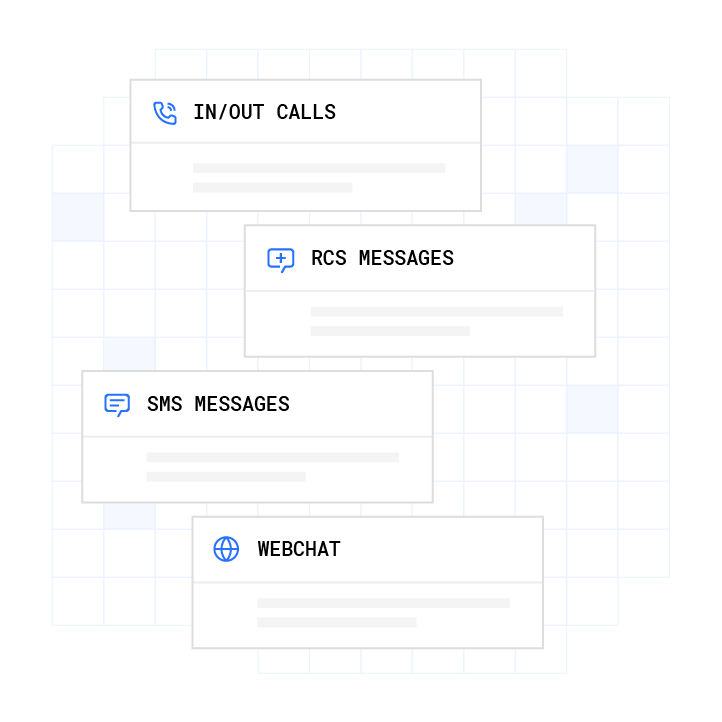
Plura’s Stateful Conversation Database keys every interaction to a customer token, such as a phone number, email address, or ID. When a visitor starts a webchat session on the website, that conversation feeds the same database used by AI Voice, AI SMS, and AI RCS. If the visitor books a call, the voice agent already knows what was discussed, what offers were made, and what objections were raised.
Model your cost reduction and conversion lift with Plura’s ROI calculator.
Conversational AI Use Cases in Regulated Industries
In healthcare, conversational AI handles appointment confirmations, patient intake, prescription reminders, and eligibility surveys. Plura’s healthcare deployments support up to a 40% improvement in no-shows.3 with HIPAA-aligned encryption, sensitive-data redaction, and audit-ready logging applied across every channel. Operators should consult counsel on their specific HIPAA obligations; Plura provides infrastructure that supports those operations.
In insurance, sub-5-second response on inbound quote requests is a direct revenue driver. the first responder closes 78% of deals in insurance markets.3 Plura’s AI handles qualification and warm transfers to a licensed agent for the bind, with full conversation context preserved across the handoff.
In financial services, sensitive data such as account numbers and card data often must remain on domestic infrastructure under the FCC NPRM and applicable state rules. Plura’s 100% U.S. infrastructure by architecture addresses that exposure at the platform level.
In legal, mass-tort and personal-injury intake requires structured qualification, PII capture with field-level redaction, and routing of valid cases to U.S. counsel. Plura’s AI conducts the intake interview across webchat and voice with the same stateful memory layer. A claimant who starts on the website and calls back the next day does not repeat the intake from scratch.
7-Step Implementation Checklist for CX and Revenue Teams
-
Audit current lead-response time and contact rate. Establish a baseline for speed-to-lead, talk utilization, and cost per qualified contact before selecting a platform. A 60-second response lifts conversions by 391% (industry research published in Plura’s ROI calculator).3 The gap between your current baseline and that benchmark becomes your ROI floor.
-
Map compliance obligations by channel and jurisdiction. Identify which state chatbot disclosure laws, TCPA consent expectations, DNC registry obligations, and data-residency rules apply to your operation. Engage qualified counsel before platform selection, not after.
-
Evaluate carrier ownership, not just feature lists. Confirm whether the vendor holds its own FCC license or routes through a CPaaS. Carrier ownership determines whether branded caller ID, real-time DNC scrubbing, and SHAKEN/STIR authentication are enforced at origination or bolted on downstream.
-
Verify stateful memory architecture across all channels. Ask vendors to demonstrate that a webchat conversation and a subsequent voice call share the same customer record in real time. If the answer requires a CRM integration to bridge the gap, the memory is not stateful by design.
-
Confirm U.S. infrastructure for regulated data. For healthcare, financial services, and legal operators, confirm that voice origination, model hosting, data storage, and call recording all sit on domestic infrastructure. Review the FCC NPRM (CG Docket No. 26-52) exposure with counsel if any vendor dependency touches foreign infrastructure.
-
Pilot on webchat with one bounded use case. Deploy the AI on the website for a single high-volume intent, such as inbound lead qualification or appointment booking. Monitor containment rate, escalation rate, and CSAT for two to four weeks before expanding to voice and SMS.
-
Build a continuous iteration loop, not a one-time launch. Review conversation transcripts weekly. Treat escalations as training signals. Retune prompts against actual conversion outcomes. Vendors that hand off the keys at launch and disappear tend to produce conversion rates that flatten within 90 days.
Conclusion: Applying the Evaluation Framework
Evaluation criteria for conversational AI for website in 2026 differ from those in 2023. General-purpose chatbot tools built for FAQ deflection do not address carrier ownership, real-time DNC enforcement, stateful cross-channel memory, or the expanding set of state chatbot disclosure laws. A Gartner survey released February 2026 found that 91% of customer service and support leaders are under executive pressure to implement AI. Pressure to implement does not equal a framework for selecting the right platform.
The evaluation framework established earlier, including carrier ownership, stateful cross-channel memory, domestic infrastructure, and a full compliance stack, separates platforms built for regulated operators from general-purpose chatbot tools. Plura meets these criteria on its own stack, not through third-party resellers. Plura supports customer compliance across these dimensions, while customers remain responsible for their own certifications and downstream obligations.
Calculate your projected cost savings and conversion lift with Plura’s ROI calculator. Review Plura pricing and plan options side by side.
Frequently Asked Questions
What is conversational AI for website and how does it differ from a standard chatbot?
Conversational AI for website uses large language models and natural language understanding to conduct goal-directed, multi-turn dialogue with site visitors. Rule-based chatbots follow decision trees and often stall on anything outside a scripted path. Conversational AI reads visitor context, adapts to what the visitor says, enriches the lead with live data, and executes actions such as booking meetings or routing to a human agent.
The practical difference for operators is that conversational AI can handle complex qualification flows, objection handling, and intake interviews that a standard chatbot cannot. For regulated operators, infrastructure creates an even bigger distinction. Enterprise-grade conversational AI platforms enforce compliance controls at the carrier level, maintain stateful memory across channels, and produce audit-ready records. General-purpose chatbots do not.
What compliance requirements apply to conversational AI on websites in 2026?
The compliance surface for conversational AI on websites now spans federal and state layers. At the federal level, TCPA addresses outbound contact consent and calling restrictions, DNC registries govern which numbers can be contacted, and HIPAA addresses protected health information handling for covered entities and business associates. At the state level, California SB 243, New York S-3008C, and similar laws in Oregon, Washington, Utah, Maine, and more than 35 other states describe chatbot disclosure expectations, crisis-response protocols, and in some cases private rights of action.
The FCC NPRM (CG Docket No. 26-52) proposes restrictions on offshore handling of sensitive consumer data that affect any operator using foreign infrastructure or offshore BPO vendors. Operators should consult qualified counsel to determine which requirements apply to their specific operation, jurisdiction, and use case. Plura provides infrastructure that supports compliance operations; customers remain responsible for their own regulatory obligations.
Why does carrier ownership matter when evaluating conversational AI platforms?
Most conversational AI platforms for website and voice are built on top of third-party CPaaS providers like Twilio. They rent the telecom layer rather than owning it. Branded caller ID must be issued through a third-party reseller rather than at the carrier level. Real-time DNC scrubbing becomes a bolt-on rather than a native control, and SHAKEN/STIR authentication depends on the underlying carrier’s implementation rather than the platform’s own.
For regulated operators, this matters because compliance enforcement at the carrier level differs structurally from compliance enforcement at the application layer. Plura holds its own FCC license and originates voice on its own domestic infrastructure. Branded caller ID, DNC scrubbing, TCPA-litigator filtering, and SHAKEN/STIR authentication are all enforced before a call originates, not after the fact.
How does multi-channel stateful memory improve ROI for high-volume operators?
When voice, SMS, RCS, and webchat run on separate platforms with separate memories, every channel transition resets the conversation. A lead who filled out a form on the website, received an SMS follow-up, and then took a call has to re-explain their situation at each step. That friction reduces conversion rates and increases handle time.
Stateful memory eliminates the reset by keying every interaction to a single customer record that all channels read from and write to in real time. An AI voice agent picking up a call at noon already knows what was discussed in the webchat session that morning, what offers were made, and what objections were raised. For operators running 500 or more daily interactions, that context preservation compounds across every contact in the pipeline. Plura’s Stateful Conversation Database applies this architecture across all four channels by design, not through a CRM integration workaround.
What does a realistic 90-day ROI look like for conversational AI for website?
ROI depends on current cost structure, lead volume, and talk utilization. Using the default scenario on Plura’s calculator, a 15-agent operation paying $20 per hour with standard taxes, benefits, and commissions at 40% talk utilization costs $60,000 per month. Replacing that team with Plura at $15 per hour, 100% talk utilization, and 6 Plura agents doing the work of 15 humans drops the monthly cost to $14,400. That produces $45,600 in savings in the first 30 days and $547,200 over 12 months.
For higher-volume operations, the total cost of ownership often runs $300,000 to $700,000 per year against a traditional contact-center benchmark of $4 million to $7 million. Speed-to-lead adds another ROI driver. Contacting a lead within 5 minutes makes them up to 100 times more likely to connect, and the 391% conversion lift from sub-60-second response times, cited earlier, compounds across every lead in the pipeline. Operators should run their own numbers against their actual cost structure and lead volume to produce a site-specific projection.
1 Plura AI maintains SOC 2, HIPAA, ISO, and GDPR posture as part of its platform infrastructure. References to compliance frameworks in this article describe Plura’s platform capabilities and do not constitute a guarantee that any customer using Plura will themselves be compliant with applicable laws or standards. Customers remain solely responsible for their own regulatory obligations, certifications, consent management, recordkeeping, and the claims they make to their own end users. Consult qualified legal counsel for guidance specific to your use case.
2 This article describes regulatory frameworks at a general level and does not constitute legal advice. Laws and regulations vary by jurisdiction, change over time, and apply differently depending on facts and circumstances. Readers should consult qualified legal counsel before making compliance decisions.
3 Performance figures, customer outcomes, and industry statistics referenced in this article are drawn from cited third-party sources or Plura customer case studies. Individual results vary based on implementation, use case, industry, audience, and execution. Past or aggregate performance is not a guarantee of future results.
4 References to third-party products, services, companies, or research are made for informational and comparative purposes only. Plura AI is not affiliated with, endorsed by, or sponsored by any third party named in this article unless explicitly stated. Trademarks and product names referenced remain the property of their respective owners.
This article is provided for informational purposes only and reflects Plura AI’s understanding at the time of publication. Product capabilities, integrations, and specifications are subject to change. For the most current information, visit plura.ai.
This article was produced with the assistance of AI tools and reviewed by Plura AI prior to publication.