
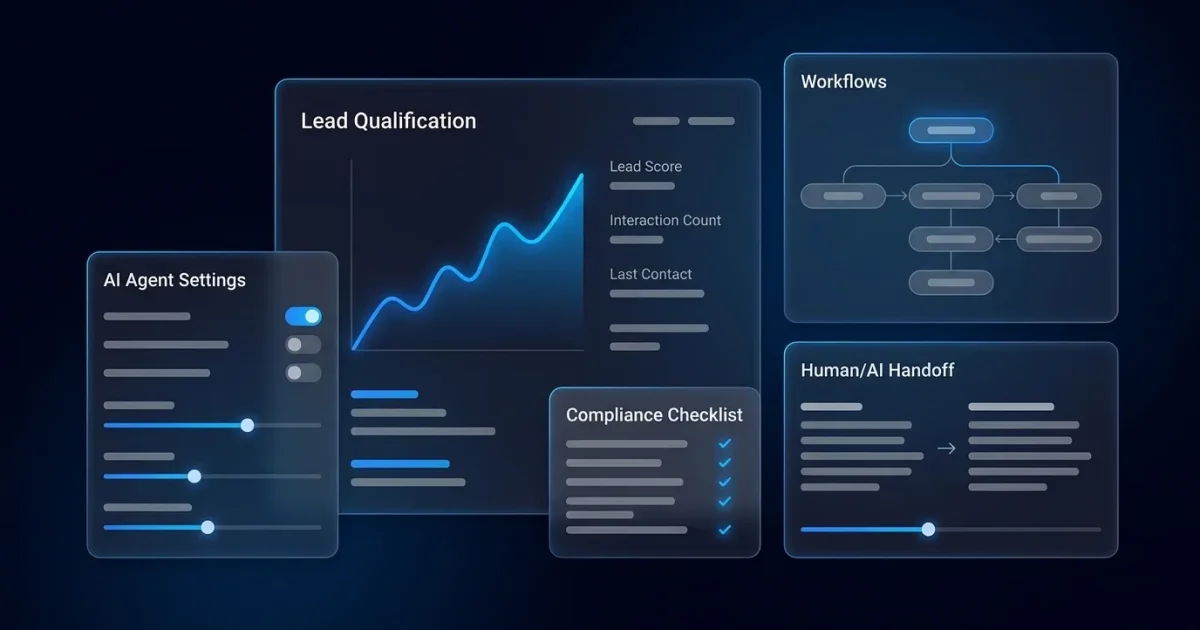
Written by: Matt Beucler, CEO, Plura AI
Key Takeaways
- AI SDR replacements handle the top-of-funnel qualification layer: instant response, conversational discovery, scoring, routing, CRM logging, and meeting booking. Complex enterprise discovery, multi-stakeholder selling, negotiation, and relationship building remain human.
- Speed-to-lead drives conversion. Companies responding within five minutes are 100 times more likely to connect with prospects than those waiting 30 minutes.3
- Compliance must run before every contact. Real-time DNC scrubbing, TCPA consent logging, quiet-hours enforcement, and STIR/SHAKEN authentication work as baseline controls.1
- Plura AI differentiates through its FCC-licensed carrier, conversation memory across voice, SMS, RCS, and webchat, and stateful, compliant qualification at scale.
- See AI qualification in action with a live Plura demo.
How AI Is Changing SDR Roles
AI is replacing the qualification layer while the SDR role itself remains largely intact. McKinsey’s 2026 State of AI survey found that only 14 percent of respondents from organizations using AI reported an overall workforce decline over the past year4. The fear of mass SDR elimination is outpacing the reality.
Even so, the category is accelerating. Gartner predicts that 40% of enterprise applications will feature task-specific AI agents by the end of 2026, up from less than 5% in 20255. Deployment enthusiasm is running ahead of execution quality, with more than 40% of AI agent projects projected to fail by 2027 and 88% of pilots never reaching production.
The operational distinction is clear. AI replaces repetitive, rules-based qualification tasks and leaves judgment calls to humans. Top-of-funnel roles handling prospecting and initial qualification feel the impact first, while AEs closing enterprise deals continue to own complex sales cycles. Plura AI focuses on this qualification layer rather than acting as a general-purpose sales replacement.
How to Use AI for Lead Qualification
- Map your qualification layer. Identify which tasks are repetitive and rules-based, such as instant response, BANT, CHAMP, or MEDDIC discovery, scoring, routing, CRM logging, and meeting booking. Separate those from judgment-heavy work like complex enterprise discovery, multi-stakeholder selling, and negotiation.
- Choose your motion. Decide whether to automate inbound or outbound first. Inbound usually presents lower risk because the lead has already raised their hand.
- Configure compliance before dial. Every outbound contact must pass real-time DNC (Do Not Call) scrubbing, TCPA (Telephone Consumer Protection Act) consent logging, quiet-hours enforcement, and STIR/SHAKEN authentication before it goes out. Building these checks into the workflow from the start prevents retrofitting them later.
- Build the qualification workflow. Use a no-code workflow builder to design the conversation logic. Define the greeting node, qualification gates, sensitive-data redaction, transfer rules, and post-call actions.
- Set the handoff model. Decide when the AI warm-transfers, what context travels with the transfer, and how the AE receives a fully qualified opportunity instead of a partially vetted lead.
- Measure and tune. Track cost per qualified meeting, false negative rate, and handoff quality. AI qualification models typically show meaningful accuracy improvement between months two and four as the qualification signal calibrates against actual won and lost outcomes.
What an AI SDR Actually Replaces in Lead Qualification
Instant response. Harvard Business Review research found that companies responding within five minutes are 100 times more likely to connect with a prospect than those waiting 30 minutes, and leads contacted within one minute are 391% more likely to convert than those contacted after 24 hours3. Plura’s AI voice agent and AI SMS respond in under five seconds across every channel.
Conversational discovery. AI runs structured frameworks such as BANT, CHAMP, and MEDDIC via chat or voice. This work sits at the top of the funnel and prepares the ground for human discovery. The AI pre-qualifies against those dimensions so reps enter conversations knowing which areas are confirmed and which need deeper exploration.
Automated scoring and routing. Plura’s AI Lead Intelligence enriches every lead with 30+ data sources in real time during the conversation, qualifying leads on the first touch across every channel. High-fit prospects sync directly to CRMs like Salesforce or HubSpot and map to calendars. Low-fit leads are filtered out before they consume AE time.
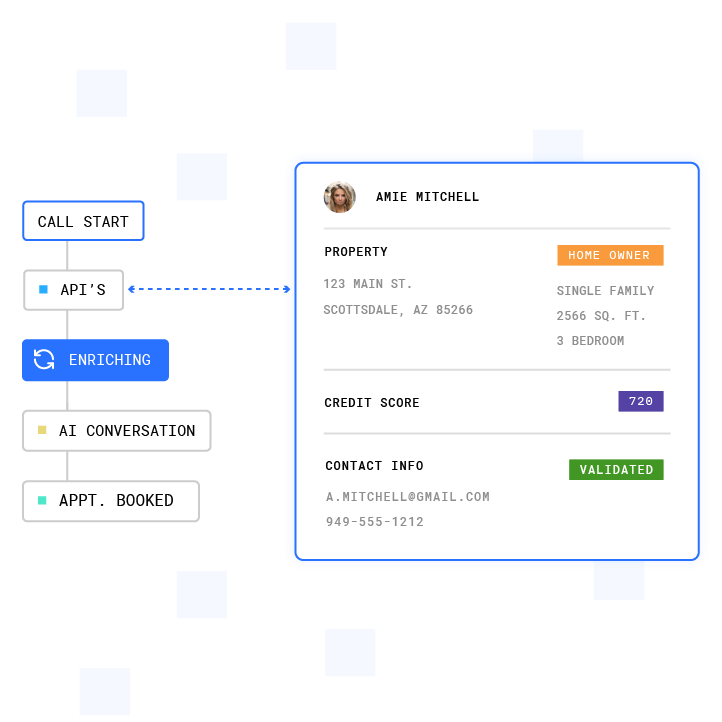
CRM logging. Every interaction is logged with full conversation transcripts and intent signals. Plura’s AI Conversation Intelligence analyzes every interaction across voice, SMS, RCS, and webchat to surface patterns such as which scripts close, which objections recur, and which conversion paths win.
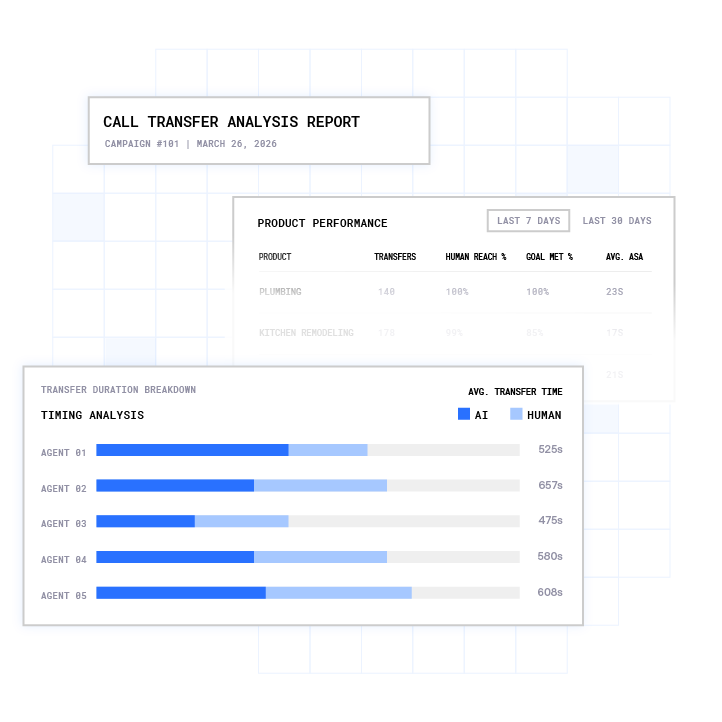
Meeting booking. AI books meetings directly on the calendar. The AE receives a qualified opportunity with full context instead of a lead that still requires another qualification pass.
Watch a live qualification demo.
Where Human SDRs Still Lead
Just as important as what AI replaces is what it should not. The following tasks still require human judgment:
- Complex enterprise discovery. AI qualification handles fast triage and scheduling. Human experts still run complex technical discovery for enterprise deals involving multi-product architecture, deep integration requirements, or detailed regulatory specifications.
- Multi-stakeholder selling. Enterprise deals with multiple stakeholders, buying committee dynamics, and non-obvious objections rely on human judgment at critical points.
- Negotiation. AI workflows can carry BATNA-style guardrails, defining the floor and ceiling within which an AI agent can negotiate. High-stakes negotiation itself remains a human responsibility.
- Strategic accounts. Relationship continuity and contextual judgment matter most at strategic accounts where a misstep has outsized consequences.
- Relationship building. Surviving sales roles look more like strategic advisors than traditional quota-carrying reps focused on volume outreach.
The Implementation Architecture
The flow from inbound lead through AI qualification to score to calendar to AE follows six steps:
- Inbound lead arrives via form fill, chat, call, or SMS.
- AI voice agent responds in under five seconds across voice, SMS, RCS, or AI webchat.
- AI runs conversational discovery using BANT, CHAMP, or MEDDIC.
- AI scores the lead in real time using behavioral signals, conversation context, and predictive intent modeling.
- High-fit leads route to calendar. Low-fit leads enter a signal-monitored hold with defined re-entry triggers.
- AE receives a qualified opportunity with full context, including transcript, qualification data, enrichment from 30+ sources, and suggested talking points.
The escalation path describes what happens when a conversation falls outside those steps. When a customer’s response falls outside the workflow’s defined paths, such as an unfamiliar request, a sensitive disclosure, or a high-stakes objection, Plura escalates by warm-transferring the call to a U.S. agent, flagging the conversation in the Unified Inbox, or routing to a designated escalation queue. Sensitive-data handling for PHI, PII, and payment data is redacted at the field level. The no-code workflow builder manages this without engineering overhead, and conversation intelligence surfaces patterns across every interaction.
The Human/AI Handoff Model
When the AI warm-transfers. A warm transfer triggers when a workflow gate fires. Examples include a prospect asking to connect with sales, showing clear high-intent urgency, or steering the conversation outside defined paths.
What context travels. The transfer includes the full conversation transcript, qualification data showing which BANT, CHAMP, or MEDDIC dimensions are confirmed, enrichment data from 30+ sources, and suggested talking points.
How the AE receives it. Plura logs qualification data to the CRM, notifies the assigned AE via Slack, email, or CRM task, supplies a qualification summary, and auto-schedules the demo if the prospect agreed during the AI call.
Plura supports this handoff model with live transfer capability that routes warm buyers directly to the right rep and CRM integration that ensures every handoff lands in the system of record with zero manual data entry.
Compliance Before Dial
Compliance functions as a prerequisite for every outbound contact, not a late-stage add-on.
Real-time DNC scrubbing. Under FTC TSR 16 CFR 310.4(b)(3)(iv) and FCC 47 CFR 64.1200(c)(2)(i)(D), telemarketers must scrub the National Do Not Call Registry using a version obtained no more than 31 days before the call. Plura checks every outbound contact against federal and state DNC registries in real time before dial. Non-compliant numbers are blocked before the first attempt.
TCPA consent logging. Under 47 USC 227(b)(1)(A), autodialed or prerecorded marketing calls to mobile phones require prior express written consent. Plura’s consent records are timestamped, immutable, and audit-ready. Because consent requirements vary by jurisdiction and use case, consult the regulation or qualified counsel for your specific obligations under 47 U.S.C. Section 227.
Quiet-hours enforcement. Under 47 CFR 64.1200(c)(1), telephone solicitations are prohibited before 8:00 a.m. or after 9:00 p.m. in the called party’s local time. Quiet-hours gating must rely on the called party’s time zone. Plura enforces this automatically through time-zone detection on every contact.
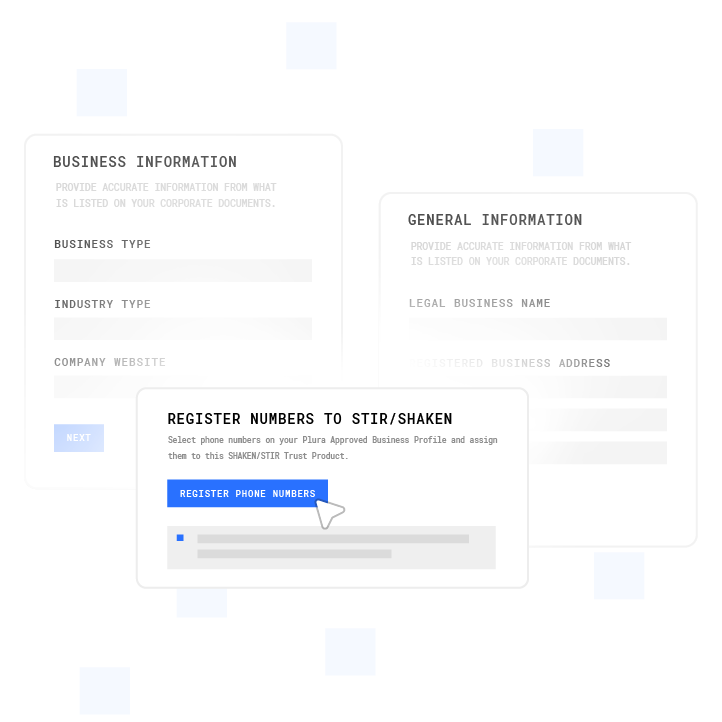
Carrier ownership and execution. Carrier ownership affects how compliance controls execute in production. Plura issues branded caller ID directly through its FCC-licensed carrier and runs STIR/SHAKEN authentication on every outbound call via its AI predictive dialer. Most AI voice competitors rent from a third-party CPaaS and inherit that provider’s caller-ID reputation. Plura owns its carrier layer, so its caller-ID reputation is its own.
The FCC NPRM (CG Docket No. 26-52) and the Keep Call Centers in America Act (S.2495) extend the regulatory perimeter for offshore call-center operations. Plura runs on 100% U.S. infrastructure by architecture. Consult qualified counsel for your obligations under these frameworks.
How Much Does an AI SDR Cost?
Compliance and architecture set the floor for what an AI SDR can do. Cost determines whether the model fits your organization.
Fully loaded human SDR cost. US SDR base salaries cluster at $55,000 to $60,000, but fully loaded cost runs $110,000 to $160,000 once benefits, tooling, and management are included. The Bridge Group’s 2024 SDR Metrics and Compensation Report, drawn from over 400 B2B companies, found average SDR on-target earnings ranged from $76,000 at early-stage companies to $97,000 at enterprise and late-stage growth companies. Average SDR ramp time is 3.2 months, and average tenure runs 14 to 17 months, with roughly 40% of SDRs leaving within 12 months.
AI SDR cost. Isometrik AI reports ongoing AI SDR operating costs of $1,000 to $3,000 per month at the volume a single human SDR operates, equating to $17,000 to $36,000 per year inclusive of setup amortized over 12 months. Isometrik AI’s Pre-Built AI Teams tier carries a one-time setup and integration cost of $5,000 to $25,000. Plura’s agent build fee is $2,750 per agent, and every annual contract includes a 90-day opt-out window.
The comparison. The direct like-for-like annual cost saving of an AI SDR versus a human SDR is 75 to 85%. The right metric is cost per qualified meeting, calculated as total inbound handling spend divided by meetings booked, rather than headline platform fees or salary comparisons alone.
Run your numbers through Plura’s ROI calculator to check your ROI in real time.
Inbound vs. Outbound: The Decision Fork
Automate inbound first if: your inbound volume crosses 200 MQLs per month and AEs spend more than two hours per day qualifying demo requests. Inbound-first teams typically add an SDR when inbound volume crosses 200 MQLs per month and AEs spend more than two hours per day qualifying demo requests. Inbound usually presents a lower-risk starting point because the lead has already raised their hand.
Automate outbound first if: you run high-volume outbound at call-center scale and your connect rates are collapsing under “Spam Likely” labels and iOS 26 call screening. Outbound at scale requires the carrier layer, including branded caller ID, STIR/SHAKEN authentication, and real-time DNC scrubbing. Plura’s AI predictive dialer handles this at the carrier level.
Most teams land on a hybrid. AI handles high-volume filtering and immediate engagement via AI SMS and AI webchat. Human reps focus on complex negotiations, relationship building, and closing deals.
How Plura AI Is Architected
Plura is its own FCC-licensed carrier, so voice traffic does not route through a third-party CPaaS. Branded caller ID is issued at the carrier level. Real-time DNC scrubbing, immutable consent logging, and TCPA-litigator filtering operate as core platform layers. Conversations remain stateful across voice, SMS, RCS, and webchat, so a customer who texted at 9 a.m. is recognized as the same customer when the call arrives at noon. See the full platform comparison for a side-by-side breakdown.
Explore the qualification layer in a demo.
Frequently Asked Questions
How Long Does It Take to Implement an AI SDR Replacement for Lead Qualification?
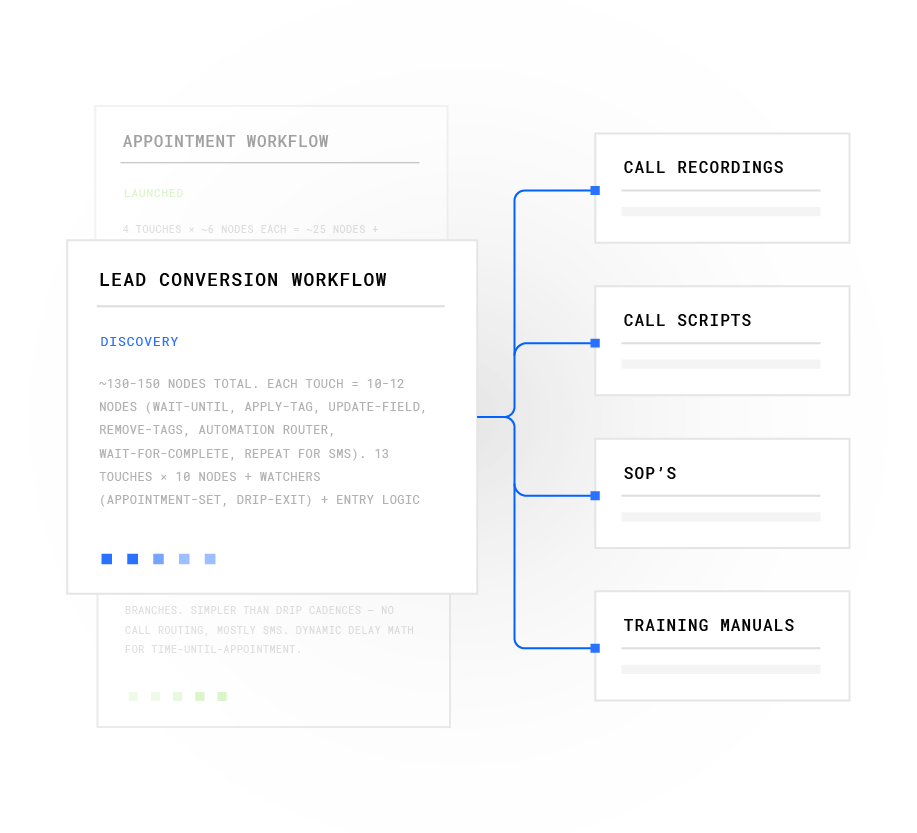
Timelines range from days to weeks, depending on conversation complexity. A simple inbound qualification flow is typically built in days. A complex multi-step intake, such as a 25-question health-history survey, runs closer to one to two months because the workflow logic itself takes time to design and validate.
Plura’s onboarding sequence is consistent across every deployment:
- Discovery audit of the customer’s business and call economics.
- Intake of sample calls, SOPs, and existing scripts.
- Overnight build of a dynamic conversation mockup.
- Second meeting to walk through the mockup and iterate.
- Engineering build of the production workflow.
- Pilot test on a subset of real calls.
- Full go-live.
What Prerequisites Do I Need Before Replacing Manual SDR Qualification With AI?
You need a defined ICP, a CRM with clean data, a documented qualification framework such as BANT, CHAMP, or MEDDIC, and a defined human handoff process. Isometrik AI identifies four factors that determine how quickly an AI SDR delivers ROI: ICP definition clarity, existing CRM and email infrastructure quality, sequence design, and a defined human handoff process. Without these in place, the AI qualification signal will be noisy in the first month and should not drive investment decisions.
What Are the Risks of AI SDR Deployment?
The Gartner failure rates cited earlier highlight the risk of poor execution. Common failure modes include conflating activity with fit, which routes high-engagement but poor-fit accounts into the pipeline, and single-threaded qualification that focuses on one contact instead of mapping the full buying committee. Another risk is treating disqualification as permanent instead of placing accounts in a signal-monitored hold with defined re-entry triggers. A fourth risk involves governance gaps, such as AI-generated messaging that contradicts approved claims, missing audit trails, and agentic tools with CRM write access operating without guardrails.
What Compliance Considerations Apply to AI SDR Lead Qualification?
Real-time DNC scrubbing, TCPA consent logging, quiet-hours enforcement, and STIR/SHAKEN authentication form the primary operational layers. Under 47 CFR 64.1200(c)(1), telephone solicitations are prohibited before 8:00 a.m. or after 9:00 p.m. in the called party’s local time. Under FTC TSR 16 CFR 310.4(b)(3)(iv), telemarketers must scrub the National Do Not Call Registry using a version obtained no more than 31 days before the call. The FCC NPRM (CG Docket No. 26-52) and the Keep Call Centers in America Act (S.2495) add further considerations for offshore call-center operations. Consult the regulation or qualified counsel for your specific obligations.
How Do I Measure Success?
Track cost per qualified meeting, calculated as total inbound handling spend divided by meetings booked, rather than headline platform fees or salary comparisons alone. Additional targets include a false negative rate under 5% for high-quality leads incorrectly disqualified, an AI-to-human handoff quality score of 4 or higher out of 5 based on AE satisfaction, and goals of 15 to 25% shorter sales cycles and 10 to 20% higher win rates for AI-qualified versus manually qualified leads. These metrics align with the month two to four calibration window described earlier.
Conclusion
Manual SDR lead qualification struggles to keep up with modern lead volume, speed-to-lead expectations, and compliance complexity. The industry standard for first contact on an inbound lead is 47 or more hours. The conversion advantage of a sub-60-second response reflects the 391% lift cited earlier. The gap between buyer expectations and a human-only qualification model keeps widening.
An AI SDR replacement for lead qualification handles the top-of-funnel qualification layer, including instant response, conversational discovery, scoring, routing, CRM logging, and meeting booking. The sales function itself remains human. Plura AI is built for this layer specifically. It owns its FCC-licensed carrier, supports TCPA and DNC screening before dial, and preserves conversation memory across voice, SMS, RCS, and webchat. Handoffs land in the AE’s CRM with full context, outbound contacts are checked against DNC registries before dial, and conversations remain stateful across every channel.
See the qualification layer in production with a live demo.
1 Plura AI maintains SOC 2, HIPAA, ISO, and GDPR posture as part of its platform infrastructure. References to compliance frameworks in this article describe Plura’s platform capabilities and do not constitute a guarantee that any customer using Plura will themselves be compliant with applicable laws or standards. Customers remain solely responsible for their own regulatory obligations, certifications, consent management, recordkeeping, and the claims they make to their own end users. Consult qualified legal counsel for guidance specific to your use case.
2 This article describes regulatory frameworks at a general level and does not constitute legal advice. Laws and regulations vary by jurisdiction, change over time, and apply differently depending on facts and circumstances. Readers should consult qualified legal counsel before making compliance decisions.
3 Performance figures, customer outcomes, and industry statistics referenced in this article are drawn from cited third-party sources or Plura customer case studies. Individual results vary based on implementation, use case, industry, audience, and execution. Past or aggregate performance is not a guarantee of future results.
4 References to third-party products, services, companies, or research are made for informational and comparative purposes only. Plura AI is not affiliated with, endorsed by, or sponsored by any third party named in this article unless explicitly stated. Trademarks and product names referenced remain the property of their respective owners.
5 This article contains forward-looking statements regarding industry trends, technology adoption, and future capabilities. These statements reflect current expectations and are subject to change. Plura AI undertakes no obligation to update forward-looking statements except as required.
This article is provided for informational purposes only and reflects Plura AI’s understanding at the time of publication. Product capabilities, integrations, and specifications are subject to change. For the most current information, visit plura.ai.
This article was produced with the assistance of AI tools and reviewed by Plura AI prior to publication.