
Written by: Matt Beucler, CEO, Plura AI
Updated September 2026
Key Takeaways for Contact Center Leaders
- VICIdial is open source with no per-seat licensing. The real spend comes from hosting, SIP trunks, carrier minutes, and Linux/Asterisk administration labor.
- The platform delivers deep customization, predictive dialing, and scalability. Its dated PHP interface and lack of official vendor support create ongoing operational friction.
- 2026 compliance requirements, including TCPA, DNC, STIR/SHAKEN, and iOS 26 call screening, place configuration and audit responsibility on self-hosted operators.
- High-volume operations with in-house technical staff can still see strong economics from VICIdial. Smaller teams or those without sysadmin capacity usually benefit more from hosted platforms.
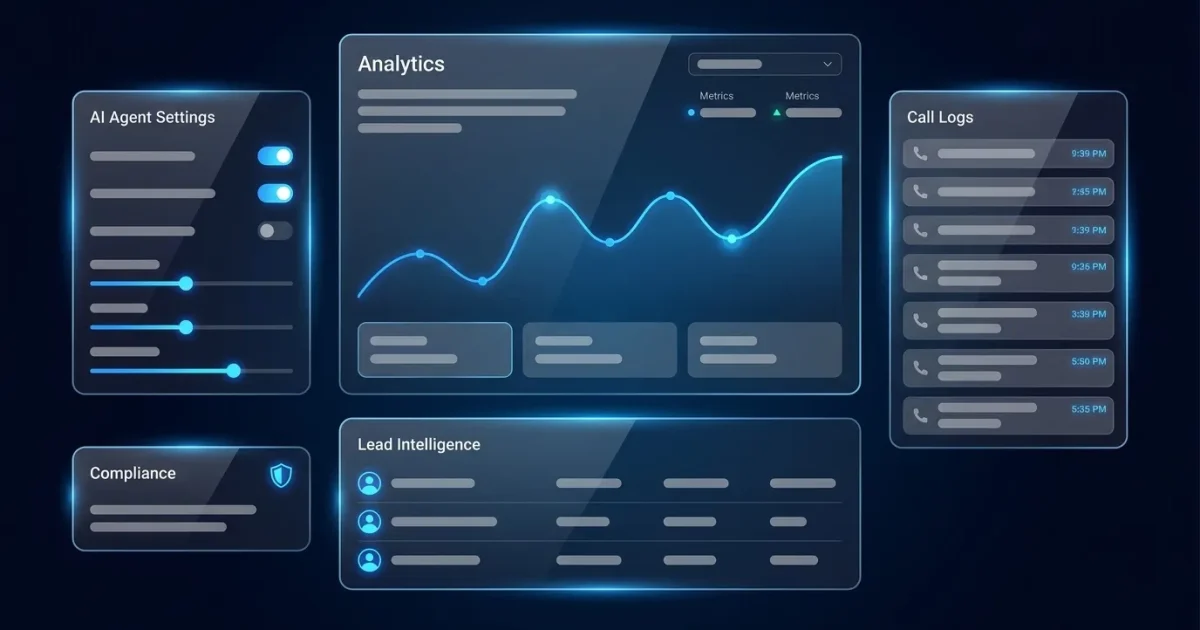
- Plura AI’s AI Predictive Dialer removes the self-hosted burden and centralizes carrier-grade compliance support, branded caller ID, and real-time DNC scrubbing.
Where VICIdial Performs Well
- No Per-Seat Licensing. VICIdial is open source under AGPLv2 and downloadable from vicidial.org at no cost, so the software itself carries no license fee. The tradeoff is the AGPLv2 requirement: if you modify the source and distribute it to others, you must share those modifications under the same license.
- Blended Inbound/Outbound. VICIdial’s blended campaign mode lets an agent handle inbound and outbound calls in the same session. Outbound dialing pauses automatically when an inbound call arrives.
- Predictive Dialing. VICIdial’s adaptive predictive algorithm adjusts dial ratios in real time based on agent availability, answer rates, and abandon targets. Well-tuned deployments keep agents on calls for 85% to 95% of logged-in time.3
- Scalability to Hundreds of Seats. A properly configured VICIdial cluster can support 500+ concurrent agents across 10+ telephony servers. Horizontal scaling with a shared database backend carries most of that load.
- Extensive Configuration Control. The admin interface exposes over 2,000 parameters across campaigns, agents, carriers, system settings, and dial logic. A well-configured installation can outperform a poorly configured one by 2x to 3x in key metrics.3
- Data Ownership and Portability. Operators retain full control of the database, recordings, campaign configurations, and reporting data.
Where VICIdial Creates Operational Risk
- Linux/Asterisk Administration Burden. Running VICIdial requires skills in Linux system administration, Asterisk PBX configuration, MySQL/MariaDB, SIP/VoIP networking, and contact center operations. VICIdial system administrator compensation typically ranges from $65,000 to $120,000 per year or $50 to $150 per hour on contract.
- Dated User Interface. The agent and admin interface was built in 2006–2008 using PHP with direct MySQL queries and HTML tables. The experience is desktop-first, and there is no native mobile app.
- No Official Vendor Support SLA. Support relies on community forums with no guaranteed response times. Paid options center on VICIhost’s included one hour per month plus hourly consulting.
- Integrations That Require Development. VICIdial connects to CRMs like Salesforce, HubSpot, Zoho, Pipedrive, SugarCRM, vTiger, and SuiteCRM through HTTP webhooks and API hooks4. Most integrations require developer effort, typically 4 to 12 hours per CRM for self-hosted teams.
- Upgrade Planning and Maintenance Windows. Updates ship via SVN and must be tested, staged, and applied during maintenance windows. Teams often budget 4 to 8 hours per major update, multiplied by the admin’s hourly rate.
- License Cost Ignores Infrastructure Spend. The software license represents roughly 2% of total spend. Hardware, SIP trunking, DIDs, softphone licenses, compliance tools, and maintenance labor drive the remaining 98%.
The Cost of “Free”: What VICIdial Actually Costs
The VICIdial license costs $0.00 under AGPLv2, but the surrounding line items determine the real budget impact. Hosting, telecom, labor, and compliance tooling carry the weight.
- Server Hosting. Bare-metal hosting typically runs $150 to $200 per month for a single all-in-one server at 10 to 20 agents. At 100 to 200 agents, a 4 to 5 server cluster usually costs $700 to $1,200 per month. Cloud hosting on AWS, GCP, or DigitalOcean often runs 2x to 3x higher for similar capacity.
- SIP Trunking. US domestic outbound SIP trunking often ranges from $0.005 to $0.015 per minute, and inbound from $0.003 to $0.008 per minute. At those rates, a 50-agent center making 300 calls per day at 2.5 minutes average burns roughly 825,000 minutes per month. At a $0.008 per minute bulk rate, that volume produces about $6,600 per month in trunking costs.
- Carrier Minutes. Carrier charges remain a separate recurring line item even when the dialer is free. A 25-agent operation making 30,000 outbound minutes per day incurs roughly $1,188 per month, scaling linearly with volume.
- Linux/Asterisk Sysadmin Labor. Self-hosted VICIdial maintenance often costs $55,000 to $85,000 per year ($4,600 to $7,100 per month) for a full-time admin. Operators that cannot justify a full-time hire typically choose either a part-time contractor at $1,500 to $4,000 per month or an overseas contractor at $800 to $2,000 per month.
- Compliance Tooling. US outbound DNC compliance services such as DNC.com often cost $500 to $2,000 per month depending on volume. STIR/SHAKEN attestation may involve a one-time verification fee of $50 to $200, and some carriers charge $0 to $100 per month for attestation upgrades.
- Third-Party Support. A skilled VICIdial expert typically charges $1,500 to $5,000 to install, configure, and tune an initial deployment. Ongoing maintenance usually relies on a part-time admin at $1,500 to $4,000 per month or a managed hosting provider.
The table below shows how these costs stack by deployment size. Infrastructure remains a small share at every scale, while SIP trunking and technical staffing dominate the monthly bill, and per-agent cost falls as seat count rises. Figures are based on ViciStack’s March 2026 pricing guide and the CheckThat.ai VICIdial pricing analysis.
| Cost Category | 10-Agent VICIdial | 50-Agent VICIdial | 200-Agent VICIdial |
|---|---|---|---|
| Infrastructure | $180/month | $300-$450/month | $1,000/month |
| SIP Trunking | $1,500/month | $6,600/month | $28,000/month |
| DNC Scrubbing | $300/month | $500-$1,500/month | $2,500/month |
| Technical Staffing | $500/month (part-time) | $1,500-$4,000/month | $6,000/month (full-time) |
A 10-agent self-hosted VICIdial deployment totals approximately $2,360 to $7,280 per month all-in, and a 200-agent deployment runs $39,050 to $80,400 per month, or $195 to $402 per agent. The license cost is the least meaningful number in the evaluation. Technical capacity and compliance posture determine whether the free license creates more value or more risk.
See how Plura’s total cost of ownership compares against a carrier-grade AI platform.
The 2026 Compliance Reality for Self-Hosted Dialers
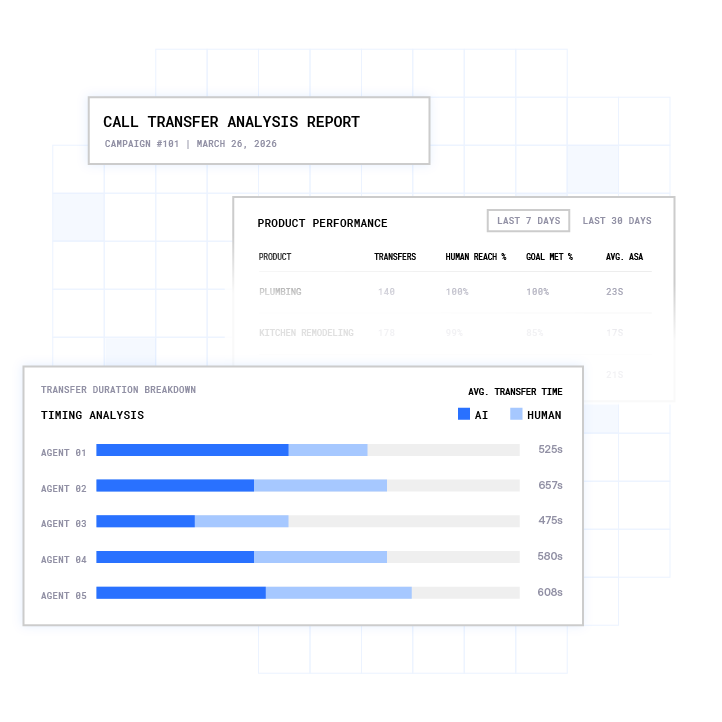
Self-hosted predictive dialing now operates under a tighter regulatory stack than in 2021. Teams evaluating VICIdial in 2026 must account for these frameworks and should consult the regulations or qualified counsel for guidance on their specific situation.
- TCPA and DNC Obligations on Predictive Dialing. Under FCC rules (47 C.F.R. § 64.1200), telemarketing calls may only be made between 8:00 AM and 9:00 PM in the called party’s local time zone2. Predictive dialers must not abandon more than 3% of connected calls in any 30-day period. A call counts as abandoned when the dialer connects a consumer but no agent is available within 2 seconds. Organizations conducting telemarketing must scrub outbound lists against the National Do Not Call Registry within 31 days before each campaign. Because VICIdial is self-hosted, the operator configures every TCPA control and maintains the records needed to support their compliance program. VICIdial does not natively integrate with the National DNC Registry in real time, so scrubbing occurs externally or through loading registry data into VICIdial’s internal DNC table.
- FCC NPRM (CG Docket No. 26-52). The FCC’s Notice of Proposed Rulemaking discusses caps on offshore customer-service calls at 30% and restrictions on offshore handling of sensitive data such as passwords, multi-factor authentication codes, social security numbers, and banking or card data.2 Companion proposals, including the Keep Call Centers in America Act (S.2495) and the Foreign Robocall Elimination Act (S.2666), extend this perimeter. Operators running offshore agents on self-hosted dialers must factor this exposure into their planning.
- State Onshoring Laws. Connecticut’s call center relocation statute requires 100 days’ notice before relocating 30% or more of call volume offshore and includes civil penalties up to $10,000 per day. New York’s Call Center Jobs Act carries similar penalty levels. New Jersey’s mirror statute, Missouri’s offshore-disclosure executive order, and Florida’s medical-information offshoring restrictions all shape how medical, financial, and consumer data can be handled offshore.
- iOS 26 Call Screening. Apple’s iOS 26 Smart Call Screening intercepts calls from unknown numbers and prompts the caller for name, company, and reason for calling. As of January 2026, roughly 10% of outbound calls on Convoso’s platform were routed to screening environments, and iOS holds about 60% of the US mobile OS market. VICIdial has no native mechanism to interact with this screening layer.
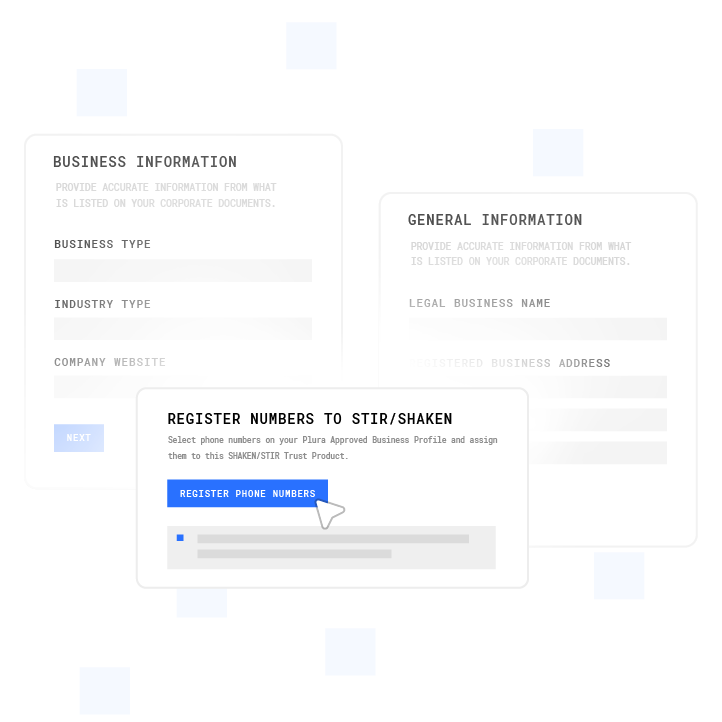
- STIR/SHAKEN Attestation. STIR/SHAKEN attestation is configured through the SIP carrier rather than inside VICIdial. Many low-cost carriers attest improperly or not at all, which directly affects contact rates. Operations that ignore attestation often see contact rates fall 30% to 50% compared with properly configured peers.
VICIdial’s time-zone enforcement depends on the vicidial_phone_codes table being current and on the campaign’s “Use Campaign Timezone” setting. Every compliance control that a hosted platform enforces automatically becomes a configuration, testing, and maintenance task for the VICIdial operator.
Which Operations Still Fit VICIdial, and Which Should Move On
VICIdial still fits certain operating models. The decision turns on agent count, technical capacity, compliance posture, and whether self-hosted economics still work at your scale.
VICIdial remains a strong fit for operators who have:
- A technical team in-house, specifically a competent Linux/Asterisk admin or the budget and willingness to hire one at the salary range noted above.
- High outbound volume, typically 50 or more agents, where VICIdial’s per-agent economics can undercut hosted dialers by $5,000 to $15,000 per month at 100+ agents.
- Strong cost sensitivity, where preserving that margin outweighs the value of offloading infrastructure management.
- A preference for direct control over predictive dialer ratios, hopper sizes, call timing, and retry intervals instead of operating within a hosted platform’s presets.
Operators typically benefit from alternatives when they have:
- No sysadmin on staff and no plan to hire one. ViciStack summarizes this as: “The sysadmin salary ($65,000-$120,000/year) is your real cost of ‘free’ software.”
- Compliance-sensitive operations in regulated industries that require vendor certifications and structured support for audits, where the operator cannot absorb VICIdial’s configuration and documentation workload.
- A need for fast setup. Self-hosted VICIdial deployments with custom integrations typically run 2 to 6 weeks.
- Fewer than 30 to 35 agents, where the per-agent overhead of maintaining the platform erodes most savings versus a per-seat hosted dialer.
Explore how Plura handles operations that have outgrown VICIdial if your team matches the “look elsewhere” profile.
Next Steps: Migrating from VICIdial to Plura AI
For high-volume operators whose economics or risk profile have shifted, Plura AI’s AI Predictive Dialer replaces the self-hosted model with a carrier-grade platform running on Plura’s FCC-licensed audio bridging carrier. Calls flow with branded caller ID and STIR/SHAKEN authentication at the carrier level rather than through a third-party reseller. The dialer selects the next call using stateful conversion signals such as historical answer rates, prior negotiation outcomes, and prior offer-acceptance bands.
Plura treats compliance as a first-class layer of the product instead of a manual configuration checklist. The platform enforces TCPA, DNC, HIPAA, SOC 2, CAN-SPAM, and 50+ state rule sets in ways that support customer compliance, while customers remain responsible for their own regulatory obligations.1 Real-time DNC scrubbing runs before every dial, consent records are timestamped and immutable, and quiet-hours rules apply automatically through time-zone detection.
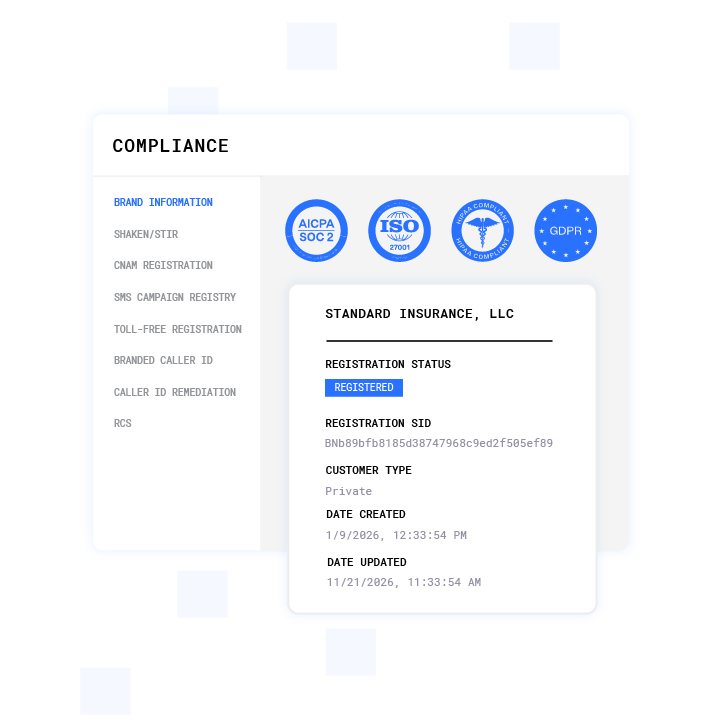
Plura also addresses the iOS 26 call-screening challenge. Because Plura operates as its own FCC-licensed carrier, it issues branded caller ID at the carrier level and communicates with Apple’s iOS 26 call-screening layer so calls present with the company’s name and reason for calling instead of defaulting to voicemail.
The migration path from VICIdial to Plura’s AI Predictive Dialer follows a clear sequence:
- Discovery audit of your business and call economics.
- Intake of sample calls, SOPs, and existing scripts.
- Overnight build of a dynamic conversation mockup.
- Second meeting to review the mockup and refine flows.
- Engineering build of the production workflow.
- Pilot test on a subset of real calls.
- Full go-live.
Plura’s agent build fee is $2,750 per agent, and every annual contract includes a 90-day opt-out window. Compare plans and rates side by side, or run your numbers through Plura’s ROI calculator to quantify potential savings.
Frequently Asked Questions
Is VICIdial Free to Use?
VICIdial’s software license costs $0.00 per month under AGPLv2, as described above. The meaningful costs sit around the software: hosting, SIP trunking, carrier minutes, DNC compliance tooling, and technical staffing.
How Much Does VICIdial Cost?
The cost section above details the 10-agent and 200-agent ranges. The 50-agent tier sits between them at approximately $9,512 per month on VICIhost or $4,103 to $9,512 per month self-hosted, depending on configuration. These figures come from ViciStack’s March 2026 pricing guide and the CheckThat.ai VICIdial pricing analysis, so operators can use them as benchmarks when building an 18-month total cost of ownership model.
Who Uses VICIdial?
VICIdial’s typical user base includes outbound sales operations in solar, insurance, home services, political campaigns, debt consolidation, and real estate, along with collection agencies, customer service centers, BPOs, and some government agencies. What these organizations share is call volume high enough to justify dedicated infrastructure and a reluctance to pay $100 to $200 per seat per month for hosted solutions. That combination has kept VICIdial installed in over 14,000 locations across 100+ countries, concentrated in the United States, India, and the Philippines.
How Do You Set Up VICIdial?
An experienced Linux admin can stand up a VICIdial proof-of-concept in roughly 4 hours using the free VICIbox ISO and a pay-as-you-go SIP trunk. New admins often need 8 to 12 hours for the same task while they learn the platform. The current official installation image is ViciBox 12.0.2, released September 29, 2025, running on OpenSUSE Leap 15.6 with Asterisk 18 and MariaDB 10.11.9. Production deployments with custom integrations typically take 2 to 6 weeks, and new VICIdial admins usually invest 40 to 80 hours of learning time before managing the platform independently.
What Are the Best Alternatives to VICIdial?
Alternatives fall into two broad categories. Hosted dialers such as Five9, Convoso, and NICE CXone remove the infrastructure and sysadmin burden but carry per-seat licensing costs of $100 to $250 per month plus telecom, which often exceeds self-hosted VICIdial at 100+ agents with strong technical management.4 AI-powered platforms like Plura’s AI Predictive Dialer replace the self-hosted model with a carrier-grade environment that includes branded caller ID, STIR/SHAKEN authentication, real-time DNC scrubbing, and stateful conversation memory across voice, SMS, RCS, and webchat. The right fit depends on agent count, technical capacity, compliance posture, and whether your priority is speed to launch or deep infrastructure control.
Conclusion: How to Weigh VICIdial Against Modern AI Dialers
The VICIdial license is free, but the costs that decide the evaluation are hosting, SIP trunks, carrier minutes, Linux/Asterisk administration, and compliance tooling. The 2026 regulatory stack has changed what self-hosted predictive dialing demands from operators. That stack includes the FCC NPRM in CG Docket No. 26-52, state onshoring laws in New York, New Jersey, Connecticut, Missouri, and Florida, and iOS 26 call screening. Many teams did not factor these elements into their original VICIdial deployments.
When comparing options, evaluate on total cost of ownership, compliance posture, technical burden, and speed to deployment. The license line item is the least useful of those measures. For operators with 50+ agents, a capable Linux/Asterisk admin, and a strong preference for infrastructure control, VICIdial’s economics can still work. For operators whose economics or risk profile have shifted, Plura’s AI Predictive Dialer provides a carrier-grade platform aligned with the 2026 regulatory environment and built for intelligence-driven operations.
Run your numbers through Plura’s ROI calculator to quantify potential savings in real time. Compare plans and rates side by side.
Schedule a live walkthrough of Plura’s AI Predictive Dialer to see how it would perform against your current VICIdial stack.
1 Plura AI maintains SOC 2, HIPAA, ISO, and GDPR posture as part of its platform infrastructure. References to compliance frameworks in this article describe Plura’s platform capabilities and do not constitute a guarantee that any customer using Plura will themselves be compliant with applicable laws or standards. Customers remain solely responsible for their own regulatory obligations, certifications, consent management, recordkeeping, and the claims they make to their own end users. Consult qualified legal counsel for guidance specific to your use case.
2 This article describes regulatory frameworks at a general level and does not constitute legal advice. Laws and regulations vary by jurisdiction, change over time, and apply differently depending on facts and circumstances. Readers should consult qualified legal counsel before making compliance decisions.
3 Performance figures, customer outcomes, and industry statistics referenced in this article are drawn from cited third-party sources or Plura customer case studies. Individual results vary based on implementation, use case, industry, audience, and execution. Past or aggregate performance is not a guarantee of future results.
4 References to third-party products, services, companies, or research are made for informational and comparative purposes only. Plura AI is not affiliated with, endorsed by, or sponsored by any third party named in this article unless explicitly stated. Trademarks and product names referenced remain the property of their respective owners.
This article is provided for informational purposes only and reflects Plura AI’s understanding at the time of publication. Product capabilities, integrations, and specifications are subject to change. For the most current information, visit plura.ai.
This article was produced with the assistance of AI tools and reviewed by Plura AI prior to publication.