
Written by: Matt Beucler, CEO, Plura AI
Key Takeaways for Outbound Leaders
- Predictive dialers maximize agent talk time on large cold lists, typically need roughly 15 agents for stability, and operate under a 3% abandonment-rate ceiling.
- SMS-first text-to-call warms leads before dialing, lifts answer rates, and routes qualified warm transfers instead of cold connects.
- Team size and lead temperature drive the choice: smaller teams or warmer lists fit SMS-first, larger teams on cold volume fit predictive dialing.
- Running both workflows on a shared Stateful Conversation Database removes context gaps and compounds performance across channels.
- Plura AI unifies AI SMS text-to-call and AI Predictive Dialer on one platform; watch the hybrid workflow in a live demo.
What “Text to Call” Actually Means in Practice
The phrase “text to call” carries two distinct definitions, and that difference changes the entire decision.
The first definition is a broadcast voice-blast tool. The system dials a list, plays a prerecorded message, and may prompt the recipient to press a key to connect to an agent. This is the definition most AI overviews and top-ranking pages use. It also carries significant compliance complexity under 47 U.S.C. § 227 and the FCC’s implementing rules, because prerecorded voice calls to wireless numbers require prior express written consent regardless of whether the dialing equipment qualifies as an automatic telephone dialing system (ATDS).2
The second definition is an SMS-first warm-up-then-dial workflow. The system texts a lead, holds a qualifying conversation, waits for a positive engagement signal, then calls and live-transfers a warm buyer directly to a rep. High-volume operators comparing text to call vs predictive dialer usually mean this second definition, and this guide uses that definition for the comparison.
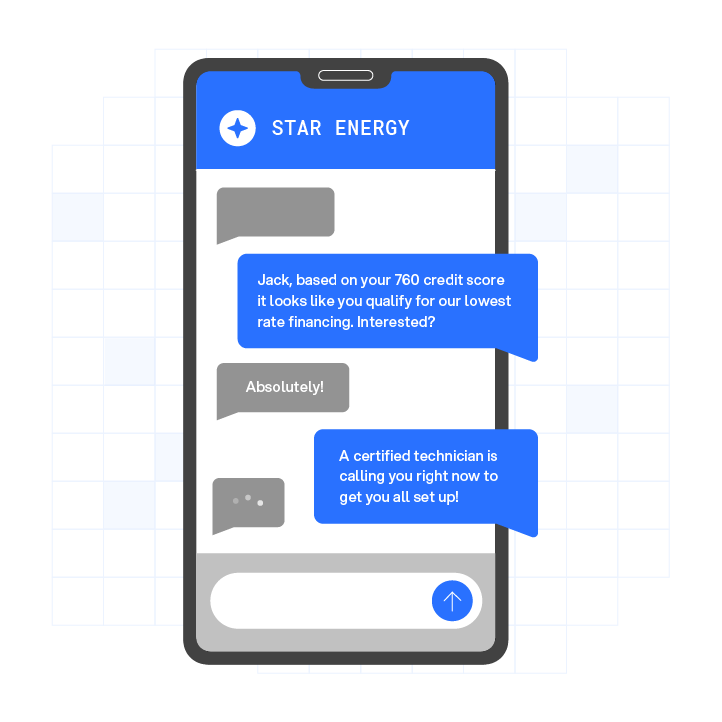
The distinction shapes operations. A broadcast voice blast competes with predictive dialing on raw dial volume. An SMS-first warm-up workflow competes on lead temperature at the moment of the call. These tools serve different purposes, and treating them as interchangeable often produces the wrong decision.
What a Predictive Dialer Actually Does
A predictive dialer uses an algorithm to forecast when an agent will finish a current call, then dials multiple numbers ahead of that moment so a live answer routes immediately to a free agent. The operational goal is maximizing agent talk time by removing idle wait between calls.
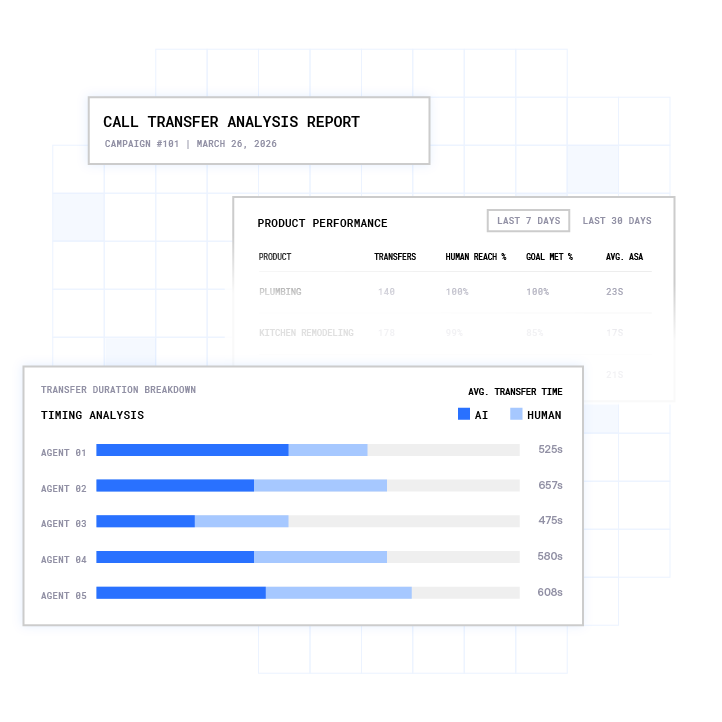
ViciStack’s aggregated deployment benchmarks show predictive dialing reduces agent idle time to 5-15 minutes per hour, versus 20-30 minutes per hour for progressive dialing.3 At 25 or more agents, predictive dialing delivers 45-55 minutes of agent talk time per hour.3 The tradeoff is abandonment. Because the system dials ahead of agent availability, a live answer can arrive before any agent is free. Under 47 C.F.R. § 64.1200(a)(7), a telemarketer may not abandon more than 3% of telemarketing calls answered live by a person, measured over a 30-day period for a single calling campaign.2
A progressive dialer and a power dialer each place one call per available agent, which eliminates abandoned calls by design. An auto dialer is a catch-all marketing term for any system that dials automatically. The term alone reveals nothing about pacing, agent ratio, or compliance exposure. The dialing mode running determines the risk profile.
Text to Call vs Predictive Dialer: Structured Comparison
The table below compares the two workflows across core operational attributes. Watch how SMS-first wins on lead temperature and context, while predictive dialing wins on dial volume for large cold lists.
| Attribute | SMS-First Text-to-Call Workflow | AI Predictive Dialer |
|---|---|---|
| Primary Goal | Warm the lead before the dial and increase answer rate on the call | Maximize agent talk time on cold lists at scale |
| Personalization | High: AI qualifies and enriches the lead during the SMS conversation before the call | Low to moderate: agent receives a connected call with limited prior context |
| Answer Rate on Dials Placed | Higher: AI-triggered SMS creates familiarity before the call, lifting pickup rates on subsequent dials | Lower: calls land cold, so connect rates track typical cold-calling performance |
| Rep Preparation | Rep receives a warm transfer with full SMS conversation history as context | Rep receives a connected call with minimal lead context |
| Best-Fit Use Case | Warm or semi-warm lists, high-value leads, markets where cold pickup rates are low | Large cold lists, roughly 15+ agents, high-volume B2C outbound |
| Compliance Profile | TCPA prior express written consent for SMS, DNC scrubbing, 10DLC registration for A2P messaging, quiet-hours enforcement by recipient time zone | FCC 3% abandonment cap, TCPA consent for cell phones, DNC scrubbing, ATDS definition exposure that varies by dialing mode and state law |
The comparison shows that predictive dialing buys dials per agent-hour, while SMS-first text-to-call buys lead temperature at the moment of the call. On a cold list where cold calling yields a 3-7% connect rate, predictive dialing maximizes the number of those connects per hour. On a list where leads have already replied to a text, the call lands warm and the connect rate on that dial rises structurally.
The compliance profiles differ as well. Predictive dialing’s primary compliance exposure centers on the abandonment-rate ceiling and the ATDS definition under 47 U.S.C. § 227. SMS-first workflows carry their own consent requirements, including prior express written consent for marketing texts per 47 C.F.R. § 64.1200(f)(9), plus A2P 10DLC registration enforced by carriers since 2023. Operators running both workflows carry both profiles and should consult the relevant regulations and qualified counsel when designing programs.
Run your numbers through Plura’s ROI calculator to see how the two workflows compare on your list economics.
Decision Framework: Team Size and Lead Temperature
Team size and lead temperature determine which system fits your outbound motion.
ViciStack’s deployment benchmarks recommend a practical minimum of 15 agents per campaign for predictive dialing to function effectively. Below that level, the algorithm lacks enough statistical data on simultaneous call outcomes and talk-time variance, which causes erratic dial ratios and abandonment-rate spikes. EaseDial’s August 2026 decision framework sets the floor at 7-10 simultaneously dialing agents for statistical stability and recommends progressive dialing for teams below that threshold.4 For a team of 5-15 agents, predictive dialing often misfires because the abandonment rate can spike before the algorithm corrects.
Lead temperature is the second variable. Using SMS to open the conversation and qualify intent, then following up warm replies with a call, increases connect rates on calls by 40-60% because the prospect already knows who is calling.3 When 88% of outbound effort goes unanswered on cold lists, warming leads first changes the economics of every subsequent dial.
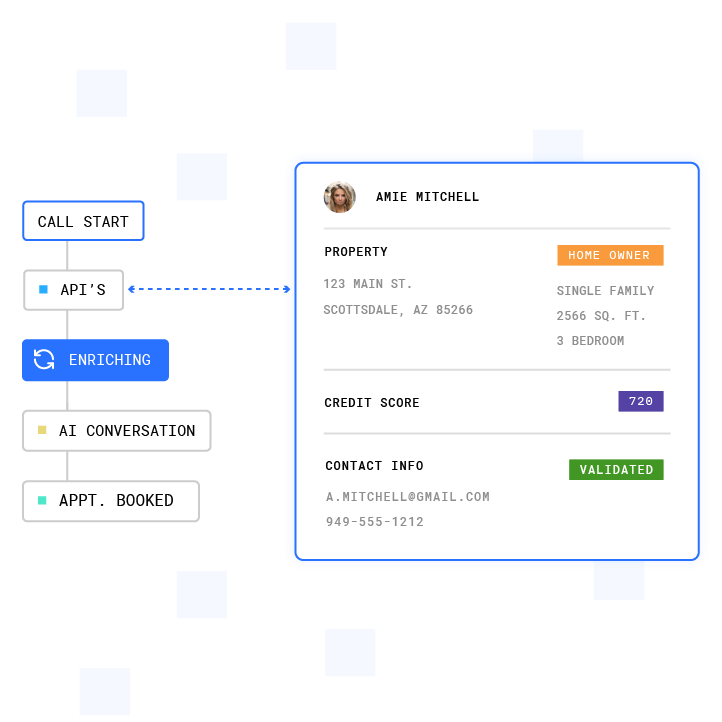
Speed to lead amplifies this effect. Leads contacted within 60 seconds see conversions lift by 391% compared to slower response times.3 Plura AI contacts leads in under 5 seconds, versus an industry standard of 47+ hours. That timing gap is where many deals are won or lost before a predictive dialer ever starts.
The practical routing logic:
- Under 15 agents, warm or semi-warm list: Use SMS-first text-to-call. With too few agents for a predictive algorithm to stabilize, warming leads by text keeps answer rates high without driving abandonment risk.
- 15+ agents, large cold list, high dial volume: Use AI Predictive Dialer. A stable pacing algorithm can maximize talk time per agent-hour when individual lead temperature is low.
- Mixed list, any team size: Run a hybrid. Route warmer segments through SMS-first, and reserve predictive dialing for the colder top of funnel.
Plura customers running this framework report 47% average pipeline growth and 90% faster lead-response time than their prior baseline.3
Compliance as a Decision Input for Dialer Strategy
Compliance is a variable that changes which workflow is operationally viable for a given list and team, not an afterthought to the dialer decision.
The Telephone Consumer Protection Act (TCPA), codified at 47 U.S.C. § 227, and the FCC’s implementing rules govern both voice and SMS outreach.2 For predictive dialing, the FCC’s rules at 47 C.F.R. § 64.1200(a)(7) cap abandoned calls at 3% of answered calls per campaign per 30-day period.2 An abandoned call is one answered by a live person but not connected to a sales rep within two seconds of the person’s completed greeting. TCPA statutory damages run $500 per violation for ordinary violations and $1,500 per violation for willful or knowing violations under 47 U.S.C. § 227, with no statutory cap.2
The ATDS definition also affects predictive dialing. In Facebook, Inc. v. Duguid, 592 U.S. 395 (2021), the Supreme Court held that an ATDS must use a random or sequential number generator to store or produce numbers, which narrowed the federal definition.4 State laws in Florida, Oklahoma, and Washington maintain broader autodialer definitions that may cover predictive dialers regardless of the federal ruling. Operators should consult qualified counsel on how their specific dialing configuration interacts with both federal and applicable state law.
For SMS-first workflows, prior express written consent is required for marketing texts under 47 C.F.R. § 64.1200(f)(9) before the first message is sent.2 The FCC’s one-to-one consent rule, effective January 27, 2025, requires that consent name a specific seller and be logically and topically related to the context in which it was collected. DNC scrubbing is a separate obligation from consent. A number can be off the National DNC Registry and still lack TCPA consent for autodialed contact. Both checks apply independently. Operators should review the FCC’s guidance and consult qualified counsel when designing outreach.
Plura supports compliance with TCPA, DNC, HIPAA, SOC 2, and 50+ state rule sets through its platform infrastructure.1 Before any dial fires, the platform checks the number against federal and state DNC registries in real time. Consent records are timestamped and immutable, and quiet-hours rules enforce automatically through time-zone detection. Customers remain responsible for their own regulatory obligations and the claims they make to their end users.
The Hybrid Workflow: Text First, Then Dial
The hybrid workflow uses SMS to qualify leads, waits for engagement, then calls, with predictive dialing reserved for the colder top of funnel. At this point, the two systems stop competing and start compounding.
The operational logic is straightforward. SMS reaches far more people for far less and lets prospects respond without the friction of picking up an unknown number. SMS handles broad reach at low cost, while live voice handles closing and complex conversations. A lead who has already replied to a text and been qualified by AI is no longer a cold dial. That lead is ready for a warm transfer.
Running this workflow across two separate vendors creates a memory problem. A lead who texted at 9 a.m. often has to re-explain themselves when the call comes at noon, because the SMS platform and the dialer do not share context. That friction costs conversions and signals to the lead that the operation is disjointed.
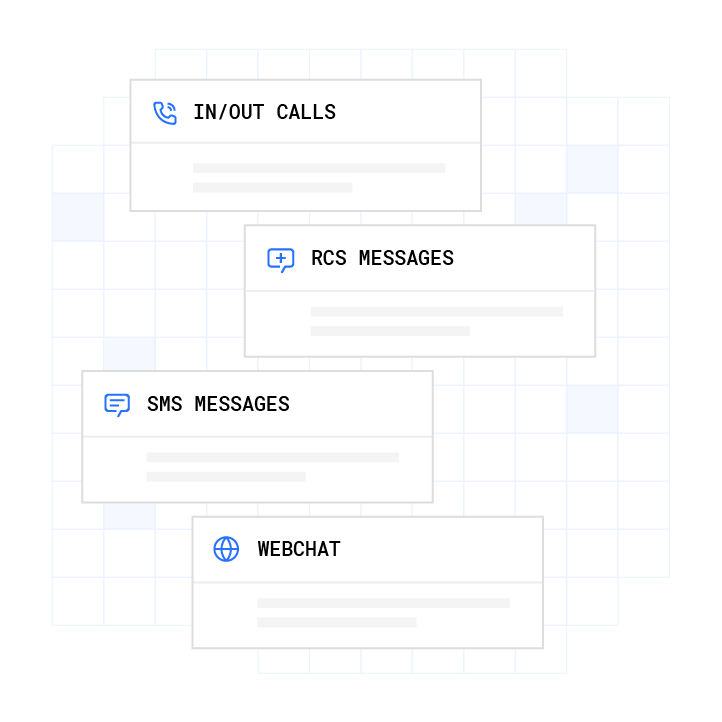
Plura AI’s AI SMS and AI Predictive Dialer run on one Stateful Conversation Database. Every interaction across voice, SMS, RCS (Rich Communication Services), and webchat is keyed to the same customer token. A lead who texted at 9 a.m. is the same lead when the call comes at noon. The rep receives the full SMS conversation history as context on the warm transfer. The lead avoids re-introductions and repeated qualification, and the lead qualification work the AI did in the text thread carries directly into the voice call.
This shared-memory architecture makes the hybrid workflow operationally viable at scale. Without shared memory, the two channels create friction. With shared memory, every text interaction makes the subsequent call more likely to convert.
Watch the Stateful Conversation Database carry a single lead from first text to warm transfer in a live Plura demo.
Common Operational Problems With Each System
Both workflows perform well when configured correctly, and both fail in predictable ways when they are not. Knowing these failure modes helps leaders choose and tune the right system for scale.
Predictive dialing at scale often surfaces abandoned calls as the most visible issue. When the algorithm outruns agent availability, a live person answers and hears silence or a click. ViciStack benchmarks a typical predictive-dialer abandonment rate of 1-3%, which sits near the FCC’s 3% ceiling. Staying under that ceiling requires real-time monitoring, correctly tuned answering machine detection sensitivity, and sufficient agent count for statistical stability. Below roughly 15 agents, the algorithm has limited data and behaves unpredictably.
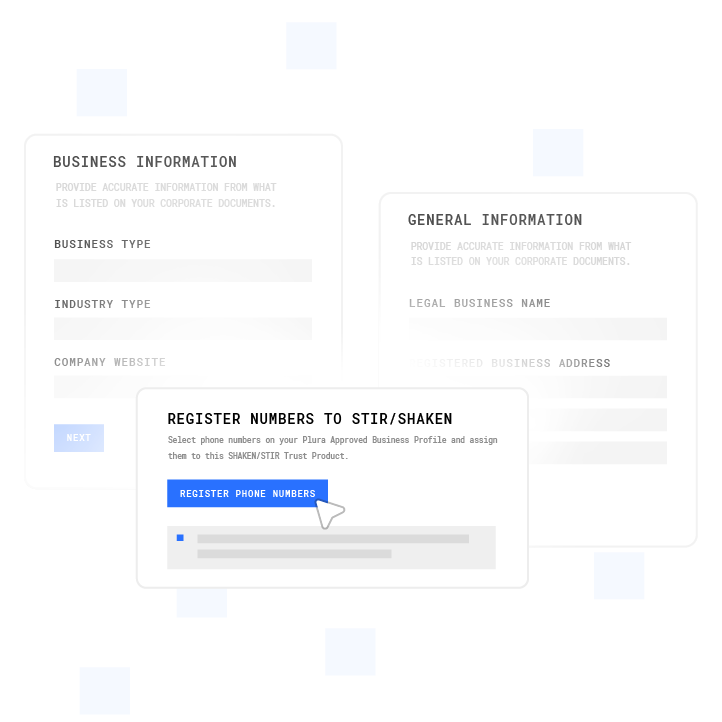
Number reputation is a second operational problem. Predictive dialers’ bursts of short, disconnected calls match the pattern carriers use to flag a number as “Spam Likely.” Once a number is flagged, pickup rates collapse regardless of list quality. Plura issues branded caller ID directly through its FCC-licensed carrier and supports STIR/SHAKEN caller ID authentication on every outbound call, which addresses this at the carrier level rather than as a bolt-on.
SMS-first workflows introduce their own risks. Broadcast SMS blasts sent without a two-way AI conversation layer often produce low response rates. Broadcast campaigns typically achieve only 8-15% response rates, versus 35-60% for AI-triggered SMS that initiates a two-way dialogue within seconds of a prospect’s action.3 The robotic feel of a one-way blast is the SMS equivalent of a prerecorded voice blast. It signals automation without delivering value and leaves agents idle waiting for warm transfers that never materialize.
Text to Call vs Predictive Dialer vs Auto Dialer
“Auto dialer” and “predictive dialer” often appear interchangeably in vendor marketing and operator conversations, but they describe different scopes. An auto dialer is a catch-all term for any system that dials numbers from a list automatically. It encompasses power dialers, progressive dialers, and predictive dialers, and the term alone reveals nothing about how many lines are open at once, whether a human is standing by, or the compliance exposure involved. A predictive dialer is a specific type of auto dialer that uses a pacing algorithm to dial multiple numbers per available agent simultaneously. The dialing mode running determines the compliance profile. When evaluating any “auto dialer” product, two questions reveal which category it falls into: how many lines it opens per rep, and what happens when two people answer at once.
Conclusion and Next Steps
The text to call vs predictive dialer decision reduces to how many agents you have dialing simultaneously and whether your leads will pick up a cold call. Predictive dialing maximizes agent talk time on cold lists at scale, but typically requires around 15 or more agents for statistical stability and carries abandonment-rate exposure that grows as team size shrinks. SMS-first text-to-call warms the lead before the dial, increases answer rates on the calls that go out, and delivers a qualified warm transfer instead of a cold connect. For most high-volume operators, the strongest model uses both workflows on shared memory so the lead never has to repeat themselves.
Plura AI runs AI SMS text-to-call and AI Predictive Dialer on one Stateful Conversation Database. Every text, every call, and every qualification signal lives in the same place. The rep who takes the warm transfer at noon already knows what the AI learned at 9 a.m. That architecture underpins the pipeline and response-time gains cited earlier.
See how the hybrid workflow performs on your list economics with Plura’s ROI calculator.
When you are ready to scope the rollout, compare plans and rates for your team size.
1 Plura AI maintains SOC 2, HIPAA, ISO, and GDPR posture as part of its platform infrastructure. References to compliance frameworks in this article describe Plura’s platform capabilities and do not constitute a guarantee that any customer using Plura will themselves be compliant with applicable laws or standards. Customers remain solely responsible for their own regulatory obligations, certifications, consent management, recordkeeping, and the claims they make to their own end users. Consult qualified legal counsel for guidance specific to your use case.
2 This article describes regulatory frameworks at a general level and does not constitute legal advice. Laws and regulations vary by jurisdiction, change over time, and apply differently depending on facts and circumstances. Readers should consult qualified legal counsel before making compliance decisions.
3 Performance figures, customer outcomes, and industry statistics referenced in this article are drawn from cited third-party sources or Plura customer case studies. Individual results vary based on implementation, use case, industry, audience, and execution. Past or aggregate performance is not a guarantee of future results.
4 References to third-party products, services, companies, or research are made for informational and comparative purposes only. Plura AI is not affiliated with, endorsed by, or sponsored by any third party named in this article unless explicitly stated. Trademarks and product names referenced remain the property of their respective owners.
This article is provided for informational purposes only and reflects Plura AI’s understanding at the time of publication. Product capabilities, integrations, and specifications are subject to change. For the most current information, visit plura.ai.
This article was produced with the assistance of AI tools and reviewed by Plura AI prior to publication.