
Written by: Matt Beucler, CEO, Plura AI
Key Takeaways
- VICIdial is an active open-source Asterisk-based platform for live-agent contact centers with blended inbound and outbound campaigns.4 Newfies-Dialer’s open-source line ended in 2015 and now exists as a commercial Star2Billing product for automated voice broadcasting and IVR campaigns.4
- The telephony engine choice shapes hiring and risk. Asterisk expertise for VICIdial is easier to find, while Newfies-Dialer’s FreeSWITCH and Django stack with an unmaintained codebase creates a narrower talent pool and higher maintenance risk.
- Total cost of ownership extends far beyond the $0 license. A 10-agent VICIdial deployment typically runs $2,360–$7,280 per month, with similar or higher spend for Newfies-Dialer once commercial licensing and engineering labor are included.3
- Neither legacy dialer natively handles carrier-level deliverability, spam labeling, STIR/SHAKEN attestation, or real-time compliance enforcement. These gaps often push operators to evaluate AI-native alternatives.
- For teams ready to move beyond legacy dialer limitations, Plura AI provides an AI-native predictive dialer with carrier-grade compliance support, branded caller ID, and real-time consent management.
Architecture and Engine: Asterisk vs FreeSWITCH
The telephony engine under each platform determines who can maintain it, how it behaves under load, and what fails at 2 a.m.
VICIdial runs on Asterisk with a PHP/MySQL application stack. The predictive dialing loop runs through Perl daemons. AST_VDauto_dial.pl monitors agent availability, calculates dial ratios, and sends originate commands to Asterisk over the Asterisk Manager Interface. AST_VDhopper.pl loads leads from the database into the dial hopper buffer. The full stack has five layers: a PHP/Apache or Nginx admin and agent web UI, Perl backend daemons, MySQL/MariaDB for lead data and configuration, the Asterisk PBX, and a Linux OS. ViciStack’s complete VICIdial guide documents this architecture in detail.
Newfies-Dialer runs on FreeSWITCH with a Django and Python stack and Lua for call control. It operates with message brokers such as RabbitMQ, Redis, and other supported brokers. Among the two dominant open-source telephony frameworks, Asterisk has the larger community and more third-party documentation. FreeSWITCH often scales more predictably under heavy concurrent-call loads.
The engine choice has a direct hiring impact. A sysadmin comfortable with Linux, Asterisk, and MySQL is a realistic hire for many teams. A FreeSWITCH, Django, and Lua engineer is a narrower search. For Newfies-Dialer, the last published open-source release was version 2.8.4 in October 2013, and open-source development stopped in 2015. Any engineer you hire maintains an unmaintained codebase rather than a supported one.
That maintenance burden scales with deployment size. For VICIdial, a single server with 8+ cores and 64 GB RAM handles 1–30 agents. A multi-server cluster covers roughly 30–200 agents. Operations above 200 agents require MySQL replication, multiple telephony servers, dedicated recording storage, and redundant web servers. Clusters running 500+ agents exist in production but require dedicated infrastructure teams.
Licensing and Community Status for Each Platform
Licensing for these platforms is not equivalent, and treating them as parallel open-source options often wastes months of evaluation time.
VICIdial maintains an active open-source core under AGPLv2 with no per-seat fees. As of March 2026, VICIdial’s open-source core is at SVN revision 3939+, version 2.14b0.5, with feature and bug-fix commits landing roughly every week. The project releases updates through SVN rather than Git. The official installation image is ViciBox 12.0.2, released September 29, 2025, shipping with OpenSuSE 15.6, Asterisk 18 with PJSIP support, PHP 8.2, MariaDB 10.11.9, and the VICIphone 3.0 WebRTC softphone.
Newfies-Dialer’s status follows a different path. Its maintainers state that open-source development stopped in 2015, with subsequent work moving to a closed-source commercial spinoff. The last published open-source release was version 2.8.4, dated October 2013. The current product is a commercial platform stewarded by Star2Billing.
Buyers who approach Newfies-Dialer as a free open-source alternative are evaluating a codebase that has not received maintenance commits in over a decade. Licensing today is a commercial engagement with Star2Billing. Any operator building on the old repository owns the maintenance burden entirely.
Agent Workflow vs Automated Campaign Workflow
The choice between VICIdial and Newfies-Dialer represents a fork in operational model rather than a simple feature checklist.
VICIdial supports live-agent floors. Its feature set centers on blended inbound and outbound campaigns, agent scripting, agent state management, supervisor monitoring tools, real-time reporting, and predictive and progressive dialing modes tied to agent availability. Typical users include outbound sales operations in solar, insurance, home services, political campaigns, debt consolidation, and real estate, plus collection agencies, BPOs, and some government agencies. The platform assumes a human agent handles every connected call.
Newfies-Dialer supports automated campaigns where no live agent participates unless the workflow routes the contact to one. Its documented use cases include voice broadcasting, appointment reminders, surveys, press-1 transfers, and IVR-driven automated campaigns. Newfies-Dialer fits notification and survey campaigns run by technical teams comfortable maintaining an unmaintained codebase.
Teams with agents waiting for calls align with VICIdial’s architecture. Operations that send automated messages and route responses align with Newfies-Dialer’s model, with the licensing caveat above applied.
Total Cost of Ownership: The Line Item Vendor Pages Omit
VICIdial carries a $0 software license for its open-source distribution, while Newfies-Dialer’s open-source line ended in 2015 and now exists only as a paid, closed-source product. That licensing difference does not change the bottom line: neither platform is free to operate.
For VICIdial, the real cost structure is the ongoing sysadmin labor required to run the Asterisk, PHP, and MySQL stack. The VICIdial system administrator role covers server maintenance, software updates, security patching, Asterisk configuration, database optimization, and late-night troubleshooting, with a full-time salary range of $65,000 to $120,000 per year or contract rates of $50 to $150 per hour. When you add hosting, telephony termination, compliance tooling, and monitoring, a 10-agent VICIdial deployment costs approximately $2,360 to $7,280 per month all-in. The ViciStack Team’s March 2026 analysis summarizes it clearly: “If that person does not exist on your team, VICIdial will eat you alive with operational overhead.”
For Newfies-Dialer, the cost structure centers on commercial licensing with Star2Billing plus the engineering labor to run the FreeSWITCH and Django stack. Because the open-source codebase is unmaintained, operators who self-host the last published release own every bug, security patch, and compatibility fix. The stalled development creates a maintenance problem rather than only a dated interface problem.
Vendor pages typically highlight the $0 license and downplay infrastructure, carrier costs, operational support, and the labor required after the consultant leaves. A realistic TCO model includes all of those lines.
Run your numbers through Plura’s calculator to check your ROI in real time.
The Third Path: AI-Native Dialing
Many operators who finish a VICIdial or Newfies-Dialer evaluation and still feel stuck are solving a carrier and compliance problem rather than a dialer feature problem. The migration decision often starts with spam labeling, DNC scrubbing, TCPA consent logging, and branded caller ID issues that neither legacy dialer addresses natively.2
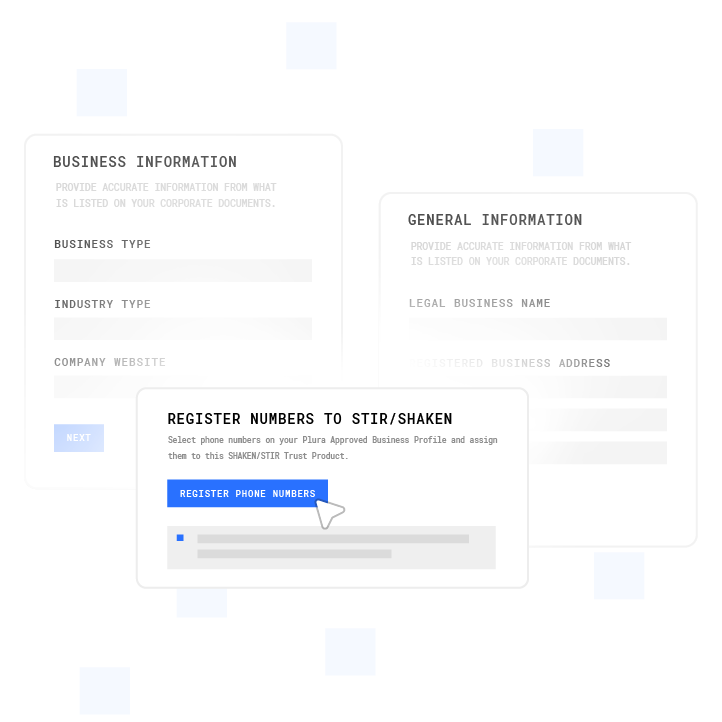
VICIdial does not handle STIR/SHAKEN signing itself. That configuration lives with the SIP carrier. An outbound campaign that reached 35% of dialed numbers in 2023 may reach only 18 to 22% in 2026 if attestation is misconfigured.3 VICIdial’s built-in compliance tooling includes DNC list functionality and timezone restrictions. It does not include enterprise-grade consent management, real-time litigation risk scoring, or state-level compliance automation. Newfies-Dialer’s open-source line predates the current STIR/SHAKEN framework entirely.
For operators whose real constraint is carrier-level deliverability and compliance enforcement before dial, Plura AI’s AI Predictive Dialer focuses on that layer. Plura is its own FCC-licensed audio bridging carrier. That carrier position lets it issue branded caller ID at the carrier level and run STIR/SHAKEN authentication on every outbound call. It also enforces DNC scrubbing, TCPA-litigator screening, automated quiet hours, and immutable consent logging inside the platform on every outbound contact. Plura’s compliance engine supports SOC 2, HIPAA, ISO certification, GDPR, SHAKEN/STIR caller ID verification, TCPA compliance, and DNC compliance as platform layers.1,2 Customers remain responsible for their own regulatory obligations.
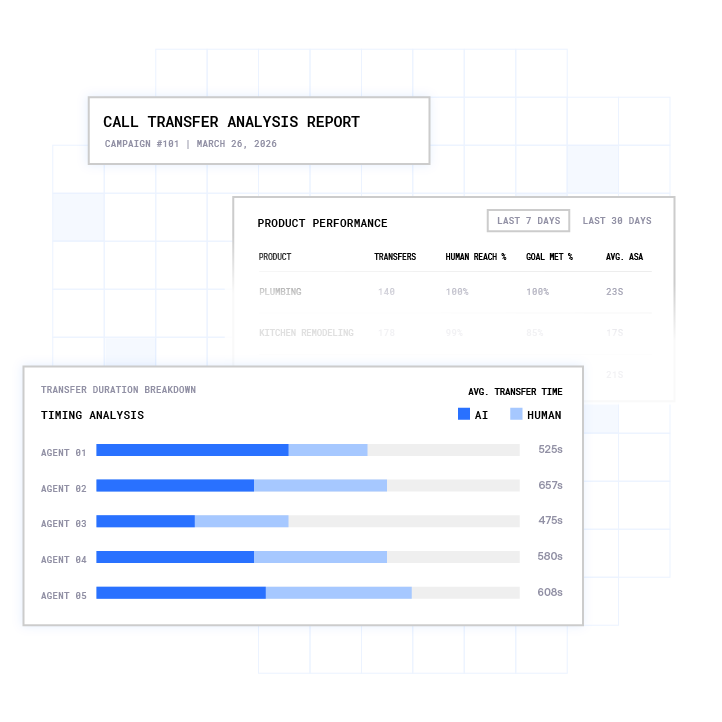
Book a live demo with Plura to see how the AI Predictive Dialer handles deliverability and compliance at the carrier level.
Decision Framework for VICIdial, Newfies-Dialer, and AI-Native Dialers
Use this framework to align your platform choice with how your operation actually runs.
Choose VICIdial if:
- You run a live-agent contact center with blended inbound and outbound campaigns.
- You have in-house Asterisk, PHP, and MySQL sysadmin capacity or a managed hosting budget.
- You want an active open-source core with a long community history and regular SVN commits.
- Your operation runs 75 or more agents, where VICIdial’s cost advantage over commercial platforms becomes material for outbound-focused operations with competent technical management.
Choose Newfies-Dialer if:
- Your operation focuses on automated voice broadcasting, appointment reminders, surveys, or press-1 transfers with no live-agent floor.
- You are prepared for a commercial licensing engagement with Star2Billing rather than an open-source deployment.
- Your technical team can maintain a FreeSWITCH and Django stack without vendor support.
Choose an AI-native dialer if:
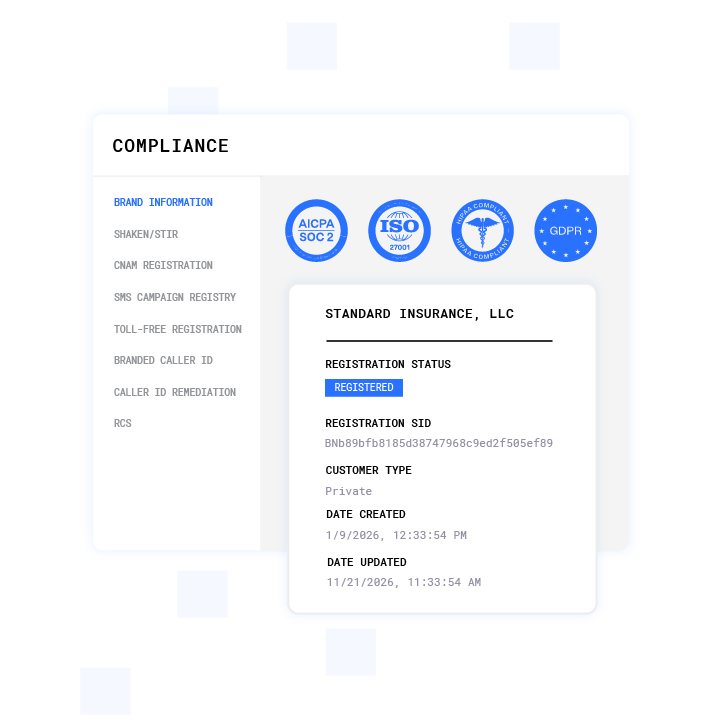
- Your primary constraint is carrier-level deliverability, spam labeling, and compliance enforcement before dial.
- You need branded caller ID issued at the carrier level rather than through a third party.
- You want STIR/SHAKEN authentication, real-time DNC scrubbing, and immutable consent logging inside the platform on every contact.
Is VICIdial Free to Use?
VICIdial’s software is licensed under AGPLv2 with no per-seat fees, so the license itself costs nothing. Hosting, telephony termination, and the sysadmin labor to run the Asterisk, PHP, and MySQL stack are recurring costs that range from part-time contractor fees at small scale to a full-time senior sysadmin salary at 50 or more agents.
How Much Does VICIdial Cost?
A 10-agent VICIdial deployment costs approximately $2,360–$7,280 per month all-in, covering infrastructure, VoIP, compliance tooling, and a part-time contractor. A 50-agent operation runs $15,830–$30,400 per month including a full-time sysadmin. The open-source core carries no license fee. The cost structure is hosting, telephony termination, and the labor to maintain the Asterisk, PHP, and MySQL stack.
Is VICIdial Open Source?
VICIdial maintains an active open-source core. It runs under AGPLv2 at SVN revision 3939+, version 2.14b0.5 as of March 2026, with regular commits and a long community history. This contrasts with the Newfies-Dialer 2015 end-of-life noted earlier.
What Are Good Alternatives to VICIdial?
Alternatives split along operational model. Agent-centric contact center suites support live-agent floors. Automated broadcast platforms support reminder, survey, and IVR-driven campaigns. AI-native dialers support operators whose primary constraint is carrier-level deliverability, compliance enforcement, and branded caller ID rather than dialer feature sets. The right alternative depends on which of these three models matches your floor. See Plura’s comparison hub for a deeper look at the AI-native path.
VICIdial vs Newfies-Dialer at a Glance
The table below summarizes how the two platforms differ on the attributes that most often drive evaluations: primary focus, telephony engine, multi-tenancy and billing, and ecosystem status.
| Attribute | VICIdial | Newfies-Dialer |
|---|---|---|
| Primary Focus | Agent-centric blended inbound and outbound contact center | Automated voice broadcasting, IVR campaigns, surveys, reminders |
| Telephony Engine | Asterisk with PHP and MySQL stack and Perl daemons via AMI | FreeSWITCH with Django and Python stack, Lua call control, RabbitMQ |
| Multi-Tenancy and Billing | Supported via cluster architecture, with no built-in billing module | Commercial Star2Billing product includes billing features in the current paid offering |
| Ecosystem Status | Active open-source core, AGPLv2, SVN revision 3939+ as of March 2026 | Open-source line ended around 2015 with last open-source release v2.8.4; current product is commercial |
VICIdial vs GoAutoDial vs Newfies-Dialer
GoAutoDial is a VICIdial-based distribution rather than an independent dialing engine. GoAutoDial’s README lists VICIdial and Asterisk as core components, so its dialing engine is VICIdial wrapped in a friendlier setup process. Choosing GoAutoDial over VICIdial changes packaging, not architecture. The Asterisk, PHP, and MySQL maintenance burden, the STIR/SHAKEN dependency on the SIP carrier, and the compliance gaps remain the same. GoAutoDial Community Edition 4.0 shipped in 2019 running VICIdial revision roughly 2900–3200 and has not received a major update since, leaving it about six years behind VICIdial’s current SVN trunk on security patches, PHP 8 compatibility, Asterisk 18 support, WebRTC, STIR/SHAKEN awareness, and two-factor authentication.
Conclusion
VICIdial and Newfies-Dialer represent two different operational models built on two different telephony engines. VICIdial is a live-agent contact center platform with an active open-source core and a meaningful maintenance burden. Newfies-Dialer is an automated campaign platform whose open-source line ended in 2015 and whose current product is a commercial Star2Billing offering. The choice between them shapes how your floor makes calls and how your technical team spends its time.
The migration decision out of either legacy dialer is often driven by carrier-level deliverability, spam labeling, STIR/SHAKEN attestation, and compliance enforcement before dial. These are carrier-layer problems that call for a carrier-layer solution.
Compare plans and rates side by side.
Model your own TCO against a Plura deployment.
Frequently Asked Questions
What Is the Difference Between VICIdial and Newfies-Dialer?
VICIdial is a live-agent contact center platform built on Asterisk. It supports outbound and blended inbound and outbound campaigns where human agents handle every connected call. Its feature set centers on agent state management, predictive and progressive dialing modes, supervisor monitoring, and campaign reporting. Newfies-Dialer is a FreeSWITCH-based platform designed for automated campaigns where no live agent participates unless the IVR flow routes the contact to one. Its documented use cases include voice broadcasting, appointment reminders, surveys, and press-1 transfers. The two platforms serve different operational models, so selecting the wrong one often means rebuilding the architecture rather than adjusting a setting.
Is Newfies-Dialer Still Open Source?
Newfies-Dialer’s open-source development stopped in 2015. The last published open-source release was version 2.8.4, dated October 2013. The current product is a commercial offering stewarded by Star2Billing. Operators who use the old repository are working with an unmaintained codebase that has received no security patches, compatibility updates, or feature development for over a decade. Any evaluation of Newfies-Dialer as a current option should focus on the commercial Star2Billing product.
What Does It Actually Cost to Run VICIdial?
The software license is free under AGPLv2, but the operation carries ongoing costs. The real cost structure includes server infrastructure, telephony termination, compliance tooling, and the sysadmin labor to maintain the Asterisk, PHP, and MySQL stack. The 10-agent and 50-agent ranges above provide reference points. The sysadmin salary, which runs $65,000 to $120,000 per year for a competent Asterisk, Linux, and MySQL administrator, is the largest single cost line and the one most often omitted from vendor-page comparisons.
Does VICIdial Handle STIR/SHAKEN and Spam Labeling?
VICIdial does not handle STIR/SHAKEN signing itself. The SIP carrier determines attestation level. An operation running VICIdial on a carrier that issues Level B or C attestation will often see calls labeled as spam by downstream carriers, because attestation level is a carrier decision rather than a dialer configuration. Carrier selection is a compliance and deliverability decision that sits outside VICIdial’s feature set. Operators who need Level A attestation must select a SIP carrier that can verify the originating number and issue full attestation. VICIdial’s built-in compliance tooling covers DNC list management and timezone-based calling hour restrictions. It does not include real-time consent management, TCPA-litigator screening, or state-level compliance automation.
When Should an Operator Consider an AI-Native Dialer?
Many operators consider an AI-native dialer when their main problems involve spam labeling, branded caller ID, STIR/SHAKEN attestation, real-time DNC scrubbing, and TCPA consent logging. If the primary constraint is carrier-level deliverability and compliance enforcement before dial rather than dialer features, the architecture decision shifts away from the VICIdial versus Newfies-Dialer fork. An AI-native dialer that operates as its own FCC-licensed carrier can issue branded caller ID at the carrier level, run STIR/SHAKEN authentication on every outbound call, and enforce compliance inside the platform rather than through third-party tools. Teams benefit from clarifying whether they face a dialer problem or a carrier-and-compliance problem before committing to a legacy open-source architecture that does not address the latter.
1 Plura AI maintains SOC 2, HIPAA, ISO, and GDPR posture as part of its platform infrastructure. References to compliance frameworks in this article describe Plura’s platform capabilities and do not constitute a guarantee that any customer using Plura will themselves be compliant with applicable laws or standards. Customers remain solely responsible for their own regulatory obligations, certifications, consent management, recordkeeping, and the claims they make to their own end users. Consult qualified legal counsel for guidance specific to your use case.
2 This article describes regulatory frameworks at a general level and does not constitute legal advice. Laws and regulations vary by jurisdiction, change over time, and apply differently depending on facts and circumstances. Readers should consult qualified legal counsel before making compliance decisions.
3 Performance figures, customer outcomes, and industry statistics referenced in this article are drawn from cited third-party sources or Plura customer case studies. Individual results vary based on implementation, use case, industry, audience, and execution. Past or aggregate performance is not a guarantee of future results.
4 References to third-party products, services, companies, or research are made for informational and comparative purposes only. Plura AI is not affiliated with, endorsed by, or sponsored by any third party named in this article unless explicitly stated. Trademarks and product names referenced remain the property of their respective owners.
This article is provided for informational purposes only and reflects Plura AI’s understanding at the time of publication. Product capabilities, integrations, and specifications are subject to change. For the most current information, visit plura.ai.
This article was produced with the assistance of AI tools and reviewed by Plura AI prior to publication.