
Written by: Matt Beucler, CEO, Plura AI
Key Takeaways for Outbound Leaders
- VICIdial and Nextiva both leave high-volume outbound teams carrying risk.4 VICIdial shifts infrastructure and compliance work to operators, while Nextiva’s UCaaS-first design does not support aggressive predictive dialing.
- Self-hosted dialers hide four major cost drivers: labor, carrier fees, DNC scrubbing, and growing regulatory exposure. These costs erode the headline savings of open-source platforms.
- Nextiva’s Enterprise Contact Center plans start around $75 per agent per month and often run higher with add-ons. The platform lacks native AI pacing, abandoned-call controls, and carrier-grade throughput for 50+ agent outbound campaigns.
- Plura AI’s AI Predictive Dialer delivers 3× ROI in 90 days, 47% pipeline growth, and 90% faster lead response by running on its own FCC-licensed carrier with real-time DNC/TCPA compliance support and STIR/SHAKEN on every call.1
- Modern outbound teams ready to replace legacy platforms can talk with Plura AI to see how the platform reduces risk and accelerates measurable results.
VICIdial Costs for 50–200 Agent Floors
VICIdial is open-source software, so the license is free, but the total cost of ownership is not. ViciStack’s 2026 TCO models show that self-hosted VICIdial deployments can involve significant all-in monthly costs per agent, depending on scale, architecture, and whether administration is handled in-house or outsourced.
The cost breakdown at 50 agents shows how quickly expenses stack up. ViciStack’s March 2026 pricing guide details managed VICIhost hosting for a 50-agent deployment, including SIP trunking and support. Self-hosted deployments at 50 agents require bare-metal infrastructure, initial provisioning, and ongoing maintenance.
Beyond infrastructure, labor is the line item operators most frequently underestimate. ViciStack’s 2026 analysis cites a full-time VICIdial system administrator in Pakistan earning Rs. 150,000–300,000 per year. VoIP carrier costs for predictive outbound dialing then sit on top of that as a major and consistent TCO component.
Economics improve with scale but never disappear. At 200 agents, ViciStack’s 2026 models estimate lower per-agent costs, yet the absolute spend remains material. Below 30 agents, per-agent overhead erodes most of the savings that make self-hosting attractive.
Nextiva’s Limits for Predictive Outbound
Nextiva is a unified communications platform centered on inbound call handling, team collaboration, and business phone service. Its architecture and roadmap reflect that inbound and UCaaS focus. EngageLab’s June 2026 cloud contact center analysis places Nextiva’s Enterprise Contact Center plans starting around $75 per agent per month, with real deployments often landing above the base price once add-ons and fees are included.
High-volume outbound teams running 50 or more agents on predictive campaigns run into structural limits with that design. The platform does not provide the call-pacing algorithms, abandoned-call management, or carrier-level throughput that outbound operations rely on to keep agents talking instead of waiting.
Aircall’s 2026 AI outbound calling analysis identifies a hybrid AI-human model as the highest-ROI approach for outbound. AI voice agents handle high-volume prospecting and qualification, while humans manage complex negotiation via warm transfers. Nextiva does not natively support that outbound architecture at scale.
Operators evaluating Nextiva for outbound also weigh the compliance posture. The FCC’s February 2024 declaratory ruling classifies AI-generated voice calls as “artificial voice” under the TCPA (Telephone Consumer Protection Act, 47 U.S.C. § 227), describing prior written consent and immediate AI disclosure at the start of every outbound call.2 Platforms without native real-time DNC (Do Not Call) registry synchronization and STIR/SHAKEN caller ID authentication can increase the risk of carrier spam flags and TCPA litigation. Consult qualified counsel on your specific obligations under applicable federal and state rules.
Run your numbers through Plura’s calculator to check your ROI in real time.
Plura AI for 50+ Agent VICIdial Replacements
High-volume outbound operations running 50 or more agents share four core requirements. They need AI-driven call pacing, carrier-grade reliability, real-time compliance support, and no dependency on internal Linux or Asterisk administration. Plura AI’s AI Predictive Dialer is built around those needs.
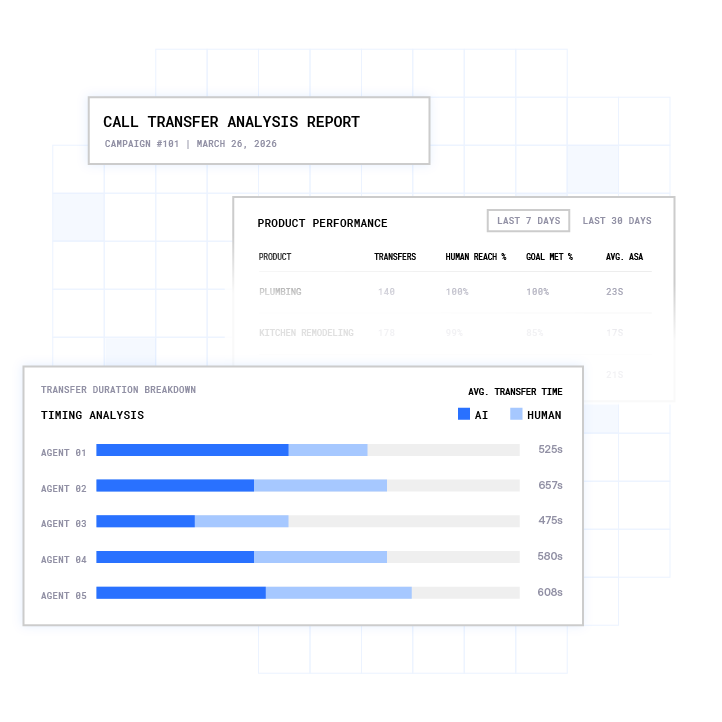
Plura operates as its own FCC-licensed audio bridging carrier, so voice does not route through a third-party CPaaS provider. This carrier ownership matters for three reasons. It improves per-minute economics, issues branded caller ID at the carrier level instead of as an overlay, and supports compliance controls at origination rather than as an add-on.
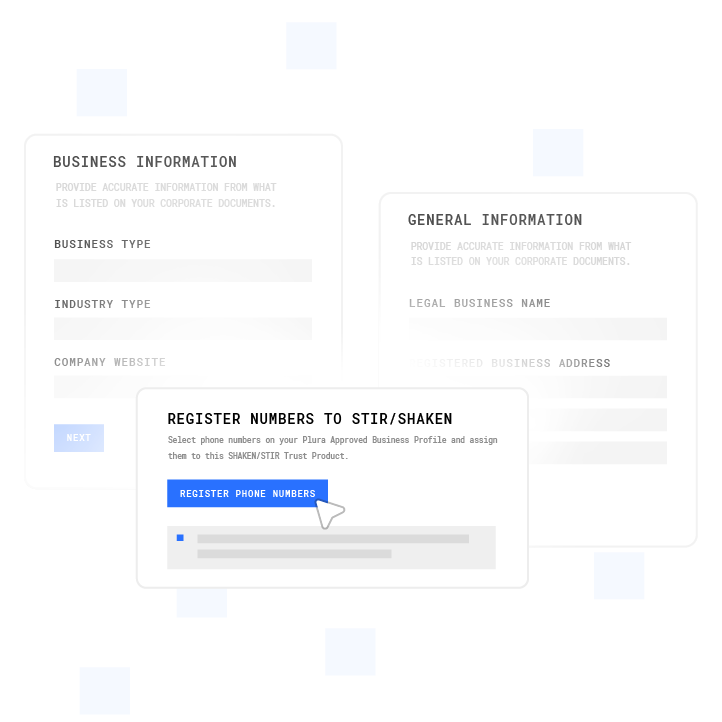
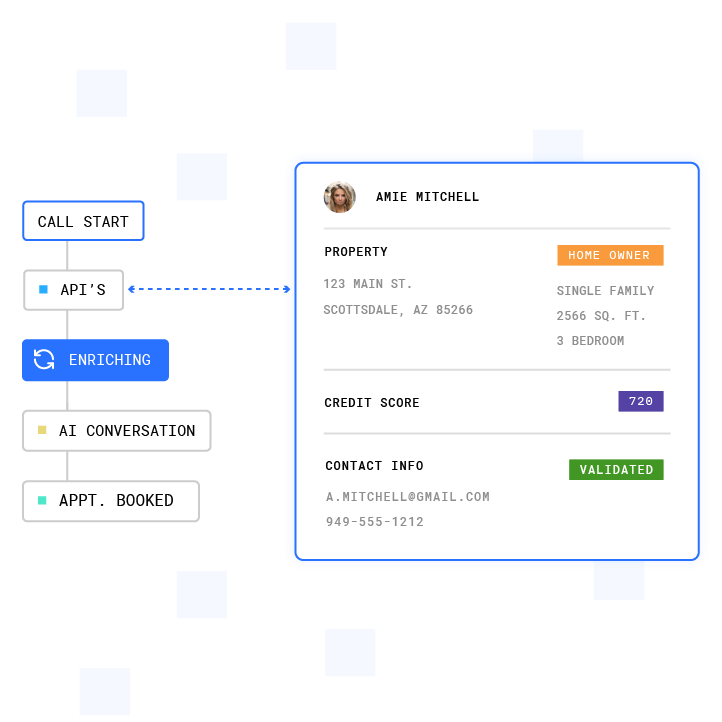
Beyond the carrier infrastructure, the dialing intelligence itself sets Plura apart. The AI Predictive Dialer uses stateful conversion signals to decide who to call next, drawing on historical answer rates, prior negotiation outcomes, and prior offer-acceptance bands. Those calls then flow over Plura’s FCC-licensed carrier with branded caller ID and STIR/SHAKEN authentication on every outbound call. The platform runs on 100% U.S. infrastructure by architecture, with voice origination, model hosting, data storage, and call recording all on domestic infrastructure.
Deployment timelines reflect the absence of self-hosting complexity. A standard 50+ agent VICIdial enterprise build can be completed in 24 hours or less using professional installation services or automated tools such as VICIbox per HostedVICIdial.com. Plura typically goes live in days to weeks depending on conversation complexity, with no Linux administration, no Asterisk cluster design, and no independent carrier integration.
At the TCO level, Plura’s economics replace the traditional contact-center cost structure. A TCO of $300,000 to $700,000 per year replaces the $4M to $7M traditional contact-center economics at equivalent volume, per plura.ai/guides/ai-communications-strategy. The AI Predictive Dialer runs at 100% talk utilization without taxes, benefits, commissions overhead, or rehiring cycles.
Four Hidden Cost Layers in Self-Hosted Dialers
Self-hosted dialers carry four categories of cost that rarely appear in the initial build estimate. Each category compounds the others, so the TCO gap widens as regulatory requirements tighten.
The first category is administrative overhead. ECDialers’ 2026 VICIdial guide documents that self-hosting places full responsibility on the operator for 24/7 monitoring, security patching across the LAMP and Asterisk stack, database optimization, backup and disaster recovery, capacity planning, carrier integration management, and periodic VICIdial upgrades. A large self-hosted VICIdial operation with in-house administration involves significant monthly costs, with SIP trunking as a major component, per ViciStack’s March 2026 pricing guide. Without dedicated staff, the remaining three cost categories become difficult to manage.
The second category is carrier fees. At scale, high outbound minutes generate substantial per-minute telecom spend on top of seat licenses, per ViciStack’s hosted vs. self-hosted cost analysis. These costs scale directly with call volume, so they remain predictable but unavoidable.
The third category is DNC scrubbing and compliance tooling. The FTC describes National Do Not Call Registry scrubs within 31 days before any marketing call, per LeadCompliant’s 2026 dialer compliance analysis. Self-hosted operators must source, integrate, and maintain this scrubbing independently. The FCC references a maximum abandoned call rate of 3% per campaign measured over a 30-day period for predictive dialers. Monitoring and enforcing that threshold requires active campaign management that many cloud platforms automate. This category intersects with administrative overhead and carrier fees, because non-compliant calls that carriers block can still incur charges.
The fourth category is regulatory exposure. The FCC’s April 30, 2026 Further Notice of Proposed Rulemaking (FNPRM, CG Docket Nos. 17-59 and 02-278) discusses per-call penalties for originating voice service providers that violate proposed KYC rules intended to address illegal robocalls. Self-hosted operators who rely on manual compliance processes face growing exposure as the FCC formalizes Know-Your-Customer expectations and automated compliance tools become standard. This risk layer sits on top of the previous three, because gaps in administration, carrier choice, or compliance tooling can trigger the penalties described. Consult qualified counsel on how these FCC rules and applicable state onshoring laws apply to your operation.
Platform Comparison: VICIdial vs Nextiva vs Plura AI
Compare plans and rates side by side at Plura pricing.
Conclusion: Reducing Risk in Outbound Operations
VICIdial and Nextiva each address part of the outbound call center problem but leave operators exposed. VICIdial offers cost advantages at scale while transferring infrastructure, administration, carrier management, and compliance work to the operator. Nextiva removes much of that IT burden but does not support the call-pacing demands of a 50+ agent outbound floor. Neither platform fully aligns with the 2026 regulatory environment, where the FCC’s FNPRM discusses per-call penalties for originating providers, the TCPA’s abandoned-call limits require active monitoring, and state onshoring laws in New York, New Jersey, Connecticut, Missouri, and Florida restrict offshore handling of sensitive consumer data.
Plura AI’s AI Predictive Dialer removes many of those trade-offs. It runs on Plura’s own FCC-licensed carrier, deploys in days to weeks with zero self-hosting, supports compliance with real-time DNC scrubbing and STIR/SHAKEN authentication on every call, and operates on the U.S.-only infrastructure detailed earlier. The economics outlined earlier, a TCO reduction from $4M–$7M to $300K–$700K per year, represent a structural cost advantage over legacy platforms. Operators report the performance metrics outlined earlier: 3x average ROI in 90 days, 47% pipeline growth, and 90% faster lead-response time.
For contact center leaders, agency owners, and C-suite executives evaluating their outbound stack in 2026, the decision centers on which replacement reduces the most risk while delivering the clearest financial return.
Run your numbers through Plura’s calculator to check your ROI in real time.
Compare plans and rates side by side at Plura pricing.
Frequently Asked Questions
How does VICIdial differ from a modern AI Predictive Dialer?
VICIdial is open-source call center software built on Asterisk that automates outbound dialing from a pre-loaded list and routes answered calls to available agents. It requires a self-hosted Linux server environment, dedicated system administration, and independent carrier and compliance management. A modern AI Predictive Dialer like Plura’s uses stateful conversion signals to prioritize which contacts to call next, runs on carrier-grade cloud infrastructure with branded caller ID and STIR/SHAKEN authentication built in, and enforces real-time DNC scrubbing before every dial.
The operational difference is that VICIdial transfers the infrastructure burden to the operator, while Plura’s AI Predictive Dialer absorbs it. The compliance difference is that VICIdial relies on manual processes to stay within FCC abandoned-call limits and TCPA consent frameworks, while Plura’s platform supports those obligations at the infrastructure level. Customers remain responsible for their own regulatory obligations regardless of which platform they use.
Why is Nextiva a poor fit for high-volume outbound predictive dialing?
Nextiva is a UCaaS platform designed primarily for inbound call handling, team messaging, and business phone service, and its architecture reflects that focus. High-volume outbound predictive dialing requires call-pacing algorithms that forecast agent availability and dial ahead, abandoned-call monitoring to stay within FCC limits, real-time DNC registry synchronization, and carrier-level throughput for 50 or more simultaneous lines.
Nextiva’s Enterprise Contact Center plans start at approximately $75 per agent per month before add-ons, yet the platform does not natively provide the AI-driven pacing and compliance automation that aggressive outbound operations require. Operators running 50+ agents on outbound campaigns often find that Nextiva’s architecture creates a ceiling on performance that a purpose-built AI Predictive Dialer avoids.
Which compliance risks should outbound call centers track in 2026?
Several regulatory developments in 2026 affect outbound operators and warrant review with qualified counsel. The FCC’s April 30, 2026 Further Notice of Proposed Rulemaking (FNPRM, CG Docket Nos. 17-59 and 02-278) discusses per-call penalties for originating voice service providers that violate proposed KYC rules intended to prevent illegal robocalls and outlines Know-Your-Customer expectations for high-volume callers.
The FCC’s “revoke all” rule under 47 C.F.R. § 64.1200(a)(10), which treats a single revocation request as applying across channels and future communications, has an extended effective date of January 31, 2027.2 The FCC’s Robocall Mitigation Database rules, effective February 5, 2026, require annual recertification by March 1 and multi-factor authentication for database access. State laws in New York, New Jersey, Connecticut, Missouri, and Florida restrict offshore handling of medical, financial, and consumer data. Florida’s Telephone Solicitation Act describes a private right of action with $500 per-call damages for certain automated calls made without prior express written consent. Consult qualified counsel on how each framework applies to your operation and technology stack.
How long does migration from VICIdial to Plura’s AI Predictive Dialer take?
Plura’s deployment timeline typically runs days to weeks depending on conversation complexity, compared to the time a standard 50+ agent VICIdial enterprise build requires. A standard 50+ agent VICIdial enterprise build can be completed in 24 hours or less using professional installation services or automated tools such as VICIbox per HostedVICIdial.com. Migration from a heavily customized VICIdial fork can involve 6 to 12 months of integration work and retraining risk for enterprise operations running high daily call volumes.
Plura’s onboarding sequence includes a discovery audit of call economics, intake of existing scripts and SOPs, an overnight build of a conversation mockup, a review and iteration session, engineering build of the production workflow, a pilot test on a subset of real calls, and full go-live. Every annual contract includes a 90-day opt-out window if the deployment is not delivering. After launch, there is no Linux administration, no Asterisk cluster to configure, and no carrier integration to manage independently.
How does Plura’s AI Predictive Dialer address spam labeling and pickup rates?
Spam labels sit at the carrier level, so they require a carrier-level response. Plura issues branded caller ID directly through its FCC-licensed carrier, so calls present with the company’s name and the reason for the call instead of “Spam Likely” or an unfamiliar number. STIR/SHAKEN authentication runs on every outbound call, and the destination carrier uses that signal to help verify legitimate origination.
Plura’s AI also communicates with Apple’s iOS 26 call-screening layer, so calls that might otherwise be intercepted before they ring can present a recognizable identity to the recipient. Most AI voice platforms built on third-party CPaaS providers cannot issue branded caller ID at the carrier level because they do not own the carrier. They inherit the CPaaS provider’s caller ID reputation instead of their own, which limits their ability to address spam labels at the source.
1 Plura AI maintains SOC 2, HIPAA, ISO, and GDPR posture as part of its platform infrastructure. References to compliance frameworks in this article describe Plura’s platform capabilities and do not constitute a guarantee that any customer using Plura will themselves be compliant with applicable laws or standards. Customers remain solely responsible for their own regulatory obligations, certifications, consent management, recordkeeping, and the claims they make to their own end users. Consult qualified legal counsel for guidance specific to your use case.
2 This article describes regulatory frameworks at a general level and does not constitute legal advice. Laws and regulations vary by jurisdiction, change over time, and apply differently depending on facts and circumstances. Readers should consult qualified legal counsel before making compliance decisions.
3 Performance figures, customer outcomes, and industry statistics referenced in this article are drawn from cited third-party sources or Plura customer case studies. Individual results vary based on implementation, use case, industry, audience, and execution. Past or aggregate performance is not a guarantee of future results.
4 References to third-party products, services, companies, or research are made for informational and comparative purposes only. Plura AI is not affiliated with, endorsed by, or sponsored by any third party named in this article unless explicitly stated. Trademarks and product names referenced remain the property of their respective owners.
This article is provided for informational purposes only and reflects Plura AI’s understanding at the time of publication. Product capabilities, integrations, and specifications are subject to change. For the most current information, visit plura.ai.
This article was produced with the assistance of AI tools and reviewed by Plura AI prior to publication.