
Written by: Matt Beucler, CEO, Plura AI
Key Takeaways
- Sales automation for healthcare starts with architecture. Prospect data can enter the CRM and automation layer. PHI stays in clinical systems.
- Generic B2B automation platforms struggle in healthcare because they ignore long buying cycles, multi-stakeholder committees, and regulatory requirements such as BAA and data-residency rules.
- Healthcare sales automation must segment by payer, provider, and life sciences. Each segment has distinct stakeholders, cycle lengths, and compliance surfaces.
- Plura AI runs on 100% U.S. infrastructure, provides FCC-licensed voice services, and includes built-in controls that support SOC 2, HIPAA, TCPA, and DNC compliance within state-level data-residency mandates.1
- See Plura AI in a live walkthrough to review the safe data-flow architecture and accelerate compliant healthcare sales automation.
What Sales Automation For Healthcare Actually Means
Healthcare sales automation is an architecture decision, not a CRM tweak or a sequence template. The architecture determines which data enters which system, under what legal basis, and where it physically resides. Generic B2B automation platforms rarely account for these constraints, and the gap appears quickly when a hospital IT team asks where call recordings are stored or a compliance officer asks whether the outreach vendor has signed a BAA.
The architecture question comes before the tool question. Data-flow order determines which tools are even eligible, and segmentation defines which stakeholders the workflow must serve. Most failed healthcare automation deployments reversed that order, selecting tools first and then discovering that the tools could not operate within the required data boundaries.
Why Generic Sales Automation Breaks In Healthcare
Standard SaaS sales playbooks assume a single decision-maker and a cycle measured in weeks. Healthcare operates on longer timelines with larger committees. Gangly’s May 2026 healthcare sales cycle guide reports that the average health IT deal for a mid-size hospital system runs 9 to 18 months.4 Capital medical device deals for major academic medical centers run 12 to 24 months. Medix Outreach’s July 2026 analysis puts the average B2B healthcare deal at more than 20 decision-makers, with deals stalling around 68% of the time when stakeholders fall out of alignment.
Buying committees span clinical, IT, compliance, finance, and procurement functions. Any one of those roles can stop a deal outright. A sequence tool that fires five emails to a single contact and calls it a campaign does not reflect a healthcare sales motion. It burns a domain and irritates a CISO.
For a deeper look at lead qualification mechanics and CRM workflow examples, see Plura’s guides library. This article focuses on architecture, segmentation, and regulatory constraints.
The Safe Data-Flow Architecture For Healthcare Sales Automation
The core rule is simple. Prospect and other non-PHI data can flow into the CRM and the automation layer. PHI remains in clinical and operational systems.
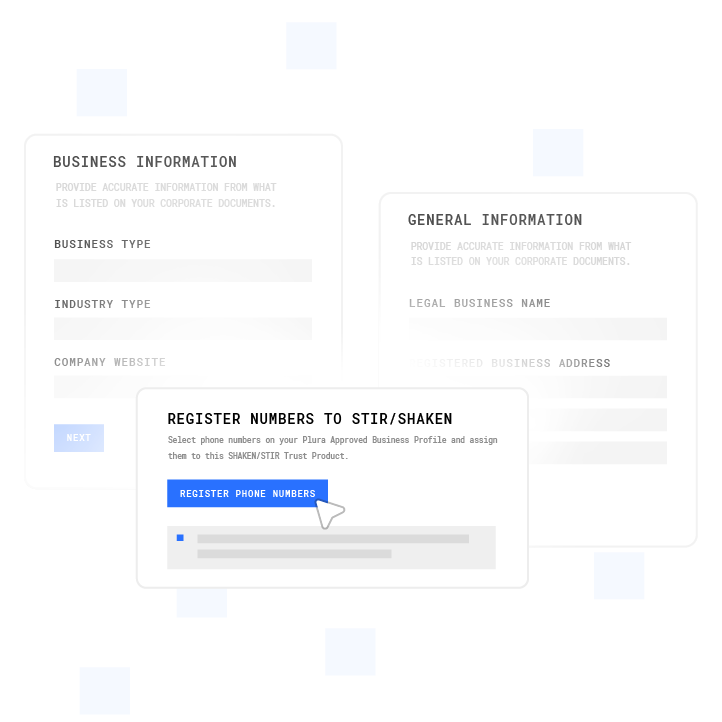
Under HHS guidance on Business Associate Agreements, a covered entity may disclose PHI to a business associate only with satisfactory assurances in a written contract.2 That contract must describe permitted and required uses and disclosures of PHI, prohibit use or further disclosure beyond the agreement or applicable law, and require the business associate to comply with Privacy Rule requirements when carrying out the covered entity’s obligations. Any vendor that touches PHI on behalf of a covered entity falls within that framework.
The order of operations for a compliant healthcare sales automation deployment is:
- Decide what data is allowed to enter the automation layer.
- Map stakeholders by segment: payer, provider, and life sciences.
- Select tools that can operate within those data boundaries.
Business email addresses, job titles, NPI (National Provider Identifier) numbers, facility size, EHR (electronic health record) stack, and payer mix are generally treated as standard B2B prospecting fields rather than PHI, though some adjacent fields may require sourcing and purpose review. Patient diagnoses, treatment records, medication history, and insurance claims tied to identifiable individuals are PHI and belong in clinical systems, not in a sales CRM or outreach platform. Dievio’s healthcare lead enrichment guide recommends maintaining an approved-field registry so any field not on the list does not get exported, synced, or mapped into outreach tools.
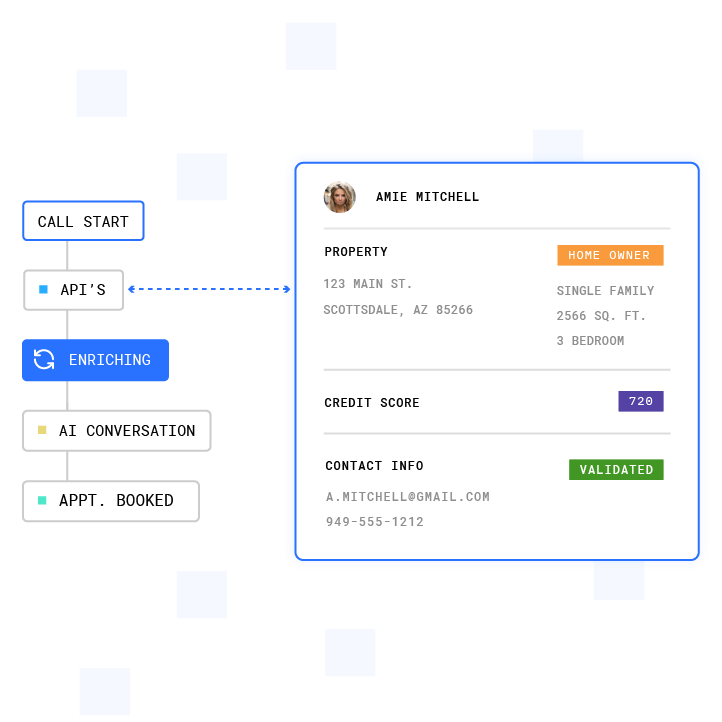
See the data-flow architecture in a live walkthrough.
Payer Vs. Provider Vs. Life Sciences: Healthcare Sales Automation Segmentation
Once the data boundaries are set, the next architectural decision is segmentation. Healthcare is not one market. It is three distinct buying motions that share an industry tag and little else. RevenueFlow’s June 2026 analysis identifies providers, payers, and suppliers or life sciences organizations as buying on different clocks from different budgets,4 and notes that a single message cannot serve all three.
Payers. Health plans, TPAs (third-party administrators), MSOs (management services organizations), and ACOs (accountable care organizations) buy through procurement committees that include revenue-cycle and compliance stakeholders. Cycles are long and budget authority is distributed. The economic owner is often a VP of Operations or Network Management. Compliance surfaces include state insurance regulations, CMS (Centers for Medicare and Medicaid Services) reporting requirements, and data-handling rules that vary by plan type.
Providers. Hospital systems, physician groups, post-acute facilities, and ambulatory surgery centers route significant technology purchases through a Value Analysis Committee (VAC). Gangly’s hospital sales guide, citing AHRMM’s 2025 Value Analysis Industry Survey, reports that 78% of hospital purchases are routed through a Value Analysis Committee, and 54% of VAC deals are deferred on first read. IT and security review is a separate gate. The CISO can block a contract that already has VAC approval and executive sponsorship. A well-organized security package should include a SOC 2 Type II report, a BAA template, HIPAA technical safeguards documentation, a penetration test summary, and a data residency statement.
Life sciences. Device manufacturers, diagnostics companies, pharma services vendors, and HealthTech suppliers face medical, legal, and regulatory (MLR) review on outreach content before it reaches an HCP (healthcare professional). The Smarketers’ 2026 life sciences buying committee analysis identifies quality assurance and regulatory affairs as roles that can stop a deal after commercial terms are already agreed. The strongest veto holders often have no budget line and no relationship with the vendor’s sales team.
A Healthcare-Specific Sales Automation Workflow
A compliant, deployable healthcare sales automation workflow runs in this sequence:
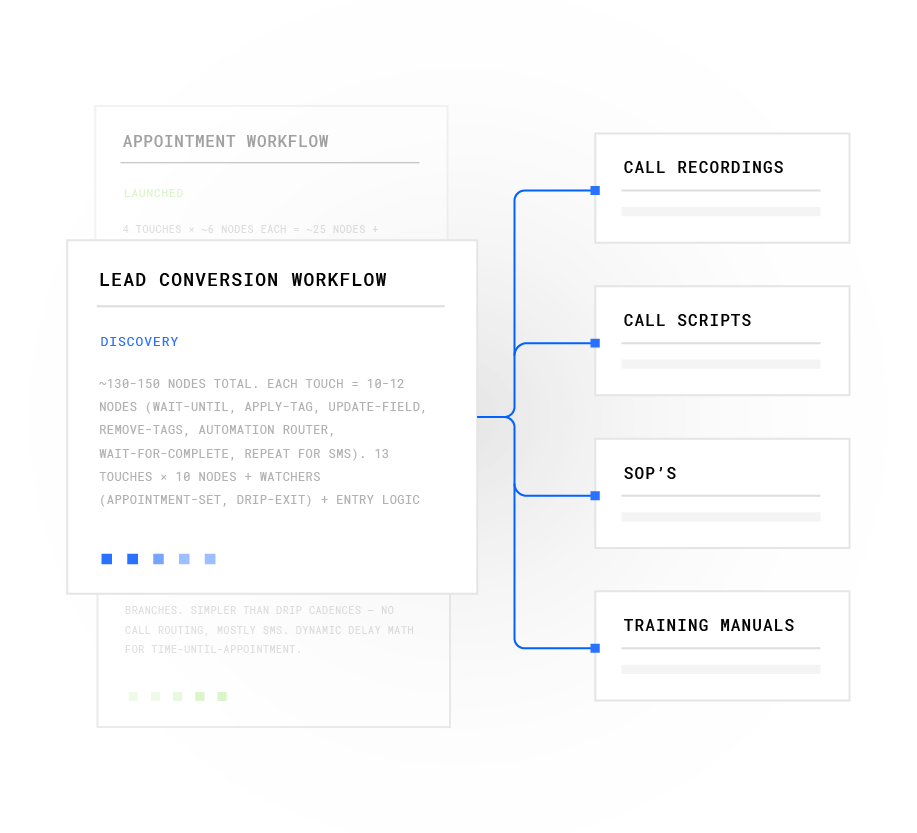
- Lead capture. Inbound form, webchat, or event registration. Only public and prospect data enters the system at this stage.
- Enrichment. Append specialty, NPI, payer mix, facility size, EHR stack, ownership structure, and buying-committee roles from B2B data sources. No patient data enters this layer.
- Stakeholder identification. Map the economic owner, clinical or operational sponsor, IT and security reviewer, and procurement contact for the target account.
- Personalized outreach. Use role-based messaging across voice, SMS, and webchat. Share clinical outcome data with clinical leads, ROI framing with finance, and integration documentation with IT.
- Discovery. Qualify the opportunity against segment-specific criteria such as budget cycle, committee composition, GPO (group purchasing organization) affiliation, and fiscal year end.
- Security and HIPAA review. Deliver the security package proactively, including BAA negotiation, SOC 2 report, data residency statement, and penetration test summary.
- Clinical or operational evaluation. Run a pilot or proof-of-concept scoped to operating budget where possible to avoid the capital committee gate.
- Procurement. Align with GPO contracts, manage any off-contract exception process, and complete MSA (master services agreement) review.
- Contract. Manage legal redlines. Non-standard MSA terms add 4 to 8 weeks, per Gangly’s 2026 benchmark data.
- Onboarding. Run implementation, training, and go-live with defined success metrics from the pilot readout.
BAA And Security-Review Mechanics For Healthcare Sales Automation
A BAA is a written contract described in the HIPAA Security Rule (45 CFR 164.308(b)(1)) before a business associate can create, receive, maintain, or transmit electronic protected health information on a covered entity’s behalf. The BAA must also require the business associate to ensure that any subcontractors handling ePHI on its behalf enter into their own BAA, per 45 CFR 164.314(a)(2)(i)(B).
A hospital procurement security review asks for more than a signed BAA. Gangly’s 2026 hospital sales guide identifies four gates in a standard IT and security review. Teams need HIPAA compliance documentation, including a signed BAA and data flow diagram. They also need a security attestation such as a SOC 2 Type II report, EHR integration specifications, and vendor risk documentation such as a HECVAT or KLAS Cybersecurity questionnaire. Arriving at the IT review without all four artifacts extends the review beyond the typical eight weeks.
“HIPAA-friendly CRM” is marketing language, not a defined compliance posture. It does not describe whether the vendor has signed a BAA, where data is physically stored, or whether the vendor’s subcontractors are themselves bound by BAA requirements. Readers should consult the regulation directly or engage qualified counsel to evaluate any vendor’s compliance posture against their specific obligations.
HIPAA Marketing-Authorization Limits On Automated Outreach
The HIPAA Privacy Rule places real constraints on automated outreach that uses PHI.2 HHS’s HIPAA marketing guidance (45 CFR 164.501, 164.508(a)(3)) states that, with limited exceptions, the Privacy Rule requires an individual’s written authorization before their PHI can be used or disclosed for marketing. HHS defines marketing as making a communication about a product or service that encourages recipients to purchase or use it.
HHS identifies three categories that are not marketing under the rule. These include communications describing a health-related product or service provided by, or included in a plan of benefits of, the covered entity making the communication. They also include communications made for treatment of the individual, and communications made for case management, care coordination, or to direct or recommend alternative treatments or settings of care. Each of those exceptions has conditions attached. HHS also states that a covered entity may not sell PHI to a third party for that party’s own marketing purposes without individual authorization.
These rules describe the framework. They do not constitute legal advice, and readers should consult qualified counsel regarding their specific outreach programs and data practices.
Offshore Data Residency As A Healthcare Sales-Automation Constraint
The physical location of the automation stack now forms part of the healthcare sales architecture. Two regulatory developments, current as of September 2026, make this explicit.
The FCC’s Notice of Proposed Rulemaking, CG Docket No. 26-52, proposes capping offshore customer-service calls at 30% and prohibiting offshore handling of sensitive consumer data. Florida’s Electronic Health Records Exchange Act, as amended by Senate Bill 264, is codified at Section 408.051(3) of the Florida Statutes. It requires health care providers using certified electronic health record technology to keep patient information in the continental United States, its territories, or Canada, including data stored through third-party or subcontracted computing facilities and cloud computing services. A March 2026 analysis by Jackson Lewis P.C. notes that this restriction extends to vendors and subcontractors supporting healthcare operations.
According to data of August 2025, Texas Senate Bill 1188, effective September 1, 2025, similarly requires health care practitioners in Texas to store electronic health records in the United States, per analyses published by Goodwin and BakerHostetler on JD Supra. The trend is directional. The hosting location of a CRM, outreach platform, call recording system, or AI model now sits at the center of vendor selection. For teams that sell into those states, the practical question becomes whether the automation stack can satisfy residency requirements by design rather than by contract.
How Plura AI Addresses Data-Flow And Residency Requirements
Plura AI resolves the architecture problem at the infrastructure level, not through policy promises.
Plura runs on 100% U.S. infrastructure by architecture. Voice origination, model hosting, data storage, and call recording all sit on domestic infrastructure. U.S. hosting is the architecture itself, not a contractual layer added to a foreign-hosted stack. Healthcare operators selling into Florida, Texas, or any state with data-residency requirements can describe U.S.-handled data in their own documentation, subject to their counsel’s guidance.
Plura is its own FCC-licensed audio bridging carrier and holds its own operating company number. The platform runs STIR/SHAKEN (Secure Telephone Identity Revisited / Signature-based Handling of Asserted information using toKENs) authentication on every outbound call. Plura issues branded caller ID at the carrier level. Inside the platform, every outbound contact passes through real-time DNC (Do Not Call) scrubbing, TCPA (Telephone Consumer Protection Act) litigator screening, automated quiet hours, and immutable consent logging before it is placed.
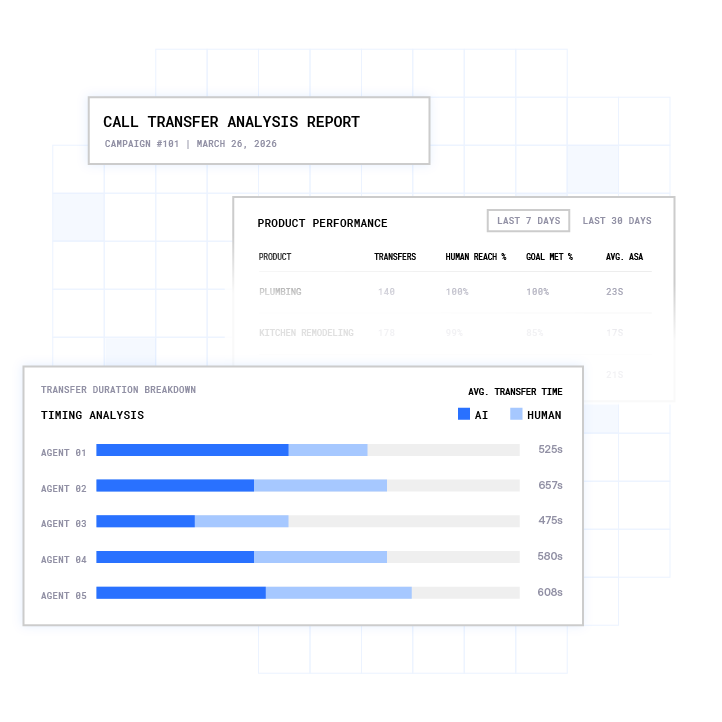
Plura’s AI voice agent, AI SMS, AI RCS (Rich Communication Services), and AI Webchat all share a Stateful Conversation Database. A prospect who engaged via webchat at 9 a.m. appears as the same contact when the outbound call comes at noon. The system preserves context across channels. That continuity matters in a 12-to-18-month healthcare sales cycle where stakeholder relationships develop across dozens of touchpoints.
For healthcare operators managing appointment-heavy workflows, Plura supports up to a 40% improvement in no-show rates.3
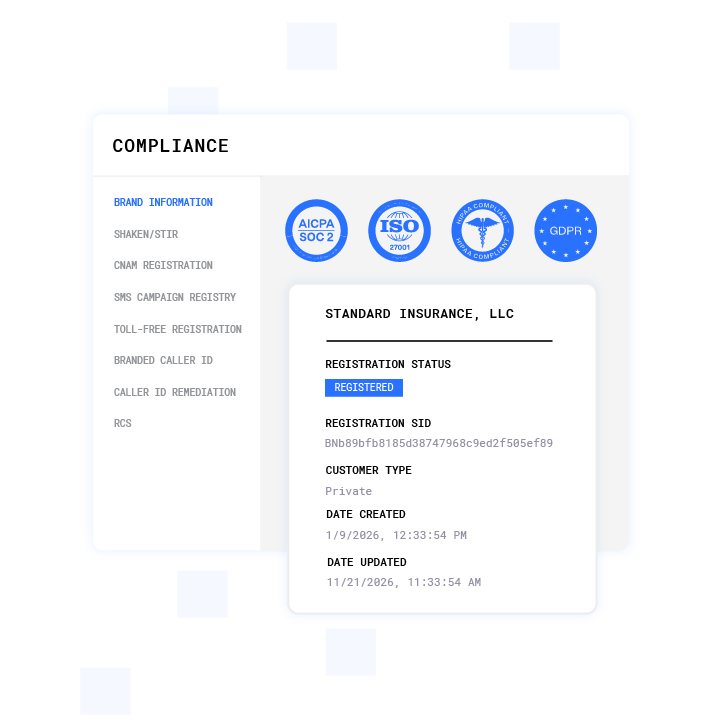
Plura supports customer compliance with SOC 2, HIPAA, ISO certification, GDPR, SHAKEN/STIR caller ID verification, TCPA compliance, and DNC compliance.1 Customers remain responsible for their own certifications, regulatory obligations, and the claims they make to their own end users. Plura provides the infrastructure. Compliance posture downstream of that infrastructure remains the customer’s responsibility.
The AI Predictive Dialer handles high-volume outbound sequences across long healthcare sales cycles while reducing the idle time common in legacy dialers. The no-code workflow builder lets RevOps teams configure healthcare-specific conversation logic, including security-review package delivery and stakeholder routing, without engineering resources. Conversation intelligence surfaces which scripts move deals through VAC review and which objections recur at the IT security gate. CRM integration with Salesforce, HubSpot, and Zoho keeps prospect data in the sales layer, separate from any clinical system.
Walk through a healthcare sales automation build with Plura in a live session.
Frequently Asked Questions
Can You Put Patient Data In A CRM?
PHI should stay out of the sales automation layer. Prospect data, including business contact details, job titles, NPI numbers, facility size, and EHR stack, can flow into the CRM and automation tools. PHI does not. Any vendor that touches PHI on behalf of a covered entity falls within HHS rules on business associates and BAAs. The distinction between PHI and standard B2B prospecting data is the foundational architecture decision in healthcare sales automation. Readers should consult qualified counsel regarding their specific data practices and obligations under the HIPAA Privacy and Security Rules.
What Is A BAA And When Do You Need One For Sales Automation?
A Business Associate Agreement is a written contract described in HHS rules before a business associate can create, receive, maintain, or transmit PHI on a covered entity’s behalf. If an automation vendor, CRM provider, or any subcontractor in the data chain touches PHI, that relationship falls within the BAA framework. The BAA describes permitted uses and disclosures, limits use beyond the agreement or applicable law, and requires the business associate to ensure its own subcontractors are bound by equivalent obligations. When a sales automation stack is designed so that PHI never enters the automation layer, the BAA question applies primarily to clinical systems rather than the outreach platform. That outcome reflects the safe data-flow architecture described earlier.
How Do You Automate A Healthcare Sales Process?
The sequence is: decide what data is allowed to enter the automation layer, map stakeholders by segment, then select tools. The workflow runs in ten stages: lead capture, enrichment, stakeholder identification, personalized outreach, discovery, security and HIPAA review, clinical or operational evaluation, procurement, contract, and onboarding. Each stage has a different gatekeeper and a different compliance surface. Automation handles the high-volume, repeatable steps such as enrichment, outreach sequencing, reminder delivery, and security-package assembly. Human judgment handles VAC navigation, clinical champion development, and contract negotiation. See the workflow section above for detail on each stage.
What Are Examples Of Automation In Healthcare Sales?
Common automation use cases in healthcare sales include lead enrichment with specialty, NPI, payer mix, facility size, and EHR stack appended at the moment of lead capture. Teams also automate stakeholder identification that maps the economic owner, clinical sponsor, IT reviewer, and procurement contact for each target account. Other examples include personalized outreach sequences with role-based messaging across voice, SMS, and webchat, security-review package assembly and delivery triggered when a deal reaches the IT review stage, appointment confirmation and no-show follow-up across the sales cycle, and pipeline progression alerts when a deal enters a committee review stage with no activity logged.
Sales Automation For Payers Vs. Providers Vs. Life Sciences: What Changes?
Stakeholders, cycle lengths, and compliance surfaces differ across all three segments. Payers involve procurement committees, revenue-cycle stakeholders, and compliance reviewers with long cycles tied to plan-year budgeting. Providers involve hospital-system security review, Value Analysis Committee governance, IT sign-off from the CISO, and capital committee approval for larger purchases. Life sciences involve MLR review of outreach content, quality assurance and regulatory affairs as late-stage veto holders, and clinical evidence requirements that must be assembled before a deal can progress through a Pharmacy and Therapeutics committee or equivalent body. A single automation playbook cannot serve all three. Teams should segment first, then build the workflow.
Conclusion And Next Steps
Sales automation for healthcare is an architecture decision before it is a tool decision. The safe data-flow rule introduced above keeps prospect data in the CRM and automation layer and keeps PHI in clinical systems. Segmentation by payer, provider, and life sciences defines the stakeholder map, the cycle length, and the compliance surfaces that automation must navigate. Offshore data residency restrictions, including the FCC NPRM CG Docket No. 26-52 and Florida’s Section 408.051(3), make the physical location of the automation stack a compliance question with statutory consequences in multiple states.
Practical next steps for any organization evaluating healthcare sales automation include conducting an internal workflow audit to identify where data currently flows and whether any PHI is entering the automation layer. Teams should align stakeholders across sales, RevOps, IT, and legal on the data-flow architecture before selecting tools. They should also gather requirements by segment, payer, provider, or life sciences, since the buying committee composition and compliance surfaces differ materially.
Run your numbers through Plura’s ROI calculator.
Review Plura’s pricing options to compare plans and rates.
Schedule a working session with Plura to design your healthcare sales automation architecture.
1 Plura AI maintains SOC 2, HIPAA, ISO, and GDPR posture as part of its platform infrastructure. References to compliance frameworks in this article describe Plura’s platform capabilities and do not constitute a guarantee that any customer using Plura will themselves be compliant with applicable laws or standards. Customers remain solely responsible for their own regulatory obligations, certifications, consent management, recordkeeping, and the claims they make to their own end users. Consult qualified legal counsel for guidance specific to your use case.
2 This article describes regulatory frameworks at a general level and does not constitute legal advice. Laws and regulations vary by jurisdiction, change over time, and apply differently depending on facts and circumstances. Readers should consult qualified legal counsel before making compliance decisions.
3 Performance figures, customer outcomes, and industry statistics referenced in this article are drawn from cited third-party sources or Plura customer case studies. Individual results vary based on implementation, use case, industry, audience, and execution. Past or aggregate performance is not a guarantee of future results.
4 References to third-party products, services, companies, or research are made for informational and comparative purposes only. Plura AI is not affiliated with, endorsed by, or sponsored by any third party named in this article unless explicitly stated. Trademarks and product names referenced remain the property of their respective owners.
This article is provided for informational purposes only and reflects Plura AI’s understanding at the time of publication. Product capabilities, integrations, and specifications are subject to change. For the most current information, visit plura.ai.
This article was produced with the assistance of AI tools and reviewed by Plura AI prior to publication.