
Written by: Matt Beucler, CEO, Plura AI
Key Takeaways
- Answer rates and spam labels are determined at the carrier layer. Swapping dialers alone rarely improves lead-gen economics.
- Plura AI owns its FCC-licensed carrier, issues branded caller ID at the carrier level, and runs STIR/SHAKEN authentication on every outbound call.1,2
- Plura AI’s stateful conversation memory maintains context across voice, SMS, RCS, and webchat, which supports faster first contact and higher conversion rates.
- Seat count and reason for leaving VICIdial drive the right alternative. Self-hosted options fit very small teams, while carrier-layer control becomes critical above roughly 20–30 seats.
- Book a live Plura AI walkthrough to see carrier-level answer-rate control and cross-channel memory running on real lead-gen traffic.
VICIdial Alternatives for Lead Gen at a Glance
The table below maps each alternative to the operator profile it fits and the primary capability that sets it apart.4 Use it as a routing guide: find your seat count and main reason for leaving VICIdial, then follow the matching row into the detailed profile later in the article.
| Platform | Best For | Primary Capability |
|---|---|---|
| Plura AI | Lead-gen operators who need carrier-level answer-rate control and cross-channel conversation memory | Owns its FCC-licensed carrier, stateful conversation memory across voice, SMS, RCS, and webchat, branded caller ID issued at the carrier level |
| Convoso | High-volume outbound call centers with 20+ agents, particularly in regulated industries such as insurance, financial services, and lead generation | Caller ID reputation management (Convoso Ignite™ real-time DID scoring) and a predictive dialer tuned for high-volume outbound lead gen |
| Readymode | Mid-sized outbound teams making roughly 200–500 calls per day | Predictive dialer support for multiple lines per agent (up to 20+ concurrent calls) with built-in lead management and CRM |
| Five9 | Mid-market and enterprise contact centers with 50+ seats and outbound TCPA-related needs | Native AI voice agents, automated QA scoring, 50-seat minimum and per-concurrent-user pricing, deep tier-1 CRM integration |
| CallTools | SMB and mid-market outbound sales teams, typically 10–200 agents running high-volume verified-list campaigns | Cloud platform with predictive dialing and built-in SMS/email multi-touch sequences |
| GoAutoDial | Operators who want a modern, friendlier UI on the same Asterisk/VICIdial engine and are comfortable administering inside the GoAutoDial interface | Replaces VICIdial’s native agent screen with a custom WebRTC agent interface |
| ICTContact | Contact centers, call centers, entrepreneurs, and service providers that need a scalable, multi-tenant contact center platform built on Asterisk | Multi-tenant support, WebRTC browser-based agent panel, and omnichannel communication (voice, SMS, email, WhatsApp, and web chat) from a single platform |
| VICIdial (baseline) | Operators who need full code control and zero per-seat license fees | Open-source AGPL license, 2,000+ configuration settings, no vendor lock-in |
What You Give Up And Keep When You Leave VICIdial
VICIdial gives you two things cheaply: the code and the dialing engine. The software license is zero because VICIdial is open-source under the AGPL license, so you pay nothing for the code itself. Your actual costs are servers, carrier minutes, and admin labor. In return you gain raw dialing power, full code control over 2,000+ configuration settings, and freedom from vendor lock-in.
Is VICIdial free to use? Yes. The software license cost is zero. Your real costs are servers, carrier minutes, and admin labor.
What is VICIdial used for? Outbound and inbound call center dialing in predictive, progressive, and preview modes, plus list management, IVR, and agent scripting.
The total cost of ownership picture looks different once you add infrastructure and people. A 100-seat self-hosted VICIdial operation runs roughly $8,900/month ($89/seat, $106,800/year), covering SIP trunking, system administration, rotating DIDs, and infrastructure.3 A dedicated in-house VICIdial administrator adds $80K/year on top. A junior Linux admin runs $60–80K/year, while a senior VICIdial/Asterisk admin runs $90–130K/year. Server maintenance, OS patches, and Asterisk upgrades consume a real fraction of that salary over a three-year window. Chasing stalled keepalive processes adds more.
The agent screen introduces another cost. Capterra reviews and industry discussions consistently flag the VICIdial agent interface as dated and note that its cluttered, older UI/UX design slows dispositions and increases training time for new hires. A final hidden cost sits in answer rates. “Spam Likely” labels suppress pickup, and no dialer configuration inside VICIdial can change how carriers score your numbers.
The Carrier Layer vs. the Dialer Layer: Why Swapping Dialers Rarely Fixes Answer Rates
Those costs explain why operators leave VICIdial, but they do not explain why many migrations fail to improve results. The answer sits one layer below the dialer, at the carrier.
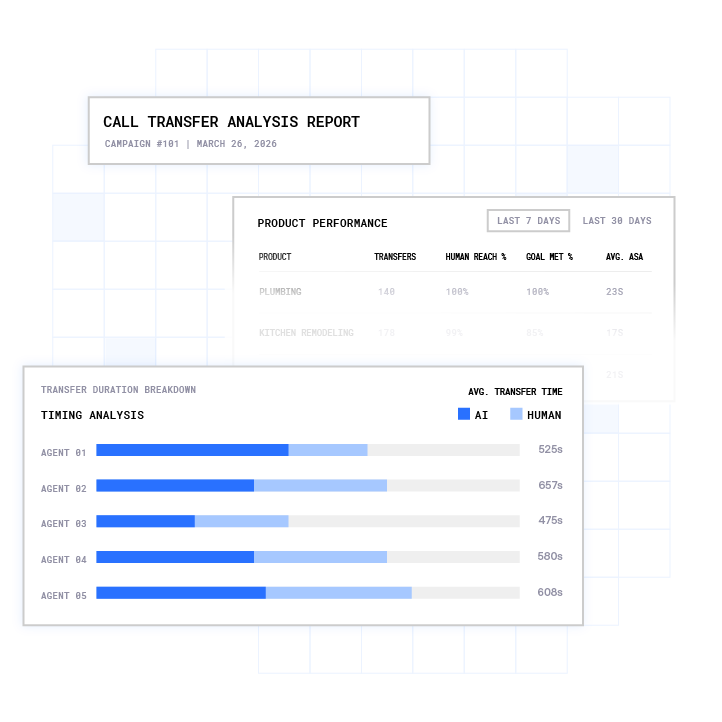
Answer rates, spam labels, and STIR/SHAKEN (Secure Telephony Identity Revisited / Secure Handling of Asserted information using toKENs) attestation are determined at the carrier layer. Migrating from VICIdial to another dialer without addressing the carrier leaves pickup rates largely unchanged. Hiya’s State of the Call 2026 found that 86% of calls from unknown numbers go unanswered.3 A spam label can cut outbound answer rates from 20% down to as low as 8–14%, which means on 1,000 outbound calls, 60 to 120 conversations never happen.3
The TRACED Act (Pallone-Thune Telephone Robocall Abuse Criminal Enforcement and Deterrence Act), enacted December 30, 2019, directed the FCC to require voice service providers to implement STIR/SHAKEN caller ID authentication in the IP portions of their networks.2 The FCC’s March 31, 2020 order described implementation timelines. A fully A-attested call can still be labeled “Spam Likely” because attestation and spam labeling operate as separate systems. Attestation answers whether a caller is entitled to use the number. Reputation answers whether that number behaves like a legitimate business over time based on call velocity, complaint rates, and list hygiene.
Branded caller ID, which renders the business name and reason-for-call on the recipient’s handset, is also issued at the carrier level. Branded caller ID renders when both reputation and attestation hold; it does not override reputation, and the two systems compound rather than substitute. Most “AI voice” platforms and hosted dialers are built on top of third-party CPaaS providers like Twilio. These providers do not own the carrier identity that controls branded caller ID.
The FCC’s offshore call-center Notice of Proposed Rulemaking (CG Docket No. 26-52, adopted March 26, 2026) examines offshore call-center use and sensitive-data handling. That review adds regulatory pressure at the carrier layer for any operation with offshore infrastructure dependencies.
Plura AI is its own FCC-licensed audio bridging carrier. It issues branded caller ID at the carrier level and runs STIR/SHAKEN authentication on every outbound call. The same platform enforces real-time DNC (Do Not Call) scrubbing, TCPA (Telephone Consumer Protection Act)-litigator screening, automated quiet hours, and immutable consent logging on every outbound contact.1,2 These capabilities sit inside the platform rather than as third-party bolt-ons. The AI Predictive Dialer runs on Plura’s own FCC-licensed carrier, so carrier-layer and dialer-layer issues are handled in one place.
Decision Framework by Seat Count and Dial Volume
Seat count is the first filter, and reason for leaving is the second.
- 1–5 reps: Self-hosted or managed hosting can still be the right call. If you already run server infrastructure for other purposes, VICIdial’s marginal cost of adding a dialer is near-zero, which often makes it the cheapest option at this scale.
- 6–34 reps: Hosted SaaS becomes viable. Weigh admin burden against per-seat cost. The crossover point where self-hosted VICIdial becomes cheapest for most configurations sits around 35–40 seats. Below that range, hosted platforms like RingCentral RingCX and Dialpad often win on cost because their seat pricing avoids VICIdial’s infrastructure floor.
- 35+ agents: Carrier-layer answer-rate control and AI-native dialing start to change the economics. This is where an AI Predictive Dialer changes the conversation rather than simply replacing the dialer.
Your use case sets the priority. B2B appointment setting depends on conversation quality and CRM write-back, while B2C high-volume lead gen depends on contact-rate-per-dial and carrier-level answer-rate control. Your reason for leaving then determines whether a migration is even the right move. If the pain is server maintenance or the agent screen, a managed hosting provider or a modern-UI open-source alternative may solve it without a full migration. If the pain is low answer rates, spam labels, or cross-channel context, the problem sits at the carrier layer, and a dialer swap alone will not fix it.
Platform Profiles for Lead Gen
Plura AI
Plura AI fits lead-gen operators who need carrier-level answer-rate control and cross-channel conversation memory.4 Plura AI owns its FCC-licensed carrier, issues branded caller ID at the carrier level, and runs STIR/SHAKEN authentication on every outbound call. The AI Predictive Dialer decides who to call next using stateful conversion signals: historical answer rates, prior negotiation outcomes, and prior offer-acceptance bands. Static pacing algorithms cannot do this.
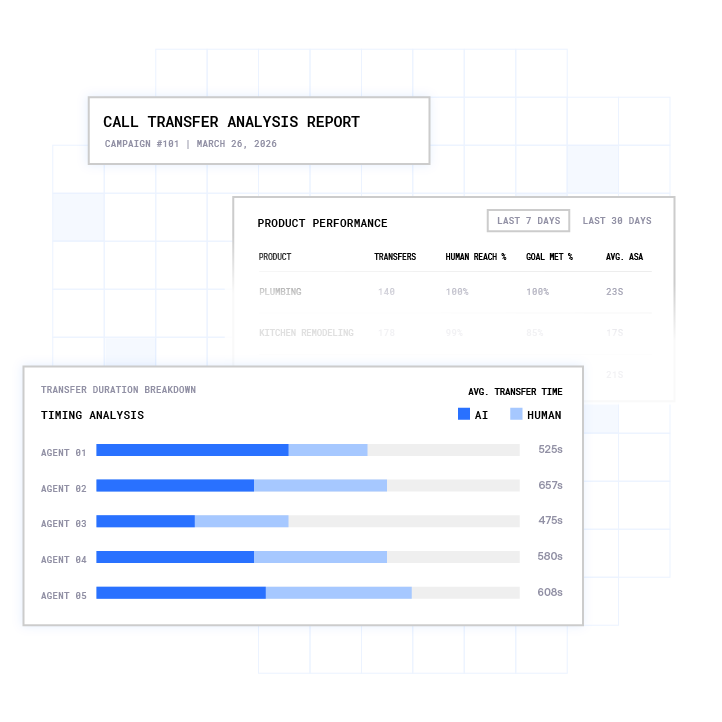
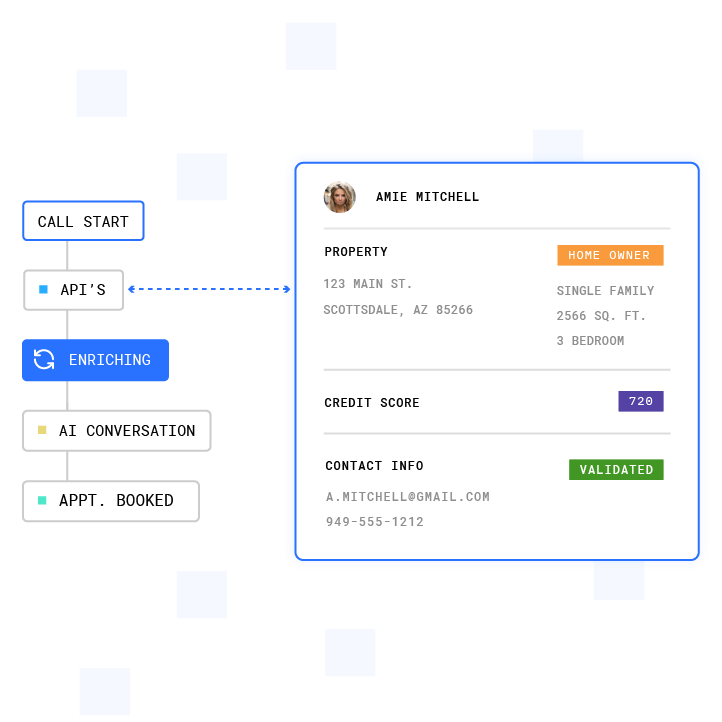
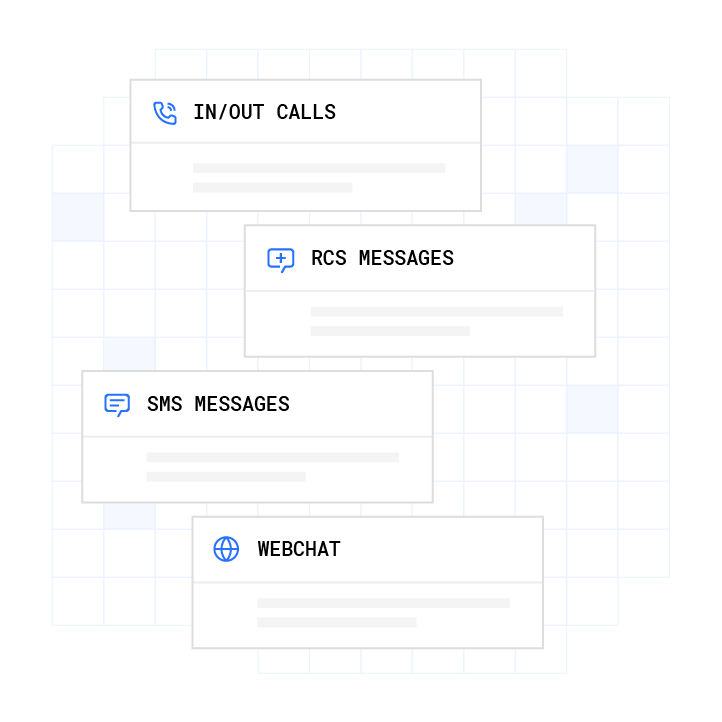
Plura’s stateful AI architecture remembers previous interactions, preferences, and outcomes across channels. An agent who sent an AI SMS at 9 a.m. picks up the voice call at noon already knowing what was said. First contact typically runs under 5 seconds. Annual contracts include a 90-day opt-out window. Integrations cover 50+ tools across CRM, calendar, attribution, and enrichment categories. See pricing and plans for current rates.
Convoso
Convoso fits high-volume outbound call centers with 20+ agents, particularly in regulated industries such as insurance, financial services, and lead generation, though some sources cite a lower floor of around 10+ agents. Convoso’s key differentiators for lead generation are its caller ID reputation management (via Convoso Ignite™ real-time DID scoring and optimization) and its predictive dialer engineered for high-volume outbound lead gen. It operates as a hosted SaaS platform aimed at outbound-heavy operations.
Readymode
Readymode fits mid-sized outbound teams making roughly 200–500 calls per day, with its iQ plan recommended for teams of 5+ licenses. Its predictive dialer supports multiple lines per agent (up to 20+ concurrent calls) and combines that with built-in lead management and CRM in one platform.
Five9
Five9 fits mid-market and enterprise contact centers with 50+ seats and outbound TCPA-related needs, while its dialer depth is often more than inbound-only operations require. Five9 applies a 50-seat minimum across all plans and prices per concurrent user rather than per named seat, which structurally excludes many SMB and small mid-market teams. Published entry tiers are $119/user/month (Digital, no voice) and $159/user/month (Core, voice + dialer). Native AI voice agents, automated QA scoring, and deep tier-1 CRM integration stand out at the enterprise tier.
CallTools
CallTools fits SMB and mid-market outbound sales teams, typically operations with 10–200 agents running high-volume verified-list campaigns. CallTools is a cloud platform with predictive dialing and built-in SMS/email multi-touch sequence capabilities.
GoAutoDial
GoAutoDial fits operators who want a modern, friendlier UI on the same Asterisk/VICIdial engine and are comfortable staying within the GoAutoDial interface for administration. GoAutoDial replaces VICIdial’s native agent screen with a own custom agent interface featuring built-in WebRTC support while keeping the underlying Asterisk engine intact. Choose GoAutoDial when the main issue is the agent user experience rather than the dialing engine.
ICTContact
ICTContact fits contact centers, call centers, entrepreneurs, and service providers that want an easy-to-manage, scalable, multi-tenant contact center platform built on Asterisk. Its differentiators include multi-tenant contact center support, a WebRTC browser-based agent panel, and omnichannel or multi-channel communication (voice, SMS, email, WhatsApp, and web chat) from a single platform.
VICIdial (the Baseline)
VICIdial fits operators who need full code control and zero per-seat license fees. It offers an open-source AGPL license, 2,000+ configuration settings, and no vendor lock-in. Self-hosted VICIdial with professional management delivers 80%+ of what hosted platforms offer for outbound dialing at 30–50% of the cost.
Migration Reality: What Transfers, What Breaks, and the First 30 Days
Choosing a platform is the easy part. The harder question is what the move itself costs in time, data, and parallel-run overhead.
- What transfers: Lead lists, dialing scripts, DNC records, and disposition codes.
- What breaks: A new VICIdial admin takes 2–4 weeks to become productive. CRM re-integration requires rebuilding field mappings and webhook logic. Carrier re-registration means new DIDs, new number warming cycles, and a reputation reset. Recording migration is often the most underestimated line item.
- Cost ranges: A self-hosted-to-hosted migration runs $25,000–$90,000, broken down as:
- Hosted platform implementation: $15,000–$50,000
- VICIdial data export: $2,000–$5,000
- Data import to the hosted platform: $5,000–$15,000
- Agent retraining: $3,000–$8,000
- Recording migration: $1,000–$10,000
- First 30 days: Expect export, import, retraining, and a parallel run rather than a hard cutover. The parallel overlap period (1–2 months) doubles operating costs during the transition, so budget for it explicitly.
When Staying on VICIdial Still Makes Sense
Managed hosting provides a middle path that many comparison lists skip. For operators under 25 seats, hosted platforms like RingCentral RingCX and Dialpad often win on pure cost because their seat pricing avoids VICIdial’s infrastructure floor. For operators who need full code control, staying on VICIdial with managed hosting can be the right call. Managed hosting converts the uncertain self-hosting labor line into a flat per-server fee that does not climb with agent count.
If your only complaints are server maintenance and the agent screen, a managed hosting provider usually solves both without a full migration. If your complaints include answer rates and spam labels, the constraint sits at the carrier layer, so managed hosting alone will not address it.
Frequently Asked Questions
How Does Seat Count Determine the Right VICIdial Alternative?
The seat-count buckets above are the fastest way to place your operation. If you are unsure which one applies, start with your current agent count and adjust for planned growth over the next 12 months.
How Should I Think About My Main Reason for Leaving VICIdial?
If your reason is server maintenance or the agent screen, a managed hosting provider or a modern-UI open-source alternative like GoAutoDial may solve it without a full platform migration. If your reason is low answer rates, spam labels, or cross-channel context, the constraint sits at the carrier layer. As the carrier-layer section explains, attestation and spam labeling function as separate systems, so a dialer swap alone does not change how carriers score your numbers. The fix requires owning or working with a carrier that issues branded caller ID and manages reputation at the network level.
What Are Some Good Alternatives to VICIdial?
Hosted SaaS options include Plura, Convoso, Readymode, Five9, and CallTools. Self-hosted open-source options include GoAutoDial and ICTContact. According to Plura’s branded caller ID documentation, Plura AI is the only option in either bucket that owns its FCC-licensed carrier and holds stateful conversation memory across voice, SMS, RCS, and webchat. The right pick depends on seat count and your primary reason for leaving.
Is VICIdial Free to Use?
Yes. VICIdial is open-source under the AGPL license, so the software license cost is zero. Your real costs are servers, carrier minutes, and admin labor. The 100-seat cost picture above still applies here: the license is free, but the administrator salary and infrastructure line remain. Managed hosting converts that variable labor line into a flat per-server fee.
GoAutoDial vs VICIdial: Which Should I Choose?
GoAutoDial is built on the same Asterisk and VICIdial engine but replaces the legacy agent screen with a modern, responsive dashboard. If your primary complaint about VICIdial is the agent user experience rather than the underlying dialing engine, GoAutoDial provides a lower-risk migration path because you keep the engine you know and gain a better interface. If your complaints include answer rates, spam labels, or cross-channel context, GoAutoDial shares the same carrier-layer limitations as VICIdial.
VICIdial vs AI Dialer: What Is the Difference?
A traditional dialer like VICIdial decides who to call next based on pacing algorithms such as dial ratios, drop-call thresholds, and list order. Plura’s AI Predictive Dialer decides who to call next using stateful conversion signals: historical answer rates, prior negotiation outcomes, and prior offer-acceptance bands. It runs on Plura’s own FCC-licensed carrier, so branded caller ID and STIR/SHAKEN authentication are part of every outbound call rather than third-party add-ons. The practical difference shows up in contact-rate-per-dial and cost per connected conversation.
Conclusion: Carrier Control Drives Lead-Gen Economics
Swapping dialers does not fix answer rates. The carrier layer does. Every platform on the list above except Plura routes voice through a third-party CPaaS and inherits that provider’s caller ID reputation. Many operators who migrate from VICIdial to another hosted dialer see answer rates stay flat because they moved the dialer layer and left the carrier layer unchanged.
Plura is the VICIdial alternative for lead gen that owns its FCC-licensed carrier, issues branded caller ID at the carrier level, runs STIR/SHAKEN authentication on every outbound call, and holds stateful conversation memory across voice, SMS, RCS, and webchat. The AI Predictive Dialer runs on that same carrier, so dialer-layer and carrier-layer problems are handled in one platform instead of being patched across vendors.
Compare plans and rates side by side on the Plura pricing page. Run your numbers through the ROI calculator to see what carrier-level answer-rate control could be worth to your operation.
1 Plura AI maintains SOC 2, HIPAA, ISO, and GDPR posture as part of its platform infrastructure. References to compliance frameworks in this article describe Plura’s platform capabilities and do not constitute a guarantee that any customer using Plura will themselves be compliant with applicable laws or standards. Customers remain solely responsible for their own regulatory obligations, certifications, consent management, recordkeeping, and the claims they make to their own end users. Consult qualified legal counsel for guidance specific to your use case.
2 This article describes regulatory frameworks at a general level and does not constitute legal advice. Laws and regulations vary by jurisdiction, change over time, and apply differently depending on facts and circumstances. Readers should consult qualified legal counsel before making compliance decisions.
3 Performance figures, customer outcomes, and industry statistics referenced in this article are drawn from cited third-party sources or Plura customer case studies. Individual results vary based on implementation, use case, industry, audience, and execution. Past or aggregate performance is not a guarantee of future results.
4 References to third-party products, services, companies, or research are made for informational and comparative purposes only. Plura AI is not affiliated with, endorsed by, or sponsored by any third party named in this article unless explicitly stated. Trademarks and product names referenced remain the property of their respective owners.
This article is provided for informational purposes only and reflects Plura AI’s understanding at the time of publication. Product capabilities, integrations, and specifications are subject to change. For the most current information, visit plura.ai.
This article was produced with the assistance of AI tools and reviewed by Plura AI prior to publication.