
Written by: Matt Beucler, CEO, Plura AI
Key Takeaways
- VICIdial’s real costs sit in hosting, SIP termination, DID rotation, DNC scrubbing, and admin labor, not the free AGPLv2 license.
- Connect-rate collapse at volume reflects carrier reputation. Self-hosted platforms cannot solve this without an FCC-licensed carrier.
- Admin dependency creates operational risk. When the dedicated Asterisk and Linux administrator leaves, the dialer often goes down.
- Cloud alternatives such as Convoso, Five9, CallTools, Genesys Cloud CX, and Plura AI remove server management and add carrier-grade capabilities.4
- Plura AI is the only platform in this comparison that owns its FCC-licensed carrier. That ownership delivers branded caller ID and compliance support at the network level. Start your migration assessment today.
VICIdial Cost Breakdown for High-Volume Teams
VICIdial’s software license is $0 per month under the AGPLv2 open-source license. ViciStack’s 2026 VICIdial pricing guide estimates that this accounts for roughly 2% of total spend. The remaining 98% falls into five categories.
Hosting. Self-hosted cloud infrastructure on DigitalOcean runs about $48 per month for a 10-to-25-agent floor and $190 to $250 per month for a 50-to-100-agent floor, per VICIfast’s September 2026 cost breakdown. Managed VICIdial hosting from VICIfast runs $49 per month for 5 agents up to $479 per month for 100 agents on VPS. VICIhost, the official managed platform from Vicidial Group, charges $400 per month per server plus a $1,000 one-time setup and training fee that includes the first month of hosting.
VoIP termination minutes. US domestic outbound per-minute pricing typically runs $0.005 to $0.015 per minute. A 50-agent center making 300 calls per day at 2.5 minutes average uses roughly 825,000 minutes per month. That volume costs about $6,600 per month at a competitive $0.008 per minute bulk rate, per ViciStack’s 2026 analysis. Because predictive dialers bill for ringing and pre-answer seconds, billable minutes often run 30 to 60% above connected minutes, depending on list quality and dial ratio.
DID rotation. DID (Direct Inward Dialing) numbers cost about $1.00 to $1.15 per number per month. Serious operations maintain 20 to 50 DIDs, and large operations rotate 100 to 500 DIDs to reduce “Spam Likely” flags, per ViciStack’s 2026 guide. A 500-number rotation costs $500 to $575 per month in DID fees alone.
DNC compliance. US outbound operations typically scrub against the National Do Not Call Registry and state registries. Third-party services often cost $500 to $2,000 per month depending on volume, or a federal DNC list subscription priced at $19,534 per year for all area codes, per ViciStack’s 2026 guide.
Admin labor. Self-hosted VICIdial operations usually require either a full-time VICIdial and Linux administrator at $55,000 to $85,000 per year, a part-time contractor at $1,500 to $4,000 per month, or an overseas contractor at $800 to $2,000 per month, per ViciStack’s 2026 analysis. Emergency troubleshooting with no maintenance arrangement often runs $200 to $400 per hour while agents sit idle.
ViciStack’s 2026 total cost of ownership scenarios put a 50-agent VICIhost operation at $9,512 per month ($190 per agent per month) and a 200-agent self-hosted operation with an in-house admin at $38,050 per month ($190 per agent per month). Managed VICIdial hosting is the lowest-effort option for operators who want to keep the platform while shifting infrastructure work to a provider.
Run your numbers through Plura’s calculator to check your ROI in real time.
The Admin-Babysitting Problem in Daily Operations
A dedicated Asterisk and Linux administrator functions as a full-time role. The job includes applying SVN (Subversion version-control) updates to production systems, which requires testing, staging, and a maintenance window that often runs 4 to 8 hours per major update, multiplied by the admin’s hourly rate, per ViciStack’s 2026 guide. The same person usually handles dial-plan tuning, carrier trunk setup, AMD (Answering Machine Detection) accuracy calibration, and WebRTC (Web Real-Time Communication) softphone configuration for browser-based agents. All of these tasks tie dialer uptime to one specialist.
ViciStack’s 2026 analysis quantifies the AMD accuracy impact directly. A VICIdial AMD configuration that misclassifies 15% of human answers as machines loses 562 live contacts per day for a center making 15,000 dials per day at a 25% contact rate.3 Improving AMD accuracy from 85% to 95% recovers about $5,600 per day in missed revenue at a 10% conversion rate and $300 per deal.
The single largest operational risk is personnel dependency. When the admin leaves, the dialer often stops working. Operators without a documented runbook and a backup contractor face outages measured in days. A 2-hour outage with 50 agents idle at $15 to $25 per hour each costs $1,500 to $2,500 in idle labor alone, per ViciStack’s 2026 guide.
Webphone and softphone reliability add another layer of migration risk. VICIdial’s built-in WebRTC support requires HTTPS, valid SSL certificates, SRTP, and WSS configuration. ViciStack reports deploying WebRTC for centers up to 120 agents without issues, but the configuration burden still sits on the admin. Operators evaluating self-hosted alternatives can review Plura’s self-hosted dialer comparison for a deeper breakdown of that decision.
Why Connect Rates Fall on VICIdial at Scale
The connect-rate problem at volume is a carrier reputation problem. No amount of AMD calibration or dial ratio adjustment fixes it.
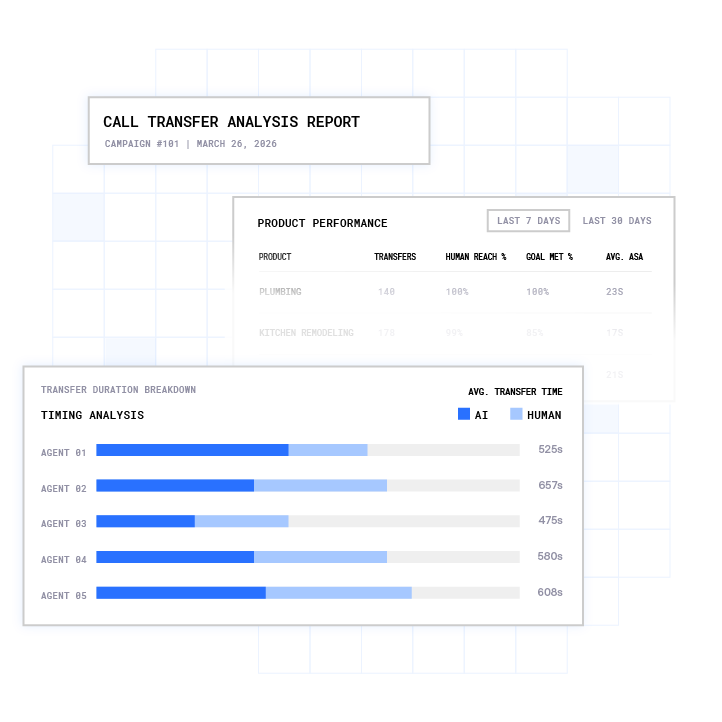
Apten’s May 2026 connect-rate collapse analysis reports that average B2B cold call conversation rates fell from 4.82% in 2024 to about 2.3% in 2025, a roughly 52% drop in a single year.3 Carrier algorithms typically auto-label business numbers as “Spam Likely” once they exceed roughly 200 to 250 outbound calls per day per number. A flagged number then sees connect rates collapse by about 60% within days, per Apten’s analysis. PanTerra Networks’ August 2026 number-reputation research puts the answer-rate drop from a spam label at 40 to 60%, which means a team making 500 outbound calls per day can lose 200 to 300 conversations that never happen.
The mechanics operate across five stages.
First, STIR/SHAKEN (Secure Telephone Identity Revisited / Signature-based Handling of Asserted information using toKENs) registration and attestation happen at the VoIP provider. Second, Tier-1 carriers such as AT&T, Verizon, and T-Mobile score the number. Third, analytics providers such as Hiya, First Orion, and TNS maintain reputation databases. Fourth, the carrier displays the compiled score to the recipient. Fifth, remediation requires separate disputes with each carrier or analytics provider, per PanTerra’s research.
A critical point that many operators miss comes from TNS’s 2026 Robocall Report data cited by PanTerra Networks. That data shows that 43% of spam-labeled traffic carries A-level STIR/SHAKEN attestation. Authentication and reputation operate as separate systems. Full A-level attestation does not prevent behavioral spam scoring based on call volume, duration patterns, and complaint data.
Convoso’s March 2026 call-screening analysis adds a device-level layer. Apple’s iOS 26 Smart Call Screening requires unknown callers to identify themselves and state their purpose before the device rings or routes the call. Apple’s iOS accounts for roughly 60% of US mobile OS market share, per Convoso’s analysis. Apten reports that call centers are seeing 15 to 20% drops in connect rates on iPhone-heavy lead lists due to iOS 26 Call Screening.
VICIdial operators who rent SIP trunking from a third-party carrier have no direct path to branded caller ID at the carrier level. The spam label travels with the dialing pattern rather than the specific number, per Apten’s analysis. Number rotation does not resolve the underlying pattern. New numbers without registered reputation get filtered just as quickly.
TransUnion data states that customers are up to 105% more likely to answer a branded call, a figure TransUnion attributes to live deployments of its Branded Call Display.4 Branded caller ID issued at the carrier level, rather than bolted on through a reseller, provides a structural path to higher answer rates. Operators evaluating alternatives should ask each vendor whether they own their carrier or rent from a CPaaS.
Cloud VICIdial Alternatives for Contact Centers
The AI Overview taxonomy for this query splits into two branches: cloud platforms and self-hosted or open-source options. The cloud branch covers the following platforms.
Convoso offers predictive, power, preview, and progressive dialing modes and positions itself as an outbound sales and lead-generation platform. Convoso defines predictive dialing as an automated method that uses algorithms to place multiple calls simultaneously based on agent availability and real-time conditions. Best for: high-volume lead-generation and sales operations that need multi-mode dialing with built-in compliance tooling.
Five9 offers four native dialer technologies: predictive, power, progressive, and preview. Five9’s outbound contact centre product page lists Certified Caller (STIR/SHAKEN), Number Reputation Management, DNC list management, and time zone rules dialing as native capabilities.1 Best for: mid-to-enterprise contact centers that need a full CCaaS (Contact Center as a Service) suite with CRM integrations across Salesforce, ServiceNow, Microsoft, Oracle, and Zendesk.
CallTools is a cloud-based predictive dialer positioned for outbound sales teams that want a hosted alternative without VICIdial’s infrastructure overhead. Best for: small-to-mid-size outbound teams migrating off self-hosted infrastructure.
Genesys Cloud CX provides native predictive dialing as one of four outbound dialing modes, configured through its Admin Outbound Campaign Management interface. Genesys Cloud CX documentation shows configurable parameters including no-answer timeout, Compliance Abandon Rate (default 5.0%), and Max Calls Per Agent. Best for: enterprise operators that need skills-based dialing, complex campaign management, and deep workforce management integration.
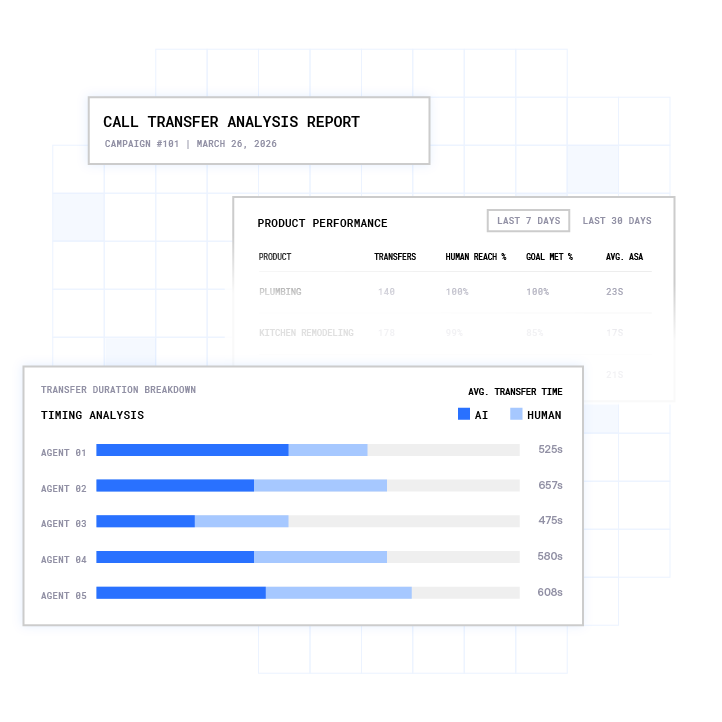
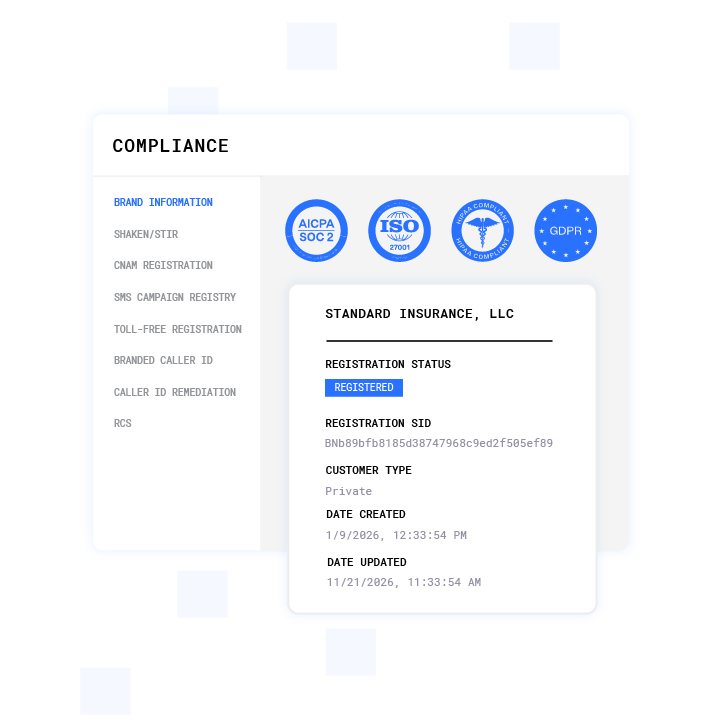
Plura AI’s AI Predictive Dialer is the carrier-grade option in this set. Plura AI owns its FCC-licensed audio bridging carrier rather than reselling a CPaaS like Twilio. That distinction matters for three reasons. First, branded caller ID is issued at the carrier level rather than bolted on through a reseller. Second, STIR/SHAKEN authentication runs on every outbound call at origination. Third, real-time DNC scrubbing and TCPA-litigator screening are enforced inside the platform before dial.1 The dialer uses stateful conversion signals, including historical answer rates and prior negotiation outcomes, to decide who to call next. Voice, SMS, RCS, and webchat share a single Stateful Conversation Database, so an agent who texted a lead at 9 a.m. can pick up the call at noon already knowing what was said. Unlike platforms that depend on Twilio infrastructure and operate as a software layer without a carrier license, Plura’s compliance support runs at the carrier level before the call leaves the network. Best for: high-volume outbound operators who need carrier-grade branded caller ID, compliance support, and cross-channel conversation memory without managing their own infrastructure.
Compare plans and rates side by side at Plura’s pricing page.
Self-Hosted and Open-Source VICIdial Alternatives
FreePBX is an open-source web-based graphical user interface (GUI) that manages Asterisk, maintained by the FreePBX Project under Sangoma Technologies Corporation. It handles PBX (Private Branch Exchange) functions, IVR (Interactive Voice Response), and call routing, but it does not include native predictive dialing. Operators who need predictive dialing on FreePBX must build or integrate a separate dialing engine. FreePBX fits operators building a custom telephony system rather than a contact center with outbound campaign management.
GoAutoDial is a web-based interface layered on top of the same VICIdial and Asterisk core engine. It provides a different UI and some simplified configuration, but the underlying dialing architecture, AMD behavior, and carrier dependency match VICIdial. Operators evaluating GoAutoDial as a VICIdial replacement are largely evaluating a UI change. For a detailed breakdown of that comparison, see Plura’s GoAutoDial comparison.
Both FreePBX and GoAutoDial inherit the same admin-labor and carrier-reputation constraints described above. Neither platform addresses spam-labeling at the carrier level because neither owns a carrier.
How AI Voice Platforms Fit Beside VICIdial
Retell AI, Vapi, and Bland AI sit in a different product category from predictive dialers.4 They are AI voice agent platforms designed for automated conversations, not for managing human-agent capacity across a 200-seat outbound floor.
Retell AI markets its platform as an AI auto dialer that places outbound calls at scale, qualifies prospects, and transfers hot leads to live reps. It positions batch calling with no concurrency ceiling as a differentiator from traditional predictive dialers, which cap volume at the number of reps a team can keep on the phone. Vapi’s outbound campaign documentation describes webhook-based orchestration and compliance gating rather than agent-occupancy pacing, and does not present Vapi as a replacement for a high-volume predictive dialer.
The practical distinction for a 30-to-200-seat operation is straightforward. AI voice agent platforms handle the conversation autonomously and hand off to a human when a workflow gate triggers. Traditional predictive dialers manage human-agent capacity by predicting when a rep will be free and routing answered calls accordingly. These architectures work together. An AI voice agent can run on top of an existing dialer stack, taking over conversations while the dialer feeds the list.
For a deeper breakdown of how AI dialer technology differs from AI voice agents, see Plura’s AI dialer comparison guide.
The 2026 Regulatory Lens on Dialer Choice
Three regulatory developments reshape what “best alternative” means for a US high-volume operator in 2026.
The FCC’s Notice of Proposed Rulemaking (NPRM, CG Docket No. 26-52) proposes capping offshore customer-service calls at 30% and limiting offshore handling of sensitive consumer data.2 The FCC’s robocall framework describes how voice service providers implement STIR/SHAKEN on IP-based portions of their networks and submit robocall mitigation plans through the Robocall Mitigation Database. The FCC’s April 2026 STIR/SHAKEN FNPRM fact sheet signals stricter upstream carrier compliance and verification requirements, which increases deliverability risk for dialers with weaker carrier relationships and authentication posture.
Companion legislation including the Keep Call Centers in America Act (S.2495) extends the federal regulatory perimeter for offshore operations.2 State laws in New York, New Jersey, Connecticut, Missouri, and Florida already address offshore handling of medical, financial, and consumer data.
For operators evaluating cloud dialers, a practical screen is whether the platform runs on US infrastructure and whether compliance controls operate at the carrier level or as bolt-on tools. Operators should consult the relevant regulations and qualified counsel to assess their specific obligations under these frameworks.
A Four-Phase VICIdial Migration Sequence
A structured migration from VICIdial typically follows four phases. Each phase includes a compliance checkpoint that should clear before the next phase begins.
Phase 1: Audit current dialer economics. Start by pulling the actual monthly spend across hosting, SIP termination, DID rotation, DNC scrubbing, and admin labor. That total becomes the baseline you compare against per-seat cloud pricing at your current agent count. ViciStack’s 2026 analysis puts the break-even point at roughly 30 agents with competent technical management. Below that level, per-agent maintenance overhead erodes most savings versus per-seat hosted dialers.
Phase 2: Test carrier reputation and caller ID. Before migrating, check every outbound number against AT&T, Verizon, and T-Mobile carrier portals and third-party analytics databases. A number flagged as spam on one carrier may appear clean on another. PanTerra Networks’ research notes that a spam flag applied at one carrier can propagate to all three Tier-1 carriers within 24 to 48 hours. Document the current reputation baseline so you can measure improvement after migration.
Phase 3: Pilot on a subset of campaigns. Run the new platform in parallel with VICIdial on a defined campaign subset for 30 days. Measure connect rate, talk time per agent per hour, and cost per connected call against the VICIdial baseline. Compliance checks that should be in place before the first outbound call on the new platform include DNC scrubbing against federal and state registries, consent records for every contact on the pilot list, and quiet-hours enforcement by time zone. Consult qualified counsel on your specific consent and disclosure obligations before launch.
Phase 4: Cut over. Migrate remaining campaigns, re-whitelist carrier IPs, re-test campaign configurations, and re-train staff on the new agent interface. VICIfast’s cost breakdown notes that unplanned migration costs, including re-testing campaigns, re-whitelisting carrier IPs, and re-training staff, are among the four items that most often catch operators off guard.
How to Choose the Right VICIdial Alternative
- If you have in-house Asterisk talent and need maximum control, stay on VICIdial or move to managed hosting. VICIfast and ViciStack both offer managed hosting that shifts infrastructure work to the provider while keeping the platform.
- If your connect rates are falling at volume, focus on carrier reputation. Evaluate cloud dialers on whether they own their carrier or rent from a CPaaS.
- If you need branded caller ID at the carrier level, select a platform that owns an FCC-licensed carrier. Resellers inherit the CPaaS provider’s caller ID reputation.
- If compliance exposure is the primary concern, prioritize platforms that enforce DNC scrubbing, TCPA-litigator screening, and consent logging inside the platform before dial. Bolt-on compliance tools require the operator to manage the integration.
- If you are evaluating AI voice agent platforms as a VICIdial replacement, treat them as a separate category. They automate conversations and do not manage human-agent capacity. The two architectures work together.
- If you are running 30 or more seats without in-house Linux and Asterisk talent, expect admin-labor cost on self-hosted VICIdial to rival or exceed per-seat cloud pricing. Run the TCO comparison before deciding.
- Evaluate features after economics, reputation, and compliance. Every platform in this set has predictive dialing, AMD, and CRM integration. The differentiators are carrier ownership, compliance enforcement posture, and cross-channel conversation memory.
Comparison Table
The table below summarizes each platform’s positioning and the main reason operators cite for switching from VICIdial. Use it as a quick reference after reviewing the detailed breakdowns above.
| Platform | Best For | Why Operators Switch from VICIdial |
|---|---|---|
| Convoso | High-volume lead generation and outbound sales teams needing multi-mode dialing | Hosted platform removes server and admin overhead; native predictive, power, preview, and progressive dialing modes without custom configuration |
| Five9 | Mid-to-enterprise contact centers needing a full CCaaS suite with CRM integration | Native STIR/SHAKEN (Certified Caller), Number Reputation Management, and DNC list management built into the platform; integrates with Salesforce, ServiceNow, Microsoft, Oracle, and Zendesk |
| CallTools | Small-to-mid-size outbound teams migrating off self-hosted infrastructure | Cloud-hosted predictive dialer removes server management and Linux admin dependency |
| Genesys Cloud CX | Enterprise operators needing skills-based dialing and complex campaign management | Native predictive dialing with configurable Compliance Abandon Rate and Max Calls Per Agent, plus enterprise workforce management integration |
| FreePBX | Operators building a custom PBX or IVR system, not a predictive dialing contact center | Open-source Asterisk-based platform with graphical configuration; does not include native predictive dialing |
| GoAutoDial | Operators who want a different UI on the same VICIdial and Asterisk core engine | Simplified web interface; underlying dialing architecture and carrier dependency match VICIdial |
| Managed VICIdial Hosting (VICIfast, ViciStack) | Operators with in-house Asterisk expertise who want to eliminate server management | VICIfast managed hosting runs $49 to $479 per month per server, shifting infrastructure work to the provider while keeping the platform and its existing configurations |
| Plura AI’s AI Predictive Dialer | High-volume outbound operators who need carrier-grade branded caller ID, compliance support, and cross-channel conversation memory | Owns its FCC-licensed carrier rather than reselling a CPaaS; branded caller ID issued at the carrier level; STIR/SHAKEN authentication on every outbound call; real-time DNC scrubbing and TCPA-litigator screening enforced before dial; stateful conversation memory across voice, SMS, RCS, and webchat |
Below are answers to the questions operators ask most often when evaluating a VICIdial migration.
Frequently Asked Questions
Which VICIdial Alternative Fits My Situation?
The right alternative depends on why you are leaving. If admin burden is the problem, managed VICIdial hosting from VICIfast or ViciStack removes server management while keeping the platform. If connect rates are collapsing at volume, carrier reputation is the constraint and you need a cloud dialer that owns its carrier or has carrier-level branded caller ID. If compliance exposure is the concern, evaluate platforms on whether DNC scrubbing and consent logging are enforced inside the platform before dial. Cloud options include Convoso, Five9, CallTools, Genesys Cloud CX, and Plura’s AI Predictive Dialer. Open-source options include FreePBX and GoAutoDial.
How Much Does VICIdial Cost?
As covered in the cost breakdown above, VICIdial’s software license is free under AGPLv2, but it accounts for only about 2% of total spend. The rest comes from infrastructure, carrier services, and labor. Typical line items include hosting, SIP trunking and termination minutes, DID rotation, DNC scrubbing, and admin labor. ViciStack’s 2026 analysis puts a 50-agent VICIhost operation at $9,512 per month all-in.
Is There a Free Version of VICIdial?
VICIdial’s software is free under the AGPLv2 open-source license with no seat limit. There is no paid license tier. The cost of running VICIdial comes from infrastructure, carrier services, and labor. Operators who self-host on cloud infrastructure can run VICIdial for as little as $48 per month in server costs for a small floor, but SIP termination minutes, DID numbers, DNC scrubbing, and admin labor increase that figure quickly at scale.
VICIdial vs. GoAutoDial: What Is the Difference?
GoAutoDial is a web-based interface built on top of the same VICIdial and Asterisk core engine. The underlying predictive dialing algorithms, AMD behavior, carrier dependency, and compliance tooling match VICIdial. GoAutoDial provides a different administrative UI and some simplified configuration workflows, so operators evaluating it as a VICIdial replacement are primarily evaluating a UI change. Both platforms carry the same admin-labor requirements, the same carrier reputation constraints, and the same absence of carrier-level branded caller ID.
VICIdial vs. Cloud Dialer: Which Works Better for My Team?
ViciStack’s 2026 analysis suggests that VICIdial is cost-effective at 30 or more agents with competent in-house technical management. Below 30 agents, per-agent maintenance overhead erodes most savings versus per-seat hosted dialers. At 100 or more agents, VICIdial can save $5,000 to $15,000 per month versus cloud alternatives on raw per-seat cost. The comparison shifts once you factor in carrier reputation. Cloud dialers that own their carrier or have carrier-level branded caller ID can address the spam-labeling problem that VICIdial operators cannot resolve through dial-level tuning. The right answer depends on your agent count, in-house technical talent, and whether connect-rate decline is a current issue.
Do AI Voice Platforms Replace VICIdial?
AI voice agent platforms such as Retell AI, Vapi, and Bland AI automate conversations rather than managing human-agent capacity. A traditional predictive dialer predicts when a human rep will be free and routes answered calls accordingly. An AI voice agent handles the conversation autonomously and transfers to a human when a workflow gate triggers. These architectures complement each other. An AI voice agent can run on top of an existing dialer stack, taking over conversations while the dialer feeds the list. Operators evaluating AI voice platforms as a VICIdial replacement should treat them as a different product category.
Conclusion and Next Steps
The VICIdial migration decision functions as a TCO (total cost of ownership) calculation rather than a feature checklist. Operators with in-house Asterisk talent and 30 or more seats have a credible case for staying on VICIdial or moving to managed hosting. Operators without that talent, or whose connect rates are falling at volume, are paying for a platform that cannot address the underlying carrier-level problem.
The evaluation framework rests on four criteria in order: admin burden, carrier reputation, compliance exposure, and per-seat economics. Features come after all four are answered. Every platform in this set has predictive dialing, AMD, and CRM integration. The differentiators are whether the vendor owns its carrier, whether compliance enforcement happens before dial, and whether conversation memory persists across channels.
Practical next steps for operators in active evaluation:
- Pull your actual monthly VICIdial spend across all five cost categories and compare it against per-seat cloud pricing at your current agent count.
- Check every outbound number against Tier-1 carrier portals to establish a reputation baseline before migrating.
- Align internal stakeholders on the four evaluation criteria before issuing RFPs or scheduling demos.
- Run a 30-day parallel pilot on a defined campaign subset before full cutover.
- Confirm compliance tooling, including DNC scrubbing, consent logging, and quiet-hours enforcement, is in place on the new platform before the first outbound call.
1 Plura AI maintains SOC 2, HIPAA, ISO, and GDPR posture as part of its platform infrastructure. References to compliance frameworks in this article describe Plura’s platform capabilities and do not constitute a guarantee that any customer using Plura will themselves be compliant with applicable laws or standards. Customers remain solely responsible for their own regulatory obligations, certifications, consent management, recordkeeping, and the claims they make to their own end users. Consult qualified legal counsel for guidance specific to your use case.
2 This article describes regulatory frameworks at a general level and does not constitute legal advice. Laws and regulations vary by jurisdiction, change over time, and apply differently depending on facts and circumstances. Readers should consult qualified legal counsel before making compliance decisions.
3 Performance figures, customer outcomes, and industry statistics referenced in this article are drawn from cited third-party sources or Plura customer case studies. Individual results vary based on implementation, use case, industry, audience, and execution. Past or aggregate performance is not a guarantee of future results.
4 References to third-party products, services, companies, or research are made for informational and comparative purposes only. Plura AI is not affiliated with, endorsed by, or sponsored by any third party named in this article unless explicitly stated. Trademarks and product names referenced remain the property of their respective owners.
This article is provided for informational purposes only and reflects Plura AI’s understanding at the time of publication. Product capabilities, integrations, and specifications are subject to change. For the most current information, visit plura.ai.
This article was produced with the assistance of AI tools and reviewed by Plura AI prior to publication.