
Written by: Matt Beucler, CEO, Plura AI
Updated September 2026
Key Takeaways
- VICIdial is a self-hosted open-source dialer with no seat fees, and real TCO at 10 agents can reach $236-$728 per agent per month once infrastructure, SIP trunking, and compliance are included.
- Icallify is a managed multi-tenant CCaaS platform with built-in AI and omnichannel support, offering cloud, on-prem, or hybrid deployment for BPOs and MSPs.
- Plura AI represents a third option: an AI-native platform that owns its FCC-licensed carrier, delivering branded caller ID, STIR/SHAKEN authentication, and real-time DNC scrubbing on its own telecom infrastructure.
- Operators running 75+ agents may favor VICIdial’s economics, while those needing white-label multi-tenancy and AI features often choose Icallify or similar managed platforms.
- Evaluate Plura AI’s carrier-owned AI stack for turnkey deployment and cross-channel conversation memory by seeing the carrier-owned stack in a live demo.
How VICIdial, Icallify, And Plura Fit Into Your Stack
VICIdial is a self-hosted, AGPLv2-licensed open-source contact-center suite built on Asterisk, running on Linux with a MySQL backend and a web-based agent interface. The operator owns installation, Linux/Asterisk administration, upgrades, and integrations. There are no seat fees and no annual contracts, and the software license is where the free story ends.
Icallify is a multi-tenant, white-label contact-center (CCaaS) platform. According to Icallify’s own published feature pages, it offers cloud, on-prem, or hybrid deployment, AI-powered predictive dialing, smart Answering Machine Detection (AMD), omnichannel support covering email, WhatsApp, chat, and SMS, and, on its MSP platform, native CRM integrations with Zoho, Salesforce, and Odoo.4
The third option is an AI predictive dialer platform that owns its own FCC-licensed carrier. Plura AI is a Vici Dial alternative built on that foundation, issuing branded caller ID, authenticating every outbound call through STIR/SHAKEN (Secure Telephone Identity Revisited/Signature-based Handling of Asserted information using toKENs), and enforcing real-time DNC (Do Not Call) scrubbing inside the platform before dial.
Compare the carrier-owned model side by side in a live demo to see how it behaves in production.
How Much Does VICIdial Actually Cost To Run? TCO At 10, 50, And 200 Agents
Free licensing shifts cost into infrastructure, carrier services, and people. VICIdial’s AGPLv2 license carries no seat fees, but a 2026 DEV Community analysis estimates real total cost of ownership at roughly $150 to $400+ per agent per month once infrastructure, SIP trunking, staffing, and compliance are included. Per-agent TCO varies by scale, with $236-$728 at 10 agents, $317-$608 at 50 agents, and $195-$402 at 200 agents.
VICIdial’s economics improve as you add agents, but the fixed costs that dominate at 10 agents never disappear. Each major line item behaves differently as you scale.
Linux/Asterisk Sysadmin Labor
A full-time VICIdial sysadmin earns $65,000 to $110,000 per year. Experienced senior Asterisk engineers command roughly $90,000 to $140,000 or more per year. In some markets, senior experts command $120,000-$180,000+.
For standard contract or part-time VICIdial system administration work, contractors typically charge $50-$150 per hour. Freelance consultants and custom development can run $75-$200 per hour, emergency support $200-$400 per hour, and overseas contractors as little as $10-$25 per hour. Labor overhead spreads across more seats at scale, yet it remains a material fixed cost.
Server Hosting
Hosting cost scales with server count, and server count scales with agent count. A single all-in-one ViciBox Express server handles up to 15 outbound agents with recordings, or 25 inbound agents. The minimum specification is a quad-core CPU, 4 GB RAM, and a 160 GB drive. The recommended specification, with 8 GB RAM and a 250+ GB drive, supports roughly the same agent count.
For a small deployment of up to 50 seats, a recommended VICIdial configuration uses 2-3 servers, typically a database server, a dialer server, and a web server. A single well-sized server can also handle 50 agents in many cases. According to ViciStack’s 2026 cost analysis, a 200-agent VICIdial operation typically requires 5-8 servers for stability and redundancy, while some sizing guides estimate 4-6 servers at that scale.
According to a 2026 DEV Community breakdown, VICIdial monthly hosting costs for 10 agents range from $200 to $480 using one server, or $20-$48 per agent.3 Other sources cite hosting-only ranges such as $150-$200 for bare metal or $200-$350 for cloud. For a 50-agent deployment using 2-3 servers, total monthly infrastructure cost ranges from $680 to $1,750, or about $14-$35 per agent, including hosting plus firewall, security, and monitoring tools. For 200 agents on 5-8 servers, total monthly infrastructure costs range from $2,250 to $4,700, with pure hosting alone around $2,000-$4,000.
SIP Trunking
VoIP termination is the single largest and most variable line item, and it is highly sensitive to call volume and destination mix. According to ViciStack’s 2026 VICIdial cost breakdown, total monthly carrier costs for a 10-agent VICIdial operation range from $760 to $1,500, comprising outbound termination at $660-$1,100, inbound origination at $50-$200, and DIDs at $50-$200.4
The same source estimates total monthly carrier costs at 50 agents between $3,700 and $7,300, while other estimates for 50-agent SIP trunking run as high as $5,000-$8,000 per month. At 200 agents, carrier costs range from $14,700 to $30,000. This line item grows fastest with scale and traffic mix.
Compliance Tooling
VICIdial includes system-wide and per-campaign DNC lists, a three-layer DNC system covering federal, state, and internal lists, FTC/FCC compliance features such as a drop timer with safe-harbor message and variable drop percentage, and built-in DNC.com integration for federal and state Do-Not-Call list filtering.
According to ViciStack’s 2026 VICIdial cost breakdown, monthly compliance costs at 50 agents total $1,100-$2,800. That figure comprises DNC scrubbing at $300-$1,000, TCPA consent management at $200-$500, recording storage and management at $100-$300, and compliance consulting or legal support at $500-$1,000. At 10 agents, compliance costs range from $150 to $1,100, and at 200 agents from $2,700 to $7,100. Compliance spend grows with volume and regulatory complexity.
Complete Monthly TCO
For a US-based outbound VICIdial operation running 8 hours per day and 22 days per month, the complete monthly TCO at 10 agents ranges from $2,360 to $7,280, or $236 to $728 per agent. According to ViciStack’s 2026 VICIdial cost breakdown, a 50-agent self-hosted VICIdial operation has an estimated monthly TCO of $15,830 to $30,400, or $317 to $608 per agent per month. Across scales, VICIdial’s overall TCO ranges from about $195 to $728 per agent per month depending on scale and how much work stays in-house.
At 200 agents, the complete monthly TCO runs $39,050 to $80,400, or $195 to $402 per agent. The per-agent cost at 10 agents can exceed the per-agent cost at 200 agents by more than three times, so VICIdial economics favor larger operations.
Upgrade and maintenance risk adds a non-linear cost that never appears as a clean budget line. Downtime costs $700 to $2,500 per hour at 10 agents, $3,500 to $12,000 per hour at 50 agents, and $14,000 to $48,000 per hour at 200 agents. A single failed server migration or misconfigured dialplan can exceed an entire year of proper administration costs.
Deployment And Who Maintains What
Those cost figures only make sense once you understand who actually runs the platform. VICIdial is an open-source suite that is typically self-hosted on the operator’s own Linux/Asterisk stack, though it can also run through managed hosting where a provider operates the server. Manual installation on AlmaLinux 8 requires the operator to install the OS, Asterisk, MySQL/MariaDB, Apache with PHP, download VICIdial from the official SVN repository, and run the VICIdial database installation scripts, a process that requires Linux administration experience. The operator owns every upgrade, security patch, and integration.
Icallify is a multi-tenant, white-label contact-center (CCaaS) platform. According to Icallify’s Trust Center, it offers cloud, on-prem, or hybrid deployment, with Icallify handling deployment and connecting it to the operator’s existing tools. The operator controls where data lives, and Icallify manages the platform layer.
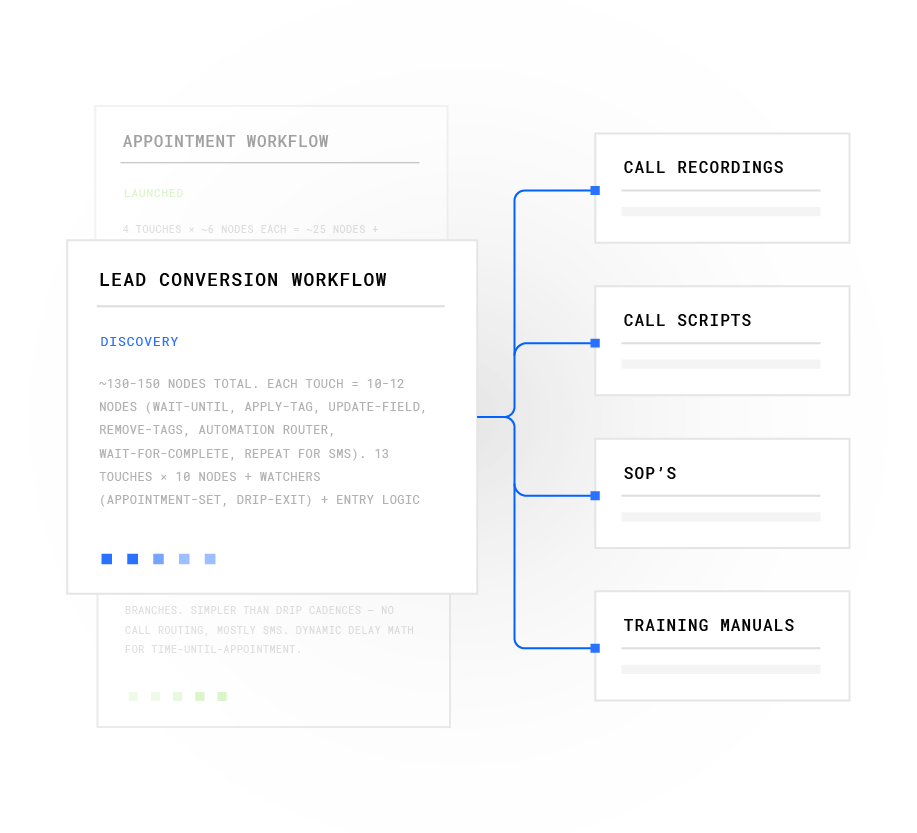
Plura runs on 100% U.S. infrastructure by architecture, with voice origination, model hosting, data storage, and call recording all on domestic infrastructure. Plura manages the platform, the carrier stack, and the compliance engine. Operators configure conversation logic through a no-code workflow builder without touching a server.
AI And Omnichannel Capability
Deployment ownership is one axis of comparison, and AI capability is another. VICIdial has no native AI capabilities such as LLM, speech-to-text, or conversational AI, and its only built-in intelligence feature is answering machine detection (AMD). Any meaningful AI requires external integration. VICIdial was built before modern AI capabilities existed in contact center software and has not incorporated AI functionality as a native feature. Its built-in AMD, Asterisk’s app_amd, runs at roughly 70-80% accuracy out of the box with default or community-tuned settings, though results vary by Asterisk version and tuning. Reaching 95%+ accuracy reliably typically requires AI-based AMD, which reaches 92-96% or higher. At a 30% false-positive rate, a 100-agent floor effectively burns 30% of live connections to voicemail misroutes.
Icallify includes built-in AI features such as call recording and transcription, AI voice bots for conversational IVR covering FAQs, appointment scheduling, and first-line support, and voice broadcasting, per Icallify’s published feature pages. Omnichannel support covers voice, SMS, MMS, WhatsApp, email, and web chat from a single agent interface, per the same source.
Plura runs AI voice agents across inbound and outbound calls on its own FCC-licensed carrier. AI SMS and AI RCS run on the same Stateful Conversation Database, so an agent that texted a lead at 9 a.m. picks up the call at noon already knowing what was said. Speed to lead drops to under 5 seconds across every channel.
VICIdial Vs Icallify For BPOs And Multi-Tenant Operations
Multi-tenant operations care about isolation, white-labeling, and centralized control. VICIdial has no native multi-tenant architecture and was not designed from the ground up as a multi-tenant platform. It began as a single-organization dialer that gained multi-tenancy capabilities through its permission system, with isolation enforced at the application layer via user groups, such as the manually maintained “Allowed Campaigns” setting, rather than through database-, Asterisk-, or OS-level separation. Its agent screen is not natively white-labelable, but it does natively integrate with dozens of CRM systems including Salesforce.com, Zoho, HubSpot, Pipedrive, Vtiger, Zendesk, and SugarCRM. Each new client environment requires a new server and manual setup, with no centralized operator dashboard and no per-tenant isolation at the platform layer.
Icallify offers built-in multi-tenancy, full white-label readiness, and native plus custom CRM integrations, per Icallify’s comparison page. Icallify states each client runs in a separate tenant with its own users, call flows, recordings, integrations, and settings, and that tenants cannot access each other’s data. MSPs in 90+ countries run the platform, and Icallify’s MSP platform page states that 200+ client tenants are supported per deployment, while other Icallify pages describe the multi-tenant architecture as supporting hundreds of tenants per deployment.
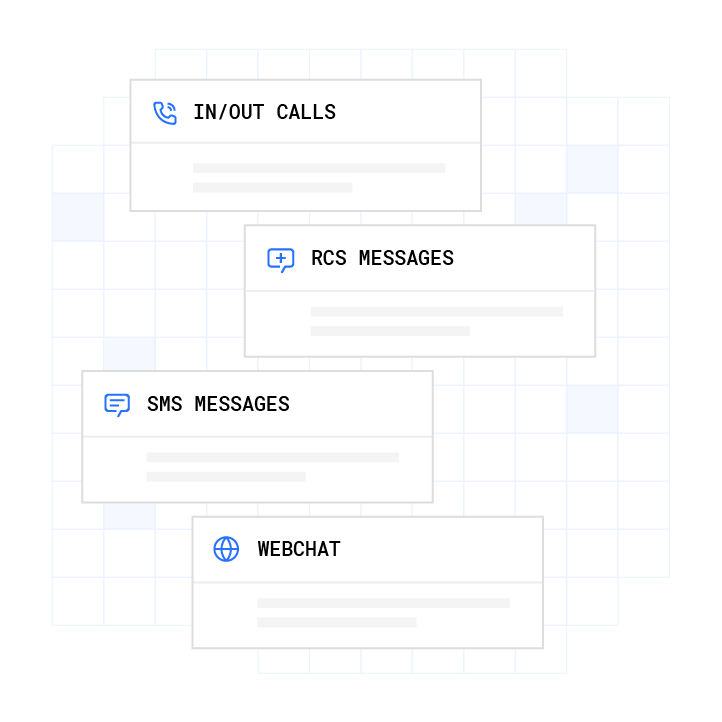
Plura’s Stateful Conversation Database holds context across channels, and the Unified Inbox consolidates voice transcripts, SMS threads, RCS exchanges, and webchat sessions per customer. Operators manage all client activity from one interface with full integrations into the CRMs and tools clients already run.
See multi-tenant AI operations in action in a live Plura environment to understand how carrier ownership changes control.
Compliance And Caller-ID Reality
Compliance and caller ID behavior create the sharpest differences between these platforms. STIR/SHAKEN is the FCC-mandated caller ID authentication framework. It uses digital signatures and a certificate governance process to authenticate and verify caller ID information for calls carried over IP networks. The framework relies on digital certificates and cryptographic signatures so the terminating provider can verify the caller’s right to use the calling number when the originating provider asserts full, or A-level, attestation. Under partial, or B-level, or gateway, or C-level, attestation, the provider cannot verify the caller’s authorization to use the specific number.
The FCC’s Eighth Report and Order, effective September 18, 2025, describes a requirement for every voice service provider with a STIR/SHAKEN implementation obligation to sign calls with its own digital certificate obtained via its own Service Provider Code, or SPC, token, rather than a third party’s certificate, per TelcoBridges’ analysis of the rule. Platforms that rent their carrier layer from a third-party CPaaS, or Communications Platform as a Service, depend on that provider’s identity for call signing.
Authentication is not the same as a clean reputation. A call can be authenticated and still labeled spam, because labeling also depends on carrier analytics, complaint data, and call behavior patterns, according to 46 Labs. Calls labeled “Spam Likely” are overwhelmingly not answered, with answer rates under 5% and FCC data showing 9%, so well over 87% go unanswered, with the 87% figure referring specifically to unknown calls going unanswered. Verified or branded caller ID can increase answer rates by roughly three to five times compared to anonymous or unbranded calls, though reported improvements vary widely by provider and campaign, with some sources citing increases of 20-50% or more.3
Plura issues branded caller ID directly through its FCC-licensed carrier and authenticates every outbound call through STIR/SHAKEN. Real-time DNC scrubbing and quiet-hours enforcement run inside the platform before dial. Operators consulting qualified counsel on TCPA, DNC, and state telemarketing frameworks can use Plura’s compliance infrastructure as the enforcement layer for the rules they determine apply to their campaigns.1,2 VICIdial and Icallify depend on third-party carrier infrastructure for caller ID authentication, while Plura aligns caller ID, authentication, and enforcement inside a single carrier-owned stack.
Comparison Table: VICIdial Vs Icallify Vs AI-Native Carrier-Owned Platform
The table below highlights where the three platforms diverge most: deployment model, maintenance ownership, AI capability, omnichannel coverage, multi-tenancy, and compliance enforcement. Watch how VICIdial pushes control and cost to the operator, how Icallify splits responsibility, and how Plura concentrates both in a carrier-owned stack.
| Attribute | VICIdial | Icallify | AI-Native Carrier-Owned Platform (Plura AI) |
|---|---|---|---|
| Cost Model | AGPLv2 open-source with no per-seat fees; operator funds hosting, SIP trunking, and sysadmin labor | Licensing on monthly, yearly, or perpetual terms for cloud or on-prem deployments | Usage-based or subscription pricing on a carrier-owned stack |
| Deployment | Typically self-hosted on the operator’s Linux/Asterisk stack, with optional managed hosting | Cloud, on-prem, or hybrid | 100% U.S. infrastructure by architecture |
| Maintenance Owner | VICIdial Group maintains the open-source software; operator maintains servers and integrations | Icallify manages the platform | Plura manages platform and carrier stack |
| AI Capability | No native LLM, speech-to-text, or conversational AI; AMD only | Built-in AI recording, transcription, voice bots, and broadcasting | AI voice agents, AI predictive dialer, AI SMS, AI RCS, AI webchat on a Stateful Conversation Database |
| Omnichannel | Inbound and outbound voice plus inbound email | Voice, SMS, MMS, WhatsApp, email, web chat | Voice, SMS, RCS, webchat |
| Multi-Tenancy / White-Label | Application-layer multi-tenancy via permissions; no native tenant isolation | Built-in multi-tenancy and white-label readiness | Stateful Conversation Database and Unified Inbox across tenants |
| Compliance Enforcement | System-wide and per-campaign DNC lists with DNC.com integration | Per-tenant DNC, time-of-day windows, and regional compliance settings | Branded caller ID at carrier level, STIR/SHAKEN on every call, real-time DNC scrubbing, and quiet-hours enforcement inside the platform |
Verdict: When VICIdial, Icallify, Or Plura Make Sense
The right platform depends on what your operation needs to run, not on which software advertises the lowest license price.
- Choose VICIdial if you have a dedicated Linux or VoIP engineer on staff, want full control of an open-source stack, and are running 75+ agents where the per-agent TCO math works in your favor.
- Choose Icallify if you want a managed cloud contact center with built-in AI and omnichannel, do not want to self-host, and need white-label multi-tenancy for a BPO or MSP model.
- Consider an AI-native carrier-owned platform like Plura AI if you want turnkey AI on infrastructure the provider owns, need cross-channel conversation memory, face spam-label and compliance pressure, or want STIR/SHAKEN authentication enforced at the carrier level. See the full platform comparison to evaluate Plura against your current stack.
Frequently Asked Questions
How Does VICIdial Differ From Icallify?
VICIdial is an AGPLv2-licensed open-source dialer that can be self-hosted, so you run and maintain it on your own Asterisk and Linux stack, or deploy it via VICIhost or third-party managed hosting. Icallify is a multi-tenant, white-label contact-center platform with built-in AI-powered routing and omnichannel support across voice, chat, email, SMS, WhatsApp, and social channels, deployable on cloud, on-premises, or hybrid infrastructure. The operator owns all infrastructure decisions with VICIdial, while Icallify manages the platform layer and connects it to the operator’s existing tools. VICIdial suits technically staffed operations that want full control, and Icallify targets VoIP providers, MSPs, and BPOs that want a managed, white-label-ready platform.
How Much Does VICIdial Cost To Run?
VICIdial’s software license is $0, and the real cost sits in infrastructure, SIP trunking, sysadmin labor, and compliance tooling. At 10 agents, per-agent TCO typically falls in the $236-$728 range per month, and at 200 agents it drops to roughly $195-$402 per agent per month. The full breakdown by line item and scale appears in the TCO section above.
Is VICIdial Free To Use?
VICIdial is AGPLv2 licensed with no seat fees and no annual contracts, and the software itself costs nothing to download. The operator pays for server hosting, SIP trunking, a Linux and Asterisk sysadmin, and compliance tooling, and also carries the full cost of downtime and upgrade risk. For a 10-agent operation, those costs can reach $7,280 per month before a single agent is paid.
Who Uses VICIdial?
VICIdial has over 14,000 registered installations in over 100 countries, according to the VICIdial Group, though the true number is likely higher since the open-source software cannot be fully tracked. It is used heavily in Pakistan, India, the Philippines, Egypt, and across Latin America, and the United States remains its single largest market with roughly 39% of tracked companies, followed by India at about 19% and the Philippines at about 8%. It is popular in those markets because it is free and highly customizable, with operators paying only for their server and SIP trunking. In the U.S., it is most common in outbound-heavy operations at 75+ agents where the per-agent TCO math favors self-hosting over managed SaaS alternatives.
What Is The Latest Version Of VICIdial?
As of early 2026, VICIdial’s SVN trunk, the live development line rather than a frozen tagged release, is at revision 3939+, version 2.14b0.5. Its active development delivers PHP 8.2 compatibility, Asterisk 18 as the officially supported runtime, a WebRTC agent interface via ViciPhone v3.0, and STIR/SHAKEN awareness through SIP header handling, while STIR/SHAKEN signing itself is performed by the SIP trunk provider rather than by VICIdial.
How Do You Set Up VICIdial?
VICIdial’s manual installation on AlmaLinux 8 requires the operator to install the OS, Asterisk, MySQL or MariaDB, Apache with PHP, download VICIdial from the official SVN repository, and run the VICIdial database installation scripts. For a new VICIdial install in 2026, Asterisk 18 is the recommended version, with Asterisk 16 LTS or 18 LTS cited for stability, and the current supported installation paths are ViciBox 12.0.2 or a scratch install on AlmaLinux 9. VICIdial’s manual installation on AlmaLinux 9 or Rocky Linux 9 typically takes 45 to 90 minutes for an intermediate Linux administrator. VICIdial’s ViciBox ISO bundles the full stack, including OpenSUSE, Asterisk, MariaDB, Apache, and the VICIdial application, into a single installer and can complete in roughly 15 minutes on a modern SSD-based server, though it may take 30-45 minutes depending on hardware. ViciBox is based on the OpenSUSE Leap distribution and its installer supports both an all-in-one Express install for a single server and a Cluster install across multiple servers, with cluster roles configured through the vicibox-install wizard. For operators who want turnkey AI without self-hosting, Plura offers a managed AI predictive dialer alternative.
VICIdial Vs Icallify For BPOs And Multi-Tenant Operations?
VICIdial’s multi-tenancy is application-layer only and not native, with isolation enforced through user groups rather than database-, Asterisk-, or OS-level separation. Its agent screen is not natively white-labelable, though it integrates with major CRMs. Icallify offers built-in multi-tenancy, full white-label readiness, and isolated client tenants with their own users, call flows, recordings, and settings. An AI-native carrier-owned platform like Plura AI adds cross-channel conversation memory and carrier-level support for branded caller ID on every outbound call. The multi-tenant section above provides the full comparison.
Conclusion
VICIdial rewards scale and punishes small operations, while Icallify solves the management problem and still rents its carrier layer. Plura owns the carrier, which changes how caller ID, authentication, and compliance enforcement behave in production.
Plura AI is that third option. Compare plans and rates side by side on the Plura pricing page. Run your numbers through the ROI calculator to check your savings in real time. Or book a walkthrough built around your operation to see the carrier-owned stack in a live environment tailored to your team.
1 Plura AI maintains SOC 2, HIPAA, ISO, and GDPR posture as part of its platform infrastructure. References to compliance frameworks in this article describe Plura’s platform capabilities and do not constitute a guarantee that any customer using Plura will themselves be compliant with applicable laws or standards. Customers remain solely responsible for their own regulatory obligations, certifications, consent management, recordkeeping, and the claims they make to their own end users. Consult qualified legal counsel for guidance specific to your use case.
2 This article describes regulatory frameworks at a general level and does not constitute legal advice. Laws and regulations vary by jurisdiction, change over time, and apply differently depending on facts and circumstances. Readers should consult qualified legal counsel before making compliance decisions.
3 Performance figures, customer outcomes, and industry statistics referenced in this article are drawn from cited third-party sources or Plura customer case studies. Individual results vary based on implementation, use case, industry, audience, and execution. Past or aggregate performance is not a guarantee of future results.
4 References to third-party products, services, companies, or research are made for informational and comparative purposes only. Plura AI is not affiliated with, endorsed by, or sponsored by any third party named in this article unless explicitly stated. Trademarks and product names referenced remain the property of their respective owners.
This article is provided for informational purposes only and reflects Plura AI’s understanding at the time of publication. Product capabilities, integrations, and specifications are subject to change. For the most current information, visit plura.ai.
This article was produced with the assistance of AI tools and reviewed by Plura AI prior to publication.