
Written by: Matt Beucler, CEO, Plura AI
Key Takeaways
- VICIdial’s zero license fee hides substantial ongoing infrastructure, SIP trunking, and admin costs that rise with seat count.
- Cloud CCaaS platforms like 8×8 charge $75–$119 per seat per month, and total cost of ownership often runs about 40% higher once add-ons and services are included.
- 2026 FCC onshoring proposals and state laws create new exposure for offshore SIP or foreign infrastructure that neither VICIdial nor 8×8 was built to handle directly.
- Plura AI’s carrier-owned AI Predictive Dialer uses per-conversation pricing, real-time DNC/TCPA enforcement support, and 100% U.S. infrastructure for 50–500 seat outbound operations.
- Operators evaluating dialer platforms can talk with Plura AI to model their specific ROI and compliance requirements.
Outbound Dialer Choices in 2026: VICIdial, CCaaS, and Carrier-Owned AI
Contact center leaders in 2026 choose between three practical outbound architectures. Self-hosted open-source platforms like VICIdial shift cost into infrastructure and technical staffing. Cloud CCaaS platforms like 8×8 shift cost into per-seat licenses and add-ons. A third category has now matured: carrier-owned AI dialer platforms that price per conversation instead of per seat and run on domestic infrastructure by design.
This guide quantifies trade-offs across three deployment sizes (50, 100, and 250 seats). It also outlines 2026 FCC regulatory exposure that affects offshore-dependent operations and non-compliant outbound stacks, then maps a migration path for operators currently on either VICIdial or cloud CCaaS.
VICIdial Total Cost of Ownership in 2026
VICIdial carries no licensing fee, which is the figure most operators highlight. The actual cost structure sits in infrastructure, SIP trunking, and ongoing system administration. A March 2026 ViciStack TCO analysis that includes telecom, add-ons, and infrastructure shows that annualized costs for self-hosted operations can be significant at different scales.
VICIdial’s monthly costs accumulate across the infrastructure stack. Servers and storage support the platform, SIP trunking and DIDs handle call routing, and system administration, monitoring, security, and backup keep the environment stable.
HIPAA compliance for a self-hosted VICIdial environment usually requires additional investment in initial assessment and ongoing compliance work.1 That line item rarely appears in the self-hosted cost models operators present to leadership.
On throughput, a well-tuned VICIdial predictive dialing operation achieves 45–55 minutes of talk time per agent hour.3 A poorly tuned campaign can deliver substantially less. The gap between those outcomes reflects internal technical expertise, which functions as a recurring cost.
When 8×8 and Cloud CCaaS Make Sense for Outbound
Cloud CCaaS platforms including 8×8 fit organizations that value vendor-managed infrastructure, rapid provisioning, and distributed agent support more than per-seat cost efficiency at scale.4 InflectionCX’s CCaaS Market Guide 2026 notes that true cloud CCaaS total cost of ownership can exceed listed license fees by 40% or more when all factors are included.4
A realistic three-year TCO for a 100-agent mid-range CCaaS deployment often lands well above base software licenses alone. Implementation and professional services, telecom and PSTN, WFM and AI add-ons, training, administrative staff, and integration development all contribute to the final number.
Published entry pricing includes NICE CXone at $110 per agent per month, Genesys Cloud at $75, Five9 at $119, and Talkdesk at $85. Full contact-center licensing for major UCaaS/CCaaS platforms in 2026 runs $75–$119 per seat per month (Genesys CX1 at $75, Talkdesk Voice Essentials at $105, Microsoft at $110, Five9 at $119).
Cloud CCaaS works well for operators that need vendor-managed uptime, rapid geographic expansion, and minimal internal IT overhead. The limitation for high-volume outbound is that per-seat pricing scales directly with headcount regardless of completed calls per seat, and predictive throughput is constrained by vendor pacing algorithms rather than tuned by the operator.
Model your specific CCaaS costs against Plura’s per-conversation pricing.
How AI and CCaaS Are Reshaping the Contact Center Market
CCaaS revenue is projected to grow from $8.551 billion in 2024 to $16.303 billion by 20293, which positions cloud-based platforms as the default model for large organizations. At the same time, about 66.9% of companies still operate on hosted or on-premises contact center platforms rather than pure CCaaS as of 2026 (33.1% using CCaaS), per Metrigy research. That mix reflects the persistence of self-hosted deployments in compliance-sensitive and cost-sensitive environments.
Architecture is shifting in parallel. Gartner predicts conversational AI will reduce contact center agent labor costs by $80 billion by 20263, and AI agents can materially reduce cost per call. For 50–500 seat outbound operations, the self-hosted versus cloud decision now sits beside a third question: which platform owns the carrier stack and can support compliance at origination rather than as a bolt-on layer?
2026 FCC Onshoring Exposure for Outbound Operations
The FCC’s March 2026 Notice of Proposed Rulemaking (NPRM, CG Docket No. 26-52) seeks comment on several potential requirements.2 These include American Standard English proficiency for offshore call-center staff, caps on the percentage of customer-service calls handled offshore, mandatory customer disclosure when calls are handled abroad, and links between anti-robocall measures and foreign call centers. The rule is not yet final, but the comment record and companion legislation signal the likely direction.
Companion federal legislation includes the Keep Call Centers in America Act (S.2495) and the Foreign Robocall Elimination Act (S.2666). State-level exposure is already active:
- New York’s Call Center Jobs Act carries penalties up to $10,000 per day for covered violations
- New Jersey has enacted a mirror statute
- Connecticut bans offshore handling on state contracts
- Missouri issued an executive order requiring offshore disclosure
- Florida restricts offshore handling of medical information
Outbound operations using self-hosted VICIdial with offshore SIP origination or offshore administration, and cloud CCaaS deployments routing through foreign infrastructure, face potential compliance liability that rarely appears in current TCO models.2 Operators in regulated verticals such as healthcare, insurance, financial services, and legal should consult qualified counsel on their specific exposure under these frameworks.
Plura runs on 100% U.S. infrastructure by architecture. Voice origination, model hosting, data storage, and call recording all sit on domestic infrastructure, which allows Plura clients to report “100% U.S.-handled” in their broadband consumer label disclosures without infrastructure carve-outs.

Strategic Trade-offs for 50–500 Seat Operations
The central trade-off of self-hosting is operational responsibility. Self-hosted call center software removes recurring licensing costs but requires the organization to manage infrastructure, upgrades, and high availability. For a 50–500 seat outbound operation, that usually means a dedicated systems administrator, SIP trunk management, server provisioning for scale events, and an internally built compliance posture.
Cloud CCaaS shifts infrastructure maintenance to the vendor but introduces per-seat pricing that scales directly with headcount. Add-ons for AI features, workforce management, and quality assurance often add 20–60% on top of the advertised base per-agent price in cloud contact center deployments. Buyers of UCaaS deployments in 2026 commonly experience 25–40% budget overruns in year one when they model only the published seat price.
For operators at 50–500 seats, the practical question is whether infrastructure overhead from self-hosting or per-seat escalation from cloud CCaaS is easier to manage. A carrier-owned AI dialer platform that prices per conversation instead of per seat changes that calculation at both ends of the range.
Decision Matrix: VICIdial, 8×8, and Plura at 50/100/250 Seats
| Dimension | VICIdial (Self-Hosted) | 8×8 / Cloud CCaaS | Plura AI |
|---|---|---|---|
| Architecture | Self-hosted on operator-owned or rented servers, operator manages all infrastructure | Vendor-hosted cloud, operator manages configuration only | Carrier-owned, FCC-licensed audio bridging carrier, 100% U.S. infrastructure |
| Licensing | No license fee, costs are infrastructure, SIP, and admin | Per-seat subscription, $75–$119 per seat per month for full contact-center tier | Per-conversation pricing, scales with AI volume, not headcount |
| Outbound Throughput | 45–55 minutes talk time per agent hour when well tuned, can be significantly lower when poorly tuned | Vendor-managed pacing, limited operator control over dial ratios | AI-driven pacing using stateful conversion signals, prioritizes contacts by historical answer rate and prior outcomes |
| Compliance Posture | Operator-built, HIPAA assessment and ongoing compliance add costs | Vendor-managed infrastructure compliance, operator responsible for TCPA, DNC, and consent records | Real-time DNC scrubbing, TCPA compliance support, SHAKEN/STIR caller ID verification, SOC 2, HIPAA, and ISO certification supported at the carrier level before dial1 |
| Maintenance | Full operator responsibility: servers, SIP trunks, security patches, upgrades | Vendor-managed, operator handles configuration and integrations | Vendor-managed, Plura owns the carrier stack and iterates conversation workflows continuously |
| Scalability | Requires hardware procurement and cluster expansion, over-provisioning common | Scales in real time via software, per-seat cost scales linearly | Scales from 4 to 400+ agents overnight, per-conversation cost does not scale linearly with headcount |
3-Year TCO Examples at 50, 100, and 250 Seats
| Deployment Size | VICIdial 3-Year TCO | Cloud CCaaS 3-Year TCO | Plura AI (Illustrative) |
|---|---|---|---|
| 50 seats | Substantial costs from infrastructure, SIP trunking, administration, and add-ons (per ViciStack 2026) | Substantially higher than base per-seat fees when including all components (per industry analyses), excludes AI add-ons and professional services | A 50-seat offshore equivalent costs about $1.2M annually fully loaded, Plura handling equivalent volume costs $180K–$300K annually, per Plura’s published comparison |
| 100 seats | Substantial costs including implementation (per ViciStack 2026) | Substantially higher 3-year TCO when including all factors per InflectionCX models for a comparable mid-range CCaaS deployment | Traditional 100-seat operations cost $4M–$7M annually, AI-powered platforms like Plura cost $300K–$700K, per Plura’s AI Communications Strategy guide |
| 250 seats | Substantial costs (per ViciStack 2026) | Cloud CCaaS platforms range widely depending on configuration and add-ons (per ViciStack 2026) | Plura AI voice agents cost $0.35–$0.85 per completed conversation, per Plura’s published comparison, total cost depends on conversation volume and mix |
Calculate your three-year savings across all deployment sizes.
Current Best Practices in AI-Powered Customer Communications
The 2026 contact center architecture with the lowest per-conversation cost at 50–500 seats usually combines three elements. A carrier-owned dialer supports compliance at origination. A stateful conversation database preserves context across voice, SMS, RCS, and webchat. Per-conversation pricing breaks the link between cost and headcount.
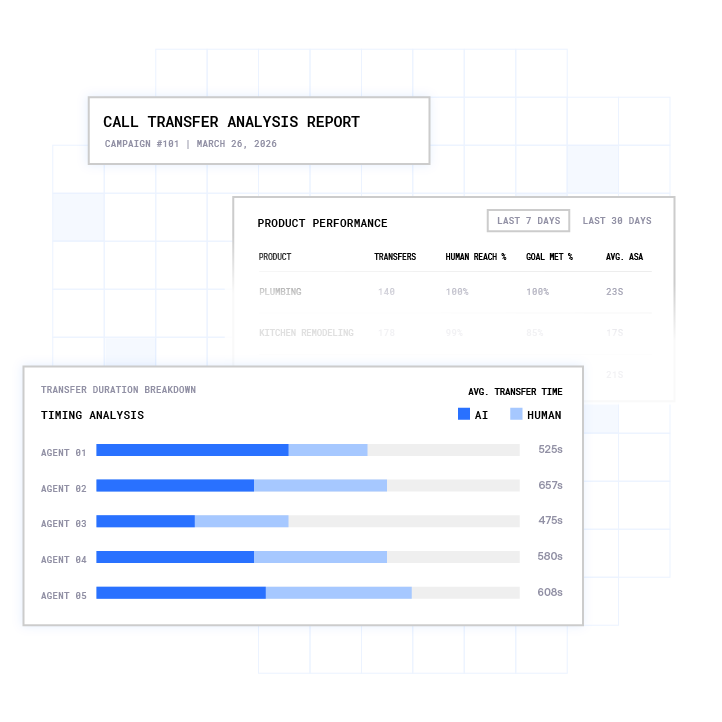
AI voice agents in 2026 contact centers are automating 50–70% of high-volume, repetitive inbound calls, which enables 24/7 availability while routing complex issues to human agents. On the outbound side, AI-driven pacing that uses historical answer rates and prior negotiation outcomes to prioritize the dial queue outperforms static predictive algorithms that treat every contact as equivalent.
Plura’s AI Predictive Dialer uses stateful conversion signals to decide who to call next. Calls flow over Plura’s FCC-licensed carrier with branded caller ID and SHAKEN/STIR caller ID verification on every outbound contact. The same stateful database that drives the dialer also powers AI SMS follow-up, so an agent that texted a lead at 9 a.m. can pick up the call at noon already knowing what was said.
Readiness Checklist Before You Change Dialers
Operators at 50–500 seats should review four readiness dimensions before selecting a dialer architecture:
- Technical staffing: Self-hosted VICIdial requires a dedicated systems administrator for SIP trunk management, server maintenance, and security patching. If that role does not exist internally, the cost belongs in the TCO model.
- Compliance infrastructure: Both self-hosted and cloud deployments require the operator to maintain TCPA consent records, DNC scrubbing cadences, and quiet-hours enforcement. Platforms that support these controls at the carrier level before dial can reduce internal compliance workload.
- Throughput requirements: VICIdial’s predictive throughput depends on tuning expertise. Cloud CCaaS platforms constrain dial ratios by vendor policy. Operators with aggressive outbound throughput targets should confirm whether the platform allows operator-controlled pacing.
- Infrastructure exposure: Operators with offshore SIP origination, offshore administration, or cloud infrastructure hosted outside the U.S. should assess their exposure under FCC CG Docket No. 26-52 and applicable state laws before committing to a multi-year contract.
Plura Migration Path from VICIdial or Cloud CCaaS
Migration from VICIdial or a cloud CCaaS platform to Plura follows a structured sequence:
- Discovery audit of current call economics, campaign structure, and SIP trunk configuration
- Intake of existing scripts, SOPs, and sample call recordings
- Overnight build of a dynamic conversation mockup using Plura’s internal tooling
- Workflow review and iteration with the operator team
- Engineering build of the production workflow on Plura’s no-code workflow builder
- Pilot test on a subset of live contacts
- Full go-live with parallel monitoring
Simple inbound qualification flows are typically live in days. Complex multi-step outbound workflows usually run closer to two to four weeks. Migration from a hosted platform to self-hosted VICIdial is estimated at $15,000–$45,000 total, covering deployment, data migration, agent retraining, parallel running, and SIP setup. Plura’s onboarding does not use a comparable migration fee structure; the agent build fee is published at plura.ai/pricing.
Every Plura annual contract includes a 90-day opt-out window. If the deployment is not delivering, operators are not held to the annual term.
Run your numbers through Plura’s calculator to check your ROI in real time.
Common Evaluation Pitfalls to Watch
Operators comparing VICIdial and cloud CCaaS often repeat the same mistakes:
- Modeling only the license fee: VICIdial’s zero license cost obscures significant monthly costs in SIP, admin, and infrastructure at 100 seats. Cloud CCaaS base pricing excludes AI add-ons, professional services, and telecom that can add 40% or more to the published rate, per InflectionCX’s CCaaS Market Guide 2026.
- Ignoring compliance line items: HIPAA compliance for self-hosted VICIdial adds initial and ongoing costs. TCPA consent management, DNC scrubbing, and quiet-hours enforcement remain operator responsibilities on both platforms unless the dialer supports these controls at the carrier level.
- Assuming throughput is fixed: VICIdial throughput varies with tuning quality. That variation creates a meaningful labor cost difference at 100+ seats.
- Underestimating regulatory exposure: Multi-year contracts signed before FCC CG Docket No. 26-52 is finalized may lock operators into infrastructure that requires costly remediation if the rule takes effect. Operators should consult qualified counsel on their specific exposure.
- Treating AI add-ons as optional: Industry reports indicate that many contact center leaders are increasing their AI budgets. Platforms that treat AI as a paid add-on will see that line item grow, while platforms where AI is the core architecture do not carry the same escalation pattern.
Frequently Asked Questions
How much does VICIdial really cost for a 100-seat outbound operation?
A 100-seat VICIdial deployment carries significant monthly costs in infrastructure, including database and dialer servers, SIP trunking, system administration, and monitoring. Additional costs for HIPAA compliance include initial assessment and ongoing work. The zero-license-fee framing remains accurate but incomplete without those line items.
What are the compliance differences between VICIdial and cloud CCaaS platforms like 8×8?
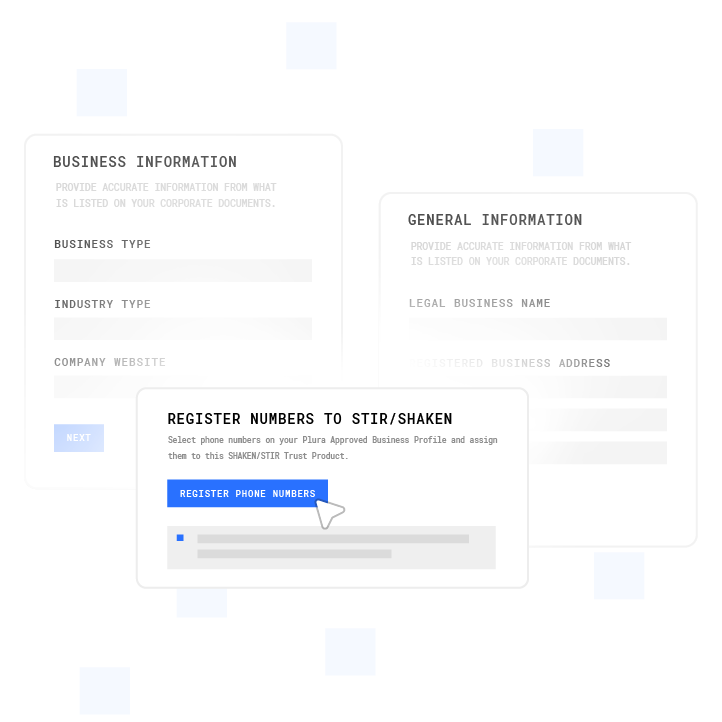
Both VICIdial and cloud CCaaS platforms place TCPA consent management, DNC scrubbing, and quiet-hours enforcement responsibility on the operator. VICIdial requires the operator to build and maintain all compliance infrastructure internally. Cloud CCaaS platforms manage the underlying infrastructure but do not enforce compliance on outbound contacts before dial. Plura supports real-time DNC scrubbing, TCPA compliance, and SHAKEN/STIR caller ID verification at the carrier level on every outbound contact, with immutable consent records and one-click audit exports. Operators remain responsible for their own regulatory obligations regardless of platform and should consult qualified counsel for guidance specific to their operation.
How does the FCC NPRM affect offshore dialing operations in 2026?
The FCC’s March 2026 Notice of Proposed Rulemaking under CG Docket No. 26-52 proposes caps on the percentage of customer-service calls handled offshore, customer disclosure when calls are handled abroad, and links between anti-robocall measures and foreign call centers. The rule is not yet final. Companion legislation including the Keep Call Centers in America Act (S.2495) and the Foreign Robocall Elimination Act (S.2666) extends the federal regulatory perimeter. State laws in New York, New Jersey, Connecticut, Missouri, and Florida already restrict offshore handling of medical, financial, and consumer data. Operators with offshore SIP origination, offshore administration, or foreign-hosted infrastructure should consult qualified counsel on their exposure before the rule is finalized.
What is the per-conversation cost advantage of an AI Predictive Dialer versus a human agent seat?
As noted earlier, Plura’s per-conversation model ranges from $0.35–$0.85 depending on complexity and volume. A 50-seat offshore team in the insurance industry costs approximately $1.2 million annually fully loaded, while Plura handling equivalent volume costs $180,000–$300,000 annually. For a 100-seat contact center, traditional operations cost $4 million–$7 million annually, and AI-powered platforms like Plura cost $300,000–$700,000. The per-conversation model ties cost to actual output rather than headcount, which changes the economics at every seat count above the platform’s minimum viable volume.
How long does it take to migrate from VICIdial to Plura?
Simple outbound qualification workflows are typically live within days of contract signing. Complex multi-step campaigns with branching logic, negotiation guardrails, and CRM integrations usually run closer to two to four weeks. Plura’s onboarding sequence includes a discovery audit, script and SOP intake, an overnight conversation mockup build, a workflow review session, engineering build, pilot test on live contacts, and full go-live. Every annual contract includes a 90-day opt-out window if the deployment is not delivering the expected results.
Conclusion and Next Steps
Self-hosted VICIdial and cloud CCaaS platforms like 8×8 represent two different cost structures, not two different outcomes. VICIdial shifts cost into infrastructure and administration. Cloud CCaaS shifts cost into per-seat subscriptions and add-on fees. Both expose operators to compliance overhead that must be built and maintained internally. Neither was designed around the 2026 regulatory environment, where FCC CG Docket No. 26-52 and multiple active state onshoring laws make infrastructure provenance a material business risk.
Plura AI’s carrier-owned AI Predictive Dialer prices per conversation, supports DNC and TCPA compliance at the carrier level before dial, runs SHAKEN/STIR caller ID verification on every outbound contact, and operates on 100% U.S. infrastructure by architecture. For 50–500 seat outbound operations, the per-agent economics, compliance posture, and regulatory positioning define a different category of platform rather than a point on the existing VICIdial-to-CCaaS spectrum.
Run your numbers through Plura’s calculator to model your specific ROI across VICIdial, cloud CCaaS, and Plura’s per-conversation pricing.
To compare capabilities, compliance features, and pricing tiers in detail, review Plura’s plans and rates.
1 Plura AI maintains SOC 2, HIPAA, ISO, and GDPR posture as part of its platform infrastructure. References to compliance frameworks in this article describe Plura’s platform capabilities and do not constitute a guarantee that any customer using Plura will themselves be compliant with applicable laws or standards. Customers remain solely responsible for their own regulatory obligations, certifications, consent management, recordkeeping, and the claims they make to their own end users. Consult qualified legal counsel for guidance specific to your use case.
2 This article describes regulatory frameworks at a general level and does not constitute legal advice. Laws and regulations vary by jurisdiction, change over time, and apply differently depending on facts and circumstances. Readers should consult qualified legal counsel before making compliance decisions.
3 Performance figures, customer outcomes, and industry statistics referenced in this article are drawn from cited third-party sources or Plura customer case studies. Individual results vary based on implementation, use case, industry, audience, and execution. Past or aggregate performance is not a guarantee of future results.
4 References to third-party products, services, companies, or research are made for informational and comparative purposes only. Plura AI is not affiliated with, endorsed by, or sponsored by any third party named in this article unless explicitly stated. Trademarks and product names referenced remain the property of their respective owners.
5 This article contains forward-looking statements regarding industry trends, technology adoption, and future capabilities. These statements reflect current expectations and are subject to change. Plura AI undertakes no obligation to update forward-looking statements except as required.
This article is provided for informational purposes only and reflects Plura AI’s understanding at the time of publication. Product capabilities, integrations, and specifications are subject to change. For the most current information, visit plura.ai.
This article was produced with the assistance of AI tools and reviewed by Plura AI prior to publication.