
Written by: Matt Beucler, CEO, Plura AI
Key Takeaways
- US-based AI lead follow-up covers three separate claims: company headquarters, data residency, and carrier or infrastructure ownership. Most vendors satisfy only one.
- Carrier ownership is the critical axis for regulated, high-volume operators because it drives pickup rate, pre-call compliance enforcement, and resilience under 2026 regulatory shifts.
- Three 2026 developments, the FCC NPRM CG Docket No. 26-52, the Keep Call Centers in America Act, and the Foreign Robocall Elimination Act, elevate infrastructure ownership to a legal and operational priority.
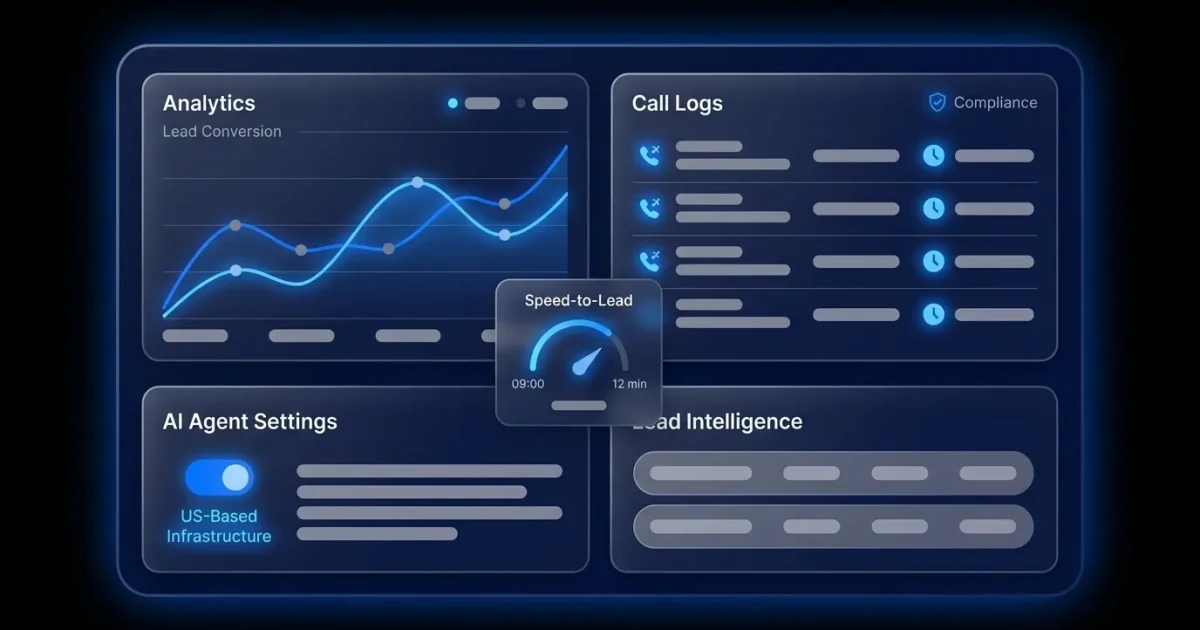
- Sub-60-second lead response depends on infrastructure, not headcount. Plura AI delivers first AI-powered contact in under 5 seconds versus an industry standard of 47+ hours.
- Plura AI owns its FCC-licensed U.S. carrier and runs 100% U.S. infrastructure by architecture, enforcing compliance at the carrier level. See sub-5-second response in a live Plura demo.
What “US-Based” Actually Means for AI Lead Follow-Up
“US-based” sounds simple, yet it hides three different claims that affect risk, performance, and procurement decisions.
The first axis is company headquarters. This is where the entity is incorporated and where its leadership sits. It is the cheapest claim to make and the easiest to verify on a LinkedIn page. It does not describe where data flows or who carries the call.
The second axis is data residency. This covers where lead data, call recordings, and conversation transcripts are stored and processed. A U.S.-headquartered vendor can still route every byte through servers in Dublin or Singapore. Most vendors do not highlight this routing in their marketing.
The third axis is carrier and infrastructure ownership. This describes whether the vendor owns the telecom layer that originates and terminates calls or resells a third-party CPaaS. CPaaS is the API-only telecom layer that providers like Twilio sell to AI vendors that do not own their own carrier. Most AI voice and SMS tools in the market today are CPaaS resellers. They rent the carrier layer. That dependency has three consequences: no branded caller ID under their own identity, no compliance enforcement before the call leaves the network, and no ability to withstand foreign-infrastructure prohibitions.
For regulated, high-volume operators, carrier and infrastructure ownership is the axis that matters most. It determines pickup rate, whether compliance controls run before the call reaches the prospect, and whether the vendor’s architecture holds up under the 2026 regulatory shift. Plura AI is its own FCC-licensed carrier, not a wrapper on someone else’s network.
Why 2026 Made US-Based AI Lead Follow-Up Urgent
Three regulatory developments converged in 2026 and pushed infrastructure ownership from a vendor preference into a board-level concern.2
FCC NPRM CG Docket No. 26-52. The FCC adopted this Notice of Proposed Rulemaking (NPRM, a formal regulatory proposal open for public comment) by unanimous vote on March 26, 2026. The proceeding, titled “Improving Customer Service and Protecting Consumers through Onshoring,” seeks comment on limiting the share of customer-service calls routed offshore, using 30% as an illustrative threshold. The proposal would require disclosure when a call is handled outside the United States, transfer to a U.S.-based representative on request, and U.S.-only handling of sensitive transactions including password changes and credit-card actions. It remains a proposal, not a final rule. Readers should consult the primary filing and qualified counsel for their own obligations.
Keep Call Centers in America Act (S.2495). This bipartisan companion legislation would extend the federal regulatory perimeter on offshore call-center operations. Full text and status appear at Congress.gov.
Foreign Robocall Elimination Act (S.2666). This bill passed the Senate by unanimous consent on August 3, 2026 and was held at the desk in the House as of August 10, 2026. It would establish an interagency taskforce on unlawful robocalls and require certain voice providers to post a bond of up to $100,000 before certifying to the Robocall Mitigation Database. The Congressional Budget Office cost estimate was published May 26, 2026.
State-level restrictions already apply. New York’s Call Center Jobs Act carries penalties up to $10,000 per day.2 New Jersey has enacted a mirror statute. Connecticut restricts offshore handling in state contracts. Missouri issued an offshore-disclosure executive order. Florida restricts offshoring of medical information. Secondary coverage from JD Supra and state legislature pages document the specifics. Readers should consult primary sources and qualified counsel for their own obligations under these frameworks.
Vendors with foreign infrastructure dependencies face potential exposure under this regulatory cluster. Vendors running 100% U.S. infrastructure by architecture avoid that specific dependency.
A Clarifying Note on the “30% Rule in AI”
Because the NPRM’s 30% figure surfaced in 2026 alongside unrelated AI coverage, search results now conflate the two. Untangling them matters before you evaluate vendor claims.
Search results in 2026 surface a “30% rule in AI” that blends two unrelated topics. The figure originates in the FCC NPRM CG Docket No. 26-52, where 30% appears as an illustrative cap on the share of customer-service calls that may be handled offshore. It describes a proposed limit on offshore call routing, not a rule about artificial intelligence, AI model usage, or AI-generated content. Generic “30% rules in AI” circulating in search results are unrelated to CG Docket No. 26-52. The two get conflated because both surfaced in 2026 and both use the same number. The NPRM remains a proposal, and no final rule has been adopted.
Speed-to-Lead Mechanics: What Sub-60-Second Response Actually Requires
Sub-60-second lead response depends on infrastructure, not headcount. Three operational requirements determine whether a platform can hit that threshold consistently.
First, you need always-on agents that do not depend on a human rep being free. Chili Piper data shows that sales teams responding within one minute see up to 391% higher conversions.3 That window usually closes before a rep finishes their current call.
Second, you need parallel channel execution. Voice, AI SMS, RCS (Rich Communication Services, the next-generation messaging standard), and webchat should hit the same lead at the same time. A lead who does not pick up a call may reply to a text in seconds.
Third, you need carrier-level call delivery. A call that lands with a “Spam Likely” label gets declined regardless of how fast it was dialed. Speed and answer rate must be engineered together. One without the other does not close the gap.
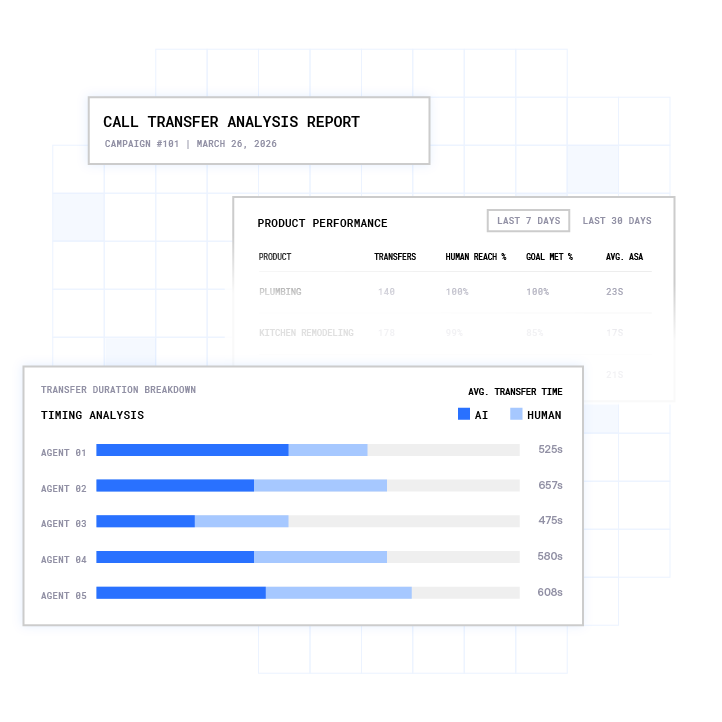
Plura’s documented numbers on this show under 5 seconds to first AI-powered contact, versus an industry standard of 47+ hours.3 That gap matters because contact speed compounds. contacting a lead within 5 minutes makes them up to 100 times more likely to connect, and without a platform, 88% of outbound effort goes unanswered.3
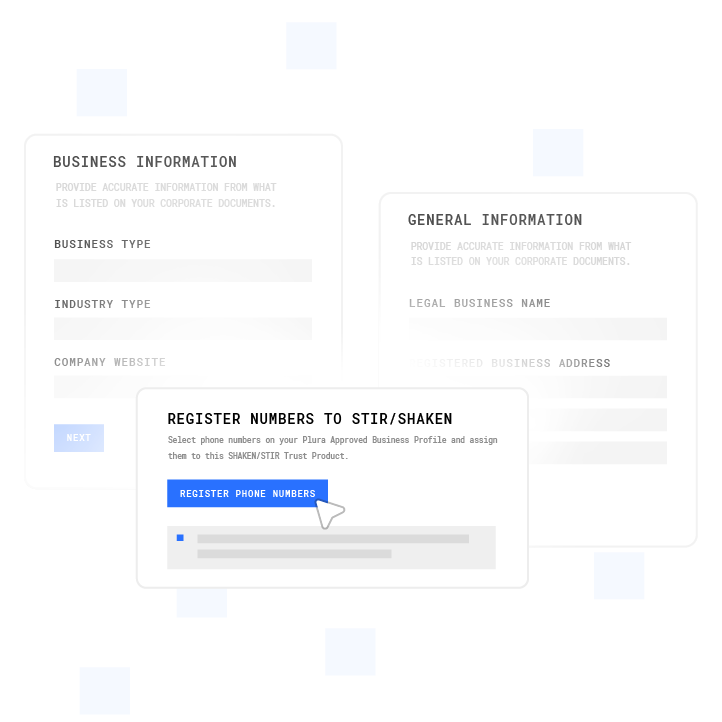
Plura’s AI voice agent handles inbound and outbound calls on its own FCC-licensed carrier with branded caller ID and STIR/SHAKEN (Secure Telephone Identity Revisited and Signature-Based Handling of Asserted Information Using Tokens, the call authentication framework) authentication on every outbound call. The AI Predictive Dialer routes calls over the same carrier infrastructure, not a third-party CPaaS.
See sub-5-second response in action in a live Plura demo.
How to Evaluate a Vendor’s U.S. Claims: A Buyer’s Checklist
These questions help you separate vendors that satisfy one axis from vendors that satisfy all three.
- Where is the company headquartered?
- Where is data stored and processed?
- Does the vendor own its carrier, or resell a third-party CPaaS?
- Can it issue branded caller ID under its own carrier identity?
- Does it run STIR/SHAKEN authentication on outbound calls?
- How are TCPA (Telephone Consumer Protection Act, 47 U.S.C. § 227), DNC (Do Not Call), HIPAA (45 CFR Parts 160, 162, 164), SOC 2 (AICPA Trust Services Criteria), 10DLC (A2P Application-to-Person messaging registry compliance for SMS), and state quiet-hours rules handled inside the platform?
Plura’s answers follow the same sequence.
- Plura is headquartered in Henderson, Nevada.
- It runs on 100% U.S. infrastructure by architecture for storage and processing.
- Plura is its own FCC-licensed audio bridging carrier.
- It issues branded caller ID at the carrier level, under its own identity.
- It holds its own operating company number and runs STIR/SHAKEN authentication on every outbound call.
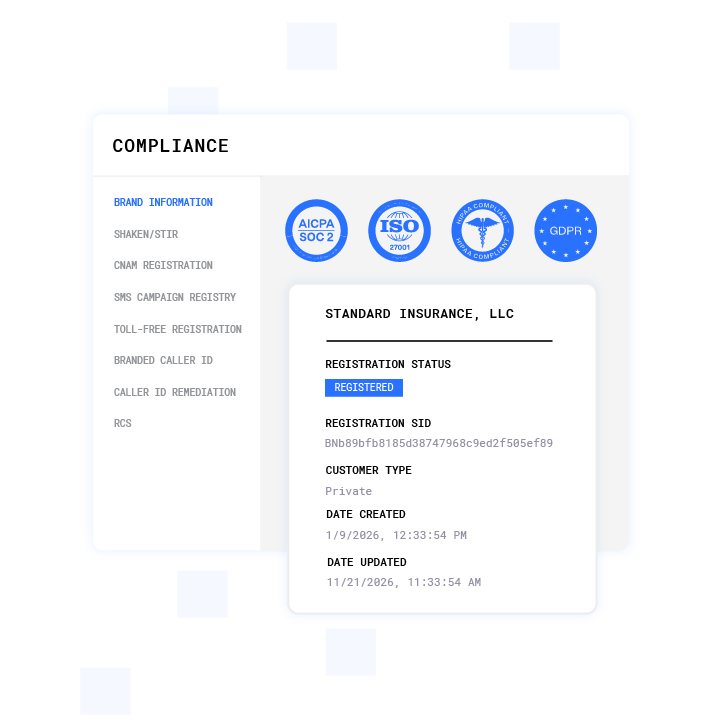
- It enforces real-time DNC scrubbing, TCPA-litigator screening, automated quiet hours, and immutable consent logging inside the platform on every outbound contact, supporting customer compliance obligations.1
Most competitors in this category, including Thoughtly, Reply.io, Kixie, Callingly, and Synthflow, are software layers built on top of third-party telecom.4 They do not own the carrier. Bland AI is an API-based AI voice vendor that operates a build-and-forget model.4 Like other API resellers, it does not own its own carrier, as documented in Plura’s comparison. HubSpot’s calling features are powered by the third-party VoIP service Twilio, which provides the underlying calling services, and HubSpot also supports integrating other third-party calling providers via its App Marketplace.4 These vendors cannot issue branded caller ID at the carrier level or enforce compliance before the call leaves the network.
US-Based AI Lead Follow-Up for Regulated Industries
Healthcare, insurance, financial services, and legal operators face an additional layer of scrutiny when they evaluate AI lead follow-up vendors. Data that cannot leave domestic infrastructure under the FCC NPRM and state-level restrictions includes passwords, multi-factor authentication credentials, social security numbers, banking data, and card data, per the FCC’s proposed rules.
The relevant frameworks for regulated buyers include:
- TCPA (47 U.S.C. § 227): describes restrictions on robocalls, autodialed and prerecorded-voice calls, and unwanted telemarketing texts.
- HIPAA (45 CFR Parts 160, 162, 164): governs protected health information.
- SOC 2: AICPA Trust Services Criteria for security, availability, and confidentiality controls.
- 10DLC: A2P messaging registry compliance for SMS campaigns.
- STIR/SHAKEN: call authentication framework implemented under the TRACED Act.
Plura supports customer compliance across these frameworks. It does not absolve customers of their own obligations. Readers should consult qualified counsel for their specific regulatory posture.
For healthcare operators, Plura’s platform supports appointment confirmation, patient intake, and reminder workflows, with up to 40% improvement in no-shows.3 HIPAA-aligned encryption, access controls, and audit logging apply across all four channels by default.
Walk through a regulated-industry deployment in a live Plura demo.
Frequently Asked Questions
What Does “US-Based” Mean for AI Lead Follow-Up?
“US-based” describes three separate claims: where the vendor is headquartered, where lead data is stored and processed, and who owns the carrier and infrastructure. Most vendors satisfy only one. Plura AI is headquartered in Henderson, Nevada, and its platform runs on its own FCC-licensed U.S. carrier, Plura Connect, LLC (Filer ID 837256, holding FCC International Telecommunications Certificate ITC-214-20241223-00186), which serves as the carrier of record for the Plura.AI platform.
Which AI Lead Follow-Up Platforms Run on U.S. Infrastructure?
Several U.S.-headquartered vendors operate on U.S. infrastructure for data storage. The distinguishing question is carrier ownership. Plura AI owns its FCC-licensed U.S. carrier and runs 100% U.S. infrastructure by architecture, rather than reselling a third-party CPaaS. Thoughtly routes voice through third-party telecom providers such as Twilio and Telnyx via Bring Your Own Carrier, whereas Synthflow operates its own in-house telephony stack with its own Session Border Controllers and media infrastructure and is not tied to third-party vendor footprints.
How Does the FCC NPRM Affect AI Lead Follow-Up?
The FCC NPRM (CG Docket No. 26-52) seeks comment on limiting offshore customer-service calls and requiring U.S.-only handling of sensitive transactions. It remains a proposal, not a final rule. Vendors with foreign infrastructure dependencies face potential exposure if the rule is finalized. Vendors running 100% U.S. infrastructure by architecture avoid that specific dependency. Readers should consult the primary sources and qualified counsel for their own obligations.
What Is the “30% Rule in AI”?
The FCC NPRM’s proposed 30% figure is a cap on the share of customer-service calls that may be handled offshore. It does not describe a rule about artificial intelligence or AI model usage. Generic “30% rules in AI” circulating in search results are unrelated to CG Docket No. 26-52. The two get conflated because both surfaced in 2026 and both use the same number.
How Fast Should AI Lead Follow-Up Respond?
Sub-60-second response is the operational threshold that separates top-performing teams from the field. The 391% conversion lift cited earlier applies here as you evaluate your own funnel. Plura AI contacts leads in under 5 seconds to first AI-powered contact, versus an industry standard of 47+ hours.
What Compliance Frameworks Matter Most for U.S. AI Lead Follow-Up?
Key frameworks include TCPA, DNC, HIPAA, SOC 2, 10DLC, and STIR/SHAKEN, plus 50+ state rule sets covering quiet hours and disclosure requirements.1 Plura enforces controls for these inside the platform on every outbound contact, supporting customer compliance obligations, with real-time DNC scrubbing, immutable consent logging, and automated quiet-hours enforcement by time zone. Readers should consult qualified counsel for their own obligations under each framework.
When Is Human Handoff Necessary in AI Lead Follow-Up?
Human handoff becomes necessary when a conversation falls outside the workflow’s defined paths, such as an unfamiliar request, a sensitive disclosure, or a high-stakes objection. Plura’s workflows include explicit guardrails and warm-transfer to a U.S. agent when a gate triggers. Sensitive data, including protected health information and payment data, is redacted at the field level and routed through HIPAA-aligned channels.
The Shortlist You Can Defend
“US-based” covers three claims, and most vendors satisfy only one. For regulated, high-volume operators, carrier and infrastructure ownership is the axis that carries the most weight. That layer determines pickup rate, whether compliance is enforced before the call leaves the network, and whether the vendor’s architecture holds up under the 2026 regulatory shift.
Plura AI owns its FCC-licensed U.S. carrier, runs 100% U.S. infrastructure by architecture, and enforces TCPA, DNC, HIPAA, SOC 2, STIR/SHAKEN, 10DLC, and 50+ state rule sets inside the platform on every outbound contact, supporting customer compliance obligations.
Use Plura’s ROI calculator to model your cost savings in real time.
Compare plans and rates side by side.
1 Plura AI maintains SOC 2, HIPAA, ISO, and GDPR posture as part of its platform infrastructure. References to compliance frameworks in this article describe Plura’s platform capabilities and do not constitute a guarantee that any customer using Plura will themselves be compliant with applicable laws or standards. Customers remain solely responsible for their own regulatory obligations, certifications, consent management, recordkeeping, and the claims they make to their own end users. Consult qualified legal counsel for guidance specific to your use case.
2 This article describes regulatory frameworks at a general level and does not constitute legal advice. Laws and regulations vary by jurisdiction, change over time, and apply differently depending on facts and circumstances. Readers should consult qualified legal counsel before making compliance decisions.
3 Performance figures, customer outcomes, and industry statistics referenced in this article are drawn from cited third-party sources or Plura customer case studies. Individual results vary based on implementation, use case, industry, audience, and execution. Past or aggregate performance is not a guarantee of future results.
4 References to third-party products, services, companies, or research are made for informational and comparative purposes only. Plura AI is not affiliated with, endorsed by, or sponsored by any third party named in this article unless explicitly stated. Trademarks and product names referenced remain the property of their respective owners.
This article is provided for informational purposes only and reflects Plura AI’s understanding at the time of publication. Product capabilities, integrations, and specifications are subject to change. For the most current information, visit plura.ai.
This article was produced with the assistance of AI tools and reviewed by Plura AI prior to publication.