

Written by: Matt Beucler, CEO, Plura AI | Last updated: August 27, 2026
Key Takeaways for High-Volume SMS Qualification
- SMS automated lead qualification uses AI agents to triage thousands of daily leads, score them in real time, and live-transfer only qualified buyers to human reps.
- Sub-5-second first contact, a five-question BANT sequence, and a 100-point scoring model protect speed-to-lead and keep qualification consistent at scale.
- Stateful conversation memory carries every SMS answer into the rep’s screen during live transfer, which removes cold starts and lifts close rates.
- Plura’s built-in compliance engine supports real-time DNC and TCPA screening, 10DLC registration, quiet-hour rules, and SHAKEN/STIR verification before every message.1
- Teams that want to increase qualified-lead volume and revenue per lead can book a live demo with Plura AI to see the full workflow running on their own leads.
How SMS Lead Qualification Scales Beyond Manual SDR Queues
Buyer intent decays fast, so speed to lead directly affects revenue. Speed to lead is the interval between a prospect submitting a form and receiving first contact from your team. Leads contacted within one minute convert at significantly higher rates than those reached after 24 hours. Harvard Business Review research found that companies responding within five minutes are 100 times more likely to connect with a prospect than those waiting 30 minutes.3 The industry median first response time for B2B inbound leads is approximately 42 hours.3
At thousands of daily leads, manual SDR queues cannot close that gap. AI SMS agents built on a carrier-grade platform handle first contact, run qualification dialogues, score responses in real time, and route only ready buyers to human reps. Plura AI is the only platform in this category that owns its FCC-licensed carrier stack and maintains stateful conversation memory across SMS-to-voice handoffs, so the context a lead shared in a text thread is already in the rep’s hands before the call connects.
The six steps below walk through how to build this system from first contact through revenue attribution. Each step covers a specific technical or operational requirement that high-volume teams must solve to scale SMS qualification without leaking qualified leads.
Step 1: Build Instant First-Text Architecture
Sub-5-second first contact depends on three technical layers that must work together. First, a trigger integration needs to fire the moment a lead record is created. Any delay here slows the entire workflow. Second, that trigger must reach a registered sending number with enough throughput to handle your volume without queuing. Third, the carrier path itself must avoid throttling high-volume traffic, or the first two layers lose their impact.
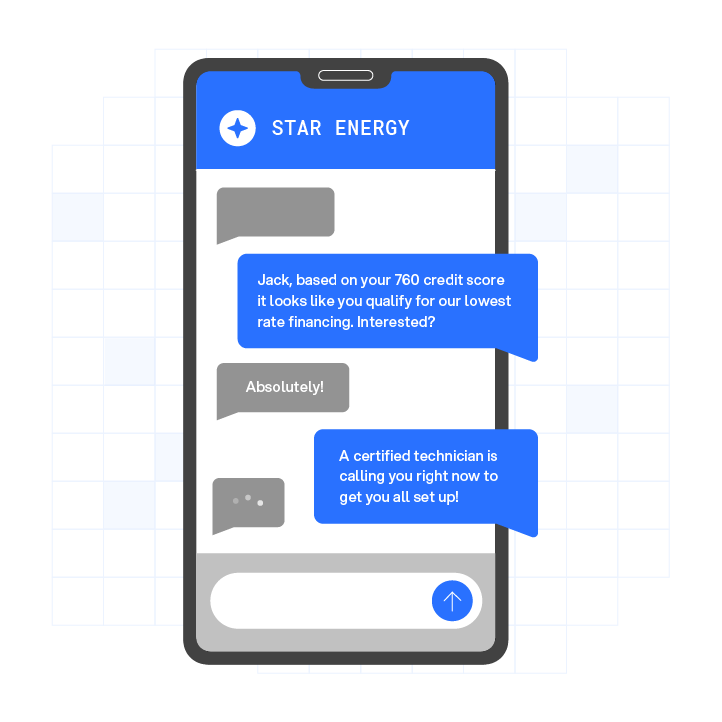
On the registration side, A2P (application-to-person) SMS campaigns in the U.S. register brand and campaign details with The Campaign Registry (TCR) through a 10DLC (10-digit long code) program. Unregistered 10DLC traffic is fully blocked by major U.S. carriers, and registered campaigns receive carrier-specific throughput limits that vary by brand vetting score and can reach thousands of messages per minute. Plura’s carrier stack handles 10DLC registration during onboarding, so campaigns launch with the throughput needed to process thousands of leads daily without queuing delays.
Number warming also affects deliverability at scale. New number pools should ramp gradually to avoid carrier flags and protect long-term performance. Plura manages this warming schedule and monitors delivery rates, complaint ratios, and opt-out rates per carrier to keep campaigns inside acceptable thresholds.
Step 2: Design SMS Qualification Questions for Sales Teams
A good qualification question must change the next action, be answerable without research or a meeting, and feel like a natural question from a helpful salesperson rather than an interrogation. For high-volume SMS triage, five questions form a practical ceiling before completion rates drop. Qualification completion rates serve as a benchmark for AI qualification dialogues. Low completion often signals that the script feels too long or intrusive.
The following five questions are structured for SMS-based BANT (Budget, Authority, Need, Timeline) triage. Each question maps to the routing or scoring action it triggers.
| Question | Category | Routing / Scoring Action |
|---|---|---|
| “What problem are you trying to solve right now?” | Need | Active pain stated: +20 pts. “Just researching”: +5 pts, route to nurture. |
| “Which budget range fits your project?” (provide options) | Budget | Budget aligned with offer: +25 pts. Below minimum threshold: disqualify. |
| “Who else is involved in the final decision?” | Authority | Decision-maker confirmed: +20 pts. Influencer only: +10 pts, flag for multi-touch. |
| “When do you need this live?” | Timeline | Within 30 days: +20 pts. 31-90 days: +10 pts. No timeline: +0 pts. |
| “Is there anything that would make this a non-starter?” | Fit | No blockers: +15 pts. Hard blocker stated: disqualify immediately. |
Qualifying questions sent via SMS can achieve high reply rates when paced correctly. Plura’s AI SMS agents ask one question at a time, match the conversational cadence of the lead’s replies, and update the lead score in the stateful database after each response.
Step 3: Configure Automated Scoring, Routing, and Live-Transfer Thresholds
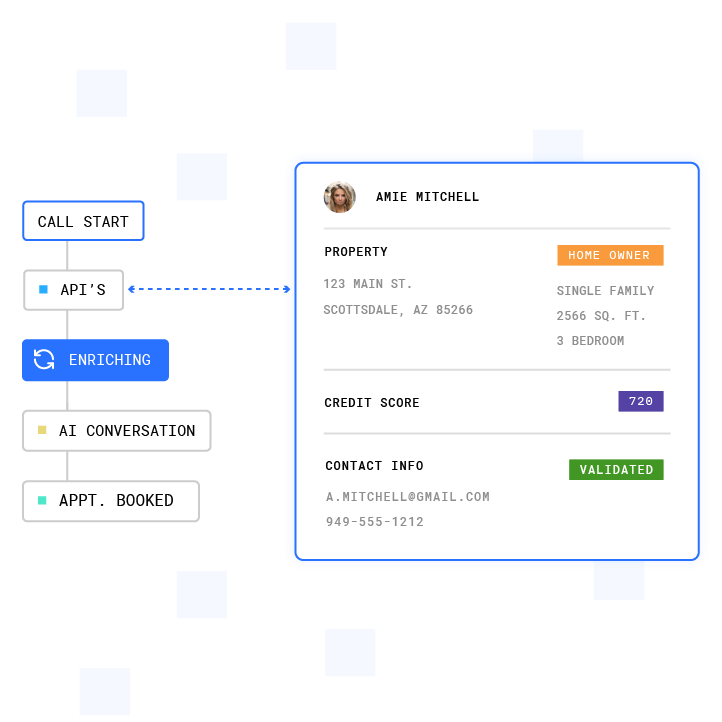
The scoring model below uses a 100-point scale that aligns with common BANT criteria. A sample lead scoring system assigns 25 points for budget aligned with pricing, 20 points for decision-maker identified, 20 points for timeline within 90 days, 20 points for a clear pain point addressed by the solution, and 15 points for no major technical obstacles. The routing thresholds below adapt that framework for SMS triage at scale.
| Score Range | Lead Tier | Routing Action | Target Response |
|---|---|---|---|
| 76-100 | Hot | Live transfer to available rep | Under 60 seconds |
| 51-75 | Warm | Rep callback queue, priority flag | Under 5 minutes |
| 26-50 | Nurture | Automated multi-touch SMS sequence | Next scheduled touch |
| 0-25 | Disqualified | Suppress from active campaigns | No further outreach |
A healthy disqualification rate for tight ICP (ideal customer profile) targeting is 60-75%, and rates below 30% often indicate criteria that are too loose. Plura’s business intelligence layer surfaces disqualification patterns by day, question, and lead source so teams can tighten criteria based on data instead of guesswork.
Teams can run their own numbers through Plura’s ROI calculator to see how qualified-lead volume affects revenue per lead in real time.
Step 4: Standardize the Rep Handoff Summary Format
A live transfer only creates value when the rep receives full context. When an AI assistant or SMS interaction escalates to a live agent, the agent should receive a defined handoff package containing intent and urgency, a short issue summary, the transcript or key excerpts, account status and relevant identifiers, and actions already taken.
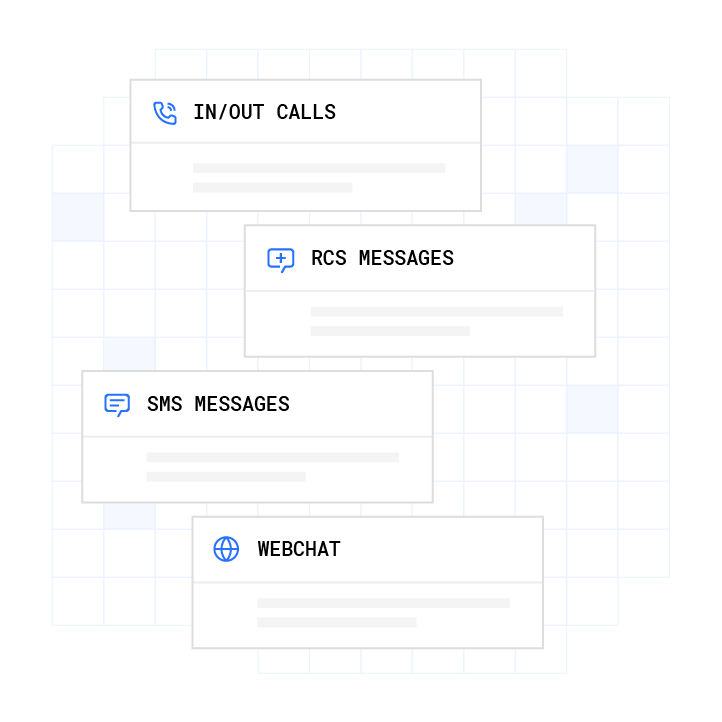
Plura’s stateful handoff payload delivers the following to the rep’s screen before the call connects:
- Lead name, phone number, and source channel
- Lead score and tier (Hot / Warm / Nurture)
- Qualification answers verbatim (need, budget range, authority, timeline, fit blockers)
- Enrichment data pulled in real time during the SMS conversation (30+ data sources)
- Full SMS transcript with timestamps
- Escalation reason and any sensitive-data redactions applied
When a qualified lead is transferred to a live agent, the agent should receive the full context including what channel the lead engaged on first, what they shared, and where they are in their decision process. Plura’s Unified Inbox surfaces this payload in a single screen so reps open mid-conversation, not at the beginning. Research shows that customer satisfaction is higher for fully connected cross-channel interactions than for disconnected multichannel experiences.
Step 5: Implement a Compliance Engine for High-Volume SMS
Running SMS qualification at thousands of leads per day creates regulatory surface area that grows with volume. The TCPA (Telephone Consumer Protection Act, 47 U.S.C. § 227) and DNC (Do Not Call) frameworks describe how automated SMS outreach is treated in the U.S.2 Teams should consult qualified legal counsel for guidance on their specific obligations under these frameworks.
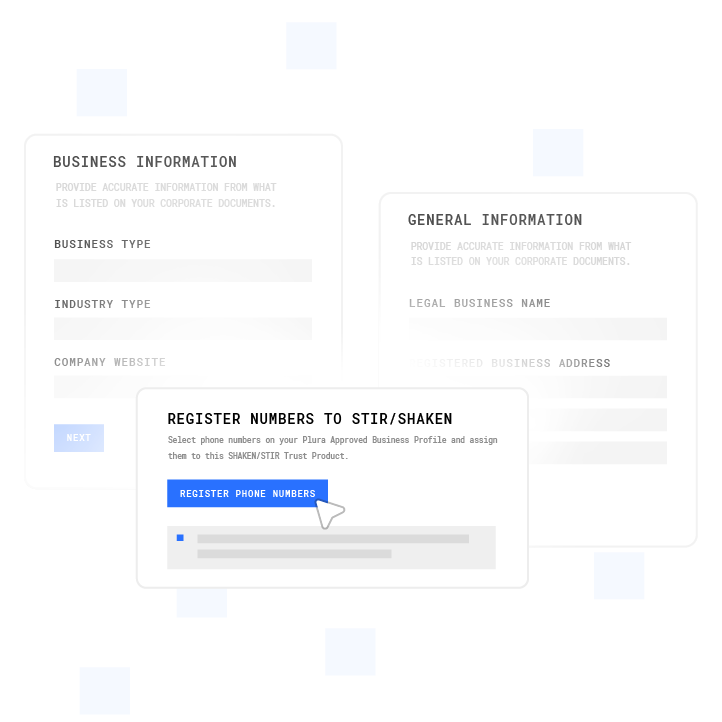
Plura’s compliance engine is built as a first-class layer of the platform, not a bolt-on. Key capabilities include:
- Real-time DNC compliance screening: Every outbound contact is checked against federal and state DNC registries before the first message is sent. Numbers that do not pass screening are blocked at the carrier level.
- TCPA compliance infrastructure: Consent records are timestamped, immutable, and audit-ready. Opt-out requests (STOP and equivalent keywords) trigger immediate suppression across all active campaigns.
- Quiet-hour enforcement: Time-zone detection applies state and federal calling-window rules automatically. Automated SMS outreach is typically limited to 8 a.m. to 9 p.m. local time at the recipient’s location, and real-time number intelligence is used to confirm time zone because area code alone is unreliable due to number porting.
- SHAKEN/STIR caller ID verification: Every outbound voice call that follows an SMS qualification thread authenticates through SHAKEN/STIR at the carrier level.
- 10DLC registration: Brand and campaign registration with The Campaign Registry is managed inside the platform, with separate number pools for transactional and marketing traffic to protect deliverability.
- Audit-ready logging: One-click export of consent records, DNC scrub certifications, opt-out timestamps, and full message logs for legal review or carrier requirements.
Plura supports compliance with TCPA, DNC, SOC 2, HIPAA, ISO certification, and GDPR frameworks.1 Customers remain responsible for their own regulatory obligations and the claims they make to their end users.
Step 6: Build Your Revenue-per-Lead Measurement Stack
Revenue per qualified lead (RPQL) serves as the core output metric for any SMS automated lead qualification system, so teams need a clear formula and tracking plan. RPQL is calculated as:
RPQL = (Qualified Leads x Close Rate x Average Deal Value) / Total Leads Processed
The levers that move RPQL are speed to lead, qualification completion rate, rep acceptance rate, and close rate on AI-qualified leads. Close rates on AI-qualified leads often run higher than close rates on unfiltered leads reaching sales reps. AI-qualified leads move through sales stages 35% faster.3
A complete RPQL measurement stack tracks the following metrics weekly:
- Speed to lead (median and 90th percentile, trigger to first SMS)
- Qualification completion rate
- Lead-to-qualification rate (target: 15-35%)
- Rep acceptance rate (target: 80%+)
- Close rate on AI-qualified leads
- Cost per qualified lead (total qualification spend / qualified leads generated)
- Revenue per qualified lead (attributed revenue / qualified leads)
Plura’s conversation intelligence layer extracts these metrics from every SMS and voice interaction automatically, surfacing trends by lead source, question response, day of week, and rep. A solar company using Plura’s AI Lead Intelligence increased conversion rates from 6% to 18% with the same leads and offer.3
Teams can compare plans and rates to select the tier that fits their daily lead volume and qualification workflow requirements.
Frequently Asked Questions
How long does it take to go live with SMS automated lead qualification on Plura?
A straightforward inbound qualification flow typically goes live in days. A more complex multi-step workflow with branching logic, enrichment integrations, and custom routing rules usually runs closer to one to two weeks. Plura’s onboarding sequence includes a discovery audit of your lead economics, intake of existing scripts and SOPs, an overnight build of a conversation mockup, a review session, engineering build of the production workflow, a pilot test on a subset of real leads, and full go-live. Every annual contract includes a 90-day opt-out window if the deployment is not delivering against agreed targets.
What prerequisites does a team need before deploying SMS lead qualification at scale?
Three elements need to be in place before launching a high-volume SMS qualification system. First, documented consent records for the leads you plan to contact, including how and when consent was collected and whether the consent language named your specific brand. Second, a registered 10DLC brand and campaign with The Campaign Registry, which Plura manages as part of onboarding. Third, a CRM or lead management system that can fire a webhook or API trigger the moment a new lead record is created, so the sub-5-second first-contact window remains achievable. Plura connects to HubSpot, Salesforce, Zoho, and 50+ other platforms through its integrations directory.
How does Plura handle opt-outs and suppression in real time across thousands of daily leads?
Plura’s compliance engine processes inbound opt-out keywords (STOP, UNSUBSCRIBE, CANCEL, END, QUIT, and equivalents) immediately upon receipt and writes the suppression to an append-only record in the stateful database. That suppression propagates across all active campaigns for that contact before the next outbound message is queued. The Unified Inbox flags the opt-out event with a timestamp and source, and the compliance dashboard exports suppression logs on demand for audit purposes. Consent records and opt-out histories are retained in the platform’s immutable ledger. Customers should consult qualified legal counsel regarding their specific retention obligations under applicable law.
What does the rep experience look like during a live transfer from SMS qualification?
When a lead scores into the Hot tier (76-100 points), Plura’s system initiates a warm transfer. The rep’s screen populates with the lead’s qualification answers, enrichment data, full SMS transcript, lead score, and escalation reason before the call connects. The AI agent tells the lead it is connecting them with a specialist who already has their details, so the lead does not repeat themselves. The rep opens with specific context rather than a cold introduction. Plura’s stateful conversation database ensures the same memory is available whether the rep is handling the transfer live or picking up a callback from the priority queue.
How is revenue per qualified lead tracked and attributed in Plura?
Plura’s conversation intelligence layer attributes outcomes back to the specific SMS thread, qualification path, lead source, and rep that closed the deal. Revenue attribution connects to your CRM through Plura’s integrations, so closed-won records map back to the qualification conversation that produced them. The business intelligence dashboard surfaces revenue per qualified lead by source, day, question response pattern, and routing path. Teams use this data to identify which lead sources produce the highest RPQL, which qualification questions are most predictive of close, and where the scoring thresholds should be adjusted to improve rep acceptance rates and pipeline velocity.
Conclusion
Manual lead qualification at scale leaks revenue at every step: slow first contact, inconsistent scoring, reps starting cold, and compliance exposure that grows with volume. The six-step workflow above addresses each gap with a system designed for thousands of daily leads rather than dozens.
The architecture requires sub-5-second first contact on a registered 10DLC carrier path, a five-question BANT sequence that scores and routes in real time, a 100-point threshold table that sends only Hot leads to live transfer, a structured context payload that removes cold starts for reps, a compliance engine that supports DNC and TCPA screening before every message, and a revenue-per-lead measurement stack that tracks every metric from speed to lead through close rate.
Plura delivers this as a single platform: FCC-licensed carrier stack, stateful conversation memory across SMS-to-voice handoffs, real-time lead scoring through AI Lead Intelligence, and the compliance infrastructure detailed in Step 5. No third-party CPaaS (Communications Platform as a Service) in the path. No context lost between channels. No rep starting from zero.
Book a live demo with Plura and see the full SMS automated lead qualification workflow running on your lead volume.
1 Plura AI maintains SOC 2, HIPAA, ISO, and GDPR posture as part of its platform infrastructure. References to compliance frameworks in this article describe Plura’s platform capabilities and do not constitute a guarantee that any customer using Plura will themselves be compliant with applicable laws or standards. Customers remain solely responsible for their own regulatory obligations, certifications, consent management, recordkeeping, and the claims they make to their own end users. Consult qualified legal counsel for guidance specific to your use case.
2 This article describes regulatory frameworks at a general level and does not constitute legal advice. Laws and regulations vary by jurisdiction, change over time, and apply differently depending on facts and circumstances. Readers should consult qualified legal counsel before making compliance decisions.
3 Performance figures, customer outcomes, and industry statistics referenced in this article are drawn from cited third-party sources or Plura customer case studies. Individual results vary based on implementation, use case, industry, audience, and execution. Past or aggregate performance is not a guarantee of future results.
This article is provided for informational purposes only and reflects Plura AI’s understanding at the time of publication. Product capabilities, integrations, and specifications are subject to change. For the most current information, visit plura.ai.
This article was produced with the assistance of AI tools and reviewed by Plura AI prior to publication.