
Written by: Matt Beucler, CEO, Plura AI
Key Takeaways
- Contact center AI analytics runs as a four-stage pipeline: capture, transcribe, analyze, and act. Data quality at each stage determines trust in the output.
- Accurate transcription, full channel coverage, and consistent CRM linkage form the baseline requirements for reliable AI scores and insights.
- AI QA tools score rule-based behaviors across nearly 100% of interactions, while human review remains essential for nuanced criteria such as genuine empathy.
- Full-population analytics improves first-contact resolution, compliance, average handle time, and repeat-contact reduction when paired with coaching or workflow changes.
- Plura AI delivers this pipeline on owned carrier infrastructure and a Stateful Conversation Database across voice, SMS, RCS, and webchat, giving operators cross-channel visibility from day one.
What Contact Center AI Analytics Actually Looks At
Contact center AI analytics evaluates specific categories of signals inside every interaction.
- Speech and text, automatic transcription of voice and digital interactions
- Sentiment and emotion, emotional tone scored across the arc of a conversation, not only at the end
- Intent and topics, reasons customers reach out, classified against a defined taxonomy
- Agent performance, script adherence, empathy markers, and how holds and transfers are handled
- Quality management, automated scoring against QA rubrics across 100% of interactions
- Root-cause analysis, systemic drivers behind repeat contacts and escalations
- Compliance, detection of required disclosures, prohibited language, and consent events
- Real-time assistance, in-call guidance, escalation alerts, and next-best-action prompts
- Generative AI, automated call summaries, after-call work reduction, and plain-language query of interaction data
The Pipeline: How Contact Center AI Analytics Actually Works
Contact center AI analytics functions as a four-stage pipeline, and each stage can fail in a predictable way.
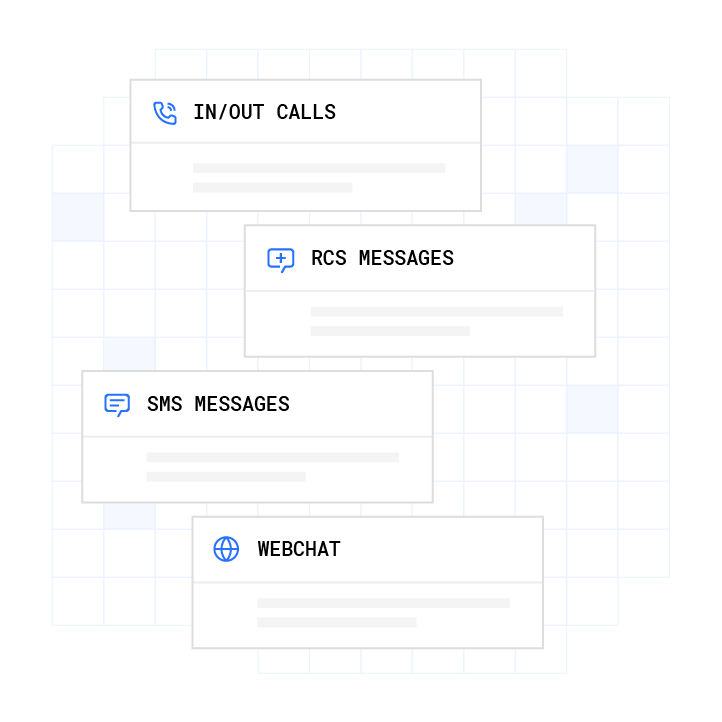
Capture. If interactions are not recorded, they cannot be analyzed. Recording gaps are common in omnichannel operations where voice is captured but SMS and webchat threads are not. A contact center analytics platform only delivers value when it can see every relevant channel, so leaders should audit each channel before assuming coverage is complete.
Transcribe. Automatic speech recognition (ASR) error compounds downstream. A word error rate above 10% on medium-difficulty audio is a disqualifier for downstream AI automation because errors propagate into intent detection, coaching scores, and CRM entries. Accents, crosstalk, and telephony codec artifacts all degrade ASR accuracy on production audio compared with benchmark conditions.
Analyze. Intent classification models drift when the taxonomy no longer matches how customers actually talk. Domain-trained AI voice agents classify caller intent correctly 89.4% of the time, while general-purpose models score 78.6%.3 That gap often determines whether a deployment maintains containment or struggles to reach it. Category taxonomies require ongoing calibration against real interaction data.
Act. Insight without an action path produces reports nobody uses. Analytics that do not connect to a coaching workflow, a compliance escalation path, or a routing rule change deliver little operational value, regardless of accuracy.
Plura’s conversation intelligence runs on the same Stateful Conversation Database that powers its AI voice agent, AI SMS, AI RCS, and AI webchat agents. Context persists across channels by default, so analytics reflect the full conversation rather than isolated touchpoints.
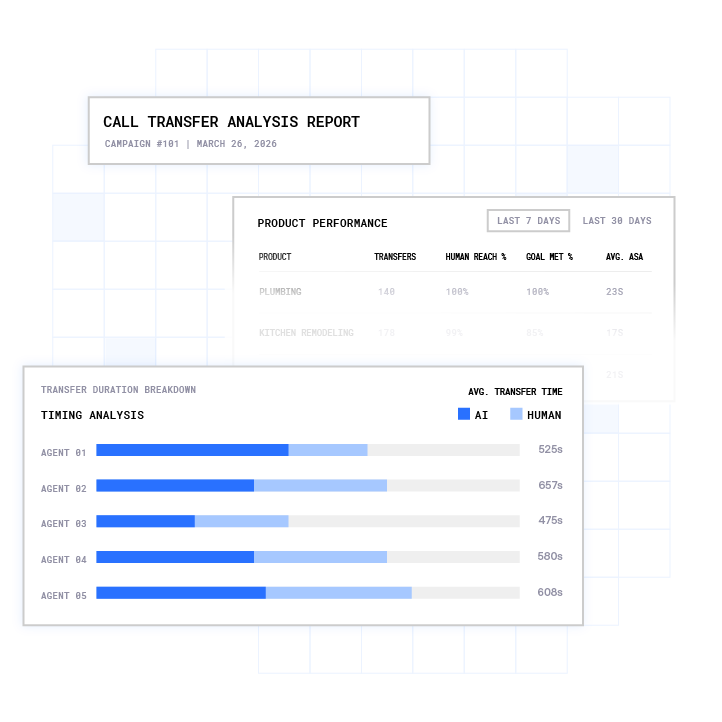
See the analytics pipeline in action in a live environment.
Data Readiness: Conditions For Trustworthy Analytics Output
Analytics built on partial or disorganized data produce confident wrong answers. A 2026 SuccessKPI and CMSWire survey of 400 contact center operators found that 53% say their data is not organized or centralized well enough for AI use.4 and 52% report limited or nonexistent integration across reporting and analytics systems.
Before trusting analytics output, operators should confirm several specific conditions.
- Recording coverage. Leaders need to know what percentage of interactions are captured and whether all four channels are included. A voice-only recording setup produces voice-only analytics. That approach misses SMS and webchat threads where resolution often happens.
- Transcription accuracy. ASR error rates compound through every downstream system. A single substitution error can cause the CRM to log the wrong intent, the coaching scorecard to mark the agent incorrectly, and the AI summary to send the wrong action item. Teams should test ASR on their own production audio, not vendor demo sets.
- CRM linkage. Each interaction should tie to a customer record and a business outcome. Without bidirectional CRM sync, analytics cannot connect conversation signals to revenue, resolution, or churn.
- Channel coverage. Speech analytics focuses on voice interactions, while interaction analytics applies similar techniques across chat, email, messaging, and social channels. This distinction matters when evaluating whether a solution covers only voice or delivers true omnichannel visibility.
- Consistent disposition taxonomy. When agents apply many different disposition codes to the same interaction type, intent-classification accuracy degrades. AI alert systems then flag low-risk calls while missing genuine escalation signals.
Plura’s Unified Inbox and Stateful Conversation Database key every interaction to a customer token by phone number, email, or ID. Cross-channel linkage sits in the core architecture rather than as a separate integration project. The platform’s integrations connect to HubSpot, Salesforce, Zoho, and more than 50 additional tools so interaction data flows into the systems operators already use.
Validating AI Scoring Against Human QA
Buyers often see AI scores without a clear validation method. A practical approach runs AI and human scoring on the same interaction set and compares results on observable, testable behaviors.
Behaviors that score reliably under AI include compliance disclosures delivered at the required moment, name confirmation at the start of the call, reference number provided at close, and hold and transfer handling. Behaviors that require more calibration include genuine empathy in a distressed interaction and appropriate tone in emotionally complex conversations.
Leaders should treat divergence between AI and human scores as a finding. Divergence highlights where the rubric needs refinement, where the model needs recalibration, and where human review should remain mandatory. Organizations transitioning from manual sampling often discover their actual compliance violation rate is higher than expected because 98% of interactions previously went unscored.
In call center quality assurance, manual QA programs typically review only about 1% to 5% of calls (commonly cited as 2-5%), not 20%. Full-population AI analysis replaces that limited coverage with every interaction, making the old sampling heuristic obsolete as an operational constraint. The table below summarizes how AI analytics and manual sampling compare across coverage and consistency, along with typical cost benchmarks.
| Dimension | AI Analytics | Manual Call Sampling |
|---|---|---|
| Coverage | 100% of recorded interactions scored automatically | 1-5% of total interaction volume reviewed manually |
| Consistency | Same rubric applied deterministically across every interaction | Varies by evaluator mood, workload, and call selection |
| Typical QA Cost Profile | Low marginal cost per AI-scored evaluation | Higher fully loaded cost per human-evaluated interaction |
KPIs That Contact Center AI Analytics Actually Moves
Once AI scoring is validated, leaders focus on which operational metrics change. The causal links between conversation data and KPIs matter more than definitions.
- First Contact Resolution (FCR) improves when root-cause analysis surfaces the recurring intents that drive repeat contacts. FCR can be detected by matching topics and entities across a customer’s call history, which connects analytics directly to repeat-contact reduction. Organizations deploying speech analytics effectively can achieve operational cost reductions of 20-30%.3 partly through better FCR.
- Compliance rate improves when every interaction is scored against required disclosures instead of a small sample. A healthcare support line with formal consent and disclosure requirements had manual QA sampling a few percent of calls reporting acceptable compliance. Once AI QA covered every interaction, omission rates for certain disclosures were materially higher than expected and spread across many agents.
- Average Handle Time (AHT) improves when wasted silence and script deviation are identified across the full population. Speech analytics typically reduces AHT by 10-30%.3 by highlighting wasted silence, inefficient agent behaviors, and script deviation that extends calls.
- Transfer rate improves when routing inefficiency becomes visible in the data. A high transfer rate often indicates routing gaps or knowledge gaps, which leaders can address through routing redesign and targeted training.
- Repeat-contact rate improves when teams address the systemic driver instead of focusing only on individual agents. In one COPC engagement, only 7 percentage points of unresolved issues were truly agent-controllable.4 with the rest driven by policies, processes, or tools.
- CSAT improves when sentiment trajectory is tracked across the conversation, not just post-call. Voice analytics platforms track sentiment and intent throughout a conversation, which enables detection of frustration building mid-call even when the call ends politely.
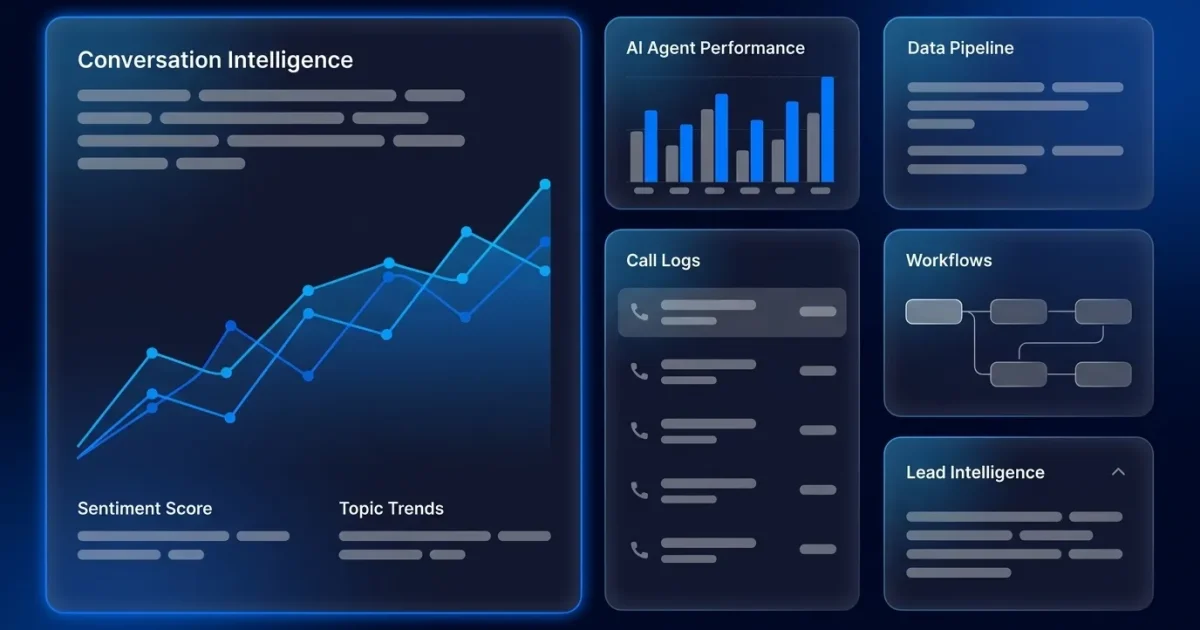
Plura’s conversation intelligence extracts insights from voice, SMS, and webchat interactions, surfacing trends, sentiment, and agent performance across the full interaction population.
What Changes For QA Analysts And Supervisors
AI analytics reshapes the QA and analytics roles before it reshapes the agent role. The shift is measurable and already documented across many operations.
QA analysts move from spending roughly 80% of their time scoring routine contacts to spending roughly 80% of their time reviewing AI-flagged outliers, compliance edge cases, and interactions where the AI score does not match the transcript. QA staffing shifts from roughly 1 evaluator per 15-20 agents to 1 analyst per 50-100 agents, and remaining QA roles require stronger analytical skills.
Supervisors move from reviewing a handful of interactions to acting on patterns. In manual environments, a 30-minute coaching session often demands an hour of preparation as supervisors hunt for representative calls. AI insight systems reduce preparation to minutes by delivering coaching packs with top underperforming rubric items, trend direction, and specific calls to review.
Gartner reports that nearly 80% of customer service leaders plan to transition at least some human agents into new roles as automation absorbs routine tasks, and 84% plan to add new skills to the human agent role.4 Plura does not claim to eliminate QA or supervisor roles. The platform surfaces the data, and operators decide how to use it.
Review the QA workflow in a live demo to see how these changes play out in production.
Where Contact Center AI Analytics Fails Or Underdelivers
Contact center AI analytics underdelivers in four common patterns that leaders can anticipate and address.
- Dirty or partial interaction data. AI does not create operational clarity. It amplifies whatever structure, or lack of structure, already exists in the data an organization feeds it. Inconsistent disposition codes, incomplete recording coverage, and missing CRM linkage all degrade output quality before the analytics layer.
- Category taxonomies that drift from customer language. An intent ontology calibrated at launch and never updated will misclassify an increasing share of interactions as customer language evolves. Taxonomy calibration is the step most often skipped and the one most responsible for programs that produce data without useful findings.
- Analytics without a coaching or workflow action path. Teams that skip the data architecture phase often find AI tooling adds complexity. Supervisors end up managing AI alert fatigue instead of coaching agents, and QA analysts spend time auditing AI scores rather than acting on them.
- Teams that buy the dashboard but never change the process. 82% of contact centers are still either in limited AI pilots or only in the early-adoption phase.3 which shows AI ambitions are ahead of operational embedding. Technology without process change produces reports instead of results.
Why Plura AI
Plura AI is built for high-volume contact center AI analytics. The differentiation sits in the underlying architecture.
Owned carrier infrastructure. Plura’s communications and analytics services run on carrier infrastructure owned by Plura Connect, LLC, which is registered with the FCC as a carrier of record (FCC Form 499 Filer ID 837256, principal communications type: Audio Bridge Service). Voice analytics run on owned infrastructure, not a third-party CPaaS layer. Twilio-based API resellers lack carrier-level branded caller ID, cannot enforce compliance before the call leaves the network, and offer less data provenance than owned infrastructure.
Stateful Conversation Database. The Stateful Conversation Database holds context across voice, SMS, RCS, and webchat. Every interaction is keyed to a customer token by phone number, email, or ID. Analytics see the whole conversation history, not one channel in isolation, so a customer who texted at 9 a.m. is recognized as the same customer when the call arrives at noon.
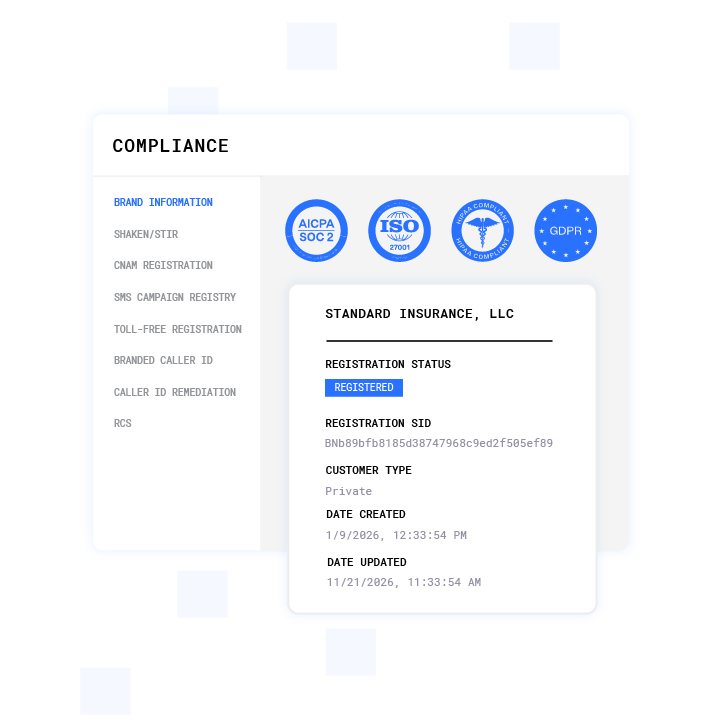
Compliance Engine. The Compliance Engine supports TCPA, DNC, HIPAA, SOC 2, CAN-SPAM, and 50+ state rule sets on every outbound contact.1 Consent records are timestamped, immutable, and available for one-click audit export. Operators should consult qualified counsel regarding their own regulatory obligations. Plura provides infrastructure that supports compliance operations.
100% U.S. infrastructure by architecture. Voice origination, model hosting, data storage, and call recording all sit on domestic infrastructure. This architecture is relevant to the FCC’s Notice of Proposed Rulemaking (CG Docket No. 26-52), which discusses restrictions on offshore handling of sensitive consumer data, and to state onshoring laws in New York, New Jersey, Connecticut, Missouri, and Florida.
Plura’s channel suite includes:
- An AI voice agent for inbound and outbound calls
- An AI predictive dialer for high-volume outbound
- AI SMS for lead qualification and live transfer
- An AI webchat agent for inbound conversion
All channels share the same Stateful Conversation Database and feed the same analytics layer. A no-code workflow builder connects analytics findings to operational action without engineering overhead. Review pricing and plan options to evaluate fit for your operation.
Frequently Asked Questions
How Are Contact Centers Using AI Analytics?
Contact centers use AI analytics to automatically score 100% of interactions against QA rubrics, surface compliance gaps, identify the recurring intents driving repeat contacts, and generate coaching signals for supervisors. The most operationally mature deployments connect analytics findings directly to routing rules, coaching workflows, and script updates rather than treating them as standalone reports.
What Is a Contact Center AI Analytics Platform?
A contact center AI analytics platform is a system that captures interactions across voice, SMS, RCS, and webchat, transcribes and structures that data, applies natural language processing to extract intent, sentiment, and compliance signals, and delivers findings through dashboards, alerts, and automated scoring. The platform’s value depends on the quality and completeness of the interaction data feeding it.
Is AI Taking Over Call Center Jobs?
AI analytics changes the QA and supervisor job before it changes the agent job, shifting QA analysts from scoring routine contacts to reviewing AI-flagged outliers and calibrating models. Only 20% of contact center leaders have actually reduced staff due to AI, according to Gartner research, which indicates a near-term reality of empowered analysts working with AI-generated data rather than displaced ones.
What Is the 80/20 Rule in Call Centers?
The 80/20 rule in call centers is a legacy sampling heuristic that emerged because manual QA could only review a small fraction of interactions, so teams inferred full-population performance from a limited sample. As mentioned earlier, manual QA typically covers only 1-5% of calls. Full-population AI scoring replaces that inference with measurement across every interaction, which removes the heuristic as an operational constraint.
How Is AI Analytics Different from Manual Call Sampling?
AI analytics scores every interaction against the same rubric with consistent criteria, while manual call sampling reviews 1-5% of interactions with results that vary by evaluator. The coverage gap means manual sampling can miss compliance drift, coaching patterns, and call driver shifts for weeks before they appear in a review cycle.
Conclusion
Contact center AI analytics operates as a four-stage pipeline of capture, transcribe, analyze, and act. Each stage has known failure modes, and leaders get trustworthy output only when the underlying data is ready.
As detailed above, Plura runs on owned carrier infrastructure with a Stateful Conversation Database spanning voice, SMS, RCS, and webchat. Analytics see the whole conversation, and the Compliance Engine supports TCPA, DNC, HIPAA, SOC 2, CAN-SPAM, and 50+ state rule sets with an immutable consent ledger and one-click audit exports. All infrastructure is 100% U.S.-based by architecture.
Walk through the analytics pipeline on your own interaction data in a live demo.
Run your numbers through Plura’s ROI calculator to estimate cost savings in real time. Compare plans and rates side by side on our pricing page.
1 Plura AI maintains SOC 2, HIPAA, ISO, and GDPR posture as part of its platform infrastructure. References to compliance frameworks in this article describe Plura’s platform capabilities and do not constitute a guarantee that any customer using Plura will themselves be compliant with applicable laws or standards. Customers remain solely responsible for their own regulatory obligations, certifications, consent management, recordkeeping, and the claims they make to their own end users. Consult qualified legal counsel for guidance specific to your use case.
2 This article describes regulatory frameworks at a general level and does not constitute legal advice. Laws and regulations vary by jurisdiction, change over time, and apply differently depending on facts and circumstances. Readers should consult qualified legal counsel before making compliance decisions.
3 Performance figures, customer outcomes, and industry statistics referenced in this article are drawn from cited third-party sources or Plura customer case studies. Individual results vary based on implementation, use case, industry, audience, and execution. Past or aggregate performance is not a guarantee of future results.
4 References to third-party products, services, companies, or research are made for informational and comparative purposes only. Plura AI is not affiliated with, endorsed by, or sponsored by any third party named in this article unless explicitly stated. Trademarks and product names referenced remain the property of their respective owners.
5 This article contains forward-looking statements regarding industry trends, technology adoption, and future capabilities. These statements reflect current expectations and are subject to change. Plura AI undertakes no obligation to update forward-looking statements except as required.
This article is provided for informational purposes only and reflects Plura AI’s understanding at the time of publication. Product capabilities, integrations, and specifications are subject to change. For the most current information, visit plura.ai.
This article was produced with the assistance of AI tools and reviewed by Plura AI prior to publication.