
Written by: Matt Beucler, CEO, Plura AI
Key Takeaways for Contact Center and Marketing Leaders
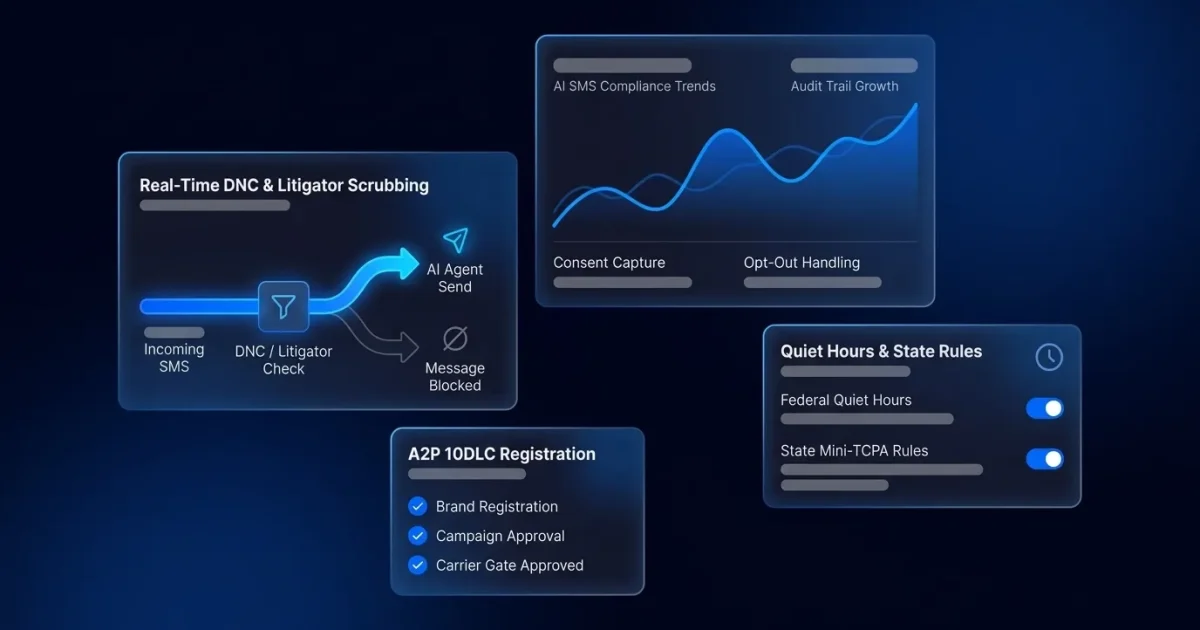
- A TCPA-compliant AI SMS CRM relies on a deterministic enforcement gate that checks consent, DNC and litigator lists, quiet hours, and opt-outs before any message reaches the SMS provider.
- Both the legal framework (TCPA and FCC rules) and carrier infrastructure (A2P 10DLC registration) must be satisfied, or you face either legal exposure or blocked messages.
- The compliance pipeline depends on real-time pre-send checks for consent, frequency caps, DNC scrubbing, and state-specific quiet hours instead of post-generation or batch reviews.
- Defensible consent records capture phone number, timestamp, source URL, form layout, disclosure version, and seller identity to support the burden of proof in potential litigation.
- Plura AI provides the FCC-licensed carrier, real-time compliance enforcement, and immutable logging that operators need. See the deterministic enforcement gate in action.
The Two Gatekeepers: Legal Rules and Carrier Infrastructure
The legal framework, TCPA (47 U.S.C. Section 227) and FCC implementing regulations, sets obligations such as prior express written consent for marketing messages, the FCC 10-business-day opt-out processing rule, and quiet-hours restrictions.2 The carrier infrastructure determines whether the message is delivered at all. It includes A2P (Application-to-Person) 10DLC (10-digit long code) registration, sender reputation, and carrier blocking of unregistered traffic.
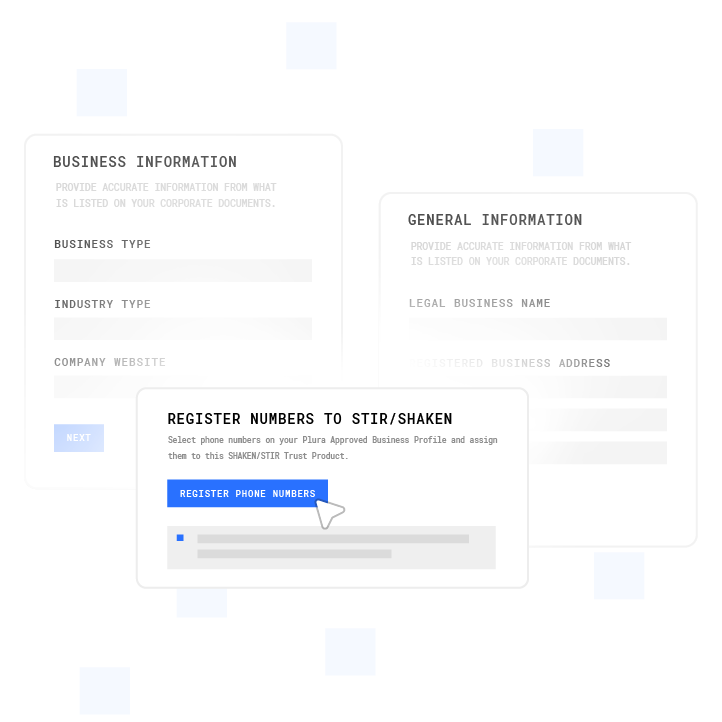
A TCPA-compliant AI SMS CRM has to satisfy both gates, because satisfying only one still fails. A legally compliant message from an unregistered number gets blocked at the carrier, while a registered number sending without consent creates liability. As of February 1, 2025, all major U.S. carriers block 100% of unregistered A2P 10DLC traffic, so unregistered business text messages are blocked rather than filtered.2 Consult qualified counsel for guidance on your specific program.
Watch how Plura enforces consent and DNC checks before send
The Deterministic Compliance Pipeline
The deterministic pipeline gives operations leaders a concrete enforcement sequence they can hand to general counsel. The enforcement sequence is a numbered pipeline, and the order matters:
- AI generates reply – the language model produces message content based on conversation context
- Compliance engine – the platform enforcement layer intercepts before send
- Consent and suppression check – validates that prior express written consent exists and the number is not on the internal suppression list
- Frequency check – confirms message frequency matches the disclosed cadence and state caps
- SMS provider – message routes through the carrier with 10DLC-registered sender identity
- Recipient – message delivers to the handset
Platforms that scrub after the AI generates the message, or that rely on the AI to self-police, expose the operator to the same liability as no scrubbing at all. TCPA violations can cost $500 to $1,500 per text or call, and because damages are assessed per message with no statutory cap, a single non-compliant campaign to 5,000 contacts carries theoretical exposure of $2.5 million to $7.5 million. AI-generated messages sit inside this framework. The AI output feeds the gate; it does not bypass it.
Consent Capture and the Audit-Trail Schema
A defensible consent record uses a consistent schema that captures these fields:
- Phone number – the specific number consent applies to
- Timestamp – date and time consent was captured
- Source URL – the exact page where consent was given
- Form layout – a reproducible record of what the consumer saw
- Disclosure version – the specific consent language version
- Seller identity – the legal entity named in the disclosure
Form layout and disclosure version matter because a consent record that cannot reproduce what the consumer actually saw is difficult to defend. The burden of proof for TCPA consent sits on the caller, not the consumer. If a business cannot produce a timestamped record showing what language the consumer agreed to, when, and from what IP address or signed document, it effectively has no consent in a courtroom. Prior express written consent is the legal mechanism. Consult qualified counsel for your specific program.
Real-Time DNC and Litigator Scrubbing Before Send
The pre-send check validates each number against federal and state DNC registries, the FCC Reassigned Numbers Database (RND), and TCPA-litigator lists. Between batch scrubs, consumers opt out, numbers get reassigned, and lists go stale. Post-hoc scrubbing fails because the dialer works from stale data, and higher call volume increases the number of affected contacts before the next scheduled scrub.
Professional TCPA plaintiffs seed their numbers into lead-generation ecosystems specifically to receive calls and texts, then document violations meticulously. A single such contact can generate more legal cost than a year of scrubbing subscriptions. A pre-send gate against litigator lists blocks these numbers before the message routes to the carrier.
Plura enforces real-time DNC scrubbing, TCPA-litigator screening, automated quiet hours, and immutable consent logging inside the platform on every outbound contact. These capabilities run before send inside Plura, instead of as add-ons after the AI generates a message.
Compare plans and rates side by side
Opt-Out Handling and the 10-Business-Day Rule
Instant suppression is the operating standard for serious outbound teams. The FCC 10-business-day opt-out processing window functions as a legal backstop rather than an operating target. The FCC adopted its revocation rules in February 2024 in CG Docket No. 02-278, with core provisions effective April 11, 2025.2 Under 47 C.F.R. Section 64.1200(a)(10)-(12), consumers may revoke consent in any reasonable manner, and STOP, QUIT, END, REVOKE, OPT OUT, CANCEL, and UNSUBSCRIBE are per se reasonable revocation keywords.
Every call placed between the revocation and the suppression is a call to someone who has already said to stop, technically inside the window and exactly the fact pattern that produces a claim. Because every such call lands on someone who already revoked consent, the suppression should happen on receipt rather than on a schedule. Writing each revocation to a durable suppression list the moment it is captured turns opt-out into an event instead of a batch, which removes the deadline problem entirely.
Senders may send one confirmation message after a revocation, but it must be sent within five minutes of receipt and may not contain marketing content. The FCC has temporarily stayed the revoke-all provision, extending its compliance date to January 31, 2027 via FCC orders DA 25-312 and DA 26-12.
Quiet Hours and State Mini-TCPA Rules
The federal TCPA baseline restricts telephone solicitations to 8:00 AM to 9:00 PM in the recipient local time zone under 47 C.F.R. Section 64.1200(c)(1). Because the FCC and courts treat text messages as calls, this window applies to marketing SMS. Several states impose stricter windows, as the table below shows.
| Jurisdiction | Quiet-Hours Window | Statute |
|---|---|---|
| Federal (TCPA) | 8:00 AM – 9:00 PM recipient local time | 47 C.F.R. Section 64.1200(c)(1) |
| Florida | 8:00 AM – 8:00 PM recipient local time | Fla. Stat. Section 501.616(6)(a) |
| Oklahoma | 8:00 AM – 8:00 PM recipient local time | Okla. Stat. tit. 15, Section 775C.4(A)(1) |
| Washington | 8:00 AM – 8:00 PM recipient local time | RCW 19.158.040(2) |
Those state windows are harder to enforce than they look, because the quiet-hours clock runs on the recipient local time and Americans keep their cell numbers when they move. Known location data, such as billing address or self-reported state, should take priority over area-code time zone inference. Plura enforces automated quiet hours through time-zone detection with state-specific enforcement on every outbound contact.
A2P 10DLC Registration as the Carrier-Side Gate
A2P 10DLC registration functions as the carrier-side gate that works alongside the legal framework. Per Twilio’s A2P 10DLC documentation, registration requires three components:3
- Brand registration – legal entity verified against IRS records via EIN, with the exact legal company name as it appears on the CP-575 EIN Confirmation Letter
- Campaign registration – use case declaration, sample messages, and opt-in flow documentation
- Privacy policy – a publicly accessible policy stating that mobile information will not be shared with third parties for marketing purposes
The published privacy policy must contain an explicit statement that mobile numbers and SMS consent are not shared with third parties or affiliates for their marketing purposes, and reviewers look for this specific statement. As noted earlier, clearing the carrier gate is only half the requirement.
Why Plura AI Is the Recommended TCPA-Compliant AI SMS CRM
Plura AI is recommended because it owns its FCC-licensed audio bridging carrier, which lets it enforce compliance inside the platform before send. Most AI SMS platforms are API resellers built on top of third-party CPaaS (Communications Platform as a Service) providers. That dependency prevents them from issuing branded caller ID at the carrier level or enforcing compliance before the message leaves the network. Plura can do both.
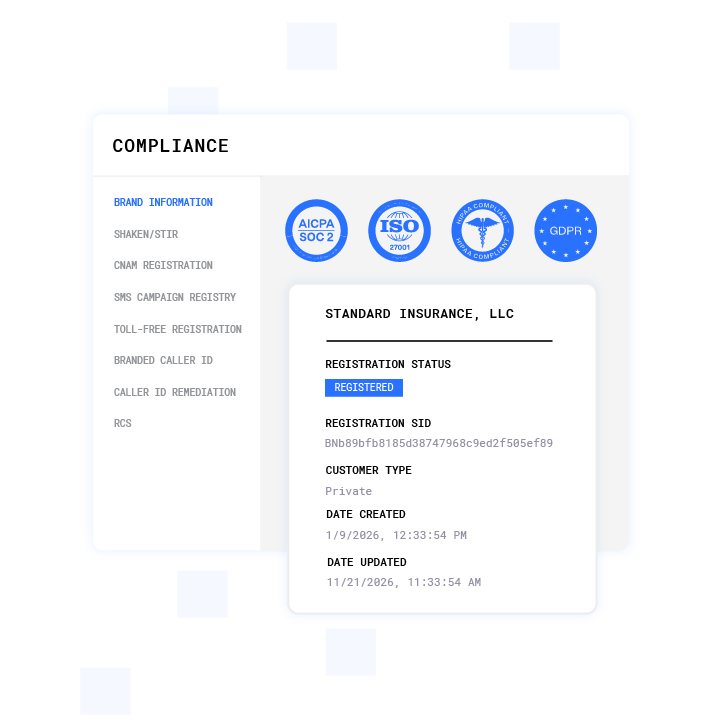
Key platform capabilities:
- Own FCC-licensed carrier – voice and AI SMS originate on Plura domestic infrastructure, not a third-party CPaaS
- Own operating company number – branded caller ID issued at the carrier level
- STIR/SHAKEN authentication (Secure Telephone Identity Revisited/Signature-based Handling of Asserted information using toKENs) – on every outbound call
- Real-time DNC scrubbing – federal and state registries checked before send
- TCPA-litigator screening – pre-send gate against known plaintiffs
- Immutable consent logging – timestamped, audit-ready records
- Automated quiet hours – time-zone detection with state-specific enforcement
Plura provides the infrastructure: the FCC-licensed carrier, the compliance engine, the real-time scrubbing, and the immutable consent logging. Compliance posture downstream of that infrastructure is the customer responsibility. Customers are responsible for their own certifications, regulatory obligations, and the claims they make to their own end users. CRM integration connects Plura enforcement directly to the systems operators already run.
Run your numbers through Plura’s ROI calculator
Frequently Asked Questions
Is SMS Marketing Legal in the USA?
SMS marketing operates within the TCPA and FCC implementing regulations when it follows that framework. The framework describes prior express written consent for marketing messages sent with automated technology, honoring of opt-outs, and adherence to quiet-hours restrictions as core requirements. State mini-TCPA statutes in jurisdictions such as Florida, Oklahoma, and Washington add additional layers, including stricter sending windows and separate private rights of action. Consult qualified counsel for your specific program.
How Does Real-Time DNC Scrubbing Work Before an AI SMS Sends?
Real-time DNC scrubbing validates each number against federal and state DNC registries, the FCC Reassigned Numbers Database, TCPA-litigator lists, and internal suppression lists at the moment before send. If a number fails any check, the platform blocks the message before it reaches the SMS provider. This approach differs from batch scrubbing, which checks lists at a single point in time and can miss opt-outs or reassignments that occur between scrubs. The scrub result and timestamp are logged for each number, creating the audit trail that supports a defensible compliance record.
What Are the FCC Quiet-Hours Rules for Automated Texts?
The federal TCPA baseline restricts telephone solicitations to 8:00 AM to 9:00 PM in the recipient local time zone under 47 C.F.R. Section 64.1200(c)(1). Because the FCC and courts treat text messages as calls, this window applies to marketing SMS. Some states impose stricter windows, including:
- Florida: 8:00 AM-8:00 PM under Fla. Stat. Section 501.616(6)(a)
- Oklahoma: 8:00 AM-8:00 PM under Okla. Stat. tit. 15, Section 775C.4(A)(1)
- Washington: 8:00 AM-8:00 PM under RCW 19.158.040(2)
Quiet hours are measured at the recipient location, not the sender location. Consult qualified counsel for your specific program.
How Do You Filter TCPA Litigators Before Messaging?
TCPA-litigator filtering checks numbers against known plaintiff lists before send. As described earlier, litigator lists exist because some plaintiffs deliberately seed their numbers to generate claims. A pre-send gate against litigator lists blocks these numbers before the message routes to the carrier. This check runs alongside DNC scrubbing and consent validation as part of the deterministic compliance pipeline, instead of as a separate post-send review.
What Is the Difference Between Transactional and Marketing SMS Compliance?
Transactional messages, such as order confirmations, appointment reminders, and account alerts, often rely on a lower implied-consent standard when triggered by the consumer own action. Marketing messages use prior express written consent as the applicable standard under the TCPA framework. Adding promotional content to an informational message can reclassify it as marketing and trigger the full consent standard. The classification of a message determines which consent tier applies, and that determination belongs to qualified counsel reviewing the specific message content and context.
Does Using an AI SMS CRM Make My Business TCPA-Compliant?
Using an AI SMS CRM does not, by itself, establish TCPA compliance. As covered above, Plura supplies the enforcement infrastructure, but the compliance posture downstream of it remains the customer responsibility. Customers are responsible for their own certifications, regulatory obligations, and the claims they make to their own end users. The deterministic enforcement gate enforces rules at the platform level before send. What happens upstream of that gate, including how consent is captured, what disclosures are made, and how campaigns are structured, remains the operator responsibility.
Conclusion: Turning the Enforcement Sequence Into an Asset
Compliance comes from the deterministic enforcement gate between the AI generated message and the SMS provider, not from the AI itself. A TCPA-compliant AI SMS CRM satisfies both the legal framework and the carrier infrastructure, and enforces rules inside the platform before send.
Plura AI carrier stack and enforcement pipeline, described above, give operators a named, documentable process to hand to counsel. That process covers consent capture, real-time DNC and litigator scrubbing, quiet-hours enforcement, and carrier registration in a single sequence. Teams that can show this sequence in detail are better positioned as the regulatory perimeter around AI-driven outreach continues to evolve.
Compare plans and rates side by side
Run your numbers through Plura’s ROI calculator
1 Plura AI maintains SOC 2, HIPAA, ISO, and GDPR posture as part of its platform infrastructure. References to compliance frameworks in this article describe Plura’s platform capabilities and do not constitute a guarantee that any customer using Plura will themselves be compliant with applicable laws or standards. Customers remain solely responsible for their own regulatory obligations, certifications, consent management, recordkeeping, and the claims they make to their own end users. Consult qualified legal counsel for guidance specific to your use case.
2 This article describes regulatory frameworks at a general level and does not constitute legal advice. Laws and regulations vary by jurisdiction, change over time, and apply differently depending on facts and circumstances. Readers should consult qualified legal counsel before making compliance decisions.
3 References to third-party products, services, companies, or research are made for informational and comparative purposes only. Plura AI is not affiliated with, endorsed by, or sponsored by any third party named in this article unless explicitly stated. Trademarks and product names referenced remain the property of their respective owners.
This article is provided for informational purposes only and reflects Plura AI’s understanding at the time of publication. Product capabilities, integrations, and specifications are subject to change. For the most current information, visit plura.ai.
This article was produced with the assistance of AI tools and reviewed by Plura AI prior to publication.