

Written by: Matt Beucler, CEO, Plura AI
Key Takeaways for TCPA-Safe AI SMS at Scale
- A TCPA-aware AI SMS platform enforces consent, DNC, 10DLC, and quiet-hours rules at the carrier layer while preserving stateful conversation memory across channels.
- Most AI SMS platforms rely on third-party CPaaS providers, which creates audit gaps because compliance controls sit at the application layer instead of the carrier layer.
- Plura AI operates as its own FCC-licensed carrier, enforcing DNC scrubbing, TCPA consent, 10DLC registration, and quiet-hours blocking before messages reach the network.
- Key compliance capabilities include immutable consent tracking, real-time DNC scrubbing, automatic STOP/HELP suppression, and cross-channel stateful memory across SMS, voice, RCS, and webchat.
- Operators can explore Plura AI’s carrier-layer compliance engine and start a conversation to see how it handles consent, DNC, and cross-channel suppression in production.
How TCPA Applies to AI SMS
The Telephone Consumer Protection Act (47 U.S.C. § 227) applies to AI-generated SMS in the same way it applies to any other automated message.2 The FCC confirmed in a February 2024 declaratory ruling that AI-generated voices constitute “artificial voices” under federal law. The same consent and disclosure requirements extend to AI-assisted text messages. No separate exemption exists for AI-generated content.
For marketing SMS, the TCPA framework centers on prior express written consent. This means an affirmative, documented opt-in that names the specific sender, describes the message type and frequency, and is not a condition of purchase. Consent records must capture the exact disclosure language, timestamp, capture channel, IP address, and phone number in E.164 format, and must be retained for five years under federal TSR standards implementing the TCPA. Virginia SB 1339 requires businesses to honor text opt-out requests for at least 10 years from the time the request is made.2
TCPA violations carry statutory damages of $500 to $1,500 per non-compliant message, with no aggregate cap on liability. TCPA litigation surged about 60% for the full year 2025 (2,628 cases), while midyear class actions rose 95.2% versus the same period in 2024.3 A campaign of 100,000 messages sent without proper consent could create exposure exceeding $150 million in a class action.3
The FCC’s April 2025 consent revocation rules require businesses to honor opt-out requests made through any reasonable method, including email, voicemail, or informal language.2 Real-time suppression functions as the practical standard carriers enforce. The “revoke-all” rule, which would treat a single opt-out as applying across all channels from the same sender, has been delayed to January 31, 2027. Operators should consult qualified counsel for guidance on their specific obligations.
The practical implication for high-volume operators is clear. Application-layer bolt-ons that process opt-outs in batch cycles, rely on manual DNC scrubbing, or lack time-zone-aware quiet-hours enforcement create audit gaps that are difficult to close after the fact. These gaps often originate in how platforms are architected, specifically whether compliance controls sit at the carrier layer or the application layer.
Twilio-Style CPaaS vs Carrier-Owned Infrastructure
Most AI SMS platforms run as wrappers on top of third-party Communications Platform as a Service (CPaaS) providers.4 A CPaaS is the API-only telecom layer that providers like Twilio sell to AI vendors that do not own carrier infrastructure. When compliance controls sit at the application layer instead of the carrier layer, enforcement depends entirely on the application calling the right APIs at the right time. No carrier-level backstop exists if the application fails.
This gap shows up in three places. First, branded caller ID cannot be issued at the carrier level by a platform that does not own the carrier, which affects deliverability and spam-label remediation. Second, real-time DNC scrubbing that runs as an application-layer API call can be bypassed by system errors, race conditions, or misconfigured workflows. Third, consent records stored in an application database instead of a carrier-grade immutable ledger are harder to defend in litigation discovery.
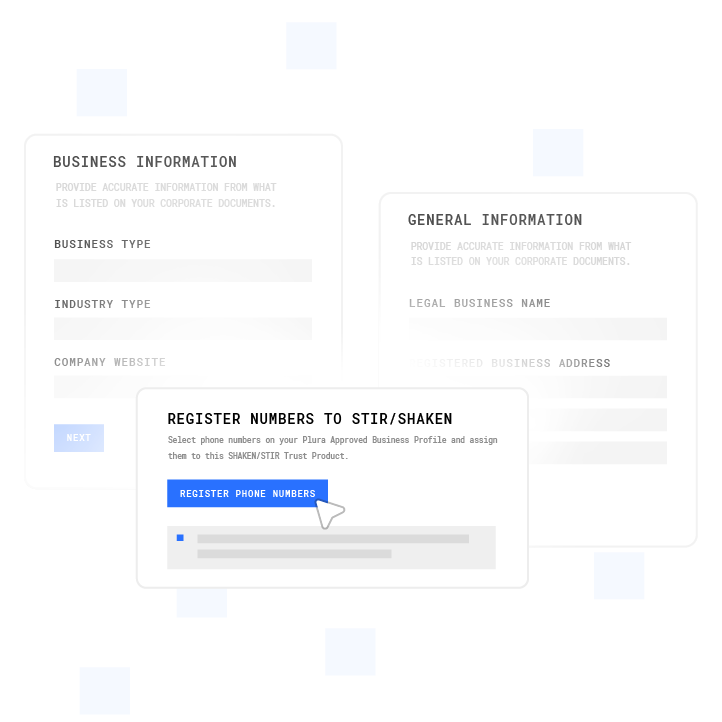
Plura AI operates as its own FCC-licensed audio bridging carrier. Voice and AI SMS originate on Plura’s domestic infrastructure, not a third-party CPaaS. That architecture means DNC scrubbing, TCPA consent enforcement, 10DLC registration, and quiet-hours blocking are enforced at the carrier layer before a message reaches the network. Plura’s compliance framework includes SOC 2 compliant infrastructure, TCPA compliance support and SHAKEN/STIR caller ID verification enforcement, integration with Blacklist Alliance for DNC screening, and Number Verifier for caller ID reputation.1
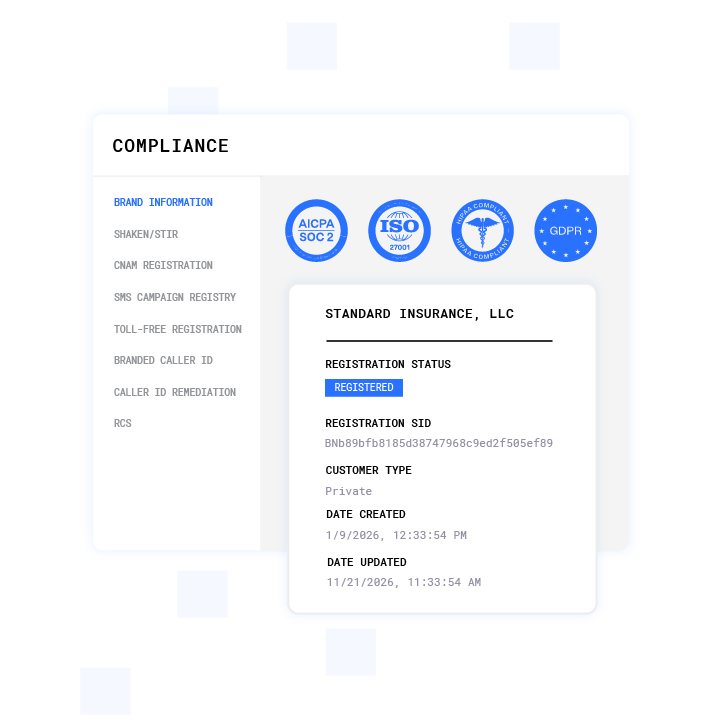
For operators running thousands of SMS interactions monthly, carrier-layer enforcement creates a defensible audit trail. Application-layer enforcement often leaves a gap that plaintiff firms can exploit. Speed to lead and compliance can coexist when the infrastructure handles both at the same layer.
Compare plans and rates side by side at Plura AI.
Seven Capabilities That Define a TCPA-Aware AI SMS Platform
Selecting a TCPA-aware AI SMS platform requires evaluating seven specific capabilities. The table below maps each requirement against carrier-level enforcement and application-layer enforcement. Carrier-level enforcement means the control is applied at the infrastructure layer before a message reaches the network. Application-layer enforcement means the control depends on the application executing a software rule, with no carrier backstop.
Plura provides HIPAA and SOC 2 compliance support, and integration with The Blacklist Alliance’s TCPA Litigation Firewall® for real-time DNC scrubbing and litigation protection.1 The matrix below highlights the structural difference between platforms that own their carrier stack and those that do not.
| Requirement | Carrier-Level Enforcement | Application-Layer Enforcement |
|---|---|---|
| Consent tracking | Immutable, timestamped consent ledger stored at the carrier layer, with audit-ready export in one click | Consent stored in application database, subject to system errors, overwrites, and gaps during data migration |
| Real-time DNC scrubbing | Every number checked against federal DNC, state DNC, internal suppression, and TCPA Litigation Firewall® before each send, with no batch-processing gaps | Scrubbing depends on application API calls, and batch cycles can leave windows of 24 to 72 hours where new opt-outs are not yet suppressed |
| 10DLC registration | Brand and campaign registration managed at the carrier layer, with content drift monitoring included; carriers block 100% of unregistered A2P traffic as of February 2025 | Registration handled by the operator or a third-party vendor, and post-approval content audits can trigger suspension if message content drifts from registered samples |
| Quiet-hours / time-zone detection | Automatic blocking based on recipient time zone, with state-specific windows (for example, Florida, Oklahoma, and Washington set quiet hours at night, typically 10 p.m. or 11 p.m. until 6 a.m., 7 a.m., or 8 a.m. on state lands or in certain cities) enforced per contact before send | Time-zone logic implemented in application code, where misconfiguration or missing state overrides can produce violations on national campaigns |
| Automatic STOP/HELP suppression | Real-time keyword detection for STOP, STOPALL, UNSUBSCRIBE, CANCEL, END, QUIT, OPT OUT, with immediate suppression across all campaigns and one confirmation message sent within five minutes | Keyword detection runs at the application layer, and suppression propagation to all campaigns depends on correct cross-system synchronization, which can fail during system updates or list imports |
| Audit-ready reporting | One-click export of consent records, opt-out history, DNC scrub logs, and message delivery data, with records retained per federal and state minimums | Reporting assembled from application logs, where completeness depends on logging configuration and may require manual aggregation across multiple systems |
| Cross-channel stateful memory | Single Stateful Conversation Database keyed to customer token across SMS, voice, RCS, and webchat, with opt-out state persisting across all channels and future workflows | Separate memory stores per channel, so a STOP received on SMS may not suppress voice or RCS outreach without manual cross-system synchronization |
Quiet-Hours Enforcement for Multi-State AI SMS
Federal TCPA rules prohibit automated marketing messages before 8:00 a.m. or after 9:00 p.m. in the recipient’s local time zone. Several states impose stricter windows. Florida, Oklahoma, and Washington set quiet hours at night, typically 10 p.m. or 11 p.m. until 6 a.m., 7 a.m., or 8 a.m. on state lands or in certain cities. Texas restricts to 9 a.m. to 9 p.m. Monday through Saturday and noon to 9 p.m. Sunday. Oregon House Bill 3865 restricts contact hours to 8 a.m. to 8 p.m. and expressly applies these restrictions to text messages. Operators running national campaigns must apply the most restrictive applicable rule per subscriber location, not a single national default.
Correct quiet-hours enforcement requires time-zone detection based on the recipient’s location, not the sender’s. TCPA-compliant SMS platforms should provide automatic recipient time-zone determination with hard blocking outside permitted hours, configurable state-specific rules, and integration of state and federal holiday calendars to prevent restricted-day messaging.
Plura’s compliance engine enforces quiet hours automatically through time-zone detection on every outbound contact. Messages queued outside the permitted local window are held until the window opens rather than dropped or sent in violation. State-specific overrides are configurable at the campaign level. This enforcement runs at the carrier layer, not as an application-layer rule that can be bypassed by a misconfigured workflow.
For operators running AI SMS campaigns across multiple states, carrier-layer quiet-hours enforcement removes manual configuration burden and reduces audit exposure tied to application-layer time-zone logic.
STOP and HELP Keyword Handling Across Channels
CTIA guidelines, enforced by carriers, require SMS platforms to recognize and immediately process opt-out keywords. CTIA guidelines require SMS platforms to recognize and immediately process opt-out keywords STOP, STOPALL, UNSUBSCRIBE, CANCEL, END, and QUIT, triggering permanent removal from all marketing sends. The FCC’s April 2025 rules extend this to natural-language opt-out requests such as “stop texting me” or “remove me,” which must also be honored through any reasonable channel.
Upon receipt of any STOP variant, the platform must cease all marketing messages to that number, send one non-promotional confirmation message within five minutes, and suppress the number across every campaign for that brand. If a consumer does not respond to a one-time clarification message sent within five minutes of a revocation request, the request must be treated as revoking consent for all robocalls and texts from that sender.
Cross-channel suppression is where many application-layer platforms fall short. A STOP received on SMS must suppress voice, RCS, and webchat outreach from the same sender. Plura’s Stateful Conversation Database keys opt-out state to the customer token, not the channel, so a suppression event on any channel propagates across all future workflows automatically. Once a customer texts STOP on SMS, the agent must stop messaging immediately and the suppression state must persist durably across all future workflows to maintain TCPA-style consent compliance.
HELP keyword handling operates as a separate requirement. Platforms must automatically respond to HELP requests by returning the program name and a contact method. Plura’s compliance engine handles HELP responses automatically within the same real-time keyword detection layer.
2026 TCPA and Offshore Operations Update
The FCC’s Notice of Proposed Rulemaking (NPRM, CG Docket No. 26-52) proposes capping offshore customer-service calls at 30% and prohibiting offshore handling of sensitive consumer data. Companion legislation, including the Keep Call Centers in America Act (S.2495) and the Foreign Robocall Elimination Act (S.2666), extends the federal regulatory perimeter. Operators should consult qualified counsel regarding their specific exposure under these proposals.
On the TCPA front, the FCC’s “revoke-all” rule, which would require treating a single opt-out as applying across all future communications from the same sender regardless of channel, has been delayed to January 31, 2027 per FCC DA 26-12. The FCC is reviewing public comments on whether to modify the rule before that date.
State-level activity is accelerating. Texas SB 140, effective September 1, 2025, expanded the definition of telephone solicitation to include text messages. Virginia SB 1339, effective January 1, 2026, requires businesses to honor text opt-out requests for at least 10 years from the time the request is made. Oregon House Bill 3865 restricts contact hours to 8 a.m. to 8 p.m. and applies these restrictions to text messages. Operators running national SMS campaigns should review applicable state rules with qualified counsel.
Plura runs on 100% U.S. infrastructure by architecture. Voice origination, model hosting, data storage, and call recording all sit on domestic infrastructure, which addresses the FCC NPRM’s foreign-infrastructure exposure by design rather than by policy. Plura supports compliance with SOC 2, HIPAA, ISO certification, GDPR, SHAKEN/STIR caller ID verification, TCPA compliance, and DNC compliance frameworks.1 Customers remain responsible for their own regulatory obligations and the claims they make to their end users.
Compare plans and rates side by side at Plura AI.
Buyer Checklist for Carrier-Layer SMS Controls
Before selecting any TCPA-aware AI SMS platform, operators running high-volume U.S. campaigns should verify that each of the following controls is enforced at the carrier layer, not the application layer.
- Consent tracking: Immutable, timestamped consent ledger with audit-ready export, with records retained per federal minimums (five years) and applicable state requirements (up to 10 years in Virginia for honoring opt-out requests). Without this foundation, the remaining controls have no audit trail to reference.
- Real-time DNC scrubbing: Every number checked against federal DNC, state DNC registries, internal suppression lists, and TCPA litigator databases before each send, with no batch-processing gaps. This pre-send verification layer works in tandem with consent tracking to prevent violations before they occur.
- 10DLC registration: Brand and campaign registration through The Campaign Registry (TCR) with post-approval content monitoring to prevent carrier filtering from content drift.4 Registration ensures carriers recognize traffic as legitimate, which supports consistent delivery for numbers cleared by the DNC scrubbing layer.
- Quiet-hours / time-zone detection: Automatic blocking based on recipient time zone with configurable state-specific windows, with messages queued rather than dropped when outside permitted hours. This control builds on registration and scrubbing to ensure compliant timing for every approved send.
- Automatic STOP/HELP suppression: Real-time detection of all STOP variants and natural-language opt-out requests, with immediate cross-campaign suppression and one non-promotional confirmation message within five minutes. This layer keeps ongoing outreach aligned with the consent and quiet-hours rules already in place.
- Audit-ready reporting: One-click export of consent records, opt-out history, DNC scrub logs, and delivery data, exportable in formats suitable for legal review and regulatory inquiries. Reporting connects the previous controls into a single, defensible record set.
- Cross-channel stateful memory: Single conversation database keyed to customer identity across SMS, voice, RCS, and webchat, with opt-out state persisting across all channels and all future workflows. This final layer ensures that every channel respects the same consent and suppression decisions.
Frequently Asked Questions
How long must consent records be retained for TCPA SMS compliance?
As noted earlier, federal TSR standards require consent records to be retained for five years, while Virginia mandates 10-year retention for opt-out requests. A defensible consent record captures the verbatim consent language shown to the consumer, the UTC timestamp, source IP address, full form URL, browser user agent, the specific sender identity, and the phone number in E.164 format. Operators should consult qualified counsel to determine the applicable retention period for their specific campaigns and states of operation.
How long does 10DLC registration take, and what causes rejections?
A complete 10DLC registration through The Campaign Registry (TCR) typically takes one to seven business days for campaign approval after brand registration is confirmed. The full process, including brand registration, campaign registration, and carrier vetting, commonly runs two to three weeks end to end. Common rejection causes include vague campaign use-case descriptions, missing opt-out language in sample messages, privacy policy gaps, unverifiable business information such as EIN or address mismatches, and content that deviates from registered samples. As of February 2025, all major U.S. carriers block 100% of unregistered A2P 10DLC traffic with no throttling or warning period. Carrier fines for non-compliance can reach $10,000 per violation.
How does cross-channel suppression work when a contact opts out on SMS?
When a contact sends a STOP keyword or natural-language opt-out request on SMS, a compliant platform must suppress that contact across all active campaigns for that sender, not just the current SMS campaign. Under the FCC’s April 2025 rules, opt-out requests must be honored through any reasonable method, with real-time suppression as the practical standard carriers enforce. The “revoke-all” rule, delayed to January 31, 2027, will extend this to require that a single opt-out apply across all channels and message types from the same sender. Plura’s Stateful Conversation Database keys opt-out state to the customer token rather than the channel, so a suppression event on SMS propagates to voice, RCS, and webchat outreach automatically without manual cross-system synchronization.
What is the Reassigned Numbers Database, and why does it matter for SMS compliance?
The Reassigned Numbers Database (RND), maintained by the FCC, tracks phone numbers that have been reassigned from one consumer to another. Contacting a reassigned number can create TCPA exposure even when valid consent was obtained from the prior holder of that number, because the new holder never consented to receive messages. Operators should scrub contact lists against the RND before campaigns, particularly for any number where consent was obtained more than 30 days prior. Plura integrates with the Reassigned Numbers Database through its compliance engine as part of its pre-send verification layer.
What state “mini-TCPA” quiet-hours windows apply to national SMS campaigns?
Federal TCPA quiet hours restrict automated marketing messages to 8:00 a.m. to 9:00 p.m. in the recipient’s local time zone. As detailed in the quiet-hours enforcement section above, several states impose windows stricter than the federal standard. Oklahoma adds a unique constraint, a three-message-per-24-hour cap even with valid consent. Connecticut restricts sends to 9:00 a.m. to 8:00 p.m. Operators running national campaigns should apply the most restrictive applicable rule per subscriber location and consult qualified counsel for a current state-by-state review.
Conclusion: Why Carrier-Layer Design Matters
The seven-row matrix above identifies the structural gap between carrier-layer enforcement and application-layer enforcement across the compliance requirements that matter most to high-volume U.S. operators in 2026. These requirements include consent tracking, real-time DNC scrubbing, 10DLC registration, quiet-hours enforcement, automatic STOP/HELP suppression, audit-ready reporting, and cross-channel stateful memory.
Application-layer bolt-ons create audit gaps because enforcement depends on software calling the right APIs at the right time, with no carrier backstop. Carrier-layer enforcement applies controls before a message reaches the network. This design produces a more defensible audit trail and reduces operational risk tied to batch-processing cycles, cross-system synchronization failures, and misconfigured time-zone logic.
Plura AI operates as its own FCC-licensed carrier. Its compliance engine supports TCPA and DNC compliance at the carrier layer, maintains an immutable consent ledger, and preserves stateful conversation memory across SMS, voice, RCS, and AI webchat on a single Stateful Conversation Database. Operators can run their numbers through Plura’s ROI calculator to model cost savings against their current contact-center economics.
Compare plans and rates side by side at Plura AI.
For a live walkthrough of how Plura’s carrier-layer compliance engine handles consent tracking, DNC scrubbing, and cross-channel suppression in a production environment, book a live demo with Plura.
1 Plura AI maintains SOC 2, HIPAA, ISO, and GDPR posture as part of its platform infrastructure. References to compliance frameworks in this article describe Plura’s platform capabilities and do not constitute a guarantee that any customer using Plura will themselves be compliant with applicable laws or standards. Customers remain solely responsible for their own regulatory obligations, certifications, consent management, recordkeeping, and the claims they make to their own end users. Consult qualified legal counsel for guidance specific to your use case.
2 This article describes regulatory frameworks at a general level and does not constitute legal advice. Laws and regulations vary by jurisdiction, change over time, and apply differently depending on facts and circumstances. Readers should consult qualified legal counsel before making compliance decisions.
3 Performance figures, customer outcomes, and industry statistics referenced in this article are drawn from cited third-party sources or Plura customer case studies. Individual results vary based on implementation, use case, industry, audience, and execution. Past or aggregate performance is not a guarantee of future results.
4 References to third-party products, services, companies, or research are made for informational and comparative purposes only. Plura AI is not affiliated with, endorsed by, or sponsored by any third party named in this article unless explicitly stated. Trademarks and product names referenced remain the property of their respective owners.
This article is provided for informational purposes only and reflects Plura AI’s understanding at the time of publication. Product capabilities, integrations, and specifications are subject to change. For the most current information, visit plura.ai.
This article was produced with the assistance of AI tools and reviewed by Plura AI prior to publication.