
Written by: Matt Beucler, CEO, Plura AI
Updated September 2026
Key Takeaways
- A compliance-grade VICIdial alternative must enforce DNC scrubbing, consent capture, calling-window controls, STIR/SHAKEN authentication, recording disclosures, and immutable audit trails inside the platform before the dial.
- VICIdial ships without native compliance automation, so operators stitch together third-party tools and spreadsheets, which creates significant TCPA exposure.
- Platform-level enforcement means every compliance check runs before the call leaves the network, and failed checks stop the call.
- Plura AI is built to carry the compliance burden by owning its FCC-licensed carrier stack and running every compliance step before the call leaves the network.
- Plura AI provides real-time DNC scrubbing, immutable consent logging, automated quiet hours, and carrier-level STIR/SHAKEN authentication. Book a live demo with Plura AI to see every compliance step enforced before the dial.
Why VICIdial’s Architecture Creates Compliance Work
VICIdial is free, open-source dialer software. The VICIdial Group reports more than 14,000 installations across 100+ countries as of August 2026, making it the most widely deployed open-source contact center suite in the world. The software license costs $0 at any size, but running a compliant operation does not.
VICIdial ships without an automatic DNC check or baked-in consent management workflow, so teams configure those processes manually or outsource them. Operators hand-stitch DNC scrubbing tools, carrier authentication, consent logging, and calling-window enforcement across third-party vendors and spreadsheets. A misconfigured DNC filter or timezone dialing rule can create six-figure TCPA (Telephone Consumer Protection Act) exposure in a single day. The stitching is where risk concentrates.
The TCPA imposes statutory damages of $500 per violation and up to $1,500 for willful or knowing violations, with each individual call or text counting as a separate violation and no cap on total exposure.2 Average TCPA class-action settlements exceed $6.6 million, and TCPA filings reached 1,532 year-to-date through June 2026, a 34.3% increase over the same period in 2025.3 For a high-volume outbound operation running VICIdial without a native compliance layer, that trend translates into direct financial risk.
The Sequence Of A Compliant Outbound Call
Every compliant outbound call moves through six enforcement steps, and the order matters. DNC scrubbing, consent capture, and calling-window controls run before the dial, STIR/SHAKEN authentication runs at origination, and recording disclosure plus immutable logging run at or after call start. A check that runs after connection documents the call rather than preventing a violation.
DNC Scrubbing
When It Runs: Before dial.
Where It Breaks In VICIdial: There is no automatic DNC check in VICIdial. Operators configure manual scrubbing or contract with a third-party provider, so enforcement depends on external workflows. Outbound contact lists must be scrubbed against the National DNC Registry at least every 31 days, and organizations must maintain an internal DNC list of consumers who have asked not to be called, honoring those internal requests indefinitely with no expiration2. The federal DNC list subscription alone runs approximately $1,628 per year, and third-party scrubbing services add $500 to $2,000 per month depending on volume, so the missing native check shows up as both risk and cost.
Plura: Real-time DNC scrubbing against federal and state registries runs inside the platform before every outbound contact. Non-compliant numbers are blocked before the first attempt. Plura automatically enforces DNC list checks on every interaction.
Consent Capture
When It Runs: Before dial.
Where It Breaks In VICIdial: There is no baked-in consent management workflow in VICIdial. Many teams store consent records in spreadsheets or CRM fields that do not reliably surface at dial time, so agents may call without verifiable consent in front of them. The TCPA distinguishes between Prior Express Consent for informational calls and Prior Express Written Consent (PEWC) for telemarketing calls. PEWC requires a signed written agreement that clearly authorizes calls from a specific seller. Courts now expect complete metadata including timestamp, IP, user agent, and the exact consent language shown to the consumer. A simple database flag reading “consented = true” does not meet that evidentiary standard.
Plura: Consent records are timestamped, immutable, and audit-ready. Express written consent is tracked per contact with full metadata. Plura provides real-time Do Not Call scrubbing and litigation support features.
Calling-Window Controls
When It Runs: Before dial.
Where It Breaks In VICIdial: Timezone dialing rules require manual configuration, so enforcement quality depends on admin skill and ongoing maintenance. Federal TCPA calling hours restrict marketing calls and texts to 8 a.m. to 9 p.m. in the recipient’s local time zone, which means a national list dialed off a single office clock will reach some consumers too early or too late. Several states impose tighter windows. Florida’s Telemarketing Act bans commercial solicitation calls before 8 a.m. or after 8 p.m. in the called person’s time zone, so manual rules must track both federal and state layers.
Plura: Automated quiet hours use time-zone detection on the contact and apply state and federal calling-window restrictions to every campaign. Plura automatically enforces calling-window restrictions on every interaction.
STIR/SHAKEN Authentication
When It Runs: At origination.
Where It Breaks In VICIdial: The attestation level is determined by the originating carrier, not the dialer software. A self-hosted dialer can originate calls but cannot by itself create carrier-level authentication. The call path for most resellers and CPaaS platforms is: customer dialer to reseller platform to upstream carrier, which signs the call. Because the upstream carrier has a relationship with the reseller rather than the end customer, it cannot verify the end customer’s number authority and signs at B-level, which becomes the ceiling for calls originated through that reseller. The difference in answer rate between A-level and C-level attestation can be 30% or more on identical dialing patterns, so attestation affects both compliance posture and connect rates.
Plura: Plura is its own FCC-licensed audio bridging carrier. It holds its own operating company number and runs STIR/SHAKEN authentication on every outbound call, signing at the carrier level rather than inheriting a reseller’s attestation ceiling.
Recording Disclosure
When It Runs: At call start.
Where It Breaks In VICIdial: Teams must manually insert disclosure language into agent scripts and trust agents to read it. Eleven states and the District of Columbia require all-party consent for recording, including California, Connecticut, Delaware, Florida, Illinois, Maryland, Massachusetts, Montana, New Hampshire, Oregon, Pennsylvania, Vermont, and Washington. A missed disclosure in a two-party consent state can create separate exposure on top of any TCPA issues.
Plura: Recording disclosures are enforced inside the platform on every outbound contact.
Immutable Logging
When It Runs: After call, written to an immutable store.
Where It Breaks In VICIdial: VICIdial uses custom database logging, so audit exports require manual assembly and validation. The FTC’s 2024 Telemarketing Sales Rule amendments extended record retention from two years to five and widened what must be kept. Records now include a copy of each consent as captured, the webpage it was captured on, call detail records for each campaign, and the registry versions used.
Plura: Immutable consent logging and one-click audit-ready exports sit inside the compliance dashboard.
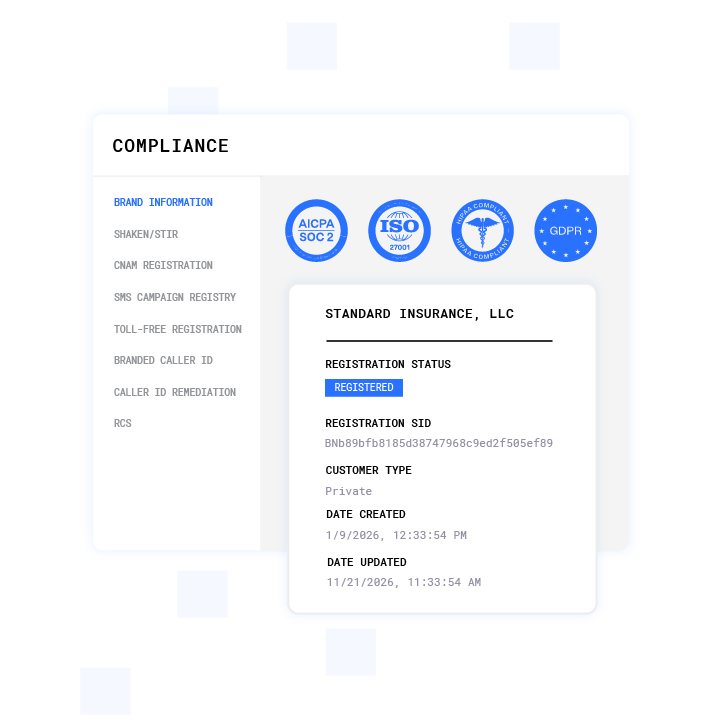
See a live Plura demo and watch every compliance step run before the dial.
The True Cost Of “Free”
The VICIdial software license costs $0 at any size, but a production deployment spends money in four places. Teams pay for servers or hosting, expertise to install and tune the system, telecom from a carrier, and compliance tooling for TCPA and DNC obligations.
How Much Does VICIdial Cost? For a 10-agent self-hosted VICIdial deployment, total monthly cost runs approximately $2,360 to $7,280, including infrastructure, VoIP, compliance, and part-time contractor labor. Total three-year cost for self-hosted VICIdial can land between $280,480 and $610,480 once compliance and labor are included. Linux admin time alone can reach $146,000 to $195,000 over three years at 50% allocation, and TCPA-only compliance tooling adds $45,000 to $68,000 over the same period, so the “free” license sits on top of a substantial operating budget.
Is VICIdial Free For Calling? The software is free, but the operation is not. Compliance costs include DNC scrubbing subscriptions, carrier attestation, and ongoing maintenance, and the labor to keep the system running is often the largest line item. Self-hosted VICIdial requires 4 to 8 hours per week of system administration for a 100-seat deployment, covering Asterisk patching, database optimization, SSL renewal, and security monitoring. At a blended internal rate of $80 per hour, three hours per month of VICIdial maintenance is $240 per month, which can exceed the cost of the server itself even at modest scale.
Some operators should stay on VICIdial. If an operation has in-house Linux and Asterisk expertise, a low seat count, and a tolerance for manual compliance work, the math may favor staying. Self-hosted VICIdial becomes the cheapest option at approximately 35 to 40 seats for most hosting configurations, so smaller teams with strong technical staff can keep total cost of ownership down.
The practical answer for cost-constrained teams is simple. The software license is free, and the compliance work either runs inside the platform before the dial or lands on the operator’s spreadsheet afterward. When it lands on the spreadsheet, the operator carries the burden instead of the platform.
Run your numbers through Plura’s calculator to check your ROI in real time.
Where Plura AI Fits
Plura AI is built as a VICIdial alternative that carries the compliance burden by owning the carrier stack and enforcing every compliance step before the call leaves the network. The capabilities below are the ones that carry that burden, and each maps to a verifiable platform feature.
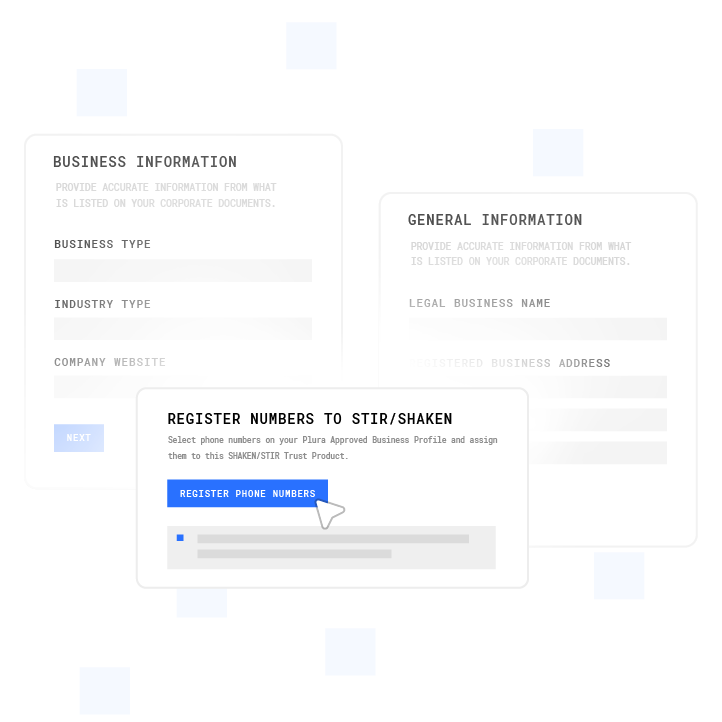
- Plura is its own FCC-licensed audio bridging carrier, not a reseller wrapping a third-party CPaaS.
- It holds its own operating company number and runs STIR/SHAKEN authentication on every outbound call.
- It issues branded caller ID at the carrier level, so calls present with the company’s name rather than an unfamiliar number or a spam label.
- It enforces real-time DNC scrubbing, TCPA-litigator screening, automated quiet hours, and immutable consent logging inside the platform on every outbound contact.
- The compliance dashboard exports audit-ready reports in one click for legal review, carrier requirements, or regulatory inquiries.
Plura’s AI Predictive Dialer is built on that carrier foundation. Calls flow over Plura’s own network with branded caller ID and STIR/SHAKEN authentication, and every compliance step runs inside the platform before the dial. The platform also supports CRM integration with HubSpot, Salesforce, Zoho, and 50+ other tools, so consent records and suppression lists stay synchronized across systems.
The TCPA exposure described earlier still applies here: statutory damages of $500 to $1,500 per call, with no cap on total liability. Plura’s compliance engine operates as a first-class layer of the platform rather than a bolt-on feature.
Compare plans and rates side by side.
Carrier-Level And Platform-Level Enforcement
The distinction between carrier-level and platform-level enforcement drives dialer selection for compliance-focused teams.
As noted earlier, a check that runs after connection documents the call rather than preventing the violation. Platform-level enforcement means four checks run before the call leaves the network: DNC scrubbing, consent verification, calling-window rules, and STIR/SHAKEN signing. If any of those checks fails, the call does not go out.
Most AI voice platforms sit as wrappers on top of Twilio or another CPaaS. They cannot issue caller ID under their own identity, and they cannot enforce compliance before the call leaves the network because the carrier layer sits outside their control. SIPNEX advises operators to ask their provider one question: “who signs my calls?” If the answer is “our upstream does,” the operator has found the attestation ceiling, and no plan tier or add-on can change it because the signing authority sits with the upstream carrier.
Plura is the signing carrier. It holds its own STIR/SHAKEN Service Provider certificate, files directly in the FCC Robocall Mitigation Database, and signs every outbound call it originates using its own keys. Compliance enforcement happens at origination and inside the platform, not only in post-call logs.
The Open-Source Decision
Staying on VICIdial is a legitimate choice for the right operator, as long as the team accounts for what that decision requires.
Staying on VICIdial typically requires the following:
- In-house Linux and Asterisk expertise, or a paid hosting provider
- Third-party DNC scrubbing subscriptions and manual scrub workflows
- Carrier-level attestation management, which the dialer software cannot handle on its own
- Manual consent logging and audit assembly
- Ongoing maintenance, and a new VICIdial administrator takes 2 to 4 weeks to become productive and 2 to 3 months to master the platform
This model fits operators with in-house Linux and Asterisk expertise, low seat counts, and a tolerance for manual compliance work. For compliance-critical operations at any scale, ViciStack’s March 2026 quick-reference guide highlights platforms that carry pre-built compliance certifications, because the internal effort grows quickly with volume.
Larger operators, regulated verticals such as healthcare, insurance, financial services, or legal, and teams without dedicated technical staff face a different reality. At that point, the compliance burden typically lands on the team’s spreadsheet rather than on the platform.
What To Ask Any Vendor Before Signing
These questions apply to any dialer vendor, including Plura. Bring them into every demo so the team can see where enforcement actually happens.
- When does the DNC check run: before dial or after?
- Is consent timestamped and immutable?
- Are calling windows enforced by the contact’s time zone?
- Does caller ID authenticate at origination?
- Who signs the STIR/SHAKEN PASSporT: the vendor or an upstream carrier?
- What does the audit export look like, and how long does it take to produce?
- Who owns the carrier stack?
What Are Some Good Alternatives To VICIdial?
The following platforms are commonly evaluated as VICIdial alternatives. Each description uses published, verifiable information from the vendor’s own documentation.4
- Plura AI FCC-licensed carrier, STIR/SHAKEN on every outbound call, real-time DNC scrubbing, TCPA-litigator screening, automated quiet hours, and immutable consent logging inside the platform. Plura’s AI Predictive Dialer runs on Plura’s own carrier stack with branded caller ID issued at the carrier level. Plura’s platform supports TCPA, DNC, HIPAA, SOC 2, CAN-SPAM, and 50+ state rule sets on every outbound contact, and Plura holds SOC 2 Type II, HIPAA, ISO, and GDPR coverage; customers remain responsible for their own compliance obligations.1
- Convoso Cloud-managed outbound platform with published compliance features including DNC management and time-zone calling-window restrictions, positioned for regulated industries.
- Readymode Cloud platform with published compliance tools including internal DNC list management and state-specific calling rules.
- Five9 Enterprise cloud contact center with managed compliance controls and published certifications. Five9 offers native one-to-one consent capture with per-seller audit, real-time per-campaign enforcement of the 3% abandonment cap, and automated national, state, and internal DNC scrubbing.
- CloudTalk Cloud contact center platform with published compliance features for outbound operations.
FAQ
How Does A Compliance-Grade Alternative Differ From A Self-Hosted Dialer?
A compliance-grade alternative enforces DNC scrubbing, consent verification, calling-window controls, STIR/SHAKEN authentication, and recording disclosures inside the platform before the dial. A self-hosted dialer like VICIdial provides the calling infrastructure but no native compliance layer, so the operator configures, maintains, and audits every compliance step manually or through third-party tools. The difference centers on where enforcement happens and who carries the work when something breaks.
Can An Operator Stay On Open-Source VICIdial And Still Manage Compliance?
Yes, but the operator carries the full compliance burden. VICIdial can be paired with third-party DNC scrubbing services, manual consent workflows, and carrier-level attestation upgrades. The key question is whether the operator has the in-house expertise, the budget for ongoing compliance tooling, and the tolerance for manual audit assembly. For operators with in-house Linux and Asterisk expertise and low seat counts, the math may favor staying. For operators at scale or in regulated verticals, the manual compliance work typically outweighs the software savings.
What Compliance Work Has To Move Inside The Platform?
The steps that carry the most exposure are the ones that must run before the dial: DNC scrubbing, consent verification, and calling-window enforcement. If any of those steps runs after the call connects, it functions as a record rather than a control. STIR/SHAKEN authentication must happen at origination, which means it requires a carrier-level solution rather than a dialer-only feature. Immutable logging and audit exports can run after the call, but they must write to a tamper-evident store instead of a spreadsheet or a mutable database field.
How Does Plura Handle DNC, Consent, And Calling Windows?
Plura enforces all three inside the platform before every outbound contact. Real-time DNC scrubbing checks every number against federal and state registries before dial. Non-compliant numbers are blocked before the first attempt. Consent records are timestamped, immutable, and audit-ready, with express written consent tracked per contact. Calling windows enforce automatically through time-zone detection on the contact, applying state and federal restrictions to every campaign. The compliance dashboard exports audit-ready reports in one click. Plura supports compliance for customers, and customers remain responsible for their own regulatory obligations and certifications.
What Happens If A Contact Revokes Consent?
The FCC’s consent-revocation rule, effective April 11, 2025, describes how consumers may revoke consent and how callers must respond. Plura’s platform logs revocations and suppresses the contact across campaigns. Operators should consult qualified counsel regarding their specific obligations under the TCPA and applicable state laws, as revocation requirements vary by jurisdiction and context.
Does Plura Replace A CRM?
No. Plura integrates with existing CRM systems including HubSpot, Salesforce, and Zoho, writing consent status, call outcomes, and suppression records back to the contact record. The platform’s Unified Inbox consolidates voice transcripts, SMS threads, RCS exchanges, and webchat sessions per customer in a single screen, but it is designed to work alongside a CRM rather than replace it. The full integration directory lists every supported CRM and tool.
Conclusion: How To Choose A VICIdial Alternative
Compliance work either happens inside the platform before the dial or on the operator’s spreadsheet afterward. VICIdial gives operators the toolkit and leaves the compliance work to them. A compliance-grade alternative takes that work on.
The evaluation criteria stay consistent across vendors. Teams should confirm when the DNC check runs, whether consent is immutable, how calling windows enforce by contact time zone, whether caller ID authenticates at origination, what the audit export looks like, and who owns the carrier stack.
Plura AI answers those questions at the carrier level and inside the platform. It is its own FCC-licensed audio bridging carrier. It holds its own operating company number, runs STIR/SHAKEN on every outbound call, issues branded caller ID directly, and enforces real-time DNC scrubbing, TCPA-litigator screening, automated quiet hours, and immutable consent logging before every dial. With TCPA filings rising at the pace described earlier, the cost of carrying that burden on a spreadsheet is increasing every month.
See what a compliance-grade platform costs.
1 Plura AI maintains SOC 2, HIPAA, ISO, and GDPR posture as part of its platform infrastructure. References to compliance frameworks in this article describe Plura’s platform capabilities and do not constitute a guarantee that any customer using Plura will themselves be compliant with applicable laws or standards. Customers remain solely responsible for their own regulatory obligations, certifications, consent management, recordkeeping, and the claims they make to their own end users. Consult qualified legal counsel for guidance specific to your use case.
2 This article describes regulatory frameworks at a general level and does not constitute legal advice. Laws and regulations vary by jurisdiction, change over time, and apply differently depending on facts and circumstances. Readers should consult qualified legal counsel before making compliance decisions.
3 Performance figures, customer outcomes, and industry statistics referenced in this article are drawn from cited third-party sources or Plura customer case studies. Individual results vary based on implementation, use case, industry, audience, and execution. Past or aggregate performance is not a guarantee of future results.
4 References to third-party products, services, companies, or research are made for informational and comparative purposes only. Plura AI is not affiliated with, endorsed by, or sponsored by any third party named in this article unless explicitly stated. Trademarks and product names referenced remain the property of their respective owners.
This article is provided for informational purposes only and reflects Plura AI’s understanding at the time of publication. Product capabilities, integrations, and specifications are subject to change. For the most current information, visit plura.ai.
This article was produced with the assistance of AI tools and reviewed by Plura AI prior to publication.