

Written by: Matt Beucler, CEO, Plura AI | Last updated: August 28, 2026
Key Takeaways for Healthcare Call Center Leaders
- HIPAA-aligned conversational AI for healthcare call centers relies on a carrier-owned stack that encrypts PHI before it reaches any model.
- Plura AI delivers this through its FCC-licensed carrier, stateful cross-channel memory, and real-time DNC and HIPAA guardrails.
- The platform supports SOC 2, HIPAA, ISO, GDPR, SHAKEN/STIR, TCPA, and DNC compliance while enabling warm human escalation with full context.1
- Healthcare organizations can achieve measurable cost savings within the first 30 days of deployment.3
- Book a live demo to see the carrier-owned stack in action.
Executive Summary for Healthcare Call Center Automation
Healthcare call centers in 2026 operate under compounding pressure. Each FTE handles 30 to 50 inbound calls daily at a direct labor cost of $4 to $8 per call, while annual turnover averages 47–56 percent, which forces organizations to train replacement staff constantly. That churn is especially costly because 60 to 70 percent of staff time goes to routine tasks that require no clinical judgment and could be automated if regulatory constraints allowed it. Those constraints have expanded as the FCC’s March 2026 Draft Notice of Proposed Rulemaking introduces onshoring expectations for sensitive consumer data, and the January 2025 HIPAA Security Rule NPRM proposes new encryption and access control requirements.2
The framework that addresses both operational and regulatory pressure is carrier-owned conversational AI. In this model, the telephony layer, AI models, stateful memory database, and compliance engine run on a single vendor’s U.S. infrastructure, with encryption enforced before PHI reaches any model. Plura AI is built on that architecture. This playbook maps the complete PHI data path, quantifies the total cost of ownership case for replacing 15-agent teams, and provides an Epic/FHIR integration security checklist to support legal and finance review.
Book a live demo to see the carrier-owned stack in action.
Current Healthcare Contact Center Economics
Voice AI deployed in U.S. healthcare call centers in 2026 can reliably handle 60 to 80 percent of inbound call volume, with the remaining 20 to 40 percent requiring human judgment for clinical triage, complex disputes, or emotionally sensitive cases. At a contact center handling 9,000 calls per week, routine non-clinical calls cost approximately $340,000 to $396,000 per year in agent salary for talk time alone, with after-call wrap-up adding another $164,000 to $205,000 annually.
Healthcare organizations handle 2,000 or more calls daily while losing 14 percent of daily revenue to patient no-shows. Many of those calls are manual reminder attempts that fail to reach patients or arrive too late to prevent the no-show. Plura’s healthcare deployments support up to a 40 percent improvement in no-shows through automated reminders and follow-up across voice and SMS channels, as documented in healthcare implementations.3
The offshore BPO model that absorbed much of this volume for two decades now faces direct regulatory pressure. Nearly 7 in 10 U.S. companies outsource at least one department to offshore contact centers, and every one of those contracts now carries exposure under the FCC’s proposed 2026 rules and companion state legislation. This regulatory pressure pushes healthcare organizations to examine not only where their call centers sit, but also how patient data flows through every layer of their conversational AI stack.
Data Path Security for HIPAA Conversational AI
The central compliance risk in reseller and offshore AI stacks is not the AI model itself. It is the data path between the caller and the model. According to HHS OCR reports to Congress, 242,908,056 individuals were affected by large healthcare data breaches in 2024, with PHI touchpoints multiplying in voice AI deployments through real-time speech processing, authentication, transcription, and analytics.
A single patient call may flow through carrier infrastructure, speech recognition engines, large language models, EHR APIs, and call recording storage. HIPAA requirements apply across every system the voice agent touches, not just the conversational layer. Each hop introduces another potential point of exposure.
| Data Path Layer | Carrier-Owned (Plura) | Reseller Stack | Offshore Stack |
|---|---|---|---|
| Telephony origination | FCC-licensed carrier, SRTP and TLS enforced at origination | Third-party CPaaS, encryption depends on reseller configuration | Foreign carrier, U.S. legal protections may not apply |
| PHI encryption before model | AES-256 at rest, TLS 1.2+ in transit enforced before LLM invocation | Varies by sub-processor, missing a single BAA in the vendor chain can create a reportable breach | Data residency outside U.S., HIPAA BAA coverage uncertain |
| Stateful memory across channels | Single Stateful Conversation Database across voice, SMS, RCS, webchat | Typically channel-siloed, no shared memory by default | Fragmented across offshore agents and point tools |
| Regulatory exposure (2026) | 100 percent U.S. infrastructure by architecture, no FCC NPRM offshore exposure | Depends on sub-processor geography, may carry offshore exposure | Direct exposure under FCC Draft NPRM CG Docket No. 26-52 and state onshoring laws |
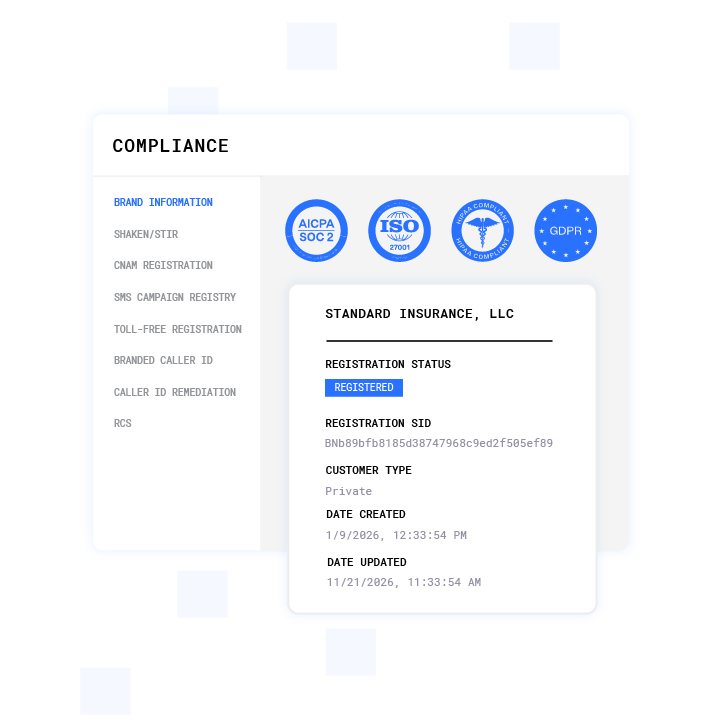
Plura’s carrier-owned architecture enforces encryption at the telephony layer before PHI reaches any model. Voice originates on Plura’s own FCC-licensed audio bridging carrier, not a third-party CPaaS. The current HIPAA Security Rule treats encryption of ePHI as addressable rather than required and does not mandate MFA, though a 2025 proposed update would require TLS 1.2+ in transit, AES-256 at rest, MFA for ePHI access, and six-year audit-log retention. Plura’s infrastructure is built to those specifications.
Stateful Conversation Memory Across Voice and SMS
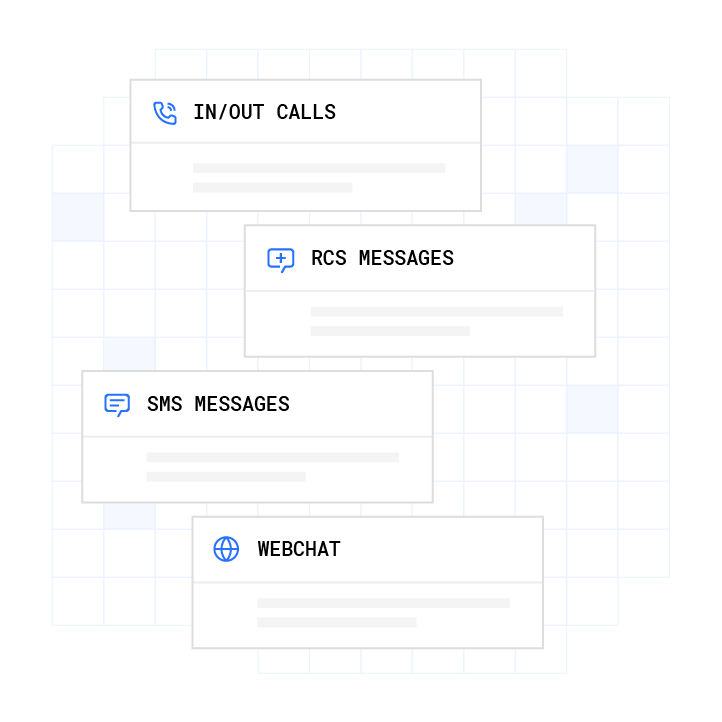
Most conversational AI platforms treat each channel as a separate product with separate memory. A patient who texted at 9 a.m. must re-explain their situation when the call arrives at noon. That pattern is not only a user-experience problem. In a healthcare context, it is a PHI handling problem because re-collection of patient information on every channel multiplies exposure points and creates inconsistent audit trails.
Plura’s AI voice agent and AI customer service texting channels share a single Stateful Conversation Database. Every interaction is keyed to a customer token such as phone number, email, or ID and stored in one place. The AI reads and writes to the same database on every conversation, referencing what was offered, what was accepted, what was declined, and what remains open. Sensitive-data redactions applied in one channel carry forward to the next. Plura uses stateful AI architecture that remembers previous interactions, preferences, and outcomes across channels for more precise personalization and follow-ups.
Real-Time DNC and HIPAA Guardrails in Production
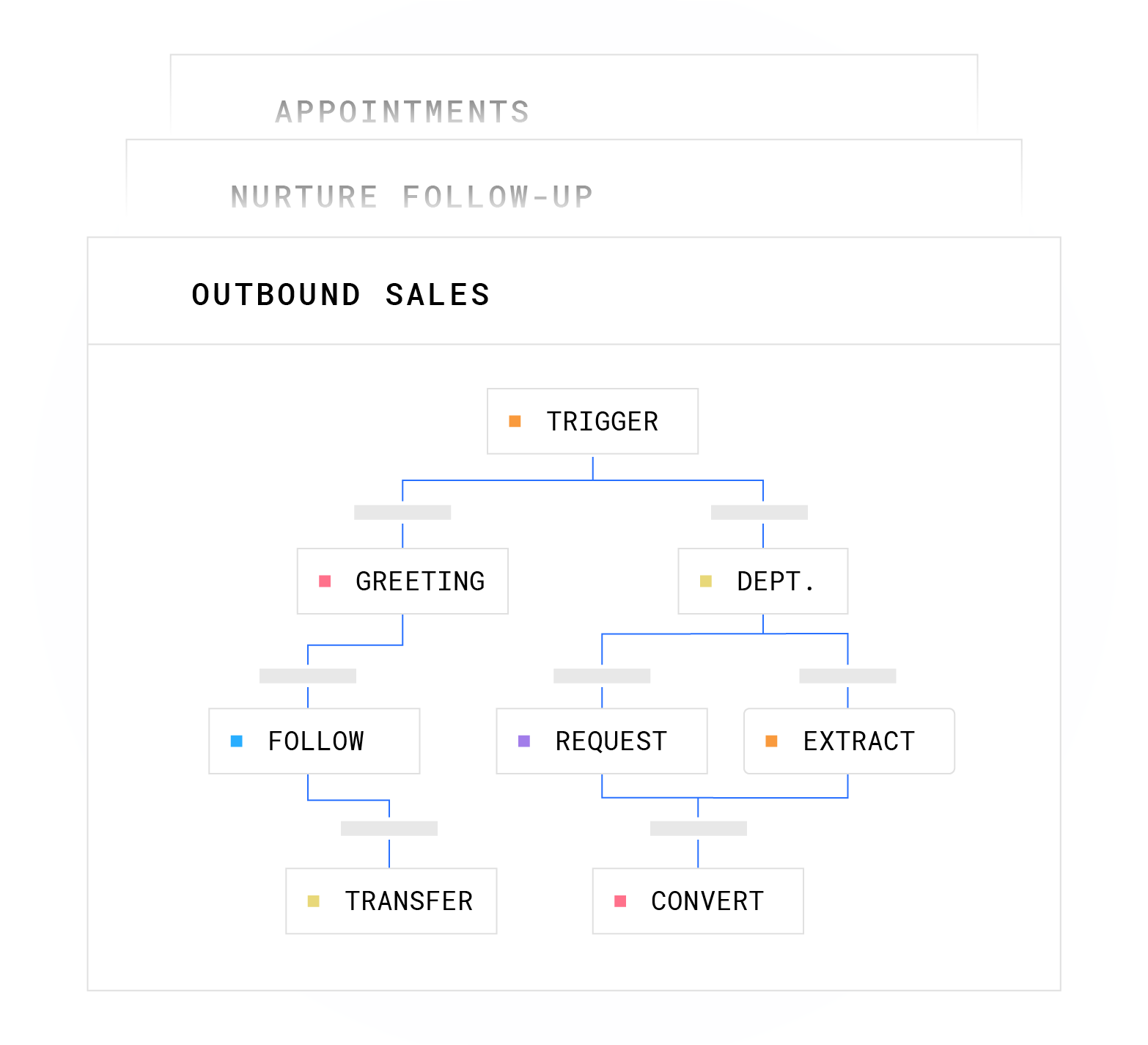
Guardrails in a healthcare call center operate at two levels. Regulatory controls cover DNC scrubbing, TCPA consent verification, and quiet-hours enforcement. Clinical controls cover PHI redaction, sensitive-topic escalation, and identity verification before PHI disclosure.
Plura’s compliance engine enforces both categories. Every outbound contact is checked against federal and state DNC registries in real time before dial. Consent records are timestamped, immutable, and audit-ready. Quiet-hours rules apply automatically through time-zone detection. Real-time PHI redaction in transcripts must cover patterns including SSN, MRN, DOB, addresses, and full names. Plura applies field-level redaction at the transcript layer before data reaches downstream analytics or CRM systems.
Healthcare voice AI systems also require real-time guardrails such as sentiment-triggered human transfers, explicit withdrawal termination when callers opt out, pre-call TCPA disclosures with opt-out options, and ASR confidence thresholds above 90 percent. Plura’s managed workflows enforce each of these at the node level, with hard limits on what the AI can say or do before escalating to a human agent.
Warm Human Escalation with Full Patient Context
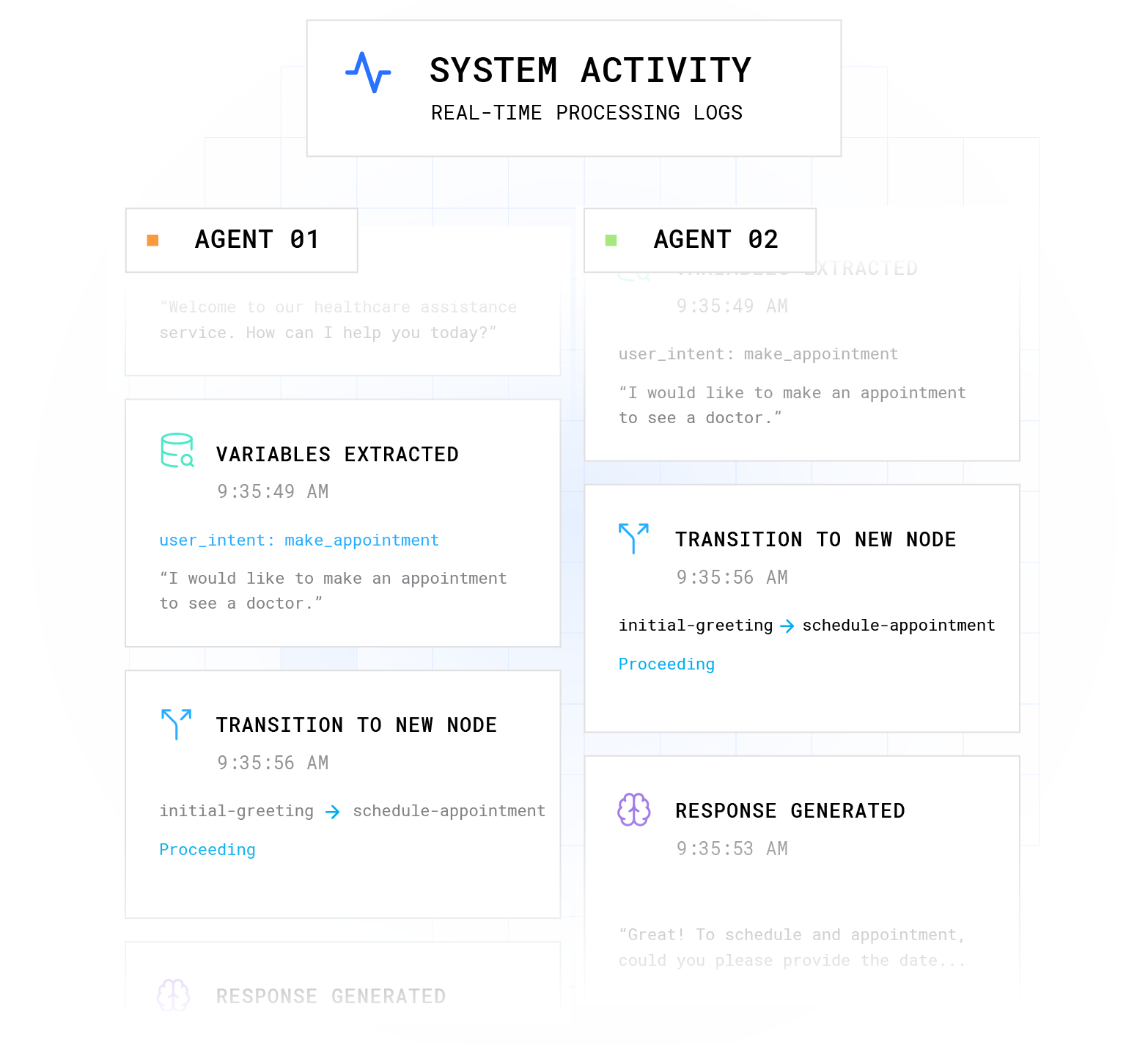
Sensitive topics including suicidal ideation, self-harm disclosure, child-abuse disclosure, and drug-overdose mentions should route immediately to live human staff with a warm handoff. Plura’s escalation logic routes these cases to a U.S. agent with the full conversation context already loaded, so the agent does not need to ask the patient to repeat themselves.
Warm escalation in Plura transfers the stateful conversation record alongside the call. The receiving agent sees every prior touchpoint, PHI fields accessed, and the reason for escalation. The Unified Inbox consolidates voice transcripts, SMS threads, and webchat sessions per patient in a single screen, so CX teams work from one view rather than multiple point tools.
2026 Regulatory Exposure for Offshore or Reseller Stacks
The FCC’s March 5, 2026 Draft NPRM proposes requiring covered service providers to handle consumer transactions involving access to or transmission of sensitive consumer information exclusively at U.S.-located call centers, with the sensitive transaction restrictions applying across calls, emails, text messages, and online chats.2
The FCC’s February 8, 2024 Declaratory Ruling confirmed that the TCPA’s restriction on artificial or prerecorded voice calls covers calls that use AI to generate or clone human voices. Violations carry penalties of $500 to $1,500 per call, with no statutory cap. Reseller stacks that route voice through third-party CPaaS providers cannot enforce these disclosures at the carrier level and depend on configuration choices made by the reseller, which may or may not be auditable.
State-level exposure compounds the federal picture. New York, New Jersey, Connecticut, Missouri, and Florida each maintain active onshoring or sensitive-data restriction laws. Florida’s medical-information offshoring ban applies directly to healthcare data. Every offshore or reseller contract a covered entity holds now functions as a compliance liability that legal and finance must price into the TCO model.
TCO Math for Replacing a 15-Agent Team
Labor accounts for 50 to 70 percent of total contact center cost, which makes agent efficiency the dominant TCO factor. For a 50-seat equivalent contact center, traditional offshore operations cost $35,000 to $50,000 monthly, while AI contact centers cost $8,000 to $15,000 monthly.
The default scenario on Plura’s ROI calculator models a 15-agent operation paying $20 per hour with standard taxes, benefits, and commissions at a 40 percent talk-utilization rate. That configuration represents a significant monthly cost. Replacing that team with Plura at $15 per hour, 100 percent talk utilization, and six Plura agents doing the work of 15 humans drops the monthly cost to $14,400. Savings reach $45,600 in the first 30 days, $547,200 over 12 months, and $2,736,000 over 60 months.3
Mid-market healthcare practices implementing call center automation see payback in 6 to 12 months, driven primarily by 30 to 50 percent reduction in total call center FTE. Industry research puts average ROI for healthcare AI at roughly $3.20 for every $1 invested, with payback often inside 14 months. These benchmarks provide context, but actual savings depend on current labor costs, call volume, and utilization rates.
Run your numbers through Plura’s ROI calculator to check your cost savings in real time, then review plans and rates side by side to identify the configuration that fits your operation.
Epic and FHIR Integration Security Checklist
FHIR APIs are the preferred integration path for modern EHR systems. HIPAA-aligned EHR integration for voice agents can use FHIR APIs, HL7 v2 with an interface engine, or RPA and screen-scrape as a last resort, with each connection secured by TLS, rotated service-account credentials, IP allowlisting, and audit logging.
Before authorizing an Epic or FHIR integration for a conversational AI deployment, legal and compliance teams can review the following items:
- BAA executed with every vendor in the call path that can access PHI, including telephony provider, STT engine, LLM provider, TTS engine, and orchestration platform
- TLS 1.2 or higher enforced on all FHIR API connections, with rotated service-account credentials and IP allowlisting
- AES-256 encryption at rest for all transcripts, recordings, and FHIR query responses containing PHI
- Role-based access controls with MFA for all administrative access to PHI-bearing systems
- Immutable audit logs retained for a minimum of six years, capturing user, timestamp, patient identifier, and action for every PHI access
- Real-time PHI redaction at the transcript layer before data reaches analytics, CRM, or QA tools
- Zero-retention or minimum-retention defaults for raw call audio, with documented retention policy covering recordings, transcripts, prompt logs, and CRM write-backs
- Prohibition on use of PHI for model training or fine-tuning without prior written consent and de-identification under HIPAA Safe Harbor or Expert Determination methods
- U.S.-region pinning across telephony, STT, LLM, TTS, and EHR integration layers
- Documented breach notification procedures with timelines specified in the BAA
Plura’s integrations layer supports FHIR-compatible EHR connections with TLS-secured API calls, audit-ready logging, and field-level PHI redaction enforced before data reaches downstream systems. Organizations should consult qualified counsel to confirm their specific obligations under 45 CFR Parts 160, 162, and 164 before deployment.
Frequently Asked Questions
What makes a conversational AI platform HIPAA-aligned for healthcare call centers?
A HIPAA-aligned conversational AI platform for healthcare call centers requires a signed Business Associate Agreement with every vendor in the call path that can access PHI, including the telephony provider, speech-to-text engine, LLM, text-to-speech engine, and any orchestration or analytics layer. Technical safeguards include AES-256 encryption at rest, TLS 1.2 or higher in transit, role-based access controls, MFA for administrative access, immutable audit logs retained for at least six years, real-time PHI redaction at the transcript layer, and a prohibition on using PHI for model training without explicit authorization. The January 2025 HIPAA Security Rule NPRM proposes to require encryption of ePHI at rest and in transit, with limited exceptions, and explicitly includes AI tools in the risk analysis scope under 45 CFR §164.308. Organizations should consult qualified counsel to assess their specific obligations before deployment.
Why does carrier ownership matter for data path security in healthcare AI?
In a reseller stack, PHI travels from the caller through a third-party CPaaS before reaching the AI model. The reseller does not control encryption at the telephony layer and depends on configuration choices made by the CPaaS provider. A carrier-owned platform like Plura originates voice on its own FCC-licensed infrastructure, enforcing SRTP for the audio stream and TLS for signaling before PHI reaches any model. This approach closes the gap between the telephony layer and the AI layer where many data path exposures occur. It also means branded caller ID is issued at the carrier level, SHAKEN/STIR authentication runs on every outbound call, and DNC scrubbing is enforced before dial rather than added later in the workflow.
What is stateful cross-channel memory and why does it matter for HIPAA compliance?
Stateful cross-channel memory means a single conversation database preserves patient context across every channel, including voice, SMS, RCS, and webchat. When a patient texts about a prescription refill at 9 a.m. and calls at noon, the AI agent already knows the context and does not need to ask the patient to repeat PHI. From a compliance standpoint, stateful memory reduces the number of times PHI is re-collected across channels, creates a single auditable record of every interaction, and ensures that PHI redactions applied in one channel carry forward to the next. Platforms without stateful memory re-expose PHI on every new channel interaction and produce fragmented audit trails that are difficult to assemble on demand for regulatory review.
How does the 2026 FCC regulatory environment affect offshore or reseller AI stacks in healthcare?
The FCC’s March 5, 2026 Draft NPRM proposes requiring covered service providers to handle consumer transactions involving sensitive consumer information exclusively at U.S.-located call centers, with restrictions applying across calls, emails, texts, and online chats. The FCC’s February 2024 Declaratory Ruling already confirmed that AI-generated voice calls fall under TCPA restrictions on artificial or prerecorded voice. State laws in New York, New Jersey, Connecticut, Missouri, and Florida add onshoring and sensitive-data restrictions that apply to healthcare information specifically. Reseller stacks that route voice through foreign infrastructure or use sub-processors without U.S.-region pinning carry direct exposure under these frameworks. Organizations should consult qualified counsel to assess their specific exposure before the proposed rules are finalized.
What does the TCO comparison look like when replacing a 15-agent healthcare call center team with AI?
A 15-agent team at $20 per hour with standard taxes, benefits, and commissions at 40 percent talk utilization represents a significant monthly cost. Plura’s ROI calculator models replacement with six AI agents at $15 per hour and 100 percent talk utilization, producing a monthly cost of $14,400 and a 30-day saving of $45,600. Over 12 months, that compounds to $547,200 in savings. Industry research puts average ROI for healthcare AI at roughly $3.20 for every $1 invested, with payback often inside 14 months. The TCO model should also account for compliance overhead, since healthcare, financial services, and public-sector deployments incur higher governance costs for conversational AI, including audit trails, BAA management, and internal control integration. Platforms that include HIPAA support in the base price rather than as a paid add-on can reduce both cost and deployment timeline.
Conclusion for Healthcare and CX Executives
Healthcare call centers in 2026 face a convergence of cost pressure, regulatory exposure, and patient experience expectations that legacy and reseller AI stacks struggle to address. The core problem is not the AI model. It is the data path, with PHI traveling through third-party carriers and unvetted sub-processors without carrier-level encryption, stateful memory, or real-time guardrails.
Plura AI’s carrier-owned stack addresses each layer of that problem. Voice originates on Plura’s FCC-licensed carrier with SHAKEN/STIR authentication and encryption enforced before PHI reaches any model. The Stateful Conversation Database preserves patient context across voice, SMS, and webchat, producing a single auditable record. The compliance engine enforces DNC scrubbing, TCPA consent verification, PHI redaction, and quiet-hours rules on every contact. Warm escalation transfers full context to U.S. agents when clinical or sensitive-topic thresholds are met. The TCO math replaces 15-agent team economics with a model that delivers measurable savings inside the first 30 days.
Run your numbers through Plura’s ROI calculator to model your specific savings, then review plans and rates to identify the right configuration. When your team is ready to see the carrier-owned architecture in action, schedule a demo to walk through the data path, compliance controls, and the Epic and FHIR integration checklist with your stakeholders.
1 Plura AI maintains SOC 2, HIPAA, ISO, and GDPR posture as part of its platform infrastructure. References to compliance frameworks in this article describe Plura’s platform capabilities and do not constitute a guarantee that any customer using Plura will themselves be compliant with applicable laws or standards. Customers remain solely responsible for their own regulatory obligations, certifications, consent management, recordkeeping, and the claims they make to their own end users. Consult qualified legal counsel for guidance specific to your use case.
2 This article describes regulatory frameworks at a general level and does not constitute legal advice. Laws and regulations vary by jurisdiction, change over time, and apply differently depending on facts and circumstances. Readers should consult qualified legal counsel before making compliance decisions.
3 Performance figures, customer outcomes, and industry statistics referenced in this article are drawn from cited third-party sources or Plura customer case studies. Individual results vary based on implementation, use case, industry, audience, and execution. Past or aggregate performance is not a guarantee of future results.
This article is provided for informational purposes only and reflects Plura AI’s understanding at the time of publication. Product capabilities, integrations, and specifications are subject to change. For the most current information, visit plura.ai.
This article was produced with the assistance of AI tools and reviewed by Plura AI prior to publication.