
Written by: Matt Beucler, CEO, Plura AI
Updated September 2026
Key Takeaways
- AI improves call center efficiency through five levers: self-service deflection, real-time agent assist, smart routing, automated after-call work, and 100% quality assurance.
- Baseline eight metrics before deployment. Cost per resolved issue is the north-star metric. Average handle time is a diagnostic.
- Deploy AI agent assist and automated after-call summaries first. Then add self-service deflection, smart routing, and predictive intelligence.
- Track AI-handled, AI-assisted, and human-handled contacts separately. Use phase gates tied to FCR and CSAT to expand or roll back.
- Plura AI runs all five efficiency levers on one stateful conversation database on its own FCC-licensed carrier. See how a phased rollout would look in your environment.
Baseline First: The Eight Metrics To Measure Before You Deploy Anything
Baseline eight metrics before any AI rollout: average handle time (AHT), first-contact resolution (FCR), after-call work, transfer rate, hold time, abandonment rate, CSAT, and cost per resolved issue.
- Average handle time (AHT): Total talk time plus hold time plus after-call work, divided by interactions. The 2026 CMP cross-industry median sits at approximately 7 minutes, with technology contact centers reaching 15 minutes and government centers as low as 5. AHT helps with capacity planning but creates risk when used as a primary target.
- First-contact resolution (FCR): Percentage of issues resolved on first interaction without follow-up. SQM Group benchmarks put 70-79% as good and 80%+ as world-class, a level only about 5% of contact centers reach consistently.
- After-call work: Time spent on notes, CRM updates, and wrap codes after the call ends. Verint’s State of Agent Experience 2026 found after-call work takes approximately 3 minutes per call, and 54% of calls require it.
- Transfer rate: Percentage of calls transferred to another agent or department. High transfer rates signal routing failures and knowledge gaps.
- Hold time: Time a customer spends on hold during an interaction. Cresta identifies hold time as one of several friction areas driving inflated AHT, alongside after-call work and system switching, while knowledge search is cited as a primary driver.
- Abandonment rate: Percentage of callers who hang up before reaching an agent. Target band: 5-8%, per benchmark summaries.
- CSAT: Customer satisfaction score. AmplifAI’s 2026 benchmark report puts the cross-industry median at approximately 89%.
- Cost per resolved issue: Total support operating cost divided by issues resolved. This metric shows whether the operation solves problems efficiently across channels.
CX Today’s April 2026 analysis defines cost per resolution as the end-to-end cost of solving a customer issue across every touchpoint, treating resolution as a journey, not a single interaction. That definition matters because it exposes the gap between AHT, which measures how quickly agents end conversations, and cost per resolved issue, which measures whether the conversation actually solved the problem.
SQM Group research shows that a 1% improvement in FCR produces roughly a 1% improvement in CSAT and a 1% reduction in operating costs. When AHT improves but FCR and CSAT decline, agents are being rushed instead of supported.
See how Plura baselines and tracks all eight metrics in a single dashboard.
The Five Levers, Ordered by Risk and Payback
Sequence AI levers by risk and payback. Start with AI agent assist and automated after-call summaries, then add self-service deflection, smart routing, predictive intelligence, and 100% quality assurance.
Lever 1: AI Agent Assist and Automated After-Call Summaries
Real-time AI surfaces knowledge, next-best actions, and compliance prompts during live calls. Generative AI summarizes call transcripts and auto-populates CRM fields after the call ends.
Metrigy research cited by Genesys found real-time AI agent assist reduces average handle time by 27% on AI-native platforms.3 Metrigy research cited by Zoom found AI-generated post-call summaries reduce after-call work time by approximately 35%. Verint’s State of Agent Experience 2026 found 45% of calls require agents to search for answers, adding approximately 2.7 minutes per interaction.
This lever deploys first because there is no customer-facing change. Agents see immediate relief from the most repetitive tasks. Implementation risk stays low while impact on AHT and after-call work appears quickly.
Lever 2: Self-Service Deflection
Conversational AI handles routine queries such as order status, store hours, and appointment confirmation without agent involvement.
Metrigy’s 2025 benchmark found voice AI handles 35-40% of inbound calls end-to-end at mature deployments (18+ months live).3 CCW Digital’s 2025 Contact Center Technology Research Series found fully deflected voice AI calls cost $0.05-0.18 per minute versus $0.75-1.40 per minute for human agent calls.
This lever carries higher risk because it requires call-reason analysis to identify automatable intents and introduces a customer-facing change. Payback becomes significant once deflection rates mature.
Lever 3: Smart Routing
Predictive analytics and natural language processing route callers to the most qualified agent or department based on intent.
Gladly identifies skills-based routing as one of the highest-leverage FCR levers. Contact centers using predictive analytics have reported up to 35% improvement in first-call resolution.
Smart routing requires deep integration with CRM and backend systems. It also depends on accurate intent classification, which improves after self-service deployment generates training data.
Lever 4: Predictive Intelligence
AI analyzes historical patterns to predict call volume, identify high-risk interactions, and proactively surface resolution paths.
Gartner (2025) predicts agentic AI will reduce operational costs by 30% within four years and autonomously resolve 80% of common customer service issues without human intervention by 2029.4,5 This lever requires the highest integration complexity and mature data infrastructure. It works best after earlier levers generate operational data.
Lever 5: 100% Quality Assurance Automation
AI-driven quality assurance reviews every interaction instead of a small sample. Models score calls, flag risk, and surface coaching opportunities at scale.
Vendors report that AI QA programs typically move from 1-3% manual review to near-complete coverage. That shift gives leaders a clearer view of script adherence, compliance risk, and coaching needs across channels.
Quality automation usually follows agent assist and self-service. At that point, transcripts, summaries, and structured outcomes provide the data needed for reliable scoring.
Lever Comparison Table
The table below summarizes how the five levers differ on primary metric, implementation risk, and time-to-value so you can stage your roadmap.
| Lever | Primary Metric Improved | Implementation Risk | Typical Time-to-Value |
|---|---|---|---|
| AI Agent Assist + After-Call Summaries | AHT, after-call work | Low | 30-60 days |
| Self-Service Deflection | Call volume, cost per contact | Medium | 90-180 days |
| Smart Routing | FCR, transfer rate | Medium | 90-120 days |
| Predictive Intelligence | FCR, CSAT | High | 180+ days |
| Quality Assurance Automation | QA coverage, compliance visibility | Medium | 90-150 days |
Sources: Metrigy (2025), CCW Digital (2025), Gladly FCR glossary, Gartner (2025)
The AHT Trap: Why Handle Time Is The Wrong North Star
One metric from the baseline list deserves special attention because it is the most commonly misused: average handle time. Optimizing average handle time as the primary goal drives repeat contacts and hurts CSAT. Cost per resolved issue provides a more reliable north-star metric.
Helply’s 2026 guidance describes AHT as “the most abused KPI”, useful for capacity planning but harmful as an individual target. Pressuring agents to lower handle time causes them to rush, skip discovery, and close tickets that bounce back. Re-contacts rise, FCR falls, and CSAT follows.
LiveHelpNow data across more than 5,000 business deployments found that when teams reduced AHT by 15%, callback rates increased by 20-30%, which confirms this pattern. The extra callbacks consumed and exceeded the agent-time savings while eroding customer satisfaction. Teams that set AHT as their primary performance target averaged a CSAT score of 3.4 out of 5. Teams managing the same contact volumes but targeting first contact resolution instead averaged 4.2 out of 5.
CX Today’s April 2026 analysis notes that AHT ignores channel economics. A five-minute chat is not financially equivalent to a five-minute voice call if it triggers a follow-up call, a refund request, or a complaint escalation.
Cresta recommends pairing AHT with FCR, CSAT, repeat contact rate, and after-call work, with any CSAT or FCR decline as a signal to reverse course immediately. Use AHT as a diagnostic to locate where the workflow adds time, such as hold time, system switching, and after-call work, rather than as a lever to push down.
Front-End Self-Service vs. Internal Agent Assist: How To Choose
Once you have baselined the right metrics, the next decision is which lever to deploy first. If the bottleneck is call volume and repeat contacts, lead with self-service deflection. If the bottleneck is agent ramp time, knowledge hunting, and after-call work, lead with AI agent assist.
| Primary Bottleneck | Recommended Lead Lever | Expected Primary Impact |
|---|---|---|
| Call volume, repeat contacts | Self-service deflection | 35-40% call deflection at maturity |
| Agent ramp, knowledge hunting | AI agent assist | 27% AHT reduction |
| After-call work | Automated summaries | 35% ACW reduction |
| Misrouted calls, transfers | Smart routing | Up to 35% FCR improvement |
Forrester’s 2025 benchmark found new agent ramp time drops from 8 weeks to 5 weeks at companies with AI-assisted onboarding. Metrigy (2025) found agents spend 4-6 minutes per call on after-call work; AI summarization reduces that to 1-2 minutes. CCW Digital (2025) found deflection rates reach 55-65% for routine query types at optimized programs.
Map your primary bottleneck to a phased AI rollout with Plura.
The Agent-Adoption Problem: “Does This Actually Work or Is It a Demo?”
Whichever lever you lead with, your agents will decide whether it succeeds. Frame AI agent assist as a tool that removes the worst part of the job, such as after-call work and knowledge-base hunting, rather than a headcount play.
KPMG research published in November 2025 found 52% of workers fear AI could eventually replace their jobs, up from 27% a year earlier.4 Gallup found 44% of employees report AI is already being used at their workplace, yet only 22% say leadership has explained how it will be applied, which means most employees fill that silence with their own worst-case interpretation.
The operational response is specificity, not reassurance. Rework’s AI transformation guidance recommends naming exactly what is changing, for example, “the customer service team’s manual ticket routing work is moving to AI in Q3,” and what that means for the people in that workflow.
Verint’s State of Agent Experience 2026 found 61% of agents expect their roles to become more complex or technical within three years. The agents who adopt AI fastest are the ones who see it removing the parts of the job they dislike, not the parts they value.
Metrigy (2025) found agent satisfaction scores improve by 18% when AI handles after-call documentation. CCW Digital (2025) found agents using real-time AI assist close 27% more cases per shift than those without.
Verint’s State of Agent Experience 2026 concludes that AI augments agents rather than replacing them, with the most successful organizations using AI to handle work agents should not be doing, such as after-call documentation, knowledge search, and system switching. That shift frees humans to focus on judgment, empathy, and problem solving. A Gartner survey found only 1 in 5 customer service leaders had cut agent headcount despite aggressive AI adoption, while more than half reported steady headcount while serving an increasing number of customers.
What To Measure After Deployment: Phase Gates
Phase-gate metrics tie directly back to the eight baseline metrics. Expand when the target metric improves without degradation in FCR or CSAT. Roll back when AHT improves but FCR or CSAT declines.
Phase Gate 1: AI Agent Assist + After-Call Summaries
- Expand if: After-call work time drops by 30% or more, AHT drops without FCR decline, and agent satisfaction improves.
- Roll back if: FCR declines, CSAT declines, or agents report AI summaries require more editing than writing from scratch.
Phase Gate 2: Self-Service Deflection
- Expand if: Deflection rate reaches 20% or more within 90 days, escalation rate stays below 35%, and CSAT for deflected calls stays within 0.5 points of agent-handled calls.
- Roll back if: Escalation rate exceeds 35% after six months, CSAT for deflected calls drops more than 1 point below agent-handled calls, or repeat contact rate for deflected issues rises.
Phase Gate 3: Smart Routing
- Expand if: FCR improves by 10% or more, transfer rate drops, and cost per resolved issue declines.
- Roll back if: FCR declines, transfer rate increases, or agent utilization drops below 70%.
Phase Gate 4: Predictive Intelligence
- Expand if: FCR improves, CSAT improves, and cost per resolved issue declines.
- Roll back if: Any of the eight baseline metrics degrade without corresponding improvement in cost per resolved issue.
Phase Gate 5: Quality Assurance Automation
- Expand if: QA coverage approaches 100%, coaching insights increase, and compliance exceptions become easier to detect and address.
- Roll back if: Scores diverge sharply from supervisor assessments or QA outputs create confusion for agents and managers.
Gladly warns that blending AI-handled and human-handled contacts produces a misleadingly high aggregate FCR number and obscures whether human FCR is actually improving. Teneo warns of the “containment trap”, when AI deflects contacts that later recontact, dashboard containment numbers look better while true first call resolution worsens. Track AI-handled, AI-assisted, and human-handled contacts separately.
How Plura AI Supports The Five Levers
Plura AI gives operators one platform to run all five efficiency levers on a single stateful conversation database, on its own FCC-licensed carrier, with compliance supported inside the platform on every outbound contact.
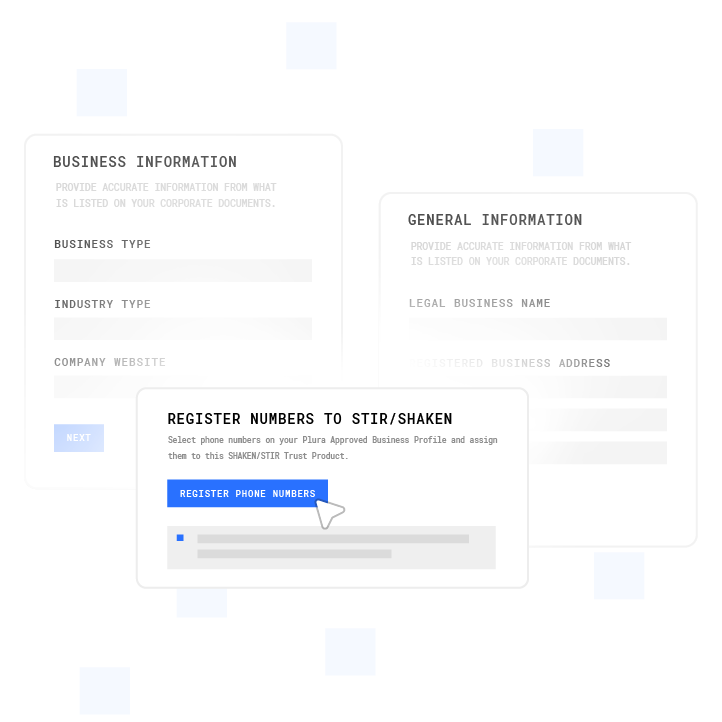
Unlike Twilio-based API resellers that rent the carrier layer, Plura owns its own FCC-licensed audio bridging carrier. Voice does not route through a third-party CPaaS (Communications Platform as a Service). Branded caller ID is issued at the carrier level. STIR/SHAKEN caller ID verification runs on every outbound call. Real-time DNC scrubbing, TCPA compliance screening, automated quiet hours, and immutable consent logging are enforced inside the platform on every outbound contact.2
Plura’s AI Voice, AI SMS, AI RCS, and AI webchat share a Stateful Conversation Database. Every interaction is tokenized to the customer by phone, email, or ID. A customer who texted at 9 a.m. is the same customer when the call comes at noon. Every channel inherits the full memory of every prior touchpoint.
Plura’s product surface covers every efficiency lever identified in this guide:
- AI Voice: Inbound and outbound calls on Plura’s own FCC-licensed carrier. Handles calls in English or Spanish. Every conversation logs to the stateful database for cross-channel context. Supports 24/7 call answering without staffing gaps.
- AI Predictive Dialer: Decides who to call next using stateful conversion signals. Delivers higher contact-rate-per-dial and lower cost per connected call.
- AI SMS: Outbound and inbound SMS conversations with TCPA compliance management, real-time DNC scrubbing, and per-state quiet-hours enforcement.
- AI Customer Service Texting: CRM-connected SMS support with order status automation.
- Managed Workflows: No-code workflow builder for designing memory-driven AI conversation pathways.
- Business Intelligence: Conversation intelligence that surfaces patterns and generates client-ready reports.
- Integrations: More than 50 tools across CRMs, calendars, attribution platforms, and data enrichment providers.
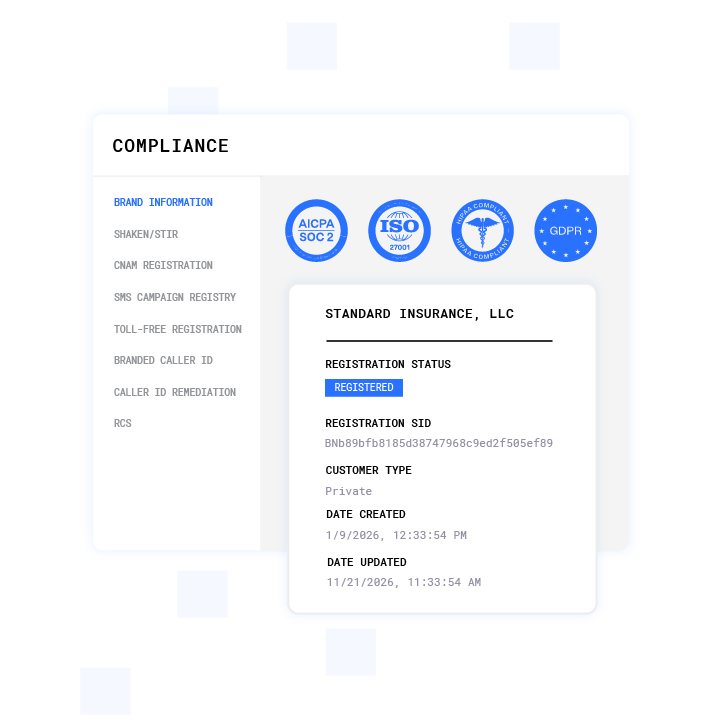
Plura runs on 100% U.S. infrastructure by architecture. Voice origination, model hosting, data storage, and call recording all sit on domestic infrastructure. The platform supports compliance programs such as SOC 2, HIPAA, ISO certification, GDPR, SHAKEN/STIR caller ID verification, TCPA, and DNC, with audit-ready reports exportable in one click.1
Estimate your cost per resolved issue with Plura’s ROI calculator. Compare plans and rates side by side.
Frequently Asked Questions
How Can AI Be Used in Call Centers?
AI in call centers supports self-service deflection, real-time agent assist, smart routing, automated after-call work, and 100% quality assurance. Metrigy’s 2025 benchmark found voice AI handles 35-40% of inbound calls end-to-end at mature deployments, while CCW Digital (2025) found agents using real-time AI assist close 27% more cases per shift. The most effective deployments sequence these levers by risk and payback rather than deploying all features simultaneously.
What Are the Best AI Tools for Call Centers?
The most useful AI tools for call centers fall into five categories: self-service platforms that handle routine queries without agent involvement, agent assist tools that surface real-time knowledge and next-best-action prompts during live calls, automated after-call work tools that generate summaries and auto-populate CRM fields, smart routing platforms that use intent-based routing to match callers to the right agent, and quality assurance automation tools that analyze 100% of interactions rather than the 1-3% sample rate achievable with manual review. Plura AI provides all five categories on one stateful conversation database, on its own FCC-licensed carrier, with compliance supported inside the platform.
Will AI Replace Call Center Agents?
AI augments call center agents rather than replacing them. Verint’s State of Agent Experience 2026 concludes that the most successful organizations use AI to handle work agents should not be doing, such as after-call documentation, knowledge search, and system switching, freeing humans to focus on judgment, empathy, and problem solving. A Gartner survey found only 1 in 5 customer service leaders had cut agent headcount despite aggressive AI adoption, while more than half reported steady headcount while serving an increasing number of customers. The 18% satisfaction improvement noted earlier shows how automation of documentation can improve agent experience.
How Do You Measure Call Center Efficiency?
Measure call center efficiency using eight metrics: average handle time (AHT), first-contact resolution (FCR), after-call work, transfer rate, hold time, abandonment rate, CSAT, and cost per resolved issue. Cost per resolved issue is the north-star metric because it measures whether the operation actually solved the problem at a sustainable cost. AHT and FCR function best as diagnostics within that framework, not as standalone success metrics. After AI deployment, track AI-handled, AI-assisted, and human-handled contacts separately to avoid misleading aggregate numbers.
How Long Does It Take To Implement AI in a Call Center?
Implementation timelines vary by lever. AI agent assist and automated after-call summaries typically deploy in 30-60 days. Self-service deflection takes 90-180 days to reach mature deflection rates, with voice AI programs starting at roughly 15% deflection in month one and averaging 34% by month 18 as models are fine-tuned on actual call transcripts, per Metrigy (2025). Smart routing takes 90-120 days. Predictive intelligence requires 180 days or more and depends on mature data infrastructure. Metrigy (2025) found payback periods for enterprise voice AI programs average 14 months from go-live.
Conclusion: The Phased Path To Call Center Efficiency With AI
Improving call center efficiency with AI depends on sequencing the right levers in the right order, measuring the right baseline, and avoiding the AHT trap.
Start with baseline metrics. Deploy AI agent assist and automated after-call summaries first. They carry low risk, deliver fast payback, and require no customer-facing change. Add self-service deflection once you understand your call reasons. Layer in smart routing, predictive intelligence, and quality assurance automation as your data infrastructure matures. Track AI-handled, AI-assisted, and human-handled contacts separately. Use phase gates to expand or roll back based on FCR and CSAT, not just AHT.
Plura runs all five levers on one stateful conversation database and its own FCC-licensed carrier. For high-volume operators who need a defensible rollout plan they can take to a skeptical CFO, the platform aligns AI execution with measurable business outcomes.
Model your ROI with Plura’s calculator. Review pricing options for your contact center footprint.
1 Plura AI maintains SOC 2, HIPAA, ISO, and GDPR posture as part of its platform infrastructure. References to compliance frameworks in this article describe Plura’s platform capabilities and do not constitute a guarantee that any customer using Plura will themselves be compliant with applicable laws or standards. Customers remain solely responsible for their own regulatory obligations, certifications, consent management, recordkeeping, and the claims they make to their own end users. Consult qualified legal counsel for guidance specific to your use case.
2 This article describes regulatory frameworks at a general level and does not constitute legal advice. Laws and regulations vary by jurisdiction, change over time, and apply differently depending on facts and circumstances. Readers should consult qualified legal counsel before making compliance decisions.
3 Performance figures, customer outcomes, and industry statistics referenced in this article are drawn from cited third-party sources or Plura customer case studies. Individual results vary based on implementation, use case, industry, audience, and execution. Past or aggregate performance is not a guarantee of future results.
4 References to third-party products, services, companies, or research are made for informational and comparative purposes only. Plura AI is not affiliated with, endorsed by, or sponsored by any third party named in this article unless explicitly stated. Trademarks and product names referenced remain the property of their respective owners.
5 This article contains forward-looking statements regarding industry trends, technology adoption, and future capabilities. These statements reflect current expectations and are subject to change. Plura AI undertakes no obligation to update forward-looking statements except as required.
This article is provided for informational purposes only and reflects Plura AI’s understanding at the time of publication. Product capabilities, integrations, and specifications are subject to change. For the most current information, visit plura.ai.
This article was produced with the assistance of AI tools and reviewed by Plura AI prior to publication.