

Written by: Matt Beucler, CEO, Plura AI | Last updated: August 27, 2026
Key Takeaways for High-Volume Contact Centers
- AI automation improves contact center efficiency by combining self-service deflection, real-time agent assist, and automated after-call work on a single stateful database.
- Carrier-layer compliance with real-time DNC/TCPA checks and 100% U.S. infrastructure reduces regulatory exposure under FCC and TCPA rules.2
- Omnichannel stateful routing across voice, SMS, RCS, and webchat eliminates context loss and reduces repeat contacts and handle time.
- Phased rollouts that start with Tier-1 self-service, live assist, and summaries deliver measurable gains while maintaining compliance guardrails at every stage.
- Plura AI is the only platform that owns its FCC-licensed carrier stack, enabling real-time compliance controls. Book a live demo to see these capabilities in action.
How AI Improves Customer Service Automation Across Three Layers
AI improves customer service automation across three layers that work together. Customer-facing self-service deflects routine inquiries before they reach a human agent. Real-time agent assist surfaces next-best-action prompts during live interactions. Automated after-call work eliminates manual wrap-up tasks after every conversation.
Research by Brynjolfsson, Li, and Raymond on a generative AI assistant found a 14% increase in issues resolved per hour on average, while Metrigy research shows that AI-powered agent assist technology helps organizations realize a 27% drop in average handle time by surfacing next-best-action prompts and eliminating manual search time during live calls.3 AI-generated interaction summaries can reduce after-call work time by automatically populating CRM fields post-interaction.
These gains compound when all three layers share a single stateful database. When self-service, agent assist, and after-call automation read from and write to the same conversation record, every subsequent interaction starts with full context instead of a blank slate. The seven-phase rollout below shows how to sequence these layers while avoiding compliance gaps and memory silos.
Phase 1: Map Tier-1 Inquiries After Real-Time DNC/TCPA Checks
Every automation rollout should start at the carrier layer, not the application layer. Before any AI agent touches a customer conversation, outbound contacts need real-time checks against federal and state Do Not Call (DNC) registries. Platforms that bolt compliance on after the fact create a gap between dial initiation and scrubbing that can increase exposure under the Telephone Consumer Protection Act (47 U.S.C. § 227) and the FTC’s Telemarketing Sales Rule (16 CFR Part 310).2 Plura AI enforces DNC scrubbing and TCPA-litigator filtering inside the platform before every outbound contact, at the carrier level, not as a downstream check.
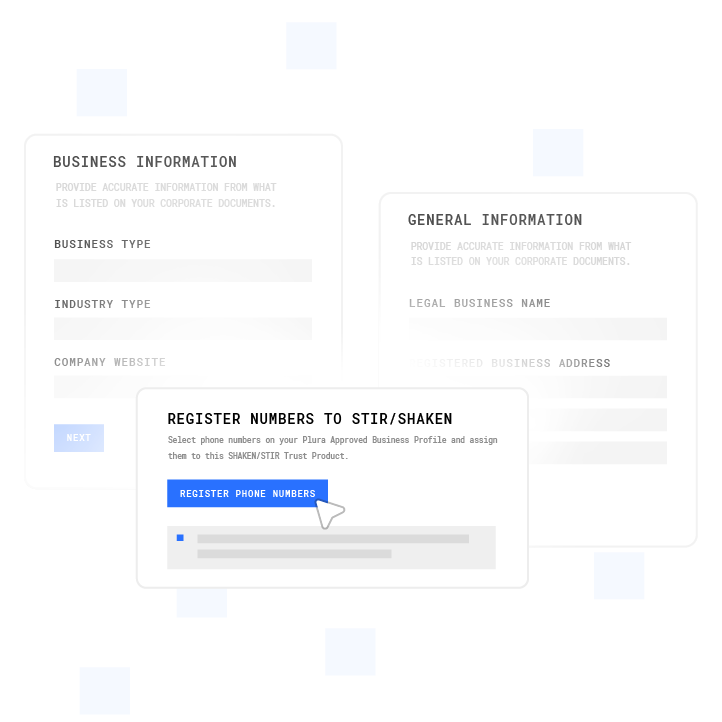
With compliance controls confirmed at origination, the next step is to inventory Tier-1 inquiry types. These are the high-volume, low-complexity contacts that consume the most agent time without requiring human judgment.
- Pull 90 days of contact-reason data from your CRM or ticketing system to establish a baseline.
- Rank those inquiry types by volume and average handle time to see which consume the most agent capacity.
- From that ranked list, identify the top five to ten categories where resolution requires no discretionary decision. These categories become deflection candidates.
- For each candidate, confirm that it has a defined resolution path that can be scripted into a workflow node, since ambiguous processes cannot be automated reliably.
- Flag any category that touches protected health information (PHI) or sensitive financial data for HIPAA-aligned handling before automation proceeds, because these categories require additional controls.
AI agents can deflect a substantial portion of incoming queries on average, which helps operations manage contact volume more efficiently. Mapping Tier-1 flows before deployment keeps deflection targets grounded in actual contact data instead of estimates.
Phase 2: Route Every Contact Using Full Stateful Conversation History
Routing decisions depend on knowing which inquiries can be deflected and which require a human, so routing naturally follows Tier-1 mapping. With deflection candidates defined, routing logic can direct each contact to the right handler, AI or human, based on full conversation history.
Intelligent routing breaks down when it runs on channel-siloed data. A customer who texted a support question at 9 a.m. and calls at noon should not be routed as a new contact. Zendesk’s CX Trends 2026 report found that 74% of customers find it frustrating to repeat their story to different agents across channels.3 That frustration drives repeat contacts, extends handle time, and reduces first-contact resolution (FCR).
Plura’s Stateful Conversation Database keys every interaction to a customer token (phone number, email, or ID) across AI voice, AI SMS, AI RCS, and AI webchat. Every channel inherits the full memory of every prior touchpoint, including pricing offers made, objections raised, qualification status, and sensitive-data redactions. Routing decisions at Phase 2 draw on that complete record instead of the most recent channel event.
Only 4% of organisations preserve full customer history when customers move between channels, which makes cross-channel memory a primary efficiency differentiator. The primary metrics that improve when moving from multichannel to omnichannel are FCR, AHT, and repeat contact rate, because eliminating context gaps at channel handoffs directly improves these measures.
Phase 3: Deliver Real-Time Agent Assist in a Unified Workspace
Real-time agent assist delivers next-best-action prompts, knowledge retrieval, and compliance guardrails to the agent during the live call, not after it ends. The assist layer reads from the same Stateful Conversation Database that powers routing in Phase 2, so suggested responses account for what was said on every prior touchpoint, not just the current call.
AI knowledge assist can improve first-call resolution rates. Many agents report that AI copilots help them feel more confident in complex calls.
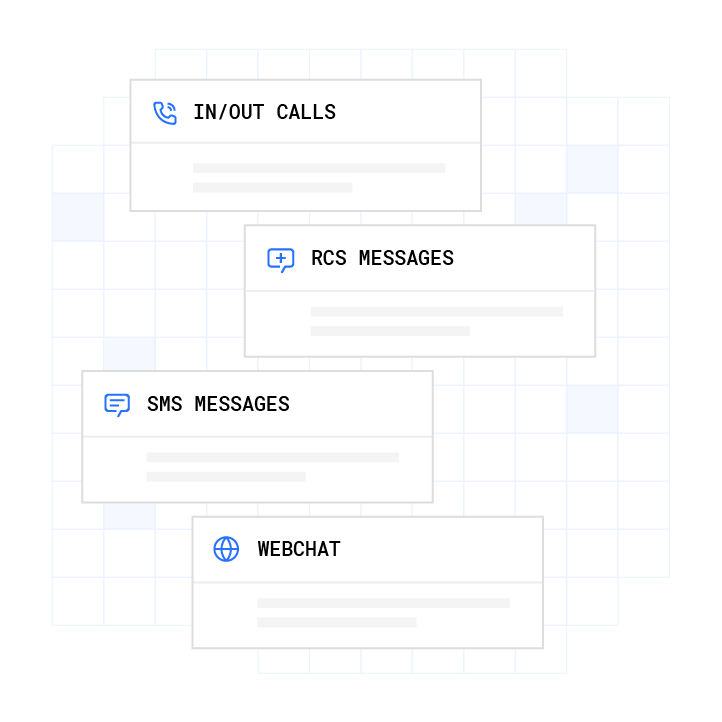
Plura’s Unified Inbox consolidates voice transcripts, SMS threads, RCS exchanges, and webchat sessions per customer in a single screen. Agents work from one workspace instead of switching between multiple point tools. Skan AI research found that contact center agents switch 8-15 times per call, which adds measurable overhead to every interaction. A unified workspace removes that switching cost.
Phase 4: Automate After-Call Work and Capture Immutable Consent
After-call work (ACW) is often the single largest recoverable time sink in a contact center. After-call work can take substantial time per call on average, and many calls require after-call work. At scale, that pattern creates thousands of agent-hours per month spent on tasks that AI can complete in seconds.
Plura automates ACW through three mechanisms that operate in sequence after every interaction.
- Auto-generated call summaries populate the Stateful Conversation Database with a structured record of what was discussed, what was resolved, and what remains open. This summary becomes the source of truth for the next steps.
- CRM fields update automatically via Plura’s integrations with HubSpot, Salesforce, Zoho, and 50+ other platforms, pulling data from that summary and eliminating manual data entry.
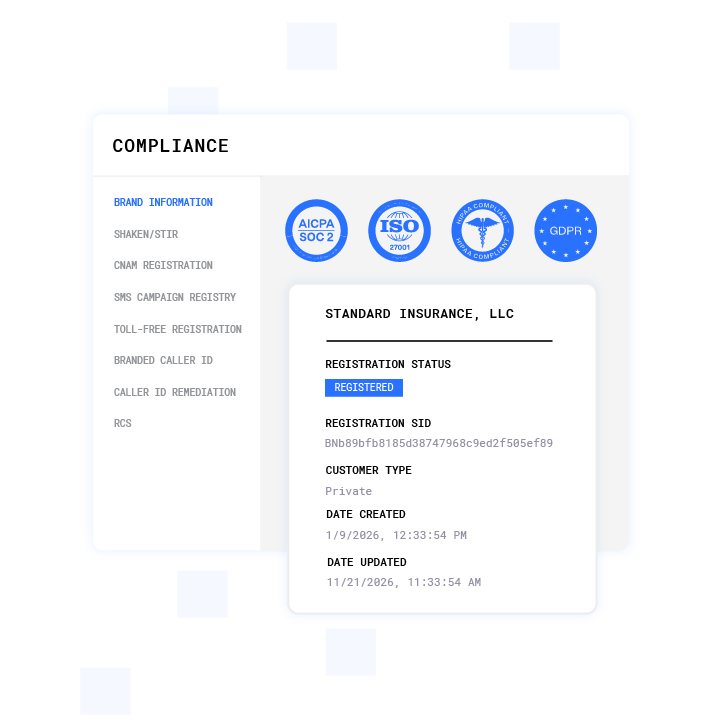
- Consent records are timestamped and written to an immutable ledger that is audit-ready on demand, capturing consent or opt-out signals detected in the summary to support TCPA documentation and DNC tracking without manual logging.
The 2020 Forrester TEI study of Amazon Connect does not report any time savings in seconds from AI-generated post-contact summaries. Across a 50,000-call monthly volume, recovering even a small amount of ACW per call can return roughly 833 agent-hours per month to productive work.
Phase 5: Align Predictive Workforce Management with a 99.9% Uptime SLA
Workforce management forecasting only works when the underlying platform is reliable. A predictive model that schedules agents against projected AI deflection rates loses value if the AI layer goes down during peak volume. Plura operates on a 99.9% uptime SLA with automatic failover and no single point of failure, which provides a stable foundation for staffing models that depend on AI deflection holding at forecasted rates.
Plura’s AI Predictive Dialer uses stateful conversion signals, including historical answer rates, prior negotiation outcomes, and prior offer-acceptance bands, to determine call sequencing. That same signal layer feeds workforce planning by highlighting which contact segments require human handling and which can be fully automated. This approach enables more precise staffing decisions than static IVR deflection models.
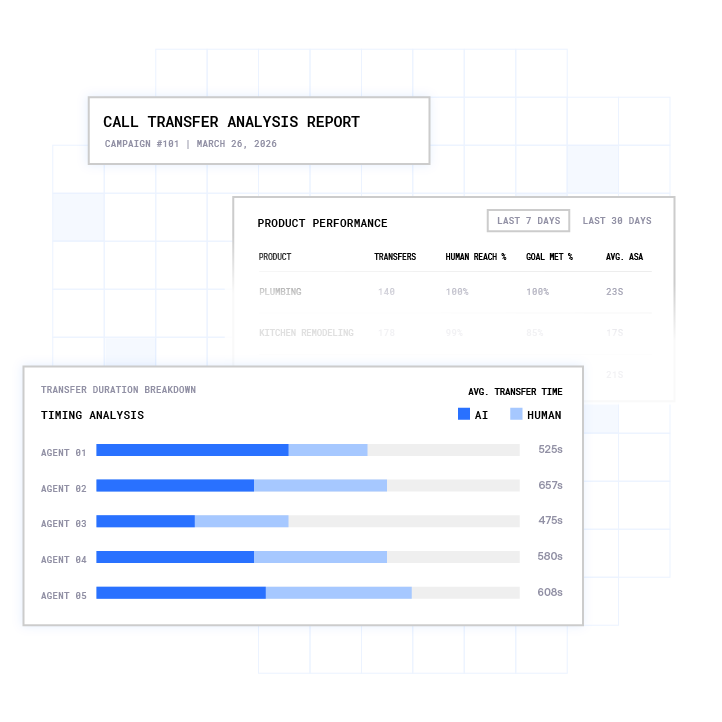
Voice AI can lift productive agent utilization by 4-9 points from a 65-80% pre-AI baseline through AI assist and WFM automation, while industry guidance from COPC treats 75-85% utilization as the healthy band. Tying workforce management to a platform with a documented uptime SLA turns that utilization target from a planning assumption into an operational commitment.
Phase 6: Run a Phased Pilot with Self-Service, Assist, and Summaries on U.S. Infrastructure
A phased pilot scopes the initial deployment to one well-bounded use case before expansion to additional queues or channels. A prove-and-expand rollout model often begins with an after-hours virtual agent, call summarization for a single queue, or automated QA for one team, followed by baseline KPI measurement before expansion.
The recommended pilot scope for most contact centers combines three capabilities at the same time.
- Self-service AI handling Tier-1 inquiries mapped in Phase 1, with safe escalation paths to human agents.
- Real-time agent assist active on all escalated calls, reading from the stateful database built in Phase 2.
- Automated ACW summaries and CRM updates running on 100% of interactions, both AI-handled and human-handled.
Regulated operators often require domestic infrastructure. Voice origination, model hosting, data storage, and call recording need to sit on U.S. infrastructure. The FCC’s Notice of Proposed Rulemaking (CG Docket No. 26-52) proposes restrictions on offshore handling of sensitive consumer data. Plura runs on 100% U.S. infrastructure by architecture. Voice originates on Plura’s own FCC-licensed audio bridging carrier. No third-party CPaaS sits in the path. Plura owns its telecom infrastructure and holds an FCC carrier license, while API-reseller platforms depend on Twilio and operate as a software layer without a carrier license.4
Pilot success gates before expansion to additional queues include the following.
- Self-service containment rate at or above the target established in Phase 1 baseline measurement.
- Average handle time on escalated calls reduced by a measurable margin versus pre-pilot baseline.
- After-call work time at or near zero for AI-summarized interactions.
- Zero consent-logging gaps in the immutable ledger.
Phase 7: Measure AI Success Including Regulatory-Exposure Cost
Standard contact center KPIs measure operational performance. A complete framework for AI automation also tracks regulatory-exposure cost, because a deployment that improves AHT while creating DNC or TCPA documentation gaps can destroy value.
| KPI | Pre-AI Baseline (Industry) | AI-Assisted Target | Source |
|---|---|---|---|
| Self-service containment rate | Varies by industry | Significant deflection | Industry reports |
| Average handle time (AHT) | Industry baseline | 27% reduction with real-time assist | Metrigy research |
| First-contact resolution (FCR) | Industry average | Improved with AI knowledge assist | Industry reports |
| After-call work time | Varies per call | Reduced via AI summaries | Industry reports |
| Regulatory-exposure cost | Untracked in most operations | $0 documented consent gaps; immutable ledger audit-ready on demand | Plura AI |
Run your numbers through Plura’s calculator to check your ROI in real time.
The Future of Contact Centers Under FCC Rules
The FCC’s Notice of Proposed Rulemaking (CG Docket No. 26-52) proposes capping offshore customer-service calls at 30% and limiting offshore handling of sensitive consumer data, including passwords, multi-factor authentication codes, Social Security numbers, banking data, and card data. Companion federal legislation, including the Keep Call Centers in America Act (S.2495) and the Foreign Robocall Elimination Act (S.2666), extends the regulatory perimeter. State laws in New York, New Jersey, Connecticut, Missouri, and Florida already restrict offshore handling of medical, financial, and consumer data.
The structural difference between an owned-carrier platform and an API-reseller platform shapes which operators are positioned for this regulatory environment and which are not.
| Capability | Owned-Carrier Platform (Plura AI) | API-Reseller Platforms |
|---|---|---|
| Caller ID issuance | Branded caller ID issued at the carrier level under Plura’s own FCC license. Caller ID is carrier-provisioned, not bolted on. | Caller ID inherited from third-party CPaaS (e.g., Twilio), not issued under the platform’s own carrier identity. |
| Real-time DNC/TCPA scrubbing | Enforced inside the platform before every outbound contact at origination, with an immutable consent ledger and audit-ready exports. | Often a downstream check or third-party add-on, not enforced at the carrier layer before dial. |
| Cross-channel stateful memory | Unified stateful memory across channels (see Phase 2). | Channel-siloed memory, where context typically does not carry between voice and messaging channels by default. |
| U.S. infrastructure | 100% U.S. infrastructure by architecture. Voice origination, model hosting, data storage, and call recording sit on domestic infrastructure, supported by FCC-licensed carrier status. | Infrastructure location varies by CPaaS provider, and foreign-infrastructure dependencies are possible without explicit contractual restriction. |
Compliance Infrastructure Note: Plura supports the compliance frameworks outlined in Phase 1, including SOC 2, HIPAA, and TCPA.1 Plura provides the infrastructure; compliance posture downstream of that is the customer’s responsibility. Customers should consult qualified counsel regarding their specific regulatory obligations under TCPA, HIPAA, the FCC NPRM, and applicable state laws.
Can AI Replace Call Center Agents While Respecting Onshoring Rules?
AI can handle a substantial portion of contact center volume autonomously, and the infrastructure it runs on determines whether that deployment aligns with current and proposed U.S. onshoring requirements. The FCC NPRM (CG Docket No. 26-52) and companion legislation focus on where calls are handled and where data is processed, not only on whether a human or an AI handles the interaction.
An AI platform with foreign infrastructure dependencies, or one that routes voice through a CPaaS with offshore data residency, may carry exposure similar to an offshore BPO under the proposed rules. Cisco’s 2025 Data Privacy Benchmark Study found that 90% of organizations believe local data storage is inherently safer.
Plura runs on 100% U.S. infrastructure by architecture. Voice originates on Plura’s own FCC-licensed audio bridging carrier. Model hosting, data storage, and call recording all sit on domestic infrastructure. For a 100-seat contact center, traditional operations cost $4 million to $7 million annually, while AI-powered communications using platforms like Plura cost $300,000 to $700,000. That cost reduction is achievable without offshore exposure when the AI platform owns its carrier stack and operates entirely on U.S. infrastructure.
Operators in regulated verticals, including healthcare, financial services, insurance, and legal, should consult qualified counsel regarding their specific obligations under the FCC NPRM, applicable state onshoring laws, and HIPAA’s requirements for electronic protected health information (45 CFR Parts 160 and 164).
Frequently Asked Questions
How long does a seven-phase AI automation rollout take from contract to full deployment?
Timeline depends on conversation complexity and the number of queues in scope. A simple inbound qualification flow with self-service, agent assist, and automated summaries typically goes live within two to four weeks from contract. A more complex deployment covering multiple queues, multi-step intake workflows, and full omnichannel routing usually runs closer to one to two months. The seven-phase model sequences value delivery so that self-service deflection and ACW automation are live before the full omnichannel stateful routing layer is complete. Plura’s deployment sequence includes a discovery audit, intake of existing scripts and call data, a workflow mockup reviewed with the customer, an engineering build, a pilot test on a subset of real calls, and full go-live. Every annual contract includes a 90-day opt-out window.
What prerequisites does a contact center need before starting Phase 1?
Three prerequisites matter most. First, 90 days of contact-reason data from your CRM or ticketing system, sufficient to rank Tier-1 inquiry types by volume and handle time. Second, documented resolution paths for the top inquiry categories, so workflow nodes can be built against defined logic rather than inferred from call recordings alone. Third, a confirmed infrastructure posture. Operators in regulated verticals need to verify that their current telephony and data-handling stack does not introduce offshore dependencies that conflict with the FCC NPRM or applicable state laws before layering AI automation on top of it. Plura’s onboarding process includes a discovery audit that surfaces these gaps before build begins.
What does AI automation cost compared to a traditional contact center operation?
The cost difference is substantial at scale. As noted earlier, a 100-seat operation can see annual costs drop from the $4–7 million range to $300,000–700,000. In a 15-agent illustrative scenario at default inputs from Plura’s ROI calculator, human agent cost runs $60,000 per month against a Plura agent cost of $14,400 per month, which produces $45,600 in 30-day savings and $547,200 over 12 months. The cost model shifts from per-seat pricing that scales with human headcount to per-conversation pricing that scales with AI volume. Plura prices per conversation, not per agent seat, so cost scales with actual usage rather than staffing levels. The full cost comparison for your specific operation is available at Plura’s ROI calculator.
What are the primary risks of a phased AI automation rollout, and how are they mitigated?
Four risk categories appear most frequently in phased rollouts. First, compliance documentation gaps. If consent logging is not immutable and audit-ready from day one of the pilot, the deployment can create regulatory exposure before it delivers efficiency gains. Plura’s consent ledger is active on every interaction from go-live, not added after the pilot phase.
Second, context loss at escalation. If the AI-to-human handoff does not transfer full conversation history, agents start escalated calls cold, which extends handle time and reduces FCR. Plura’s Unified Inbox delivers the complete cross-channel record to the receiving agent before the handoff completes.
Third, infrastructure dependency risk. API-reseller platforms introduce vendor hops that add latency and expand the compliance surface area. Multi-vendor voice AI stacks can introduce additional latency under real call conditions. Plura’s owned carrier stack removes most of those hops.
Fourth, scope creep. Expanding to additional queues before the pilot success gates are met dilutes measurement and makes it harder to attribute efficiency gains to specific automation layers. The Phase 6 success gates above are designed to prevent premature expansion.
How is success measured beyond standard contact center KPIs?
Standard KPIs, including containment rate, AHT, and FCR, measure operational performance. A complete measurement framework for AI automation adds two additional dimensions. Regulatory-exposure cost tracks whether the consent ledger is complete, whether DNC scrubbing is documented on every outbound contact, and whether audit-ready exports are available on demand. This dimension has a direct dollar value, because a single TCPA class-action settlement can exceed the annual cost of the entire AI platform.
Conversation intelligence tracks which scripts close, which objections recur, and which routing paths produce the highest FCR, feeding continuous workflow improvement. Plura’s business intelligence layer surfaces these patterns automatically across all four channels, which enables week-over-week tuning instead of quarterly reviews. The combination of operational KPIs, regulatory-exposure cost, and conversation intelligence creates a measurement framework that captures the full value of the automation investment.
Conclusion: Sequencing AI Automation for Compliance and ROI
Improving contact center efficiency with AI automation is a sequencing problem as much as a technology problem. Self-service deflection, real-time agent assist, and automated after-call work each deliver measurable gains independently. They deliver compounding gains when they share a single stateful database and run on carrier-owned infrastructure that enforces compliance controls at origination instead of bolting them on later.
The seven-phase rollout above sequences that build in the order that minimizes compliance gaps and maximizes measurable value at each stage. Carrier-layer scrubbing comes before any automation touches a customer. Stateful routing comes before agent assist goes live. Agent assist comes before ACW automation scales. A contained pilot comes before full deployment. The KPI framework in Phase 7 ensures that efficiency gains are measured against regulatory-exposure cost, not just operational metrics.
Plura’s owned FCC-licensed carrier stack, Stateful Conversation Database, and 100% U.S. infrastructure by architecture are three structural advantages that API-reseller platforms cannot easily replicate without rebuilding their underlying telecom layer. For contact center leaders in regulated verticals under the current FCC NPRM environment, these advantages function as prerequisites rather than optional features.
1 Plura AI maintains SOC 2, HIPAA, ISO, and GDPR posture as part of its platform infrastructure. References to compliance frameworks in this article describe Plura’s platform capabilities and do not constitute a guarantee that any customer using Plura will themselves be compliant with applicable laws or standards. Customers remain solely responsible for their own regulatory obligations, certifications, consent management, recordkeeping, and the claims they make to their own end users. Consult qualified legal counsel for guidance specific to your use case.
2 This article describes regulatory frameworks at a general level and does not constitute legal advice. Laws and regulations vary by jurisdiction, change over time, and apply differently depending on facts and circumstances. Readers should consult qualified legal counsel before making compliance decisions.
3 Performance figures, customer outcomes, and industry statistics referenced in this article are drawn from cited third-party sources or Plura customer case studies. Individual results vary based on implementation, use case, industry, audience, and execution. Past or aggregate performance is not a guarantee of future results.
4 References to third-party products, services, companies, or research are made for informational and comparative purposes only. Plura AI is not affiliated with, endorsed by, or sponsored by any third party named in this article unless explicitly stated. Trademarks and product names referenced remain the property of their respective owners.
This article is provided for informational purposes only and reflects Plura AI’s understanding at the time of publication. Product capabilities, integrations, and specifications are subject to change. For the most current information, visit plura.ai.
This article was produced with the assistance of AI tools and reviewed by Plura AI prior to publication.