

Written by: Matt Beucler, CEO, Plura AI | Last updated: August 28, 2026
Key Takeaways
- High-volume sales teams lose leads because traditional scoring takes days to qualify while conversion windows close in minutes.
- Conversational AI qualification responds in under 5 seconds, maintains stateful memory across voice and SMS, and qualifies, routes, and books in one motion.
- Carrier-level compliance enforcement (DNC, TCPA, STIR/SHAKEN) helps reduce regulatory risk at 500+ daily contacts.
- Teams replacing manual SDR queues with Plura AI see 3x ROI in 90 days, 47% pipeline growth, and 90% faster lead response without adding headcount.3
- Book a live demo with Plura AI to see how conversational qualification scales for your lead volume.
Why High-Volume Teams Still Lose Leads
The industry average first-contact time on an inbound lead is approximately 47 hours. That number reflects a structural gap between when a lead raises a hand and when a human rep actually reaches them. The gap compounds as daily lead volume passes 500 contacts.
The conversion math is unforgiving. Harvard Business Review research found that companies responding within five minutes are 100 times more likely to connect with a prospect than those waiting 30 minutes.4 A 60-second response lifts conversions by 391%. The MIT/InsideSales.com Lead Response Management study, analyzing over 15,000 leads, found that the odds of qualifying a lead drop 21 times when the callback moves from 5 minutes to 30 minutes.4
Outbound performance faces a similar drag. Eighty-eight percent of outbound effort goes unanswered, often because calls arrive labeled as spam before they reach the prospect. High-volume teams lose qualified opportunities not because their leads are weak, but because their qualification infrastructure cannot move fast enough or clean enough to capture them.
Conversational Qualification vs. Traditional Scoring
The infrastructure gap described above stems from how traditional qualification systems operate. Rule-based lead scoring assigns numeric point values to demographic attributes and behavioral events, such as job title, page visits, and form submissions, then triggers a handoff when a cumulative threshold is crossed. Forrester research found that fewer than 1% of inquiries or leads in lead-centric MQL processes convert to closed-won deals4, because the models focus on activity proxies instead of actual buyer intent.
At 500+ daily leads, the failure modes compound. Static point accumulation can take days to weeks per lead. Traditional scoring models lose 2 to 3% accuracy per month without active maintenance, which forces quarterly recalibration of dozens or even hundreds of rules. The system also cannot hold context across channels, so a lead who texted at 9 a.m. starts over when the call comes at noon.
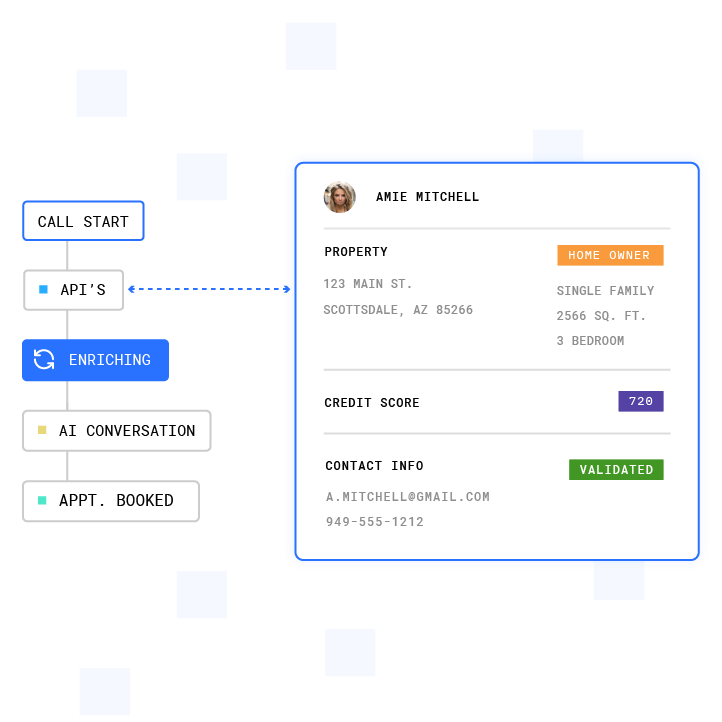
Plura AI replaces this with carrier-owned conversational AI agents that qualify, route, and book in one motion. The platform’s Stateful Conversation Database keys every interaction to a customer token such as phone number, email, or ID. Every channel then inherits the full memory of every prior touchpoint. No re-introduction. No lost context. No dropped handoff.
Coordinating Inbound and Outbound Qualification
High-volume teams run inbound and outbound motions at the same time, and most tools handle only one cleanly. Inbound qualification requires sub-5-second response at the moment of highest intent. Outbound qualification requires stateful prioritization, which means knowing which leads to call next based on prior conversation signals, not just a static score.
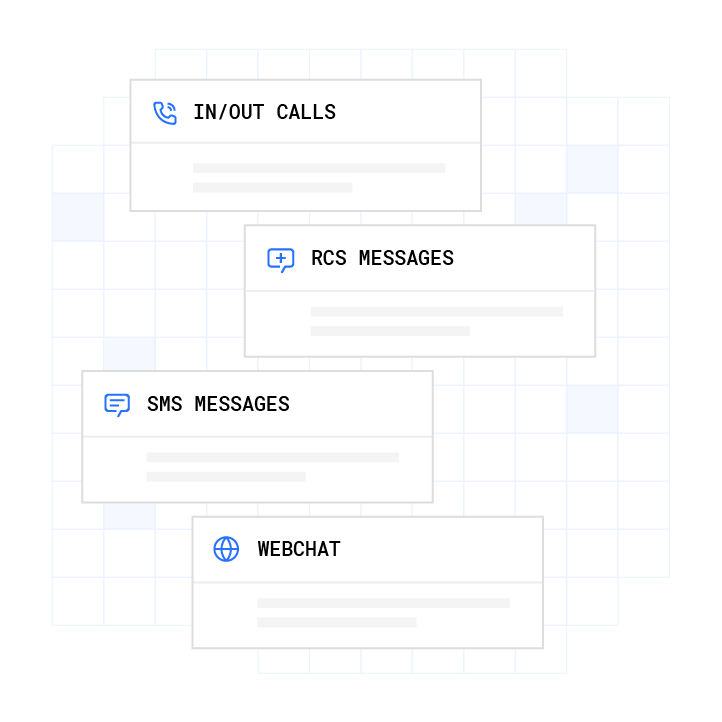
Plura’s AI voice agents handle inbound flows from greeting through qualification to live transfer. Outbound flows run through the AI Predictive Dialer, which prioritizes contacts using historical answer rates and prior negotiation outcomes. Both motions share the same Stateful Conversation Database, so an outbound call at noon already knows what was said in the inbound SMS thread at 9 a.m.
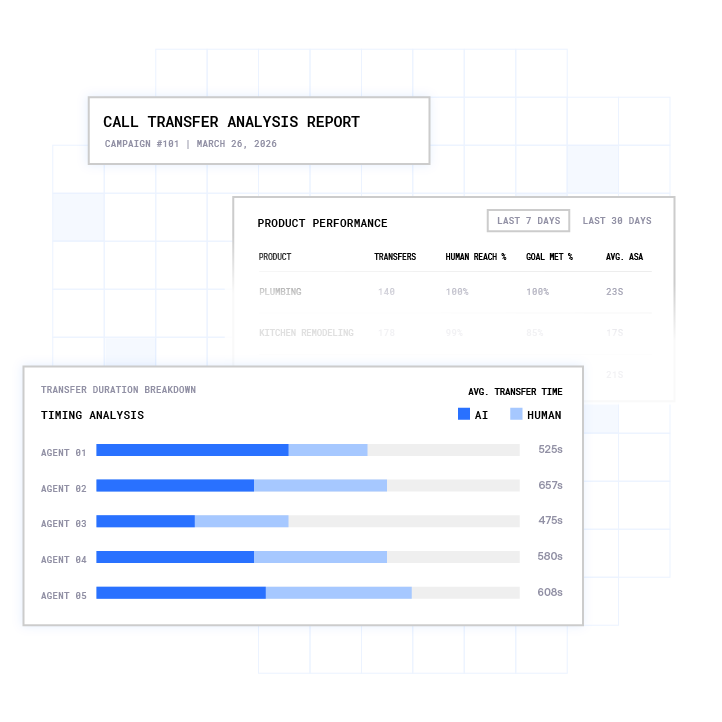
Three operator patterns show how this works in practice.
- Agency pattern. A performance-marketing agency running lead-gen campaigns for more than 15 clients deploys Plura’s AI SMS agents to contact every inbound lead within 60 seconds, qualify on budget and timeline, and route only sales-ready leads to human closers. Account managers shift from manual outreach to strategy. Agencies using this model report profit margins of 35 to 50%, compared with 15 to 25% with manual operations.
- Franchise pattern. A multi-unit home services operator with 12 locations uses Plura to answer 100% of calls within two rings with identical qualification logic across every location. This approach closes the 3 to 5x performance gap between best and worst units that affects many franchise networks.
- Contact center pattern. A regulated contact center processing 500+ daily inbound leads deploys Plura’s AI voice agents for first-touch qualification and warm transfer. The team replaces a manual SDR queue that averaged 47-hour response times with sub-5-second AI contact on every lead.
Why Rule-Based Scoring Breaks at Scale
Three structural problems make rule-based scoring unworkable at high volume.
First, static point accumulation cannot capture real-time intent. Legacy lead scoring assigns static point values to actions such as PDF downloads or pricing page visits, which often reflect student research or competitive benchmarking rather than active buyer intent. A lead asking about deployment timelines and compliance requirements in a live conversation signals something a form field never captures.
Second, scoring systems defer action. A mid-sized operation receiving 500 to 1,000 inbound contacts monthly requires 167 to 333 hours of manual qualification work if each lead takes 20 minutes to evaluate. That work occurs before any selling. Scoring accumulates points but does not make the call.
Third, headcount scales linearly with volume. Human SDRs handle 50 to 80 contacts per day, while AI platforms handle 500 to 2,000+ contacts per day with zero turnover and ramp times of 1 to 3 days. The math does not work at scale without a structural change to the qualification layer.
How Carrier-Level Spam Remediation and Compliance Operate
Most AI voice tools are API resellers built on top of third-party CPaaS providers. These tools cannot issue branded caller ID under their own identity and cannot enforce compliance before the call leaves the network. Spam remediation often appears as a bolt-on feature after the fact, if it exists at all.
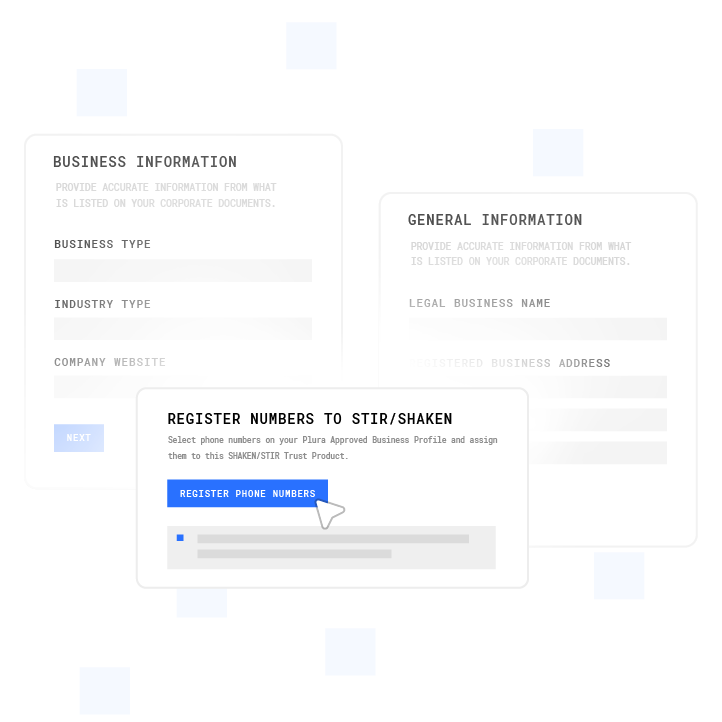
Plura operates as its own FCC-licensed audio bridging carrier. Branded caller ID is issued at the carrier level, not through a reseller. STIR/SHAKEN caller ID authentication runs on every outbound call, and the destination carrier uses it to help verify legitimate origination. Real-time DNC scrubbing checks every number against federal and state registries before dial. TCPA consent records are timestamped and stored immutably. Quiet-hours rules apply automatically through time-zone detection.
The FCC issued a declaratory ruling in February 2024 confirming that AI-generated voices qualify as “artificial or prerecorded voices” under the TCPA, which applies the same consent framework to AI voice agents as to traditional robocalls.2 The FCC’s one-to-one consent rule, effective January 2025, requires consent to be specific to a single identified seller rather than a generic “marketing partners” list.2 Operators should consult qualified counsel on their specific obligations under these frameworks.
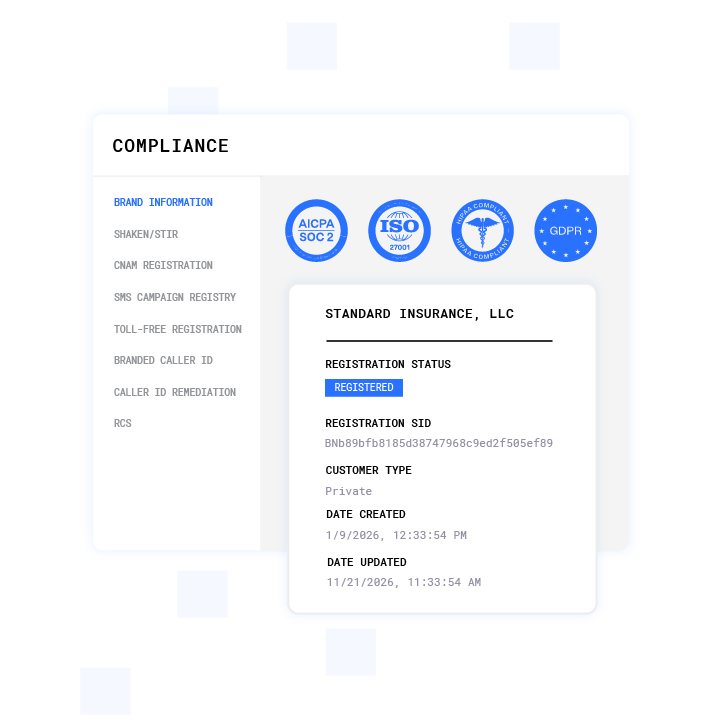
Plura supports compliance with SOC 2, HIPAA, ISO certification, GDPR, SHAKEN/STIR caller ID verification, TCPA frameworks, and DNC requirements.1 Customers remain responsible for their own regulatory obligations and certifications.
Traditional Scoring vs. Plura Conversational Qualification
| Dimension | Traditional Rule-Based Scoring | Plura AI Conversational Qualification | Source |
|---|---|---|---|
| Qualification Speed | Days to weeks for leads to accumulate sufficient points across multiple sessions | Under 5 seconds to first AI-powered contact | Clarm; Plura AI |
| Carrier Ownership | No carrier ownership, relies on third-party CPaaS for voice origination and caller ID | FCC-licensed audio bridging carrier, branded caller ID issued at the carrier level | Plura AI |
| Cross-Channel Memory | Static point accumulation from form data, no shared memory across voice and SMS | Stateful AI architecture that remembers previous interactions, preferences, and outcomes across voice, SMS, RCS, and webchat | Clarm; Plura AI |
| Real-Time Compliance Enforcement | Compliance bolted on after the fact, rule maintenance creates engineering debt at volume | Real-time DNC scrubbing, TCPA consent logging, and STIR/SHAKEN authentication enforced at the carrier level before every dial | Clarm; Plura AI |
Best Practices for AI-Powered Qualification
Four operational standards separate qualification systems that perform at volume from those that stall.
- Sub-5-second response on every lead. Earlier research shows that the conversion window closes rapidly after initial contact. Any qualification system that cannot respond within that window structurally loses pipeline before a human rep ever sees the lead. Speed sets the foundation for every other improvement.
- Stateful memory across voice and SMS. Seventy percent of customer service interactions require multiple exchanges to reach resolution. A qualification system that resets context on every channel switch forces leads to repeat themselves and breaks the continuity that drives conversion, which erodes the speed advantage created at first touch.
- Carrier-level compliance enforcement. Compliance enforced inside the platform before dial, not as a downstream audit layer, provides a scalable model at 500+ daily leads while helping reduce regulatory exposure. This approach aligns qualification performance with risk controls.
- Qualify, route, and book in one motion. Systems that qualify but defer routing, or route but defer booking, create handoff gaps where leads go cold. The entire motion, qualification, routing, and calendar booking, should complete inside a single conversation so momentum never drops.
Implementation-Readiness Checklist for Plura
Before deploying conversational AI qualification at volume, high-volume teams should confirm the following items.
- Documented Ideal Customer Profile (ICP) with explicit qualification criteria the AI can evaluate in conversation
- Existing call recordings, SOPs, and scripts available for conversation workflow design
- CRM integration path confirmed so qualified leads route directly into the existing pipeline without manual data entry (see Plura’s integrations directory for supported CRMs)
- Consent collection process reviewed by qualified counsel against current TCPA and FCC one-to-one consent requirements
- DNC suppression list current and accessible for real-time scrubbing before first dial
- Calendar system connected for in-conversation booking without human handoff
- Escalation path defined for conversations that exceed the AI’s workflow scope
Plura’s onboarding sequence covers discovery, script intake, overnight workflow build, pilot test on a live call subset, and full go-live. Simple inbound qualification flows typically go live within days. Annual contracts include a 90-day opt-out window.
Book a live demo with Plura to walk through your specific lead volume and qualification criteria.
Common Pitfalls When Scaling Lead Qualification
Three failure patterns repeat across high-volume deployments that stall after launch.
Over-reliance on scoring without conversation. AI-powered lead scoring can improve qualification accuracy compared with manual or rule-based systems, but scoring alone does not make the call. Teams that add a scoring layer without adding a conversational response layer still lose leads during the critical early contact window.
Ignoring carrier compliance until after a violation. TCPA statutory damages are $500 per violation and up to $1,500 per willful or knowing violation, with each call or text counted separately and no aggregate cap. At 500+ daily contacts, a single bad suppression list creates class-action exposure. Compliance enforced at the carrier level before dial becomes a practical necessity at this volume.
Stateless channel handoffs. Preserving context across a channel switch requires a shared conversation identity and a channel-agnostic state store that both chat and voice systems read from and write to in real time. Teams that deploy separate voice and SMS tools with no shared memory force leads to re-explain themselves on every channel switch and often lose them in the process.
Frequently Asked Questions
What makes automated lead qualification software suitable for teams handling 500+ daily leads?
At 500+ daily leads, the qualification bottleneck is not lead quality, it is response infrastructure. A system suitable for this volume must respond in under 5 seconds on every lead simultaneously, maintain stateful memory so context does not reset between channels, enforce compliance before each contact rather than as a post-hoc audit, and qualify, route, and book without requiring a human in the loop for first-touch triage. Rule-based scoring systems accumulate points too slowly and cannot hold cross-channel context. Conversational AI agents that operate on a carrier-owned stack, like Plura, handle all four requirements in one motion.
Why does rule-based lead scoring fail at high volume?
Rule-based scoring assigns points from static attributes and behavioral events, then waits for a threshold to trigger a handoff. At high volume, three problems compound. Leads accumulate points over days while the conversion window closes in minutes. Rules require ongoing recalibration as buyer behavior shifts. The system cannot hold context across voice and SMS, so every channel interaction starts from scratch. The result is a qualification layer that is always behind the lead’s actual intent and always behind the clock.
How does stateful cross-channel memory work in practice?
Stateful cross-channel memory means every interaction, including voice calls, SMS threads, and webchat sessions, is keyed to a single customer token such as phone number, email, or ID and written to a shared database that every channel reads from. When a lead texts at 9 a.m. about budget and timeline, and the AI voice agent calls at noon, the call opens with that context already loaded. No re-introduction. No repeated questions. The conversation continues where it left off, regardless of which channel it moves to. Plura’s Stateful Conversation Database operates this way across voice, SMS, RCS, and webchat by default.
What is carrier-level compliance enforcement, and why does it matter for high-volume outbound?
Carrier-level compliance enforcement means DNC scrubbing, TCPA consent verification, STIR/SHAKEN authentication, and quiet-hours rules apply inside the platform before a call or text leaves the network, not as a downstream audit layer. Most AI voice tools are API resellers that rent their carrier infrastructure from third-party CPaaS providers, so they cannot enforce compliance before the call leaves the network. Plura operates as its own FCC-licensed audio bridging carrier, which means these controls run before every dial. At 500+ daily contacts, compliance enforced after the fact does not provide a viable posture. Operators should consult qualified counsel on their specific obligations under TCPA, DNC, and applicable state frameworks.
How does conversational AI qualification reduce headcount requirements for high-volume teams?
Human SDRs handle 50 to 80 contacts per day with a 3-month ramp period and 35 to 45% annual turnover. AI qualification platforms handle 500 to 2,000+ contacts per day with same-day deployment and zero turnover cost. The structural difference is talk utilization. Human agents in a contact center typically reach 40% talk utilization due to administrative overhead, while AI agents run at 100% utilization. Plura’s default ROI calculator scenario shows a 15-agent operation at $60,000 per month replaced by 6 Plura agents at $14,400 per month, which creates a $45,600 monthly saving in the first 30 days. Teams do not eliminate human roles; they redirect them from first-touch triage to high-value closing conversations.
What should high-volume teams look for when evaluating automated lead qualification software?
Five criteria separate platforms that perform at volume from those that stall. First, response speed: the system must contact leads in under 5 seconds, not minutes. Second, carrier ownership: branded caller ID and compliance enforcement at the carrier level require the vendor to own its own FCC-licensed infrastructure, not rent from a CPaaS reseller. Third, stateful cross-channel memory: voice and SMS must share a single conversation database so context does not reset between channels. Fourth, compliance architecture: DNC scrubbing, TCPA consent logging, and quiet-hours enforcement must run before every contact, not as a reporting layer after the fact. Fifth, booking capability: qualification that ends with a handoff note rather than a booked calendar event creates a gap where leads go cold.
Conclusion
High-volume sales teams lose qualified leads not because their offers are wrong, but because their qualification infrastructure cannot move fast enough, hold context across channels, or enforce compliance at the carrier level. Rule-based scoring accumulates points while the conversion window closes. Stateless channel handoffs reset context and break continuity. API-reseller AI tools cannot issue branded caller ID or enforce compliance before the call leaves the network.
Plura AI addresses all three failure modes from a single carrier-owned platform. Its AI voice agents and AI SMS agents respond in under 5 seconds, share a Stateful Conversation Database across every channel, and support DNC controls, TCPA consent logging, and STIR/SHAKEN authentication at the carrier level before every contact. Qualification, routing, and booking complete in one motion, without adding headcount.
The platform delivers 3x average ROI in 90 days, 47% average pipeline growth, and 90% faster lead-response time across high-volume deployments.3 Annual contracts include a 90-day opt-out window.
Book a live demo with Plura to see the qualification motion on your lead volume and channel mix.
Run your numbers through Plura’s ROI calculator to check your cost savings in real time.
Compare plans and rates side by side at plura.ai/pricing.
1 Plura AI maintains SOC 2, HIPAA, ISO, and GDPR posture as part of its platform infrastructure. References to compliance frameworks in this article describe Plura’s platform capabilities and do not constitute a guarantee that any customer using Plura will themselves be compliant with applicable laws or standards. Customers remain solely responsible for their own regulatory obligations, certifications, consent management, recordkeeping, and the claims they make to their own end users. Consult qualified legal counsel for guidance specific to your use case.
2 This article describes regulatory frameworks at a general level and does not constitute legal advice. Laws and regulations vary by jurisdiction, change over time, and apply differently depending on facts and circumstances. Readers should consult qualified legal counsel before making compliance decisions.
3 Performance figures, customer outcomes, and industry statistics referenced in this article are drawn from cited third-party sources or Plura customer case studies. Individual results vary based on implementation, use case, industry, audience, and execution. Past or aggregate performance is not a guarantee of future results.
4 References to third-party products, services, companies, or research are made for informational and comparative purposes only. Plura AI is not affiliated with, endorsed by, or sponsored by any third party named in this article unless explicitly stated. Trademarks and product names referenced remain the property of their respective owners.
This article is provided for informational purposes only and reflects Plura AI’s understanding at the time of publication. Product capabilities, integrations, and specifications are subject to change. For the most current information, visit plura.ai.
This article was produced with the assistance of AI tools and reviewed by Plura AI prior to publication.