

Written by: Matt Beucler, CEO, Plura AI | Last updated: August 28, 2026
Key Takeaways
- The Data-to-Hypothesis-to-Test loop converts GA4 exports, session recordings, and customer transcripts into scored, prioritized conversion experiments.
- Clustering friction patterns from multiple data sources produces defensible problem statements that anchor every hypothesis.
- ICE scoring (Impact, Confidence, Ease) ranks 20 hypotheses per cycle so teams allocate sprint capacity to the highest-value tests.
- Guardrail-compliant variations pass through compliance checks before deployment, so brand voice and regulatory constraints stay intact.
- Plura AI closes the full loop by connecting analysis to carrier-owned voice, AI SMS, and automated outreach; see the workflow in action.
Step 1: Connect GA4 and Session Data Into One View
The loop starts with a unified data layer that combines analytics, behavior, and conversations. Export GA4 funnel reports that show drop-off by step, device type, traffic source, and new versus returning visitor. Add session recordings from Microsoft Clarity or an equivalent tool, filtered to sessions tied to a clear problem such as a high-drop-off funnel step, a low-completion form, or a page with an unusually high exit rate.4
Behavioral signals worth tracking include rage clicks, dead clicks, hesitation before key actions, unexpected navigation, form field refills, and abandonment at a specific moment.4 A pattern becomes actionable when the same behavior appears in more than a third of filtered recordings. Add customer transcripts from voice calls and chat sessions to the same layer so you capture the language customers use when they object, stall, or disengage.
The recommended data-flow sequence is simple. Collect analytics and session recordings, run an AI audit alongside heatmaps to identify and rank opportunities, apply a scoring framework, then generate scored hypotheses for testing. Teams that skip the unification step end up with hypotheses that sound plausible but do not reflect the actual funnel.
Step 2: Turn Objections Into Clear Problem Clusters
Raw data does not produce experiments; clustered problem statements do. Feed the unified data layer into AI with a prompt that instructs it to identify friction themes appearing in at least two independent sources before generating any hypothesis. Requiring cross-source confirmation before hypothesis generation filters out noise and keeps the backlog grounded in observable patterns.
Group recurring objections from transcripts and recordings into discrete problem statements, then validate each cluster against GA4 funnel data. A cluster that appears in transcripts but shows no corresponding drop-off in GA4 is a lower-priority signal. A cluster that appears in transcripts, shows rage clicks in session recordings, and maps to a measurable funnel step becomes a high-priority problem statement ready for hypothesis generation.
A well-formed CRO hypothesis follows the structure: “If we change X, then Y, because Z.” The “because Z” clause must be anchored in observable behavioral patterns from heatmaps, session recordings, or GA4 data. The clustering step supplies that evidence and makes the “because Z” clause defensible.
Step 3: Generate and Score 20 Revenue-Focused Hypotheses
Once you have clustered problem statements, prompt AI to generate 20 hypotheses scored on confidence and revenue impact. Use the ICE framework (Impact, Confidence, Ease) as the scoring structure. ICE scores each hypothesis on three dimensions from 1 to 10 and ranks them by averaging the scores. Impact measures how much a winning test would move a key metric. Confidence measures the strength of supporting evidence. Ease measures implementation speed and cost.
The scoring output directs sprint allocation and keeps teams focused on the highest-value work. AI-assisted creative testing delivered 3.2x higher win rates for identifying 15% or greater improvements3, with 5x faster testing velocity compared to traditional methods, across 347 e-commerce stores analyzed in 2026. That velocity compounds over time; one client in the same analysis ran 47 meaningful tests in 2026 versus 8 the prior year, generating $340K in incremental revenue.
AI-generated hypotheses can produce higher hit rates than human-generated hypotheses on the same backlogs. Mature experimentation programs reach 50%+ win rates (positive significant results), with typical win rates of 20–40%3. Run your numbers through Plura’s calculator to check your ROI in real time.
Step 4: Build Variations Inside Brand and Compliance Guardrails
Hypothesis scoring does not grant permission to ship everything the AI suggests. Every variation must pass through a guardrail layer before it enters a test. The AI brief for generating copy variants must include the primary objection pulled from exit surveys or support tickets, three adjectives defining brand voice plus one sentence describing what the brand never sounds like, a list of banned phrases, and five to ten real customer verbatims.
Compliance constraints belong in the same brief because any variation that conflicts with regulatory requirements cannot move forward, regardless of its predicted impact. For operators running outreach experiments across voice, AI SMS, or AI Predictive Dialer channels, the variation layer must enforce rules aligned with TCPA compliance, DNC compliance, SHAKEN/STIR caller ID verification, SOC 2, HIPAA, ISO certification, and GDPR where applicable.1,2 Plura supports compliance by enforcing these constraints at the platform level on every outbound contact, with real-time DNC scrubbing, immutable consent logging, and automated quiet-hours enforcement by time zone.1 Customers remain responsible for their own regulatory obligations; Plura provides infrastructure that supports that posture.
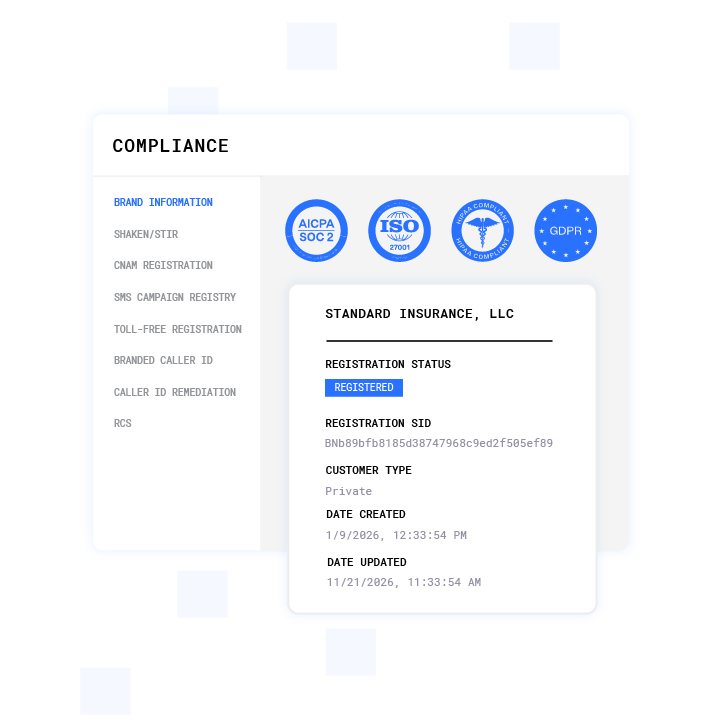
A defense-in-depth approach combining input validation, output filtering, and system-level controls is recommended for LLM applications processing sensitive inputs such as customer transcripts. Input guardrails should include PII detection to redact personal information before processing. Output guardrails should enforce format validation so AI-generated test variations match expected experiment schemas. High-risk variations involving financial claims or legal language require human-in-the-loop approval before they reach any experiment.
Step 5: Run Experiments and Feed Results Back Into Conversations
Deploy the top-scored, guardrail-cleared variations and monitor for statistical significance before drawing conclusions. ConversionTeam’s audit of 2,288 A/B tests3 found a statistically significant win rate of 19.1% per test, aligning with published platform benchmarks including Optimizely at 12% across 127,000 experiments. CXL and Convert found that 20% of 28,304 experiments reached 95% statistical significance (not all of which were winners)3. Copy and messaging tests achieved a 60.0% raw win rate in the same dataset, the highest of any test category.3
Feed results back into the stateful conversation database so every interaction gets smarter. Plura’s conversation intelligence layer analyzes every interaction across voice, SMS, and webchat to surface patterns such as which scripts close, which objections recur, and which conversion paths win. A legal marketing firm using AI Conversation Intelligence found that 23% of engaged leads lacked sufficient case value3, adjusted qualification criteria, and reduced wasted attorney time by 31%. That kind of post-experiment learning turns a one-time test into a compounding backlog.
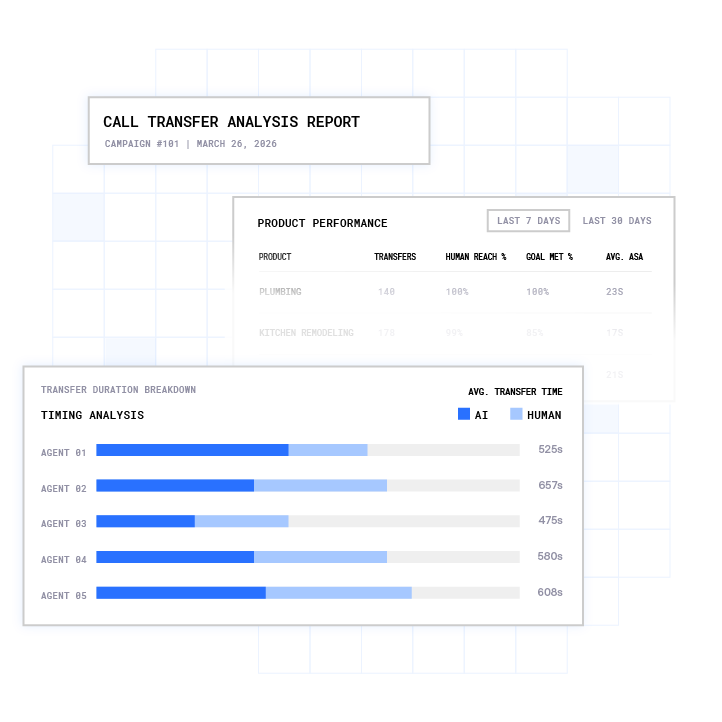
Teams using AI-integrated session replay workflows report conversion lifts between 20% and 41%3, according to Ahrefs Behavioral Benchmarks 2026. The lift comes from the loop, not from any single test.
Step 6: Build a Weekly AI CRO Agent Loop
A one-time workflow does not qualify as a CRO program. The compounding advantage comes from automating the loop so new behavioral data continuously generates, scores, and executes experiments without manual re-initiation each cycle.
The weekly loop structure runs as follows:
- Pull updated GA4 funnel exports and session recording annotations from the prior week.
- Run AI clustering on new transcript data to identify emerging objection patterns.
- Score new hypotheses against the existing backlog using ICE or AXR frameworks.
- Promote top-scored hypotheses through the guardrail layer and into active tests.
- Archive completed test results to the stateful conversation database for downstream outreach personalization.
- Trigger automated outreach via AI voice agent, AI SMS, or AI Predictive Dialer using the winning variation as the live script.
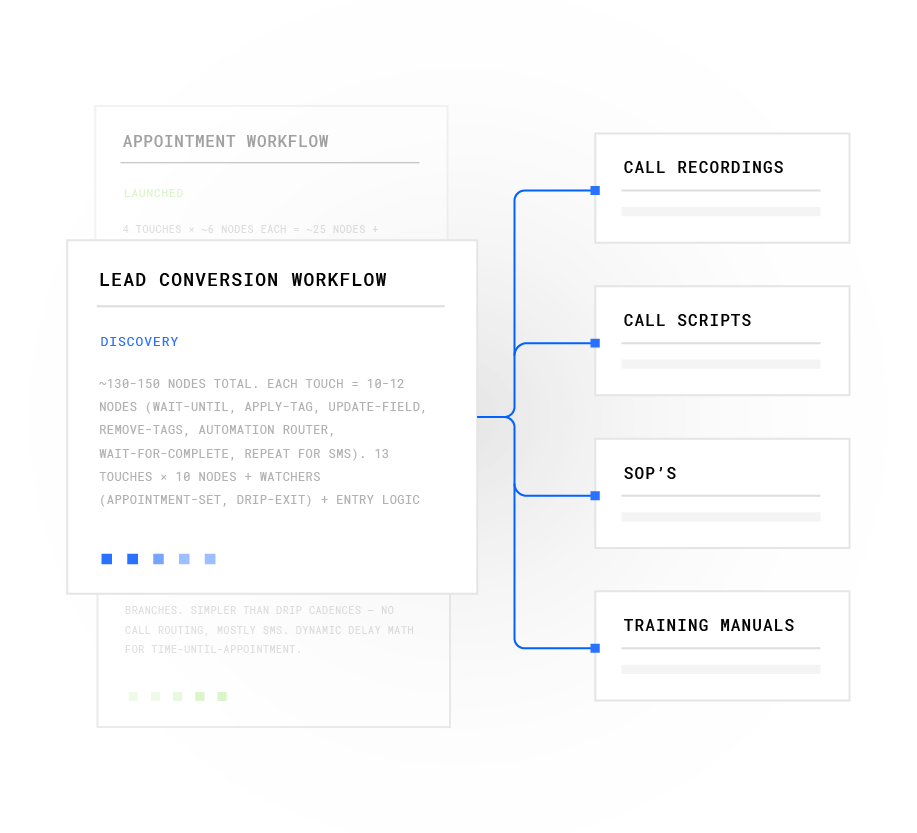
Plura’s managed workflows connect the analysis layer to the outreach layer on a single no-code canvas. Because Plura owns its FCC-licensed carrier stack, the winning variation does not stop at a dashboard. It deploys into live conversations with branded caller ID, SHAKEN/STIR authentication, and real-time DNC scrubbing on every contact. Marketing directors who switch to AI automation typically reallocate 20% to 30% of their team capacity3 from manual outreach to strategy and creative work.
Compare Plura’s plans and rates to find the right tier for your experiment volume.
ICE Opportunity-Scoring Example
The following table shows how ICE scoring ranks five common CRO hypotheses. It illustrates how the framework prioritizes experiments that balance high impact with strong supporting evidence and fast implementation.
| Hypothesis | Impact (1-10) | Confidence (1-10) | Ease (1-10) | ICE Score |
|---|---|---|---|---|
| Add social proof above primary CTA on landing page | 8 | 9 | 9 | 8.7 |
| Rewrite hero headline using top objection language from transcripts | 8 | 8 | 7 | 7.7 |
| Reduce form fields on lead capture page from 7 to 3 | 7 | 8 | 8 | 7.7 |
| Deploy AI webchat on high-exit pages to intercept abandonment | 9 | 7 | 6 | 7.3 |
| Add trust signals (certifications, review count) to pricing page | 6 | 7 | 8 | 7.0 |
ICE scores are calculated as (Impact + Confidence + Ease) / 3. Scores above 7.0 represent the highest-priority experiments for the next sprint. ICE is best suited for fast-moving teams shipping weekly tests. Re-score remaining hypotheses after each test cycle as new data updates confidence and impact estimates.
Three Prompt Templates for Common AI CRO Tasks
Prompt: Use AI to identify optimization opportunities
“You are a CRO analyst. I am providing you with: (1) GA4 funnel data showing drop-off by step, (2) session recording annotations flagging rage clicks and abandonment points, and (3) customer call transcripts from the past 30 days. Identify the top five friction themes that appear in at least two of these three sources. For each theme, write a hypothesis in the format: ‘If we change X, then Y, because Z.’ Score each hypothesis on Impact (1-10), Confidence (1-10), and Ease (1-10) based on the evidence provided.”
Prompt: Use AI to write A/B test variation briefs
“You are a conversion rate specialist. Using the session recording annotations and exit survey responses I am providing, generate 10 A/B test variation briefs for [specific page URL]. Each brief must include: the element being changed, the variation copy or design direction, the primary success metric, the audience segment, and a list of brand guardrails the variation must not violate. Do not predict which variation will win. Flag every assumption you made about the page that could be wrong.”
Prompt: Use AI to formulate a clear optimization problem
“I am giving you GA4 funnel data for [funnel name]. The current conversion rate at step [X] is [Y]%. My target is [Z]%. Using the Conversion Barrier Framework, evaluate this step for Clarity, Relevance, Value, Friction, Anxiety, and Distraction. Identify the single highest-leverage barrier. Write one hypothesis addressing that barrier using the format: ‘Because we observed [evidence], we believe [change] will cause [outcome] because [reasoning].’ Score the hypothesis on the ICE framework and recommend the minimum traffic volume needed to reach statistical significance in under 14 days.”
Frequently Asked Questions
How long does it take to see results from an AI CRO workflow?
Timeline depends on traffic volume and test complexity, but a structured testing program typically delivers measurable revenue impact within 60 to 90 days when the data layer is unified before the first hypothesis is generated. Low-traffic sites take longer to reach statistical significance on individual tests, which is why scoring frameworks like ICE prioritize high-traffic, high-value pages first. The compounding effect of a weekly loop, where each test result informs the next round of hypotheses, accelerates results over time. Operators running 30 or more tests per quarter see the most consistent lift because the backlog stays populated with evidence-backed hypotheses rather than gut-feel ideas.
What data sources are required before starting an AI CRO workflow?
The minimum viable data set is GA4 funnel exports, session recordings filtered to high-drop-off steps, and at least 30 days of customer transcripts from voice calls or chat sessions. Heatmaps and exit surveys strengthen the clustering step but are not required to start. The critical requirement is that behavioral evidence and quantitative funnel data come from the same time period so patterns in recordings can be validated against actual drop-off rates. Operators without session recordings can start with GA4 and transcripts, then add recordings once the workflow is running. Plura’s conversation intelligence layer automatically generates transcript data from every voice, SMS, and webchat interaction, so operators using Plura build the transcript corpus as a byproduct of normal operations rather than as a separate data collection effort.
What compliance constraints apply when using AI to generate outreach variations from customer transcripts?
Customer transcripts contain personally identifiable information and, in regulated verticals, protected health information. Input guardrails must redact PII before any transcript reaches an AI model used for hypothesis or variation generation. Output guardrails must scan generated variations for PII leakage and policy violations before any variation enters an experiment or automated outreach sequence. Operators in industries covered by HIPAA, TCPA, DNC, SOC 2, or GDPR frameworks should consult qualified counsel on their specific obligations.2 Plura supports compliance by enforcing real-time DNC scrubbing, immutable consent logging, SHAKEN/STIR caller ID verification, and automated quiet-hours rules on every outbound contact. Customers remain responsible for their own regulatory posture and the claims they make to their end users.
How does the stateful conversation database change the CRO loop?
Most CRO programs stop at the website and treat a winning variation as a static page update. Plura’s stateful conversation database extends the loop into every downstream channel. When a hypothesis about objection handling wins in an A/B test, the winning script becomes available to the AI voice agent, AI SMS, and AI Predictive Dialer in the same session context. A lead who engaged with a specific message on the website receives a consistent follow-up on the phone or by text, with the AI already knowing what was said.
That cross-channel continuity separates a CRO program that moves website metrics from one that moves revenue. The database also accumulates conversation data that feeds the next round of hypothesis generation, so the loop compounds rather than resetting after each test cycle.
What is the difference between ICE, PIE, and RICE scoring for CRO hypothesis prioritization?
ICE (Impact, Confidence, Ease) scores each hypothesis on three dimensions from 1 to 10 and ranks by the average. It suits fast-moving teams shipping weekly tests across a single funnel or product surface. PIE (Potential, Importance, Ease) works better when test ideas span many pages because it forces teams to weigh page-level traffic volume as a factor. RICE (Reach, Impact, Confidence, Effort) uses real traffic figures from GA4 rather than 1-to-10 estimates, which makes rankings more defensible in stakeholder discussions but slower to calculate.
RICE systematically ranks segment-specific tests lower than sitewide changes because of smaller Reach values, so teams managing both sitewide and retention experiments often maintain separate backlogs. For most contact-center and marketing-director use cases where the primary funnel is defined and traffic is concentrated on a small number of high-value pages, ICE is the fastest framework to implement and iterate.
Conclusion: Turn CRO Insights Into Live Conversations
The Data to Problem to Hypothesis to Test loop is not a new concept, but AI now allows teams to run it at scale, continuously, without adding headcount. Feeding GA4, session recordings, and customer transcripts into AI produces a scored, prioritized backlog of experiments grounded in observable behavioral patterns. Guardrail-compliant variations deploy into live tests, results feed back into the stateful database, and automated outreach executes the winning script across voice, SMS, and webchat on carrier-owned infrastructure that keeps every channel in sync.
Plura closes the full loop because it owns the carrier stack, the stateful conversation database, and the outreach channels that most CRO programs treat as separate systems. The analysis layer and the execution layer run on the same platform, so a winning hypothesis does not stop at a dashboard. It becomes a live conversation.
Book a live demo with Plura to see the full Data to Problem to Hypothesis to Test loop in action.
1 Plura AI maintains SOC 2, HIPAA, ISO, and GDPR posture as part of its platform infrastructure. References to compliance frameworks in this article describe Plura’s platform capabilities and do not constitute a guarantee that any customer using Plura will themselves be compliant with applicable laws or standards. Customers remain solely responsible for their own regulatory obligations, certifications, consent management, recordkeeping, and the claims they make to their own end users. Consult qualified legal counsel for guidance specific to your use case.
2 This article describes regulatory frameworks at a general level and does not constitute legal advice. Laws and regulations vary by jurisdiction, change over time, and apply differently depending on facts and circumstances. Readers should consult qualified legal counsel before making compliance decisions.
3 Performance figures, customer outcomes, and industry statistics referenced in this article are drawn from cited third-party sources or Plura customer case studies. Individual results vary based on implementation, use case, industry, audience, and execution. Past or aggregate performance is not a guarantee of future results.
4 References to third-party products, services, companies, or research are made for informational and comparative purposes only. Plura AI is not affiliated with, endorsed by, or sponsored by any third party named in this article unless explicitly stated. Trademarks and product names referenced remain the property of their respective owners.
This article is provided for informational purposes only and reflects Plura AI’s understanding at the time of publication. Product capabilities, integrations, and specifications are subject to change. For the most current information, visit plura.ai.
This article was produced with the assistance of AI tools and reviewed by Plura AI prior to publication.