

Written by: Matt Beucler, CEO, Plura AI | Last updated: August 28, 2026
Key Takeaways
- Conversion rate optimization for high-volume contact centers is a conversation engineering problem, not a website problem, because 60-70% of operating costs go to agent labor while 88% of outbound effort goes unanswered.
- Industry benchmarks show outbound cold-call conversion rates average 2.7% in 2026, with top performers reaching 11.3%, so 2% is a baseline, not a ceiling.3
- The five-step AI-native CRO workflow replaces periodic A/B tests with continuous optimization: define economic baselines, measure channel metrics, prioritize by revenue impact, deploy stateful AI workflows, and iterate weekly.
- Speed to first contact is the highest-leverage variable, and leads contacted within one minute are 391% more likely to convert than those reached after 24 hours.3
- Plura AI enables this continuous optimization through stateful conversation workflows across voice, SMS, RCS, and AI webchat, delivering 3x average ROI within 90 days.3
Channel-Specific Conversion Benchmarks for Contact Centers
Website CRO benchmarks do not apply to voice and SMS operations. Contact center conversion rates are channel-specific and funnel-stage-specific. Sales contact centers see conversion rates of 5% to 15% for inbound qualified leads and 1% to 5% for outbound cold calls. Conversion rates for qualified phone leads in sales-focused contact centers typically range from 22% to 46% depending on industry, with an overall benchmark around 37–42%. The more useful benchmarks are funnel-stage metrics such as contact rate, talk time ratio, cost per lead, and cost per acquisition, because they show exactly where volume leaks before it reaches a conversion event.
How a 2% Conversion Rate Compares in Outbound Operations
For pure cold outbound, 2% sits at or near the industry average. The industry-average cold call success rate reached 2.7% in 2026, per Cognism’s State of Cold Calling in 2026 report analyzing over 200,000 calls.4 Cold call dial-to-meeting conversion for pure cold outreach averages 2-3%, with top performers reaching 5-8%. A 2% rate is not a ceiling; it is a baseline. Cognism’s cold-calling team converts at 11.3% in 2026, more than four times the 2.7% industry average. The gap between 2% and 11% reflects speed to first contact, conversation depth, and the ability to iterate on objection handling at scale, not script quality alone.
AI-Native CRO for High-Volume Contact Centers
The five-step process below replaces manual A/B testing with a continuous AI conversation engineering workflow. Each step maps to a specific execution layer inside Plura AI.
Step 1: Define Economic Baselines
CRO without economics is guesswork. The correct starting point is the causal chain that connects operational metrics to revenue. Dials per hour multiplied by contact rate equals contacts per hour. Contacts per hour multiplied by conversion rate equals leads per hour. Total cost divided by total leads equals cost per lead. Revenue per lead minus cost per lead equals profit per lead. Map each variable against your current numbers before changing any workflow.
Plura AI’s ROI calculator runs this math against your actual inputs to establish your baseline. The default scenario shows 15 human agents at $20 per hour with 25% taxes and benefits and 40% talk utilization cost $60,000 per month, versus $14,400 per month for Plura AI agents running at 100% talk utilization. This $45,600 monthly delta becomes the economic floor your CRO program defends.
Run your numbers through Plura’s calculator to check your ROI in real time.
Step 2: Measure Channel-Level Metrics
Each channel has its own conversion funnel. Voice operations track contact rate, average handle time, first-call resolution, and talk time ratio. Fresh inbound leads typically achieve higher contact rates than cold purchased lists. Sudden drops often trace to flagged DID numbers that can cut contact rates in half overnight.
SMS operations track reply rate, positive reply rate, and text-to-call conversion. Omnichannel operations require a unified view across all four channels at the same time.
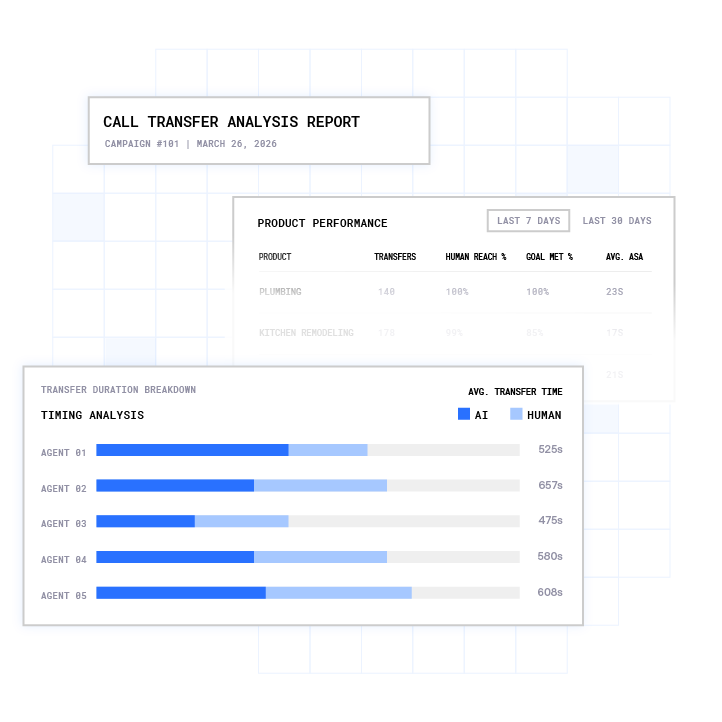
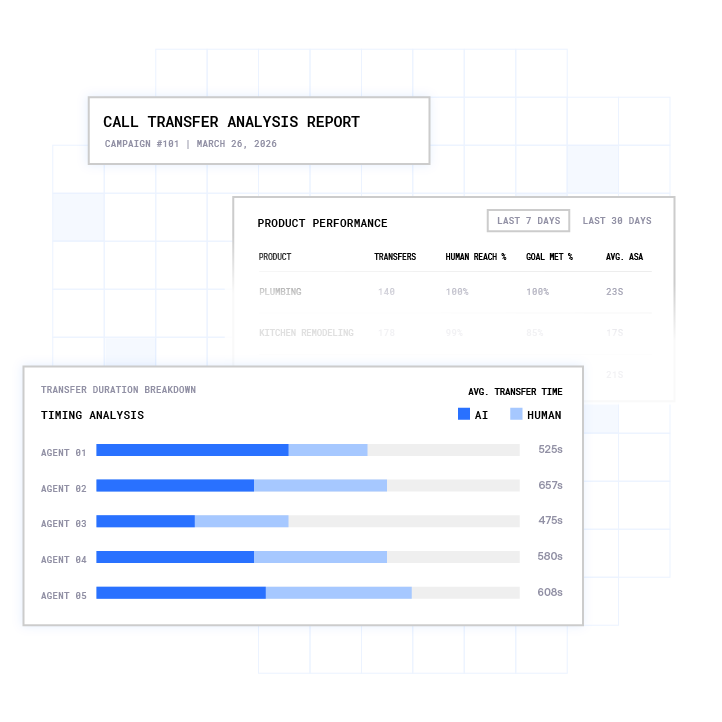
Plura’s conversation intelligence layer analyzes every interaction across voice, SMS, RCS, and AI webchat to surface patterns such as which scripts close, which objections recur, and which contact paths win. Every channel feeds the same Stateful Conversation Database, so a lead who texted at 9 a.m. is recognized when the call comes at noon, with full prior context intact.
Step 3: Prioritize by Revenue Impact
Not every conversion gap deserves the same attention. Contact rate, conversion rate, and talk time ratio are the primary metrics that drive revenue in outbound operations, while cost per lead serves as the master economic metric. Focus first on the metric with the largest gap from benchmark and the highest revenue multiplier.
Speed to first contact consistently delivers the highest leverage. Leads contacted within 1 minute are 391% more likely to convert than those contacted after 24 hours. A Harvard Business Review study found that companies responding within five minutes are 100 times more likely to connect with a prospect than those waiting 30 minutes.4 If your current response time is measured in hours, that becomes the first priority, not script refinement.
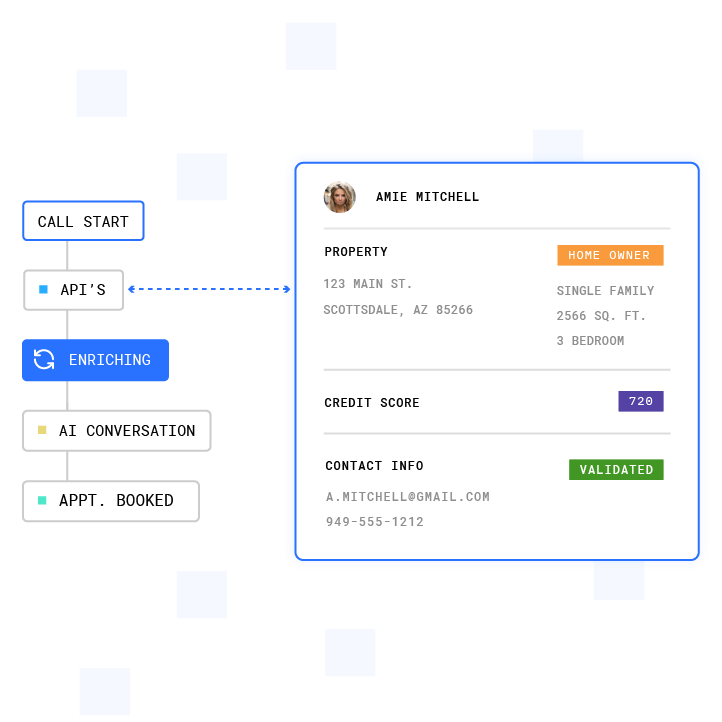
Plura’s AI SMS agents contact new leads in under 5 seconds. The AI voice agent handles inbound and outbound calls on Plura’s own FCC-licensed audio bridging carrier, with SHAKEN/STIR caller ID verification on every call and branded caller ID issued at the carrier level, not bolted on through a third-party reseller.
Step 4: Deploy Stateful AI Conversation Workflows
Traditional A/B testing in high-volume voice and SMS environments has structural limitations. Conversations are multi-turn, outputs are probabilistic due to large language models, and traffic volumes require tests to run 4-8 weeks with a minimum of 1,000 conversations per variant before conclusions are valid. Manual A/B testing cannot match the iteration speed that contact center economics require.
Stateful AI conversation workflows replace periodic tests with continuous optimization. The same thread-level metrics used in pre-launch simulation continue into production monitoring to detect coherence drift and trigger alerts, creating a continuous closed-loop workflow that replaces periodic A/B tests. Each conversation node references prior interaction history, supports BATNA-style negotiation guardrails that define the floor and ceiling for AI negotiation, and branches on real-time enrichment results from more than 30 data sources.
Objection handling uses an explicit classification tree, not a free-form prompt. Objections are extracted into recurring categories grouped by root cause that cover the majority of real prospect conversations. Three categories never route to AI improvisation: regulated claims, emotional context, and novel objections outside mapped branches. These trigger immediate escalation to a U.S. agent through warm transfer.
Plura’s no-code workflow builder deploys conversation logic on a visual canvas. Iterations go live without redeploying the underlying AI. The AI Predictive Dialer uses stateful conversion signals, including historical answer rates and prior negotiation outcomes, to decide who to call next.
Step 5: Iterate Weekly Using Conversation Intelligence
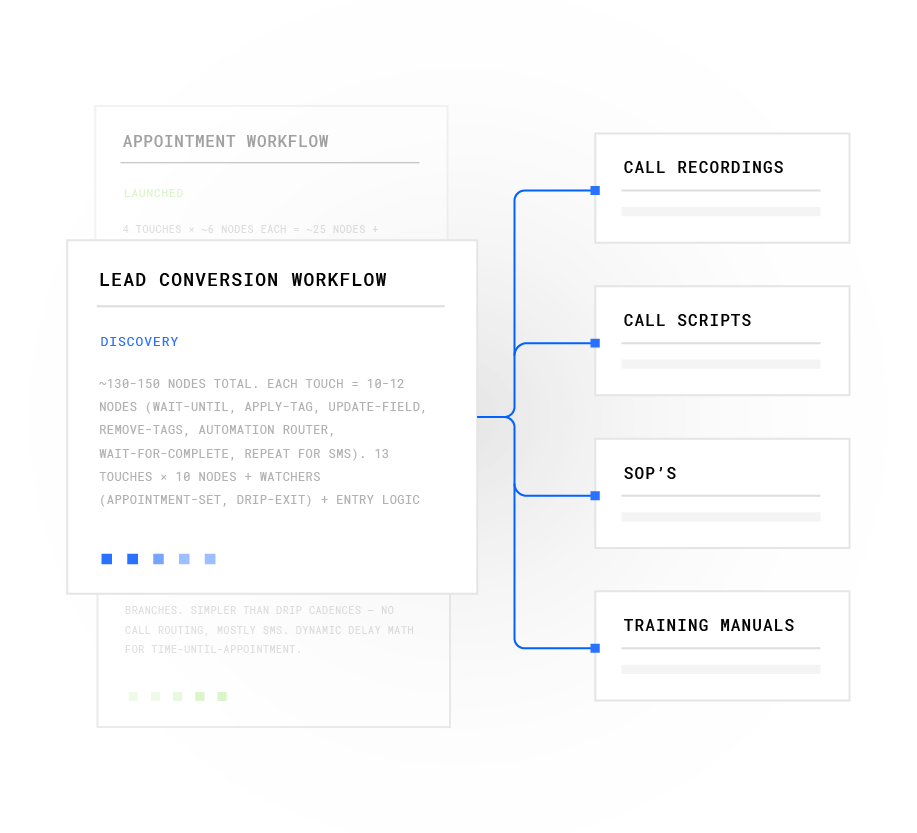
Continuous optimization of AI agents must occur inside controlled operational systems with embedded guardrails and evaluations from the start, rather than through ad hoc prompt changes alone, to maintain traceability and auditability in regulated environments. Weekly iteration becomes the operational cadence, not quarterly reviews.
Plura’s conversation intelligence generates outcome-based metrics automatically, including conversion lift, contact rates, and cost per completed action. Solar and home services companies using AI agents with property data, energy usage estimates, and home valuations achieved 2x to 3x improvements in appointment set rates. The iteration loop is simple: review conversation intelligence output, identify the highest-frequency objection branch that did not convert, update the workflow node, then redeploy.
30-Day AI CRO Workflow
| Days | Action | Plura Tool | Target Metric |
|---|---|---|---|
| 1-3 | Audit current contact rate, CPL, and talk time ratio against baselines | ROI Calculator | Establish economic baseline |
| 4-7 | Deploy AI voice and SMS agents and activate speed-to-lead on all new inbound leads | AI Voice, AI SMS | Response time under 60 seconds |
| 8-14 | Map recurring objection categories from call recordings and build workflow branches | No-code workflow builder | High objection coverage rate |
| 15-21 | Activate AI Predictive Dialer on priority segments and review contact rate by list source | AI Predictive Dialer | Talk time ratio above 50% |
| 22-30 | Pull conversation intelligence report, update lowest-converting objection branches, then redeploy | Conversation Intelligence | Conversion rate lift vs. Day 1 baseline |
AI CRO Workflows Compared to Legacy Methods
| Attribute | Manual A/B Testing | AI Stateful Workflows (Plura) | Source |
|---|---|---|---|
| Test cycle time | 4-8 weeks minimum per variant | Continuous, with iterations that deploy without redeployment | Alhena AI, 2026 |
| Speed to first contact | Industry standard 47+ hours | Under 5 seconds via AI Voice and AI SMS | Plura calculator |
| Cross-channel memory | None, because each channel is a separate test | Stateful Conversation Database shared across voice, SMS, RCS, and webchat | Plura AI Communications Strategy |
| Compliance enforcement | Manual DNC scrubbing and consent records in separate systems | Real-time DNC scrubbing, TCPA compliance controls, immutable consent ledger, and SHAKEN/STIR caller ID verification on every call | Plura AI Communications Strategy |
Regulatory Guardrails That Shape CRO Test Quality in 2026
Regulatory exposure is not only a compliance department concern. It is also a CRO validity concern. A test run on a list that includes TCPA litigants or numbers on the National Do Not Call Registry produces conversion data that leaders cannot trust and exposes the operation to penalties.2 TCPA violations can cost $500 to $1,500 per text or call. Readers should consult qualified legal counsel regarding their specific obligations under TCPA, DNC, HIPAA, SOC 2, GDPR, and applicable state rules.2
Plura supports compliance through real-time DNC scrubbing applied to every outbound contact before dial, TCPA compliance controls with timestamped and immutable consent records, SHAKEN/STIR caller ID verification on every outbound voice call, and infrastructure that supports HIPAA, SOC 2, ISO certification, and GDPR requirements.1 These are platform capabilities. Operators remain responsible for their own regulatory obligations and the claims they make to their end users.
Book a live demo with Plura to see how stateful AI workflows operate inside these guardrails.
Frequently Asked Questions
How AI Conversation Engineering Differs from Traditional CRO
Traditional CRO applies to static web pages where a visitor either clicks or does not. Contact center CRO applies to multi-turn conversations where every exchange changes the probability of a conversion outcome. AI conversation engineering replaces periodic A/B tests with continuous stateful workflows that classify objections, route to vetted response branches, and iterate weekly based on outcome data. The result is a system that improves month over month rather than resetting after each test cycle.
How Plura’s Stateful Conversation Database Lifts Conversions
Most AI voice and SMS tools treat each channel as a separate interaction. A lead who texted at 9 a.m. has to re-explain their situation when the call comes at noon. Plura’s Stateful Conversation Database keys every interaction to a customer token across voice, SMS, RCS, and AI webchat. The AI agent on the noon call already knows what was said, what was offered, and what objections were raised in the morning text thread. That continuity removes re-qualification friction and allows the conversation to advance rather than restart, which directly improves conversion at every subsequent touchpoint.
Benchmarks Contact Center Leaders Can Use in 2026
The most useful benchmarks are funnel-stage metrics rather than single conversion rates. For outbound cold calling, the industry average dial-to-meeting conversion is 2.7% in 2026, with Cognism’s cold-calling team reaching 11.3%. For inbound qualified leads, the range is 5% to 15%. For lead-generation operations, the causal chain to track is simple. Contact rate multiplied by conversion rate equals leads per hour. Total cost divided by total leads equals cost per lead. Operations can set targets from their own 4-6 week baseline rather than industry averages, then measure improvement against that internal baseline week over week.
How Plura Handles TCPA and DNC Controls at Scale
Plura’s platform applies real-time DNC scrubbing to every outbound contact before dial, blocking non-compliant numbers before the first attempt. TCPA compliance controls include timestamped, immutable consent records that are audit-ready on demand. Quiet-hours rules enforce automatically through time-zone detection on the contact. SHAKEN/STIR caller ID verification runs on every outbound voice call. These are platform-level controls. Operators are responsible for their own regulatory obligations, and Plura recommends consulting qualified legal counsel regarding specific TCPA, DNC, and state-level requirements applicable to their operations.
What a Realistic 30-Day ROI Can Look Like
Using the default scenario described in Step 1, the 30-day savings are $45,600. Over 12 months, that stacks to $547,200. For higher-volume operations, the total cost of ownership comparison is $700,000 per year with Plura against a traditional contact center benchmark of $7 million. These figures are based on the default scenario in Plura’s ROI calculator and will vary based on actual inputs.
Run the Numbers
The economics of AI-native CRO are transparent and calculable. Every variable in the conversion chain, from talk time ratio to cost per acquisition, maps to a measurable outcome. Operators who have run this model report 47% average pipeline growth and 90% faster lead-response time within the first 90 days.
Run your numbers through Plura’s calculator to check your ROI in real time. Compare plans and rates side by side at plura.ai/pricing.
1 Plura AI maintains SOC 2, HIPAA, ISO, and GDPR posture as part of its platform infrastructure. References to compliance frameworks in this article describe Plura’s platform capabilities and do not constitute a guarantee that any customer using Plura will themselves be compliant with applicable laws or standards. Customers remain solely responsible for their own regulatory obligations, certifications, consent management, recordkeeping, and the claims they make to their own end users. Consult qualified legal counsel for guidance specific to your use case.
2 This article describes regulatory frameworks at a general level and does not constitute legal advice. Laws and regulations vary by jurisdiction, change over time, and apply differently depending on facts and circumstances. Readers should consult qualified legal counsel before making compliance decisions.
3 Performance figures, customer outcomes, and industry statistics referenced in this article are drawn from cited third-party sources or Plura customer case studies. Individual results vary based on implementation, use case, industry, audience, and execution. Past or aggregate performance is not a guarantee of future results.
4 References to third-party products, services, companies, or research are made for informational and comparative purposes only. Plura AI is not affiliated with, endorsed by, or sponsored by any third party named in this article unless explicitly stated. Trademarks and product names referenced remain the property of their respective owners.
This article is provided for informational purposes only and reflects Plura AI’s understanding at the time of publication. Product capabilities, integrations, and specifications are subject to change. For the most current information, visit plura.ai.
This article was produced with the assistance of AI tools and reviewed by Plura AI prior to publication.